
- LOGIN
- MemberShip
- 2026-04-28 14:33:08
- Company
- Trodelvy approved for reimbursement with the ICER value
- by Whang, byung-woo Jun 12, 2025 06:06am
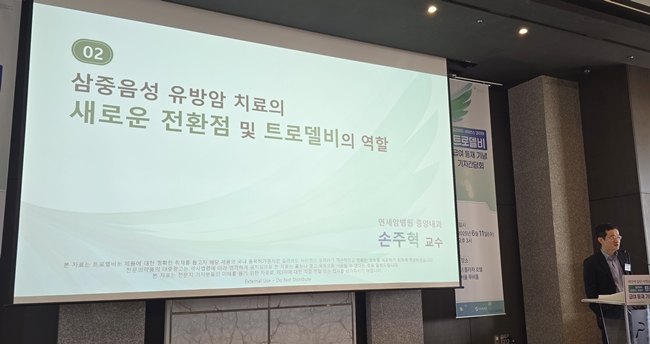
- As Trodelvy (sacituzumab govitecan), the first antibody-drug conjugates (ADC) for treating Triple-Negative Breast Cancer (TNBC) available in South Korea, becomes reimbursed, a paradigm shift in the treatment is expected. Experts assess that the metastatic TNBC treatment, which has been challenging due to a high risk of metastasis and relapse and relied on chemotherapy, has undergone a transition. There is a high demand for Trodelvy, as demonstrated by two previous National Petitions with over 50,000. In the future, the survival benefit is expected to rise. Trodelvy can be reimbursed by the national health insurance from June for the treatment of Triple-Negative Breast Cancer (TNBC). A paradigm shift in TNBC treatment is expected. On June 11, Gilead Sciences Korea hosted a session to celebrate reimbursement approval of Trodelvy, and the company shared the latest updates on TNBC treatment and the significance of reimbursement. TNBC is a type of breast cancer that is negative for three receptors: two types of hormone receptors and the HER2 receptor. TNBC has unmet needs because there is no receptor that treatment can target, and treatment options have been limited to cytotoxic anticancer agents. Trodelvy is known to bind Trop-2 protein, releasing the medicine inside tumor cells. It minimally affects healthy cells, and it can destroy not only tumor cells but also the tumor microenvironment (TME). Besides cytotoxic anticancer agents, Trodelvy is the only treatment approved by the Ministry of Food and Drug Safety (MFDS) as a second-line treatment for patients with metastatic TNBC, regardless of existing genetic mutations or biomarkers. When MFDS granted approval in May 2023, Trodelvy presented a cost burden of KRW 10 million per cycle. It was approved for national health insurance reimbursement in June, thereby expanding patient accessibility. Specifically, Trodelvy can be reimbursed for treating locally advanced or metastatic TNBC as a third-line or later treatment. If recurrence occurs during or within one year of completing neoadjuvant or adjuvant chemotherapy, previous treatments are considered as first-line treatment, allowing for reimbursement of Trodelvy in the second-line setting as well. Trodelvy was categorized as having innovativeness. It gained attention for becoming the first case to clear the DREC review, with its price being measured based on its an Incremental Cost-Effectiveness Ratio (ICER) values. Dr. Joohyuk Sohn, a Professor at Yonsei Cancer Hospital's Department of Oncology, who presented during the meeting, assessed that reimbursement approval of Trodelvy will bring a new shift in the treatment of TNBC. Dr. Joohyuk Sohn, a Professor at Yonsei Cancer HospitalDr. Sohn explained, "While there has been remarkable progress with the emergence of various new drugs for breast cancer, treatment options for TNBC have remained limited. It has been challenging to treat due to its faster and more aggressive progression compared to other types of breast cancer." Additionally, Trodelvy, with efficacy confirmed through the Phase 3 ASCENT study and now reimbursed, is considered a potential new game changer. Dr. Sohn stated, "The final analysis results of the ASCENT study showed that the overall survival (OS) of the Trodelvy treatment group, including patients with brain metastases, was 11.8 months, approximately twice as long as the single-agent chemotherapy group (6.9 months), and it reduced the risk of death by 49%." The breast cancer guidelines of the National Comprehensive Cancer Network (NCCN) and the European Society for Medical Oncology (ESMO) foremost recommend Trodelvy as a second-line treatment for metastatic triple-negative breast cancer. Dr. Sohn emphasized, "For patients who were hesitant to receive treatment because Trodevly was not reimbursable, despite the clear clinically confirmed treatment benefits, the reimbursement listing of Trodelvy will bring survival benefits." "When new drug efficacy is proven, rapid reimbursement approval is needed to expand patient access" In particular, Dr. Sohn suggested that if a new drug's efficacy is sufficient, a rapid reimbursement approval is necessary. Dr. Sohn stressed, "Regarding (new drug) accessibility, it takes too long, usually 3 to 4 years, and I think it's problematic that we consider it a good thing when it takes only 2 years," and added, "While reimbursement listings can be delayed due to health insurance finances. If the research data is not accurate, it can also be delayed. However, if the benefit in OS is proven, rapidly expanded reimbursement is necessary." Meanwhile, Trodelvy is recently expected to expand its indication as a first-line treatment for TNBC through combination therapy with the immunotherapy Keytruda. In the interim analysis results of the Phase 3 'ASCENT-04/KEYNOTE-D19' clinical trial, presented at the recent American Society of Clinical Oncology (ASCO 2025) Annual Meeting, the median progression-free survival (mPFS) for the Keytruda-Trodelvy group was 11.2 months, showing a significant improvement over the control group's chemotherapy+Keytruda at 7.8 months. The duration of response (DOR) for the Trodelvy-Keytruda treatment group was 16.5 months, while chemotherapy+Keytruda was limited to 9.2 months. The OS data were yet incomplete, but a positive trend was observed with Trodelvy plus Keytruda.
- Company
- Tevimbra seeks to add 6 indications in Korea
- by Eo, Yun-Ho Jun 12, 2025 06:05am
- The use of the immuno-oncology drug Tevimbra is set to be extended further in Korea. The Ministry of Food and Drug Safety is in the final stages of reviewing and approving the additional indications for BeOne Medicines Korea’s Tevimbra (tiselizumab). The drug is expected to be approved for the extended indications within the month. Specifically, the extended indications include its use as: ▲First-line combination therapy for patients with unresectable, locally advanced, or metastatic esophageal cancer; ▲First-line combination therapy for patients with unresectable or metastatic, HER2-negative gastric cancer or gastroesophageal junction adenocarcinoma; and ▲First-line combination and second-line monotherapy therapy for non-small cell lung cancer (NSCLC). Tevimbra has already been approved by the U.S. Food and Drug Administration (FDA) for a first- and second-line treatment for patients with unresectable or metastatic esophageal squamous cell carcinoma, as well as for the first-line treatment for patients with advanced gastric cancer (GC). The drug has been expanding its indications in the global market. The European Medicines Agency (EMA) has approved Tevimbra as a first- and second-line treatment of esophageal squamous cell carcinoma, a first-line treatment of advanced gastric cancer, and as a first- and second-line treatment of non-small cell lung cancer (NSCLC). In line with the global trend, Tevimbra’s role is expected to expand to treating various types of cancer in Korea in the future as well. Tevimbra is an immuno-oncology drug with a PD-1 inhibition mechanism of action that recently demonstrated clinical efficacy in second-line treatment of esophageal squamous cell carcinoma, was approved in Korea in November last year and became the first immuno-oncology drug to be reimbursed for esophageal cancer in March this year. This drug is designed based on the technological expertise of BeOne Medicines and employs a dual mechanism of action that effectively blocks PD-L1 while minimizing binding to Fc-gamma receptors (FcγR), thereby inducing potent antitumor responses through a mechanism distinct from that of existing immuno-oncology agents. Notably, it demonstrated superior PD-L1 blocking efficacy (>99%) compared to other immunotherapy agents of the same class, and according to the company, it has a higher binding affinity and a half-life 30-80 times longer than existing drugs, suggesting a more sustained therapeutic effect. Based on this unique mechanism of action, Tevimbra demonstrated treatment efficacy by significantly improving overall survival rates compared to chemotherapy in patients with esophageal squamous cell carcinoma, where over 70% of patients have low or no PD-L1 expression, regardless of PD-L1 expression status. Meanwhile, BeOne Medicines Ltd. recently changed its name from Beigene and relocated its corporate headquarters to Switzerland, marking its new beginning.
- Company
- 'Ocrevus' for multiple sclerosis available at hospitals
- by Eo, Yun-Ho Jun 11, 2025 06:03am
- Product photo of OcrevusThe new drug 'Ocrevus' for treating multiple sclerosis is becoming available at general hospitals. According to sources, Roche Korea's Ocrevus (ocrelizumab), the treatment for relapsing multiple sclerosis (RMS), has passed drug committees of tertiary general hospitals, including Samsung Medical Center, Seoul National University, Asan Medical Center in Seoul, and Sinchon Severance Hospital, and medical institutes, including Chonnam National University Hospital and Inje University Haeundae Paik Hospital. Ocrevus is expanding its prescription areas after being included in the insurance reimbursement list in March. Ocrevus is a drug that targets B-cells expressing CD20, which affects the demyelination causing neurological disorder in patients with multiple sclerosis. Multiple sclerosis is a chronic disease in which the myelin sheaths are damaged due to autoimmune inflammatory responses. Damages to the myelin sheaths cause muscle weakening, fatigue, and vision impairment, and the disease could lead to atraumatic disorders. As of 2022, there are approximately 2674 patients with multiple sclerosis in South Korea, and people aged 20-40 account for 62% of all patients. Until now, antibody medications such as 'Tysabri (natalizumab),' 'Gilenya (fingolimod),' and 'Mabthera (rituximab)' have been used for treating multiple sclerosis. However, there are ongoing requests for new drugs. In overseas, various new drugs were developed, such as Novartis 'Briumvi (ublituximab)' TG Therapeutics 'Kesimpta (ofatumumab).' However, Roche's Ocrevus is the only drug introduced to Korea. Ocrevus has the advantage of administration duration. Ocrevus can be taken once every 6 months, providing greater convenience of administration compared to Kesimpta (administered once a month). The basis of this drug is the Phase 3 OPERA-I and II studies. These trials comparatively evaluated the efficacy and the safety of Ocrevus and Biogen's Plegridy (pegInterferon beta-1a) in patients with relapsing multiple sclerosis. In the clinical trials, Ocrevus reduced the annual recurring revenue (ARR) by almost half compared to Plegridy. Specifically, in the OPERA I trial, the ARR of the group treated with Ocrevus for 96 weeks had an ARR of 0.156, compared to 0.292 in the control group. In the OPERA II trial, the ARR of the group treated with Ocrevus for 96 weeks had an ARR of 0.155, which was lower than the 0.290 ARR of the control group. Additionally, in the Phase 3 ORATIORIO clinical trial involving patients with primary progressive multiple sclerosis (PPMS), Ocrevus demonstrated effectiveness. In the clinical trial, Ocrevus reduced the confirmed disease progression (CDP) by 24% for 12 weeks compared to the control group. Dr. Ho Jin Kim, Professor of the Department of Neurology at the National Cancer Center, said, "Even a small difference in the early stage of multiple sclerosis has significant cumulative results. Using treatments with higher treatment effects at an earlier stage offers significant benefits. Using these treatments will be helpful in terms of improving the quality of life and reducing the economic cost burden. Ocrevus is useful because of its efficacy and sufficient data regarding long-term administration."
- Company
- Janssen Korea to cut distribution margins… sparks pushback
- by Son, Hyung Min Jun 11, 2025 06:03am
- # i1 Janssen Korea, which has announced a 2% reduction in distribution margins, is expected to engage in dialogue with individual pharmaceutical distribution companies rather than the Korea Pharmaceutical Distribution Association (KPDA) to resolve the current issue. The KPDA has sent two official letters to Janssen Korea, demanding negotiations via the association, but the company did not accept the request. As a result, the KPDA has expressed concerns that the margin cut will become more of a unilateral notification rather than a matter for negotiation. According to the pharmaceutical distribution industry on the 11th, Janssen Korea is expected to visit multiple pharmaceutical distribution companies this week to address the current issue of pharmaceutical distribution margins. Notably, Christian Rodseth, the Senior Vice President of Janssen Korean, plans to visit the companies in person for the negotiations. Janssen Korea recently notified its distribution partners of a 2% margin reduction. However, the distributors have strongly opposed the additional margin reduction, arguing that it threatens their survival as they are already struggling with low margins. In response, Janssen Korea sent a formal statement to the KPDA on the 29th of last month, stating that the decision to adjust pharmaceutical distribution margins was not a unilateral decision being imposed by the company, but rather a part made under the spirit of mutual cooperation. It emphasized that it will continue discussions with individual distributors based on reasonable standards and procedures. In the official statement, Janssen Korea stated, “Considering the number, scale, and diversity of the distribution companies we deal with, we believe it is unrealistic to uniformly apply the same transaction conditions to all distribution companies.” It further explained, “Transaction conditions between suppliers and distribution companies are typically determined through individual negotiations, which is the normal industry practice.” Previously, the KPDA had reached a consensus that Janssen Korea’s margin reduction measures threaten the survival of the distribution industry and agreed on joint countermeasures. A representative from a pharmaceutical distribution company stated, “The margin reduction being pushed by Janssen Korea is at a level that threatens the survival of the pharmaceutical distribution industry. Given that negotiations with Janssen Korea, a company that holds a dominant position in the relationship, are likely to amount to mere notifications, we have decided to have the association represent the positions of pharmaceutical distribution companies.”

- Company
- Korean pharmas to make strong presence at BIO USA
- by Son, Hyung Min Jun 11, 2025 06:02am
- The domestic pharmaceutical and biotech industry will showcase its contract development and manufacturing (CDMO) and new drug candidate technologies at Bio USA, the world's largest biotech convention. Various Korean companies have also set out to participate in BIO USA 2025, which will be held in Boston, USA, for four days from the 16th of this month, to expand partnerships and discuss global technology exports. Samsung Biologics, Lotte Biologics, Celltrion, and Kolon Life Science plan to showcase their manufacturing capabilities in the CDMO sector. With China's largest CDMO firm, WuXi Biologics, deciding not to participate for the second consecutive year, domestic pharmaceutical and biotech companies are expected to reap reflective benefits. Additionally, CareGen, Aptamer Sciences, and Pharos iBio will promote their innovative new drugs. CDMO companies promote manufacturing capacity again this year Samsung BioLogics plans to expand partnerships with multinational pharmaceutical companies based on its world-class manufacturing facilities. With the start of operations at its fifth plant, the company has secured a total manufacturing capacity of 780,000 liters per year and is accelerating the diversification of its CDMO order portfolio. Lotte Biologics plans to actively target the North American CDMO market leveraging its Syracuse plant in the US. At this year's BIO USA, the company is expected to not only attract new partners but also discuss contract renewals with existing partners. Industry observers predict that Lotte Biologics' plant, which has completed certification under the US Food and Drug Administration's (FDA) current Good Manufacturing Practice (cGMP) standards, will begin securing orders in earnest starting in the second half of this year. Celltrion is shifting its strategy from focusing on its products to expanding its CDMO business. The company is emphasizing its technological capabilities to drive CMO demand in Europe and is expected to highlight its customized biopharmaceutical development collaboration model. These three companies are particularly focused on antibody-drug conjugates (ADCs). Samsung BioLogics, and Samsung Bioepis, have invested in ADC development companies Aimed Bio, Swiss Araris Biotech, and U.S.-based BrickBio through the Samsung Life Science Fund. They are also continuing to invest in companies developing new drug candidates, not just manufacturing facilities. Lotte Biologics, which recently signed an ADC manufacturing contract with an Asian materials company, has also invested in new ADC drug development companies such as Pinot Bio and Kanap Therapeutics. Celltrion is directly involved in new ADC drug development. Earlier this year, Celltrion disclosed the preclinical results of its ADC candidate 'CT-P71.' CT-P71 utilizes the ADC platform of Pinot Bio, a domestic ADC development company. CT-P71 is an ADC therapy targeting bladder cancer and other various solid tumors. The candidate specifically targets Nectin-4, a cell surface protein overexpressed in various solid tumors such as urothelial cancer and breast cancer. Additionally, Celltrion has received approval for the Phase I clinical trial of CT-P70. CT-P70 is an ADC therapy candidate for solid tumors such as non-small cell lung cancer. CT-P70 targets 'c-MET,' which prompts tumor growth when activated in cancer cells. BIO USA 2024 Korea Pavillion (Pic=KoreaBIO) Technology exports of new drug candidates a success?... domestic companies discuss partnerships with global companies At the event, Kolon Life Science will discuss technology export partnerships with global pharmaceutical companies regarding its pipeline of new drugs under development. The main pipelines to be introduced are ▲ KLS-2031, a gene therapy for neuropathic pain, and ▲ KLS-3021, an anti-cancer gene therapy. KLS-2031 has completed Phase 1/2a clinical trials in the US, and KLS-3021 is in preclinical development, with preparations for global technology export now in full swing. KLS-2031 is designed to carry three complementary therapeutic genes using recombinant adeno-associated virus (rAAV) and has demonstrated its safety and tolerability in a Phase I/2a clinical trial in patients with lumbosacral radiculopathy (LSR). KLS-3021 is a solid tumor therapy that incorporates three therapeutic genes into a vaccinia virus-based platform with enhanced cancer cell selectivity. The candidate drug has demonstrated safety and efficacy in preclinical studies. CareGen has been continuously participating in BIO USA with a standalone booth every year since 2019. At this year’s event, CareGen plans to focus on introducing its main core products, including Korglutide, MyoKi, and ProGsterol, which have been commercialized based on its proprietary peptide platform technology. With growing global demand for its products, Caregen aims to use this exhibition as a platform to strengthen partnerships with international distributors and pharma companies, focusing on expanding indications and diversifying its market presence. CareGen also plans to showcase its major new drug pipelines, including CG-P5, a treatment for wet age-related macular degeneration, and CG-T1, a treatment for dry eye syndrome. CG-P5 is being developed as a non-invasive eye drop formulation, while CG-T1 is a dry eye treatment based on a unique mechanism of action applicable to a wide range of ophthalmic conditions. Aptamer Sciences plans to use BIO USA as an opportunity to initiate strategic collaboration discussions with leading ADC-focused companies in North America, Europe, and China. The company aims to explore concrete partnership opportunities in joint development, clinical collaboration, expansion of new indications, and technology transfers. Aptamer Sciences owns its proprietary ADC platform technology, ApDC (Aptamer Drug Conjugate). ApDC is a next-generation precision drug delivery platform that uses aptamers instead of antibodies and incorporates Aptamer Sciences’ proprietary modified nucleic acid technology. According to the company, anticancer drugs developed using the ApDC platform demonstrate rapid intracellular internalization and fast onset of action after binding to target cell surfaces, excellent tumor tissue penetration, swift tumor targeting in animal models post-administration, and superior antitumor efficacy—validated through comparative studies with existing ADC drugs. In addition to cytotoxic drugs, Aptamer Sciences is currently expanding its platform to enable conjugation with various other therapeutic modalities such as radioisotopes, targeted protein degraders (TPDs), and immunotherapies. At this year’s event, Pharos iBio will showcase research progress on its next-generation drug candidates—PHI-101 for acute myeloid leukemia (AML) and PHI-501 for refractory solid tumors—while actively seeking global partnership opportunities. With both key pipelines backed by strong clinical data and advanced development stages, the company expects this conference to serve as a significant stepping stone toward global market entry. PHI-101 is an innovative anticancer drug candidate discovered through Pharos iBio’s proprietary AI-driven drug discovery platform, Chemiverse. It is a next-generation AML treatment designed to target a wide range of resistance mutations in the FLT3 protein. The drug has demonstrated high therapeutic efficacy in global Phase 1 clinical trials and has shown favorable cardiac safety in preclinical studies through AI-based toxicity prediction, offering itself a new treatment option to patients with relapsed or refractory AML. PHI-501, which is entering Phase 1 clinical trials, is a treatment candidate for hard-to-treat solid tumors. In recent preclinical studies, it showed promising therapeutic effects against difficult-to-treat cancers such as refractory lung cancer, malignant melanoma, and colorectal cancer with limited treatment options. Notably, PHI-501 demonstrated significant efficacy in solid tumors with BRAF, KRAS, and NRAS mutations. In March, Pharos iBio submitted an IND (Investigational New Drug) application for PHI-501 to Korea’s Ministry of Food and Drug Safety, signaling its full-scale entry into the high-value KRW 40 trillion global solid anticancer drug market.
- Company
- EU revises pharma package law for the first time in 20 years
- by Kim, Jin-Gu Jun 11, 2025 06:02am
- The European Union (EU) is pushing for revisions to its “Pharmaceutical Package” law on major drugs for the first time in 20 years. The core of the revision, which is now awaiting final approval by the European Parliament, can be summarized as expanding the exclusivity of innovative drugs and strengthening supply obligations within Europe. In addition, measures such as exempting relevant intellectual property rights are being promoted to improve access to biosimilars and generics. According to the Korea Biotechnology Industry Organization on the 10th, the European Council (EC) recently agreed to the European Commission's revision of the “Pharmaceutical Package.” The only remaining procedure is the final approval by the European Parliament. The Pharmaceutical Package, established in 1965, forms the foundation of pharmaceutical laws in Europe. The last revision was in 2004. However, over the past 20 years, issues regarding pharmaceutical access have been consistently raised, particularly in certain countries. In response, in April 2023, the European Commission drafted a revision to the pharmaceutical package law. The revision focuses on three main points: extending protection for innovative drugs, imposing a supply obligation for pharmaceuticals, and supporting the early entry of generics and biosimilars. First, to protect innovative medicines, additional incentives will be provided to companies that develop and produce them. Specifically, companies producing innovative medicines will be granted an 8-year data exclusivity period. During this period, competing companies will not be able to access the development data for the medicine. Additionally, companies producing innovative medicines will be eligible for a 1-year regulatory market protection benefit. This benefit may be extended to 2 years if certain conditions are met. Furthermore, a new provision (56A) will be added to strengthen supply obligations. EU member states will be able to impose obligations on drug marketing authorization holders to ensure that their patients have sufficient access to necessary drugs. Early market entry for generics and biosimilars will also be supported. To this end, the provisions known as the “Bolar exemption” are clarified. The Bolar exemption recognizes exemptions from certain requirements, allowing generic and biosimilar manufacturers to conduct clinical trials and prepare regulatory documents for patented drugs. This revision ensures the availability of generic and biosimilar drugs on the first day after patent expiration. Once a patent or exclusive period expires, competitive products (generic drugs) can be launched immediately without bureaucratic delays. If a drug is sold after patent expiry, its generic and biosimilar manufacturers can complete the submission of a Health Technology Assessment (HTA) beforehand. Furthermore, they can participate in national tenders through hospital contracts even before the exclusive rights of the original manufacturer expire.
- Company
- Pfizer launches 'Prevenar 20' for adults aged 18 years+
- by Whang, byung-woo Jun 11, 2025 06:01am
- Product photo of Prevenar 20 Pfizer Korea (CEO and President Dong-wook Oh) announced on June 10 that its 'Prevenar 20,' a 20-valent pneumococcal conjugate vaccine for adults, was launched in early June, and it is now available for vaccination for individuals aged 18 years and older. Prevenar 20 will be supplied to the Korean market for adults through a co-promotion and distribution partnership between Pfizer Korea and Chong Kun Dang. The two companies have maintained a partnership since their initial domestic distribution agreement for Prevenar 13 in 2017. Through this new partnership for Prevenar 20, they aim to strengthen their position in the adult vaccine market and continue efforts to enhance vaccine accessibility. Prevenar 20 is a pneumococcal conjugate vaccine that was approved by the Ministry of Food and Drug Safety (MFDS) on October 31, 2024. Compared to the 13-valent vaccine, Prevenar 20 has added seven additional pneumococcal serotypes. Among domestically approved pneumococcal conjugate vaccines, it contains the most serotypes (as of 10/31/2024). It can be used for preventing invasive pneumococcal disease and pneumonia caused by pneumococcus in all ages postnatal 6 weeks or above (serotypes 1, 3, 4, 5, 6A, 6B, 7F, 8, 9V, 10A, 11A, 12F, 14, 15B, 18C, 19A, 19F, 22F, 23F, 33F). The Korean Society of Infectious Diseases (KSID) has recently announced new recommendations for the pneumococcal conjugate vaccine as part of its revised 2025 guidelines for adult vaccination. KSID's adult immunization board has recommended sequential vaccination with PCV20 or PCV15, followed by PPSV23, for adults aged 65 and older and for high-risk individuals aged 19-64. This high-risk group includes patients with chronic diseases, cerebrospinal fluid leakage or cochlear implants, immunocompromised patients, and individuals with functional or anatomical asplenia. Chan-woo Song, Vice President of the Primary Care Business Unit at Pfizer Korea, said, "We are delighted to further strengthen our long-standing partnership with Chong Kun Dang through this co-promotion and distribution partnership for Prevenar 20." He added, "This collaboration between our two companies has expanded the opportunity for Prevenar 20 to be made available to more adults." Young-Joo Kim, CEO of Chong Kun Dang, said, "Based on the partnership that began with Prevenar 13, we find it meaningful to be able to supply the newly launched adult Prevenar 20 in Korea," and added, "Both companies will continue to collaborate to contribute to the development of the domestic vaccine market and strive to provide a healthier future for more patients." Meanwhile, the safety, tolerability, and immunogenicity of Prevenar 20 were confirmed through global clinical trials. In the United States and Sweden, 3,902 adults aged 18 and older who had no prior pneumococcal vaccine history were divided into three age groups: 18-49 years, 50-59 years, and 60 years or older. Individuals aged 60 and above received either Prevenar 20 or PCV13+PPSV23, while those aged 18-59 received either Prevenar 20 or PCV13. Based on the primary immunogenicity endpoint, which was OPA GMT in adults aged 60 and older, Prevenar 20's non-inferiority was confirmed for the 13 serotypes shared with Prevenar 13. Non-inferiority was also confirmed for 6 out of the seven additional serotypes compared to PPSV23. Furthermore, the frequency and severity of local and systemic reactions occurring within 10 days after vaccination with Prevenar 20 or PCV13 were similar.

- Company
- "Atopic dermatitis treatment…personalized trt. is the key"
- by Whang, byung-woo Jun 11, 2025 06:01am
- "Significant changes are being brought to atopic dermatitis treatment. which can be described as a 'major shift.' As it is a complex disease with various factors involved, establishing criteria for personalized treatment regarding which therapeutic agent to use for each patient is necessary." Atopic dermatitis is one of diseases whose treatment landscape has undergone significant changes in recent years. As atopic dermatitis is a chronic skin condition with complex etiologies, its treatment has historically been challenging. However, the recent emergence of various novel drugs, such as biologics and JAK inhibitors, has diversified treatment options. During a meeting with Daily Pharm, Dr. Ga-Young Lee, a Professor at Kangbuk Samsung Hospital's Department of Dermatology, stressed the necessity of personalized treatment options for advancing the treatment environment of atopic dermatitis. "Introduction of new atopic dermatitis drugs offers hope to patients who gave up on treatment due to side effects" Atopic dermatitis is a chronic skin inflammation caused by a complex interplay of genetic factors, immune dysfunction, and impaired skin barrier function. Professor Ga-Young Lee at Kangbuk Samsung HospitalNotably, the quality of life issue for patients with severe atopic dermatitis is particularly acute. Because the disease affects the whole body, patients experience severe itching and pain, leading to sleep disturbances and psychological stress, which significantly disrupt their daily lives. In this context, the shift of the atopic dermatitis treatment landscape with the advent of new drugs is assessed as offering hope to patients. Dr. Lee explained, "With the emergence of various new drugs, such as biologics and JAK inhibitors, patients who were previously neglected due to side effects from steroid treatments or treatment abandonment are now returning to the hospital," and Dr. Lee added, "Now, diverse treatment options are available, enabling personalized treatment tailored to each patient's condition and needs." Biologics and JAK inhibitors are two main pillars of atopic dermatitis treatment, with the choice of therapy being made based on patient severity, treatment speed, side effects, and economic burden. Dr. Lee said, "It's difficult to decide on a single approach, but strategies can vary depending on the patient's severity." Dr. Lee noted, "For severe patients with extensive systemic involvement, injectables are primarily considered, but for those requiring rapid treatment, JAK inhibitors might be more suitable." For severe patients with an EASI score of 30 or higher and extensive systemic involvement, injectables such as dupilumab or tralokinumab are used. For cases requiring rapid treatment, JAK inhibitors like Cibinqo (abrocitinib) are an option. Indeed, Cibinqo has shown a rapid onset of action (the time it takes to see treatment effects) in clinical studies. In the JADE MONO-2 study, 200mg monotherapy demonstrated significantly greater itch improvement compared to placebo within 24 hours of the first dose. The JADE MONO-1 study also demonstrated significant improvement in skin symptoms by week 12 compared to the placebo. "There are patients who say their symptoms improved significantly within a week or even the very next day after taking Cibinqo, which highlights its fast onset," Dr. Lee stated. "This advantage makes Cibinqo a consideration for those who need quick relief or young adults entering the workforce." Dr. Lee also said, "Cibinqo showed good efficacy even in cases where symptoms were confined to the face and neck. While there are concerns about herpes as a side effect of JAK inhibitors, Cibinqo has shown relatively fewer side effects, making it safe." She added, "Considering that drug price is also an important factor, the availability of various dosages is a strength of Cibinqo." Currently, Cibinqo offers three dosage options: 50mg, 100mg, and 200mg, allowing for adjustment based on weight or condition. Dr. Lee explained that patients whose condition is controlled with 200mg can gradually reduce their dosage to 100mg or 50mg. "For patients with impaired kidney function, even if severe, it's difficult to use high doses, so sometimes only 50mg is prescribed. For lighter female patients or adolescents, high doses may be unnecessary," Dr. Lee said. "In such cases, treatment can be started with 100mg and adjusted down to 50mg. Therefore, having three dosage options is a significant advantage, as it allows for personalized patient treatment." "Reimbursement criteria of atopic dermatitis has a limitation, expanded criteria for rapid treatment is necessary" Another change concerning atopic dermatitis treatment is the approval of inter-class switching between biologics and JAK inhibitors. Regarding this, Dr. Lee advised that inter-class switching (between therapeutic regimens) is necessary to ensure treatment flexibility. Dr. Lee stated, "The current reimbursement criteria for switching therapies only allow coverage when switching between biologics and JAK inhibitors, which doesn't align with clinical practices," and explained, "There are patients who need to switch from biologics to JAK inhibitors, and conversely, there are cases where switching from JAK inhibitors to biologics is necessary." Especially with the emergence of new atopic dermatitis drugs, personalized treatment should be possible. However, as data have not yet fully accumulated, some consider that improvements are needed to allow for trying and switching to therapies within the same class but with different targets and effects. "In recent meetings with overseas medical professionals, issues related to switching therapies were raised, and no other country had as restrictive criteria as Korea," Dr. Lee said. "While there may be limitations within Korea's national health insurance system, in my opinion, I believe there needs to be a greater variety of options for drug switching." Dr. Lee also pointed out that the 'special cases criteria' for atopic dermatitis are excessively stringent compared to conditions like psoriasis. Dr. Lee stated, "For psoriasis, reimbursement is approved if there's no effect even after 3 months of treatment, but for atopic dermatitis, 'special cases criteria' is only possible for severe patients with an EASI score of 23 or higher," and suggested, "If 'special cases criteria' are applied only to severe patients with a 10% co-payment, mild or moderate patients don't receive treatment benefits. The system should be improved to allow partial reimbursement support for moderate patients as well." Additionally, Dr. Lee emphasized the need for systematically established treatment guidelines tailored to patient conditions, mentioning the necessity of clear treatment criteria and personalized guidance, including biomarkers and lesion location. Finally, Dr. Lee stressed, "While the atopic dermatitis treatment landscape is rapidly advancing, continuous management and treatment are currently the main focus rather than a complete cure." Dr. Lee concluded, "With specialized medical professionals, it's important to maintain and improve the patient's quality of life continuously."
- Company
- Polycythemia vera drug 'Besremi' nearing end of reimb review
- by Eo, Yun-Ho Jun 10, 2025 06:04am
- PharmaEssentia Korea The polycythemia vera (PV) treatment 'Besremi' has entered the final stage of an insurance reimbursement review process. The Ministry of Health and Welfare (MOHW) has recently ordered the National Health Insurance Service (NHIS) to initiate drug price negotiation for PharmaEssentia Korea's Besremi (ropeginterferon alfa-2b). If the company succeeds in negotiation, the drug will be approved for reimbursement in the second half of this year. It is to be watched whether Besremi will be successful in its second attempt. The company underwent the reimbursement process in March 2023 for the treatment of hydroxyurea-refractory/resistant polycythemia vera. However, Besremi did not overcome the Cancer Disease Review Committee (CDRC) hurdle. At the time, the CDRC determined that Besremi lacked evidence for clinical utility as a second-line treatment. After that, PharmaEssentia added Besremi's domestic clinical documents, supplemented efficacy evidence as a second-line treatment, and re-submitted the reimbursement application in March last year. In the same year, it passed the CDRC in July. It passed the review by the Health Insurance Review and Assessment Service (HIRA)'s Drug Reimbursement Evaluation Committee (DREC) last month. Besremi is a next-generation interferon designed to selectively eliminate Janus kinase 2 (JAK2) gene, which causes polycythemia vera. With the improvement made to purity and tolerability of the previous interferon agents, this drug was designed to be taken once every 2 weeks for the initial 1.5 years, then once every 4 weeks. Besremi is now recommended by the National Comprehensive Cancer Network (NCCN) and the European LeukemiaNet (ELN) as treatment for polycythemia vera regardless of previous therapy history. Meanwhile, polycythemia vera is a rare blood cancer where somatic cell mutation in bone marrow causes abnormal activation of bone marrow function, resulting in the overproduction of red blood cells. According to the HIRA documents, the number of patients in Korea with the disease is about 5,000, and hydroxyurea is used in most patients. However, polycythemia vera is a disease with high unmet needs because the current drugs that are covered by reimbursement cannot treat the underlying causes of the disease, and no alternative treatment options exist when patients fail hydroxyurea treatment.
- Company
- Celltrion’s Stelara biosimilar Qoyvolma gains EU approval
- by Kim, Jin-Gu Jun 10, 2025 06:03am
- Celltrion announced on the 9th that ‘Qoyvolma,’ its biosimilar version of the autoimmune disease treatment Stelara (ustekinumab) has received marketing authorization from the European Commission (EC). Qoyvolma has been approved with the addition of ▲'ulcerative colitis (UC)' to the existing indications of ‘Steqeyma,' another Stelara biosimilar previously approved by Celltrion, which is indicated for ▲plaque psoriasis, ▲psoriatic arthritis, and ▲Crohn's disease (CD). With this approval, Celltrion now holds two biosimilars of Stelara. Celltrion plans to strategically leverage the two products with different indications to flexibly address the complex patent landscape across European countries and expand its market share. The company expects that the addition of Qoyvolma will enhance its competitiveness in the ustekinumab market by expanding indications, as Steqeyma’s sales have been growing rapidly in Europe upon its launch. Steqeyma is a new biosimilar treatment that was released in Europe and the US in November last year and March this year, respectively. In Europe, it has been launched in five major countries (Germany, Spain, the UK, Italy, and France) as well as the Netherlands, and has already secured bids in tenders, marking the beginning of its market penetration. In the US, it has signed contracts with two of the top five prescription drug reimbursement management companies (PBMs), which account for about 90% of the total insurance market, and is in negotiations with other PBMs. Celltrion plans to continue expanding its market share in the global ustekinumab market to drive sales growth. According to IQVIA, a pharmaceutical market research firm, the global market size for ustekinumab is estimated to be approximately USD 21.66 billion (approximately KRW 30.32 trillion) as of 2024. A Celltrion official stated, “With the recent approval of Qoyvolma, we will be able to further strengthen our coverage of the ustekinumab market in Europe. Given that Steqeyma, which was launched earlier, is already showing positive growth trends in the global ustekinumab market including Europe, we will make every effort to leverage the complementary strengths of both products to expand market share and drive sales growth.”
