
- LOGIN
- MemberShip
- 2026-04-27 13:31:35
- Company
- 1st drug to win 2nd concurrent approval·pricing program
- by Eo, Yun-Ho Jul 28, 2025 06:08am
- As the first drug has been approved under the 2nd concurrent approval·drug pricing program, the process for insurance reimbursement is garnering attention. MSD Korea's 'Winrevair (sotatercept),' a new drug for pulmonary arterial hypertension (PAH), recently obtained final approval from the Ministry of Food and Drug Safety. As it has been selected for the concurrent approval-evaluation-negotiation pilot program, Winrevair will soon be subjected to reimbursement review. The Ministry of Health and Welfare has been running the 'Pilot Project for Integration of Product Approvals, Reimbursement Coverage Reviews, and Drug Price Negotiations' since 2023 to improve treatment access for life-threatening severe and rare diseases. The project conducts approval, reimbursement evaluation, and drug price negotiations concurrently, aiming to shorten the time required for new drugs to be included in the National Health Insurance list. The first pilot project is in its final stage, showing accomplishments. The Ministry of Health and Welfare recently completed selecting items, and three drugs were chosen. Three drugs chosen for the second pilot project are 'Winrevair (sotatercept),' a pulmonary hypertension treatment from MSD Korea; 'Fintepla (fenfluramine),' a Dravet syndrome treatment from UCB Pharma Korea; and 'Limcato,' a large B-cell lymphoma treatment from the Korean company Curocell. Winrevair is a first-in-class innovative new drug with a novel mechanism of action, emerging 20 years after 'Sildenafil,' which targeted the NO-sGC-cGMP pathway in 2005. As of 2023, the number of pulmonary hypertension patients in Korea was approximately 3,600. The average age of these patients is in their 40s, a demographic that plays a crucial role in society and families. Although the 5-year survival rate has significantly improved compared to the past, 3 out of 10 Korean pulmonary hypertension patients still die within 5 years. Furthermore, most patients experience significant difficulties performing daily activities such as housework, childcare, and light outings. Pulmonary hypertension is a rare, intractable, and progressive disease, delaying the worsening of the condition directly impacts patients' quality of life and survival. To date, no cure through drug treatment has been discovered, and the mechanism of existing drugs primarily aims to alleviate symptoms by relaxing thickened pulmonary arteries. It remains to be seen how quickly drugs undergoing the concurrent approval-evaluation process, including Winrevair, will be included to the list. Meanwhile, the approval of Winrevair was based on the 'STELLAR' clinical study. This study evaluated the efficacy and safety of Winrevair in 323 adult patients with pulmonary hypertension (WHO-FC II or III). During the 24-week study period, patients received either Winrevair or a placebo in combination with their existing therapy, administered once every three weeks. As a result, Winrevair increased the 6-minute walk distance by 40.8m (Hodges–Lehmann estimate) compared to placebo at the 24-week mark and reduced the risk of clinical worsening or death by 84%. Additionally, significant improvements were confirmed compared to the placebo in eight secondary efficacy endpoints, including the WHO-FC, pulmonary vascular resistance (PVR), and NT-proBNP levels, a biomarker for heart failure. Wook-Jin Chung, President of the Korean Society of Pulmonary Hypertension (Professor of Cardiology at Gachon University Gil Hospital), stated, "Winrevair is a new mechanism treatment that normalizes modified pulmonary vascular structures. It's also presented as a combination therapy option for use in early treatment stages, as outlined in updated global clinical guidelines, based on the latest evidence. This approval has widened the range of treatment options for pulmonary hypertension patients in Korea."
- Company
- Alopecia areata drug Litfulo lands in the Big 5 hospitals
- by Eo, Yun-Ho Jul 28, 2025 06:07am
- Litfulo, a new drug for alopecia areata, may now be prescribed at tertiary hospitals in Korea.. According to industry sources, Pfizer Korea's new Janus kinase (JAK) inhibitor Litfulo (ritlecitinib) has passed review of Drug Committees (DCs) at major medical institutions, including Samsung Medical Center, Seoul National University Hospital, Seoul Asan Medical Center, Sinchon Severance Hospital, Pusan National University Hospital, Seoul National University Bundang Hospital, and Pusan National University Yangsan Hospital. Jeonbuk National University Hospital and Chungnam National University Hospital. Since the drug’s launch in March, its prescription area has been steadily expanding. Approved in Korea in September last year, Litfulo is the first drug approved for the treatment of alopecia areata in adolescents in Korea. Alopecia areata is an autoimmune condition that causes patchy or complete hair loss on the scalp, face, or other parts of the body. It occurs when the immune system attacks the hair follicles, causing hair loss. The number of patients diagnosed with alopecia areata in Korea has increased over the past decade, from 154,380 in 2013 to 178,009 in 2023. In general, most cases of alopecia areata with mild symptoms tend to recover naturally or respond well to treatment, but also recur frequently, with approximately 40–80% of patients experiencing recurrence within one year. Professor Chong-Hyun Won of the Department of Dermatology at Asan Medical Center Seoul, said, “The launch of this new treatment option brings new hope for patients who have long suffered from alopecia areata and have unmet needs. It is also significant for us medical professionals as it provides a new and safe option.” Meanwhile, Litfulo has demonstrated its efficacy through the global ALLEGRO IIb/III trial. Its primary endpoint, which evaluated the proportion of patients with a Severity of Alopecia Tool (SALT) score of 20 or below, 23% of the treatment group achieved a SALT score of 20 or below at Week 24, compared to 2% in the placebo group, demonstrating statistically significant treatment efficacy. At Week 48, the proportion of patients in the Litfulo 50 mg treatment group with a SALT score of 20 or below was 43%, compared to 10% in the placebo group, confirming significant efficacy. This suggests that the efficacy of Litfulo increases over time. The incidence of adverse events in these patients was similar to that in the placebo group, with no deaths.
- Company
- Mounjaro launch set for August in Korea
- by Whang, byung-woo Jul 25, 2025 06:11am
- The launch date for Mounjaro (tirzepatide), a dual GIP/GLP-1 receptor agonist, has been set, signaling the start of full-fledged competition in the obesity treatment market in Korea. Lilly Korea announced on the 23rd that it will launch Mounjaro 2.5mg and 5mg/0.5mL in mid-August for patients with type 2 diabetes and obesity in Korea. Mounjaro is the first and currently only dual GIP (glucose-dependent insulinotropic polypeptide)/GLP-1 (glucagon-like peptide-1) receptor agonist. It is a single-molecule injection designed to selectively bind to and activate the GIP receptor and GLP-1 receptor with once-weekly administration. It helps lower blood glucose levels by promoting insulin secretion, improving insulin sensitivity, and reducing glucagon levels, as well as reducing food intake and body weight through delayed gastric emptying. Domestic and international clinical guidelines, as well as the World Health Organization (WHO), classify Mounjaro as a distinct class of therapy apart from existing GLP-1 receptor agonists based on its mechanism of action and the results of the Phase III SURPASS and SURMOUNT clinical trials. Mounjaro is currently indicated in Korea as an adjunct to diet and exercise (monotherapy or combination therapy) for improving blood sugar control in adult patients with type 2 diabetes, and for chronic weight management in adults with obesity (initial BMI ≥ 30 kg/m2) or overweight (initial BMI 27 kg/m2 ≤ BMI) with at least one weight-related comorbidity.
- Company
- Verzenio fails to pass third CDDC review for reimb in KOR
- by Eo, Yun-Ho Jul 25, 2025 06:10am
- Unfortunately, the third time was not the charm. The breast cancer treatment Verzenio is facing difficulties in expanding insurance reimbursement for early breast cancer in Korea. On the 23rd, Lilly Korea’s CDK4/6 inhibitor Verzenio (abemaciclib), which sought to secure reimbursement for its early breast cancer indications, failed to pass the Health Insurance Review and Assessment Service's Cancer Disease Review Committee (CDRC). This is already the company’s third failed attempt.. The reason for the committee not establishing Verzenio's reimbursement criteria is believed to be the lack of overall survival (OS) data. However, OS data is difficult to obtain for drugs with early-stage cancer indications such as Verzenio. In fact, overall survival (OS) has been the main reason many drugs fail to pass the CDRC review. This has become one of the biggest points of contention among pharmaceutical companies with oncology portfolios regarding the committee’s evaluation criteria. Verzenio faced difficulties in being reviewed by the CDRC in its first attempt for early breast cancer. After a long wait of 6 months after submitting the reimbursement application, it was finally reviewed by CDRC in May 2023, but the result was “reimbursement criteria not set.” Five months later, in October, Lilly resubmitted the reimbursement application to HIRA, and in March last year, it was submitted to CDRC for review, facing the same results. The reimbursement of Verzenio for early breast cancer has been a long-standing hope among patients. In fact, a national petition calling for the expansion of reimbursement for Verzenio has garnered more than 50,000 signatures. The 5-year monarchE data that was presented at the 2023 European Society for Medical Oncology (ESMO) Congress reaffirmed the drug’s clinical efficacy for early breast cancer. This was a follow-up study to the 4-year data presented at the Annual San Antonio Breast Cancer Symposium and Lancet Oncology in December 2022. Results showed that the gap between the Verzenio arm and the control arm (endocrine therapy alone) in the primary clinical endpoints of invasive disease-free survival (IDFS) and distant recurrence-free survival (DRFS) widened further in year 5 compared to year 4. At year 5, the primary endpoint, the difference in invasive disease-free survival (IDFS), was approximately 8% between the two arms. This data suggested that even for those who received treatment with Verzenio for the limited period of 2 years after surgery, the treatment benefit persisted on to year 5. Other than the letrozole generic that is used as endocrine therapy, it is the only new drug available for HR+/HER2- type early breast cancer. The drug’s indication was expanded on November 18th, 2022, as an adjuvant treatment for adult patients with hormone receptor-positive/human epidermal growth factor receptor 2-negative (HR+/HER2-), node-positive, early breast cancer (EBC) at high risk of recurrence in combination with endocrine therapy. More specifically, the drug is indicated for a very limited range of patients at high-risk of relapse: ▲ patients with 4 or more positive axillary lymph nodes, ▲ 1-3 positive axillary lymph nodes and a tumor size of 5 cm or larger, or ▲histological grade 3 disease. Professor Keun Seok Lee from the Breast Cancer Center of the National Cancer Center said, “The Verzenio+endocrine therapy combination is recommended with a high level of evidence in major national and international practice guidelines as adjuvant therapy for patients at high risk of recurrence. With various clinical studies and major academic society reviews confirming its clinical utility, we need to enable rapid access to the treatment through prompt reimbursement to improve the survival of patients at high risk of recurrence.”
- Company
- Expanded reimbursement criteria for 'Enspryng'
- by Eo, Yun-Ho Jul 24, 2025 06:07am
- Product photo of Enspryng As the insurance reimbursement criteria for 'Enspryng' have been eased, the drug is expected to be more utilized. The Ministry of Health and Welfare (MOHW) recently announced an administrative announcement regarding the partial revision to the "Detailed Standards and Methods of Application for Health Insurance Benefits (Pharmaceuticals)," which includes expanding the reimbursement criteria for Roche Korea's Neuromyelitis Optica Spectrum Disorder (NMOSD) treatment, Enspryng (satralizumab). Accordingly, starting in August, the eligibility for Enspryng will be broadened from patients with two or more relapses within two years to those with one or more relapses within one year. Yet, unmet needs still exist. The reimbursement criteria for Enspryng are primarily for '4th-line treatment or later.' Currently, for NMOSD, azathioprine, an immunosuppressant, is used as first-line maintenance treatment. Following azathioprine treatment failure, mycophenolate or rituximab are reimbursed as second-line treatments, but these are off-label drugs without an NMOSD indication. In other words, Enspryng can only be used by patients who have failed rituximab treatment as a 3rd-line treatment. Therefore, future developments, including whether Enspryng will pursue further reimbursement expansion, remain to be seen. Enspryng is an officially approved treatment for adult aquaporin-4 antibody-positive NMOSD. It is a drug that selectively targets the Interleukin-6 (IL-6) receptor, a key pathogenic factor of the disease, to inhibit IL-6 signaling. A novel recycling antibody technology was used, enabling the drug to recirculate in the bloodstream, thereby extending the duration of its IL-6 inhibitory effect. Moreover, as the only subcutaneous injection formulation, it can be self-administered once every four weeks during maintenance therapy, enhancing patient convenience. Meanwhile, the efficacy of Enspryng was demonstrated through the SAkuraStar and SAkuraSky clinical trials conducted in adult aquaporin-4 (AQP4) antibody-positive NMOSD patients. In the AQP4 antibody-positive group of the SAkuraStar monotherapy trial, 76.5% of Enspryng-treated patients prevented relapse for 96 weeks, compared to a relapse prevention rate of 41.1% for the placebo group. Additionally, in the SAkuraSky trial, which evaluated the concomitant use of Enspryng with standard immunosuppressant therapy, the relapse prevention rate was 91.1% at 96 weeks, compared to 56.8% for the placebo.
- Company
- Wegovy legend Novo Nordisk pursues public good and profit
- by Cha, Jihyun Jul 24, 2025 06:06am
- KRW 318 trillion. This is the market capitalization of Novo Nordisk as of the closing price on the 16th. The market capitalization of this single Danish pharmaceutical company is more than 15 times larger than the combined market capitalization of the top 10 pharmaceutical companies in South Korea (JW Pharmaceutical, Kwangdong Pharmaceutical, GC Biopharma, Daewoong Pharmaceutical, Dong-A Pharmaceutical, Boryung Pharmaceutical, Yuhan Corp, Ildong Pharmaceutical, Chong Kun Dang, and Hanmi Pharmaceutical), which totals approximately KRW 21 trillion. Novo Nordisk rose to the top of the European stock market by capitalization thanks to its GLP-1 (glucagon-like peptide-1) class obesity treatment drug “Wegovy.” The foundation-owned governance structure has served as a key factor to Novo Nordisk's explosive growth. The company operates under a model of “Foundation → Holding Company → Operating Company.” The nonprofit public interest foundation Novo Nordisk Foundation holds 100% of the shares in Novo Holdings, which in turn controls the core business entities such as Novo Nordisk and Novonesis.. Novo Holdings structure (Source: Novo Holdings) Thanks to this structure, Novo Holdings can consistently implement its investment philosophy without being swayed by short-term profits or market fluctuations. Novo Holdings does not prioritize financial performance above all else. Instead, it aims to create sustainable value by promoting human health and planetary health as its core values. Novo Holdings also has the flexibility to respond to changes in equity stakes and investment methods. It can secure a majority stake to deeply engage in direct management or, conversely, hold a minority stake while focusing on long-term support and public interest objectives. The timing of investment exits is not strictly predetermined. In other words, Wegovy is the result of a foundation-owned governance structure and a long-term investment philosophy. Novo Holdings' financial performance is also noteworthy. Last year, Novo Holdings generated revenue of EUR 8 billion (approximately KRW 13 trillion), a nearly twofold increase from the previous year. The portfolio return rate jumped from 9.4% in 2023 to 18% last year. Novo Holdings has expanded its global investment footprint significantly recently. In particular, since establishing its Asia office in Singapore in 2021, it has been rapidly expanding its presence in the region. Dailpharm met with Amit Kakar, Head of Novo Holdings' Asia and Managing Partner, about the company's investment vision and future plans for Asia, including Korea. Amit Kakar, Head of Novo Holdings Asia and Managing Partner -What are the core philosophies or principles guiding Novo Holdings' global investment decisions? As a long-term investor, Novo Holdings has a dual mandate to generate attractive financial returns while making a meaningful contribution to improving human health and planetary health. Our investment strategy is rooted in our deep heritage in life sciences, our global network, and our value-based responsible investment approach. -In terms of investment, what industries or platform technologies is Novo Holdings currently focusing on? Novo Holdings invests across the entire life sciences value chain. We focus on biotechnology, biopharmaceuticals, medical technology, healthcare information technology (IT), pharmaceutical services, diagnostics, and life science tools. We are also actively expanding into the field of planetary health and investing in science-based, scalable solutions to environmental and social issues. From an investment cycle perspective, we execute investments across all stages of corporate growth, ranging from early-stage investments such as seed or venture capital to growth-stage equity investments and large-scale direct investments. We also operate a globally diversified capital investment portfolio to spread risk. -How does Novo Holdings view investment opportunities in Asia, particularly in South Korea? Asia is a strategic growth region for Novo Holdings. The region combines rapid urbanization, growing healthcare demand, and innovation potential, which align closely with our long-term investment mission. To date, we have built a diverse portfolio through our teams in Singapore, Shanghai, and Mumbai. South Korea is an attractive market with strong innovation capabilities, a solid R&D infrastructure, and a growing global presence in the biopharmaceutical, diagnostics, and medical device sectors. Novo Holdings views South Korea as an important pillar of its Asia strategy and is actively seeking to build relationships to explore future collaboration and investment opportunities. -Are there any cases of ongoing or planned collaborations between Novo Holdings and Korean companies or institutions? South Korea is a key market of interest for Novo Holdings in Asia. In April last year, Novo Nordisk and the Korea Health Industry Development Institute (KHIDI) jointly hosted Novo Nordisk Partnering Day in Seoul. The event was organized to increase contact with innovative Korean companies and discover opportunities for synergy. We are also seeking collaboration opportunities with Korean investors who share our vision in various fields, including strategic focus areas such as medical devices, life science tools, and pharmaceutical services. This is part of our efforts to collaborate with outstanding companies or institutions that share our values and long-term vision. -How does Novo Holdings reflect social value and sustainability in its investment strategy in the Asia region? Sustainability is a core principle of Novo Holdings' investment strategy. Through its Planetary Health Platform, Novo Holdings invests in commercially viable companies that provide practical solutions to global challenges such as food, agriculture, materials, energy, and water. Asia plays a key role in this strategy due to its scale, biodiversity, and the urgency of its transition to sustainability. AgNext, a company in India that Novo Holdings recently invested in, uses artificial intelligence (AI) to improve the reliability and transparency of food systems. Sylvan, a company in China, develops fungus-based biotechnology for sustainable agriculture. These two investment cases are representative examples of the implementation of the company’s Planetary Health portfolio strategy in the Asia region. -Does Novo Holdings have a specific method for identifying and evaluating potential investment or partnership opportunities in Asia? How does the company manage risk in a dynamic region such as Asia? Novo Holdings' approach is based on local expertise and in-depth industry knowledge. We have teams across Asia and design our strategies specific to each country, taking into account its dynamics, market maturity, and regulatory environment. Risk management is embedded in Novo Holdings' investment process. We combine thorough due diligence with active ownership. We often participate in boards to align long-term goals and manage the governance of our portfolio companies. -Among various forms of collaboration, such as strategic minority investments, joint ventures, and mergers and acquisitions (M&A), does Novo Holdings have a preferred approach? Novo Holdings invests at all stages of corporate growth by utilizing both strategic minority stake investments and full acquisitions. However, in Asia, we tend to prefer strategic minority stake investments. We primarily utilize a partnership approach with founders and management to support growth and innovation. Of course, if the strategic direction and interests align well, the possibility of joint management or securing a majority stake is also open. Novo Holdings can collaborate with various stakeholders, including private equity funds, sovereign wealth funds, and family offices, thanks to its flexible investment structure. It can also adjust its investment approach to suit each investment opportunity. This approach enables the company to fulfill its role as a long-term, proactive, and responsible investor.
- Company
- The 1st RSV vaccine 'Arexvy' available at general hospitals
- by Eo, Yun-Ho Jul 23, 2025 06:09am
- Product photo of ArexvyThe RSV vaccine 'Arexvy' is becoming available for prescription at general hospitals. According to industry sources, GSK Korea's Arexvy, a respiratory syncytial virus vaccine, has passed the drug committees (DC) of tertiary general hospitals, including Seoul National University Hospital and Asan Medical Center in Seoul, and medical institutes, including Konkuk University Hospital, Konyang University Hospital, Kyungpook University Hospital, Korea University Anam Hospital, and Hanyang University Hospital. Additionally, Arexvy is available for vaccination nationwide in over 1,800 medical institutes, including private clinics. Arexvy, which is the first RSV vaccine, was approved by the Ministry of Food and Drug Safety (MFDS) at the end of December 2024 for the 'Prevention of lower respiratory tract disease (LRTD) caused by RSB in adults over 60 years of age and older.' The efficacy of Arexvy was demonstrated based on results from two Phase 3 studies, 'RSV OA=ADJ-006' and 'RSV OA=ADJ-004,' involving adults 60 years of age and older. The study results showed that during the first RSV season, Arexvy significantly lowered the RSV-LRTD risk by 82.6% and severe RSV-LRTD risk by 94.1% in participants 60 years of age and older compared to placebo. Furthermore, the efficacy of the vaccine regarding RSV-A-associated LRTD increases and RSV-B-associated LRTD increases were 84.6% and 80.9%, respectively. The transmissibility of RSV is comparable to that of influenza, with one infected person capable of infecting three others during the epidemic season (October to March). The transmission rate of RSV infection within families is particularly high, with the rate of secondary infection occurring from the first infected family member to other household members in the same space ranging from 11.6% to 39.3%. When adults aged 60 and over are infected with RSV, they face a high risk of developing severe complications such as pneumonia. In the United States, an estimated 177,000 adults aged 65 and older are hospitalized annually due to RSV infection, and approximately 14,000 die. About 80% of adults aged 60 and older hospitalized with RSV infection experience severe progression to the extent of needing oxygen supplementation. Lee Jae-gab, Professor of Infectious Diseases at Kangnam Sacred Heart Hospital, said, "Arexvy showed a vaccine efficacy of 94.6% against LRTD in adults with one or more comorbidities. This is noteworthy data, considering that 84% of adults aged 65 and older in Korea have one or more chronic diseases."
- Company
- Opdivo·Yervoy combination therapy for HCC
- by Whang, byung-woo Jul 23, 2025 06:08am
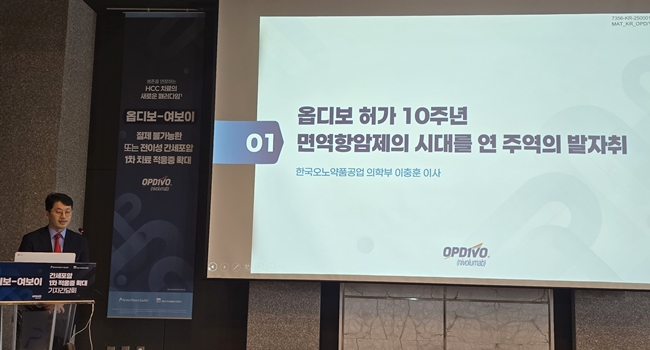
- Opdivo, celebrating its 10th anniversary of approval in South Korea, is expected to expand its influence by broadening the indication of its combination therapy with Yervoy to include first-line treatment for hepatocellular carcinoma (HCC). Experts assess that this will become a primary treatment option, given the unmet need in the existing first-line HCC treatment landscape, where tyrosine kinase inhibitors (TKIs) have been the standard of care for over 10 years. Although reimbursement remains a challenge, there is a view that it will become a new standard of care. Ono Pharma Korea and BMS Korea held a press conference on the 22nd of this month, highlighting the expanded indication of Opdivo (nivolumab) and Yervoy (ipilimumab) combination therapy for first-line HCC treatment. Opdivo is a PD-1 (programmed cell death-1) immune checkpoint inhibitor that reactivates the body's immune system to mount an anti-tumor immune response by inhibiting the PD-1 and PD-1 ligand pathways. Dr. Do Young Kim of the Department of Gastroenterology at Severance Hospital First introduced in Korea in 2015 as a second-line treatment for malignant melanoma, as of July 2025, it has secured 24 indications across a total of 11 cancer types. On July 10, the combination therapy of Opdivo and Yervoy received additional approval from the Ministry of Food and Drug Safety (MFDS) for the first-line treatment of unresectable or metastatic HCC. The CheckMate-9DW study, which served as the basis for the first-line approval of the Opdivo-Yervoy combination therapy for HCC, is receiving a positive evaluation for setting lenvatinib as a comparator drug. Dr. Do Young Kim of the Department of Gastroenterology at Severance Hospital explained, "Most treatments approved for first-line HCC treatment have used sorafenib as a comparator, but this study also set lenvatinib, which is a relatively newer treatment option, as a comparator." He added, "The significance lies in confirming the superiority of the Opdivo+Yervoy combination therapy under conditions more similar to the current clinical environment, as lenvatinib was administered to 85% of the overall comparator arm." The Opdivo+Yervoy combination therapy, based on the CheckMate-9DW study, demonstrated a median overall survival (OS) of 23.7 months, with a median follow-up period of 35.2 months. The comparator group had an OS of 20.5 months, showing that the Opdivo+Yervoy combination arm had a 21% lower risk of death than the comparator arm. The OS rates for the Opdivo+Yervoy combination therapy group at 2 and 3 years were 49% and 38%, respectively, surpassing the comparator group's 39% and 24%. Dr. Kim said, "The CheckMate-9DW study results showed that the improved overall survival benefit of the Opdivo+Yervoy combination therapy was maintained up to the 3-year mark compared to sorafenib and lenvatinib," and added, "This confirms its sustained efficacy as a dual immunotherapy." Dr. Kim also mentioned, "The Opdivo+Yervoy combination therapy showed approximately a threefold improvement in both response rate and complete response rate compared to the comparator group, and the median duration of response was 30.4 months. In other words, patients who respond to Opdiv+Yervoy combination therapy, long-term therapeutic effects of over 2.5 years can be expected." "Opdivo+Yervoy expected to address unmet needs in HCC" Dr. Chang-hoon Yoo, Professor of the Department of Medical Oncology at Asan Medical Center in Seoul, highlighted the possibility that the Opdivo+Yervoy combination therapy could become a new standard of care in HCC, where existing treatments have faced limitations. According to Dr. Yoo, liver cancer (disease code C22) had the second-highest mortality rate among major cancer types in Korea as of 2023, at 11.9%, following lung cancer (21.9%). In the same year, total deaths due to liver cancer amounted to 10,136. Dr. Chang-hoon Yoo, Professor of the Department of Medical Oncology at Asan Medical Center in SeoulDr. Yoo explained, "The 5-year survival rate for advanced HCC is reported to be less than 5%, and TKIs, which have been used as standard first-line treatment for over 10 years in the existing treatment environment, only showed a survival period of around one year." He added, "While immunotherapy-based combination therapies were introduced as new treatments for HCC in 2022, changing the treatment landscape, there was still a demand for additional alternatives in terms of survival duration, response rates, and side effects like variceal bleeding." Currently, Dr. Yoo's opinion is that the approval of Opdivo+Yervoy combination therapy for the HCC indication makes it the first treatment to consider for prescription. Dr. Yoo stated, "The CheckMate-9DW clinical trial results, which showed high response rates and the potential for long-term survival of approximately two years, demonstrated its potential to serve as a new standard of care in first-line HCC treatment in Korea." He added, "The treatment response of Opdivo+Yervoy combination therapy was consistent regardless of the patient's liver function, providing a basis for selecting it as a first-line option considering the patient's condition." He also assessed, "It can be primarily considered for patients whose main treatment goal is long-term survival." Notably, Dr. Yoo anticipated no concerns regarding safety, given that the Opdivo+Yervoy combination therapy has already accumulated sufficient clinical experience through the prior application system for several years. Dr. Yoo said, "The safety profile was similar to the existing profiles of each drug, and adverse events were mostly manageable," and added, "Opdivo and Yervoy have accumulated sufficient clinical experience in combination therapy for HCC through the prior application system for several years now." Dr. Yoo further added, "Immune-related adverse events can be safely managed through early detection and monitoring, and in actual clinical studies, cases where immune-related adverse events led to treatment discontinuation were rare. Concerns regarding adverse event management are expected to be minimal."
- Company
- The driving force behind Lundbeck's long-term innovation
- by Cha, Jihyun Jul 23, 2025 06:07am
- "Lundbeck is a publicly listed company, but 70% of its shares are held by the Lundbeck Foundation. This structure has provided a foundation for Lundbeck to focus on its core value without being swayed by short-term stock price fluctuations. The Lundbeck Foundation reinvests the dividend income it receives from the operating company (Lundbeck) in research and development in the fields of brain disorders and neuroscience." Lan Ding, Vice President of Corporate and Portfolio Strategy, spoke about the company’s governance system at Lundbeck's headquarters in Valby, Copenhagen, Denmark. Ding explained that the stable investment structure backed by the foundation acts as a catalyst for accelerating innovation through a virtuous cycle. Lan Ding, Vice President of Lundbeck Corporate and Portfolio Strategy Lundbeck is a pharmaceutical company that has focused exclusively on brain disease treatments since its establishment in 1915. It has built a pipeline covering the entire spectrum of central nervous system disorders, from mental illnesses such as schizophrenia and depression to neurological disorders such as migraine and epilepsy. As of the closing price on the 10th, the company's market capitalization stood at DKK 32.9 billion (approximately KRW 8 trillion), ranking among the top 20 companies on the Danish stock exchange. Ding holds a master's degree in supply chain management from Lancaster University in the UK and an EMBA from London Business School (LBS). She has worked in strategy and portfolio management at global pharmaceutical companies such as GlaxoSmithKline (GSK). She joined Lundbeck in January this year as vice president of corporate and portfolio strategy, and has been directing the company's mid- to long-term growth strategy. What has enabled Lundbeck to continue innovating for over 100 years? Ding cited four factors: ▲a focus on neuroscience, ▲continuous R&D investment, ▲open innovation, and ▲a foundation-owned governance structure. First, Ding emphasized the company's strategy of dedication and focus on CNS. “Our deep and unwavering focus on neuroscience is the foundation of Lundbeck's innovation,” said Ding. “Reinvesting more than 20% of our annual revenue in R&D based on scientific data and unmet medical needs is also a key factor.” Open innovation is another pillar supporting Lundbeck's innovation. Lundbeck is expanding its scientific scope and accelerating innovation by forming strategic partnerships with various stakeholders, including academia, biotech companies, and patient groups. Lundbeck is also actively pursuing mergers and acquisitions (M&A) to accelerate growth, not just technology adoption. A notable example is last year's acquisition of Longboard Pharmaceuticals for USD 2.6 billion, when the company secured a new drug candidate for epilepsy. The company’s foundation-based governance structure provides the grounds for the execution of such long-term strategies. “Since the Lundbeck Foundation holds approximately 70% of Lundbeck's shares, stable investment is possible from a long-term perspective,” said Ding, adding, “The Lundbeck Foundation itself is a major supporter of neuroscience research worldwide.” Currently, Lundbeck is focusing its resources on three core areas through a focused innovation strategy (Focused Innovator) to enhance capital allocation efficiency while pursuing sustainable and profitable growth in the long term. Ding explained, “Lundbeck is focusing on continuing development based on its long legacy in the field of mental illness, strengthening its position in the field of neurology, and expanding into the field of rare neurological diseases. We are concentrating on the acquisition of Longboard Pharmaceutical, the expansion of indications for Vyepti, and next-generation neurological drug programs such as PACAP inhibitors.” Lundbeck is also actively exploring external partnerships to enhance its global competitiveness in the rare disease field. Ding said, “Recently, we have been actively exploring external assets and technologies such as artificial intelligence (AI), neuroimmunology, and RNA-based technologies. When collaborating with external institutions, Lundbeck places importance on scientific excellence, alignment with our strategic focus areas, and the potential to deliver meaningful medical outcomes.” Lundbeck Asia, including South Korea, is also one of the regions that Lundbeck is focusing on. Lundbeck signed a contract with AprilBio in South Korea in October 2021 to introduce the technology for APB-A1, a candidate drug for autoimmune diseases, worth USD 448 million (approximately KRW 537 billion). The contract includes a non-refundable upfront payment of USD 16 million (approximately KRW 19 billion) and milestone payments of up to USD 430 million (approximately KRW 518 billion) based on the progress of development. Ding stated, “The agreement with AprilBio marks a strategic milestone for Lundbeck in accelerating its expansion into the neuroimmunology field. The program aligns well with Lundbeck's R&D strategy that focuses on biomarker-based, traceable development.” She added, “APB-A1 is a promising candidate with potential efficacy in various neuroimmunological diseases and is currently in Phase Ib clinical trials for thyroid eye disease.” Lundbeck's mission is to “advance brain health and transform lives.” Ding mentioned that the company always adheres to this management philosophy as the principle of all its strategies. Ding said, “Lundbeck is committed to scientific innovation that pushes the boundaries of neuroscience, with a patient-centered mindset at the core of all decision-making. We prioritize ethical and responsible research, placing the highest value on safety, transparency, and scientific integrity.” “Lundbeck is actively engaging with the outside world based on its philosophy of focusing on long-term impact rather than short-term results and working with various stakeholders to achieve greater progress. This principle is in line with Lundbeck's core values of passion, responsibility, and commitment to progress.”
- Company
- Samsung Medison aims to achieve 'competitive edge in tech'
- by Whang, byung-woo Jul 22, 2025 06:09am
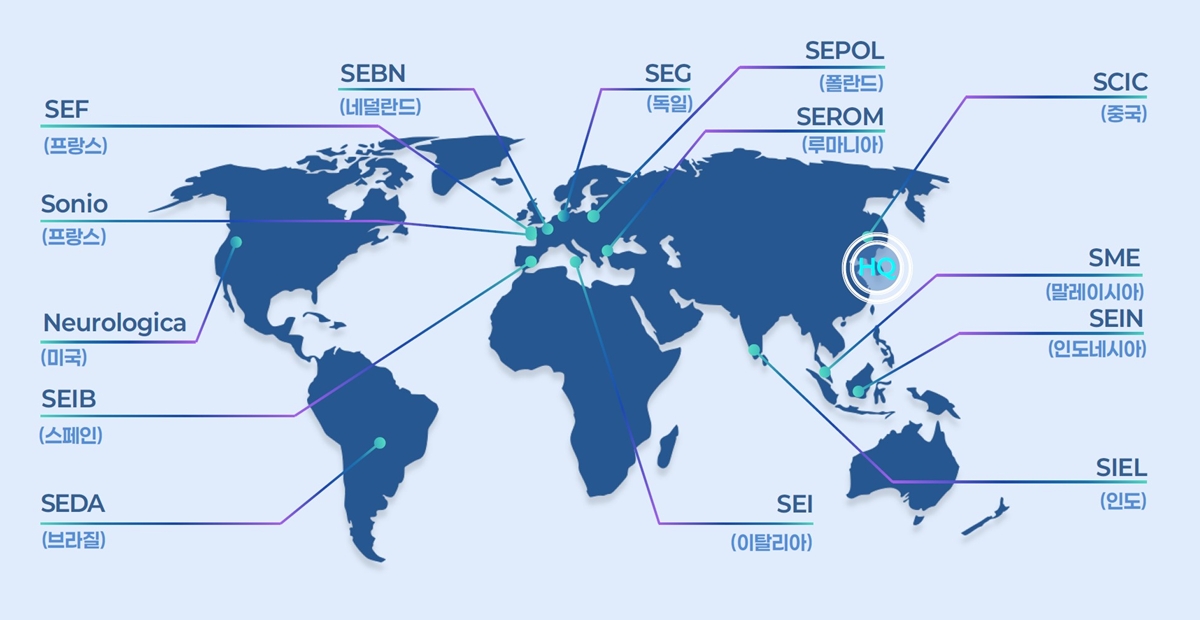
- Samsung Medison, a leading company in South Korea's medical device industry, is celebrating its 40th anniversary this year by investing heavily to become a top player in the diagnostic ultrasound equipment sector. Over the past 40 years, Samsung Medison has grown into a global medical device company, supplying diagnostic ultrasound equipment to over 100 countries worldwide and achieving more than 90% of its revenue through exports. Since Samsung Group acquired this company in 2011, Samsung Medison has consistently strengthened its product competitiveness through technology development, including improvements in imaging performance, the development of AI-powered diagnostic assistance features, and the implementation of user-centric designs. As a result, Samsung Medison showed over 14% growth in the first half of this year compared to the same period last year, and it is anticipated to record its all-time highest annual sales. Strong growth in the first half was driven by winning public tenders in multiple regions, including Europe, and expanding its presence in large hospitals across the U.S. Samsung Medison plans to take a leadership position in the diagnostic ultrasound equipment industry through comprehensive investments in future growth, including ▲Strengthening global sales capabilities ▲Securing next-generation technologies like AI ▲Expanding its portfolio and production capacity. To sustain its high growth in the second half of the year, Samsung Medison plans to recruit top talent, primarily in the U.S. and Europe, to enhance its direct sales capabilities. It will also subdivide and establish specialized sales organizations by medical division across different regions to boost its responsiveness to local markets. Additionally, the company aims to accelerate revenue growth by exploring new large markets, including Australia, Canada, and Mexico. Samsung Medison Global Sectors: France, Netherlands, Germany, Poland, Romania, China, Malaysia, Indonesia, India, Italy, Brazil, Spain, United States. The company also plans to focus on securing next-generation technologies, such as AI, which have recently become a hot topic, to ensure growth through maintaining a 'competitive edge in technology.' Currently, Samsung Medison is establishing an R&D system focused on AI capabilities and actively pursuing strategic partnerships with leading global medical institutions. It plans to expand the utilization of infrastructure, such as Samsung Electronics' overseas research institutes, and establish Innovation Labs and Next Generation Tech Labs locally. These efforts will drive the development of next-generation ultrasound technologies and diagnostic solutions while accelerating new market penetration. Furthermore, Samsung Medison will actively expand its portfolio beyond obstetrics and gynecology and radiology to include divisions such as cardiology·point-of-care diagnostics. The company aims to increase its global market share by strengthening its product lineup with AI features that automatically visualize·quantify the size of major organs and disease indicators in real time across various divisions, such as the heart, liver, and uterus. In line with increasing global demand, the company is also actively pursuing the expansion of its production facilities. The Hongcheon plant, currently undergoing expansion, will incorporate automation systems and smart processes, with plans to increase annual production capacity by over 50% by 2026. By 2030, when the expansion of the second plant is complete, the company aims to more than double its current production while also further enhancing quality. Kyu Tae Yoo, CEO of Samsung Medison, said, "Samsung Medison will continue to develop next-generation medical technologies to provide better diagnostic experiences for both medical professionals and patients." Yoo added, "We will combine the trust built with global medical professionals over the past 40 years with proactive investment to be reborn as a leading global diagnostic device company."
