
- LOGIN
- MemberShip
- 2026-04-26 18:32:21
- Company
- AI usage-profitability disconnect…"perspective shift needed
- by Hwang, byoung woo Sep 19, 2025 06:13am
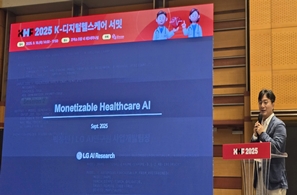
- Despite the increased use of Artificial Intelligence (AI) in the medical field, it is reportedly 'not profitable.' Some advised the need for new challenges to overcome systematic limitations. During the KHF2025 K-Digital Healthcare Summit on the 18th, Park Yong-min, a lead researcher at LG AI Research, suggested that for healthcare AI to be profitable, companies need to direct their business from hospitals to pharmaceutical companies and adopt new performance-based business models. Park Yong-min, a lead researcher at LG AI ResearchAccording to Park, three factors contribute to the reality that AI is 'not profitable' in healthcare: an oversaturated market, a structural limitation centered on on-premise systems, and AI's role as a supplemental tool detached from the core business. Park said, "The medical AI solution market has become so saturated, like a camera app market that anyone can easily jump into, that it's difficult to create a differentiated value." He pointed out that "With the rapid advancement and open-sourcing of AI technology in the last year or two, the difficulty of development has decreased, making it even harder to generate profits." Furthermore, Park explained that because hospitals, for safety reasons, insist on installing software on their own servers rather than in the cloud, the revenue for software companies is extremely low. For example, the software license accounts for only about 10% of the cost, while the remaining 90% covers ancillary expenses such as hardware installation and maintenance personnel, creating a structure where the software developer's share is minimal. Another barrier preventing the active use of this technology in the field is the lack of perceived intrinsic value in AI. While many medical AI companies sell their AI models, the argument is that because the products are treated as auxiliary tools separate from the core business, the value customers perceive is unclear. Park explained, "AI itself doesn't make money; the core business that embraces AI must be profitable." He added, "If medical AI is not linked to a hospital's core revenue, it becomes difficult for the decision-makers to justify spending money on it." 'Reimbursement and implementation delays' have been hurdles for medical AI…request prompted for a change in perspective Park also analyzed that structural obstacle in the industry are a significant factor in the lack of profitability for medical AI companies, citing a reimbursement system that does not translate technological advancements into increased revenue. "The system is structured so that AI created with technology from two years ago or the latest technology gets the same amount of money," Park stated. "Even innovative AI is facing difficulty in generating additional revenue." According to analysis by Park, the lack of incentives for technological advancement weakens companies' motivation to invest, resulting in a proliferation of similar technologies on the market. Park also pointed out that the process of adopting technology in hospitals is inefficient. To integrate an AI solution into a hospital's Electronic Health Record (EHR) system, it must undergo complex decision-making procedures, including review by each clinical department and the hospital's IT committee. "Assuming it takes about six months to adopt a specific solution, that's a long enough time for updated technology to emerge," Park said. "As a result, a technology gap can open up before both the medical professionals (the users) and the developers (the suppliers) can even feel the effects of the adoption." Related to this, the importance of shifting the business direction was emphasized. Park stated that AI's value would be recognized adequately if it were integrated into the value chain of pharmaceutical companies, which have larger budgets, rather than being limited to hospital services. For example, a health management app that collects a patient's daily data could be used as a tool to collect digital biomarkers for clinical trials or as a companion app for patient monitoring after a new drug is launched. Such usage would significantly increase its value and a pharmaceutical company's willingness to pay. "Even if it's the same technology, changing perspective from the current field to new drug development would open up a wider world," Park urged for a shift. Concluding his presentation, Park emphasized, "Medical AI must find a path to profitability." He pointed out that medical AI companies can only build sustainable businesses by adopting realistic strategic adjustments and fostering inter-industry collaboration, while acknowledging structural limitations.
- Company
- CKD-Novo Nordisk to jointly sell obesity drug 'Wegovy'
- by Kim, Jin-Gu Sep 19, 2025 06:13am
- Young-Joo Kim, CEO of Chong Kun Dang (left), and Kasper Roseeuw Poulsen, CEO of Novo Nordisk Korea (right), are signing a co-promotion agreement for Wegovy on September 18 at Chong Kun Dang Chong Kun Dang announced on September 18 that it has signed a domestic co-promotion agreement with Novo Nordisk Korea for the obesity drug Wegovy (semaglutide) at its headquarters in Chungjeongno, Seoul. Through this agreement, the two companies will jointly handle sales and marketing for Wegovy in hospitals and clinics across South Korea starting October 1. Wegovy is an injectable developed by Novo Nordisk with the active ingredient semaglutide. It is an obesity medication that aids in weight loss and reduces cardiovascular risk by suppressing appetite and increasing feelings of satiety. Launched in Korea in October 2024, it ranked first in domestic ethical drug sales for the second quarter of this year, according to IQVIA, a pharmaceutical market research firm. Wegovy is the only GLP-1 single receptor agonist (GLP-1 RA) and the only biologic among GLP-1 formulations. Wegovy shares 94% homology with the GLP-1 hormone produced in the human body. In the global pivotal trials, STEP 1 and STEP 5, Wegovy showed an average weight loss of 17%, with more than 20% weight loss confirmed in one-third of the subjects. Consistent weight loss effects and a strong safety profile were also demonstrated in the STEP 6, 7, and 11 clinical trials, which included Asian participants, including those from Korea. Wegovy is also the first and only obesity drug with an indication for reducing the risk of major adverse cardiovascular events (MACE). It has proven its ability to not only provide sustained weight loss but also to reduce the risk of major cardiovascular events independently of weight loss. A sub-analysis of the large-scale SELECT Phase 3 clinical trial, a cardiovascular outcomes trial (CVOT) in obese patients, showed a significant 37% reduction in the risk of major cardiovascular events within three months of administration (HR 0.63, 95% CI: 0.41-0.95). Within six months of administration, the risk of death from cardiovascular disease was reduced by 50% (HR 0.50, 95% CI: 0.26–0.93). In the heart failure patient cohort, the risk of hospitalization, urgent care, and cardiovascular disease-related death was reduced by 59% (HR 0.41, 95% CI: 0.24–0.67). Young-Joo Kim, CEO of Chong Kun Dang, said, "We have great expectations as we become a partner for Wegovy, a groundbreaking alternative in the obesity treatment field." Kim added, "Building on Chong Kun Dang's accumulated expertise from leading the hypertension, hyperlipidemia, and diabetes markets, accompanying disease of obesity, and our successful co-promotion experience with multinational and domestic companies, we will actively expand the domestic obesity treatment market." Kasper Roseeuw Poulsen, CEO of Novo Nordisk Korea, stated, "Through our collaboration with Chong Kun Dang, the company with a strong presence in the chronic disease sector in Korea, we will raise awareness of Wegovy's clinical benefits and actively support medical professionals in Korea, thereby contributing to improving the treatment environment for patients suffering from obesity."

- Company
- Will 'Bylvay' be listed in the second half the year?
- by Eo, Yun-Ho Sep 18, 2025 06:04am
- Attention has been drawn to whether Bylvay, the first drug in the Concurrent Approval-Evaluation-Negotiation Pilot Program, will be approved for the reimbursement listing. Ipsen Korea is currently in negotiations with the National Health Insurance Service (NHIS) over the drug price for Bylvay (odevixibat), a treatment for pruritus in patients aged 3 months and older with Progressive Familial Intrahepatic Cholestasis (PFIC). Bylvay recently passed the Health Insurance Review & Assessment Service's (HIRA) Drug Reimbursement Evaluation Committee (DREC) in July after a second review. It had previously been sent back for re-deliberation at the DREC in April. The government initiated the first phase of the Concurrent Approval-Evaluation-Negotiation Pilot Program in October of last year, selecting two drugs as its initial targets: 'Qarziba (dinutuximab),' a treatment for pediatric rare diseases, and Bylvay. The Concurrent Approval-Evaluation-Negotiation Pilot Program is a system designed to support swift insurance listing by conducting the Ministry of Food and Drug Safety (MFDS) approval, HIRA reimbursement evaluation, and NHIS drug price negotiation in parallel. However, questions were raised about the program's effectiveness in expediting drug listings when Bylvay initially failed to pass the first reimbursement hurdle. The review for Qarziba, the other drug in the first phase of the program, was also briefly halted at the DREC. Now that Bylvay has entered the final stage of negotiation, it remains to be seen if the Concurrent Approval-Evaluation-Negotiation Pilot Program can live up to its name by Bylvay's successful reimbursement listing. Meanwhile, the efficacy of Bylvay was proven in the Phase 3 ASSERT study, which was conducted on pediatric and adolescent patients up to 17 years of age. The study results showed that Bylvay met its primary endpoint by significantly reducing pruritus compared to the placebo. It also significantly improved the key secondary endpoints, including the mean serum bile acid concentrations at weeks 20 and 24 compared to placebo. These effects of Bylvay were sustained for up to 24 weeks of treatment.

- Company
- Rewriting the Medical Field with AI: KHF 2025
- by Hwang, byoung woo Sep 18, 2025 06:03am
- “Artificial intelligence (AI) technology is no longer just being applied to clinical settings; it is reshaping daily life.” Korea’s largest healthcare exhibition, the Korea-Hospital and Health Tech Fair (KHF2025), kicked off on the 17th at COEX in Seoul for three days. KHF2025 held its opening ceremony on the 17th and commenced its three-day schedule. Experts and stakeholders at the venue remarked that the medical field has now moved beyond simply adopting AI technology to actively exploring how best to utilize it. Now in its 12th year, the event highlighted the use of AI in hospitals and digital innovation across the sector. A wide range of players—from startups to public institutions—showcased their approaches to applying AI in healthcare, drawing significant attention. Right at the exhibition entrance, medical imaging company DK Medical Solution drew visitors’ attention with its equipment and technology that adopts medical AI. The company partnered with Google for the past 3 years, integrating Google Workspace collaboration tools and generative AI technologies into clinical workflows. DK Medical Solution showcased technology it developed in partnership with Google For example, AI agents can take care of hospital documentation and repetitive administrative tasks. A DK Medical Solution representative explained, “Previous AI adoption sometimes led to what we call ‘AI fatigue,’ placing burdens on medical staff. We found the solution through Google. In fact, hospitals that have implemented this system responded with comments like, ‘It’s much better than expected, beyond what we imagined.’” New AI technologies showcased by NIPA in the Digital Health Special Pavilion The National IT Industry Promotion Agency (NIPA), under the Ministry of Science and ICT, also participated in this exhibition, showcasing its digital health industry support strategies. NIPA has been overseeing medical AI projects for over a decade and responded swiftly to new developments—for instance, just three months after the emergence of ChatGPT last year, it began planning new projects in the healthcare field. The digital healthcare special hall organized by NIPA was structured around three themes: ▲Large-scale AI ▲DTx (digital therapeutics) ▲Public healthcare. Specifically, projects were unveiled for specialized counseling LLM services to manage chronic conditions in children and adolescents and to provide mental health care for depression and suicide prevention, as well as the development of digital therapeutics for conditions such as bruxism and irritable bowel syndrome. NIPA highlighted the companies and technologies it is supporting at its Digital Healthcare Special Pavilion. In particular, the AI-powered emergency medical network “Smart Ambulance” drew attention for its role in narrowing regional healthcare disparities. According to Myung-sook Yoon, a team leader at NIPA, the Smart Ambulance project was developed from 2019 to 2021 and is now in operation as an AI emergency system linking 119 ambulances with hospitals in real time in parts of Gangwon, Jeonnam, and Chungcheong (including Gwangyang and Yeosu) provinces. When a patient’s condition is recorded by voice in the ambulance, it is transcribed into text in real time and sent to the emergency room. The system also automatically displays bed availability at nearby hospitals using GPS, helping to reduce the so-called “ER ambulance carousel” problem. Yoon emphasized that the paradigm of medical AI is shifting. “In the past, domestic medical AI support was concentrated on diagnostic areas such as CDSS (Clinical Decision Support Systems) and medical imaging interpretation. Now, the focus is shifting toward pre-care (disease prevention) and post-care (prognosis management). For technology to take root in practice, it is crucial to enhance flexibility and usability at the level of the end user.” NIPA plans to continue supporting digital health policies through regulatory sandboxes and assisting regional hospitals in their digital transformation. AI is no longer novel - “We must consider what to use and how to use it” Industry stakeholders generally expressed positive expectations regarding the integration of medical AI, as observed through this event. At the same time, challenges remain. Hospital representatives visiting the booths remarked, “There are so many AI solutions that we don’t know which ones to actually use.” For this reason, experts at the fair predicted that the role of solutions would increasingly shift from merely developing AI suitable for clinical medicine to helping determine which AI systems to use. An industry official commented, “In clinical settings, the most common question is which AI solution to use among so many. Ultimately, finding the most optimized service will become critical. The consulting sector will also continue to expand, evolving into more customized services.” Many companies participating in KHF2025 prominently featured AI technology in their promotional activities. For instance, cost-related issues such as insurance reimbursement remain significant hurdles to adopting AI in healthcare. Experts were in consensus that institutional support is essential to ensure that the benefits of AI technology permeate every corner of the healthcare field. The experts particularly emphasized pan-ministerial cooperation. The Ministry of Health and Welfare should establish reimbursement policies grounded in safety and efficacy, while the Ministry of Science and ICT supports initial adoption through pilot projects and infrastructure development—a two-track approach. If regulators adopt a more flexible mindset and actively incorporate feedback from medical practitioners, the medical AI integration efforts highlighted at KHF2025 may well take root soon in more hospitals, pharmacies, and other care settings in Korea.
- Company
- Alteogen secures EU authorization for Eylea biosimilar
- by Cha, Jihyun Sep 18, 2025 06:03am
- [Bio platform company Alteogen (CEO Soon-jae Park) announced on the 17th that it has obtained marketing authorization from the European Commission (EC) for ‘Eyluxvi (project name ALT-L9),’ an Eylea biosimilar it had jointly developed with Alteogen Biologics. Eyluxvi is Alteogen’s second biosimilar product to receive approval, following its Herceptin biosimilar. The final authorization was granted about two months after the Committee for Medicinal Products for Human Use (CHMP) of the European Medicines Agency (EMA) issued a positive opinion in July. Eylea is a widely used treatment for ophthalmic diseases such as wet age-related macular degeneration (wAMD) and diabetic macular edema (DME). In 2024, it generated blockbuster sales of USD 9.5 billion (approximately KRW 13 trillion). With the authorization, Eyluxvi can now be prescribed in Europe for approved indications, including wAMD, DME, macular edema secondary to retinal vein occlusion (BRVO/CRVO), and myopic choroidal neovascularization (myopic CNV). Alteogen CEO Soonjae Park said, “Eyluxvi is Alteogen's first biosimilar product, developed through our proprietary research to derive the substance, followed by global clinical development completed with our subsidiary Alteogen Biologics, and ultimately approved independently. Through this process, we not only advanced R&D but also gained valuable experience with European regulators and the approval process, thereby expanding Alteogen’s capabilities.”

- Company
- Samjin Pharm and Sanofi collide in the influenza vaccine mkt
- by Hwang, byoung woo Sep 17, 2025 06:12am
- With the influenza (flu) vaccination season approaching, competition in the vaccine market for adults aged 65 and over is anticipated. The government has switched the National Immunization Program (NIP) vaccine to a three-valent vaccine and lowered the procurement price. The introduction of the four-valent vaccine in the non-reimbursed medicine market is likely to be a variable. (from left) product photo of Fluad Quad and Efluelda According to the Korea Disease Control and Prevention Agency (KDCA), the 2025-2026 seasonal influenza National Immunization Program (NIP) will begin on the 22nd of this month and run until April of next year. Free vaccinations will be provided to high-risk groups, including children aged 6 months to 13 years (born between January 1, 2012, and August 31, 2025), pregnant women, and individuals aged 65 and over (born before January 1, 1956). Considering that influenza vaccinations typically begin with the NIP, the competition between Samjin Pharm-CSL Seqirus and Sanofi is expected to heat up from October. Samjin Pharm-CSL Seqirus and Sanofi are aiming to expand their market influence by promoting an adjuvanted vaccine and a high-dose vaccine, respectively. First, Samjin Pharma, in cooperation with CSL Seqirus, is scheduled to supply 'Fluad Quad,' an adjuvanted vaccine for elderly individuals, and 'Flucelvax Quad,' the cell-based flu vaccine. Samjin Pharma offers a specialized line of prescription drugs for treating chronic diseases and product lines related to pediatrics, such as Trestan. The company anticipates synergy with its existing sales capabilities. A Samjin Pharma official said, "The company has long strived to provide good treatments for chronic disease patients, who are a high-risk group for influenza," and added, "As our product portfolio is focused on chronic disease treatments, we intend to ensure that Fluad Quad, an adjuvanted influenza vaccine, can be administered to the chronic disease patients we have been focusing on." Sanofi is expected to pursue a continuous market strategy, building on its efforts from last year. Sanofi has already been prepared for inclusion of its product in the NIP, including the publication of a cost-effectiveness analysis in the international journal 'Human Vaccines & Immunotherapeutics' in November 2023, which compares its high-dose vaccine with a standard-dose vaccine using national health insurance big data. A Sanofi official emphasized, "Efluelda is the only product among the high immunogenicity flu vaccines recommended by the Korean Society of Infectious Diseases that has proven preventive efficacy in a randomized clinical trial," and added, "Efluelda will contribute to reducing the socioeconomic burden caused by influenza and pneumonia in adults aged 65 and over." The premium vaccine market for adults aged 65 and over has been increasing. One of the variables is the shift of the NIP vaccine to a three-valent formulation. Previously, a four-valent vaccine containing antigens for four types of viruses, including influenza A virus (H1N1 and H3N2) and influenza B virus (Victoria and Yamagata), was used in the NIP. However, based on the World Health Organization's (WHO) recommendation earlier this year, this season's vaccine will be a three-valent vaccine that excludes the influenza B/Yamagata virus antigen. Consequently, the procurement price has been lowered compared to the previous four-valent vaccine, and the four-valent vaccine that was previously administered will now be a non-reimbursed vaccine. It means that the adjuvanted vaccine and high-dose vaccine, which previously competed with the NIP-included four-valent vaccine, will now have to compete for market share with both the NIP-included three-valent vaccine and the (non-reimbursed) four-valent vaccine. Both the adjuvanted vaccine and the high-dose vaccine claim to offer higher preventive efficacy in elderly individuals than the conventional influenza vaccine, but a price barrier could be an issue. However, a prediction also exists that, in the long run, as both vaccines aim to enter the NIP, they will focus on expanding the market for vaccines specifically designed for elderly individuals, rather than just competing with each other. In a previous press conference, Professor Choi Min-joo of the Department of Infectious Diseases at Korea University Guro Hospital said, "Research results indicate that the switch from a standard influenza vaccine to an adjuvanted vaccine is a rational choice not only in terms of medical benefits but also from an economic perspective," and added, "These results suggest that an adjuvanted vaccine like Fluad could be a worthy subject for policy consideration in future discussions for selecting NIP vaccines for the elderly." An individual from the vaccine industry said, "The promotions by Samjin Pharma-CSL Seqirus and Sanofi will likely involve considering various factors beyond simple market share competition, including their products' potential inclusion in the NIP and vaccination patterns." They added, "Since both companies are already emphasizing not only their vaccination efficacy but also their cost-effectiveness through research, We believe they will consider growing the overall market pie."
- Company
- Jemperli nears final hurdle for reimb in endometrial cancer
- by Eo, Yun-Ho Sep 17, 2025 06:11am
- The immunotherapy Jemperli is on the verge of securing expanded reimbursement coverage for endometrial cancer in Korea. According to industry sources, GSK Korea has recently finalized drug price negotiations with the National Health Insurance Service (NHIS) for the PD-1 inhibitor Jemperli (dostarlimab). The only step remaining is review by the Health Insurance Policy Deliberation Committee. Specifically, the indication for reimbursement is extended to the treatment of newly diagnosed recurrent or advanced high microsatellite instability (MSI-H)/mismatch repair-deficient (dMMR) endometrial cancer. Currently, the first-line standard of care for endometrial cancer is platinum-based chemotherapy combining paclitaxel and carboplatin. However, one in four patients relapses or progresses after this therapy. With the number of recurrent/advanced cases increasing but effective options lacking, the 5-year survival rate remains under 20%. Jemperli was first listed for reimbursement in December 2023 as a second-line treatment for recurrent/advanced (FIGO stage IIIB and above) endometrial cancer that had progressed during or after platinum-based chemotherapy. Since then, efforts have been made to add a first-line indication and expand reimbursement. The drug’s efficacy in the first-line setting was confirmed through the Phase III RUBY trial. The RUBY trial enrolled 494 patients with advanced or recurrent endometrial cancer, comparing Jemperli plus platinum-based chemotherapy (carboplatin + paclitaxel) against placebo plus chemotherapy. Designed with more than 3 years of treatment follow-up—given that the average survival under standard platinum therapy is less than 3 years—the primary endpoints were progression-free survival (PFS) and overall survival (OS) per RECIST (Response Evaluation Criteria in Solid Tumors). Results showed that the Jemperli combination reduced the risk of death by 31% versus the control group across the overall advanced/recurrent patient population. Over a median follow-up of 37 months, the median OS in the Jemperli arm was 44.6 months, compared to 28.2 months in the control arm, extending survival by 16.4 months and lowering the risk of death by 31%. Jae Kwan Lee from the Department of Obstetrics & Gynecology at Korea University Guro Hospital, said, “Endometrial cancer carries a high risk of recurrence even after initial treatment, so effective first-line options are crucial. The RUBY trial is recognized as a landmark study that demonstrated the long-term efficacy of immunotherapy in this setting.” He added, “Jemperli in combination with platinum chemotherapy is the only immunotherapy available in Korea to show an OS benefit in endometrial cancer. Importantly, the trial included high-risk groups, such as patients relapsing more than 6 months after chemotherapy and those with carcinosarcoma, yet still demonstrated significant clinical value.”
- Company
- Vivozon "Joint sales of Unafra with Daiichi Sankyo"
- by Kim, Jin-Gu Sep 17, 2025 06:10am
- Vivozon has chosen Daiichi Sankyo Korea as its co-promotion partner for Unafra Inj (opiranserin). The pharmaceutical industry points to two key reasons for this partnership: a synergy in sales and marketing for postoperative patient care, and the potential for Daiichi Sankyo Korea to play a positive role in Unafra's global market entry. Joint sales promotion of Unafra Inj: synergy between product·sales expected in 'postoperative patient care.' On September 16, Vivozon announced that it had signed a co-promotion and sales agreement with Daiichi Sankyo Korea for the distribution, marketing, and sales of Unafra in Korea. Under the terms of the agreement, Vivozon will supply the finished product, and the two companies will share the responsibilities of distribution, sales, and marketing. Vivozon announces signing a co-promotion and sales agreement with Daiichi Sankyo Korea for its Unafra. Unafra received the marketing authorization as the 38th new Korean drug in December of last year. Around the time of the product's approval, Vivozon began searching for a co-promotion partner. For Vivozon, securing a domestic sales partner was crucial. Its existing sales team of about 30 people handled promotion and sales for regional hub hospitals, but this was insufficient for a stable landing of the new drug. To effectively sell Unafra, which is approved for postoperative pain management, a sales team specializing in large hospitals was needed. Consequently, the company focused on securing a partner while also expanding its own sales force. It is reported that several other pharmaceutical and biotech companies showed interest, but Vivozon ultimately chose Astellas Pharma Korea. A Vivozon official stated, "With the Unafra's approval set, we added about 10 sales representatives dedicated to the product. With this partnership, we will now begin full-scale sales of Unafra," and added, "Daiichi Sankyo Korea will be responsible for sales and marketing at general hospitals with over 300 beds, while both companies will jointly handle sales and marketing for hospitals and clinics with fewer than 300 beds." Daiichi Sankyo Korea's product portfolio, which targets postoperative patients, is also considered a background to the partnership. Daiichi Sankyo Korea holds 'Nasea (ramosetron),' a preventive medication for nausea and vomiting, and 'Taleaje (mirogabalin),' a treatment for neuropathic pain. Both products are primarily used for pre- and postoperative patient management, creating a potential synergy with Unafra, which targets postoperative pain management. The global pharma Daiichi Sankyo Korea's support is expected for global expansion From the development stage, Vivozon set its goal on the global market for Unafra. The decision to choose Daiichi Sankyo Korea as a partner is interpreted as a move that extends beyond mere domestic sales and marketing collaboration, with the company also seeking practical and strategic support for its global expansion. Vivozon has established a two-track global entry strategy. For the U.S., Europe, and China, the goal is to enter the market through technology transfer. The company plans to out-license the drug to companies with local clinical and new drug approval experience. In the U.S. market, the largest, a local Phase 3 clinical trial for the injectable formulation is underway, and U.S. Food and Drug Administration (FDA) product approval remains a key hurdle. For Southeast Asia, the Middle East, North Africa, Latin America, and Russia/Eurasia, the company's policy is to secure regional export partners. It is reported that specific discussions are underway with several companies. During this full-scale global expansion, Daiichi Sankyo Korea's expertise in global clinical trials, approvals, and supply chain management can enhance the company's business credibility in negotiations for technology transfer to the U.S. and Europe, local clinical trial design and operation, and large-scale production and supply planning. Daiichi Sankyo Korea also has a global network, regional subsidiaries, and distribution channels, which could be instrumental in connecting with local partners and verifying distribution networks. It is expected that the company's network will play a crucial role in facilitating communication with local pharmaceutical companies and distributors when searching for regional export partners in areas such as Southeast Asia, the Middle East, and Latin America. A Vivozon official stated, "We expect this partnership with Daiichi Sankyo Korea, a global pharmaceutical company, to have a positive impact on Unafra's overseas expansion."

- Company
- Did companies pre-stock inventories in the U.S.?
- by Kim, Jin-Gu Sep 17, 2025 06:10am
- The surge in Korean pharmaceutical exports to the United States—driven by concerns over possible tariffs—returned to normal levels within 2 months. Industry observers suggest that companies may have frontloaded shipments to secure inventories in the U.S. market. While exports have declined, some note that since tariff risks remain unresolved, shipments to the U.S. could spike again at any time. August U.S. exports total USD 95.43 million…79% drop in just 2 months According to Korea Customs Service data released on the 16th, exports of Korean pharmaceuticals to the US in August reached USD 95.43 million (approx. KRW 130 billion). This represents a 4% increase compared to August 2024 (USD 91.75 million). This trend sharply contrasts with the previous 3 months, during which exports surged. Monthly pharmaceutical exports to the US in the past 2 years In May, exports rose 35% year-on-year to USD 184.35 million (KRW 260 billion). In June, exports hit a record USD 458.38 million, nearly equal to the previous 4 months combined. In July, exports more than doubled year-on-year (+120%), reaching USD 136.21 million. However, by August, exports increased only 4% year-on-year, effectively returning to typical levels. Compared with June, exports fell 79%, shrinking to one-fifth in just 2 months. The share of US exports in Korea’s overall pharmaceutical exports also fell—from 49% in June to 15% in August, returning to a level similar to the 2024 annual average of 18%. Did companies sufficiently secure local inventory...levels return to previous years' levels Analysts attribute the decline to companies having already secured sufficient inventories in the U.S. in response to tariff risks. Amid fears of potential US tariffs on pharmaceuticals, Korean companies boosted shipments to build local stockpiles. Once inventories were secured, exports normalized in August. In April, US President Donald Trump announced reciprocal tariffs globally, though pharmaceuticals were initially exempt. On July 30, the US and EU agreed to impose a 15% tariff on pharmaceuticals. However, tariff rates on Korean medicines remain undecided. With risks ongoing, Korean pharmaceutical and biotech firms have taken proactive measures. For example, Celltrion reportedly secured a 2-year supply of inventory in the US and is investing KRW 700 billion to acquire a local biopharmaceutical manufacturing facility. Companies with significant U.S. export shares, including Celltrion, are known to have employed similar strategies. As inventory levels in the U.S. were sufficiently secured during this process, it is suggested that export volumes likely returned to normal levels in August. However, some observers note that since tariff risks have not been fully resolved, pharmaceutical exports to the U.S. could increase again after September. A pharmaceutical industry insider stated, “The large volume exported in June and July may have accumulated as inventory within the U.S. Consequently, the need for additional procurement decreased in August, and export performance may have been adjusted. However, as the tariff risk has not yet been fully resolved, exports of domestic pharmaceuticals to the U.S. could fluctuate again around the time of the U.S. government's official announcement.”
- Company
- "PSA test determines prostate cancer survival rate"
- by Son, Hyung Min Sep 17, 2025 06:09am
- There is a growing need to introduce prostate-specific antigen (PSA) test for the early diagnosis of prostate cancer. On September 16, the Korean Urological Oncology Society held a press conference at the Press Center, highlighting current updates on prostate cancer and emphasizing the importance of early diagnosis through PSA testing. Professor Byong Chang Jeong, President of the Korean Urological Oncology Society (Samsung Medical CenterAccording to the National Cancer Registration Program's announcement last year, there were 20,754 new prostate cancer patients in 2022, accounting for 7.4% of all cancer cases. In particular, the incidence of prostate cancer in individuals aged 65 and over reached 416.1 per 100,000 people, and this burden is expected to grow as Korea approaches a super-aged society. Professor Byong Chang Jeong, President of the Korean Urological Oncology Society (Samsung Medical Center's Department of Urology), said, "The Society has designated the third week of September as 'Prostate Cancer Awareness Week' and has been conducting various campaigns to spread correct awareness of prostate cancer and establish early screening as a part of daily life." Professor Jeong stressed, "We are raising awareness about the importance of early diagnosis, such as with PSA testing." A variety of treatments for prostate cancer have been introduced, leading to improvements in patient survival rates. Androgen receptor inhibitors, such as Janssen's Zytiga, Erleada, and Akeega, Astellas' Xtandi, and Bayer's Nubeqa, are being used. Recently, radiopharmaceuticals have also emerged. Novartis' Pluvicto received domestic approval in Korea last May and is now available for the treatment of adult patients with prostate-specific membrane antigen (PSMA)-positive metastatic castration-resistant prostate cancer who have previously received an androgen receptor pathway inhibitor and a taxane-based chemotherapy. PSMA is a proteolytic enzyme synthesized in the epithelial cells of the prostate. Its expression is typically high in high-grade, metastatic, and castration-resistant prostate cancer. Compounds that combine a ligand binding to PSMA with a radioisotope that emits relatively low energy (Gallium-68) are used for PET/CT diagnosis. In contrast, compounds combined with a high-energy emitting radioisotope (Lutetium-177) can be used as a treatment. Additionally, several Korean biopharmaceutical companies, including FutureChem and Celltrion, are also developing radiopharmaceuticals for prostate cancer. Professor Park Sung-woo, Vice President of the Korean Urological Oncology Society (Pusan National University Yangsan HospitalProfessor Park Sung-woo, Vice President of the Korean Urological Oncology Society (Pusan National University Yangsan Hospital's Department of Urology), assessed, "When prostate cancer is detected early, the treatment outcomes are so good that it is often curable. However, if it metastasizes, the treatment outcomes rapidly worsen." He stated, "Early diagnosis is a key variable that determines a patient's survival rate and quality of life." Park added, "Various treatments have been included in the reimbursement list, contributing to improved survival rates. However, the speed of listing is slow compared to the pace of new drug launches. If new drugs that emerge in the future are quickly covered by reimbursement, it will help improve the survival rates of prostate cancer patients." PSA testing plays critical role in the early diagnosis of prostate cancer Prostate cancer, like other cancer types, often has few early symptoms, making it difficult for patients to be aware of the disease and leading to delayed diagnoses. Because of this, PSA testing plays a critical role in the early diagnosis of prostate cancer. PSA is a protein produced by the prostate, and its levels increase when cancer cells multiply. The PSA test, a simple blood test, has a low patient burden and high accessibility. If included in regular health check-ups, it could significantly enhance the effectiveness of prostate cancer management. Professor Young Hwii Ko, Editor-in-Chief of the Korean Urological Oncology Society (Ewha Womans University Medical CenterBased on PSA levels, Gleason score, and stage, prostate cancer is classified into risk groups: ▲low-risk (PSA ≤10, Gleason score ≤6, stage T1-T2a) ▲intermediate-risk (PSA >10 to ≤20, Gleason score 7, stage T2b) ▲high-risk (PSA >20, Gleason score 8-10, stage T2c or higher). Since the treatment strategy varies depending on the stage, PSA testing has the advantage of quickly identifying which risk group a patient belongs to, going beyond just early diagnosis. Professor Young Hwii Ko, Editor-in-Chief of the Korean Urological Oncology Society (Ewha Womans University Medical Center's Department of Urology), said, "The treatment outcomes and survival rates for prostate cancer are dramatically different depending on whether it's diagnosed early." He added, "The PSA test is both simple and highly accurate. If the PSA test were included in the NIP, it could help increase patient survival rates and reduce socioeconomic costs."
