
- LOGIN
- MemberShip
- 2026-05-11 16:20:58
- Company
- Antengen Korea's blood cancer treatment Xpovio is approved
- by Eo, Yun-Ho Aug 09, 2021 06:02am
- The Chinese pharmaceutical company Antengene’s blood cancer drug ‘Xpovio’ has entered the domestic market. According to industry sources, Antengene Korea’s first-in-class XPO1 inhibitor Xpovio (Selinexor) was approved by the Ministry of Food and Drug Safety (MFDS) on the 29th of last month. The drug had been previously designated an Orphan Drug in Korea through a priority review process. Xpovio is a first-in-class drug that selectively inhibits the XPO1 nuclear export protein that was approved ▲ in combination with dexamethasone for the treatment of adult patients with relapsed or refractory multiple myeloma (rrMM) who have received at least 4 prior therapies and whose disease is refractory to at least 2 proteasome inhibitors, at least 2 immunomodulatory agents, and 1 anti-CD38 monoclonal antibody; and ▲ as a monotherapy for the treatment of adult patients with relapsed/refractory diffuse large B-cell lymphoma (rrDLBCL) who have received at least 2 prior lines of treatment. XPO1 inhibitors are expected to be used in combination with other various therapies (drugs) to improve treatment outcomes in various diseases. Currently, 5 therapies that contain Xpovio are recommended under the National Comprehensive Cancer Network (NCCN®) Guidelines. Most patients with MM eventually suffer from relapse or become refractory diseases. For Diffuse large B-cell lymphoma (DLBCL) patients that failed systemic therapy, their prognosis and the chance of cure or long-term disease-free survival declines every time the condition worsens after treatment. Therefore, a dire need had existed for safer and more effective therapies to treat rrMM and rrDLBCL. Minyoung Kim, General Manager of Antengene Korea said, “I am confident that this oral selective inhibitor of nuclear export protein will improve the quality of life of patients with rrMM and rrDLBCL in South Korea, and bring renewed hope to this patient population.” Xpovio’s approval was based on the two Phase II studies - STORM and SADAL. In the STORM study, Xpovio achieved a 26% Overall response rate (ORR) and a clinical benefit rate (CBR) of 39.9% in combination with dexamethasone for the treatment of adult patients with relapsed or refractory multiple myeloma (RRMM) who have received at least four prior therapies. In the SADAL study that was conducted on relapsed DLBCL patients who have received two or more prior therapies, Xpovio monotherapy demonstrated an overall response rate (ORR) of 28.3% and a complete response (CR) rate of 11.8%.
- Company
- Sales of 'Stillen' have declined in two years
- by Chon, Seung-Hyun Aug 08, 2021 06:50pm
- Sales of gastritis treatments containing Artemisia Herb as an active ingredient have decreased. Sales had increased due to reflective profits from withdrawal of Ranitidine, but fell in two years. It is analyzed that Artemisia Herb's sales have decreased as the prescription market has shrunk due to the prolonged COVID-19 outbreak and PPI drugs have replaced Ranitidine. According to UBIST, a pharmaceutical research agency on the 5th, the amount of outpatient prescriptions for gastritis treatments including Artemisia Herb in the first half of last year fell 9.3% year-on-year to ₩59 billion. It fell 9.7% from ₩65.3 billion in the second half of last year. Artemisia Herb is a natural drug containig mugwort. Dong-A ST's Stillen is the original. It is the first time in two years that the Artemisia Herb gastritis treatment market has shown a decline since the first half of 2019. Sales of Artemisia Herb rose at the end of September 2019 with the impurity crisis of Ranitidine. The prescription amount of Artemisia Herb in the second half of 2019 was ₩54.9 billion, up 30.6% from a year earlier. Artemisia Herb was not the same as Ranitidine, which is used in gastric acid, heartburn, gastric ulcers, and reflux esophagitis, but it is analyzed that it was actively prescribed. The size of Artemisia Herb's outpatient prescription market in 2019 when Ranitidine was expelled increased 17.4% from the previous year to ₩87.5 billion. The Artemisia Herb market fell every year from ₩105.5 billion in 2014 to ₩74.5 billion in 2018, but it rebounded for the first time in a while. The prescription amount of Artemisia Herb in the first half of last year was ₩65.1 billion, up 53.7% from the first half of 2019 before Ranitidine was expelled. Prescriptions for the second half of last year rose 19.1% year-on-year to ₩65.4 billion. However, sales have declined since this year. Prescription amount of PPI drugs in the first half of this year was ₩323.6 billion, up 7.3% from the previous year. Compared to a 23.4% year-on-year increase in prescriptions in the first half of last year, the rise was slightly slower. The prescription amount of H2 receptor antagonist in the first half of the year was ₩68.6 billion, up 8.7% from a year earlier. Two years after Ranitidine crisis broke out, sales of Artemisia Herb decreased, unlike PPI and H2 receptor antagonists. Major Artemisia Herb drugs also saw their prescription performance drop. The amount of prescription for Dong-A ST's Stillen 2X in the first half of the year fell 15.3% year-on-year to ₩6.2 billion. Artemisia Herb gastritis treatments has 60 mg and 90 mg. Stillen TwoX is Artemisia Herb 90mg. Daewon's Otillen F prescription amount fell 8.6% year-on-year to ₩5 billion in the first half of last year, while Jeil's Nexillen S recorded ₩3.7 billion, down 22.8% from the first half of last year.
- Company
- Celltrion's developing next-generation mRNA vaccine platform
- by Lee, Seok-Jun Aug 08, 2021 06:49pm
- Celltrion has started developing next-generation mRNA vaccine platform with TriLink Biotechnology in the U.S. According to the company on the 4th, TriLink is a contract development and manufacturing organization (CDMO) based on the mRNA platform located in San Diego, U.S. It has its own Vactor and Gen3 CleanCap, which are essential for the development of mRNA vaccines, and has the ability to provide technology transfer along with clinical materials. TriLink plans to produce and supply substances that can proceed with Phase 1 and Phase 2 clinical trials to Celltrion by utilizing its own capping technology along with verification of antigen sequences. It also provides Celltrion with a GMP production scale-capable mould vector and mRNA process technology. Celltrion is expected to develop next-generation vaccines independently that have preventive effects against various mutated viruses, including COVID, and at the same time accelerate the development of mRNA platforms using its own patented technology. Celltrion is focusing on developing the next generation COVID vaccine using various mutated virus antigens, rather than developing and commercializing vaccines using the existing COVID antigens. It is planning to produce large-scale clinical phase 3 substances by establishing mRNA process facilities along with development of vectors that avoided patents. Through the development of the mRNA platform, it is planning to expand its technical scope beyond COVID to other diseases such as anticancer.
- Company
- Pfizer seeks generation change in the ALK market
- by Aug 08, 2021 06:48pm
- ALK target treatment Xalkori and Pfizer’s LorviquaPfizer, which developed the first ALK-targeted treatment, has released a third-generation new product. A new option has emerged in the ALK targeted treatment market, where subsequent drugs were not appropriate. Third-generation drugs are also expected to compete with second-generation products as a primary treatment. Pfizer was approved by the MFDS on the 29th of last month to treat ALK-positive non-small cell lung cancer. Lorviqua can be used at least once to treat patients who have been treated with conventional first-generation or second-generation treatments. The third-generation drug, Lorviqua, can be an alternative to the treatment of patients with resistance after the first-generation drugs Xalkori and the second-generation drugs Zykadia, Alecensa and Alunbrig. If Xalkori is used in the first generation, it can be used in the second generation and then in the second generation, it can be used in the second generation, and chemotherapy had to be used if secondary drugs developed resistance. G1202R is the most common type of resistant mutation that occurs after the second generation medication, and depending on the drug, F1174L (Zykadia), I1171T/N/S (Alecensa), and E1210K (Alunbrig). Lorlatinib is known to have an effect on all known resistant mutations. In the second phase of 275 previously treated patients, including the second generation ALK TKI, Lorviqua showed 47% ORR and 63% ORR in patients with brain metastasis. Lorviqua quickly became effective after taking. The time median to the first response and the time median to the first two in-reactions were 1.4 months, respectively. In the sub-analysis classified by second-generation drugs, Lorviqua maintained a consistently significant effect.The objective response rates in Alecensa, Alunbrig and Zykadia groups were 40.3%, 37.5%, and 40.4%, respectively. Attention is focusing on whether Pfizer, which has weakened its position in the ALK TKI market due to the advent of second-generation drugs, will succeed as third-generation Lorviqua. Pfizer has developed the first ALK targeted treatment called Xalkori, but sales continue to decline as second-generation drugs enter the primary treatment option. Xalkori, which had more than ₩10 billion in sales in the quarter of 2018 based on IQVIA, started to see a sharp drop in sales in 2019 due to the expansion of benefit for the second generation Alecensa and the termination of the risk-sharing contract. Annual sales fell 59% from ₩49.6 billion in 2018 to ₩20.3 billion in 2019. Last year, it also dropped 28% year-on-year to ₩14.6 billion. A three-phase CROWN study identified the primary treatment effect of Lorviqua. In this clinical trial, Lorviqua showed an improved OR (73% vs. 58%). It also reduced the risk of disease progression and death compared to Xalkori by 72%. The U.S. Food and Drug Administration (FDA) added an indication in March to use Lorviqua as a primary drug. It is expected that it will soon obtain additional indications in Europe. It is also expected that Lorviqua will expand its adaptation in Korea. However, competition between second-generation drugs is expected to continue for the time being because many steps have to be passed before applying domestic benefits.
- Company
- Generic share in the Tamsulosin market has surpassed 60%
- by Kim, Jin-Gu Aug 05, 2021 08:46pm
- Harnal-DIn the Tamsulosin prostate hypertrophy treatment market worth ₩170 billion per year, Rx amount of generics increased by 10% compared to last year. During the same period, the original decreased by 10%, with generic accounting for more than 60% of the total market. According to UBIST, a pharmaceutical market research institute on the 2nd, the market size of Tamsulosin for prostate hypertrophy in the first half of last year is ₩83.7 billion. Compared to ₩82.6 billion in the first half of last year, it increased by 1%. Considering that prescriptions for prostate hypertrophy treatments are usually concentrated in the third and fourth quarters, it is expected to expand to more than ₩170 billion by the end of this year. Original Rx performance is decreasing, and generic performance is gradually increasing. The original Hannal-D by Astellas recorded ₩33 billion in prescription in the first half of this year. Compared to ₩36.6 billion in the first half of last year, it decreased by 10%. Generics increased 10% from ₩46 billion to ₩50.7 billion during the same period. Its market share is 61%. It surpassed 50% for the first time in the second half of 2019, and exceeded 60% in a year and a half. Since the expiration of the original patent in 2015, generic has joined the market in earnest. Currently, 107 companies are licensed for generics. Among them, 86 companies are competing in the market. Among generic companies, Hanmi posted ₩13.6 billion in prescription records in the first half alone with Hanmi Tams and Hanmi Tams OD. Analysts say that the release of Hanmi Tams 0.4mg and Hanmi Toms OD, which are high-capacity products in line with market demand, was significant. Genuine Science, DongKoo, Kyung Dong, and Celltrion posted more than ₩2 billion in prescriptions in the first half of the year. A variable in this market is combination formulations. Recently, pharmaceutical industries are developing a variety of combination formulations centered on Tamsulosin. GSK's Duodart was approved in May, a compound that combines Tamsulosin with another ingredient in the treatment of prostate hypertrophy. This compound is the first licensed drug in Korea. Given that there is a combination of two components in the prostate hypertrophy treatment market, attention is being paid to whether a compound including two components will reorganize the market composition. Development of a compound targeted at both prostate hypertrophy and irritable bladder is also in full swing. Ildong and Jeil are the hypersensitivity bladder therapy ingredients for Tamsulosin. Clinical treatment for a combination drugs that combines Solifenacin has been completed. DongKoo and Kyung Dong are developing a combination of Tamsulosin and Mirabegron, an irritant bladder treatment ingredient. Because there are many patients suffering from both diseases at the same time, it is explained that the possibility is sufficient. It is also developing combined drugs that targets prostate hypertrophy and erectile dysfunction at the same time. Hanmi's Gugutams (Tamsulosin+Tadalafil) was approved. Chong Kun Dang is also undergoing phase 3 of the compound clinical trial, which combines the same ingredients. Dongkuk and Yuyu are developing a compound that combines Dutasteride with Tadalafil.

- Company
- Keytruda's sales in Q1 of the year are ₩9 trillion
- by Aug 05, 2021 08:46pm
- (Top left clockwise) Yervoy, Opdivo, Keytruda, Imfinzi, and Tecentriq MSD's Keytruda (Pembrolizumab)'s global quarterly sales surpassed $4 billion for the first time, ranking first in immuno-cancer drugs. According to related industries on the 2nd, the total global performance of five Checkpoint inhibitors (Keytruda, Opdivo, Tecentriq, Imfinzi, and Yervoy) in the first half of this year was $15.558 billion, up 17.7% year-on-year. All immuno-cancer drugs, except Opdivo, recorded 20% year-on-year growth. Keytruda posted the highest sales of $8.075 billion. It is a 21% increase compared to the same period last year-on-year. Keytruda surpassed $4 billion for the first time in the second quarter of this year, recording $4.176 billion due to increased sales every quarter. Keytruda, which added six new indications, including bladder cancer, skin cancer, colorectal cancer, lymphoma, triple negative breast cancer, and solid cancer with TMB, expanded its scope to esophageal cancer and early triple negative breast cancer this year. Keytruda was the second-highest selling drug after Humira with annual sales of ₩14.4 billion last year. It is expected to beat Humira next year. BMS and Ono's Opdivo made $3.63 billion in sales. Opdivo made up for the second quarter of this year. Sales in the second quarter rose 15.5% year-on-year to $1.91 billion. However, due to stagnant sales in the first quarter, the growth rate in the first half of the year was only 6.2%. Yervoy (Ipilimumab), a CTLA-4 family used as a combination therapy with Opdivo, posted $966 million in sales, up 26.4% from the previous year. Sales of Roche's Atezolizumab and Astrazeneca's Imfinzi are also increasing. Tecentriq rose 22.7% year-on-year to $1.727 billion in the first half of the year, while Imfinzi expanded 21.6% to $1.16 billion. Keytruda, the No. 1 market share, is also growing by a similar margin. Keytruda accounts for more than half (51.9%) of the five Checkpoint inhibitors. Meanwhile, Merck-Pfizer's most recently licensed "Bavencio" still stands at $60 million to $70 million in quarterly sales, less than ₩100 billion.

- Company
- Sales of PPI antiulcer agents rise 30% in 2 years
- by An, Kyung-Jin Aug 05, 2021 06:03am
- The ranitidine impurity issue gave wings to the rising prescription of proton pump inhibitors (PPIs). The share of PPI prescriptions in the antiulcer agent market grew 30% in only 2 years after the drugs containing ranitidine – which used to occupy the largest share of the H2 receptor antagonists - were pulled from the market. Hanmi’s incrementally modified drug ‘Esomezol’ gained marked influence over the antiulcer drug market with the impurity issue and COVID-19 as momentum. ◆PPI prescriptions increase 5%...reaps benefits despite prolonged COVID-19 crisis According to the pharmaceutical market research institution UBIST on the 4th, outpatient prescription of PPIs recorded ₩616.7 billion in Q2 this year, which is a 5.0% year-on-year increase from the same period of the previous year. Compared to Q2 2019, sales had risen 29%. Despite the overall contraction of the prescription drug market due to the prolonged COVID-19 pandemic, PPI prescriptions have maintained quarterly sales of over ₩160 billion during the past year. The cumulative PPI prescriptions in the first half of this year amounted to ₩323.6 billion, which was a 7.3% year-on-year increase. Proton pump inhibitors (PPIs) block the final step of acid secretion and maintain a high pH level in the stomach to treat peptic ulcer disease and gastroesophageal reflux disease (GERD). Since recording ₩335.8 billion in outpatient prescription sales in 2015, sales of PPIs have increased over 10% each year to account for the largest share of anti-ulcer drugs prescribed in Korea. The rate of increase became greater since 2019. The ranitidine impurity issue was pointed to as the reason for the surge in PPI prescriptions. Analysts believe the suspended sales of 'ranitidine' products among H2 receptor antagonists that used to hold the largest proportion of prescriptions and had a similar prescription target to PPIs, led to PPIs receiving the benefit. ◆Sales of Esomeprazole jump 33%·rabeprazole 22%...polarization intensifies in PPI prescriptions The ranitidine impurity first led to an improvement in the prescription performance of all the 7 PPI ingredients. However, after two years, the different PPI ingredients saw mixed results. Prescription of esomeprazole and rabeprazole, which accounted for a large proportion of prescriptions, have continued to rise after their prescription performance surged in Q4 2019, while the upsurge in the rest of the ingredients was only temporary, showing the intensifying gap between the ingredients. The esomeprazole ingredient that is prescribed the most has continued to make double-digit growth despite the COVID-19 crisis. Outpatient prescriptions of esomeprazole amounted to ₩70.4 billion in Q2. This is a 4.0% increase from the previous year and a 33.3% increase from the year before the last. In Q3 2019, esomeprazole sold around ₩53.7 billion, however, after ranitidine was removed from the market in Q4 2019, its sales rose sharply to reach ₩67.9 billion. The upward growth continued afterward to reach ₩70.8 billion in Q4 last year. The rabeprazole ingredient sold ₩38.1 billion in Q2, marking a 4.5% year-on-year increase. Rabeprazole’s sales in Q4 2019 rose to ₩36.5 billion and continued its rise to reach ₩ 41 billion in Q4 last year. Compared to 2Q 2019, prescriptions rose 22.0% in just 2 years. Although the increase was not as prominent as in esomeprazole or rabeprazole, Ilaprazole also benefited from the market withdrawal of ranitidine. Ilaprazole’s outpatient prescriptions reached ₩8 billion in Q2. This was an 8.8% year-on-year decrease, but a 2.3% increase from 2 years before. The other PPI ingredients received less impact from the impurity issue. Omeprazole sold ₩6.4 billion in Q2. This was a 10.2% and 6.6% decrease from the same period a year and 2 years ago. In the same period, pantoprazole sold ₩9.6 billion, an 11.2% and 6.5% decrease from the previous year and 2 years ago. Outpatient prescriptions of lansoprazole in Q2 was ₩3.9 billion. This was an 11.6% year-on-year increase, but a 12.2% decrease from the 2 years ago, showing less performance than usual. ◆Prescriptions of Hanmi’s 'Esomezol' rise 45%...Products see mixed results from COVID-19 The key PPI products have experienced a sharp change in their prescription performance during the past 2 years, with the lessening impact of the impurity crisis and the increasing impact of the COVID-19 crisis. Hanmi Pharmaceutical’s ‘Esomezol’ showed the most marked growth. In 1H this year, Esomezol sold ₩23.3 billion in outpatient prescriptions. Despite the COVID-19 crisis, prescription of the drug increased 14.2% year-on-year to exceed ‘Nexium’ and become the leader in the PPI prescription market. Esomezol is a salt-modified drug of esomeprazole. The impurity issue led to an upsurge in prescription demand for Esomezol, with outpatient prescriptions rising 44.8% in just 2 years. AstraZeneca’s Nexium sold ₩18.7 billion in outpatient prescriptions in Q2. This is a 17.6% decrease from the year before and a 5.8% decrease from 2 years ago. Due to the COVID-19 crisis, prescriptions of Nexium decreased significantly, enough to hand over its long-held lead in the PPI prescription market. Nexium is the original esomeprazole brand that is distributed and sold by Daewoong Pharmaceutical in Korea. The other items were also not free from the impact of COVID-19. Il-Yang Pharmaceutical’s ‘Noltec’ sold ₩16.2 billion in 1H this year. This was a 4.3% year-on-year decrease, but also a 4.7% increase from 2 years ago. Noltec was able to maintain its 3rd place among prescriptions of single-agent PPIs. Noltec, an ilaprazole PPI agent developed by Il-Yang Pharmaceutical, was released as the nation’s 14th new indigenous drug at the end of 2009. Takeda Pharmaceuticals Korea’s ‘Lanston LFDT’ also rose to the ranks in H1 this year, selling ₩13.8 billion in outpatient prescriptions. In the same period, Daewon Pharm's ‘Eswonamp’ sold ₩8.3 billion. After the ranitidine issue, Eswonamp had enjoyed a profit with the annual prescription amount exceeding ₩20 billion for the first time, but prescription performance fell 17.3% this year. In addition to the impurity issue, analysts believe that the COVID-19 pandemic has acted as a variable that increased the gap between prescriptions of the products. HK Inno.N’s release of the antiulcer agent ‘K-Cab (tegoprazan) that has a new mechanism of action, has also intensified the change in the dominion of antiulcer drug prescriptions.
- Company
- Restylane Kysse has been approved in Korea
- by jung, sae-im Aug 05, 2021 12:41am
- Galderma Korea announced on the 2nd that Hyaluronic acid filler Restylane Kysse was approved by the MFDS on July 26 for the purpose of temporarily expanding the volume of lips for adults aged 21 or older. Restylane Kysse, which received Korea's first permission for lip fillers, was developed by Galderma as Optical Balanced Technology( OBT). Customized procedures can be performed to suit the patient's skin condition, and lip volume can be restored to create natural and beautiful lip volume. More than 78% of all patients who participated in Restylane Kysse's clinical trial said they were still satisfied with the results of the procedure a year later. The effect of Restylane Kysse was confirmed by a clinical trial. A total of 270 people were evaluated for the validity and satisfaction of the product by measuring changes after the lip enlargement procedure every eight weeks for 12 months. Clinical results showed that it lasted up to a year and showed high treatment satisfaction not only in middle-aged people who lost lip volume due to aging but also in young patients who wanted natural and thick lips. Based on this, it was approved by the FDA on March 26 last year as a lip filler. Lee Jae-hyuk, executive director of Galderma Korea's Aesthetic Division, said, "We reaffirmed the technical skills of Galderma, which developed the Hyaluronic acid filler Restylane Kysse. We will continue to make efforts as a helper to complete each person's skin through products like Restylane Kysse. We have been constantly innovating for healthy and beautiful skin."
- Company
- Roche’s Polivy can be prescribed at general hospitals
- by Eo, Yun-Ho Aug 05, 2021 12:40am
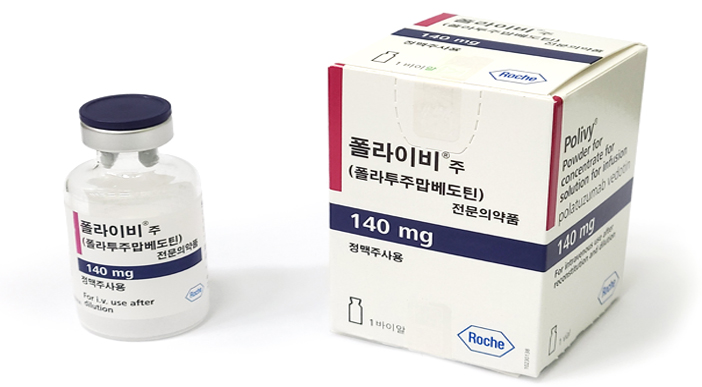
- The new lymphoma drug Polivy can be prescribed at general hospitals. According to related industries, ADC that combine with conventional BR therapy (Bendamustine/ Rituximab) treatments for diffuse large B-cell lymphoma (DLBCL) that have poor non-responsive prognosis of Roche. However, Polivy is still a non-reimbursed drug. Roche applied insurance benefit earlier this year, but failed to pass HIRA's Cancer Drugs Benefit Appraisal Committee in April. Roche is attempting to register Polivy in the future. Diffuse large B-cell lymphoma, which accounts for the highest percentage of non-Hodgkin lymphoma, is a type of aggressive lymphoma that requires immediate treatment due to its fast progression. More than half of patients have good treatment response rates to reach related levels, but 30 to 40% of patients do not respond to the standard therapy, R-CHOP, or experience recurrence after the first treatment. Most patients experience recurrence within two years, and the disease is fatal enough to last only six months. Recurrent and nonresponsive diffuse large B-cell lymphoma has been an area that lacks effective treatment options. Polivy is the first ADC drug to target CD79b, which binds to CD79b expressed in B cells and has the mechanism of inducing apoptosis. Polivy was validated by phase 1b/2 clinical trials in 80 patients with recurrent or diffuse large B-cell lymphoma patients who could not receive hematopoietic stem cell transplants and had more than one treatment experience. It was designated as a rare drug in Korea in October last year. Studies have shown that the Polivy co-therapy group extends CR, Complete Response and OS and Overall Surviva compared to the BR therapy group. Ko Young-il, a professor of hematology at Seoul National University Hospital, said, "Polivy has confirmed its usefulness through clinical use and is a treatment option recommended by international guidelines, which is significant in that it has proposed a new alternative to re-use or diffuse large B-cell lymphoma treatment.
- Company
- Will regulations on ERP be established?
- by Aug 03, 2021 08:24pm
- Presidential candidate Lee Nak-yeonLee Nak-yeon, a presidential candidate for the Democratic Party of Korea, mentioned the need to draw up regulations on the Early Retention Program (ERP) of foreign-invested companies, including foreign pharmaceutical companies. Attention is focusing on whether frequent ERP regulations in the pharmaceutical industry will be possible. He made the remarks at a recent meeting in Gwangju Metropolitan City, "How to improve the working environment and secure the right to survive for workers in office research jobs and foreign-invested companies." "Recently, foreign-invested companies, including multinational pharmaceutical companies, have unilaterally implemented corporate changes such as division, acquisition, merger, and transfer of operations, and the government's investment in the name of internal restructuring. He agreed, "Changing legislative and public policies for new types of workers with different working conditions from existing production service jobs is an important task." "We need additional protective measures to regulate reckless abuse of voluntary retirement," he said. "We will make efforts to respect the value of labor in the future and not ignore the legal system for workers who are not legally protected in blind spots other than existing production, service, and even those who are not properly protected," he said. ERP of foreign pharmaceutical companies is being implemented more frequently following the outbreak of COVID-19. Sanofi, Lilly, and Roche conducted ERP in the second half of last year, and five to six companies, including Viatris, Astellas, GSK and Roche, conducted ERP in the first half of this year. He also said, "The comprehensive wage management is a structure in which it is difficult to reflect the opinions of workers because there is a possibility that users will unilaterally decide," adding, "We need to think about ways to increase the bargaining power of office research." The meeting, hosted by LG Electronics' human-centered office workers' union and the Korea MSD labor union, and organized by Daesang LLF, drew attention from unions of three pharmaceutical companies as representatives of foreign investment companies. They emphasized the reality that Korean branch employees are harmed by unilateral M&As at the global level and the need to pass legislative proposals for safety measures.
