
- LOGIN
- MemberShip
- 2026-05-08 19:39:35
- Company
- Nucala retries insurance benefits for the first time in five
- by Eo, Yun-Ho Dec 12, 2022 05:48am
- Nucala, a respiratory antibody drug, is seeking to register insurance benefits again. According to related industries, GSK Korea recently submitted an application for the salary of Nucala, a severe eosinophilic asthma treatment. It is the first re-challenge in about five years since the non-reimbursed decision of the Drug Benefit Evaluation Committee of the Health Insurance Review and Assessment Service in 2017. At that time, the committee decided that the cost effectiveness was unclear as a result of Nucala's PE data analysis. Nucala is an interleukin (IL)-5 antagonist that reduces eosinophilic levels, a type of white blood cell involved in asthma triggers. Currently, it can be used as an additional maintenance treatment for asthma treatment in adult patients suffering from severe eosinophilic asthma with 150 cells/㎕ or more in the blood or 300 cells/㎕ or more in the blood within 12 months before the start of ▲ treatment, and is prescribed as a non-reimbursement. Nucala proved its validity through phase DREAM, MENSA, and SIRIUS studies. Among them, MENSA was published in the NEJM in 2014 as a representative study of this drug. This study was conducted on patients with severe asthma who developed exacerbations despite the use of several regulators, including high-dose inhaled corticosteroids (ICS), and in particular, patients with increased eosinophils by more than 150 cells/㎕ (more than 300 cells/㎕ a year ago) were recruited in the initial screening. They were administered Mepolizumab and placebo, and the annual incidence of exacerbation was observed. As a result, the annual incidence of exacerbation in the Mepolizumab 75mg intravenous treatment group at 32 weeks decreased by 47% compared to the placebo group, and the Mepolizumab 100mg subcutaneous injection treatment group also decreased by 53%. In addition, the quality of life was improved, and asthma control satisfaction was higher than placebo. The SIRIUS study observed dose changes in OCS after 20–24 weeks when Mepolizumab was administered in patients with oral corticosteroids (OCS). As a result, the dose of OCS in the Mepolizumab 100 mg subcutaneous injection group was reduced by 50% compared to the placebo group, and asthma control satisfaction and quality of life evaluation were significantly improved. This study was published in the ERJ in 2014 as the first to demonstrate a decrease in the dose of OCS when administering antibody drugs. In addition, various sub-analysis confirmed the effect of improving the incidence rate of deterioration and quality of life according to the eosinophil level.
- Company
- Daewoong suspends clinical trials of COVID-19 treatments
- by Kim, Jin-Gu Dec 12, 2022 05:47am
- All three clinical trials have been discontinued, and DWRX2003' has not progressed in domestic and foreign clinical trials. Daewoong decided to voluntarily stop the last clinical trial of DWJ1248, which was being developed as a treatment for severe COVID-19. Analysts say that Daewoong's COVID-19 project has also ended as all three clinical trials of the drug have been suspended. Daewoong announced on the 9th that it will voluntarily suspend the phase 3 clinical trial of the COVID-19 treatment DWJ1248. Daewoong explained the reason, "It is expected that it will be difficult to secure clinical results as the transition rate to severe patients decreases due to the rapidly changing COVID-19 situation and the expansion of vaccination." With this decision to suspend clinical trials, all clinical projects related to Daewoong's DWJ1248 have been terminated. Daewoong announced in July 2020 that it would develop Foistar, which was previously used to treat chronic pancreatitis, as a treatment for COVID-19. Daewoong then operated three clinical trials at the same time. They include two-thirds clinical trials for mild and moderate patients, three clinical trials for combination therapy with Remdesivir for severe patients, and three clinical trials for severe prevention purposes. Among them, phase 3 clinical trials for preventive purposes were suspended in December last year. In addition to DWJ1248, Daewoong is developing DWRX2003 containing Niclosamide as a treatment for COVID-19. However, this candidate substance is also said to have difficulty in clinical trials. Daewoong was approved for phase 1 clinical trial in October 2020. The clinical trial conducted at Chungnam National University Hospital was completed in June last year. However, there is no news that the second phase will be held since then. Overseas clinical trials of this drug are also failing to boost. In the Philippines, phase 1 clinical trials were started with the aim of recruiting 40 people, but phase 1 ended early with only two people gathered. The company's strategy is to focus on clinical trials in Australia, India, and Indonesia. However, even this is said to have difficulty recruiting patients as the local vaccination rate increases rapidly. In the case of DWRX2003 clinical trials, vaccinations are excluded from recruitment.
- Company
- GLP-1 Diabetic Trulicity's High Flux
- by Kim, Jin-Gu Dec 12, 2022 05:47am
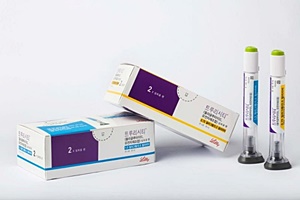
- Trulicity GLP-1 analog diabetes treatment Trulicity is on the rise. In the third quarter of last year, sales increased by 22% compared to the same period last year, continuing to grow. Attention is drawn to the competitive drug Ozempic. The pharmaceutical industry predicts that Ozempic will be a strong opponent of Trulicity. In the global market, Ozempic has already surpassed Trulicity sales. According to IQVIA, a pharmaceutical market research firm, Trulicity's sales in the third quarter were 15.8 billion won. It increased by 22.3% compared to 12.9 billion won in the third quarter of last year. Trulicity is a GLP-1 analog diabetes treatment. GLP-1 analogs are drugs developed using GLP-1 (Glucagon-Like Peptide-1) hormones that are involved in controlling blood sugar in the body. GLP-1 hormones promote insulin secretion immediately after meals, lowering blood sugar, and reducing insulin secretion when blood sugar falls below a certain level to help prevent hypoglycemia. Trulicity monopolizes the GLP-1 analog diabetes drug market. As of the third quarter, the sales share reached 99.8%. Trulicity received domestic item approval in May 2015 and released its salary in May 2016. It was the latest GLP-1 analog diabetes drug to be released, but it grew steeply every quarter. Since 2017, it has virtually solidified its dominance system. At the same time, it is breaking new sales records every quarter. In addition to Trulicity, Lyxumia, Victoza, and Byetta have entered the domestic market, but they seem to have been completely pushed out of the competition with Trulicity. Lyxumia and Byetta withdrew their item permits and withdrew from the domestic market, while Victoza's quarterly sales fell to around 30 million won. Ozempic & RybelsusThe pharmaceutical industry's attention is focused on competitive products to be released by Novono Disc Pharmaceutical. Novo Nordisk was granted Ozempic in April and Rybelsus in May. Ozempic is a long-term, once-a-week injection of the same type as Trulicity, and Rybelsus is a drug that converts it into an oral drug. Rybelsus is a once-a-day drug. In the pharmaceutical industry, It includes an indication of reducing the risk of cardiovascular events compared to Trulicity. Synergy with Rybelsus, the world's first oral GLP-1 analog, is also expected. In the global market, Ozempic has already overtaken Trulicity. According to a quarterly report by Eli Lilly and Novo Nordisk as of the second quarter, Ozempic's global sales in the second quarter amounted to $1.986 billion. During this period, Trulicity's global sales were $1.94 billion.
- Company
- “Immunotherapies take lead in liver cancer treatment"
- by Dec 09, 2022 06:04am
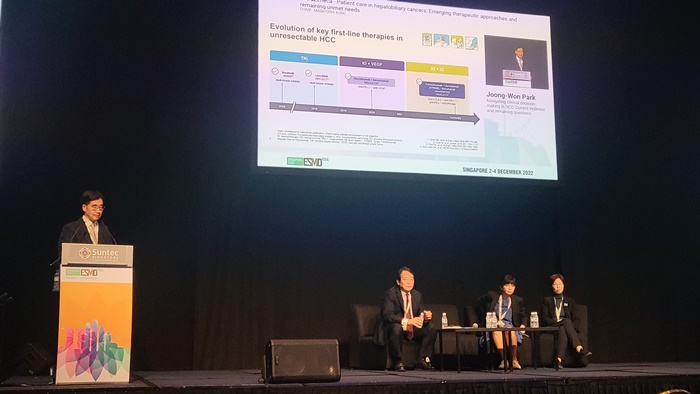
- “Immuno-oncology drugs have brought great advances in the treatment of unresectable advanced hepatocellular carcinoma. However, the unfortunate fact is that these are not well used in the field due to lack of later-line options.” Professor Joong-Won Park, Division of Gastroenterology, National Cancer Center Korea, said so to Dailypharm at the ‘ESMO Asia Congress 2022’ that had been held in Singapore. On the same day, Professor Park introduced the latest research trends in liver cancer treatment at a session held on ‘Patient care in hepatobiliary cancers: Emerging therapeutic approaches and remaining unmet needs.’ According to Professor Park, the treatment paradigm for unresectable advanced liver cancer (hepatocellular carcinoma) has been evolving quickly with the introduction of immuno-oncology drugs. Roche’s ‘Tecentriq’ had been granted as a first-line treatment for HCC in combination with the VEGF inhibitor ‘Avastin.’ It became the first immunotherapy approved for the systemic treatment of liver cancer. Following the combination, AstraZeneca’s immuno-oncology drug Imfinzi’ was also approved in combination with ‘Imjudo,’ another immuno-oncology drug with a different mechanism of action. The Imfinzi+Imjudo combination was approved in the US in October and is expected to be soon introduced to Korea as well. Through the STRIDE regimen (single dose of Imjudo as an initial dose followed by Imfinzi every four weeks), the Imfinzi+Imjudo combination improved the effect while minimizing safety risks. Another benefit of using Immuno-oncology drug combinations is that patients can worry less about the risk of hepatotoxicity that arises from the use of TKIs or bleeding from Avastin. Professor Park said, “We consider bleeding risk an important factor when selecting primary treatments. Patients with hepatic-portal hypertension must be tested for risk of hemorrhage. Slight concerns (adverse event) remain in the use of Imjudo in the Imfinzi+Imjudo combination, but it is only administered once, so if the patient well passes that period, the combination is well-tolerated." Its effect was also positive. According to the HIMALAYA Phase III trial, the Imfinzi+Imjudo combination using the STRIDE regimen recorded a median overall survival (mOS) of 16.4 months and reduced the risk of death over Nexavar by 22%. At 36 months of follow-up, the proportion of patients that reached OS in the Imfinzi+Imjudo group and Nexavar group was 30.7% and 20.2%, respectively, demonstrating an improvement in long-term survival with the use of Imfinzi+Imjudo. The Asian (excluding Japan) subanalysis results of the HIMALAYA trial were also disclosed at the ESMO Asia Congress. In Asians, the mOS of Imfinzi+Imjudo was 16.5 months, consistent with the global data. At 35 months, the OS was 32.2% in the Asian group. Professor Park explained, “It is encouraging that the data showed positive results in Asians, as we have a higher prevalence of hepatitis B than in the West. Immuno-oncology drugs came to the fore in this year’s guideline for HCC treatment in Korea. According to the '2022 Practice Guideline for Diagnosis and Treatment of Hepatocellular Carcinoma’ that was published by the Korean Liver Cancer Association, the Tecentriq + Avastin and Imfinzi + Imjudo combinations received A1 recommendations. This is the first time an immuno-oncology drug received a priority recommendation, overtaking Nexavar, which had been the standard treatment for liver cancer for a long time. The biggest challenge that remains for the use of these immunotherapy combinations is in receiving reimbursement. The key lies in how fast the Imfinzi + Imjudo combination will be able to receive reimbursement after it is introduced to Korea. The high prices of Tecentriq and Avastin had been the biggest barrier to their reimbursement in HCC. Fortunately, the introduction of Avastin biosimilars after the expiry of Avastin's patent lowered the drug price and allowed progress in their reimbursement. On the other hand, Imfinzi's partner, Imjudo, is expected to have a higher price barrier because it is a new immuno-oncology drug. The later-line therapies following the use of immunotherapy-based regimens also remain a barrier. The guidelines recommend physicians and patients consider the use of 6 drugs including Nexavar, Lenvima, Stivarga, and Cabometyx. However, in practice, the only realistic option is to use Nexavar without reimbursement. Lenvima is not approved for use in the second line in Korea. In the case of Stivarga and Cabometyx, they are only allowed for use after using Nexavar in the first line. Professor Park said, “Using Nexavar or Cabometyx in the second line is not an issue in the US or in Japan. It is even covered by insurance there. However, in Korea, reimbursement is strictly set for each line of therapy, therefore, it is difficult to use new drugs that are introduced in Korea due to the lack of later-line options. Using the recommended drugs in the later line as in the US or Japan is off-label and illegal or rejected from reimbursement. This is one of the biggest barriers in HCC treatment in Korea.”
- Company
- Ildong's new migraine drug Reyvow can be prescribed at gener
- by Eo, Yun-Ho Dec 09, 2022 06:04am
- According to related industries, Lilly and Ildong Pharmaceutical's Reyvow passed the Drug Commission (DC) of medical institutions such as Kangwon National University Hospital, Nowon-eulji Hospital, and Sinchon Severance Hospital, and advanced general hospitals such as Seoul National University Hospital, Asan Medical Center, and Seoul St. Mary's Hospital are also undergoing procedures. Reyvow is attracting attention as an expected replacement for tryptan-based drugs, which are most commonly used to treat migraines. This drug targets serotonin (5-HT) 1F receptors like conventional tryptan drugs, but has the advantage of not having cardiovascular side effects by acting selectively. On the other hand, tryptan-based drugs were limited in use because they contract blood vessels in the mechanism, causing cardiovascular diseases such as myocardial infarction and stroke. Reyvow proved its validity through a three-phase study. In two studies of 4,439 migraine patients, 28-39% of the Raybow administration group disappeared within two hours, and 41-48% were free from Most Bothersome Symptom (MBS) symptoms that overreacted to light, sound, and nausea. Reyvow is still unpaid. In August, the HIRA received a conditional salary judgment, but the company did not accept the offered drug price. Ildong Pharmaceutical plans not to give up the registration process afterwards. Meanwhile, Ildong Pharmaceutical signed a development partnership with Raybow developer CoLucid in 2013 to secure copyrights in eight ASEAN countries, including Taiwan, including domestic sales licenses.
- Company
- Enhertu seeks approval as 2nd-line tx in breast cancer
- by Eo, Yun-Ho Dec 08, 2022 06:05am
- The antibody-drug conjugate anticancer drug ‘Enhertu’ is attempting to extend its indication to the second line in breast cancer. According to industry sources, the Ministry of Food and Drug Safety is currently reviewing whether to expand the indication for the ADC drug Enhertu (trastuzumab deruxtecan). Its approval is expected in Q1 next year (2023) at the earliest. The indication extension is to treat adult patients with unresectable or metastatic HER2-positive breast cancer who have received a prior anti-HER2-based regimen either in the metastatic setting or in the neoadjuvant or adjuvant setting and have developed disease recurrence during or within 6 months of completing therapy. The drug has been approved to extend its indication to the second line by the US FDA in May and by the European Commission in July. In Korea, Enhertu is being jointly promoted by AstraZeneca and Daiichi Sankyo. The drug is considered a next-generation ADC drug that has been designed using DXd ADC technology. With the drug yet to be listed for reimbursement, what strategy the companies will implement to attract prescriptions after expanding indications remains to be seen. The efficacy of Enhertu in the second line had been identified through the Phase III DESTINY-Breast03 trial. DESTINY-Breast03 is a head-to-head trial that evaluated the efficacy and safety of Enhertu versus the first-generation ADC ‘Kadcyla (trastuzumab emtansine).’ The trial enrolled 524 patients to evaluate the efficacy and safety of Enhertu in patients with HER2-positive unresectable and/or metastatic breast cancer previously treated with trastuzumab and a taxane. The primary efficacy endpoint of DESTINY-Breast03 was progression-free survival (PFS) based on blinded independent central review (BICR). Secondary efficacy endpoints included overall survival (OS), objective response rate (ORR) based on BICR, duration of response (DoR), and PFS based on investigator assessment. Results showed that Enhertu reduced the risk of disease progression or death by 72% compared with Kadcyla in patients with HER2-positive unresectable and/or metastatic breast cancer previously treated with trastuzumab and a taxane.
- Company
- AbTis contracts ADC technology cooperation/ world's #1
- by Dec 08, 2022 06:05am
- ApTis, a company specializing in antibody-drug conjugate (ADC) development, announced on the 7th that it has signed a technology cooperation contract for antibody-drug combination platform for new drug development with global CDMO company Ron. With this cooperation, AbTis' "AppClick" platform technology will be included in Lonza's customized solution toolbox for developing antibody-binding candidate drugs. AppClick is a location-selective ADC linker platform technology that allows users to easily and quickly connect various drugs without antibody deformation. Appclick improved the chemical stability of ADCs by using cyclic peptides that irreversibly bind to specific sites of antibodies. By being included in Lonza's customized solution, AbTis has opened the way to expand technology partnerships with various ADC new drug development companies. In addition, AbTis will be able to receive integrated services on the development and manufacture of Lonza's antibody-binding drug. "The AppClick platform is expected to be used in various ways because it can selectively combine various drugs with existing antibodies," said Gene Christophe, president of Hibert Lonza's bio division. "When developing new treatments such as ADC, it is possible to provide effective technology to various customers who suffer from antibody modifications." In the process of realizing the entry of the AbTis ADC linker platform into the global market, we are very happy to cooperate with the global No. 1 CDMO investor, said Jeong Sang-jeon. "Through this cooperation with Lonza, many ADC new drug developers are expected to apply AbTis Technology to shorten the period of development."
- Company
- The power of FDA-approved new drugs
- by Chon, Seung-Hyun Dec 08, 2022 06:05am
- SK Biopharm announced on the 6th that it won the "Tower of Exporting $100 million" at the 59th Trade Day ceremony held at COEX in Gangnam-gu, Seoul on the 5th. SK Biopharm's independently developed innovative new drug, Cenobamate, surpassed $100 million in exports to the U.S. and Europe from July 1, 2021, to June 30, 2022. This is the first time that a domestic pharmaceutical company has won the top $100 million in exports with a single innovative new drug developed by itself. Cenobamate is a new drug for epilepsy that SK Biopharm has independently carried out the entire process from initial development to FDA approval. It is prescribed for adult epilepsy patients with partial seizure symptoms. It is an action mechanism that alleviates seizure symptoms by simultaneously controlling two targets related to excitatory and inhibitory signaling that cause epilepsy. Cenobamate has been licensed to market by the U.S. Food and Drug Administration (FDA) in 2019 and is being sold under the product name XCOPRI. Since May 2020, it has been selling directly through SK Life Science, a local subsidiary in the U.S. Cenobamate has been on the rise every quarter since its local release in the U.S. It exceeded 10 billion won in the first quarter of last year and exceeded 20 billion won in the fourth quarter of last year. It recorded 31.7 billion won in the first quarter of this year and achieved high gains in both the second and third quarters. Cenobamate's cumulative sales in the U.S. were estimated at 200 billion won. Last year, it joined hands with its partner Angelini Pharma to enter the European market under the product name "ONTOZRY." The Export Tower Awards are held on Trade Day on December 5 every year under the auspices of the Korea International Trade Association. The association awards the "Tower of Exports" to exporters who have contributed to Korea's international status and economic development over the past year.

- Company
- Immunotherapy shows effect as first-line treatment for BTC
- by Dec 08, 2022 06:05am
- Biliary tract cancer has long remained an area in which no new drug has been developed. Following targeted therapies, immunotherapies have led to remarkable advances in anticancer treatment, but biliary tract cancer has been neglected in terms of developing new drugs. This is because it has a lower prevalence rate than other cancers like lung cancer or stomach cancer, and even lower incidence in the West, which has been leading the development of new drugs. In this area with minimal progress, AstraZeneca’s cancer immunotherapy Imfinzi obtained indication in Korea and abroad as a first-line treatment in biliary tract cancer. In Korea and abroad, Imfinzi became the first immunotherapy to be approved as a first-line treatment in biliary tract cancer, and this latecomer among immunotherapies beating its competitors like Keytruda and Opdivo and won the “first” title. One thing to note is that a Korean medical team led to Imfinzi’s global approval in biliary tract cancer. Professor Do-Youn Oh’s persuasion was what moved the pharmaceutical company to pursue this unattended area. At the European Society of Medical Oncology (ESMO) Asia Congress 2022 that had been held on the 2nd (local time) in Singapore, Professor Oh said, “I believe the biggest achievement that has been made is that Imfinzi’s first approval as a first-line treatment in biliary tract cancer opened the stage for other immunotherapies to take on research into the field of biliary tract cancer.” Professor Do-Youn Oh Around 10 years ago, Professor Oh proposed an investigator-led trial to pharmaceutical companies that own cancer immunotherapies after finding out that immunotherapies show relatively higher effects in biliary tract cancer. However, companies at the time were more focused on cancers that have many patients and showed little interest and a low understanding of biliary tract cancer itself. Oh recalled, “I proposed a clinical trial on biliary tract cancer to all companies that own cancer immunotherapies at the time. I offered to test the drug myself to AstraZeneca’s clinical team. The company accepted my offer, and so began the investigator-led Phase II clinical trial. The trial went well thanks to the AstraZeneca team's active engagement. Professor Oh and AstraZeneca designed a detailed and thorough clinical trial after long discussions. They added 2 cohorts and enrolled more subjects. Based on the anti-tumor effect and safety confirmed in Oh’s trial, a global Phase III trial was initiated, and Professor Oh took the role of principle investigator (PI) in the Phase III TOPAZ-1 trial. The TOPAZ-1 trial was a success. The Imfinzi arm (Imfinzi+ gemcitabine + cisplatin) showed a 20% improvement in overall survival (OS) versus the placebo arm (placebo+ gemcitabine + cisplatin). Further analysis showed a higher OS improvement of 24% in the Imfinzi arm. At 2 years, the 2-year survival rate in the Imfinzi arm was 23.6% compared with 11.5% in the placebo arm. Median PFS (mPFS) was 7.2 months for the Imfinzi arm, a 25% improvement over the 5.7 months shown in the placebo arm. Also, the Imfinzi arm achieved an objective response rate (ORR) of 26.7% (91 cases), 2.1% (7 cases) of which showed complete response, and 24.6% (84 cases) showed partial response. Based on Oh’s investigator-led trial and TOPAZ-1 results, the US FDA approved Imfinzi for the treatment of biliary tract cancer. Furthermore, the National Comprehensive Cancer Network recommended Imfinzi as the standard (Category 1) first-line treatment in biliary tract cancer. For the first time, a cancer immunotherapy drug was listed as a standard of care in a field that only had chemotherapy options. This was a very unusual case where a clinical trial initiated by a Korean healthcare professional led to global approval and a standard-of-care designation. Professor Do-Youn Oh is presenting her findings at the ESMO Asia Congress 2022 Even after the approval, Professor Oh is busy conducting further analysis on TOPAZ-1. At the ESMO Asia Congress, Oh presented results on the impact of mutation status on efficacy outcomes in the TOPAZ-1 trial. The result of the study, which was the first to analyze the effect of cancer immunotherapies according to mutation status, was that there was no significant difference in the effect of cancer immunotherapies depending on the presence or absence of major mutations. Professor Oh referred to the entry of Imfinzi in biliary tract cancer as a ‘starting point’ that opens the stage and drives the development of biliary tract cancer treatments. In other words, an area that has not been tried due to lack of knowledge and lack of interest has opened up for research. Oh said, “With the TOPAZ-1 study, people have come to recognize that immunotherapies can be developed for biliary tract cancer as well. With so many cancer immunotherapies of various mechanisms of action in development, the biggest significance held by the success of the TOPAZ-1 trial is that the stage has been set for these to be tested in biliary cancer as well.” Above all, Oh expressed pleasure in providing new hope for biliary tract cancer patients. Professor Oh said, “Polarization of treatment options exists in the field of cancer as well. Some cancers offer many treatment options, others less than few. Biliary tract cancer was one of those that had almost no available treatment options. Whenever my patients asked why they can’t use immunotherapies, all I could do was tell them that a research was underway. With an immunotherapy option now available for biliary tract cancer, I look forward to more progress being made in the field and various more studies to come.”
- Company
- Oral Exon20 targeted Exkivity to apply for reimb in Korea
- by Eo, Yun-Ho Dec 06, 2022 07:55pm
- The EGFR Exon20 insertion mutation targeted oral therapy ‘Exkivity’ is attempting reimbursement listing in Korea. According to industry sources, Takeda Pharmaceuticals Korea is preparing to apply for reimbursement of ‘Exkivity (mobocertinib), its treatment for non-small cell lung cancer (NSCLC) with EGFR exon 20 insertion mutations. Although the drug targets the same biomarker as Janssen Korea’s ‘Ryvrevant (amivantamab),’ Exkivity is different as an oral formulation. EGFR Exon20 insertion mutation is a new biomarker that is newly receiving attention in the field of NSCLC. Targeted anticancer therapies that are currently available for prescriptions include those that target the Exon19 deletion or Exon21 L858R substitution mutations that are commonly found in EGFR mutations, but an unmet need had existed for EGFR Exon20 insertion mutations. Therefore, the industry’s eyes are on whether Exkivity will succeed in reimbursement listing with Ryvrevant failing to pass deliberations by the Health Insurance Review and Assessment Service’s Cancer Disease Deliberation Committee. Meanwhile, Exkivity demonstrated its efficacy through a Phase I/II trial which enrolled 114 patients with EGFR Exon20 insertion-positive NSCLC who received prior platinum-based therapy. In the trial, patients who were treated with a 160 mg dose of Exkivity showed an objective response rate (ORR) of 28% as well as a median duration of response (DoR) of 17.5 months per independent review committee (IRC). In particular, the median time to response after Exkivity treatment was 1.9 months, demonstrating the rapid effect it shows from the beginning of treatment. The median progression-free survival (mPFS) was 7.3 months, and the median overall survival (mOS) 24.0 months. The safety profile was also manageable. The most common adverse reactions were diarrhea, rash, fatigue, etc, and were manageable through dosage adjustments.
