
- LOGIN
- MemberShip
- 2026-05-08 01:10:32
- Company
- Monthly sales of OTC Allegra rise 30% on average
- by Jung, Sae-Im Feb 28, 2023 05:52am
- Sales of Sanofi’s third-generation antihistamine drug ‘Allegra’ has risen 30% on average per month ever since it entered the over-the-counter (OTC) drug market. According to the market research institution IQUVA, sales of the OTC Allegra have risen 29% on average per month, ever since its release in March to the allergy season in October of the same year. Since its launch, 44% of pharmacies nationwide have been supplying Allegra. Allegra’s sales had risen significantly during the spring and fall season when allergic rhinitis worsens. Its sales, which had been in the KRW 20 million range in the first month of March of last year, had risen over fivefold to KRW 120 million in April. Even in the non-allergy season, its sales had been in the KRW 60 million range. And after entering fall, in September and October, its sales recorded KRW 200 million and 140 million each. Allegra is an antihistamine OTC that contains fexofenadine as the active ingredient. Most third-generation antihistamine drugs are ethical drugs (ETCs) that can only be prescribed at hospitals, but the 120mg dose of Allegra was approved as an OTC. The release of the OTC and ETC versions has created a synergy effect and positively impacted prescription sales of Allegra as well. According to the company, prescription sales of Allegra last year reached KRW 7.5 billion, which is a 16% increase from the previous year. Allergic rhinitis is an inflammatory autoimmune disease that is commonly confused with the cold. Typical symptoms include sneezing, stuffy nose, runny nose, and itchy eyes. Although a series of first and second-generation antihistamine drugs have been released to treat symptoms of allergic rhinitis, side effects such as drowsiness have been cited as an issue. Allegra is a third-generation fexofenadine drug that is an improved version of the first and second-generation antihistamine drugs. It has fewer side effects of drowsiness as it does not pass through the blood-brain barrier or bind to histamine cortical H1 receptors with a quicker effect. The OTC Allegra contains 10 tablets per pack, and one tablet (120mg) should be taken once daily before meals with plenty of water. It relieves symptoms of allergic rhinitis within 60 minutes the effect lasts for 24 hours after intake. With this improved convenience in intake and undergoes minimal hepatic metabolism, the drug can be taken with less concern. Sanofi has been paying close attention to the tangible results brought by Allegra in the ETC and OTC markets over the past year. As the drug enters the second year of release this year, the company aims to actively conduct diverse campaigns to increase and expand demand. For this, Sanofi plans to promote the various strengths of Allegra by carrying out a Spring digital campaign in March of this year. For the campaign, the company will prepare an advertisement that points out the various causes of allergic rhinitis that people may easily encounter in daily life. By portraying how Allegra relieves the symptoms quickly without concern over drowsiness, the company will emphasize the key message of how Allegra is 'a third-generation antihistamine allergy medication that is effective and lasts for 24 hours that can be taken with less concern over drowsiness.’ The advertisement will not only be broadcasted on TV but be available online via YouTube and Naver. A Sanofi official said, “As we enter the second year of Allegra’s release, we plan to spur up brand awareness-raising activities. We will conduct broad marketing activities to make known the efficacy and effect of third-generation antihistamines.”
- Company
- Will Tagrisso finally be reimbursed with public support?
- by Eo, Yun-Ho Feb 28, 2023 05:52am
- The D-day has finally been revealed. Will the lung cancer treatment ‘Tagrisso’ finally succeed in extending reimbursement to the first line? According to industry sources, AstraZeneca’s EGFR mutation-positive non-small cell lung cancer (NSCLC) treatment Tagrisso will be deliberated at the Health Insurance Review and Assessment Service’s Cancer Disease Deliberation Committee meeting on March 22. A dire need had long existed. The public petition urging for the extension of reimbursement benefits to the first line for Tagrisso that had been filed earlier this year had received consent from 50,000 people. Patients desperately want it, but doctors are saying no to it. Under such strange circumstances, Rep. Jung-Sook Suh of the People Power Party had pointed to the need to extend reimbursement, upon which the Ministry of Health and Welfare expressed intent on its review. The pharmaceutical company had also expressed its strong will to extend Tagrisso’s reimbursement to the first line, by accepting the financial-sharing plan proposed by the authorities. Four years have already passed. Tagrisso, which added its first-line indication in December 2018 in Korea, attempted to extend its reimbursement to the indication in 2019. However, upon review by the Cancer Disease Deliberation Committee in October, the committee decided to defer the decision until the full data from the Phase 3 FLAURA trial that studied the overall survival (OS) of Tagrisso in NSCLC patients in the first-line was disclosed. Although AstraZeneca submitted the full FLAURA data and expressed their will to accept most of the financial-sharing plan proposed by the government, the reimbursement fell through due to opposition from committee members (specialists) that raised an issue over the drug’s clinical efficacy. At the time, the largest obstacle that impeded Tagrisso’s reimbursement in the first line was the Asian subgroup analysis results of the FLAURA trial. Tagrisso’s overall survival (OS) in the trial was 38.6 months, a significant extension of 6.8 months over its first-generation comparators ‘Iressa (gefitiniib)’ and ‘Tarceva (erlotinib)’. The results were encouraging, considering how Tagrisso was the first EGFR TKI to demonstrate efficacy in the first line and that crossover prescriptions were allowed for research ethics in patients with confirmed T790 mutations while receiving treatment with its first-generation comparators. However, the issue was the hazard ratio (HR) of the Asian subgroup analysis. HR was 0.995 when separately analyzing Asian patients that received Tagrisso. An HR of 0.995 means that the difference between Tagrisso and the control group is 0.005, which could be interpreted as that there is virtually no difference between Tagrisso and its comparator. This was why the academic society raised the opinion that ‘Tagrisso’s OS in Asians, including Koreans, was not reliable in the first line,’ and the opinion had a dominant influence on the results of the CDDC review. Many others have expressed different views on the subgroup analysis results. A primary efficacy endpoint exists for all trials, and subgroup analysis results are only presented as a reference only when the trials satisfy the primary efficacy endpoint. This is the universally accepted concept in virtually all academia beyond medicine. However, the expert committee pointed to the subgroup analysis as the key reason for the non-reimbursement even though the trial succeeded in demonstrating the OS, which was the purpose of the trial. Regardless of what happened in the past, the agenda is again awaiting CDDC review. Tagrisso has reinforced support with drug price cuts and real-world data that was announced last year. In other words, the company has strengthened grounds for support from the financial and effect aspect. Therefore, the industry’s attention is on whether Tagrisso will be able to produce a different result this time. Meanwhile, the real-world study evaluated the effect of Tagrisso in the first-line in clinical practice in 660 NSCLC patients with EGFR mutations from 2018 to 2020. 583 of the patients received Tagrisso in the first line, and the other 76 received another EGFR-targeted cancer therapy. Actual measurement was taken every 6 months in the 583 patients that received Tagrisso. The median follow-up period was 24.6 months. Results of the study showed that the median progression-free survival (mPFS) in patients that were administered Tagrisso was 20.0 months. This is even longer than the mPFS of 18.9 months that had been identified in the global Phase III trial of Tagrisso. By mutation, Tagrisso’s mPFS in patients with exon19 deletions was 23.5 months. In those with L858R mutations, the PFS was 17.0 months. In terms of OS, the median OS was 33.1 months in the Tagrisso arm, 7.4 months longer than the 25.7 months in the control group, reaffirming Tagrisso’s overall survival of over 3 years.
- Company
- Daiichi Sankyo Korea appoints Jeongtae Kim as new CEO
- by Eo, Yun-Ho Feb 27, 2023 05:57am
- Kim Jeong-tae, new presidentDaiichi Sankyo Korea appointed Vice President Kim Jung-tae (49) as the new CEO. Daiichi Sankyo announced on the 20th that it will appoint Vice President Kim Jeong-tae as the new CEO and President Kim Dae-jung will retire on March 31. Accordingly, from April 1st, President Kim Dae-jung will support the company as an advisor, and new President Kim Jung-tae will be inaugurated as the representative. President Kim Jeong-tae graduated from the College of Pharmacy at Sungkyunkwan University, obtained an MBA from Korea University, and has accumulated extensive experience and expertise by holding various positions at Daiichi Sankyo Korea and Daiichi Sankyo Headquarters. He started his career in 2008 at Daiichi Sankyo Korea's Pharmacy Team (Regulatory Affairs, Pricing, and Reimbursement), and has led the process of business restructuring and vision establishment for Daiichi Sankyo Korea through management planning and business development. Since 2017, he has been in charge of strategic planning in the Daiichi Sankyo Headquarters Business Promotion Department after marketing for the ASCA (Asia, South & Central America) region of Daiichi Sankyo. After returning to Daiichi Sankyo Korea in 2020, he led the Marketing MR General Department, which oversees marketing and sales operations.
- Company
- Sales of 26-year-old Gemzar·Zyprexa show rebound
- by Kim, Jin-Gu Feb 27, 2023 05:57am
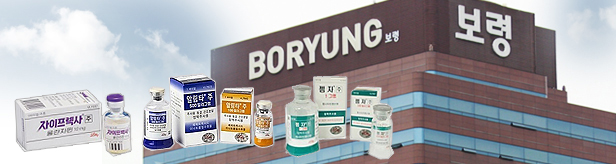
- The anticancer drug ‘Gemzar‘ and schizophrenia drug ‘Zyprexa' Boryung Pharmaceutical had acquired domestic sales and licensing lights of have enjoyed a rebound in sales. Sales of both drugs had been on a downfall prior to Boryung’s acquisition. Therefore, the analysis is that Boryung’s active portfolio expansion strategy and license acquisition activities have been effective. ◆Gemzar’s sales rise 33% after Boryung’s acquisition...plays a central role in Boryung’s oncology business According to the pharmaceutical market research institution IQVIA on the 25th, Gemzar raised KRW 19.1 billion in sales last year. Gemzar is a first-generation cytotoxic agent that contains gemcitabine. It was released in 1997. Gemzar’s sales have been on a decline until 2020. Its sales, which had reached KRW 14.5 billion in 2018, had fallen to KRW 14.3 billion by 2020. However, sales started rising in earnest starting in 2021. This is an unprecedentedly rare case for a drug that has been on the market for over 25 years. Gemzar’s sales are analyzed to have made a solid rebound after Boryung’s acquisition of its domestic rights in Korea. The company newly established the ONCO (Oncology) division in May 2020. At the time, the company had acquired rights to Gemzar in Korea from Eli Lilly. Quarterly sales of Gemzar (Unit: KRW 100 mil, Source: IQVIA) Building on Gemzar, the company’s oncology business has made rapid growth. Gemzar’s rising sales are analyzed to have driven sales growth of Boryung’s existing oncology drugs, including Campto, Oxalitin, Ditaxel1. In fact, sales of the three drugs had risen 2-9% last year. In the process, Boryung’s oncology business arose as the company's new growth engine. In Q4 last year, Boryung’s oncology business raised sales of KRW 46.4 billion and exceeded the KRW 45 billion made by the company’s existing key hypertension and hyperlipidemia treatment business during the same period. ◆ Zyprexa’s sales show signs of rebound...”Aims to record KRW 50 billion in CNS sales by 2025” Zyprexa’s sales are also showing signs of a rebound since Boryung’s acquisition. Last year, Zyprexa’s sales increased 2% from KRW 14.1 billion in 2021 to KRW 14.4 billion. Zyprexa, the olanzapine-containing schizophrenia treatment market had been released in 1997. Like Gemza, Zyprexa’s sales also was on a continuous decline until Boryung’s acquisition. Its sales, which had been KRW 16.8 billion in 2018, had declined to KRW 14.1 billion in 2021. Quarterly sales of Zyprexa (Unit: KRW 100 mil, Source: IQVIA) However, its sales first made a rebound last year. Boryung acquired all sales and licensing rights for Zyprexa in Korea from Lilly in October last year. Afterward, its quarterly sales had first declined to KRW 3.3 billion in Q2 last year, then made a rebound to and raised to KRW 3.9 billion by Q4. KRW 3.9 billion is the most quarterly sales the product has made since 2019 Q4. With the acquisition, the company announced plans to reinforce its CNS (central nervous system) treatment portfolio around Zyprexa. The company’s goal is to raise its CNS sales to ₩50 billion by 2025. ◆Will the company succeed in raising sales of Alimta as it had for Gemzar and Zyprexa?... Interest rises on whether the company will acquire additional sales rights Currently, the industry's attention is focused on another product Boryung acquired in October last year, Alimta. Boryung acquired the domestic rights for Alimta from Eli Lilly in October last year for KRW 100 billion (USD 70 million). Three products Boryung acquired domestic rights for. (from the left) Alimta, Gemzar, Zyprexa Alimta is a treatment for non-small-cell lung cancer that was approved in 2005. It is used as a chemotherapy for non-squamous NSCLC, and also used in combination with Keytruda. It had raised sales of KRW 21 billion last year. If the company succeeds in raising sales of Alimta as it had for Gemzar and Zyprexa, the company’s Legacy Brands Acquisition (LBA) strategy is expected to gain momentum. LBA is the strategy of acquiring original drugs after patent expiry. Boryung announced it plans to additionally introduce a product in Oncology and one other area this year, and another product in CNS by next year. The industry has been predicting that the company’s plans may be to introduce products through the acquisition of domestic rights through LBA.
- Company
- Will Luxturna will be deliberated by DREC for reimb?
- by Eo, Yun-Ho Feb 27, 2023 05:56am
- Industry attention is focused on whether progress will be made in discussions for the reimbursement of the one-shot retinal dystrophy treatment Luxturna. It was found that it is highly likely that Novartis Korea’s Inherited Retinal Dystrophy (IRD) treatment Luxturna (voretigene neparvovec) will be presented as an agenda for deliberation by the Health Insurance Review and Assessment Service’s Drug Reimbursement Evaluation Committee next month (March). Although the company applied for reimbursement of the drug in September 2021, no progress had been made on its listing since then. Being a high-priced one-shot treatment for a non-life-threatening condition, these factors have acted as a barrier to the reimbursement listing until now. By replacing the defective or defective RPE65 gene - one of the causes of IRD - with a normal gene, Luxturna restores the visual function of an IRD patient with a single administration. In other words, the drug provides a fundamental cure for IRD. Therefore, the passage depends on how well the company conveys the value of Luxturna in preventing blindness to the authorities. In the U.S., the drug was granted a Breakthrough Therapy Designation by the FDA in 2014, the drug was approved as an orphan drug in 2016, then granted priority review and a fast-track designation in 2017. IRD is a rare intractable disease in which vision loss occurs due to mutations in genes responsible for the structure and function of retinal photoreceptors. In addition to over 20 ophthalmologic diseases, there are currently over 300 genes that have been identified as being associated with IRD. IRD, which is caused by the mutation in the RPE65 gene, causes abnormalities in the visual cycle of the retina that converts visual information into a neural signal and delivers it to the brain. The mutation in the RPE65 gene reduces the RPE65 protein essential to the visual cycle and destroys the retinal cell, gradually narrowing the field of vision to eventually result in blindness. Meanwhile, the efficacy of Luxturna was demonstrated through a Phase III trial that was conducted on IRD patients with confirmed biallelic RPE65 mutations. Study results showed that the group of patients that received Luxturna demonstrated statistically significant improvements in their functional vision compared to the control group at one year of treatment. Using the mean score of the multi-luminance mobility test (MLMT), which evaluates the ability to complete the obstacle course at low light levels by recreating the daily walking environment, as the primary endpoint at one year of treatment, the MLMT score change in the Luxturna treatment group was 1.8 points, which was 1.6 points higher than the 0.2 points in the control group.
- Company
- US approval of Celltrion Yuflyma was delayed
- by Feb 24, 2023 05:53am
- Celltrion has confirmed that the U.S. Food and Drug Administration (FDA) will complete the Yuflyma final approval review by May of this year. Celltrion announced on the 23rd that it had confirmed that the final approval review of Yuflyma would be completed by May of this year while continuing discussions with the FDA. Earlier, the U.S. approval process for Yuflyma was somewhat delayed as foreign finished drug manufacturers in charge of finished product production received criticism from the FDA. Celltrion emphasized that the delay in FDA approval of Yuflyma was due to the situation of overseas finished manufacturing plants that had nothing to do with Celltrion's own technology. Overseas finished drug manufacturing plants received an appropriate grade by resolving the issues pointed out after FDA inspections. The conformity level is a level given when a manufacturer voluntarily requests corrective action when unreasonable matters are found but the violation is not serious. Celltrion Group will be able to sell Uplyma in the US from July 1 after reaching a patent agreement with a company that owns Yuflyma's original drug. Apart from FDA approval, we are working on a pre-work to introduce the product to the US market in time for the launch. Celltrion Healthcare acquired Celltrion USA in August last year for direct sales in the United States, securing a license and distribution network for pharmaceuticals in the United States. It has completed securing local experts to lead the US business by recruiting Thomas Nusbickel, who has extensive experience in biosimilar commercialization at global pharmaceutical companies, as CCO of the US corporation.
- Company
- Shingrix may be prescribed in 93 general hospitals in Korea
- by Eo, Yun-Ho Feb 24, 2023 05:52am
- The shingles vaccine ‘Shingrix’ has quickly landed in medical institutions in Korea after starting vaccinations. According to industry sources, GSK Korea’s recombinant vaccine Shingrix passed review by drug committees of 93 medical institutions in Korea, including tertiary hospitals - Samsung Medical Center, Seoul National University Hospital, Asan Medical Center - as well as general hospitals - Kangbuk Samsung Medical Center, Kyung Hee University Medical Center, Korea University Hospital (Buro, Anam, Ansan), Soonchunhyang University Hospital Seoul, Ajou University Hospital, and Hanyang University Hospital. Considering how vaccination had started in December in earnest, the vaccine has settled quickly in the market. Shingrix is the first shingles vaccine approved in Korea that combined a non-live antigen with GSK's vaccine adjuvant. It offers protection from shingles in adults over 50 who are at increased risk of shingles from age-related decline in immunity. In two Phase III clinical trials (ZOE-50, ZOE-70) that were conducted on 15,411 adults aged over 50 years of age, Shingrix showed a 97.2% efficacy compared to the non-vaccinated group and over 90% efficacy in those aged 70 years and above. The rate of serious adverse events was similar in the Shingrix arm and the placebo arm. The interim analysis of the ZOSTER-049 (ZOE-LTFU) extension study that was conducted to follow up ZOE-50 and ZOE-70 showed that Shingrix’s shingles prevention effect continued for at least 10 years after vaccination. Also, Shingrix’s safety profile was confirmed through 5 clinical trials that were conducted on immunocompromised patients aged 18 years and older. Based on such evidence, patients who received autologous hematopoietic stem cell transplantation or have solid cancer, blood cancer, or received solid organ transplants that have an increased risk of shingles are also eligible to receive vaccination with Shingrix. Kyung Young Yoon, Professor of Infectious Disease at Korea University Anam Hospital, said, “Complications from shingles greatly reduce patients' quality of life. Therefore, it is important to prevent this in advance. As the first and only non-live recombinant vaccine approved in Korea that demonstrated a prevention effect and safety profile through global clinical trials, I believe Shingrix will open a new paradigm in shingles prevention in Korea.” Meanwhile, GC Biopharma and Kwangdong Pharmaceutical signed a co-promotion and distribution agreement with GSK for Shingrix in Korea and are carrying out promotional activities for the vaccine.
- Company
- Tabreca can now be prescribed at general hospitals in Korea
- by Eo, Yun-Ho Feb 23, 2023 05:46am
- The first MET-targeted anticancer drug, ‘Tabrecta’ can now be prescribed at hospitals in Korea. According to industry sources, Novartis Kore’s Tabrecta (capmatinib) passed the drug committees of the Big-5s general hospitals including Samsung Medical Center (SMC), Seoul National University Hospital (SNUH), Sinchon Severance Hospital, and medical institutions including the National Cancer Center, Pusan National University Hospital, etc. MET mutation is a rare type of cancer that is present in approximately 3-4% of patients with non-small-cell lung cancer (NSCLC). No treatment option had been available in this type until now, which is why attention has been rising for new drugs in the area. Tabrecta targets c-MET and was first approved as a treatment for MET exon 14 skipping mutation in NSCLC in the US in May 2020. However, the issue of reimbursement still remains an obstacle. The company applied for reimbursement in November 2021 after receiving marketing authorization in Korea. However, the agenda was unable to pass review in both Health Insurance Review and Assessment Service’s Cancer Disease Review Committee meetings in August and last month this year. Whether Novartis will apply for and succeed in listing the drug for reimbursement remains to be seen. The drug’s efficacy was confirmed through the GEOMETRY mono-1 trial in 97 patients with METex14. In the pivotal GEOMETRY mono-1 trial, Tabrecta demonstrated a 68% objective response rate (ORR) and 41% ORR in treatment-naïve and previously treated patients, respectively. The duration of response (DoR) was 12.6 months and 9.7 months, respectively. Meanwhile, Novartis is also actively studying the combined use of Tabrecta with other therapies. In particular, its combined use is expected to be able to address the issue of resistance that patients acquire after treatment with EGFR inhibitors. As such, combined use of Tabrecta with AstraZeneca’s 3rd generation EGFR TKI Tagrisso (osimerbinib) is also underway. More specifically, the study will evaluate the treatment effect of Tabrecta+Tagrisso in comparison to platinum-based chemotherapy in NSCLC patients with epidermal growth factor receptor (EGFR) mutation, T790M negative, MET-amplified who progressed following treatment with 1st/2nd generation EGFR tyrosine kinase inhibitors (TKIs) or Tagrisso. Professor Ji-Youn Han, Department of Hemato-oncology, National Cancer Center, said, “Patients who have MET amplification or overexpression have a very poor prognosis. In this sense, with the prompt introduction of MET inhibitors becoming ever important, the approval of Tabrecta, a treatment that demonstrated clear efficacy in MET exon 14 skipping mutation, holds great significance.”
- Company
- Neulasta's sales surpassed those of Neulapeg
- by Kim, Jin-Gu Feb 23, 2023 05:46am
- Neulasta and NeulapegNeulasta and Neulapeg are competing for the lead in the neutropenia treatment market. In the fourth quarter of 2021, Neulapeg took the lead by surpassing the original product, Neulasta, for the first time after its release, but from the first quarter of last year, Neulasta took the lead again, widening the gap with Neulapeg. In the pharmaceutical industry, there is an analysis that the change is due to the replacement of sales partners. Boryung led rapid growth by co-selling Neulapeg with GC Pharma until 2021 but started co-selling Neulasta in partnership with Kyowa Kirin last year. According to IQVIA, a pharmaceutical market research institute, on the 23rd, sales of Neulasta last year were 31.4 billion won. It increased by 29% compared to 24.5 billion won in 2021. During the same period, Neulapeg showed a decrease of 6% in one year from 22.8 billion won to 21.5 billion won. Neulasta is classified as a second-generation neutropenia treatment. Neutropenia treatment is a drug that prevents the side effects of lowering immunity due to a decrease in the number of neutrophils in the body when cancer patients are administered anticancer drugs. Neulapeg is a kind of Biobetter product upgraded from Neulasta. GC Pharma applied PEGylation technology, which attaches polyethyleneglycol only to a specific location, to increase purity and stability and increase the half-life of the drug compared to existing treatments. By 2021, the neutropenia treatment market has developed in such a way that Neulapeg is chasing Neulasta. Released in 2014, Neulapeg had minimal initial commercial success. Until 2018, most quarterly sales were less than 1 billion won. However, as Boryung's sales power increased, it began to show a steep upward trend. GC Pharma signed a joint sales contract with Boryung in October 2018 for Neulapeg. Since then, it has exceeded 3 billion won in the 4th quarter of 2019, 4 billion won in the 4th quarter of 2020, and 5 billion won in the 2nd quarter of 2021, respectively. In particular, in the fourth quarter of 2021, it recorded quarterly sales of 6.3 billion won, surpassing Neulasta (5.6 billion won) and rising to the top of the market. Neulasta, new sales in one year ↑ 29% In the pharmaceutical industry, it is analyzed that the change of sales partner had a significant impact on the change in the market landscape. Boryeong, which led Neulapeg's growth until 2021, started selling Neulasta instead of Neulapeg last year. Boryeong, which contributed to Neulapeg's rise to the top at the end of 2021, led to the recapture of Neulasta, a competing product. Jeil has been co-selling GC Pharma Neulapeg since last year. Jeil had experience co-marketing Neulasta from 2014 to 2017. The gap between Neulasta and Neulapeg is widening after the change of sales partners. The gap between the two products, which was only 700 million won in the first quarter, Neulasta 6.5 billion won and Neulapeg 5.8 billion won, widened to 3.4 billion won in the fourth quarter, 8.4 billion won and 5 billion won. ◆Rolontis, a third-generation new drug, sales of KRW 1.8 billion in 2 months after the launch Rolontis is a third-generation treatment that appeared in the neutropenia treatment market after 16 years. Hanmi Pharmaceutical's Labscovery technology was applied. Compared to existing drugs, the half-life in blood was longer, so the frequency of administration was reduced to once every 3 weeks. Hanmi Pharm received domestic approval for Rolontis in March 2021. In November of last year, Rolontis was listed on the health insurance benefit list. In just two months of benefit, Rolontis posted sales of 1.8 billion won, proving its growth potential. Sales of Handokteva Lonquex and Dong-A ST Dulastin, which were second-generation products, exceeded the 4Q sales. Lonquex and Dulastin posted sales of 1 billion won and 600 million won, respectively, in the fourth quarter of last year.
- Company
- Celltrion Eyelea expands U.S. patent
- by Feb 22, 2023 05:55am
- Celltrion researcher is conducting formulation research.(Photo by Celltrion)Celltrion is conducting an additional trial for invalidation of the U.S. patent for the eye disease treatment "Eylea." According to industries on the 17th, Celltrion recently filed an IPR (Inter Parts Review) with the U.S. Patent and Trademark Office, claiming that Eylea's composition patent developed by Regeneron is invalid. Eylea is a biopharmaceutical for treating ophthalmic diseases that treat macular degeneration and diabetic macular edema. It is a blockbuster drug that recorded $9.4 billion (about 12 trillion won) in global sales in 2021. Celltrion is developing the Eylea biosimilar 'CT-P42'. In April last year, it completed the recruitment of global phase 3 clinical patients. A total of 13 countries, including Germany and Spain, recruited patients with diabetic macular edema, which are clinical targets. Celltrion claimed that paragraph 1-18 of US patent number US 10464992 was invalid in this IPR. The patent is about polysorbate 20, sodium phosphate buffer, sucrose, etc., which are commonly used to stabilize vascular endothelial cell growth factor (VEGF) inhibitors such as Eylea. The IPR petition number is PTAB IPR2023-00462. In the petition, Celltrion stressed that the method of utilizing polysorbate 20, sodium phosphate buffer, and sucrose applied to Ailia is not novel content that can be protected by patents. Earlier in November last year, Celltrion won the first trial of an invalidation lawsuit against Regeneron for two Eylea patents (patent number US 9254338, US 9669069). This lawsuit is a lawsuit in which Celltrion jointly participated in the IPR filed by Mylan against the original company Regeneron in May 2021 through an application for participation in the lawsuit in December 2021. Celltrion also filed a lawsuit against one patent (patent number US10857231) related to Eylea formulation in September 2021. In March last year, Regeneron, the patent holder, declared the final abandonment of the patent, leading to a victory in the invalidation lawsuit. Celltrion plans to commercialize CT-P42 in time for the expiration of material patents and monopoly rights after the development of CT-P42 is completed. The patent for Eylea material is scheduled to expire in June this year in the U.S. and in May 2025 in Europe, respectively. The expiration date of the U.S. market monopoly has been extended to May 2024.
