
- LOGIN
- MemberShip
- 2026-05-08 01:10:33
- Company
- Becton Dickinson achieves a 90% customer satisfaction rate
- by Eo, Yun-Ho Mar 08, 2023 05:53am
- Becton Dickinson (BD Korea), a multinational medical device and equipment manufacturing company, achieved a customer satisfaction rate of 90%. The company conducted a customer satisfaction survey for domestic pharmaceutical and bio customers and announced the results on the 6th. The survey was conducted between January 9 and February 3 of this year for a total of 74 domestic pharmaceutical and bio customers that supply drug delivery systems including pre-filled syringes from the BD Pharmaceutical Division. It was conducted online for about a month until the day. The survey consisted of a total of 25 questions in five areas: product ordering and delivery, quality and technical support, understanding customer needs, prospects for partnerships, and online resources. As a result of the survey, more than 90% of customers responded that they were satisfied with BD Korea's order, delivery, and supply system. Out of BD Korea's services, items of interest were answered in the order of ▲approval support (31.52%) ▲container tightness test (25.0%) ▲device, and drug convergence product test (22.83%). BD Korea provides customized permit support services optimized for each country's regulations, requirements, and guidelines in various countries including Korea, Europe, the United States, China, and Malaysia. Representatively, there are RA services (Regulatory Support Service), which supports convergence product registration, and Your Path (BD YourPathTM), which provides product and test permit consulting online and offline. BD Korea merged with ZebraSci Inc., a company specializing in convergence product testing, in 2021 to provide various service items from the initial development stage of customers' products to clinical and commercialization. Through this, BD Korea has expanded its capabilities to smoothly support customers' goals and timely market entry during the development of convergence products. In addition, in a survey of innovative drug delivery system products and service solutions, ▲ technology that enables product traceability (30.82%) ▲ wearable devices for injection (29.56%) ▲ reusable autoinjectors (18.87%) were the main areas of interest for customers. appear. In addition, as a result of a satisfaction survey on BD Korea's technical support, data provision, and quality policy, it was tallied that more than 80% were satisfied. BD Korea plans to hold a professional consulting meeting with a BD Global license support manager for pre-booked customers at the International Pharmaceutical, Bio, and Cosmetics Technology Exhibition (COPHEX), which will be held from April 18 to 21 this year.
- Company
- Hemophilia A treatment market sales were 66 billion won
- by Kim, Jin-Gu Mar 08, 2023 05:53am
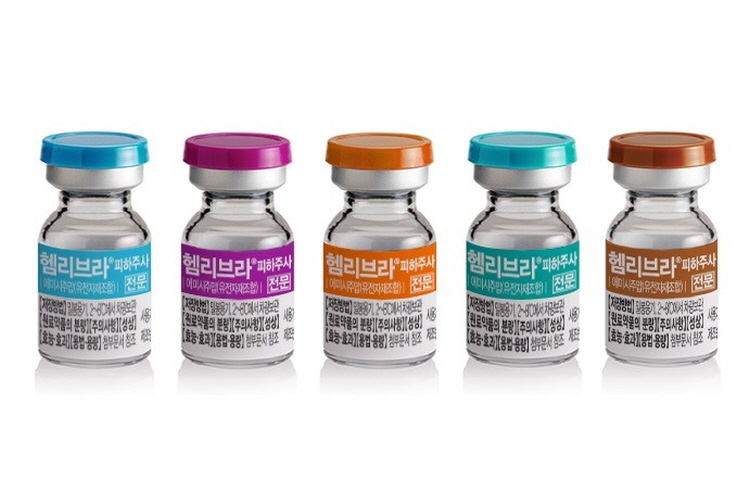
- Hemlibra Last year, sales of hemophilia A treatment in hospitals and clinics were tallied at 66 billion won. While existing major drugs are sluggish in hospitals and clinics, JW Pharmaceutical's Hemlibra, which recently joined the market, has risen in sales for two consecutive years, rising to No. 2 in the market. In the pharmaceutical industry, sales of Hemlibra are expected to increase further as benefits for Hemlibra are expected to increase in the first half. As a result, there is a prospect that the hemophilia A treatment market, which has been led by GC Pharma, will be greatly shaken. According to IQVIA, a pharmaceutical market research institute on the 7th, sales of hemophilia A treatment to hospitals and clinics last year were 66.2 billion won. It decreased by 15% compared to 78.2 billion won in 2021. Sales data generated by medical institutions operated by the Hemophilia Foundation were excluded from the tally. In the pharmaceutical industry, if this data is included, it is estimated that the total sales volume would have been maintained at the level of the previous year. While the overall market size of hospitals and clinics has been reduced, JW Pharmaceutical Hemlibra has succeeded in increasing sales for two consecutive years. Last year, Hemlibra sales were 7.6 billion won, up 5% from 7.2 billion won in 2021. Although the increase in sales last year was not large, it is analyzed that it rose to the second place in the market at once as major competing products performed poorly overall. Hemlibra is a hemophilia A treatment introduced by JW Pharmaceutical in Korea. In 2017, JW Pharmaceutical secured exclusive domestic development and sales rights for Hemlibra from Chugai Pharmaceuticals. In January 2019, domestic item permission was obtained, and in May 2020, it was listed as a salary and released in earnest. In the first year of its release, it recorded sales of 2.1 billion won. It is evaluated that Hemlibra succeeded in making a soft landing in the market by improving the convenience of administration. Hemlibra is the first subcutaneous injection formulation among hemophilia A treatments. Existing treatments required patients to find a vein and inject themselves. In particular, since many of the patients are children and adolescents, there was not a little inconvenience with the intravenous injection formulation. Existing major products such as Takeda Pharmaceutical's Adynovate, Novo Nordisk's Novoseven, and GC Pharma's GreenMono saw a simultaneous decrease in sales. Adynovate's sales last year were 19.5 billion won. It decreased by 15% compared to 22.9 billion won in 2021. Adynovate peaked at 27.7 billion won in 2019, and sales declined for three consecutive years until last year. However, it still ranks first in the market. In the case of Novoseven, it decreased by less than half from 14 billion won in 2021 to 5.5 billion won last year. The market ranking fell from 2nd to 5th. It recorded sales of 19.5 billion won in 2018, but since then, it has steadily decreased, and the new sales volume has reached a quarter of the level in four years. Green Mono decreased from 8.3 billion won in 2021 to 6.6 billion won last year. It's ranking in the hemophilia A treatment market fell from third to fourth. The pharmaceutical industry predicts that Hemlibra will grow more rapidly in the future. This is because the scope of benefits is expected to expand in the first half of this year. Last February, the HIRA recognized the adequacy of Hemlibra's reimbursement as a 'prophylactic treatment for patients with severe non-antibody hemophilia A'. JW Pharmaceutical plans to begin negotiating the drug price of Hemlibra with the NHIS soon. It is expected that the benefit increase will be decided within the first half of this year at the earliest. Currently, Hemlibra is covered only by antibody patients resistant to existing treatments. It is known that 9 out of 10 hemophilia A patients in Korea do not have antibodies. According to the 2019 Hemophilia White Paper, there are 1,746 patients with hemophilia A in Korea, of which 1,589 are non-antibody patients, accounting for 91%. In effect, Hemlibra's salary range is expanded 10 times, and industry insiders predict that related sales will surge in the process. Attention is focused on whether JW Pharmaceutical will emerge as a strong competitor to GC Pharma in the hemophilia A treatment market due to Hemlibra's coverage expansion. GC Pharma dominates the domestic hemophilia A treatment market. GC Pharma sells its own products, GreenMono and Greengene F. In addition, Takeda Adynovate and Adynovate, the No. 1 and No. 3 products in the market, will be jointly sold. The combined sales of the four products last year were 35.6 billion won, accounting for more than half of the hemophilia A treatment market last year.
- Company
- 'Vabysmo’s 4mth dosing interval may reduce patient burden'
- by Jung, Sae-Im Mar 08, 2023 05:53am
- A new drug for Neovascular (Wet) Age-Related Macular Degeneration (nAMD) that offers treatment effect with once every 4-month administration has landed in Korea. The new option is expected to greatly improve the convenience of administration in domestic patients whose number has been increasing with Korea’s aging population. Roche Korea held a press conference on the 7th to celebrate the approval of Vabysmo (faricimab) at its headquarters in Seocho-gu, Seoul. Vabysmo is the first bispecific antibody that targets both the VEGF that is commonly targeted by existing ocular disease treatments as well as angiopoietin-2 (Ang-2) that are considered to be the cause of retinal disease to block both pathways. MOA of Vabysmo Vabysmo has demonstrated non-inferiority over Eylea in improving vision outcomes in a Phase III study and was approved in Korea in January as a treatment for the treatment of patients with Neovascular (Wet) Age-Related Macular Degeneration (nAMD) and Diabetic Macular Edema (DME). With the approval, the total number of AMD treatments available in Korea increased to 4 – Vabysmo (Roche), Eylea (Bayer), Lucentis (Novartis), and Beovu (Novartis). nAMD is considered one of the 3 major causes of blindness in the elderly aged 65 or older. The importance of its treatment is increasing with the rising number of patients in the rapidly aging society. During his presentation, ophthalmologist Kim Jae-hui, (Kim’s Eye Hospital) said, “The widely used nAMD treatments Eylea and Lucentis are effective but have their limitations. One is that the drugs have to be injected frequently for a longer period of time to maintain the patients' vision and anatomical improvements. Also, the response may be limited even with treatment depending on the patient. In this sense, expectations are rising on treatment effect as the only drug that also inhibits Ang-2. “ Ophthalmologist Jae-Hui Kim (Kim The bispecific antibody Vabysmo has demonstrated that it can produce comparable effects to existing treatments while significantly increasing the dosing interval. After the first 4 doses are administered by intravenous injection every 4 weeks, the dosing interval for patients with no disease activity can be extended to every 16 weeks (4 months). In other words, the effect that existing treatments offered with every 1-2 month administration can be achieved with up to every 4-month administration of Vabysmo. In two Phase III trials conducted on 1,329 patients, patients who received Vabysmo at dosing intervals of up to 4 months showed non-inferiority over its comparator, the 2-month interval treatment Eylea, in improving vision outcomes after 1 year of treatment. Over half of the Vabysmo-administred patients were maintaining the 4-month dosing interval after 1 year of treatment. Kim expected that the introduction of Vabysmo and its longer dosing interval would benefit patients who had felt burdened by the frequent injections to the eye. Kim said, “In many cases, it was difficult to reproduce the results that were found in the clinical setting on-site because patients cannot receive regular injections in the long term as strictly as they would have had in clinical trials. So, their effect was reduced in line with the reduced number of injections the patients received. In this sense, I have higher hopes for Vabysmo as it only needs to be injected once every four months, which reduces patient burden. During practice, I often encountered patients whose edema does not go away with existing treatments, but data has shown that Vabysmo can remove edema at a higher rate. I think this will benefit the patients who have had shown limited response to existing treatments” At the press conference, Roche Korea expressed the company's plans to promptly supply Vabysmo in Korea through quick reimbursement listing. In-Hwa Choi, Lead at Roche Korea, said, “Vabysmo has been approved in 50 countries worldwide and is reimbursed in A7 countries and Australia. We have already applied for its reimbursement at the end of last year before it was approved in Korea.”
- Company
- Self-administered Kynteles lands at general hospitals
- by Eo, Yun-Ho Mar 08, 2023 05:52am
- The self-injectable formulation of the inflammatory bowel disease treatment ‘Kynteles’ can now be prescribed at general hospitals in Korea. According to industry sources, the subcutaneous injection formulation of Takeda Pharmaceuticals Korea’s Kynteles (vedolizumab) has passed the drug committee (DC) reviews in tertiary hospitals such as Samsung Medical Center and Seoul Asan Medical Center and other general hospitals including Kyungpook National University Hospital, Yeungnam University Medical Center, and Inje University Haeundae Paik Hospital. The company has been quickly expanding its prescription area after the drug was listed for reimbursement in December last year. Kynteles is reimbursed in Korea if the patient ▲writes a ‘patient administration journal’ that is managed by his/her healthcare institution within 14 weeks of the first administration. For long-term prescriptions, ▲up to 2 weeks’ worth of prescriptions is allowed per prescription upon discharge, and up to 4 weeks’ worth of prescriptions is allowed for outpatient care patients. Also, up to 8-12 weeks’ worth of administration is approved for reimbursement in patients who show stable disease activity after 24 weeks of administration with no side effects. The subcutaneous injection formulation of Kynteles, ‘Kynteles Prefilled Pen inj.’ can be self-administered by the patient without visiting hospitals, and was approved for the same efficacy and effect as ‘Kynteles Inj,’ the intravenous injection formulation, in Korea on February 17. In addition to the existing strength held by the intravenous injection formulation of having a short administration period of 30 minutes, the added reimbursement of the subcutaneous injection formulation has provided a wider treatment option for Korean patients. The subcutaneous formulation of Kynteles showed a similar rate of clinical remission to that of the intravenous injection in the VISIBLE trials. In the VISIBLE 1 study that was conducted on adult patients with ulcerative colitis, the subcutaneous formulation showed comparable improved improvement with the intravenous formulation in terms of efficacy, safety profile, and tolerability. The VISIBLE 2 trial that evaluated the subcutaneous formulation as a maintenance treatment in adults with Crohn’s disease also confirmed the significant improvement in results, demonstrating the new formulation’s effect as a maintenance treatment. Kynteles is a biological agent used to treat patients with moderate-to-severe active ulcerative colitis or Crohn's disease. As the only anti-integrin therapy among inflammatory bowel disease treatments, the drug owns a safety profile that does not cause systemic immunosuppressive activity.
- Company
- Celltrion Healthcare published clinical result of Remsima SC
- by Hwang, Jin-joon Mar 08, 2023 05:51am
- An official from Celltrion Healthcare is giving a presentation on Remsima SC at ECCO. (Photo by Celltrion Healthcare)Celltrion Healthcare announced on the 6th in Copenhagen, Denmark, that it was holding the '2023 European Crohn's Disease and Colitis Society (ECCO)' for four days from the 1st (local time), and 'Remsima SC' was held for the purpose of US approval. announced that it had unveiled a new global clinical trial of '. The first clinical trial is the result of analyzing the efficacy and safety of Remsima SC compared to placebo during maintenance therapy after administering Remsima to patients with Crohn's disease (CD). It was released as a digital oral presentation online. 343 patients with moderate to severe CD were randomly assigned to the Remsima SC treatment group and the placebo control group in a 2:1 ratio at week 10 and compared at week 54. Clinical outcome The primary endpoint, clinical remission (CR), was 62.3% for Remsima SC and 32.1% for placebo. In the endoscopic response (ER), Remsima SC 51.1% and placebo 17.9%, a statistically higher efficacy result than the control group was confirmed. No new safety issues were identified with Remsima SC maintenance treatment. The second clinical trial was released through a poster presentation as a result of analyzing whether Remsima SC maintained a statistically significant advantage over placebo in phase 3 clinical trials for patients with ulcerative colitis (UC). After 438 patients with UC were treated with Remsima up to week 10, they were randomly assigned to receive Remsima SC or placebo in a 2:1 ratio, and data from week 54 were compared. The CR set as the primary evaluation index for clinical results was 43.2% in the Remsima SC-administered group, higher than 20.8% in the placebo control group. No new safety issues were found in the clinical trial. The results of the post-clinical phase 1 post-analysis confirming the correlation between high serum trough concentration and low immunogenicity of Remsima SC were also released as a poster. Predictors of Immunogenicity in IBD Patients Treated with Infliximab: According to CT-P13 SC Phase 1 Post-Clinical Analysis', maintenance treatment with Remsima SC confirmed that the proportion of patients whose blood concentration reached a certain threshold or higher was higher than that of patients receiving an intravenous injection. done. Through this, indices such as antibody to the drug (ADA) and neutralizing antibody (NAb) involved in the immune process were lower, confirming the potential advantage of Remsima SC in terms of immunogenicity. Celltrion Healthcare also published three posters, including 'Network meta-analysis for comparative evaluation of the efficacy of Infliximab IV and SC and Vedolizumab IV and SC in the maintenance treatment of patients with Crohn's disease and ulcerative colitis'. presented at the conference.
- Company
- Exkivity applies for reimbursement
- by Eo, Yun-Ho Mar 07, 2023 05:38am
- Exkivity, an anti-cancer drug targeting EGFR exon 20 insertion mutation, is aiming for insurance coverage. Takeda Korea recently submitted a reimbursement application for Exkivity, a treatment for non-small cell lung cancer (NSCLC) with an EGFR exon 20 insertion mutation. This drug targets the same biomarker as Janssen's Rybrevant but differs in that it is an oral drug. EGFR Exon 20 insertion mutation is a new biomarker that has recently attracted attention in the field of non-small cell lung cancer. Currently available anticancer drugs are suitable for Exon19 deletion or Exon21 L858R substitution mutation, which are commonly found in EGFR mutations, but EGFR Exon20 was still a blind spot. Accordingly, it remains to be seen whether GFR exon 20 insertion mutation non-small cell lung cancer targeting anticancer drugs can be listed in Korea. In the case of Rybrevant, it failed to cross the HIRA barrier after applying for benefits once. Rybrevant proved its efficacy through a phase 1/2 study conducted on 114 patients with non-small cell lung cancer with an EGFR exon 20 insertion mutation who had previously received platinum-based chemotherapy. Clinical results, in the patient group who took Rybrevant 160 mg, the ORR evaluated by IRC was 28% and the mDOR was 17.5 months. In particular, the median reaction time after administration of Rybrevant was 1.9 months, confirming that the drug's effect appears quickly from the beginning of treatment. mPFS was 7.3 months and mOS was 24.0 months. The safety profile was also found to be favorable. The most common adverse reactions were diarrhea, rash, and fatigue, which can be managed by adjusting the dose.
- Company
- Boryung officially launches Zepzelca
- by Kim, Jin-Gu Mar 06, 2023 05:56am
- Boryung announced on the 28th that it has officially launched Zepzelca, a new small-cell lung cancer drug, in Korea. Zepzelca is a new anticancer drug developed by PharmaMar S.A. It is used for metastatic small-cell lung cancer that has failed first-line platinum-based chemotherapy. Zepzelca is a new drug with a mechanism that simultaneously shows 'apoptosis of cancer cells through inhibition of DNA transcription' and inhibition of cancer cell proliferation, immune checkpoint action, and angiogenesis through suppression of transcriptional activity in Tumor-Associated Macrophage (TAM). Zepzelca was approved by the Ministry of Food and Drug Safety in September of last year and will be distributed to medical institutions in earnest through this official launch. It was released in July 2020 in the US. Zepzelca has established itself as a representative second-line treatment for small-cell lung cancer in the United States, with sales of $535 million until last year. Currently, more than 40% of patients with small cell lung cancer are prescribed Zepzelca as a second-line treatment. In Korea, Boryung has held exclusive sales and distribution rights for Zepzelca since 2017. Boryung expects the use of Zepzelca to expand as there are not many types of second-line or higher small-cell lung cancer treatments in Korea. According to the literature supporting the approval of Zepzelca published in The Lancet Oncology, an overall response of 35% based on the entire patient group, the average duration of response of 5.3 months, ease of administration given once every 3 weeks, and manageable side effects such as clinical benefits such as existing drug The contrast effect is evaluated as excellent. For this reason, Zepzelca is also recommended in the NCCN and ESMO guidelines. Young-seok Kim, head of Boryung Onco Division, said, "So far, the options for second-line treatment have been limited for patients with small cell lung cancer who have failed platinum-based chemotherapy."
- Company
- ‘No regrets...happy to have served at Daiichi Sankyo Korea'
- by Eo, Yun-Ho Mar 06, 2023 05:56am
- Dae Jung Kim, President of Daiichi Sankyo Korea “I have no regrets. Although I have no specific plans set for the future, I would like to say it was a great honor to have served over 30 years at Daiichi Sankyo, and will cherish the memory forever.” Dae Jung Kim (63), President of Daiichi Sankyo Korea and the longest-serving multinational pharmaceutical company CEO in Korea, is leaving the industry. Although the company headquarters proposed to extend his term, President Kim has respectfully expressed his intention to resign. As successor, Daiichi Sankyo Korea recently appointed Jeong-tae Kim (49), the current vice president of Daiichi Sankyo Korea, as the new president. Accordingly, President Dae Jung Kim will retire at the end of this month (March) and remain as an advisor to help the company for the time being. “After dividing the employees into over 20 teams, I have been holding farewell parties with them for almost 2 months. Having served such a long time, I wanted to personally meet each and every one of my employees and express my gratitude. I will be leaving the beloved company after completing the overseas workshop that we haven’t been able to conduct due to COVID-19.” After being appointed as President of Daiichi Sankyo Korea in 2010, President Kim led the Korean subsidiary for 15 years. Also, President Kim had been working at Daiichi Pharmaceutical before the company merged with Sankyo in 2007. Kim joined Daiichi Pharmaceutical in 1991. After leaving the company to acquire an MBA, he returned to work in the US office and Japanese headquarters and led the M&A process of the Korean subsidiary. Although Daiichi was not his first place of work, Kim had been with Daiichi Sankyo for nearly 30 years. Kim said, “During my term, I worked to stay true to principle. I believe the role of multinational pharmaceutical companies in Korea is pretty clear. Rather than conduct research or manufacture products, the companies need to supply the products that they have already developed to the Korean patients. Based on this belief, I worked to deliver accurate instructions on how to use the product we introduced to Korea. We thoroughly monitored variables that could occur on-site, unlike in the clinical setting, and focused on improving the knowledge of our employees to ensure accurate information delivery.” While reminiscing, Kim chose the patent term expiry of ‘Olmetec’ as his most difficult period. “At the time, sales of Olmetec fell by nearly 20% due to the inflow of its generics and the price cut that followed. So we decided to take on a ‘choose and focus’ strategy and set the slogan ‘to become reborn as a cardiology treatment specialist,' based on which we discontinued the domestic promotional activity for our antibacterial agent ‘Cravit.' Fortunately, the strategy showed an effect. This decision was solely made by the Korean subsidiary, and we were the only one in the Asia-Pacific region to make such a decision.’ “As a result, we accumulated knowledge and rapport in cardiology, which led to the success of the fourth new oral anticoagulant (NOAC), ‘Lixiana.’ Of course, factors such as the performance of our partners also contributed to the success, so it was a result of everyone's efforts." Immediately after his retirement, President Kim plans to trek the 750km Haeparang trail alone for 50 days. Kim made time for such solitary walks at every turning point of his life. “I only have gratitude and thanks to express to my executives and employees at Daiichi Sankyo Korea. As a leader, I have long been in a position where I had to set a direction and lead the people forward. Having experienced the joys and sorrows together, I want to express thanks to the many that believed in me and followed me through difficult times. I owe my safe retirement to my executives and employees."
- Company
- JAK inhibitor market jumped 2.4 times in 3 years
- by Kim, Jin-Gu Mar 03, 2023 05:57am
- (From left) Product photos of Olumiant, Rinvoq, and Xeljanz The market for Janus kinase (JAK) inhibitors, an oral autoimmune disease treatment drug, has expanded 2.4 times over the past three years. In addition to Xeljanz, which was leading the market, new products such as Olumiant and Rinvoq were added, and each product actively expanded its indications. Competition between major products is also getting fiercer. Olumiant overtook Xeljanz to become the No. 1 in the market in its fourth year of release, and Rinvoq grew more than four times last year compared to the previous year, rapidly catching up with Olumiant·Rinvoq. According to IQVIA, a pharmaceutical market research institute, on the 27th, the size of the domestic JAK inhibitor market last year was 40.6 billion won, an increase of 34% compared to 2021. JAK inhibitors are drugs used for autoimmune diseases such as rheumatoid arthritis and atopic dermatitis. It is a mechanism that blocks inflammation, pain, and cell activation by inhibiting inflammatory cytokines. In 2014, Pfizer's Xeljanz was approved in Korea for the first time, followed by Lily's Olumiant in 2017 and AbbVie's Rinvoq in 2020. In 2021, Pfizer received approval for Cibinqo as a successor to Rinvoq. As new products have been introduced one after another in recent years, the size of the related market is also rapidly expanding. The size of the JAK inhibitor market, which was 16.9 billion won in 2018, increased 2.4 times to 40.6 billion won in three years. It is analyzed that not only the addition of new products but also the active expansion of indications for each product had an impact on the market growth. Xeljanz was first approved for rheumatoid arthritis and then added indications for psoriatic arthritis, ankylosing spondylitis, and ulcerative colitis. Olumiant was also initially approved for use as an indication of rheumatoid arthritis. In 2021, the indication was expanded to atopic dermatitis for the first time among JAK inhibitors. In addition, at the end of last year, it applied for the expansion of indications targeting severe alopecia areata. Rinvoq has the fastest rate of indication expansion among major drugs. After receiving approval for rheumatoid arthritis, Rinvoq added indications for psoriatic arthritis, ankylosing spondylitis, atopic dermatitis, and ulcerative colitis one after another from the end of 2021. AbbVie plans to add Crohn's disease to this. ◆Olumiant leader, Rinvoq soaring… Competitive heat for expansion of indications As generic drugs rapidly expand their indications, competition for the lead in this market is also intensifying. Olumiant surpassed Xeljanz and rose to the top spot in the fourth year of its release. Last year, Olumiant's sales increased by 22% year-on-year to 15.4 billion won. The rise of Rinvoq, which secured the most indications in a short period of time, is also remarkable. Rinvoq's sales last year were 11.5 billion won. From 2.7 billion won in 2021, it soared 4.3 times in one year. During the same period, Xeljanz sales decreased by 11% from 15.1 billion won to 13.5 billion won. Xeljanz sales have been declining since 16.2 billion won in 2020. It is analyzed that the fact that the US Food and Drug Administration (FDA) warned of the possibility of cardiovascular side effects of Xeljanz based on post-marketing investigations affected the decrease in sales. The FDA warned not only Xeljanz but also Olumiant·Rinvoq with the same content because the mechanism was similar, but the market impact seems to have been prominently shown in Xeljanz. The pharmaceutical industry predicts that competition among JAK inhibitors will intensify in the future. The key is the atopic dermatitis market. In particular, the application of benefits to children and adolescents is expected to have an impact on future market trends. Currently, Olumiant and Rinvoq are covered for the treatment of moderate to severe atopic dermatitis in adults. In the case of Rinvoq, the indication for atopic dermatitis in children and adolescents has been approved, and there is a possibility that it will receive reimbursement within the year. If Rinvoq expands its coverage to the indication of atopic dermatitis in children and adolescents, it is expected that the rise will be even steeper. Olumiant has not secured indications for atopic dermatitis in children and adolescents. Pfizer is also targeting the atopic dermatitis market with Cibinqo, a follow-up drug to Xeljanz. Cibinqo is approved for the treatment of moderate to severe atopic dermatitis in adults and adolescents 12 years of age and older. However, wages have not yet been applied. Pfizer applied for insurance benefits for atopic dermatitis in adults last year but withdrew it, and recently reapplied for insurance benefits for both children and adolescents and adults.
- Company
- Obesity mkt grows larger than ever...Saxenda leads mkt
- by Chon, Seung-Hyun Mar 03, 2023 05:57am
- The domestic obesity treatment market grew to record an all-time high last year. Saxenda maintained its unrivaled lead for 4 consecutive years and left its competitor Qsymia far behind. According to the market research institution IQVIA on the 2nd, the obesity treatment market grew 22.4% YoY to reach KRW 175.7 billion last year. The obesity treatment market had renewed its record for 4 consecutive years since it first set a 10-year new record of KRW 134.1 billion in 2019. The market, which had recorded KRW 96.8 billion in 2018, had recorded high annual growth of 81.5% for the 4 years that followed. However, this growth in the obesity treatment market had slowed down with the spread of COVID-19. In 2019, the market had grown by 38.5% YoY. However, the market only grew by 6.6% and 0.4% in 2020 and 2021, respectively. At the time, interest in obesity treatments declined with the reduction in people's outdoor activities in the early stages of COVID-19. However, last year, the demand for obesity treatments increased again among people who gained weight due to reduced outdoor activities during the COVID-19 crisis and the rise in outdoor activities with the lift of social distancing measures. Among the treatments, Saxenda rose to the sold lead, breaking the two-way structure it had held with Qsymia. Last year, Saxenda’s sales increased 62.7% YoY to KRW 58.9 billion. This is the largest sales it had recorded since its release. It surpassed the KRW 42.6 billion it had made in 2019 by 38.3% in 3 years. Saxenda is the world’s first GLP-1 (Glucagon-Like Peptide 1) analogue approved to treat obesity. It contains the same ingredients as the company’s 'Victorza (liraglutide)’ which is used to treat diabetes but has a different dosage and administration. After recording KRW 42.6 billion in 2019, Saxenda’s sales fell for two consecutive years to KRW 36.8 billion in 2020, then to KRW 36.2 billion in 2021, but then made a sharp rebound. After making the lead in the obesity treatment market with KRW 5.6 billion in Q4 2018 with its release, the drug has topped the market ever since, for 17 consecutive quarters. Saxenda enjoyed explosive popularity as it acts with the same mechanism of action as the human body's GLP-1 and suppresses the patient’s appetite to induce weight loss, forming the perception that it is relatively safe. Last year, Saxenda occupied 33.5% of the market. Saxenda’s market share surged from 7.8% in 2018 to 31.8% in 2019, then its growth slowed down somewhat to 25.8% and 25.2% in 2020 and 2021. However, the product regained its rapid growth last year, and its share of the market also reached an all-time high. Qsymia maintained its second place in the market. Its sales rose 14.8% YoY and recorded sales of KRW 30.1 billion last year. Qsymia, which was released at the end of 2019, is a combination drug that contains ‘phentermine’ and ‘topiramate’ that Alvogen Korea gained exclusive marketing rights for in Korea from the US company Vivus. Alvogen Korea signed a copromotion agreement with Chong Kun Dang at the end of 2019 and started to sell the drug in earnest in Korea. Qsymia’s rapid penetration into the market was possible due to the synergistic effect of the sales network owned by Alvogen Korea and Chong Kun Dang in the obesity treatment market from selling ‘Furing’ and ‘Furimin.’ Also, the fact that it contains relatively antipsychotics and may be prescribed long-term although it is an oral formulation acted as a success factor. In 2021, Qsymia’s sales rose to KRW 26.2 billion and closely chased Saxenda by KRW 10 billion. However, as Saxenda showed higher growth, the gap widened to 28.8 billion won last year. Sales of Korea Prime Pharm’s ‘ Phendimen’ rose tenfold from KRW 0.7 billion to KRW 8.2 billion last year. Phendimen is an obesity treatment that contains phendimetrazine. Daewoong Pharmaceutical's ‘Dietamine’ sales fell 5.5% YoY to KRW 7.9 billion, and sales of Huons' ‘Hutermin’ also fell 8.9% YoY to record ₩4.8 billion last year.
