
- LOGIN
- MemberShip
- 2026-05-07 23:25:56
- Company
- Forxiga, has the largest number of clinical trials
- by Jung, Sae-Im May 10, 2023 05:58am
- With the expansion of SGLT-2 inhibitor coverage, which began in April, combination prescriptions of various diabetes drugs and SGLT-2 drugs are expected to increase. However, as the clinical basis for each drug is a prerequisite for the expansion of this benefit, there are differences in detailed application depending on the presence or absence of clinical trials. Expectations are growing that AstraZeneca's Forxiga, which has the most clinical trials among SGLT-2 inhibitors, will rise further. Kim Jong-hwa, Director of Insurance, Korean Diabetes Association Kim Jong-Hwa, head of the Department of Endocrinology at Bucheon Sejong Hospital (insurance director of the Korean Diabetes Association), said, “Forxiga is the first SGLT-2 inhibitor in Korea and has the most related clinical studies among drugs in the same class, so it will become the same as Lipitor in the statin class. expected". From April 1, the Ministry of Health and Welfare applied the expansion of the combination benefit for diabetes treatment SGLT-2 inhibitors. According to the notice, the reimbursement of two-drug combination therapy with sulfonylurea (SU), which was limited to some drugs, has been expanded to all SGLT-2 inhibitors. ▲Metformin + SU + SGLT-2, ▲Metformin + DPP-4 + SGLT-2, and ▲Metformin + Thiazolidinedione (TZD) + SGLT-2 can be used as reimbursements for the three-drug regimen. Daewoong Pharmaceutical's Envlo, which has no evidence in the SU+SGLT-2 inhibitor dual therapy, is not covered by insurance coverage. This is because Envlo has not proven its effectiveness through clinical trials in combination with the SU series. Even in the metformin + TZD + SGLT-2 triple therapy, MSD's Steglatro and Envlo, which have no clinical evidence, are not covered by reimbursement. The drugs that can be used in the two-drug regimen that is not included in this reimbursement are also limited. In the DPP-4+SGLT-2 two-drug regimen, only Forxiga and Steglatro can be used together with Januvia at the full cost of the first type patient. Among various exceptions, the drug that can be used most widely is, of course, Forxiga. As explained by Director Kim, Forxiga has proven its efficacy and safety in combination with monotherapy and other diabetes drugs through a total of 15 clinical trials. Clinical trials included not only metformin, but also various combination therapies such as sulfonylurea, insulin, DPP-4 inhibitor, TZD, sulfonylurea + metformin, and DPP-4 + metformin. This is the background of the increased utilization of Forxiga. By demonstrating the effect of protecting heart disease and heart function along with blood sugar control, Forxiga had a significant impact on changing the treatment guidelines to prioritize SGLT-2 inhibitors in patients with comorbidities such as cardiovascular disease. “The obesity rate of type 2 diabetic patients in Korea is getting higher and the number of patients with heart failure is also increasing,” said Kim. shows good compatibility with DPP-4 inhibitors and TZD, so a good effect can be produced if the combination therapy is used appropriately." Director Kim expected that Forxiga would become the same as Lipitor, a statin drug used to treat hyperlipidemia, as it accumulated long-term prescription experience and clinical data. Lipitor is an old drug that has been released in Korea for 25 years as a treatment for hyperlipidemia containing atorvastatin. Although more than 100 generics have been launched on the market since the patent expired, Lipitor still boasts an annual prescription of about 200 billion won. Forxiga also faces a full-fledged generic competition system this year. About 150 dapagliflozin products (including complex drugs) registered for a benefit that was released last month are reached. From the standpoint of Forsh, the expansion of the combination benefit widened the utilization and at the same time had to defend against the offensive of generics. It is expected that the strengths of the original product will be maintained even in the generic competition. He believed that it was necessary to pay attention to the side effects of SGLT-2 that would arise from the surge in generics. "If using SGLT-2 inhibitors indiscriminately in diabetic patients, they can be poisonous. We need to clearly determine which patients need SGLT-2 inhibitor prescription so that it can be used for appropriate patients," he urged.
- Company
- Betmiga generics’ market share rises to 49%...
- by Kim, Jin-Gu May 09, 2023 05:38am
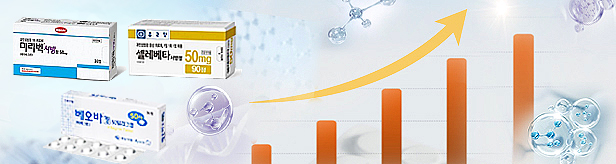
- Miragegron original Betmiga (left) and its generic versions Mirabek and Selebeta (right) Generic versions of mirabegron have increased their influence in Korea’s overactive bladder market. The overall market share of the generic products in Q1 was 49%, chasing sales of the original drug, ‘Betmiga,’ right under the nose. In particular, sales of Hanmi Pharmaceuticals ‘Mirabek’ and Chong Kun Dang’s ‘Selebeta’ have shown rapid growth. On the other hand, the prescription performance of the original product, Astellas Betmiga, dropped to less than half in 3 years after the release of its generics. Betmiga’s generics increase market share to 49%...Sales of original continue to decline According to the market research institution UBSIT on the 6th, the OAB market for the mirabegron ingredient had been KRW 15.6 billion in Q1, which is a 21% increase from the KRW 12.9 billion in Q1 2022. The market expansion was led by mirabegron generics. The overall prescription performance of the 22 Betmiga generics currently released in Korea reached KRW 7.7 billion, which is a 64% increase from the KRW 4.7 billion in Q1 last year. On the other hand, the decline in the prescription of the original mirabegron drug, Betmiga, is evident. In Q1, its prescriptions had fallen 3% from KRW 8.2 billion in Q1 2022 to KRW 8 billion this year. The amount is less than half of what it had made in Q1 2020, immediately before the release of its generics. Astellas had been delaying the execution of the price cut disposition on Betmiga that follows the release of generics by filing administrative suits and suspension of disposition execution requests, but had lost the final suit early last year and received price cuts. The increasing influence of its generics aggravated the decline in the prescription performance of the original drug. At this pace, sales of generics will exceed the original’s and take over the majority of market share in Q2 at the earliest. Mirabek and Selebeta’s sales grow rapidly... Domestic pharmaceutical companies’ new OAD drugs remain a variable in the market By product, sales of Hanmi Pharmaceuticals ‘Mirabek’ and Chong Kun Dang’s ‘Selebeta’ have shown rapid growth. In the case of Mirabek, its sales had increased 18% from KRW 3.2 billion in Q1 last year to KRW 3.8 billion in Q1 this year. In the same period, Selebeta’s sales have also risen from KRW 1.3 billion to KRW 1.7 billion. Sales of generics produced by the other 20 companies have raised less than KRW 0.5 billion in quarterly sales. Hanmi Pharmaceutical and Chong Kun Dang released their generics one after another after winning the patent dispute with Astellas in June 2020. In February last year, 20 additional companies released their generics after the generic exclusivity period expired for the two companies. The quarterly prescriptions of 20 companies that released products after the generic exclusivity period were all less than KRW 0.5 billion, but their growth rate is also quite steep. Therefore, the new OAD drugs released by domestic pharmaceutical companies are expected to act as the variable in this market. Jeil Pharmaceutical Jeil Pharmaceutical received approval for its new OAD drug, ‘Beova (vibegron)', in November last year. Jeil Pharm plans to supply this product, which was developed by Kyorin Pharmaceutical in Japan, within the year. Recently, it held a symposium for doctors, indicating its imminent entry into the market. By selectively acting on β3-adrenoceptor agonists, Beova relaxes the bladder and enhances urine collection. Its mechanism of action is similar to mirabegron, but Beova is known to have a higher response rate to β3 receptors and a low risk of cardiovascular side effects Dong-A ST is also in the final stages of developing a new OAD treatment. Dong-A ST has been conducting a Phase III trial in Korea for its OAD drug candidate 'DA-8010' since January last year. This drug is an antimuscarinic drug developed by Donga. Antimuscarinic drugs act primarily in the urine storage phase when the parasympathetic nerve is not activated, suppressing involuntary contraction of the bladder, reducing urinary urgency, and increasing bladder volume. In terms of mechanism, it is similar to another overactive bladder treatment, 'Veshcare (Solifenacin)'. DA-8010 is a new antimuscarinic being developed by Dong-A ST. Antimuscarinics inhibit involuntary contraction of the bladder and reduce urinary urgency to increase bladder capacity by primarily acting in the urinary storage phase where parasympathetic nerves are not activated. its mechanism of action is similar to that of ‘VESIcare (solifenacin),’ another OAD treatment.
- Company
- Ildong’s diabetes combi Qtern registered for reimbursement
- by Kim, Jin-Gu May 08, 2023 05:41am
- Ildong Pharmaceutical announced on the 3rd that its type 2 diabetes combination drug 'Qtern 5/10mg' was registered as an item subject to medical care benefit as of May 1st. As a result, Qtern is covered by insurance as a three-drug therapy drug that can be used in combination with metformin when HbA1c is 7% or higher even if the two-drug therapy is administered for more than 2 to 4 months. 'Qtern 5/10mg' is a combination drug that combines ▲DPP-4 inhibitor Saxagliptin 5mg and ▲SGLT2 inhibitor Dapagliflozin 10mg. In 2016 and 2017, it obtained new drug approval in Europe and the United States, respectively, and in Korea, it was launched in 2021 after item approval from the Ministry of Food and Drug Safety in 2017. According to Ildong Pharmaceutical, as a result of phase 3 clinical trials, HbA1c decreased significantly in the three-drug combination therapy of metformin and Saxagliptin·Dapagliflozin compared to the two-drug combination therapy of metformin and Saxagliptin or metformin and Dapagliflozin. Ildong Pharmaceutical emphasized that Qtern is the only combination drug of dapagliflozin and DPP-4 inhibitor that both active ingredients are based on the original. In addition, the combination of three drugs, including metformin, has an economic advantage in that the drug cost is cheaper than prescribing a DPP-4 inhibitor and an SGLT2 inhibitor as single-component preparations, respectively. An official from Ildong Pharmaceutical said, "We plan to continue conducting academic marketing, including delivery of medical information, in consideration of newly changed standards such as the expansion of insurance benefits related to prescriptions for diabetes medications."
- Company
- Xospata passed the first hurdle to increasing benefits
- by Eo, Yun-Ho May 08, 2023 05:41am
- After submitting the application for expansion of Xospata's benefits, the Health Insurance Review and Assessment Service's Cancer Disease Review Committee succeeded in setting the reimbursement standard. As a result, attention is focused on future procedures such as the schedule for submission to the Pharmaceutical Reimbursement Evaluation Committee. As Xospata is a PE drug, in the case of insurance coverage expansion, it is necessary to go through the drug price negotiation process with the Health Insurance Corporation. Xospata has been approved as monotherapy for patients with FLT3 mutation-positive relapse or Acute Myeloid Leukemia, but the current reimbursement standard allows up to four cycles only for patients eligible for allogeneic hematopoietic stem cell transplantation. There are no specific reasons to limit the dosing cycle of Xospata except for financial issues. Looking at the ADMIRAL clinical study of this drug, it was designed with no restriction on the administration period, and it is recommended as 'Category 1' in the NCCN Guidelines without any limitation on the period. The best treatment for patients with acute myeloid leukemia is hematopoietic stem cell transplantation, but there is a high risk of recurrence, and transplantation is difficult in many cases because there are many elderly patients. In the case of patients who cannot undergo hematopoietic stem cell transplantation, which is excluded from the current reimbursement standard, there is no suitable treatment alternative other than Xospata, so they remain on chemotherapy developed over 40 years ago. The Korea Leukemia Patients Association commented immediately after the review committee, "There are many patients with acute myeloid leukemia aged 70 years or older who are unable to undergo transplantation due to lack of physical strength or high non-insured hematopoietic stem cell transplantation costs. Such allogeneic hematopoietic stem cell transplantation is impossible. FLT3 Xospata is used in patients with mutation-positive relapsed or refractory acute myeloid leukemia." "The government authorities and the relevant pharmaceutical companies should expeditiously carry out follow-up procedures such as scheduled deliberation committee, drug price negotiation, and deliberation by the Health Insurance Policy Deliberation Committee so that the reimbursement standard for Xospata, a treatment for acute myeloid leukemia, can be expanded as soon as possible," he urged.
- Company
- New polycythemia vera drug Besremi may be prescribed
- by Eo, Yun-Ho May 08, 2023 05:40am
- The Taiwanese pharmaceutical company PharmaEssentia’s first new drug ‘Besremi’ can now be prescribed in general hospitals in Korea. According to industry sources, PharmaEssentia’s polycythemia vera treatment, Besremi (Ropeginterferon alfa-2b) passed drug committee reviews of tertiary hospitals in Korea including Seoul National University Hospital and Asan Medical Center. The company submitted an application for the reimbursement of its drug on March 28 and is undergoing the reimbursement process in Korea. If listed, the drug is expected to quickly lead to actual prescriptions in the field. Polycythemia vera is a rare blood disorder where a somatic cell mutation in the bone marrow abnormally activates bone marrow function and produces excessive red blood cells. It has a short survival period and is so fatal that 10~15% of patients with polycythemia vera develop myelofibrosis or leukemia within 10 years. Although hydroxyurea had been used as the standard of care, it was difficult to fundamentally cure the disease with hydroxyurea, and patients who could not be treated with hydroxyurea had limitations as there were practically no drugs available for them in Korea’s domestic reimbursement environment. Besremi is an interferon treatment that selectively removes JAK2 mutations that cause polycythemia vera. In Korea, the drug received approval in October 2020 to treat low-risk and high-risk patients with polycythemia vera without symptomatic splenomegaly. The drug demonstrated its potential as a radical treatment for polycythemia vera in patients who had not received cytoreduction therapy or received less than 3 years of treatment with hydroxyurea. Therefore, whether the only interferon treatment option approved for polycythemia vera will be born in Korea is receiving attention. Besremi demonstrated its efficacy and safety in the Phase III PROUD/CONTINUATION-PV trial that was conducted on polycythemia vera patients. Trial results showed that 53% of the patients in the Besremi arm achieved a complete hematological response, an improvement compared with the hydroxyurea patient arm (38%). The hematologic and molecular response rates at 72 months were also high, at 80.4% and 65.3% in low-risk and high-risk patients, respectively. Regardless of their risk, patients treated with Besremi did not require phlebotomy even 6 years after administration. Sung-Soo Yoon, Professor of Hemato-Oncology at Seoul National University Hospital, said, “Polycythemia vera is currently left unattended in the blind area of reimbursement in Korea. Patients that show no response to hydroxyurea, the current standard of care, had no appropriate treatment and had no option but to wait for their condition to progress further.” He added, “Korea’s clinical practice guidelines recommend interferon and ruxolitinib as second-line treatment for patients who show intolerance or are refractory to hydroxyurea, but both drugs are currently unreimbursed, and other interferon treatments have withdrawn from the Korean market. Therefore, as the only treatment option available, Besremi is in urgent need of reimbursement.” Besremi is recommended as a first-line or second-line treatment for polycythemia vera in the National Comprehensive Cancer Network (NCCN) and European Leukemia Network (ELN) guidelines, regardless of previous treatment experience.
- Company
- Merck establishes a bio-production facility in Daejeon
- by Jung, Sae-Im May 08, 2023 05:40am
- (From left) Minister of Trade, Industry and Energy Lee Chang-yang, Merck Life Science CEO Matthias Heinzel, Daejeon Metropolitan City Mayor Lee Jang-woo Merck Life Sciences establishes a bio raw material production facility in Korea. Merck Lifesciences announced on the 3rd that it has signed a memorandum of understanding (MOU) with the Ministry of Trade, Industry and Energy and Daejeon Metropolitan City to establish a production facility for raw and subsidiary materials used in the new Asia-Pacific bioprocess in Korea. The bio-process production facility scheduled to be established in Daejeon will support the pharmaceutical/bio ecosystem in the Asia-Pacific region and focus on producing products for biotech and pharmaceutical customers. Along with this, the company and the city of Daejeon will support biotech companies that have moved into the Daedeok Research Complex in Daejeon and will expand research cooperation with leading universities in Korea. Matthias Heinzel, CEO and Member of the Board of Directors of Merck Life Sciences said, "Korea is an emerging world leader in the biotechnology industry, and this MOU is a commitment to actively support our customers in the Asia Pacific region through close cooperation with the government. "The production facility being tested will play an essential role in meeting the demand for bioprocessing in the Asia-Pacific region, while also serving as an important hub for the development of Korea's biopharmaceutical industry." said. Minister of Trade, Industry, and Energy Lee Chang-yang said, "This cooperation is expected to serve as an opportunity for our biopharmaceutical industry to take a leap forward as a national high-tech industry."
- Company
- AbbVie Korea merges with Allergan Korea
- by Jung, Sae-Im May 07, 2023 08:37pm
- AbbVie Korea announced on the 2nd that it will complete the integration of domestic corporations with Allergan Korea on May 1st and launch as a single corporation. The domestic corporation merger is a follow-up to the announcement of the merger and acquisition of Allergan by the global headquarters in May 2020. It plans to integrate the entire business operation management system and take a new leap forward with 'one AbbVie'. As part of the integration process, AbbVie Korea recently expanded its existing office space and renovated it into a smart office to integrate the two companies workspaces. Since the announcement of the global acquisition of Allergan in 2020, the two companies have been operating employee programs such as Culture Week, company-wide training program, and Possibilities Week together every year, integrating corporate culture into a unified AbbVie. With this domestic corporation integration, the total number of AbbVie Korea employees will be about 330 as of May. As a leader in the field of immunology, AbbVie has successfully launched Humira, a treatment for autoimmune diseases, Skyrizi, a treatment for psoriasis, and Rinvoq, which is expanding its treatment to include rheumatoid arthritis, ankylosing spondylitis, psoriatic arthritis, atopic dermatitis, and ulcerative colitis. introduced domestically. In addition, it is supplying innovative treatments such as Maviret, a treatment for hepatitis C, and Venclexta, a treatment for chronic lymphocytic leukemia and acute myeloid leukemia. The integration will include Allergan's Ozurdex treatment for diabetic macular edema and uveitis, Combigan treatment for glaucoma, Ganfort and XEN Gel implant medical devices for eye diseases, as well as Botox for stroke-related upper extremity spasticity and chronic migraine headache treatment, which will be included in AbbVie's specialty medicines business. widen Allergan esthetic provides differentiated brand programs and educational opportunities in the medical esthetic business, such as botulinum toxin preparation Botox, hyaluronic acid filler Juvedern, and coolsculpting, and provides new growth opportunities. Kang So-young, CEO of AbbVie Korea, said, "We are pleased to have successfully completed the operation management system and corporate integration process of both companies." We expect that we will be able to maximize the synergy effect by integrating each other's professional capabilities and experiences, as well as expanding the treatment area."
- Company
- BeigeneKR's hematologic cancer drug Brukinsa, covered from M
- by Jung, Sae-Im May 04, 2023 05:50am
- BeigeneKR announced on the 2nd that Brukinsa, a treatment for Waldenstrom's macroglobulinemia (WM), will be covered from this month. Brukinsa reimbursement applies to monotherapy in adult patients with Waldenstrom's macroglobulinemia who have received one or more prior therapies. Brukinsa is a second-generation BTK inhibitor that targets BTK. Existing patients with Waldenstrom's macroglobulinemia were treated with chemotherapy that damages normal cells as well as cancer cells. Brukinsa improved both efficacy and side effects by targeting the BTK protein through the malignant B-cell receptor (BCR). Waldenstrom's macroglobulinemia is a rare type of non-Hodgkin's lymphoma. It mainly occurs in the elderly. The main pathogenesis is the infiltration of lymphoid plasma cells secreting monoclonal immunoglobulin M (IgM) into the bone marrow. Increased IgM causes blood viscosity to rise, resulting in symptoms such as blood flow disorders, headaches, nosebleeds, retinal hemorrhages, and cerebral hemorrhages. Anemia, thrombocytopenia, and neutropenia due to bone marrow involvement are also common. Some patients experience fever, night sweats, or unexplained weight loss. Brukinsa reduced median IgM levels by 79% in a phase 3 trial in patients with WM. The event-free rate at 18 months for patients who achieved a complete response (CR) or very good partial response (VGPR) was 93%. Brukinsa also has indications for ▲MCL and ▲MZL. However, the two indications failed to pass the Cancer Disease Review Committee of the Health Insurance Review and Assessment Service.
- Company
- Erleada can be prescribed at general hospitals in Korea
- by Eo, Yun-Ho May 04, 2023 05:50am
- The new prostate cancer drug ‘Erleada’ can now be prescribed at general hospitals in Korea According to industry sources Janssen Korea’s metastatic hormone-sensitive prostate cancer (mHSPC) treatment Erleada (apalutamide) passed the drug committees (DCs) of tertiary hospitals in Korea including the Seoul National University Hospital and Asan Medical Center, including emergency DC meetings, a total of 60 medical institutions generated a prescription code for Enhertu. With the drug’s reimbursement listing last month, the approval is expected to quickly lead to actual Erleada prescriptions in the field. Erleada is an androgen receptor targeted agent and a latecomer that belongs to the same class of drugs as Zytiga (abiraterone)’ and ‘Xtandi (enzalutamide).’ The drug safety and efficacy in the Phase III TITAN trial in 1,052 patients with mHSPC. Despite the fact that about 40% of the patients assigned to the placebo group continued treatment with Erleada during treatment, the risk of death in the Erleada group was 35% lower than that of the placebo group. Overall survival (OS) at 48 months was 65% in the Erleada group and 52% in the placebo group. Also, when excluding the effect of patients who switched medication from the placebo group to Erleada, the risk of death in the Erleada group was 48% lower than that of the placebo group. Meanwhile, according to the National Cancer Registration Statistics Program, the number of patients diagnosed with prostate cancer in 2020 was 16,815, ranking third in men following lung cancer (19,657) and stomach cancer (17,869). The number surpassed that of colorectal cancer (16,485). In addition, among the 5 major male cancers (lung cancer, stomach cancer, prostate cancer, colorectal cancer, and liver cancer), only the rate of prostate cancer has been increasing, and at an annual average rate of over 5%.
- Company
- Daewoong is accelerating its global expansion
- by Kim, Jin-Gu May 04, 2023 05:50am
- A view of Daewoong Pharmaceutical’s Hyangnam factory (above) and Daewoong Bio’s Hyangnam factoryDaewoong Pharmaceutical Group is speeding up CAPA expansion. In order to speed up its global expansion, it decided to invest 250 billion won in establishing two new factories this year alone. Daewoong Pharmaceutical plans to expand its botulinum toxin production capacity to 3.6 times the previous level by constructing a third plant for Nabota. Daewoong Bio will expand its scope from the production and sales of raw materials and finished pharmaceuticals to the global CDMO business by establishing a new microorganism-only plant. ◆Production capacity increased 3.6 times with the establishment of the 3rd factory in Nabota, Will the utilization rate decrease to 150%? According to the pharmaceutical industry on the 4th, Daewoong Pharmaceutical has begun construction of a third plant exclusively for producing Nabota, a botulinum toxin. Daewoong Pharmaceutical plans to complete the construction by 2024 at a cost of 103.6 billion won. The third factory located in Hyangnam-eup, Hwaseong-si, Gyeonggi-do has an annual production capacity of 13 million vials. The production capacity of the existing Nabota Plants 1 and 2 was 5 million vials. This means that after 2024, Nabota production capacity will expand to 3.6 times the current level. Daewoong Pharmaceutical explained that it is setting out to establish a new plant to respond to the expanding global demand for Nabota. Daewoong Pharmaceutical achieved sales of 142.1 billion won with Nabota last year. It increased by 79% compared to 79.6 billion won in 2021. In particular, exports of Nabota increased 2.3 times in one year to 109.8 billion won. The production capacity of Daewoong Pharmaceutical's Hyangnam plant, including Nabota, has steadily expanded since 2018. It more than doubled in four years from 5.8 billion won in 2018 to 6.2 billion won in 2019, 9.3 billion won in 2020, 10 billion won in 2021, and 14.4 billion won last year. The utilization rate has already exceeded 100%. 159% in 2018, 156% in 2019, 149% in 2020, 143% in 2021, and 165% last year. The utilization rate of the entire Hyangnam plant is also steadily maintained at 150-160%. This means that even though factories are operating beyond their limits, the situation continues to be difficult to meet demand. In particular, in February 2021, Daewoong Pharmaceutical's US partner, Evolus, signed a three-way agreement with Medytox and AbbVie to eliminate risks associated with local sales of 'Jubo (Nabota's US product name)', and exports are rapidly increasing. Daewoong Pharmaceutical launched Nabota in the UK in September of last year, aiming to enter the European market in earnest. Daewoong Pharmaceutical obtained product approval from the EC in October 2019. It has been registered in 62 countries around the world so far and plans to release products in 9 European countries, China, Egypt, Chile, Australia, New Zealand, Singapore, and Malaysia. Daewoong Bio, entering the global CDMO business with the construction of a new plant, expects synergy with Daewoong Pharmaceutical. Daewoong Bio also announced an expansion of its production capacity recently. Daewoong Bio announced in January that it would build a microbe-based plant. At the same time, it announced that it would enter the global CDMO business. It plans to expand its business area from the production of existing raw materials and finished drugs. Daewoong Bio is operating its Hyangnam and Anseong factories in Korea. The production capacity of the Hyangnam plant is 200,000 liters per year. It has production lines dedicated to raw materials, UDCA, and Fexuclue, which are raw materials for Ursa. The Anseong plant has an annual production capacity of 400 million tablets and produces Gliatamine, Atorvastatin, and Clopidogrel. The new plant, with an investment of 146 billion won, is expected to serve as an outpost for the global CDMO business. In the pharmaceutical industry, there is a prospect that the CDMO business structure from Daewoong Pharmaceutical to Daewoong Bio will be completed. Daewoong Pharmaceutical obtained permission for an advanced regenerative medicine cell processing facility from the Ministry of Food and Drug Safety in July last year. Daewoong Pharmaceutical has been able to speed up the development of cell and gene therapy products by obtaining permission for cell processing facilities in addition to the existing high-tech biopharmaceutical manufacturing and management businesses such as human tax cells. If Daewoong Pharmaceutical's Yongin Bio Center provides services such as the development and quality testing of cell and gene therapy products, it is expected that Daewoong Bio's new plant will be able to complete the CDMO business structure in charge of the production of related products. It is analyzed that both Daewoong Pharmaceutical and Daewoong Bio made a bold investment decision at the group company level in the construction of a new plant. The 103.6 billion won invested in Daewoong Pharmaceutical's new plant construction amounts to 14% of its equity capital (741.2 billion won) at the end of last year. Daewoong Bio plans to invest 40% of its equity capital (365.1 billion won) in the construction of a new plant at the end of last year.
