
- LOGIN
- MemberShip
- 2026-05-07 17:03:37
- Company
- ALS drug Teglutik may be prescribed at general hospitals
- by Eo, Yun-Ho Jun 20, 2023 05:35am
- SK Chemical’s Lou Gehrig's disease treatment ‘Teglutik’ can now be prescribed at general hospitals in Korea. According to industry sources, Teglutik (riluzole) passed the drug committees (DCs) of tertiary hospitals including Samsung Medical Center, Seoul National University Hospital, Asan Medical Center, as well as medical institutions such as Pusan National University Hospital The drug, which was released this year, was approved by the Ministry of Food and Drug Safety in May last year to extend the survival period or delay tracheostomy in patients with amyotrophic lateral sclerosis (ALS) ALS, which is also commonly referred to as Lou Gehrig's disease, is a neurodegenerative disorder that results in the progressive loss of motor neurons, leading to paralysis in the limbs and breathing. So far, there is no cure for Lou Gehrig's disease itself, however, symptomatic treatments such as Teglutik are available to slow down symptoms. Teglutik comes in a suspension formulation that allows an easier oral intake for patients suffering from swallowing disorders. The company explained that Teglutik offers an improved convenience in intake compared to existing treatments. Meanwhile, other riluzole treatments available in the market are Rilutek (Sanofi) and Yooritek Tab. Based on IQVIA, Rilutek sold KRW 3.7 billion and Yooritek KRW 2.5 billion in 2021. Teglutik, the only riluzole suspension formulation available, was listed for insurance reimbursement in January last year. The ceiling insurance price is KRW 133,970 per vial for 15-day use. Therefore, the price is the same as the price of existing tablet formulations (KRW 4,499 per day) in terms of daily dosage. Therefore, what changes will occur with SK Chemicals' entry into the riluzole market that had been shared by Sanofi and Yoo Young Pharmaceutical remains to be seen.
- Company
- SK Biopharmaceuticals’ Cenobamate approved in Canada
- by Chon, Seung-Hyun Jun 19, 2023 06:00am
- SK Biopharmaceuticals announced on the 15th that Cenobamate, a new drug for epilepsy, has received marketing approval from the Canadian Department of Health. Cenobamate's commercialization in Canada is being handled by Paladin Labs, a local pharmaceutical company. Cenobamate is a new drug for epilepsy that SK Biopharmaceuticals is independently selling in the US. It was approved by the US FDA in 2019. Cenobamate was independently carried out by SK Biopharmaceuticals in the entire process from initial development to U.S. Food and Drug Administration (FDA) approval. It is prescribed for adult epileptic patients with partial seizure symptoms. It is a mechanism of action that relieves seizure symptoms by simultaneously regulating two targets related to excitatory and inhibitory signaling, which cause epilepsy. SK Biopharmaceuticals expects that "Cenobamate will receive approval in Canada four years after FDA approval, and will accelerate its advance into the North American market, which accounts for more than half of the global epilepsy market."
- Company
- ADHD drug Strattera discontinues supply in Korea
- by Kim, Jin-Gu Jun 19, 2023 06:00am
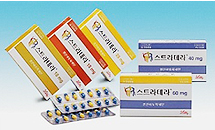
- Pic of Strattera The domestic supply of the ADHD (Attention-Deficit·Hyperactivity Disorder) treatment ‘Strattera (atomoxetine) was completely discontinued in Korea. Its supplier Lilly Korea said, “We have currently discontinued its supply, with no plans for resupply. According to the pharmaceutical industry on the 17th, Lilly Korea recently notified Boryeong Pharmaceutical that it will suspend the supply of Strattera. Lilly Korea has been supplying Strattera to the domestic market through Boryeong. Lilly Korea had notified Boryung about the discontinuation earlier this year and additionally announced that it has no plans to resupply Strattera in Korea. “Supply of Straterra will be discontinued not only in Korea but also in most countries," and "We have no plan to resupply the drug in Korea either." Regarding whether the company will voluntarily withdraw the drug’s authorization in Korea, it said, “We are currently discussing the specifics on withdrawing Straterra’s approval." Lilly Korea received approval for Straterra in Korea in 2006. Since then, the drug had led Korea’s ADHD treatment market with Janssen Korea’s Concerta OROS (methylphenidate). However, the gap between its sales and Concerta OROS had widened greatly recently. According to the market research instruction IQIVIA, the size of Korea’s ADHD treatment market was KRW 36 billion. Among those, Concerta OROS sold KRW 23.9 billion, and Straterra KRW 4.4 billion. In terms of market share, Concerta OROS has a monopoly over the market, occupying 67% of the market. Even in Q1 this year, there was a more than fourfold difference in sales between Concerta OROS’s KRW 6.9 billion and Straterra’s KRW 1.6 billion. Quarterly ADHD treatment market size (Unit: KRW 100 million, Data: IQVIA) Due to the prolonged monopoly of Concerta OROS, many competitors in addition to Lilly, whose headquarter discontinued the global supply of the drug, have discontinued the supply of its products or voluntarily withdrew their marketing authorizations in Korea 7 out of 15 domestically approved ADHD treatments have been withdrawn from the market. Hwanin Pharm's Metadate CD, Korean Drug’s Atomottera, Hanmi Pharmaceutical’s Atocera, Mundipharma Korea's Bisphentin, and JinYang Pharm's Amoxetine were withdrawn from the market either voluntarily or due to license expiry. Korea Pharma’s Domotin and Myungmoon Pharmaceutical’s Artrex are not being supplied to the market. Here, the supply of Lilly’s Straterra in Korea will also be discontinued. Boryung, which is in charge of marketing Lilly’s Straterra in Korea expects the discontinuation to not lead to a gap in the company’s performance due to its small sales volume. An official from Boryung said, "We are expanding our pipeline by introducing items in the overall CNS area, including ADHD while developing IMDs and generics. Discontinuing Straterra will not be a serious issue.”
- Company
- Epkinly designated as an orphan drug in Korea
- by Eo, Yun-Ho Jun 19, 2023 06:00am
- Epkinly, the first bispecific antibody drug involving T cells, has been designated as an orphan drug in Korea. The Ministry of Food and Drug Safety recently announced that it designated AbbVie's lymphoma treatment Epkinly as an orphan drug. The specific indication is relapsed or refractory DLBCL with a history of two or more systemic therapies. Epkinly is a type of immunoglobulin 1 bispecific antibody that simultaneously binds to CD3 of T cells and CD20 of B cells and induces T cell-mediated killing of lymphoma B cells. Recently, the US FDA obtained approval through the rapid approval program, and the phase 1/2 EPCORE NHL-1 study became the basis for approval. The study enrolled 148 patients with CD20-positive diffuse large B-cell lymphoma, of which 86% were patients with unclassified diffuse large B-cell lymphoma, and 27% of these patients were DLBCL converted from indolent lymphoma. The remaining 14% were patients with advanced B-cell lymphoma. As a result, Epkinly showed an ORR of 61%, a CRR of 38%, and a median duration of response of 15.6 months in patients with relapsed or refractory DLBCL who had previously received an average of three treatments. In Korea, one type of B-cell lymphoma new drug, MONJUVI, was recently approved. MONJUVI, an introduced new drug from Handok, is used as combination therapy with Lenalidomide in adult patients with relapsed or refractory diffuse large B-cell lymphoma who are not suitable for autologous hematopoietic stem cell transplantation and who have failed at least one previous treatment. MONJUVI binds to CD19, a B cell surface antigen protein, and has a mechanism of inducing B cell depletion by inducing direct apoptosis, antibody-dependent phagocytosis, and antibody-dependent cell-mediated cytotoxicity.
- Company
- Forxiga generics occupy 20% of mkt 2 mths into their release
- by Kim, Jin-Gu Jun 19, 2023 05:59am
- Forxiga (left), Pic of Xigduo ‘Forxiga (dapagliflozin)’ generics have increased their market share to 20% within 2 months of entry into the market. With fierce competition unfolding in the prescription field, the total market size expanded to exceed KRW 10 billion per month. However, since so many products were released at the same time, the average monthly prescription amount per generic product amounted to only around KRW 20 million. According to the marker research institution UBIST on the 19th, the outpatient prescription amount of single-agent and combination dapagliflozin drugs was KRW 11 billion in May. The original drugs, Forxiga and Xigduo posted sales of KRW 8.8 billion, and the combined generics of the two products recorded KRW 2.2 billion. In terms of market share, the original drugs accounted for 79.9% and generics 20.1% of the market. This means that the market share of generic drugs has increased to 20% in just 2 months after entry. A large number of Forxiga·Xigduo generics were released after Forxiga’s substance patent expired in April. A total of 90 pharmaceutical companies obtained approval for 105 single-agent drugs and 64 combination drugs. By May, 60 single-agent drugs and 31 combination drugs were released. The total market size has also expanded to more than KRW 10 billion per month. In March, before the full-fledged addition of generics, the total market size was KRW 9.5 billion, but in May, the market increased by 15.2% in 2 months to KRW 11 billion. The analysis is that the introduction of generic products in droves and fierce sales competition at the prescription site led to the expansion of the overall market. Monthly prescription performance of Forxiga and Xigduo original and generic However, with so many products entering at the same time, the average profit made by the companies was minimal. In the case of single-agent drugs, 60 pharmaceutical companies recorded a total of KRW 1.44 billion in prescriptions in May. The average prescription amount for each generic drug is only around KRW 24 million. In the case of combination drugs, 31 pharmaceutical companies recorded KRW 772 million in prescriptions in the same month. The average prescription amount per combination product was around KRW 31 million. ▲Boryung Pharmaceutical’s Trudapa, and ▲Hanmi Pharmaceutical’s Dapalon among single-agent drugs, ▲ Boryung Pharmaceutical’s Trudapa M, ▲ Hanmi Pharmaceutical’s Dapalon Duo, and ▲Kyung Dong Pahrma’s Dapamet among combination drugs, posted over KRW 100 million in monthly sales each. Among 60 companies that released single--agent drugs, over half – 29 companies – earned less than KRW 10 million a month. In the case of combination drugs, 17 of the 31 companies recorded monthly sales of less than KRW 10 million. Sales of the original drug, Forxiga, which posted sales of KRW 5.2 billion in March, fell 9.7% in May. In the same period, Xigduo’s sales fell 5.0% from KRW 4.3 billion to KRW 4.1 billion. Forxiga and Xigduo’s prices did not fall despite the release of their generics. AstraZeneca filed a lawsuit against the government to cancel the drug price cut and requested suspension of execution of the government’s price cut disposition. The court accepted AstraZeneca's request for suspension of execution. Therefore, the original drug’s price will remain the same until February next year. The suspension of disposition decision is considered a success on AstraZeneca’s part as it succeeded in delaying the drug price cuts and did relatively well against the large number of generics that were introduced to the field.
- Company
- Lipiodol is in stable supply despite price cuts
- by Nho, Byung Chul Jun 16, 2023 05:55am
- Guerbet Korea X-ray contrast agent Lipiodol Ultra (iodized oil), which caused controversy over supply and demand, faced a drug price cut due to the entry into a generic on the 1st of last month. Still, it is understood that the supply is stable so far. In the meantime, Guerbet Korea has been negotiating with the health authorities for reasons such as 'reduced margins due to price hikes for raw material drugs' and 'justice to maintain current drug prices due to application for price adjustment'. However, in 2020, Dongkook Pharm's Fattiodol, a competitive product with the nature of an alternative drug, obtained approval from the Ministry of Food and Drug Safety and was released, and the generic drug price calculation following patent expiration was applied from May 1 this year. Last year's sales of Lipiodol and Fattiodol according to drug distribution performance standards were about 2.8 billion won and 36 million won, respectively. According to industry estimates, Guerbet Korea did not take out the extreme card of refusal to supply because it cannot hand over the market to competing generics. Lipiodol, an old-drug original drug licensed in 1998, was sold at 52,560 won in June 2018, 190,000 won in August 2018, 189,224 won in January 2022, 133,000 won in September 2022, and 189,224 won in September 2022. It has experienced drug price increases and decreases seven times in the last five years, including 19,224 won, 133,000 won in 2023, and 101,745 won in May 2023. The price of Fattiodol 10·5ml was reduced twice: 113,050 won and 75,367 won in 2020 and 101,745 won and 67,830 won in 2023. Regarding this, Dongkuk Pharmaceutical said, "We plan to do our best to ensure a stable supply of Fattiodol from the patient's point of view. However, it is true that the cost rate of related drugs is so high that profitability is not good." It is a necessary part to reestablish the direction of rational drug price calculation.” Since cost disclosure is a corporate trade secret, it is difficult to ascertain the exact details. In addition, Guerbet Korea and Dongkuk Pharmaceutical's only way to raise or preserve drug prices is to apply for a drug price adjustment, but they cannot use it because there are alternative drugs for Lipiodol and Fattiodol. Because of this, both Guerbet Korea, the original company, and Dongkuk Pharmaceutical, the generic company, are bound by the institutional shackles of essential medicines and are forced to fall into the dilemma of continuous supply of drugs, which is their ethical duty as pharmaceutical companies. In the worst case, if two pharmaceutical companies stop supply at the same time because of lower margins due to drug price cuts, a supply-demand crisis is expected. On the other hand, Lipiodol's main ingredient is iodized fatty acid ethyl ester (iodized oil) derived from poppy seeds and is used for lymphography, salivary gland imaging, carotid artery chemoembolization for liver cancer, and hysterosalpingography.
- Company
- Ultomiris under review as myasthenia gravis Tx in Korea
- by Eo, Yun-Ho Jun 16, 2023 05:54am
- The paroxysmal nocturnal hemoglobinuria (PNH) treatment ‘Ultomiris’ is seeking to secure an indication for myasthenia gravis (gMC) in Korea. According to industry sources, AstraZeneca Korea submitted an application to the Ministry of Food and Drug Safety and is being reviewed for the indication to treat adults with generalized myasthenia gravis who are anti-acetylcholine receptor (AChR) antibody-positive. Ultomiris’s myasthenia gravis indication was approved by the US FDA in April 2022, and by the European Commission in September of the same year. Myasthenia gravis is a rare, chronic, autoimmune neuromuscular disease that causes patients to lose muscle function and cause severe weakness. AChR antibody-positive patients account for about 80% of all gMG patients. The approvals abroad and the application in Korea are based on the positive results of the Phase III CHAMPION-MG trial. In the trial, Ultromiris demonstrated superiority over the placebo in the 26-week change in MG-ADL(Myasthenia Gravis-Activities of Daily Living Profile) total score, a patient-reported symptom improvement scale used to measure the difficulty of everyday activities. The safety profile of ULTOMIRIS was comparable to placebo and consistent with that observed in Phase III trials of ULTOMIRIS in paroxysmal nocturnal hemoglobinuria (PNH) and atypical hemolytic uremic syndrome (aHUS). The most common adverse reactions in patients receiving ULTOMIRIS were upper respiratory tract infection and diarrhea. Myasthenia gravis is a rare disease that affects about 5 people in 100,000 and can occur in people of all ages. In children and the elderly, symptoms of decreased muscle strength are caused by immune disorders. Systemic myasthenia gravis is an unpredictable chronic autoimmune disease, where the autoimmune antibodies that trigger the disease target specific proteins in the postsynaptic membrane and disrupt synaptic transmission in the neuromuscular junction. Due to the gravity of the disease, major countries have been actively granting accelerated review and orphan drug designations to candidate drugs. In the field, Argenx’s efgartigimod received US FDA approval. Johnson & Johnson’s nipocalimab is also nearing commercialization. Also, Immunovant has completed the Phase III trial for batoclimab, for which it had signed a license transfer agreement with the Korean company Hanall Biopharma.
- Company
- Development of Recomid generics fierce despite reeval issue
- by Kim, Jin-Gu Jun 15, 2023 05:38am
- Pic of Yuhan Corp Development of generics of Yuhan Corp’s antiulcer drug, ‘Recomid SR’ (rebamipide),’ continues to remain fierce in Korea. Despite the authorities’ notification of the reevaluation of rebamipide, generic companies are continuing to develop their generic versions as planned along with patent challenges. The rebamipide-based antiulcer drug market has been growing rapidly recently, mainly around Recomid SR Tab. This is why the industry believes that the generic companies decided to take the risk and believe that the reevaluation results will be to ‘maintain reimbursement.’ According to industry sources on the 15th, CMG Pharma received approval for a test plan to evaluate the bioequivalence of its Remipid SR tablets and Yuhan Corp’s Recomid SR tablets earlier this month. Before CMG Pharma, Pharmgen Science, Dongkook Pharmaceutical, and Withus Pharm received approval for 4 bioequivalence test plans to develop their respective generic versions of Recomid SR Tab. All have been approved after March this year. Adding up the approvals. 4 companies have received approval for 5 bioequivalence test plans in the last three months. One interesting aspect is that rebamipide is subject to reimbursement reevaluations this year. In February last year, the government announced its plans that it will reevaluate its reimbursement of rebamipide drugs. This means that all 5 bioequivalence tests for the development of Recomid generics were approved while the company was aware of the risk of 'reimbursement withdrawal’ that may arise after the reevaluations. The companies have also been attempting to evade Recomid’s patent. Thirty-three generic companies, including the four companies including CMG Pharma, filed a passive trial on the scope of rights against Yuhan Corp in June last year against Recomid SR’s formulation patent. 8 ingredients subject to reimbursement reevaluation in 2023 The industry pointed to the relevant market growth as the reason why the generic companies are continuing the development of generics for Recomid SR Tab and patent challenges despite the risk of reimbursement withdrawal. According to the market research institution UBIST, the rebamipide-based antiulcer drug market grew 19.7% YoY to reach KRW 143.1 billion last year. The market started to grow rapidly after the ranitidine issue arose in Q3 2019. As ranitidine-based antiulcer drugs were withdrawn from the market for excess NDMA (N-nitrosodimethylamine) impurities, rebamipide-based antiulcer drugs received reflective benefits. In 2020, its sales exceeded KRW 100 billion for the first time and then increased by 27.2% in 2 years until last year. Recomid SR Tabs were at the center of market growth. Recomid SR Tab was jointly developed by Yuhan Corp, GC Pharma, Daewoong Pharmaceutical, and Daewon Pharmaceutical. The existing tablet formulation was improved into a sustained-release formulation, reducing the 3 times a dosage regimen to 2 times a day. Thanks to the rapid growth of Recomid SR Tab, Yuhan Corp’s Recomid (tablet + SR tablet) has grown to become the second-largest product in the market. Last year, the total prescription amount of Recomid was KRW 6.8 billion, up 61% YoY. The industry estimated that about 80% of all prescriptions for Recomid came from Recomid SR Tab. Companies that jointly developed and released drugs with Yuhan Corp are in a similar situation. GC Pharma’s Mucotect, Daewon Pharmaceutical's ‘BIDreba’, and Daewoong Pharmaceutical's 'Mucotra' showed a 35-100% increase in prescriptions in 2022 compared to 2021, thanks to the addition of SR tablet products. Quarterly antiulcer rebamipide drug market size(Unit: KRW 100 million, Data: UBIST) An industry official said, “It seems that companies are continuing generic development in preparation for the possibility that reimbursement will be maintained even after the reimbursement reevaluation.” Judging from last year's case, the outline of the reimbursement reevaluation for rebamipide will be revealed as early as July. In the case of last year, the reevaluation results were notified to the pharmaceutical companies in July, and then the authorities received objections were received for a month in August. The final decision was made in November after a DREC meeting.
- Company
- Samsung Bioepis emphasized the role of a similar
- by Hwang, byoung-woo Jun 14, 2023 05:38am
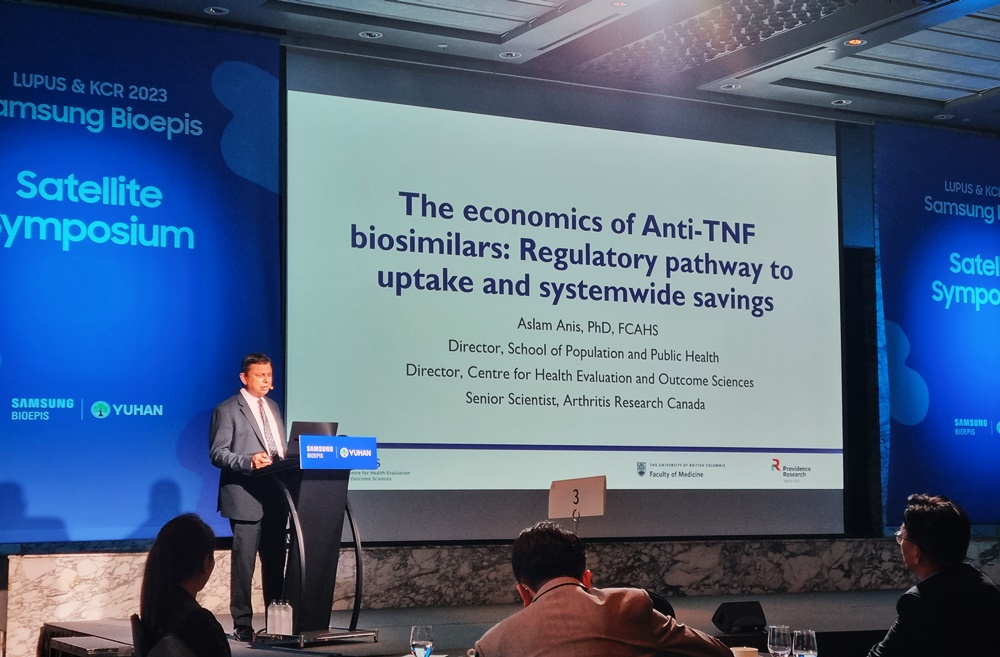
- As financial savings and patient benefits, such as health insurance, are emerging as major issues both domestically and globally, biosimilars that have the same effect as the original and are cheaper are expanding their presence. It is the expert's view that the effects are felt even when looking at overseas cases where active prescriptions are already being made. Samsung Bioepis held a satellite symposium at the 15th World Lupus Academic Conference, the 43rd Korean Society of Rheumatology Spring Conference, and the 17th LUPUS & KCR 2023 organized by the Korean Lupus Research Association and the Korean Society of Rheumatology, which were held at COEX on the 18th. The role of biosimilars was discussed. This symposium is the first academic discussion held by Samsung Bioepis at a domestic academic conference, and it delivered information on the current status and economic effectiveness of biosimilars in the field of autoimmune disease treatment to domestic and foreign rheumatology specialists. Biosimilars for 21 original biopharmaceuticals have been developed worldwide. Looking at the number of products approved for biosimilar sales by country, 78 in the EU, 40 in the US, 51 in Canada, 51 in Australia, 33 in Japan, and 20 in Korea. Speakers who participated in the Samsung Bioepis Symposium on this day emphasized that the use of biosimilars can lead to economic effects on the healthcare system. Dr. Aslam H. Anis, from the Graduate School of Population Health at the University of British Columbia in Canada, mentioned the need for an institutional mechanism for biosimilars to settle down under the theme of 'Economics of Anti-TNF Biosimilars'. Dr. Anis said, “Biosimilars trigger market competition, which promotes economic benefits, such as improving education for medical staff, developing new formulations, and conducting administrative procedures.” is estimated at about 30 billion euros." As an example, three anti-TNFs were selected: Infliximab, Etanercept, and Adalimumab biosimilar market penetration rates were analyzed with IQVIA data. Considering these points, it is a view that countries that are concerned about financial savings, such as health insurance, are considering expanding the role of biosimilars, and related markets will continue to grow. From this point of view, Dr. Anis believes that it is necessary to respond in line with each country's drug price policy, such as the conversion of prescriptions to biosimilars for previously treated patients, policies to maintain the price advantage of biosimilars, and periodic price re-evaluation. Dr. Anis said, “It is necessary to realize that the use of biosimilars brings economic benefits to the healthcare system.” Professor Jonathan Kay of the University of Massachusetts School of Medicine, who gave a presentation titled 'What rheumatologists should know about biosimilars before prescribing', mentioned that biosimilars can reduce treatment costs and offer various alternatives. In particular, he argues that there should be no prejudice in prescription as biosimilars are drugs that have undergone rigorous comparative analysis and clinical trial evaluation with expired patent drugs and have been approved by regulatory agencies. Professor Kay said, "FDA-approved biosimilars have equivalent efficacy and similar safety through extensive comparative analysis with the originals." It has potential social benefits.” He also explained, "Using inexpensive biosimilars can provide more people with an opportunity for effective drug treatment." "The cost savings from using biosimilars can be reinvested in research and development to develop new therapies that address unmet drug demand," he added.
- Company
- The efficient use of CDK 4/6 needs to be discussed
- by Jun 14, 2023 05:38am
- Dr. Dennis J. Slamon presented the clinical results of NATALEE at ASCO 2023 held in Chicago on the 2nd (local time)CDK4/6 inhibitors, which were prevalent in metastatic breast cancer, have expanded their scope to early breast cancer. Following Lily Verzenio, Novartis Kisqali demonstrated the effect of adjuvant therapy after surgery through a clinical presentation this year. As the role of CDK4/6 inhibitors expands, new concerns are emerging to achieve the best cost-effectiveness. Joo-Hyeok Son, a professor of oncology at Yonsei Cancer Hospital, who met at the 'American Society of Clinical Oncology Annual Conference (ASCO 2023)' held for five days from the 2nd (local time) said, "The risk ratio (HR) of Verzenio is slightly higher than the risk ratio (HR) shown in early breast cancer. However, as time goes on, it remains to be seen whether the Kisqali group will be able to widen the difference between the control group and the control group,” he said. Although they are the same class of drugs, the clinical designs of the two drugs in early breast cancer are different in many ways. First of all, Verzenio was targeted for administration to high-risk patients with lymph node metastases. Kisqali did not limit the presence of lymph node metastasis. A relatively low-risk patient group was also included in the clinical trial. The dose and duration of administration are also different. Verzenio uses the same dose as for metastatic breast cancer, and after two years of administration, only endocrine therapy is continued. On the other hand, Kisqali lowered the dose by two-thirds and set the duration of administration to 3 years while conducting clinical trials. It appears to be intended to lower the risk of side effects by reducing the dose. Attention is focused on whether such differences in clinical design will affect the data. Professor Sohn said, "The risk ratio of the primary indicator shown by Kisqali at this conference was 0.74, which did not reach the initial result of Verzenio. The risk ratio was similar in advanced breast cancer, but slightly different results in early breast cancer." Several factors, such as condition and dose, may have had an impact." Prof. Sohn thinks that Verzenio, which has released four-year follow-up data, is in a slightly more solid position in early breast cancer. However, there is room for Kisqali to show more improved data over time. In fact, Verzenio showed a sustained effect even after the two-year administration period was over. The invasive disease-free survival (iDFS) rate of Verzenio, which showed a difference of 2.8%p from the control group at the 2-year follow-up, widened to 6.4%p at the 4-year follow-up. At 4 years, the hazard ratio was 0.66, and the improvement effect was greater than that of 0.70 a year ago. As the treatment area for CDK4/6 inhibitors expands to early breast cancer, new concerns are emerging. Representatively, the problem is how to set the patient group that can see the most CDK4/6 inhibitor effect. Some point out that CDK4/6 inhibitors improve iDFS by 2-3 percentage points over control. This means that out of 100 patients treated, only 3 patients will benefit from improvement. In fact, after the NATALEE study results were announced at ASCO, during the discussion session, "It is questionable whether the medical system can afford the cost of improving 3 out of 100 people in a situation where pharmaceutical costs alone cost 15 million dollars." told In this discussion session, another question was asked, "Is it possible to establish a group of patients who are more likely to receive the CDK4/6 inhibitor effect?" Professor Sohn also explained, “A consensus is needed on whether to prevent the recurrence of the three patients by spending about 65 billion won in a situation where the drug must be used for 2 to 3 years.” Professor Sohn predicted, "In the end, we have to find a biomarker (which can measure the effect of CDK 4/6 inhibitors), but it will not be an easy process."
