
- LOGIN
- MemberShip
- 2026-05-03 07:14:43
- Company
- Dong-A ST’s biosimilar first enters the U.S. market
- by Chon, Seung-Hyun Oct 14, 2024 05:49am
- Dong-A S.T. has succeeded in entering the US market 13 years after declaring its entry into the biosimilar business. It has received approval in the US for a biosimilar version of Stelara, which owns a global market worth KRW 14 trillion. It was the company’s second overseas market with a self-developed biosimilar. The biosimilar's entry into the U.S. market secured additional technology fee revenues and added a new item for the company. Pic of Dong-A ST headquarters According to industry sources, Dong-A ST's Stelara biosimilar ‘Imuldosa’ was approved by the US Food and Drug Administration (FDA) on the 12th. Stelara is a treatment for inflammatory diseases such as plaque psoriasis, psoriatic arthritis, Crohn's disease, and ulcerative colitis. It is a high-grossing product that generated more than KRW 14 trillion in global sales last year. Dong-A ST is the second Korean company to receive approval for a Stelara biosimilar in the US following Samsung Bioepis. Dong-A ST passed the US market gateway 11 years after it started developing its Stelara biosimilar in 2013. Dong-A Socio Holdings began codeveloping Imuldosa with Japan's Meiji Seika Pharma in 2013. In July 2020, the development and commercialization rights were transferred to Dong-A ST for efficient execution of the global project. From 2021 to the end of 2022, Dong-A ST conducted a global Phase III clinical trial of Imuldosa in 9 countries including the United States, Poland, and Estonia, on a total of 605 patients. Trial results confirmed that Imuldosa’s efficacy and safety was equivalent to is equivalent to Stelara for marketing authorization by the U.S. Food and Drug Administration (FDA) and European Medicines Agency (EMA) Imuldosa's FDA approval is expected to generate additional technology fees. In July 2021, Dong-A ST signed a technology export agreement with the multinational pharmaceutical company Intas Pharmaceutical to license out Imuldosa. Intas paid a non-refundable upfront payment of USD 10 million. The payments based on clinical, licensing, and sales milestones were set at up to USD 95 million. Royalties on product sales are guaranteed to be at least 10%. In addition, payments from Intas will be shared by Dong-A ST, Dong-A Socio Holdings, and Meiji Seika Pharma. Intas has secured exclusive rights to license and market the product globally, excluding South Korea, Japan, and select Asian countries. Intas is an Indian multinational pharmaceutical company with a global sales network in more than 85 countries. Global commercialization will be handled by Accord Healthcare, a subsidiary of Intas Pharmaceuticals. Accord Healthcare submitted a marketing authorization application for Imuldosa to the European Medicines Agency (EMA) in June last year and submitted an application to the FDA in October last year. By the end of the first half of last year, Dong-A ST had recognized KRW 41 billion as development costs for Imuldosa as an intangible asset. The Financial Supervisory Service has identified Phase III clinical trials as the stage at which new drug R&D costs can be capitalized. This means that KRW 41 billion was spent on global Phase III clinical trials of Imuldosa. Dong-A ST announced its entry into the biosimilar business in 2011. In 2011, Dong-A Socio Holdings established DM Bio with an investment of KRW 57 billion from Meiji Seika Pharma to build a biopharmaceutical plant. In March 2015, Dong-A Socio Holdings spun off DM Bio into a 100% subsidiary and transferred 49% of its shares to Meiji Seika Pharma. In 2021, Dong-A Socio Holdings acquired 1,117,200 shares of DM Bio from Meiji Seika Pharma for KRW 42.1 billion. The company's stake in DM Bio increased to 80.4% as it took over 60% of the 1.86 million DM Bio’s shares held by Meiji Seika Pharma. In 2022, DM Bio changed its name to STgen Bio. STgen Bio will be responsible for the production of Imuldosa. Imuldosa is the second biosimilar product that Dong-A ST has successfully commercialized in overseas markets. Dong-A ST sells Nesp's biosimilar version, ‘darbepoetin alfa’ in Japan. Dong-A ST conducted Phase I clinical trials of darbepoetin alfa and transferred the development and sales rights in Japan to Sanwa Kagaku Kenkyusho (SKK) in January 2014. Based on the results of a local Phase III clinical trial comparing the original Nesp with darbepoetin alfa, SKK received marketing authorization from the Japanese Ministry of Health, Labour and Welfare in September 2019, and launched the drug in late November of the same year. Dong-A ST will export the finished product manufactured on consignment by STgen Bio to SKK, and SKK is in charge of local sales. Last year, Dong-A ST recorded 20.6 billion won in exports with its dabepoetin alfa.

- Company
- ERT demonstrates effectiveness in treating Fabry disease
- by Whang, byung-woo Oct 11, 2024 06:25am
- "'It has been 20 years since ERT treatments became available for patients with Fabry disease. More treatment options are available to treat Fabry disease, but selecting treatment options and strategy requires precise attention based on research data." Analysis suggests that the treatment environment for rare diseases has improved due to the emergence of Enzyme Replacement Therapy (ERT) to treat lysosomal storage disease (LSD), such as Fabry disease. New treatment strategies and research for treatments are being conducted to complement the limitations of ERTs. For example, studies on treatments like Substrate Reduction Therapy (SRT) are being conducted. Antonio Pisani, a professor in the Department of Nephrology at the University of Naples Federico II. However, considering the nature of rare diseases, using available treatment resources to the fullest remains equally important. Antonio Pisani, a professor in the Department of Nephrology at the University of Naples Federico II, has emphasized the importance of monitoring when switching between medicines for treating Fabry disease during a meeting with Daily Pharm. A study comparing ERT→oral drug switching…disease management through monitoring is essential During the WORLD Symposium 2024, held in San Diego, USA, in February, a study result was presented that close monitoring for medication switching is essential. It is because after a patient switch from Fabrazyme to oral drugs, a long-term change in treatment outcomes has been reported. The study is expected to aid in selecting treatments as it compares the efficacy and safety of the ERT treatment, Fabrazyme, to an oral drug, migalastat, using registry data on patients with Fabry disease. "Migalastat has been approved in Europe in 2016. However, the use of the drug has been limited because there is no real-world evidence (RWE) besides pre-clinical or clinical results," Professor Pisani, who conducted the research, said, "The study analyzed data of patients who had been treated with Fabrazyme over a year and then switched to migalasta and continued treatment over six months. It confirmed various biomarkers for Fabry disease, changes to patient symptoms, whether a patient reached first-line treatment goal and clinical symptoms." Based on research results, migalastat treatment, compared to Fabrazyme, worsened an estimated glomerular filtration rate (GFR), a biomarker for Fabry disease, and GL-3 level, a glycolipid in cells. Additionally, a classical-type patient with Fabry disease who switched to migalastat had worsened UPCR and heart index, demonstrating that Fabrazyme is much more effective in treating patients with Fabry disease. "The study confirmed that migalastat has variability in efficacy in a clinical setting," Professor Pisani said, "We concluded that a close monitoring and patient follow-up is important when a patient has been switched to migalastat following Fabrazyme treatment." "A close monitoring of enzyme activation and changes to clinical symptoms is necessary. A change in enzyme activation is expected once a patient starts taking migalastat. Therefore, medication switching requires patient follow-up," Professor Pisani emphasized. Migalastat is approved in South Korea as a long-term treatment for patients over 12 years old diagnosed with Fabry disease with a gene variant. An oral drug can be reimbursed for second-line treatment when a patient has used ERT for over 12 months in a first-line treatment or cannot use ERT. If the study results were to apply to Korea, what could be the possible analysis? Professor Pisani advises that physicians must carefully consider medication switching based on treatment guidelines for Fabry disease. "There are studies implicating positive efficacy of migalastat. However, there are opposite results," Professor Pisani said, "When treating with migalastat, physicians must monitor patients by checking biomarkers, such as eGRF and proteinuria, to confirm the efficacy of the use." Treatment outcomes of migalastat may vary depending on the patient's condition. For example, a classical-type patient with Fabry disease may have a stable or worsened heart-related index upon switching medication to migalastat, but worsening renal functions may accelerate significantly. "In the end, a follow-up of patients is essential, and it is important to closely monitor symptoms and disease progression of patients with poor baseline indexes," Professor Pisani said. Still there are limitations to Fabry disease treatment…what are unmet needs? New Fabry disease treatments are available, and real-world data have been presented. Although these improvements have been made for patients with Fabry disease, there are still unmet needs. Professor Pisani highly values the benefits brought by ERT treatments to patients with Fabry disease. Yet, he emphasizes the need for new drug development. Studies being conducted related to new treatment strategies and drugs to complement ERT treatment limitations. For example, studies on substrate reduction therapy and gene therapy are being conducted. "We can consider possibilities, such as treatment development, including new ERT and chaperone, a combination therapy containing chaperone, or Fabrazyme in combination with gene therapy," Professor Pisani said. "We can approach Fabry disease with new treatments, such as SRT, as it is a lysosomal storage disorder." Yet, new treatment development takes time. Therefore, a strategic approach is necessary using known research results. "There are several possibilities for Fabry disease treatment. Physicians should now plan treatment option selection and strategy using research data," Professor Pisani said. "The dosage of treatment is an important factor for Fabry disease. A sufficient dosage administration can delay the disease progression." "I would like to emphasize the importance of early treatment through early diagnosis. Early treatment can delay the disease progression and worsening," Professor Pisani emphasizes.
- Company
- ‘Switching between AD drugs’ discussed at NA audit
- by Whang, byung-woo Oct 11, 2024 05:54am
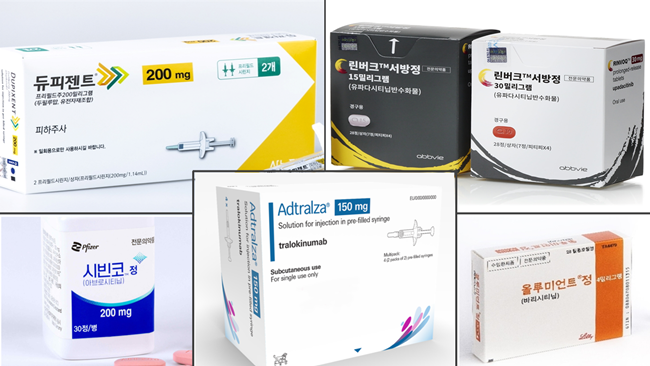
- The issue of switching between medications for severe atopic dermatitis, whose need had been voiced constantly in the clinical field, has been mentioned during the National Assembly Audit, attracting attention to whether the reimbursement environment will change. (Clockwise from top left) Pic of Dupixent, RInvoq, Olumiant, Adtralza, Civinqo During the National Audit of the National Assembly's Health and Welfare Committee on the 8th of this month, Democratic Party Rep Jin-Suk Jeon asked Minister of Health and Welfare Kyoo-Hong Cho about the issue of switching between medication for atopic dermatitis. Currently, the special calculation and reimbursement standards for switching between medications in severe atopic dermatitis stipulate that ‘starting treatment with one of the biologics or JAK inhibitors and then changing to another’ is not eligible for special calculation and reimbursement. However, experts have consistently expressed the opinion that atopic dermatitis is a disease that features various characteristics in each patient, which is why it is necessary to switch between treatments for personalized treatment. The Korean Atopic Dermatitis Association’s ‘2024 Korean Atopic Dermatitis Treatment Guidelines’ which was revised after 9 years, also made specific recommendations to address this issue of switching. The association’s position is that patients should be able to switch between medicines regardless of the line of therapy or class of drug, without having to decide which drug is more appropriate, as it is difficult to be sure of the decision. “Patients cannot switch from one drug to another even through other options are available,” said Jo-Eun Park, CEO of the Severe Atopic Dermatitis, Association who attended the meeting as a witness. “The government does not apply health insurance and special calculation cases when switching drugs, so patients have to pay for up to KRW 17 million on drugs per year if they switch to another drug.” “Even when a new drug is released, the only drug available to patients is the first drug they choose. If they want to change their medication due to severe side effects or ineffectiveness, they will have to stop treatment and worsen their condition in order to meet the criteria for reimbursement and special calculation of the other drug.” Park also pointed out that patients with psoriasis, a skin condition similar to severe atopic dermatitis, can switch to different medications when they are ineffective or have side effects, which shows the disparity in the treatment environment of the two. In this regard, Rep Jeon asked Minister Cho to review the need for switching between severe atopic dermatitis drugs and prepare measures. Minister Cho said, ‘I understand that switching between drugs for atopic dermatitis is an important issue, and I think the evidence is accumulating now. I was told that the Health Insurance Review and Assessment Service will actively review the issue.” Despite the positive response, the key to its outcome may depend on the budget budget, including Korea’s health insurance finances. In fact, the notification of the amendment related to the recognition of insurance reimbursement benefits for switching between JAK inhibitors in rheumatoid arthritis, which was scheduled to be implemented in October, has been put on hold. According to the industry, the delay is due to budgetary issues. The government is likely to face similar challenges to rheumatoid arthritis, as the core issue in atopy dermatitis is also focused on switching between biologics and JAK inhibitors. According to the drug market research institution UBIST, the outpatient prescription market for JAK inhibitors reached KRW 27.5 billion in the first half of last year. This is a 54% increase from the KRW 17.8 billion made in the first half of last year.
- Company
- Will Tevimbra be reimbursed promptly in Korea?
- by Eo, Yun-Ho Oct 11, 2024 05:54am
- Whether an immuno-oncology treatment option will arise in the oesophageal cancer space is garnering attention. BeiGene Korea's immuno-oncology drug Tevimbra (tislelizumab) passed the Health Insurance Review and Assessment Service’s Cancer Disease Review Committee in August during its second attempt. Tevimbra is a PD-1 inhibiting immuno-oncology drug that has demonstrated clinical utility in second-line oesophageal squamous cell carcinoma and was approved in Korea in November last year. Currently, there are seven immuno-oncology drugs licensed and marketed in Korea, including ▲Keytruda, ▲Opdivo, ▲Tecentriq, ▲Imfinai, ▲Bavencio, ▲Jemperli, and ▲Tevimbra, which owns a total of 64 indications. However, only 21 indications (around 33%) are currently reimbursed. Also, none of these drugs are yet reimbursed for esophageal cancer. Currently, only platinum-based chemotherapy is reimbursed in Korea as both first-line and second-line treatment options for oesophageal squamous cell carcinoma. Reimbursement rates for immuno-oncology drugs by indication, including oesophageal cancer, are low due to high drug costs and finances. After being reimbursed for some cancers, such as lung cancer, overall claims for immuno-oncology drugs and their share of health insurance expenditures have increased significantly, leading to an increased burden on national health insurance finances. As of 2023, the total claims for anticancer drugs was around KRW 2.4 trillion, with immuno-oncology drugs accounting for about KRW 500 billion, or 20% of the total claims for anticancer drugs. This is why BeiGene plan to supply Tevimbra at a relatively low price is raising expectations. BeiGene’s corporate philosophy of providing ‘innovative new medicines at reasonable prices’ to eliminate underserved patients, has already been demonstrated through the reimbursement process it had shown with its blood cancer drug ‘Brukinsa (zanubrutinib).’ The company has also made Tevimbra available at no cost to select patients with oesophageal cancer through its Expanded Access Program (EAP). It remains to be seen if Tevimbra will make it onto the reimbursement list after passing discussions with the Pharmacoeconomic Evaluation Subcommittee, Risk Sharing Subcommittee, and Drug Reimbursement Evaluation Committee. In the global Phase III RATIONALE-302 study, Tevimbra prolonged median overall survival (OS) by 2.3 months (8.6 months vs. 6.3 months) compared to chemotherapy, resulting in a statistically significant 30% reduction in the risk of death. Compared to chemotherapy, Tevimbra resulted in more than twice as many patients responding to treatment (20% vs. 10%), and showed an improvement in the median duration of response of approximately 3 months, from 4.0 months to 7.1 months, with sustained responses and a reduction in tumor size, which is directly related to quality of life for esophageal cancer patients. As a result, the U.S. National Comprehensive Cancer Network (NCCN) revised its guidelines to recommend Tevimbra as a Category 1 preferred option for second-line treatment of esophageal squamous cell carcinoma.
- Company
- SK bioscience invests KRW 4.1B stake in a U.S. biotech
- by Kim, Jin-Gu Oct 10, 2024 05:51am
- SK bioscience announced on October 8th that the company has signed an agreement to acquire a stake in U.S. biotech Fina Biosolutions by investing USD 3 million (approximately KRW 4.1 billion). SK bioscience became the first and only strategic investor of Fina Biosolutions. According to the contract between both companies, the specific stake acquisition size remains undisclosed. According to SK bioscience, Fina Biosolutions, established in 2006, has the core technology of conjugate vaccines for pneumoniae, meningococcus and typhoid. Fina Biosolutions is known to manufacture 'CRM197 (cross-reacting material),' a protein carrier important for the conjugate vaccine development, and produce it in high yield. CRM197 conjugates to antigens that induce infectious disease prevention and enhance immune responses. Fina Biosolutions has developed 'EcoCRM' to enhance productivity, which is higher than that for CRM197, using its in-house expression system and filtration technology. Additionally, the company is researching to increase immunogenicity and productivity using the next-generation CRM197 technology, which targets an antigen-binding site. Fina Biosolutions provides various carrier proteins, including CRM197, in collaboration with various biotech companies and agencies, including the U.S. Inventprise and companies in China and India. Furthermore, the company is expanding its business by providing antigen·dextran (carbohydrate-derived polysaccharides) conjugate service using its specialty in conjugate technology. SK bioscience, which owns conjugate vaccines for pneumoniae·typhoid, plans to utilize Fina Biosolutions' CRM197 technology. The company aims to increase profitability by securing the high preventative benefits of conjugate vaccines and high-yield production. "We appreciate the confidence shown by SK bioscience," Fina Biosolutions CEO Andrew Lees said. "With the investment agreement, we anticipate acceleration of global commercialization and conjugate vaccine development." "We are pleased to continuously pursue the partnership opportunities with global companies that have next-generation vaccine technologies," Jaeyong Ahn, CEO of SK bioscience. "Thorugh long-term collaboration with Fina Biosolutions, we will enhance the quality of vaccines in development and enhance our competitiveness for global entry." SK bioscience has recently made active investments to create a synergy with global companies with technologies. The company also signed an agreement to acquire the business rights of a German company, 'IDT Biologica,' which ranked among the top 10 global vaccine CMOs in June and wrapped up the acquisition process earlier this month. In June SK bioscience conditionally acquired a stake in a U.S. biotech company, 'Sunflower Therapeutics.' Sunflower Therapeutics has its own 'yeast-based culturing system' required for antigen·antibody development. "We plan to continue securing competitiveness by making investments and M&As in companies with superior technologies to establish steppingstones as a global company," SK bioscience personnel said.
- Company
- Who will distribute Mounjaro in Korea?
- by Whang, byung-woo Oct 10, 2024 05:50am
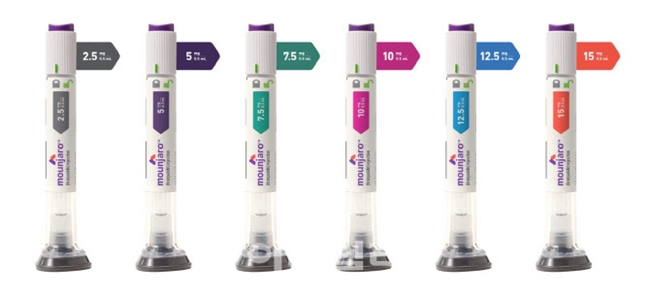
- As Novo Nordisk's obesity drug Wegovy (semaglutide) is set to be released, the industry’s interest is on which domestic distributor Lilly will choose for its Mounjaro (tirzepatide). 마운자로 제품사진. According to industry sources on the 8th, Boryung Pharmaceutical and Chong Kun Dang are in the running to become domestic distributors of Wegovy’s rival obesity drug Mounjaro. Zuellig Pharma Korea, which handled Novo Nordisk's existing obesity drug Saxenda, was announced as the domestic distributor of Wegovy. The supply price is set at KRW 370,000 for 4 weeks’ worth. The reason why the competition amongst domestic distributors for Mounjaro is so interesting is the sales potential of obesity drugs. Due to its global craze, its sales are likely to have a positive impact on the sales of domestic distributors as well. In 2023, global sales of Wegovy reached USD 4.5 billion (about KRW 6 trillion), while Zepbound (the U.S. brand name for the Mounjaro’s obesity indication), which was launched in Q4 last year, generated sales of UDS 176 million (KRW 240 billion). In June last year, Mounjaro received approval as an adjunct for chronic weight management, about a year after it was approved for type 2 diabetes. In the SURMOUNT-1 and SURMOUNT-2 trials which became the basis of approval, all doses showed statistically significant weight loss results compared to placebo, and the rate of achieving weight loss of 5% or more was also higher in the Mounjaro arm than in the placebo arm. Lilly’s decision to add the obesity indication to its existing product rather than file a new drug application is also expected to accelerate its launch. The industry is currently expecting a May launch next year. The first pharmaceutical company being considered as a possible distributor for Mounjaro is Boryung. It has a distribution agreement for Lilly's diabetes drug Trulicity and therefore is expected to have an advantage in Mounjar, which is a similar drug. In addition, Boryung has acquired the domestic rights to the patent-expired cancer drugs Gemzar (gemcitabine) and Alimta (pemetrexed) and the schizophrenia drug Zyprexa (olanzapine) from Eli Lilly in 2020-2022. ‘We have been in charge of Trulicity’s distribution since 2016 after signing a sales agreement with Lilly. However, signing a new drug partnership is a completely different matter, therefore it is difficult to confirm any facts,’ said a Boryung official. Chong Kun Dang, which has experience in distributing obesity drugs, is also in the running. Currently, Chong Kun Dang is the co-promoter and distributor of Alvogen's obesity drug Qsymia. Qsymia was approved in the US in 2012 for the treatment of obesity in adults. It is a combination of phentermine, a short-term appetite suppressant, and topiramate, a neurotherapeutic agent. It was introduced in South Korea in late 2019. “From Lilly's point of view, experience in distributing obesity drugs will be important when choosing a domestic distributor. I think we are being considered because we have experience in distributing the obesity drug Qsymia,” said a Chong Kung Dang official.

- Company
- Wegovy's release on the 15th…competitor Mounjaro
- by Whang, byung-woo Oct 08, 2024 05:49am
- With the release of Wegovy, the next-generation obesity drug, set for the middle of this month (October), the release of its competitor Mounjaro is also gaining attention. Although Lilly has not yet announced a specific launch date for its Mounjaro, the company has opted to add another indication to its drug rather than apply for new drug approval, which is raising expectations on the company’s early launch scenario. Pic of Mounjaro Novo Nordisk recently announced that it will launch Wegovy (semaglutide) in the Korean market from the 15th of this month. This will be the 9th global launch in a year and a half since the drug was approved by the Ministry of Food and Drug Safety in April last year. With the launch of Wegovy, a representative next-generation obesity treatment, near, attention is also being drawn to the release of Mounjaro (tirzepatide), which was approved by the MFDS in August. As there is a time gap between the global approvals of Wegovy and Mounjaro, the timing of the domestic launch of the two is also set to differ. Even so, the industry is awaiting the release of Mounjaro due to the company’s method of approval. Lilly received approval for its Mounjaro as an adjunct to chronic weight management in June last year, about a year after receiving approval for the type 2 diabetes indication. In the U.S., Lilly received approval for the obesity treatment separately under the brand name Zepbound, just as a separate brand called Ozempic is approved for the diabetes indication of Wegovy. In Europe, as in Korea, Lilly received approval for both the diabetes and obesity indications with one product, Mounjaro. The industry interpreted Lilly's approach as a choice made to accelerate the approval timeline, although it may not necessarily mean an early launch. ‘It's much easier to get multiple indications approved for one product if you don't have to brand the product separately,’ said a pharma industry insider. “Given that the drug showed significant weight loss in the diabetes clinical data already showed, and that the product is already approved in the US and Europe, adding an indication to an existing product is faster.” He added, “Adding an indication only requires safety and efficacy review, but new approvals are allocated a longer time allocated for review, including GMP site assessment, which makes a difference in the speed of (approvals). In general, it is rare for an existing product to receive approval for a new indication as a separate product in Korea.” In other words, it's Lilly's choice whether to add indications to a product and seek new approvals, but in terms of speed of approvals, adding indications is much easier. The company is also expected to have considered the fact that MFDS’s inspection timeline for overseas manufacturing sites is scheduled to be after 2027. In conclusion, there is no doubt that Lilly's decision to add an indication for Mounjaro gave the company an option to ‘choose’ the timing of its launch rather than wait for approval. The industry is now speculating on Mounjaro’s launch in the first half of next year, with a shortlist of potential domestic distributors. The idea is that the company will seek to enter the market before Wegovy has a chance to reap the benefits of first-mover advantage. However, the industry believes that the distributors that are being discussed based on their relationship with Lilly or their experience in distributing obesity drugs need to be watched further. In addition, even if Mounjaro is launched immediately, it is a different matter whether sufficient quantities can be supplied to Korea, which also requires review from various aspects. Lilly Korea is of the view that the launch date should be determined before discussing whether to select a distribution partner. “Both Wegovy and Mounjaro are expected to compete with a greater focus on obesity treatment,’ said another pharmaceutical industry insider. “However, as they have different indications for type 2 diabetes and cardiovascular disease, their impact is likely to vary depending on the patient condition.”
- Company
- Ilaris can be prescribed at general hospitals in KOR
- by Eo, Yun-Ho Oct 08, 2024 05:49am
- Ilaris, which was listed for reimbursement 9 years after receiving marketing authorization in Korea, can now be prescribed at general hospitals in Korea. According to industry sources, Novartis Korea's hereditary recurrent fever syndrome drug Ilaris (canakinumab) has passed the drug committees (DCs) of Seoul National University Hospital, Seoul St Mary's Hospital, and Sinchon Severance Hospital. Ilaris, which was approved in Korea in 2015, has been on the reimbursement list since August. The company quickly accepted the conditional reimbursement decision made by the MFDS’s Drug Reimbursement Evaluation Committee in April and then promptly concluded the difficult drug pricing negotiation process. ILARIS is an interleukin-1 (IL-1) inhibitor recommended for the treatment of CAPS in the 2021 international guidelines from the European College of Rheumatology and the American College of Rheumatology. In a Phase III study, the drug demonstrated significant clinical benefit in remission after a single dose and remission rate at 6 months and can be administered every 8 weeks in patients with CAPS, improving the quality of life for patients and their caregivers. In the CLUSTER study, which included 46 patients with TRAPS and 63 patients with colchicine-resistant FMF, 45% (n=10/22) of TRAPS patients treated with Ilaris 150 mg and 61% (n=19/31) of colchicine-resistant FMF patients achieved a complete response at week 16. "All three of these indications reimbursed for Ilaris are extremely rare diseases, and many patients suffer through a diagnostic odyssey that prevents them from receiving an accurate diagnosis," said Dae-Chul Jeong, professor of Pediatrics at Seoul St. Mary's Hospital, "and even after diagnosis, their treatment options were very limited, which was frustrating for them and us as medical professionals. Patients and us healthcare providers alike have been waiting for the reimbursement coverage of Ilaris for a long time, so the reimbursement approval came as encouraging news.” Ilrais is indicated for the following diseases in Korea: ▲Periodic fever syndromes (PFS), cryopyrin-associated periodic syndromes (CAPS), tumor necrosis factor receptor-associated periodic syndrome (TRAPS), hyperimmunoglobulin D syndrome (HIDS)/mevalonate kinase deficiency (MKD), and familial mediterranean fever (FMF) ▲Active systemic juvenile idiopathic arthritis (Systemic JIA). For CAPS, the indication can be further categorized into the following symptoms: ▲Familial cold autoinflammatory syndrome (FCAS)/ familial cold urticaria (FCU) ▲Muckle-Wells syndrome (MWS) ▲Neonatal onset multisystem inflammatory disease (NOMID)/chronic infantile neurological, cutaneous and articular syndrome (CINCA). With such a small patient population and complex indications, making progress in the reimbursement discussions for the drug had not been easy. The number of patients eligible for the various indications of ILARIS is extremely small. Some indications for ILARIS do not even have disease codes or have only recently been registered.
- Company
- Eisai Korea signs Alzheimer's MOU with the Korean Dementia
- by Whang, byung-woo Oct 08, 2024 05:49am
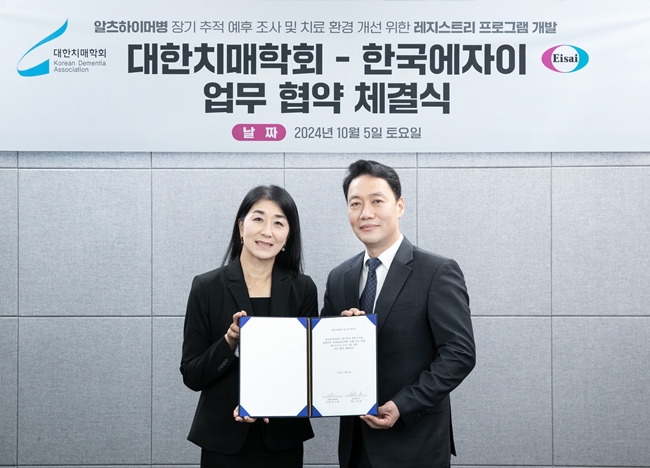
- (From left) the Korean Dementia Association President Seong Hye Choi, Eisai Korea CEO Ko Hong-Byung Eisai Korea announced on October 7th that it has signed a memorandum of understanding (MOU) with the Korean Dementia Association to utilize and manage 'JOY-ALZ,' a registry program for long-term follow-up survey platform of Alzheimer's disease prognosis. The MOU aims to advance Alzheimer's disease treatment and to establish safe Alzheimer's disease treatment settings in South Korea. According to the MOU, both companies will collaborate on establishing and running JOY-ALZ, thereby securing high-quality data on Alzheimer's disease patients. Based on this platform, they will establish and provide safe and optimized treatment settings for Alzheimer's disease patients in South Korea. JOY-ALZ is a long-term follow-up registry program that collects and registers real-world data (RWD) on the efficacy and safety of new drugs for Alzheimer's disease in South Korea. In the United States, a registry program called 'ALZ-NET' is used to follow, manage, and evaluate the efficacy and safety of RWD on new drugs for Alzheimer's disease. Collected data are utilized to report the latest diagnosis, categorization, and treatment options for Alzheimer's disease. JOY-ALZ will enable the collection of RWD information on the efficacy and safety of drugs by collaborating with overseas global platforms, such as ALZ-NET. This platform is expected to aid in systematic treatment and management. Moreover, its data gathering of Korean patients is expected to help establish treatment backgrounds considering Korean-optimized genetic and environmental factors. Based on RWD collected through JOY-ALZ, Eisai Korea plans to execute post-sales drug monitoring duty on its Leqembi, a new drug used to treat Alzheimer's disease. By submitting the long-term safety and efficacy results of Leqembi to the Ministry of Food and Drug Safety (MFDS). Eisai Korea plans to contribute to the safe use of medicines. "In collaboration with the Korean Dementia Association, we are pleased to fulfill the duty of monitoring Leqembi following the Pharmaceutical Affairs Act, as well as contribute to the advancement of treatments for Alzheimer's disease in South Korea," Eisai Korea CEO Ko Hong-Byung said. "Eisai Korea will strengthen treatment monitoring of Alzheimer's disease patients and adverse cases related to medicines. We will strive to provide safe and effective treatment options." "After years of efforts, a drug has been developed to delay the progression of Alzheimer's disease. An overseas registry has been established and is in operation to evaluate the efficacy and safety of new drug," the Korean Dementia Association President Seong Hye Choi, "If JOY-ALZ in South Korea allows for active research, new drug development, and RWD-based treatments for dementia, a global-level treatment environment for treating dementia can be established."
- Company
- Galderma Korea appoints Jai Hyuk Lee as new GM
- by Whang, byung-woo Oct 08, 2024 05:48am
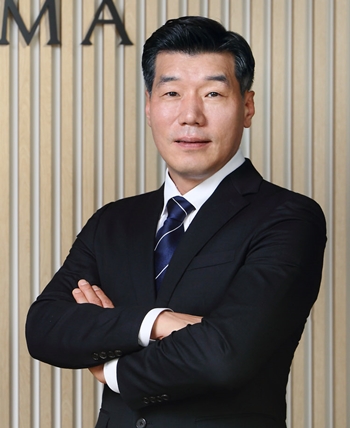
- Jake (Jai Hyuck) Lee, new General Manager of Galderma Korea, Galderma Korea announced on the 7th that it has appointed Jake (Jai Hyuck) Lee, former head of the Aesthetics Business Unit, as its new General Manager, effective as of October 1. The new GM is a seasoned sales and marketing expert with more than 25 years of experience in the global pharmaceutical and aesthetics industries. Lee will succeed Younhee Kim, who led Galderma Korea for 4 years from 2020. Lee started his pharmaceutical career at GSK Korea. He has since held positions at MSD Korea, Sanofi-Aventis Korea, Novartis Korea, and Merz Aesthetics Korea before joining Galderma Korea in 2019. Over the past 5 years, Lee has successfully led the launch of new Restylane brands such as Restylane Kysse and Restylane Eyelight, as well as the renewal of the Sculptra and Dysport brands, strengthening the product portfolio and driving rapid business growth. He has also served as the interim head of the pharmaceuticals BU and the derma-cosmetics BU, accumulating a wealth of hands-on experience and expertise in non-esthetic skin diseases and skincare across all divisions of Galderma Korea. “I am very pleased to be able to represent Galderma Korea, which has grown into a leading company in the skin field under the slogan of advancing dermatology for every skin story,” said the new GM. ’Going forward, I will do my best to support the company’s growth both internally and externally by advancing the company’s organizational capabilities and expertise, while presenting innovative solutions to solve skin problems that are becoming more diverse and fragmented based on the dermatological know-how that Galderma Korea has already accumulated.’
