
- LOGIN
- MemberShip
- 2026-05-01 14:44:58
- Policy
- Announcement of dual pricing system
- by Lee, Jeong-Hwan Oct 20, 2023 05:32am
- The Ministry of Health and Welfare is expected to include the application of a refund-type risk-sharing system for innovative new drugs in the plan to provide appropriate information on the innovative value of new drugs to be announced soon. In order to improve accessibility to rare disease treatments, the company announced its position to carefully review the plan to expand the scope of drugs from children to adults by omitting the submission of economic evaluation data. In the case of reimbursement management for expensive new drugs, we plan to implement policies to minimize uncertainty in financial impact by applying a patient-based performance-based reimbursement system, implementing a prior approval system, and setting standards for discontinuation of medication. On the 19th, the Ministry of Health and Welfare responded as follows to a written inquiry from People Power Party lawmaker Lee Jong-seong on the government audit. ◆Application of the dual pricing system = Regarding the expansion of the refund-type risk-sharing system to prevent Korea from passing and promote the overseas expansion of domestically developed new drugs, the Ministry of Health and Welfare said, "We are reviewing a plan to improve the drug price system to appropriately compensate for the innovative value of new drugs." We also agreed on the need to ensure profitability and support the overseas export of R&D-invested new drugs, such as conducting domestic clinical trials. In particular, they announced that they will prepare appropriate measures, including the application of a risk-sharing system (dual pricing system), to the extent that they do not conflict with WTO trade issues in order to promote the overseas expansion of domestically produced new drugs and strengthen price competitiveness. ◆ Expansion of drugs subject to PE data = In order to strengthen patient accessibility to new drugs for serious diseases such as cancer and rare diseases, the Ministry of Health and Welfare has revised related regulations since January of this year to allow for rapid listing of new drugs with a small number of patients and clinically proven to improve quality of life. He explained that he is operating it by adding it as a PE omission target. Crysvita, a new drug for the treatment of hypophosphataemic rickets in children, was administered on May 1, an example of rapid reimbursement due to a revised regulation. At the same time, the Ministry of Health and Welfare expressed its position that social discussion is needed regarding the expansion of drugs subject to PE omission to adults and that it should be pursued with caution. It should be taken into account that the PE omission system is an exceptional operation in which the cost-effectiveness evaluation is determined based on the listed price of the excluded country. ◆Improvement of the orphan drug coverage rate = In relation to the improvement of the orphan drug coverage rate, the Ministry of Health and Welfare aims to strengthen coverage of treatments for expensive severe diseases and has launched two items to treat rare pediatric diseases with a life expectancy of less than one year, no alternative drugs, and sufficient improvement effect. They announced that they are conducting a pilot project to simultaneously conduct the Ministry of Food and Drug Safety approval evaluation, HIRA reimbursement evaluation, and NHIS drug price negotiation in the second half of this year. It was announced that reimbursement management would be strengthened by applying a patient-based performance-based reimbursement system for high-priced new drugs, implementing a prior approval system, and setting standards for discontinuation of medication to minimize uncertainty about financial impact.
- Policy
- Will a new Alzheimer’s drug be introduced in 20 yrs in KOR?
- by Lee, Tak-Sun Oct 20, 2023 05:31am
- New Alzheimer's disease treatments are accelerating their introduction into the country. Following Eisai's application for the approval of its ‘lecanemab’ in June, Lilly also received approval from the Ministry of Food and Drug Safety to initiate a multinational Phase 3 clinical trial for ‘donanemab’ in Korea. As Biogen applied to introduce 'aducanumab' to Korea in 2021 but withdrew its application for approval due to controversy over its effectiveness, attention is being paid to whether other new drugs may achieve success and make their way into Korea. The MFDS approved Lilly’s Phase 3 clinical trial for donanemab on the 18th. The trial will evaluate the safety and efficacy of donanemab inpatients with early symptomatic Alzheimer's disease. Donanemab is a new antibody drug that blocks amyloid beta plaque accumulation, which is overexpressed in early-stage Alzheimer's patients. The company submitted an application to the U.S. Food and Drug Administration (FDA) at the end of June and is anticipating its approval at the end of the year. In the Phase III trial results that were published in the Journal of the American Medical Association in July that observed the intermediate tau population, patients who were treated with donanemab showed that the drug slowed clinical decline by 35% compared to placebo. A clinical trial that was conducted for 76 weeks also confirmed the effect of delaying the progression of Alzheimer's disease. In the donanemab arm, 47% had no disease progression after 1 year, compared with 29% in the placebo arm After applying for FDA approval, the company also submitted data to Japan’s Ministry of Health, Labor and Welfare. With the approval of this clinical trial, the company is expected to soon begin the approval process in Korea as well. #iLilly had already applied for the approval of its ‘lecanemab,’ which has the same mechanism of action as donanemab, in June to treat mild cognitive impairment or mild dementia stage of disease arising from Alzheimer’s disease (AD). The drug, which was co-developed by Eisai and Biogen, was officially approved by the FDA in July. This is the third application the company has filed in Asia, following Japan and China. Clinical trial results showed that the lecanemab arm recorded a CDR-SB score of 1.21 at 18 months, which is a 27% reduction in clinical decline compared with the 1.66 recorded in the placebo arm. In Korea, no new drug for treating Alzheimer's disease has been approved since Ebixa (memantine) in 2003. Aricept, the original drug of the ingredient donepezil, which is the most commonly prescribed treatment for Alzheimer's disease in Korea, received domestic approval in 2000. The size of the domestic Alzheimer's disease treatment market is estimated to be near KRW 340 billion as of last year. As it has already been 20 years since the first treatment was released, the companies of the 2 new drugs are expected to competitively accelerate entry into the domestic market for market preoccupation.
- Policy
- HIRA ‘will discuss reimb obesity treatments with MOHW'
- by Lee, Tak-Sun Oct 19, 2023 05:29am
- HIRA President Jung-gu Kang In response to the claim that obesity should be recognized as a chronic disease and its treatment covered by Korea’s health insurance, President Jung-gu Kang of the Health Insurance Review and Assessment Service responded that he would discuss the request with the Ministry of Health and Welfare. Kang made this announcement at the National Assembly Health and Welfare Committee’s Health Insurance Service-Health Insurance Review and Assessment Service audit that was held at the National Assembly on the 18th. Rep Hyun-Young Shin from the Democratic Party of Korea said, " Obesity should be considered a chronic disease. According to the Korea Disease Control and Prevention Agency, 1 in 3 adults suffer from obesity.” Shin asked, “The Korean Society for the Study of Obesity, which recognizes not only severe obesity but general obesity as a chronic disease, claimed the need to provide everything from testing to drug treatment. What does HIRA’s president think about the claim that the whole course of obesity treatment from testing to pharmacotherapies should be reimbursed?” Kang answered “Early treatment is important due to the high follow-up care and treatment costs required for obesity. We will discuss the issue with the Ministry of Health and Welfare.” Shin said, “From a preventive medicine perspective, covering obesity will also help with the financial soundness of NHI finances. Please consider gradually expanding reimbursement for obesity.”
- Policy
- NA calls for prompt reimb of Ilaris during NA audit
- by Lee, Tak-Sun Oct 19, 2023 05:29am
- The National Assembly requested progress to be made in reimbursing ‘Ilaris (canakinumab, Novartis),’ a drug used to treat Hereditary recurrent fever syndromes that affect 13 patients in Korea. Rep. Sun-Woo Kang of the Democratic Party of Korea and member of the National Assembly Health and Welfare Committee suggested so at the Health Insurance Service-Health Insurance Review and Assessment Service audit held on the 18th. Mr. Lee, a parent of a pediatric patient whom Rep. Kang called as a witness, appeared before the National Assembly and said, "There are two palliative treatments. One is Kineret Inj, which needs to be administered daily, and my two-year-old child is suffering the pain of its daily injections every day." “Ilaris can administered once every 8 weeks, but it has not been reimbursed yet,” he said. He said, "If Ilaris is reimbursed, it can significantly improve my child's quality of life. " adding, "It is difficult to understand that this drug, which is covered by insurance in 30 other countries, is not covered by insurance in a developed country like Korea" appealed. Rep. Kang said that patients are spending between KRW 80 million to KRW 100 million per year to use non-reimbursed drugs, and requested that the registration of benefits be speeded up to improve the quality of life for children and ease the financial burden on patients' families. Regarding this, HIRA President Kang said, "Ilaris is administered once every 8 weeks, and it is so effective that 97% of patients responded to the treatment. We reviewed the reimbursement standards last September, and will continue to work to reimburse it as soon as possible."
- Policy
- Rep. Young-hee Choi ‘expenses surged after Moon Care’
- by Lee, Tak-Sun Oct 18, 2023 05:49am
- After the implementation of Moon Jae-in Care, which was implemented to strengthen health insurance coverage, KRW 5.272 trillion was found to have been spent on drugs for seriously ill patients over the 6 years and exceeded the expenditure target every year. According to data Rep. Choi Young-hee (People Power Party, proportional representation), a member of the National Assembly Health and Welfare Committee, received from the National Health Insurance Service on the 12th, the number of previously non-reimbursed drugs that are now reimbursed and categorized as pharmaceutical expenses for severe diseases increased from 529 in 2017 to 4,027 as of September this year, even though the NHIS granted 1306 non-reimbursed items reimbursement last year. In addition, Rep. Choi's office claimed actual expenditures spent on expanded non-reimbursed covered drugs rose 56.5 times from ▲ KRW 31.5 billion in 2017, ▲ KRW 309.8 billion in 2018, ▲ KRW 6854 billion in 2019, ▲ KRW 1.3 trillion in 2020, ▲ KRW 1.43 trillion in 2021, to ▲ KRW 1.77 trillion in 2022. Rep. Choi's office explained that patients frequented hospital visits even if they were only mildly ill due to improved medical access and the reimbursement of non-reimbursed drugs. Last year, 188,054 patients received treatment more than 150 times, and patients in their 50s showed excessive medical consumption, receiving treatment 3,009 times at 50 medical institutions. Due to this, it is pointed out that the current health insurance balance was in deficit of ▲KRW 177.8 billion in 2018, ▲KRW 2.82 trillion in 2019, then ▲KRW 353.1 billion in 2020. Afterward, the use of medical services decreased due to COVID-19, resulting in a surplus of ▲KRW 2.82 trillion in 2021 and ▲KRW 3.629 trillion in 2022. Rep. Young-hee Choi said, “Moon Jae-in's care is ultimately a ruined policy that only increased the burden on patients due to worsening health insurance finances and increasing non-reimbursed items," and she emphasized, "It is natural that the Yoon Suk-yeol government defined it as a 'populist policy' and declared its abolition." Representative Choi then urged the preparation of countermeasures, saying, “Although health insurance finances have recently become stabilized, we must work for efficient operation and normalization of health insurance finances in preparation for the low birth rate and aging population.”
- Policy
- Layla+Celecoxib coming soon
- by Lee, Tak-Sun Oct 18, 2023 05:48am
- a new osteoarthritis complex developed by PMG Korea.A compound that combines different osteoarthritis treatments based on natural products and synthesis is expected to be released on the 1st of next month. 20 companies are selling their products, and it is noteworthy whether it will create a new wind in the osteoarthritis treatment market. The original drug ingredient of Danggui, Mogwa, Bangpung, Sokdan, Ogapi, Wooseul, Wiryeongseon, Yukye, Jingyo, Cheongung, Cheonma, and Honghwa 25% Ethanol Yeonjo X is Layla of Korea PMG Pharmaceutical. PMG Pharmaceuticals Korea succeeded in developing a compound that combines the ingredient of Layla tablet with the ingredient of COX-2 inhibitor 'Serecoxib', and was approved for the item 'Reladisuine' in August. The drug demonstrated superiority to the control group in a phase 3 clinical trial of 356 patients with knee osteoarthritis (177 in the trial group and 179 in the control group) in a 100 mm pain VAS change in activity at week 8 compared to the baseline, the primary efficacy evaluation variable. In the same month, 19 items with the same ingredients were also licensed. These items are consignment items that have been approved through joint development with Korea PMG Pharmaceuticals. All product production is handled by PMG Korea Pharmaceutical. The items are Kyungdong Pharmaceutical's 'Selec Duojeong', Guangdong Pharmaceutical's Cox Duojeong', Daewoong Bio's Beacoxis Plus Jeong', Dongkuk Pharmaceutical's Selebron Jeong', Vascan Bio-Pharmaceutical 'Sebkan Plus Jeong', Samil Pharmaceutical 'Lecoxjeong', Samjin Pharmaceutical 'Asbon Plus Jeong', CMG Pharmaceutical 'Coks Plus Jeong', Anguk Pharmaceutical 'Cox2 Plus Jeong', Alico Pharmaceutical 'Raycelco Jeong', HLB Pharmaceutical 'Rex Duojeong', Unimed Pharmaceutical 'Bon Ekox', Ilhwa 'Sele Inajeong', Jenewon Science 'Sereduojeong', Jinyang Pharmaceutical 'Aduria Diess', Palm Genesis 'Sejoinjeong', Pungjeong', Korea Techon Pharmaceutical 'Unira-on Pharmaceutical 'Unira Plus These are expected to be priced by the compound calculation criteria. The compound is calculated at 53.55% sum of the single component before patent expiration. Both ingredients have expired patents, so it is likely that they will be set at the sum of the highest price of a single component. Then, the drug price is expected to be calculated at 567 won, which is the maximum price of ethanol Yeonjo X, which is 220 won for 25% ethanol Yeonjo X and 347 won for Celecoxib 100 mg 347 won. However, if the Ministry of Food and Drug Safety recognizes it as an improved new drug, the drug price will be added at 58.5% instead of 53.55%, so there is also interest in whether to designate an improved new drug. Some analysts say that in the case of eperison + aceclofenac complex in December last year, only Aju Pharm, a trustee, received an added-improved new drug, so there may be a difference in the drug price depending on whether it is above or not. Regardless, with a combination of the two ingredients, each pharmaceutical company has performance expectations in that it can receive a higher drug price than a single drug. In particular, PMG Pharmaceutical, which sells the original Layla, has seen a decline in earnings due to drug price adjustments since the appearance of Layla generic, so expectations for this product are different. Moreover, since it is also in charge of consignment production to 19 companies, it is expected to add CMO performance to its own product sales performance. The domestic osteoarthritis treatment market is estimated to be about 500 billion won. The launch of this complex is expected to be an opportunity to create a new competitive landscape.
- Policy
- Pharma-Bio Control Tower launched…first meeting next month
- by Lee, Jeong-Hwan Oct 18, 2023 05:48am
- A presidential order to establish the Biohealth Innovation Committee, a control tower to foster the pharmaceutical bio-industry, has been issued. The government plans to hold its first meeting next month to begin discussing major agendas. With the launch of a pan-ministerial organization, financial and administrative support is expected to be strengthened in addition to support for domestic pharmaceutical and bio companies' research and development (R&D), new drug development, and entry into overseas markets. The Ministry of Health and Welfare announced on the 17th that regulations regarding the establishment and operation of the Biohealth Innovation Committee (Presidential Order No. 461) have been issued. Until now, issues related to products and services of biohealth in the industry, including the use of pharmaceuticals, medical devices, and healthcare technology, have been blocked by inconsistent regulations between ministries, fields, and stages. To address this, the MOHW has been working to launch the 'Biohealth Innovation Committee' as a government-wide control tower chaired by the Prime Minister that encompasses all areas of biohealth, taking advantage of the strategy that seeks to open a biohealth market that was announced at the pan-ministerial biohealth new market creation strategy meeting held on February 28th. The newly established Biohealth Innovation Committee will appoint the Prime Minister as the chair and will consist of the head of 12 ministries, including the Ministers of the Ministry of Health and Welfare, Ministry of Strategy and Finance, Ministry of Education, Ministry of Science and ICT, Ministry of Trade, Industry, and Energy, Ministry of Foreign Affairs, and Ministry of SMEs and Startups, as well as the minister for the Office for Government Policy Coordination, the Chairperson of the Personal Information Protection Committee Commission, the Minister of Food and Drug Safety, Commissioner of the Korea Intellectual Property Office, and the Commissioner of the Korea Disease Control and Prevention Agency, and field and academic private experts. The government plans to concentrate on reviewing and deliberating policies to support the full cycle from biohealth technology development, commercialization, and insurance registration, to market entry. Seung-Hyun Hwang, Director-General of the Global Vaccine Hub at the Ministry of Health and Welfare, said, "Through the Biohealth Innovation Committee, we will bring together public and private capabilities to lay the foundation for the biohealth industry as a future growth engine and a key national strategic industry. The first meeting, which will be held in November, will focus on urgent agendas.”
- Policy
- Daewoong's new diabetes drug 'Envlo',
- by Lee, Tak-Sun Oct 17, 2023 05:28am
- Envlo, a new diabetes drug developed by Daewoong Pharmaceutical, is entering long-term safety and efficacy testing of the Zemiglo three-drug therapy. While triple therapy of the Metformin+SGLT2i+DPP4i has been approved for reimbursement since last April, Daewoong Pharmaceutical is expected to establish its position as a latecomer, Envlo, in the triple therapy through this long-term trial. On the 13th, the Ministry of Food and Drug Safety approved the phase 3 clinical trial to evaluate the safety and efficacy of Envlo + Metformin + Gemigliptin applied by Daewoong Pharmaceutical. Envlo is the first domestically produced SGLT-2 type diabetes drug developed by Daewoong Pharmaceutical. It received approval in November 2022 and has been commercially released since May of this year. Gemigliptin, which is included in the three-drug combination therapy along with metformin, is a new domestic diabetes drug of the DPP-4 series developed by LG Chem and is being jointly promoted in the market with Daewoong Pharmaceutical. Daewoong Pharmaceutical confirmed the safety and effectiveness of the metformin and gemigliptin triple therapy through phase 3 clinical trials at the time of Envlo approval. At that time, the clinical trial lasted 24 weeks. The long-term clinical trial to be conducted this time will verify safety and effectiveness for 12 months. Last month, Daewoong Pharmaceutical announced that it had applied for this clinical trial to the Ministry of Food and Drug Safety and that it was a preemptive market response following the expansion of coverage for combination SGLT-2 inhibitors in April. Jeon Seung-ho, CEO of Daewoong Pharmaceutical, said, "This phase 3 was conducted to respond to the changing treatment paradigm. As diabetes treatment is a representative drug that requires long-term use, we plan to expand various treatment options based on Envlo's excellent efficacy in the future." He explained. Since its launch last May, Envlo has been supplied to large hospitals one after another and is expanding its market. Last September, the two-drug combination drug 'Envlomet', which combines Envlo + Metformin, was also launched for reimbursement. Daewoong Pharmaceutical plans to develop Envlo into a large blockbuster drug with sales of 100 billion won within three years.
- Policy
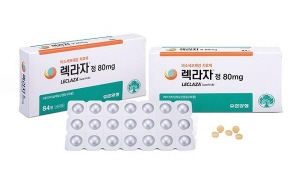
- Yuhan’s Leclaza passes DREC review for 1st-line NSCLC
- by Lee, Tak-Sun Oct 16, 2023 05:24am
- Yuhan Corp’s application to extend coverage for its 3rd-generation EGFR TKI non-small-cell lung cancer treatment Leclaza (lasertinib)' as a first-line treatment is making rapid progress. After passing the Health Insurance Review and Assessment Service review, all that remains is drug price negotiations with the National Health Insurance Corporation. On the 12th, the HIRA held the 2023 11th Drug Reimbursement Evaluation Committee meeting and deliberated on the adequacy of reimbursement for drugs including Leclaza. Leclaza, which was the only one on the agenda for reimbursement expansion on this day, was recognized as adequate for reimbursement. Accordingly, the agenda has moved to the next stage, to conduct drug pricing negotiations with the NHIS like Tagrisso, another 3rd generation EGFR TKI that passed DREC review last month. The industry prospect is that Tagrisso and Leclaza will receive reimbursement for their first-line indication at the same time. Meanwhile, among the drugs for which a new reimbursement decision was requested on this day, Kerendia Tab (Bayer Korea) was recognized as adequate for reimbursement. The drug is used to treat chronic kidney disease in patients with type 2 diabetes. In addition, the Trimbow inhaler (Kolon Pharmaceuticals), which is used to treat asthma and COPD, and Obizur, a treatment for bleeding episodes in adult patients with acquired hemophilia A, received conditional approval. In other words, the two drugs may pass the DREC review If their companies accept a price less than the evaluation amount.
- Policy
- Regkirona approval is for the Moon care to build up records
- by Lee, Jeong-Hwan Oct 13, 2023 05:30am
- People Power Party lawmaker Lee Jong-seong pointed out the Moon Jae-in government's budget support for Celltrion's COVID-19 treatment Regkirona as a problem. Rep. Lee Jong-seong criticized the approval of Regkirona, saying it lacked proper verification of effectiveness in order to build on the previous government's legacy of the K vaccine. On the 11th, Rep. Lee pointed out to Minister Cho Gyu-hong at the Ministry of Health and Welfare's audit of government affairs, "The Moon Jae-in administration's approval of Regkirona and encouragement of its use is a fraud on the public," urging him to launch an investigation. Minister Cho responded to Rep. Lee's request, saying, "We will conduct an investigation to respond to the next pandemic." Rep. Lee argued that the previous government launched a pan-government support group for vaccine development to promote policies such as vaccine sovereignty, K-Bio, and K-vaccine, and set out to accumulate achievements. He said that there were improprieties in the licensing and distribution process of Celltrion Regkirona. Rep. Lee said, “At the time, Lee Nak-yeon, leader of the ruling party, officially set the drug price prior to government drug price negotiations, saying that the drug price should be at least 400,000 won before the committee meeting.” Lee I-won said, “During the product change approval process, it was approved through a vote even though there were opinions that it was not effective against the COVID-19 delta variant strain.” Rep. Lee said, "In December, we encouraged the elderly in an official letter to actively use it," adding, "Ultimately, they forced us to build the legacy of developing Korea's first COVID-19 treatment with Regkirona. This is a fraud on the public." did.
