
- LOGIN
- MemberShip
- 2026-05-01 00:25:48

- Policy
- “Calling for promotion of substitute drug dispensation“
- by Lee, Jeong-Hwan Mar 13, 2024 05:32am
- Article 27 (Dispensation of Substitute Drugs) of the Pharmaceutical Affairs Act currently permits the dispensation of substitute drugs and is being implemented. The Ministry of Health and Welfare (MOHW) announced that they are not officially reviewing specifics of a potential policy to promote the dispensing of substitute drugs. Yet, the MOHW agreed on the need to promote the dispensing of a substitute drug for the drug prescribed in a prescription. Promoting the dispensation of substitute drugs may help solve patient inconvenience, including situations with an unstable supply and demand for medications, such as long-term out-of-stock essential medicines and prescription drugs being unavailable at a pharmacy after non-face-to-face medical care. An official from the People Power Party stated on the 8th that the MOHW has commented on the policy aimed at increasing the dispensing of substitute drugs, “There is a call for promotion of substitute drug dispensation. However, it has not been officially reviewed yet.” The issue of substitute drugs is drawing attention in the medical community amid the ongoing conflict between the government and the medical community over the proposal to increase the medical school enrollment quota to 2,000. The government and the People Power Party have stated their intention to pursue a policy aimed at increasing the dispensing of substitute drugs. However, the MOHW announced that the dispensing of substitute drugs is currently officially permitted and being implemented in accordance with the Pharmaceutical Affairs Act. Following the press release by the government and the ruling party about the issue, they have not engaged in discussions about the potential changes to the policy. The MOHW emphasized that the government is already implementing this policy based on the current Article 27 (Dispensation of Substitute Drugs) of the Pharmaceutical Affairs Act. Regarding the policy aimed at promoting the dispensation of substitute drugs, the MOHW acknowledges the inconvenience in the medical field, including situations involving unstable supply and demand for medications, as well as the complexity of the process for obtaining substitute drugs, which requires patients to locate pharmacies where the prescribed drugs are available. This means that the MOHW has recognized the need to consider the dispensation of substitute drugs as a measure to partially alleviate the problems where pharmacists and patients face difficulties in dispensation and drug administration due to long-term shortages of essential medicines at frontline pharmacies. Furthermore, this can address the inconveniences of implementing the pilot project for non-face-to-face medical care without limitations. These inconveniences include situations where drugs prescribed during non-face-to-face sessions are not available at pharmacies. However, the MOHW's stance is that there has been no specific internal discussion or external consultation regarding the promotion of substitute dispensing. “While there have been press releases suggesting the promotion of dispensing substitute dispensing due to the medical community's backlash against the government's policy of increasing medical school quotas, it appears that there hasn't been specific discussion between the government and the ruling party on this matter,“ an official from the People Power Party commented. “The MOHW acknowledges the challenges regarding unstable drug supplies and the difficulty patients face in finding pharmacies with prescribed drugs in stock. While there is recognition of the necessity to discuss the promotion of substitute dispensing as a solution, it is not currently under consideration, as per the MOHW's explanation,” the official added.

- Policy
- Companies with superior CP ratings get reduced fines
- by Lee, Jeong-Hwan Mar 13, 2024 05:32am
- The Korea Fair Trade Commission announced the enforcement of the amendment to the Enforcement Decree of the Fair Trade Act, which grants up to a 20% penalty reduction to companies that receive superior ratings through the operation of a Compliance Program (CP), drawing industry-wide attention. Companies that have been operating for more than one year and meet the CP requirements will be able to receive a one-time penalty reduction of 10% if they receive an AA rating in FTC's CP evaluation, and 15% if they receive an AAA rating. An additional 5% penalty reduction is possible if the company (business operator) proves that it has detected and stopped the violation of the law under investigation through effective CP operation before the initiation of an unfair trading practice investigation. In the case of pharmaceutical and biotech companies, if the KFTC calculates and imposes fines for unfair practices including illegal drug rebates, the companies can receive a reduction in fines from 10% to up to 20% if they meet the conditions under the amended provision. The KFTC (Chairperson Ki-Jeong Han) will finalize the recently announced ‘Amendment to the Enforcement Decree to legislate the Compliance Program’ by April 15, and the ‘Notification on the Establishment of the CP Operation by the 25th of this month after an opinion-collecting process. Korea will reduce fines by 20% for superior CP companies”’unexpected and unusual" e The biggest significance of the KFTC's legislative and administrative notice is that it revived the provision for reducing fines for companies caught engaging in unfair behavior that had been abolished in the past. This is due to the amendment to the Enforcement Decree of the Act on Monopoly Regulation and Fair Trade that passed the National Assembly review in June last year, the effective date of which was set as June 21 this year. Article 120(2) of the amended Fair Trade Act states that the KFTC can take corrective measures, reduce penalties, reward, and support businesses (companies) that have received CP evaluation in accordance with the standards set by the Presidential Decree to promote CP. In particular, Korean CP experts have expressed that "the results are encouraging" over the provision of up to 20% penalty reduction in the KFTC's legislation draft. When looking at incentives provided to companies in major countries around the world that have CP systems in place, no other country has reduced fines by up to 20%. As such, the Korean government has shown its determination to encourage and induce companies to adopt CP by operating a wide range of penalty reduction incentives to implement internal compliance systems. Specifically, the UK reduces fines by up to 10% if a company demonstrates that its CP activities were appropriate. Italy provides a 15% penalty reduction for effective CP operation, 10% for CP that is not manifestly inadequate, and 5% for inadequate CP that is corrected within six months. The US law stipulates that CP operations and efforts to prevent recurrence may be taken into account in determining the level and reduction of penalties during the sentencing phase for companies found guilty of unfair trade acts. What are the criteria for receiving the 20% penalty reduction in Korea? Korea plans to adopt a penalty reduction rate of 10% to 20%, which is significantly higher than that of other foreign countries. To be eligible, companies need to meet the requirements for adopting the CP as notified by the KFTC and have operated a CP for more than one year. Then, the company must apply with the necessary documents and receive the KFTC's CP evaluation. The actual CP operation evaluation will be conducted by an evaluation agency designated and delegated by the KFTC, or an organization that has been engaged in fair trade-related certification and evaluation business for more than 2 years. According to the KFTC's incentives for CP implementation and operation, such as the reduction of fines, companies with a CP rating of A or higher can receive a reduction of the corrective action order once within the period of two years. The size and number of media requirements for publicizing the corrective action will be reduced by one level for companies rated as AA and A and by two levels for companies rated as AAA. The period for mandatory publication of corrective measures in workplaces and electronic media will also be reduced. The reduction in fines will be capped at a maximum of 20%. Companies with AA ratings will receive a 10% reduction and AAA ratings a 15% reduction in the second adjustment phase of a single penalty notice within the 2-year validity period. Companies that demonstrate that they have identified and stopped the violation of the law through CP operations before the start of the investigation can receive an additional 5% reduction in their fine. Also, new conditions were set for not applying the corrective orders and penalty reductions. As the penalty reduction benefit that was abolished was reintroduced with the amendment, the exclusion requirement was also revived to apply the corrective order and penalty reduction benefit more strictly, according to the KFTC. The exclusion requirements apply when the person in charge of the CP is found to have participated in the violation of the law, the violation of the law occurred before the introduction of the CP, the violation is an unfair collaborative act, or the director or senior executive is directly involved in the violation.
- Policy
- ‘A multifaceted approach to reimburse high-priced drugs'
- by Lee, Jeong-Hwan Mar 13, 2024 05:32am
- It has been pointed out that a financial management plan needs to be established for high-priced drugs listed through the general system, as well as a system to evaluate and manage the performance of high-priced drugs that were granted reimbursement through the risk-sharing agreement (RSA) scheme in order to manage the soundness of the National Health Insurance drug finances. In other words, the criticism was that health authorities need to devise multifaceted drug price negotiation models to manage health insurance finances spent on high-priced drugs listed through the general process as no other mechanism than the one that reduces a drug’s price upon patent expiry exists in the current state. In the case of the RSA system, although there had been requests to expand the scope of eligible drugs, the same people pointed out that it is necessary to carefully review such expansions in consideration of the uncertainty of Korea’s health insurance finances. The suggestions above were made in the “Patterns of National Health Insurance Spendings for High-Priced Medicine in Korea,” which was researched by Hye-Jae Lee (Professor, Korea National Open University), Ji-Hyung Hong (Professor, Gachun University ), Eun-Young Bae. (Professor. College of Pharmacy, Gyeongsang National University) The research team analyzed the claims data of Korea’s National Health Insurance from 2010 to 2021, and defined drug with annual per-patient costs exceeding KRW 10 million as 'high-priced drugs. The claims of such high-priced drugs, which accounted for 3.0% of the NHI pharmaceutical expenditure in 2010 (KRW 388.4 billion), rose to account for 8.0% of the NHI pharmaceutical expenditure by 2021 (KRW 1.69 trillion). This is over a 4.4% increase in 11 years, underlining the need and importance of strengthening management of high-priced drugs. During the same period, the annual amount of pharmaceutical expenditures rose by 4.7%, compared with the 14.3% rise in expenditures spent on high-priced drugs. The number of covered high-priced drugs rose from 34 to 209 in the same period and the number of patients from 17,896 to 77,737. This research team defined high-priced drugs based on per-patient costs into low-high-priced drugs (KRW 10 million to 500 million), moderately-high-priced drugs (KRW 50 million to 100million), high-priced drugs (KRW 100 million to 300 million), and ultra-high-priced drugs (over KRW 300 million). By price, low--high-priced drugs, and moderately high-priced drugs accounted for most of the total drug expenditure, accounting for 79.1% of all high-priced pharmaceutical expenditures. 6.0% were moderately high-priced drugs, 10.4% were high-priced drugs, and 4.5% were ultra-high-priced drugs. Among the findings, one thing to note was that among low-high-priced drugs that accounted for 79.1% of all , high-priced pharmaceutical expenditures., the proportion higher for RSA drugs (87.7% ) compared with generally listed drugs (65.4%). The research team also found it interesting that low-high-priced drugs were more likely to be listed through RSA, while ultra-high-cost drugs were more likely to be listed through the general listing process. In particular, the proportion of high-priced drugs was higher among drugs that were granted reimbursement through RSA than through the general listing process. In terms of the proportion of claims filed for high-priced drugs with per patient expenses exceeding KRW 100 million, the rate was 23.0% for generally listed high-priced drugs, much higher than the 9.9% of RSA high-priced drugs. Based on the results, the research team suggested that a financial management plan for generally listed high-priced drugs needs to be established. The research team pointed out that there is a lack of innovative financial management measures to reduce healthcare expenditures for generally registered high-value drugs other than the mechanism of reducing the drug price when the patent expires. In particular, the researchers analyzed that high-priced drugs listed through the general listing process that have been on the market for more than 10 years have already passed the period of surge in usage, and because of the nature of rare diseases, there is often no surge in claims, so the drugs cannot be applied price cuts through price-volume agreement negotiations. "Nevertheless, the absolute number of patients using such drugs is rising due to the introduction of new hemophilia drugs and enzyme drugs, and claims for these two drug types are steadily increasing. When applying PVA negotiations, the parties need to take into account various circumstances such as price changes in overseas reference price countries and listing status of alternative treatments." Furthermore, given that many high-cost drugs are anticancer drugs and are managed within the RSA framework, the researchers suggest that the RSA system should be reviewed and the performance of the financially based types of reimbursement and expenditure-cap types should be evaluated. "Some have suggested expanding the number of drugs eligible for financial-based RSA schemes, but this should be done with caution to effectively manage the uncertainties in health insurance finances. The RSA system should be reviewed and a long-term financial monitoring system be established for high-priced drugs."
- Policy
- 1st KOR trial of 'STX-721' to treat EGFR mutant NSCLC begins
- by Lee, Hye-Kyung Mar 11, 2024 05:55am
- The US pharmaceutical company Scorpion Therapeutics has started conducting the first clinical trial of its new EGFR-targeted therapy, 'STX-721,' on patients in South Korea. The Ministry of Food and Drug Safety (MFDS) has approved ‘The first human clinical trial of STX-721 enrolling patients with locally advanced or metastatic non-small cell lung cancer (NSCLC) driven by EGFR exon 20 insertion mutations.’ The currently available targeted anti-cancer therapies for NSCLC (Source: Korea Bio-Economic Research Center of Korea Bio). The Phase 1/2 clinical trial of STX-721 will be conducted at Seoul National University Hospital. Scorpion Therapeutics and Pierre Fabre, a French pharmaceutical company, have entered an exclusive collaboration and license agreement to co-develop STX-721 and STX-241, two new drug candidates for next-generation mutant epidermal growth factor receptor (EGFR) inhibitors. According to Scorpion Therapeutics, STX-721, an orally administered treatment, is designed to selectively target mutations and optimize tolerability and efficacy compared to conventional treatments. “Conventional treatment options face significant limitations associated with the inhibition of wild-type EGFR in healthy tissues, including serious side effects often leading to dose reductions or interruptions, stated Michael Streit, Chief Medical Officer of Scorpion Therapeutics. “STX-721 demonstrated a compelling preclinical selectivity profile,” he added. The Phase 1/2 clinical trial of STX-721 started in October 2023, with the first patient receiving treatment. The company aims to complete the research, involving all 120 patients, by June 1st, 2028. Furthermore, the Phase 1/2 clinical trial is a multi-center, open-label study designed to evaluate the safety and tolerability of multiple dose escalation in patients with advanced or metastatic NSCLC. In the Phase 1/2 clinical trial, the first patient received STX-721 in October. The company is evaluating the drug as a monotherapy for patients with advanced or metastatic NSCLC driven by EGFR exon 20 insertion mutations. About 80-90% of all lung cancers are NSCLC. Early NSCLC detection can lead to a cure through surgery. However, only about 15% of patients with NSCLC are eligible for surgery and the recurrence rate after surgery is between approximately 20 to 45%. The most used targeted anticancer drugs for treating NSCLC are inhibitors that target EGFR, ALK, ROS1, and BRAF/MEK. EGFR mutations are reported to occur most frequently in non-smoking Asian lung cancers.
- Policy
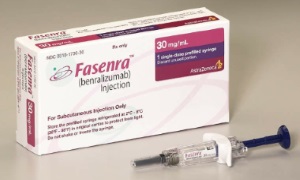
- Fasenra's reimb application passes DREC review
- by Lee, Tak-Sun Mar 11, 2024 05:55am
- Fasenra, the last of 3 antibody drugs used for severe asthma to apply for reimbursement in Korea, has now passed the Drug Reimbursement Evaluation Committee (DREC) stage, increasing the likelihood of its reimbursement. The drug, like Nucala, is seeking reimbursement through the risk-sharing arrangement (RSA) scheme. The industry is paying attention to Fasenra’s progress because its same-class drug Cinqair has been reimbursed through the general listing process and Fasenra is going through the RSA process Nucala went through. The Health Insurance Review and Assessment Service announced on the 7th that it passed the applications for the reimbursement of new drugs such as Fasenra, Idelvion, and reimbursement extension of Brukinsa at the 3rd 2024 Drug Reimbursement Evaluation Committee. The reimbursement adequacy of Fasenra Prefilled Syringe Inj 30mg (benralizumab, AZ), a treatment for severe eosinophilic asthma, was deemed adequate at the recent DREC meeting. Fasenra had received a non-reimbursement decision at the previous DREC meeting that was held in September last year. Therefore, the company passed HIRA’s review in its second attempt. In particular, Fasenra is receiving attention for the fact that 2 other drugs with the same mechanism of action have already been approved. In October last year, 2 interleukin (IL)-5 antagonists used for severe eosinophilic asthma, like Fasenra, were granted reimbursement. The 2 other drugs are Cinqair (reslizumab, Teva-Handok) and Nucala (mepolizumab, GSK). Cinqair was approved through the regular reimbursement process, and Nucala was approved through the RSA process. This is the first time a drug in the same class has been approved through two different reimbursement schemes. In this sense, DREC’s recognition of Fasenra's reimbursement adequacy is even more unusual. The fact that the company is undergoing the reimbursement process through the RSA track is not exceptional, as latecomers can also apply for RSA since 2020, but no drug has attempted reimbursement listing through the RSA track after a same-class drug was listed through the general track. This is because if a drug in the same class is listed through the general listing process, it is disadvantageous for the latecomer to apply for RSA. However, since one of the drugs -Nucala – was listed through the RSA scheme, it is likely that the company referred to Nucala’s case when applying for Fasenra’s reimbursement through the RSA track. Moreover, as RSA applications were limited to anticancer drugs and rare diseases, Fasenra and Nucala are regarded as exceptions because they are severe chronic diseases. However, the Health Insurance Review and Assessment Service is expected to apply RSA to drugs for severe chronic diseases for which there are no alternatives and which irreversibly cause a significant deterioration in the quality of life, such as systemic pustular psoriasis, interstitial lung disease, hereditary angioedema, and severe asthma. At the meeting, DREC also recognized the reimbursement adequacy of CSL Behring’s ‘Idelvion Inj,’ which is used to treat hemophilia B. As it can extend the dosing cycle by up to 3 weeks, it is expected to be in high demand if it is approved for reimbursement. BeiGene Korea's Brukinsa Cap, which also sought to expand reimbursement, has been deemed adequate for reimbursement in Mantle cell lymphoma (MCL), Chronic lymphocytic leukemia (CLL), or small lymphocytic lymphoma (SLL). Burkinsa was first approved reimbursement as a treatment for Waldenström’s macroglobulinemia (WM) in May last year.
- Policy
- Pfizer starts trial for its RSV drug sisunatovir on adults
- by Lee, Hye-Kyung Mar 08, 2024 05:19am
- Pfizer will initiate a clinical trial for its respiratory syncytial virus (RSV) infection drug sisunatovir in adults in Korea. The company had previously initiated a trial for the drug on pediatric patients in Korea. On the 7th, the Ministry of Food and Drug Safety (MFDS) approved Pfizer's "interventional Phase II/III, adaptive, multicenter, randomized, double-blind clinical trial to compare the efficacy and safety of oral sisunatovir with placebo in non-hospitalized adults with symptomatic respiratory syncytial virus infection at risk of progression to severe disease.” The trial will be conducted in Chungnam National University Hospital, Korea University Medicine, Chilgok Kyungpook National University Medical Center, Gachon University Gil Hospital, Konkuk University Medical Center, Chonnam National University Hospital, Ewha Womans University Mokdong Hospital, Gangnam Severance Hospital, Wonju Severance Christian Hospital, Ajou University Hospital, Korea University Ansan Hospital, Kangdong Sacred Heart Hospital, Seoul Asan Medical Center, Jeonbuk National University Hospital, Hallym University Gangnam Medical Center, Eunpyeong Saint Mary's Hospital, Seoul Saint Mary's Hospital, and Korea University Guro Hospital. The company acquired the new drug candidate in 2022 when it acquired the UK-based antiviral drug developer ReViral. At the time, Pfizer paid up to USD 525 million to ReViral, which included an upfront payment and future development milestone payments. If successful, Pfizer expected ReViral’s programs to generate annual sales of over USD 1.5 billion. Reviral had received a Fast Track designation for sisunatovir from the US. FDA in August 2020 and initiated two international multi-phase clinical studies in pediatric and high-risk adult patients. RSV is a respiratory pathogen that can cause severe and fatal lower respiratory tract infections (LRTIs) in high-risk populations, including infants, immunocompromised individuals, and the elderly. Approximately 64 million people are infected each year, resulting in 160,000 deaths. Developing preventive treatments for RSV is an area that has been receiving much interest from global big pharmaceutical companies, and last year, RSV vaccines GSK's Arexvy and Pfizer's Abrysvo were approved by the US FDA. Also, AstraZeneca and Sanofi’s preventive antibody RSV treatment ‘Beyfortus’ was approved last year. Currently, there is no vaccine or antiviral drug available for the RSV virus, and AstraZeneca's Synagis is used in Korea to prevent severe lower respiratory tract diseases in children who require hospitalization due to RSV. Among Korean companies, SK Bioscience is working to discover an RSV vaccine candidate, and EUGiologics is preparing preclinical trials.
- Policy
- Pharmas impacted by ‘minoxidil’ bioequivalence test result
- by Lee, Hye-Kyung Mar 08, 2024 05:18am
- The bioequivalence re-evaluation of the active ingredient ‘minoxidil’ in comparison to Hyundai Pharm’s Bioequivalence test outcomes result in different paths for prescription drugs containing the active ingredient ‘minoxidil,’ which was first introduced as a hypertension drug but is now commonly used as a hair-loss drug. The Ministry of Food and Drug Safety (MFDS) recently issued a two-month sales suspension order on Binex’s ‘Bimo Tab 5mg.’ Binex received a notice for ‘Failing to submit the required documents for the 2023 bioequivalence re-evaluation of medicines.’ As a result, the company is banned from selling the item in question from March 11th to May 10th. Although Bimo Tab received a drug suspension settlement, Binex continues attempting bioequivalence test. Binex received approval from the MFDS on February 6th to conduct a bioequivalence study to re-evaluate Bimo Tab and Hyundai Pharm’s 'Minoxidil Tab Hyundai' and has completed patient recruitment. Due to a late start, the company’s submission of equivalence test report may have been delayed. “The delay in the bioequivalence study was due to protocol issues during the preparation process for the equivalence re-evaluation,” a Binex official stated. “Patient recruitment has been completed, and the first phase of blood sampling has been conducted.” The eight products containing the active ingredient minoxidil underwent a re-evaluation for equivalence. These products include Union Korea Pharm’s 'Uni-Minoxidil Tab,' TheU Pharmaceuticals' 'Momosidil Tab,' Medica Korea’s 'Medica-Minoxidil Tab,' Binex’s 'Bimo Tab 5mg,' Auskorea Pharm’s 'Minoxion Tab,' Biopharma’s 'Introminoxidil Tab,' Dae Han New Pharm’s 'DHNP Minoxidil Tab,' and Dongkwang Pharm’s 'Minoxidil Tab 5mg Dongkwang.' DHNP Minoxidil Tab and Medica-Minoxidil Tab were voluntarily withdrawn. Meanwhile, Minoxion Tab and Introminoxidil Tab are currently not in production. Therefore, the four products subjected to equivalence re-evaluation included Minoxidil Tab 5mg Dongkwang, Bimo Tab, Uni-Minoxidil Tab, and Momosidil Tab. Among these, Uni-Minoxidil Tab and Momosidil Tab showed inequivalent compared to Hyundai Pharm’s 'Minoxidil Tab Hyundai' in the bioequivalence test, leading to a recall order for companies on February 7th. Also, Bimo Tab is currently under a suspension of sales order. The only re-evaluated product currently approved for marketing is Minoxidil Tab Dongkwang. The MFDS is reviewing the submitted bioequivalence results report. However, the bioequivalence test for Bimo Tab, which received administrative order, is ongoing. Additionally, Union Korea Pharm is conducting new bioequivalence test for Uni-Minoxidil Tab after a recall, the results of which are currently unknown. Union Korea Pharm received approval from the MFDS on February 21st to conduct bioequivalence test for the Uni-Minoxidil Tab. "After reviewing the bioequivalence report submitted for Uni-Minoxidil, it was found that the drug was not equivalent and had to be recalled. The company revised its bioequivalence test plan and obtained re-approval," an MFDS official stated. The official added, "The bioequivalence re-evaluation will maintain the product's approval status intact, limiting the recall of products already distributed in the market. As the re-evaluation continues, Union Korea Pharm has amended its test plan to conduct bioequivalence test again."
- Policy
- CSL Behring’s hemophilia B Tx Idelvion reattempts reimb
- by Lee, Tak-Sun Mar 08, 2024 05:18am
- CSL Behring, a subsidiary of Australian multinational pharmaceutical giant CSL, is reattempting to receive reimbursement benefits for its hemophilia treatment in Korea. CSL Behring holds the domestic marketing authorization and reimbursement rights for the hemophilia drug Afstyla Inj which was developed by SK Chemicals. According to industry sources on the 7th, the reimbursement adequacy of CSL Behring’s hemophilia B treatment ‘Idelvion Inj’ was discussed at the Health Insurance Review and Assessment Service’s Drug Reimbursement Evaluation Committee meeting that was held on the 7th. The drug had previously been reviewed by the committee in July 2021. At the time, the committee determined that Idelvion’s reimbursement was adequate if the company accepted a price below the assessed value, but there had been no news of progress being made since then. So it is understood that the company did not accept a lower assessed price. And more than 3 years later, the company has reapplied for reimbursement. The drug is indicated for the ▲control and prevention of bleeding episodes, ▲ control and prevention of bleeding in the perioperative setting, and ▲ routine prophylaxis to prevent or reduce the frequency of bleeding episodes in patients with hemophilia B (congenital factor IX deficiency). In Korea’s hemophilia B treatment market, Pfizer’s ‘BeneFIX Inj’ owns the top market share. If reimbursed, Idelvion is expected to rise and become a viable competitor to BeneFX, fueled by its more convenient dosing frequency, as it can be administered once every 1 to 3 weeks. On the other hand, BeneFIX is administered once or twice weekly. In the PROLONG-9FP trial, patients who were administered Idelvion maintained mean Factor IX activity by over 5% for over 14 days with a single 75 IU/kg administration and a median annualized spontaneous bleeding rate (AsBR) of 0.00. Also, in a clinical trial that reviewed the long-term effect of Idelvion, patients who received 100 IU/kg every 21 days showed FIX activity levels in the 7.6% range. AsBR in the 14-day and 21-day regimen were all similar to the 7-day regimen. Based on these findings, Idelvion was approved by the US FDA and in Europe, Japan, and Canada in 2016. In Korea, the drug was approved in March 2020.
- Policy
- 2yr use restriction lifted for Alimta+Keytruda combo reimb
- by Lee, Tak-Sun Mar 08, 2024 05:18am
- The reimbursement period for the Alimta+Keytruda+platinum-based chemotherapy is set to be extended. Previously, the 3-drug combination was covered for up to 2 years, but the Cancer Disease Deliberation Committee decided to remove this restriction from the reimbursement standards. The Health Insurance Review and Assessment Service announced that it had made the decision above at the 2nd 2024 Cancer Disease Review Committee meeting that was held on March 6. After deliberations, the CDDC decided to remove the maximum 2-year coverage restriction set for pemetrexed drugs such as Alimta Inj used in combination with pembrolizumab and platinum-based chemotherapy as first-line treatment for patients with metastatic non-squamous NSCLC without EGFR or ALK mutations. This is expected to reduce the financial burden borne by patients who use the regimen for a longer period of time. The reimbursement standards for Clinigen Korea’s Erwinase Inj will also be changed, and its use as ‘a component of a chemotherapeutic regimen for the treatment of patients with acute lymphoblastic leukemia (ALL) who have developed hypersensitivity to E. coli-derived asparaginase’ that was allowed for patients with level 3 or higher allergic reactions will be changed to level 2. Reimbursement standards for Zavedos Inj (idarubicin), which Pfizer Korea applied to extend reimbursement as an idarubicin monotherapy for transarterial chemoembolization (TACE) in liver cancer, were not set, however, off-label use with partial copayment 5/100 was approved. Also, reimbursement extension requests for Lonquex Pre-filled Inj (lipegfilgrastim, Teva-Handok), Taxotere 1 Vial Inj (docetaxel trihydrate, Sanofi), Verzenio Tab (abemaciclib, Lilly) were not accepted, and were not set. Also, all 3 drugs that applied for new reimbursement listings - Tepmetko Tab (tepotinib, Merck), Pemazyre Tab (pemigatinib, Handok), and Tevimbra (tiselizumab, Beigene) – were unable to pass the CDDC stage. For the second year, the reimbursement progress for Tepmetko Tab has remained stalled at the CDDC stage.
- Policy
- DPK urges doctors to return to work
- by Lee, Jeong-Hwan Mar 07, 2024 07:16am
- Rep. Kim Min-seok, the head of the Democratic Party’s situation room. The Democratic Party of Korea (DPK) urged trainee doctors who walked off the job en masse to return to their medical sectors. Furthermore, the DPK suggested that medical community negotiate a reasonable capacity of medical school admissions. The ruling party has temporarily allowed non-face-to-face medical treatment to address the current absence of trainee doctors in hospitals. In response, the DPK has officially requested the government allow additional supportive systems, including active ingredient prescribing and prescription refills, also temporarily. “We understand the concerns regarding the medical crisis. In response, the Democratic Party has established an emergency situation team, affiliated with the party’s situation room, for medical crisis,” Rep. Kim Min-seok, the head of the Democratic Party’s situation room, announced on the 3rd during the press conference at the National Assembly’s communication building. The DPK has acknowledged that expanding medical school quotas is a timely issue for the medical community. They suggest that the reasonable capacity of expansion should be determined through dialogue. "With my expereince serving as the chair of the Ministry of Health and Welfare (MOHW), I will personally oversee the development of measures by communicating with medical community," Kim added, "I am already communicating with various medical professional organizations, including not only doctors but also nurses and pharmacists," Kim said. "We must be cautious about expanding the medical school enrollment quota, as it might increase non-insured doctors in the metropolitan area. Therefore, we should consider implementing supportive systems like regional doctor quotas," Kim said. "The government should also discuss with the medical community, including the possibility of introducing regional doctors quotas along with the issue of medical school." The DPK proposed the temporary allowance of active ingredient prescribing and prescription refills in order to reorganisze the non-face-to-face medical treatment pilot project, which is being implemented without legal basis. "The government has announced measures to temporarily allow non-face-to-face medical treatment without legal basis, unrelated to the current crisis," Kim emphasized. He added, "If such measures are necessary, implementing supportive systems like active ingredient prescribing and prescription refills, even temporarily, will ensure integrity." Kim also argued, "The government's proposal to allow Physician Assistants (PAs), which is currently illegal under existing laws, citing medical crises and treatment disruptions, would ultimately shift responsibility onto medical institutions and nurses, resulting in irresponsible consequences." "The government must clearly outline the legal basis for implementing nursing law," Kim said. "If the Nursing Act, promoted in the National Assembly, had been passed earlier without the president's veto, it would have helped deal with the PA issue more stably in the current situation. I hope that the government takes note of this," Kim added. Kim continued, "There is a need to reconsider the government's stance of not communicating with the Korean Medical Association as a channel for dialogue and communication." "The DPK will do its best to alleviate the damage to patients and the anxiety of the public due to the confusion in the medical field," Kim added.
