
- LOGIN
- MemberShip
- 2026-04-24 08:27:13

- Policy
- Rezurock, Fetroja reimbursed through Refund-type RSA
- by Jung, Heung-Jun Mar 06, 2026 08:44am
- The number of domestic pharmaceutical companies entering refund-type risk-sharing agreements (RSA) is gradually increasing. Following GC Biopharma’s Livmali solution in January, Jeil Pharmaceutical's Fetroja Inj has now signed a reimbursement contract.This brings the total number of domestic pharmaceutical companies that have signed Refund-type RSA contracts with the National Health Insurance Service (NHIS) to five, including Yuhan Corp, JW Pharmaceutical, and Handok.As of January and February this year, the number of domestic companies participating in Refund-type RSA has reached five. AI-generated imageAccording to the list of drugs eligible for refund-type RSA released by the NHIS this year, three new active ingredients signed contracts in January and February.In January, GC Pharma’s Livmarli solution (maralixibat chloride) for pruritus associated with Alagille syndrome signed a refund-type RSA contract. In February, Jeil Pharmaceutical’s gram-negative antibiotic Fetroja Inj (cefiderocol tosylate sulfate hydrate) and Sanofi Aventis’s third-line treatment for chronic graft-versus-host disease, Rezurock Tab (belumosudil mesylate), also entered refund-type RSA agreements.The listed prices were KRW 29,002,835 for Livmarli solution, KRW 210,097 for Fetroja Inj, and KRW 424,742 for Rezurock Tab.With additional refund contracts signed this year, the number of RSA refund-target drugs has reached 64 ingredients, or 115 products when dosage strengths are counted separately.Domestic companies that had previously signed refund-type agreements include Yuhan Corp for Leclaza (lazertinib), JW Pharmaceutical for Hemlibra (emicizumab), and Handok for Defitelio Inj (defibrotide), Vyxeos liposomal Inj, and Pemazyre Tab (pemigatinib).Among domestic companies, all except Yuhan Corp’s Leclaza are imported new drugs. The remaining 59 ingredients under refund agreements belong to drugs from 26 multinational pharmaceutical companies.With the addition of Rezurock, Sanofi now holds 5 RSA refund-type drugs, including four dosage forms of Dupixent and Rezurock.Among multinational pharmaceutical companies, AstraZeneca holds the largest number of RSA refund-type drugs, including Tagrisso, Lynparza, Imfinzi, Koselugo, Strensiq, and Fasenra. When dosage strengths are counted separately, AstraZeneca has 14 products under RSA refund contracts.
- Policy
- Padcev–Keytruda combo receives orphan drug designation for bladder cancer
- by Lee, Tak-Sun Mar 06, 2026 08:44am
- The Padcev–Keytruda combination therapy for bladder cancer has been designated as an orphan drug in Korea. Since orphan drug designation enables expedited review by the Ministry of Food and Drug Safety (MFDS), the timeline to commercial approval is expected to be shortened.On the 4th, the MFDS announced that it has designated three drugs, including the enfortumab vedotin–pembrolizumab combination therapy for bladder cancer, as orphan drugs.Enfortumab vedotin is the generic name of Padcev, an antibody-drug conjugate (ADC) developed by Astellas. Pembrolizumab is the generic name of Keytruda, the immuno-oncology drug developed by MSD.The newly designated orphan indication is muscle-invasive bladder cancer in the perioperative setting for patients ineligible for cisplatin-containing chemotherapy (limited to cases where both components are administered in combination).This indication was approved by the U.S. FDA in November last year. Results from the KEYNOTE-905 clinical trial, which evaluated the combination therapy of the two drugs for bladder cancer, showed that the combination of Padcev and Keytruda improved event-free survival (EFS) by 60% compared to the control group (NR. vs 15.7 months; HR 0.40; 95% CI 0.28–0.57; P<.001), and overall survival (OS) improved by 50%. The pathological complete response rate (pCR) was also significantly higher in the Padcev-Keytruda combination group.It appears that the company applied for domestic approval following FDA approval. If the combination therapy receives commercial approval, patient access to treatment is expected to improve substantially.The orphan drug designation also includes nirogacestat (tablet) and tovorafenib (oral formulation).Nirogacestat is a drug indicated for the treatment of desmoid tumors, marketed under the brand name Ogsiveo by Merck.SpringWorks Therapeutics, a healthcare affiliate of Merck, received approval for the oral gamma-secretase inhibitor Ogsiveo from the European Commission (EC) in August last year as monotherapy for adults with progressing desmoid tumors requiring systemic treatment.Ogsiveo is the first and only therapy approved in the European Union for the treatment of desmoid tumors.Tovorafenib is a treatment for pediatric low-grade glioma (pLGG). It is a type II BRAF inhibitor developed for pediatric low-grade glioma patients with BRAF gene mutations. Marketed as Ipsen's ‘Ojemda,’ the drug received U.S. FDA approval in 2024. It is expected to provide a new treatment option for pediatric brain tumor patients who have failed existing therapies.Designation as an orphan drug shortens the approval period through expedited review. Beyond conditional approval and fee reductions, submission requirements are simplified, including exemptions from bridging studies, and a fast-track approval process is conducted through priority review.
- Policy
- Implementation of the drug price reform may be delayed to next year
- by Lee, Jeong-Hwan Mar 05, 2026 05:30pm
- The Ministry of Health and Welfare plans to finalize its drug pricing reform proposal that focuses on lowering prices of already-listed generics while granting pricing incentives to innovative pharmaceutical companies through a special one-point meeting of the Health Insurance Policy Deliberation Committee (HIPDC) review in early to mid-March.However, the government is reportedly considering postponing the implementation timeline from the originally planned July this year to January next year.The significant backlash from the domestic pharmaceutical industry against the drug pricing reform plan appears to be the reason the MOHW decided in February to postpone submitting it to the HIPDC subcommittee and plenary session, and is now reviewing whether to defer the implementation date from July this year to next year.Nevertheless, the MOHW remains steadfast in its plan to submit the drug pricing system reform proposal, which contains specific generic drug calculation rates, to the HIPDC this month (March) to finalize the drug pricing policy direction.A ministry official said on the 3rd, “It is true that we are reviewing a plan to postpone the implementation of the drug pricing system reform plan until next year, but we will complete the submission and vote on the reform proposal at the HIPDC this month.”In effect, even if implementation is delayed, the policy framework itself is expected to be finalized soon. This means the calculation rate for generic drug price reductions and the detailed regulations for preferential pricing for innovative pharmaceutical companies will be determined at this month's meeting.Currently, the ministry has proposed lowering the price calculation ratio for already-listed generics from the current 53.55% to the 40% range. The reform proposal also includes pricing incentives depending on whether a company is certified as an “innovative pharmaceutical company,” while allowing non-certified firms to receive preferential pricing based on their clinical trial performance and contribution to supplying drugs with unstable supply.Domestic pharmaceutical companies have criticized the proposal, arguing that it fails to adequately reward firms that invest in facilities for high-quality drug production and in innovative R&D for new drugs. They contend that it instead imposes the same level of price reduction shock on companies that have made no such investments and focused solely on generating revenue through contract generic production.Particularly regarding the MOHW's decision to finalize the drug pricing system reform plan at the March HIPDC meeting and postpone its implementation from July this year to next year, the domestic pharmaceutical industry is criticizing that “the specific policy content matters far more than delaying the implementation date.”They argue that if the government reduces the generic pricing ratio to the 40% range, companies may abandon the production of low-margin drugs, leading to job losses and reduced capacity for new drug R&D.Based on the current 53.55% generic drug pricing rate, the position of most domestic pharmaceutical companies is that the MOHW must set the rate at a minimum of 48% to allow them to maintain reasonable operations without changing their current business status.In particular, mid-sized and top-tier pharmaceutical companies, including those certified as Korean innovative pharmaceutical companies, state that the Korean pharmaceutical and biotech industry can only grow if drug prices for companies that have sustained value-based investments for decades are preserved, while prices for contract-manufactured generic-focused companies that have made no investments are significantly reduced.In other words, they insist the reform must move away from across-the-board mechanical price cuts and adopt a differentiated system reflecting actual investment and contribution.This is why attention is rising on whether the reform will include measures that foster innovative R&D environments crucial to the growth of the Korean pharmaceutical industry.As a result, the pharmaceutical industry is closely watching the detailed direction and revisions of the reform proposal expected to be presented at the one-point HIPDC meeting in early to mid-March.In the National Assembly, lawmakers like Yoon Kim of the Democratic Party of Korea have pointed out the incompleteness of the MOHW's drug pricing reform plan and called for a revised plan.While praising the Lee Jae-myung administration for deciding on the first significant overhaul of the domestic drug pricing system since the 2012 blanket generic price cuts, Rep. Kim also raised the need for a ‘more refined reform plan’.He argued that generic drug prices should be adjusted more carefully by therapeutic class, referencing price levels in 8 countries already being referenced by Korea.However, the drug pricing system reform plan announced by the MOHW on November 28 last year involves a blanket adjustment of approximately 40% for drugs whose prices have seen little change since the 2012 blanket price cuts.Rep. Kim has urged the MOHW to submit a revised proposal that sets differentiated reduction rates by therapeutic class instead of applying uniform cuts.Rep. Kim stated, “To enhance the innovation of the pharmaceutical industry through drug pricing policy, drug price reform should not be a standalone policy but part of a package policy that can foster innovative pharmaceutical companies. The core issue is not simply price cuts but addressing excessive marketing competition through CSOs, curbing the proliferation of generics, and identifying price distortions created by competition centered on selling and administrative expenses.”The pharmaceutical industry points out that the MOHW's approach of simply assigning different drug price premiums and preferential rates based solely on whether a company is certified as an innovative pharmaceutical company is overly crude and risks creating a distorted pharmaceutical industry landscape.The point is that promoting innovative R&D should not automatically translate into preferential treatment solely for companies with official certification.A drug pricing manager at a mid-sized domestic pharmaceutical company expressed, “The MOHW's drug price reform plan concentrates all benefits on certified innovative pharmaceutical companies. Ultimately, these innovative pharmaceutical companies are defined by the proportion of new drug R&D relative to total sales. It's questionable whether the standard for innovation can be determined solely by the R&D ratio.”This manager added, “It is highly inappropriate to select innovative pharmaceutical companies and grant benefits exclusively to them based on this criterion when the government and the pharmaceutical industry have not mutually agreed on the definition or standards of innovation. The reform plan must adequately reflect that pharmaceutical companies not certified as innovative are also striving for the development of the domestic pharmaceutical industry and overseas exports through high-value-added new drugs or improved new drugs. As it stands, it is unfair.”Another pricing executive at a large pharmaceutical company commented, “The current proposal effectively cuts prices uniformly without distinguishing between companies that invested in high-quality generic production and those that generated profits through contract generics and aggressive marketing without real investment. If the goal is to reward companies that contribute through new drug R&D, high-quality manufacturing, or stabilizing supply, the reform must introduce a differentiated pricing system that significantly lowers prices for companies that make no such contributions.”

- Policy
- ‘Forcing 40% generic drug price cut will kill the industry’
- by Lee, Jeong-Hwan Mar 05, 2026 05:30pm
- “If the generic price calculation rate is cut to 40%, companies will inevitably halt new drug research and development (R&D). Also, they will also stop producing medicines that are not profitable, even if they are designated as essential medicines or market-withdrawal prevention drugs. Companies will likely proceed with workforce restructuring to remove what they see as unnecessary personnel, which will worsen employment instability. While the pharmaceutical industry understands the government’s goal of strengthening the sustainability of the national health insurance system, , the absolute limit we can accept is 48%. Even lowering the current rate of 53.55% by more than 5 percentage points will cause considerable management losses and shock.”Although the MOHW has decided to postpone the implementation of its drug pricing system reform plan that focuses on generic drug price cuts and preferential pricing for innovative pharmaceutical companies until next year, the pharmaceutical industry has emphasized the need for revisions, stating that ‘the details matter more than the timing.’Multiple pharmaceutical companies have criticized the MOHW's proposed reform plan, arguing it fails to create a structure that properly values companies that have consistently invested in producing high-quality medicines, improving R&D capabilities for incrementally modified drugs and new drugs, and contributing to the stable supply of pharmaceuticals.In particular, while the industry understands the government’s intention to reduce drug prices to cut healthcare spending, many companies suggest that the maximum acceptable generic pricing rate would be 48%.This represents a 5.55 percentage point reduction from the current 53.55% calculation rate, equivalent to a roughly 10% drug price reduction when the generic calculation price is set at 100. The intent is to indicate that, while maintaining current operations and accepting the MOHW's policy, they can only tolerate a price reduction level of up to 10% when calculating the administrative shock impact on sales revenue and other factors.On the 4th, pricing managers at domestic pharmaceutical companies did not offer particularly positive assessments upon hearing that the MOHW is considering delaying the implementation of the drug pricing system reform plan until January next year.This is because, even looking at the implementation plan for the drug pricing system reform announced on November 28 last year, it was foreseeable that the timing for major policy implementations, such as drug price reductions, would be next year.Industry officials say that the specific details of the reform to be finalized at this month’s Health Insurance Policy Deliberation Committee (HIPDC) are far more important than the implementation schedule.The industry criticizes that the reform plan confirmed by the HIPDC must include measures that can fundamentally improve the domestic pharmaceutical industry's structure. They argue that the drug price preferential criteria and generic drug price reduction methods proposed by the MOHW thus far are essentially irrelevant to pharmaceutical industry innovation.Companies also say the government must significantly refine the criteria and tools used to evaluate a pharmaceutical company’s “innovation.”They argue that simply ranking companies based on whether they are certified as an “innovative pharmaceutical company or their R&D expenditure ratio relative to sales revenue to grant preferential drug pricing, or uniformly lowering generic drug prices, fails to accurately gauge the value of each company's true level of innovation.Pharmaceutical companies propose that the MOHW must establish and implement a drug pricing system reform plan that employs a multi-layered innovation assessment tool. They argue this would naturally lead to the elimination of ‘paper companies’ that contribute little to the development and innovation of the domestic pharmaceutical industry, while favoring drug prices for companies that diligently pursue value-based investment and sound management. This, they contend, would achieve the goal of pharmaceutical industry innovation.Furthermore, observations of advanced countries indicate that lowering the generic drug pricing rate to 40% may trigger the abandonment of domestic pharmaceutical production.Analyzing the cases of Japan and France, where the generic drug pricing levels are 40-50%, similar to the level proposed by the MOHW, Japan saw supply shortages and production discontinuation of 4,064 items (23.1% of generic items). Even in the French case published by the European Medicines Agency (EMA), only 15% of new generics are produced in France, and only 30% of all generic drugs are produced in the country.Given these precedents, the industry strongly advocates 48% as the maximum acceptable generic pricing rate, representing a 5.55 percentage-point reduction from the current 53.55% rate, but still significantly higher than the ministry’s proposed level in the 40% range.A representative from domestic pharmaceutical company A stated, “Contrary to the policy goal of prioritizing innovation value in the pharmaceutical industry, the MOHW's drug pricing system adopts a blanket price reduction approach. This structure means that companies with larger sales volumes and greater investment scale will incur proportionally larger absolute losses. A revised proposal must be developed to ensure that pharmaceutical companies that have contributed to the industry's development through clinical trial achievements, expansion of high-quality drug manufacturing facilities, advanced quality control, and hiring research personnel can gain a clear competitive advantage over paper companies.”Another official from pharmaceutical company B said, “If the government truly wants to build an innovative ecosystem for the pharmaceutical industry and strengthen health security, it must create clear criteria to identify companies that genuinely contribute to those goals and provide appropriate pricing incentives. If the generic pricing rate is reduced to the 40% range, this would cause immediate operational losses for pharmaceutical companies, creating shockwaves severe enough to prevent them from fulfilling new drug development, stable supply of essential medicines, and maintaining employment. Maintaining a minimum calculation rate of 48% is essential to ensure management is capable of sustaining innovation.”
- Policy
- Voluntary recall announced of Bayer's contrast agent 'Gastrografin'
- by Lee, Tak-Sun Mar 05, 2026 05:30pm
- Bayer Korea's GastrografinBayer Korea's contrast agent Gastrografin (amidotrizoic acid, meglumine, sodium hydroxide) is being recalled for its commercially distributed units due to concerns over excessive impurity detection. Bayer has suspended supply in South Korea as a preemptive measure.Gastrografin is a contrast agent used for gastrointestinal examinations, with an import value of $139,636 (KRW 206.18 million) as of 2024.The Ministry of Food and Drug Safety (MFDS) announced on the 26th of last month that it issued an operator recall for commercially distributed units of certain batch numbers of Bayer Korea's Gastrografin due to concerns over the detection of the impurity N-Nitroso-Meglumine exceeding permissible limits.The batch numbers subject to recall are MA04TPB, MA04RUS, MA04NK2, MA04NDM, MA04JX3, MA04H8X, MA048E7, MA043KK, MA040LT, and MA03VLL.Bayer stated, "During recent post-marketing stability testing, the potential formation of N-Nitroso-Meglumine, a nitrosamine byproduct, was identified. While this component was not detected during quality testing at the shipping stage, post-marketing stability results for some manufacturing units confirmed levels exceeding the European Medicines Agency (EMA) Acceptable Daily Intake (ADI) standards (calculated based on conservative guidelines for nitrosamine byproduct management)."The company added, "Bayer has decided to stop production immediately and voluntarily recall all manufacturing units currently in circulation (Class II) as a preemptive measure. Depending on clinical judgment, alternative use of broadly approved low-osmolality iodinated contrast agents is possible."Furthermore, they explained, "The cause of the component's formation is under investigation, and production of new batches will be temporarily suspended until the investigation is complete. At this point, it is difficult to predict when the supply of Gastrografin will resume."Additional products are being recalled due to excessive impurity levels. CMG Pharm's Tratol Inj (tramadol hydrochloride) has been recalled for batch numbers 23001, 23002, 23003, 24001, 24002, 24003, 24004, 24005, and 24006. The official announcement date was the 27th of last month.Tratol Inj is used for severe and moderate acute or chronic pain (such as various cancers) and for pain following diagnosis and surgery. Its production performance in 2024 was 49.82 million KRW.Meanwhile, certain units of Samchandang Pharm's S-Porin Eye Drops 0.05% (cyclosporine) are being voluntarily recalled following the discovery that the outer packaging and the contents differ.The batch number for the recalled product is 25004. The production performance of this product in 2024 was KRW 1.2 billion. The recall was officially announced on the 27th of last month.Additionally, Jeil Pharmaceutical's diabetes treatment, Linatin Tab (linagliptin), has been recalled voluntarily due to deviations from standards in certain categories (active ingredient content) during post-marketing stability testing. The MFDS announced this as of March 3.The recalled batch numbers are FLEA601, FLEA602, FLEA603, FLEA701, FLEA702, FLEA703, FLEA704, FLEA705, and FLEA801. The production performance of this product in 2024 was KRW 651.16 million.
- Policy
- MFDS ‘GMP revocation system reform and ongoing litigation are separate matters’
- by Lee, Tak-Sun Mar 04, 2026 05:41pm
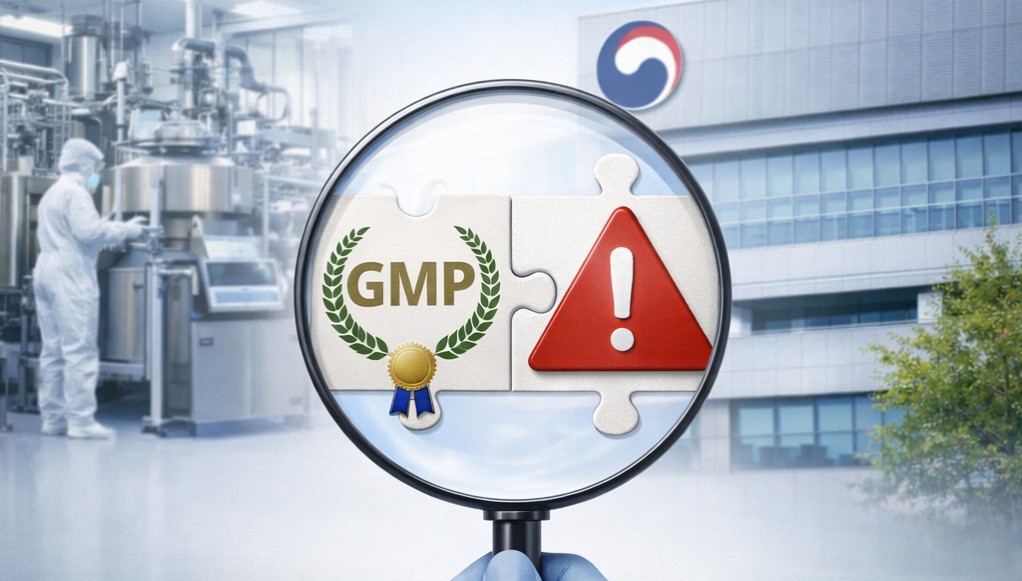
- AI-generated imageAs the Ministry of Food and Drug Safety (MFDS) moves forward with legislative revisions to the GMP certification revocation system in cooperation with the National Assembly, it has clarified that the changes will not apply to pharmaceutical companies that previously had their GMP certifications revoked.The ministry also drew a clear line regarding companies currently engaged in litigation, stating that the institutional reform is separate from ongoing lawsuits.According to the MFDS on the 3rd, the proposed amendment to the Pharmaceutical Affairs Act, jointly introduced on the 27th of last month by Rep. Jong-heon Baek (People Power Party) and Rep. Mi-hwa Seo (Democratic Party of Korea), reflects findings from last year’s research on improving the GMP certification revocation system.The GMP revocation system, implemented in December 2022, is a so-called “one-strike out” rule under which the MFDS revokes GMP certification for manufacturing sites that seriously violate Good Manufacturing Practice standards or repeatedly falsify manufacturing and quality records.The MFDS revokes GMP certification or changes compliance determinations if they were obtained through ‘false or fraudulent’ means or if manufacturing/quality management records were ‘repeatedly’ falsified or incorrectly documented.Additionally, it issues a ‘correction order’ if there is a risk of quality impact due to the lack of detailed standards or procedures for GMP compliance.The industry has previously argued that penalties under this system are excessively harsh, while also pointing out that criteria such as ‘repeated’ within the legally stipulated regulations lack clarity.Therefore, this amendment to the Pharmaceutical Affairs Act introduces intermediate regulations that allow for the suspension of GMP certification for up to 6 months and corrective orders to be issued, depending on the severity of the violation, when simple errors occur in GMP record-keeping or when there are minor issues in GMP compliance or operation.Furthermore, a new regulation has been established stipulating that pharmaceutical companies that fail to create or retain GMP records will have their certification immediately revoked, similar to cases of false or fraudulent certification. This aims to prevent deliberate failure to prepare GMP records to evade certification revocation.Since the revocation system took effect, GMP certification revocations were notified to 8 companies as of last October, beginning with Hutecs Korea. Of these, 5 companies are currently pursuing administrative litigation, while penalties for 3 have been finalized.An MFDS official stated, “In principle, the amendment to the Pharmaceutical Affairs Act cannot be applied retroactively. Companies currently involved in litigation may submit opinions regarding the amendment, but legislative changes and lawsuits are separate matters.”This suggests that the MFDS intends to continue defending its position in court against companies that have filed lawsuits.The MFDS official stated, “We understand that once this revised Pharmaceutical Affairs Act is promulgated, it is expected to take effect one year later. Accordingly, we plan to proceed with revising the details in accordance with the legal provisions through amendments to the Prime Ministerial Decree (Regulations on the Safety of Pharmaceuticals).”The reason opposition lawmaker Jong-heon Baek of the People Power Party joined the MFDS in pursuing this amendment is that, after Baek spearheaded and passed the initial Pharmaceutical Affairs Act amendment addressing the revocation of GMP compliance certifications, the industry flooded the MFDS with requests for further revisions.In response, Rep. Baek’s office requested that the MFDS conduct research on potential improvements, ultimately leading to the current legislative proposal. The amendment is jointly sponsored by Rep. Mi-hwa Seo of the Democratic Party of Korea, reflecting bipartisan support for refining the system.
- Policy
- Pharma exports surpassed $10 billion threshold
- by Lee, Jeong-Hwan Mar 04, 2026 05:41pm
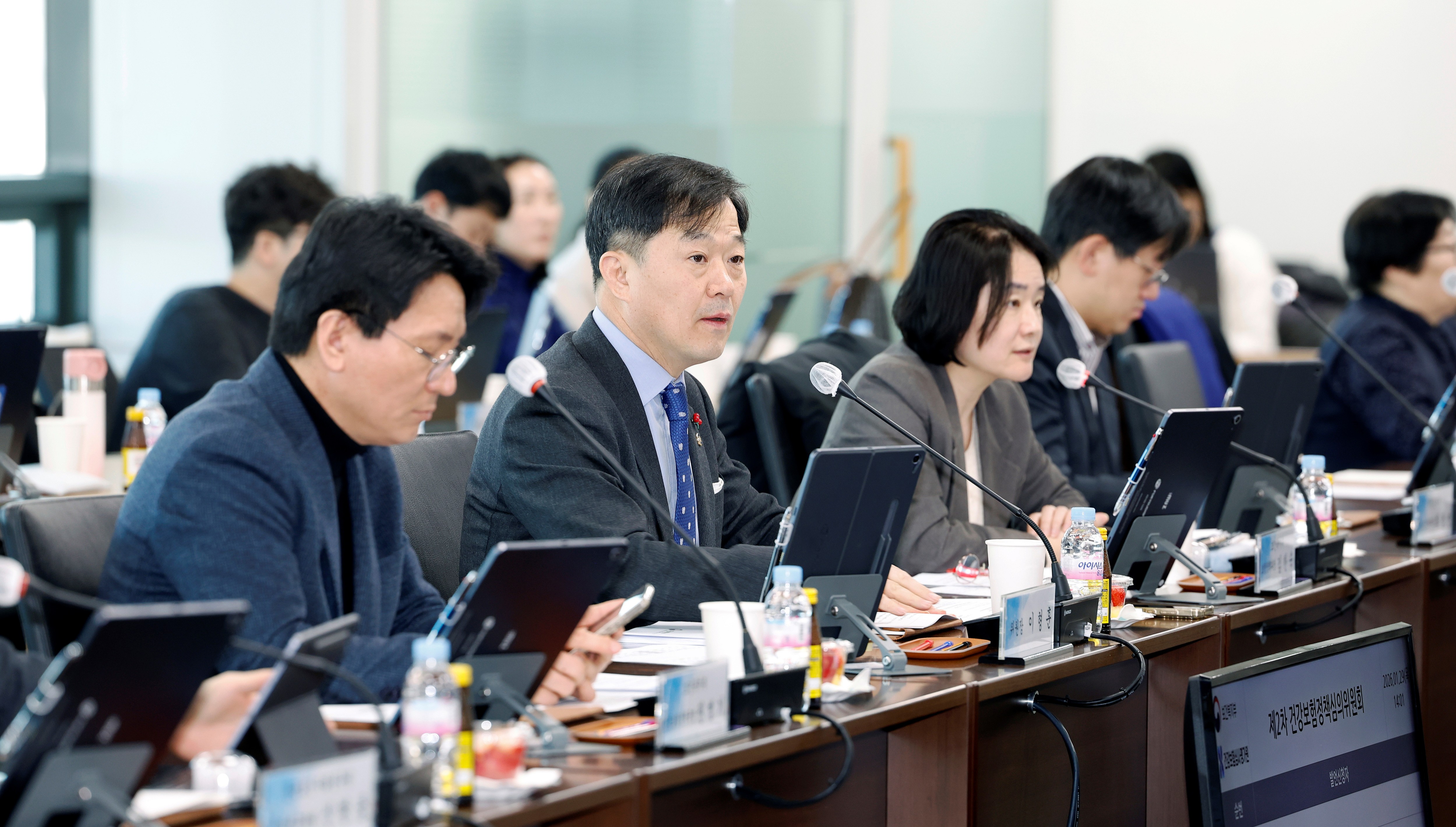
- Lee Hyung-hoon, Second Vice Minister of MOHWIn 2025, South Korea's bio-health industry export sales reached a record high of KRW 27.9 billion. The Ministry of Health and Welfare (MOHW) met with exporting companies to listen to industry voices and gather opinions on support measures.Notably, pharmaceutical exports surpassed the $10 billion threshold for the first-time last year, recording $10.4 billion.This figure represents an approximately ten-fold increase over the past ten years as biopharmaceuticals, which account for 62.6% of pharmaceutical exports, expanded their export markets, focusing on the United States and Europe.Lee Hyung-hoon, Second Vice Minister of MOHW, held a corporate briefing on the activation of bio-health industry exports at City Tower in Seoul at 2:00 PM on the 3rd. Lee encouraged the efforts of export company officials and promised to strengthen support.After sharing industry trends, Vice Minister Lee sought government support measures by listening to difficulties in the field.Among pharmaceutical companies, Samsung Biologics, GC Biopharma, HK inno.N, and Alteogen attended. In the medical device field, CGBio, Vuno, Meerecompany, and Wontech attended.The briefing began with presentations on the 2026 outlook and export activation support plans, followed by officials from each exporting company presenting the difficulties they face and proposed policy improvement measures. It concluded with a free discussion for all attendees.◆2025 export performance=Last year, the export value of the bio-health industry, including pharmaceuticals, biotech, medical devices, and cosmetics, reached $27.9 billion, an increase of 10.3% compared to the previous year, despite uncertain conditions such as tariffs. This recorded an all-time high and ranked 8th among South Korea's major industries.Specifically, in terms of last year's performance by major industry, semiconductors ranked first with $173.4 billion, followed by automobiles at $72.0 billion, general machinery at $46.9 billion, petroleum products at $45.5 billion, petrochemicals at $42.5 billion, ships at $31.8 billion, steel at $30.3 billion, and bio-health at $27.9 billion.Notably, pharmaceuticals surpassed $10 billion for the first time, recording $10.4 billion in exports and achieving their highest-ever performance.This is the result of biopharmaceuticals, which account for 62.6% of pharmaceutical exports, expanding their markets in the United States and Europe and increasing approximately tenfold over the past decade.By country, the United States, Switzerland, and Hungary were the major countries for exports, accounting for 39.5% of total exports and showing steady increases centered on advanced markets.The export value of biopharmaceuticals grew from $670 million in 2015 to $3.49 billion in 2020, and further increased approximately tenfold to $6.52 billion last year.Medical devices, including in-vitro diagnostic devices, shifted back into a recovery trend, and general medical devices also made progress with steady growth. By country, the United States, China, and Japan accounted for 33.1% of total exports, maintaining the top three positions.◆2026 export outlook=The MOHW announced an export target for the bio-health industry of $30.4 billion, a 9.1% increase compared to last year.This year's goals are $11.7 billion for pharmaceuticals (+12.4%), $6.2 billion for medical devices (+2.7%), and $12.5 billion for cosmetics (+9.5%).In pharmaceuticals, domestic biopharmaceuticals are expected to lead export growth, driven by the global expansion of the biopharmaceutical market and South Korea's position as the world's number one in Contract Development and Manufacturing Organization (CDMO) capacity.This is the outcome of the current status for biosimilar development following the patent expirations of 58 original biopharmaceuticals through 2032, and the encouragement of biosimilar prescriptions in the United States and the EU.In medical devices, export expansion is expected in advanced and emerging markets for ultrasound imaging diagnostic devices and X-ray equipment incorporating AI technology, as they increase diagnostic accuracy and efficiency, in line with trends in aging populations and the AI transition.To support export activation, the MOHW will invest KRW 233.8 billion, a 3.5-fold increase from last year, to overcome export uncertainties and actively foster the bio-health industry through investment promotion, supply chain strengthening, overseas regulatory response, consulting, marketing, and the establishment of local bases. ◆Pharmaceutical and bio field=The MOHW will strengthen competitiveness by creating an investment environment. Based on industry suggestions and analysis of past performance, the ministry will promote improvements to the innovative pharmaceutical company certification system for companies with excellent R&D investment and continue to form a KRW 1 trillion mega-fund to ensure that domestic drug pipeline-based new drugs reach global commercialization.Specifically, a new specialized fund of KRW 150 billion will be established this year to support Phase 3 clinical trials, which require the most capital during new drug development, and more than KRW 1 trillion in national health and medical R&D will catalyze expanding private R&D investment.The MOHW will also revitalize the industrial ecosystem by strengthening the pharmaceutical supply chain. To prepare for supply chain crises, the ministry will prepare an integrated stabilization response system, including securing raw materials and parts, supporting production facilities for drugs with unstable supply, and supporting the stockpiling of core medicines.First, it will support the stabilization of new biomaterials) and expand support for diversifying new raw material purchases (10 companies, KRW 1.5 billion). It will also support the production of drugs with unstable supply (4 companies, KRW 3.8 billion), the stockpiling of new core medicines (5 companies, KRW 500 million), and the advancement of manufacturing for new promising export medicines (15 companies, KRW 8.1 billion).To strengthen support for global entry and export diversification, the goal is to move beyond the generic and biosimilar stages that have been the center of the pharmaceutical industry and enter the global market, with a focus on innovative new drugs.The ministry plans to strengthen full-cycle support, including 'open innovation' based on cooperation, 'consulting,' the operation of domestic accelerator programs (inbound), and key global market entry (outbound).The "K-Biopharma Next Bridge" project will be introduced to facilitate collaboration between domestic companies with promising technologies and global leading companies with high interest in the Korean market. Open innovation growth programs will be operated one-by-one, and the provision of information on regulatory changes by country and consulting for patent, legal, tax, customs, and distribution channel diversification will be strengthened.Domestically, an accelerator program will be operated to increase the commercialization success rate of technology-based startups, support for companies occupying the Boston CIC to establish a bridgehead for US market entry will be expanded from 30 to 40 companies, and various networking activities to secure global sales channels will be strengthened through export consultations, the dispatch of market pioneer groups, and support for participating in global medical societies.◆Medical device =An innovation ecosystem will be created to strengthen competitiveness, centered on the Medical Device Comprehensive Support Center, which covers the entire cycle from R&D to commercialization and overseas entry. Utilizing the Medical Device Comprehensive Information System and MDCC, the MOHW will strengthen customized consulting support for companies and provide more professional information.The Medical Device Consulting Council (MDCC) consists of 202 external experts in eight fields, including licensing and systems, R&D and clinical trials, overseas entry, commercialization, and legal and accounting.Furthermore, the ministry will strengthen technology verification and market linkage for domestic companies through the global open innovation program "New Impact Korea," which promotes cooperation with global companies, hospitals, and investment institutions.By holding "MedTech Insight," which systematically provides industry trends, regulations, and market information, the ministry will support the development of strategies aligned with field demand and lay the foundation for sustainable growth in the domestic medical device industry.To increase the export potential of the domestic medical device industry, new projects to strengthen competitiveness will be expanded.Support will be provided for the commercialization of innovative technologies and the strengthening of the competitiveness of the next-generation surgical robot industry, including support for the rapid commercialization of AI-applied products and the construction of an AI-based surgical robot innovation lab from 2026 to 2030.Additionally, the MOHW will support clinical trials and real-world evaluations through professional consulting and medical staff matching by operating six hospital-based demonstration support centers this year, thereby facilitating the acquisition of clinical evidence and market entry in domestic and overseas markets.To strengthen market-tailored export support, specialized support for major overseas markets will be increased. To facilitate local-based global entry cooperation, the ministry will support 10 companies in the US bio cluster in Houston with company occupancy and provide up to KRW 200 million per company annually to cover regulatory response costs essential for overseas market entry.The MOHW will also help secure stable sales channels by supporting marketing and auxiliary export costs amid uncertainties in the international supply chain.Furthermore, from this year, the "Medical Device Global Education and Training Support" project for overseas medical staff will be promoted to expand experience with key Korean products through linked education with overseas medical institutions, training facilities, and international medical societies, thereby strengthening product reliability and the foundation for market expansion.
- Policy
- GMP “one-strike” rule to be eased… suspension introduced
- by Lee, Jeong-Hwan Mar 03, 2026 09:21am
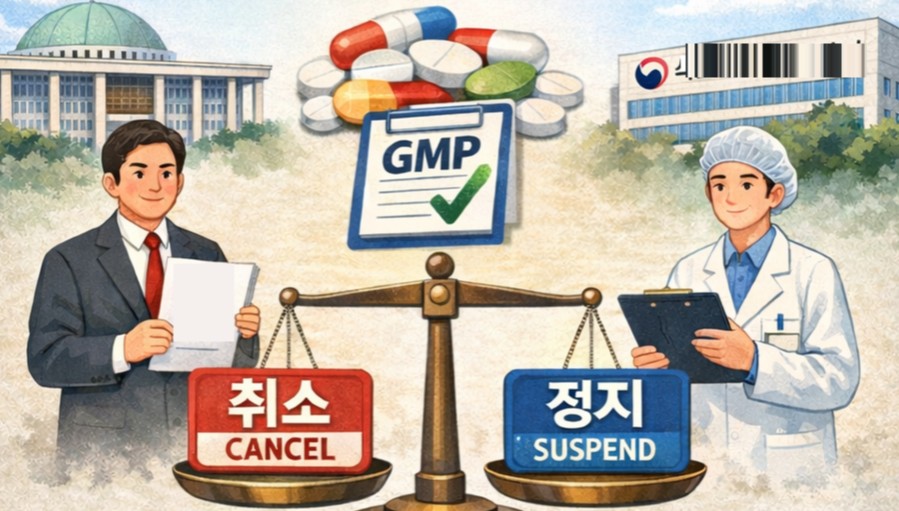
- The National Assembly and the government are launching a comprehensive overhaul of the “one-strike out” (immediate revocation) system for pharmaceutical GMP (Good Manufacturing Practice) compliance violations.This approach introduces an intermediate regulatory step: adding a ‘GMP suspension’ penalty before immediate revocation, depending on the severity of violations related to the manufacturing record. The suspension period can be set for up to 6 months.At the same time, a new provision will mandate immediate revocation of GMP certification for companies that fail to prepare, properly retain, or intentionally discard GMP records, equating such conduct with obtaining certification through false or fraudulent means.The reform aims to address concerns that the current system, which focuses heavily on the ‘repeated nature’ of GMP manufacturing record violations by pharmaceutical companies, has led to some unreasonable penalties.On the 27th, Rep. Jongheon Baek of the People Power Party and Rep. Mi-hwa Seo of the Democratic Party of Korea jointly introduced amendments to the Pharmaceutical Affairs Act to rationalize GMP regulations.The bipartisan push for legislation to improve the GMP one-strike-out system was influenced by the Ministry of Food and Drug Safety (MFDS) commissioning and completing a research project based on industry complaints.Previously, amid incidents involving unauthorized manufacturing and falsified GMP records, the MFDS and the National Assembly strengthened GMP sanctions to prevent recurrence.As a result, the one-strike-out system for GMP compliance violations of pharmaceutical companies was implemented in December 2022 following National Assembly legislation.However, since the law's enactment, pharmaceutical companies whose GMP certifications were revoked by the MFDS have repeatedly filed administrative lawsuits challenging the decisions. As shortcomings in the system became apparent, calls for improvement emerged from both the pharmaceutical industry and the National Assembly.Complaints frequently arose that immediate revocation of GMP certification not only halts a pharmaceutical company's drug production lines but also causes significant operational damage to contract manufacturers tied to the penalized company, necessitating pre-revocation regulatory measures.Specifically, pharmaceutical companies criticized the current GMP one-strike-out system as excessive punishment. They argued it applies the criterion of ‘repeated false or erroneous record-keeping’ without considering the severity of the violation (such as falsifying manufacturing records), its impact on human health, or the presence of intent.Pharmaceutical companies pointed out that focusing solely on repetition for GMP certification revocation can result in lighter penalties for serious violations compared to minor infractions and does not adequately account for intent.Consequently, some companies reportedly resorted to intentionally not preparing or discarding GMP records to avoid revocation triggered by repeated documentation errors.In response, the MFDS initiated a research project on the GMP compliance certification system and advanced supplementary legislation in collaboration with the National Assembly.The core revision introduces ‘GMP certification suspension’ as an intermediate sanction between corrective orders and full revocation. This penalty will be applied based on the severity of the GMP violation and its impact on drug quality.Notably, companies that fail to prepare or retain GMP records will face immediate revocation, targeting attempts to evade penalties through deliberate non-documentation or record destruction.Additionally, a new intermediate regulatory measure was established, allowing for a 6-month suspension of GMP certification for relatively minor GMP violations.The MFDS and lawmakers Jong-heon Baek and Mi-hwa Seo, who proposed the bill, plan to collaborate on advancing GMP certification revocation regulations through swift legislation.
- Policy
- Will pharma be able to request 'records of administrative sanctions' during acquisition?
- by Lee, Jeong-Hwan Mar 03, 2026 09:21am
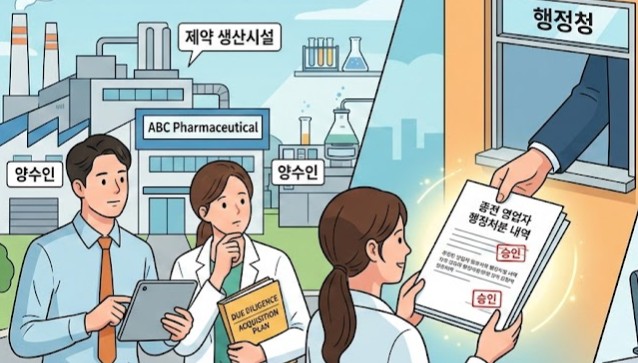
- A bill is being developed to grant pharmaceutical manufacturers that intend to acquire an existing pharmaceutical company the authority to request and receive records of administrative sanctions imposed on the previous owner (the former operator) by administrative authorities.This legislation aims to address the issue that the current law lacks a legal basis for an assignee to verify the assignor's history of administrative sanctions.Once the bill is passed, cases in which an assignee suffers unfair losses, such as managerial damage, by acquiring a pharmaceutical company without knowledge of existing administrative sanctions are expected to disappear.On February 27, 2026, Representative Park Hyeong-soo of the People Power Party proposed a partial amendment to the Pharmaceutical Affairs Act containing these details.Under the current law, when a new operator succeeds to the status of a former operator through business transfer, inheritance, or merger between corporations, the effects of administrative sanctions on the former operator are transferred to the assignee, except for cases of good faith acquisition.In other words, if a pharmaceutical company with finalized administrative sanctions is purchased, the responsibility and effects of those sanctions are transferred to the assignee rather than the assignor.Rep. Park raised concerns that if a pharmaceutical company is acquired without knowledge of any administrative sanction history, the assignee is forced to fulfill the existing sanctions, which can sometimes lead to a situation worse than not having acquired the company at all.Accordingly, Rep. Park introduced a bill that allows a person seeking to succeed to a pharmaceutical manufacturing business (a person intending to acquire a pharmaceutical company) to request the history of past administrative sanctions and details of administrative sanctions currently in progress from the Minister of Health and Welfare (MOHW), the Minister of Food and Drug Safety (MFDS), provincial governors, or heads of local governments (mayors, governors, or district heads).Rep. Park explained, "This bill allows assignees to check the records of administrative sanctions against the previous operator in advance, enabling them to make more rational decisions regarding the acquisition," adding, "The Anti-Corruption and Civil Rights Commission has also recommended establishing procedures to verify administrative sanctions, as cases of attempting to transfer businesses to evade administrative sanctions have become frequent."
- Policy
- Reimb for switching between Evrysdi and Spinraza allowed in Korea
- by Jung, Heung-Jun Mar 03, 2026 09:21am
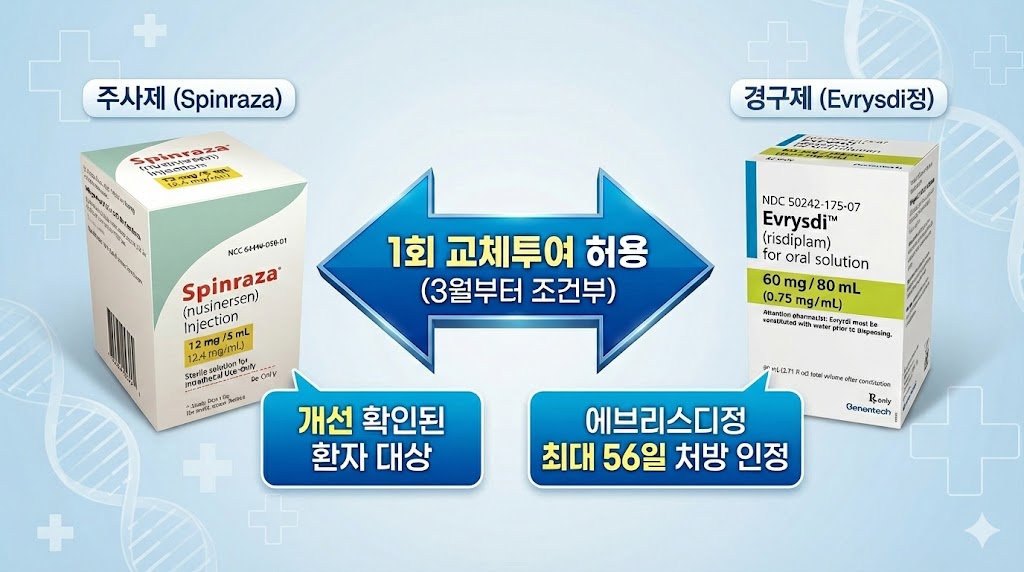
- Beginning in March, the scope for switching between spinal muscular atrophy (SMA) treatments Evrysdi and Spinraza will be expanded with reimbursement.With bidirectional switching now permitted between injectable and oral therapies, prescriptions can be adjusted based on changes in patient condition. Previously, only a single switch from Spinraza to Evrysdi had been allowed.AI-generated ImageOn the 27th, the Health Insurance Review and Assessment Service (HIRA) announced updated reimbursement criteria for SMA therapies, effective March 1, following revisions to the Ministry of Health and Welfare’s reimbursement standards.Until now, switching or combination therapy between SMA treatments had not been covered. Under the revised policy, a one-time conditional switch will be permitted between the injectable Spinraza and the oral formulations Evrysdi Dry Syrup and Evrysdi Tab.Switching is allowed if clinical improvement has been confirmed during treatment, the discontinuation criteria are not met, and there is a valid clinical reason. This applies not only to switching from an injectable to an oral medication but also from an oral medication to an injectable. Patients can even switch from an injectable to an oral medication and then return to an injectable.The change enhances treatment accessibility by allowing reimbursement coverage when medication adjustments are necessary based on a patient’s condition.However, patient motor function assessment criteria have become more detailed. Previously, assessment tools were applied uniformly based on whether the patient was under or over 24 months of age.Starting in March, assessment tools will instead be differentiated based on whether the patient can sit, among other refinements. This will apply to assessments conducted after implementation.With the new reimbursement listing of Evrysdi Tab in March, long-term prescription limits have also been established. The maximum prescription duration for Evrysdi Tab is 56 days.Roche Korea’s Evrysdi Tab 5mg is scheduled for reimbursement listing next month at KRW 793,333, adding a tablet formulation alongside the existing dry syrup.With the addition of a new formulation, the wording has been revised to refer to ‘Evrysdi Dry Syrup, etc.’ in prior review procedures and reimbursement criteria to reflect the expanded formulations.
