
- LOGIN
- MemberShip
- 2026-04-28 14:33:08
- Policy
- KMPG ‘We ask for the prompt reimbursement of Xpovio’
- by Kim, Jung-Ju Apr 22, 2024 05:45am
- Patients’ demand for the reimbursement listing of ‘Xpovio 20mg (selinexor),’ a new drug for multiple myeloma that was developed by the Chinese pharmaceutical company Antengene, is growing. The patients are claiming that they are becoming ‘medical poor’ due to the delay in the reimbursement of the only option available in the area. Xpovio’s reimbursement agenda has been stuck at the reimbursement stage for more than 3 years since it was approved in Korea and is being delayed without a viable alternative. The Korea Multiple Myeloma Patient Group issued a statement on the 19th and strongly urged the authorities to consider the patients’ situations. The KMPG chairman said, "We strongly urge the Drug Reimbursement Evaluation Committee, which will meet in May, to expedite the reimbursement of Xpovio, the only light of hope remaining for the fading flickers of life for our multiple myeloma patients.” Multiple myeloma is a blood cancer caused by the abnormal differentiation and proliferation of plasma cells, a type of white blood cells responsible for the immune system, in the bone marrow. Xpovio Tab 20mg, which was developed to treat the disease, was approved by the MFDS and introduced to Korea on July 29, 2021. On June 14, 2023, the drug’s reimbursement application passed HIRA’s Cancer Disease Review Committee but suffered a setback right before its reimbursements when it was deemed non-reimbursable by DREC in November of the same year. Min-Hwan Baek, Chairman of KMPG, said, “Xpovio is currently being reimbursed in not only the A8 countries but A9 countries, being granted reimbursement in the United States, Germany, Canada, the United Kingdom, and Australia. But in Korea, patients are dying due to the drug’s non-reimbursement. I lay awake night after night as chairman of KMPG, worrying about the patients who are dying needless deaths due to lack of other options than the non-reimbursed, unaffordable Xpovio.” "It has come to the point where many patients who turned medical poor due to Xpovio’s non-coverage are giving up on treatment," said KMPG, urging for the prompt reimbursement of Xpovio.
- Policy
- Will the 37th new drug in Korea receive approval?
- by Lee, Hye-Kyung Apr 22, 2024 05:45am
- Jeil Pharmaceutical. The approval for the 37th new drug in Korea is approaching. According to industry sources on the 22th, the Ministry of Food and Drug Safety (MFDS) completed the safety and efficacy assessment of the three zastaprazan-containing products from Onconic Therapeutic, Jeil Healthscience, and Jeil Pharmaceutical. The completion of the safety and efficacy assessments by MFDS indicates that approval is nearing. Jeil Pharmaceutical simultaneously applied for new drug approvals from three affiliated companies, including Jeil Healthscience, which manufactures over-the-counter drugs, and its subsidiary, Onconic Therapeutic, which specializes in new drug R&D. These three products contain the active ingredient of zastaprazan. Upon completion of the safety and efficacy assessment by MFDS, approval for these three products is anticipated. In June last year, Onconic Therapeutic submitted the New Drug Application (NDA) to the MFDS for domestic launch. The NDA was based on the Phase 3 clinical trial, which evaluated 298 patients with gastroesophageal reflux disease (GERD) in 28 medical facilities in South Korea. Notably, there has not been a single case of MFDS-designated new drug in South Korea following the 36th new drug in Korea, 'Envlo,' in November 2022. Therefore, approval of zastaprazan would lead to approval of new drugs in South Korea. Zastaprazan is a new drug that belongs to the class of novel potassium-competitive acid blocker (P-CAB). P-CAB is expected to replace the proton pump inhibitors (PPI) in the anti-peptic ulcer drug market, including the treatment for gastroesophageal reflux disease (GERD). P-CAB class products in Korea include HK inno.N’s 'K-CAB,' the 30th new drug in Korea, and Daewoong Pharmaceutical’s 'Fexuclue,' the 35th new drug in Korea. According to medical market research firm UBIST, K-CAB recorded prescription sales of KRW 30.4 billion in 2019. Sales grew rapidly to generate KRW 77.1 billion in 2020, KRW 110.7 billion in 2021, and KRW 132.1 billion in 2022. Since its launch in July 2022, Fexuclue has recorded cumulative prescription sales of KRW 61 billion up to November 2023, changing the market paradigm for gastroesophageal reflux disease.
- Policy
- Reimb expansions of Keytruda have failed the 4th CDRC
- by Lee, Tak-Sun Apr 19, 2024 06:24am
- MSD Korea’s cancer immunotherapy drug Keytruda’s reimbursement expansion item did not cross the Cancer Disease Review Committee (CDRC) threshold for the fourth time following its expansion in June last year. The analysis is that this attempt is particularly significant as all 15 indications were reviewed by the CDRC, and MSD’s financial contribution proposal was discussed for the first time. During the 3rd CDRC in 2024, held on April 17th, the reimbursement expansion of MSD Korea’s cancer immunotherapy drug 'Keytruda (pembrolizumab)' was reviewed but failed in securing reimbursement expansion. The CDRC announced during the meeting, it decided to postpone setting reimbursement criteria for 15 indications, including endometrial cancer. It was decided that the setting of reimbursement criteria would be reconsidered upon the additional submission of financial contribution proposal. All 15 indications included in the reimbursement expansion application were reviewed. In June of last year, MSD Korea submitted Keytruda’s reimbursement expansion application to the Health Insurance Review and Assessment Service (HIRA) for 13 indications with high unmet needs in medical fields in Korea. MSD's application includes 13 indications: ▲ Early-stage triple-negative breast cancer ▲ Metastatic or recurrent triple-negative breast cancer ▲ Metastatic or recurrent head and neck cancer ▲ Advanced or metastatic esophageal cancer ▲ Adjuvant therapy after renal cell carcinoma surgery ▲ Non-invasive bladder cancer ▲ Persistent, recurrent, or metastatic cervical cancer ▲ Advanced endometrial cancer ▲ Metastatic endometrial cancer with MSI-H or dMMR ▲ Metastatic rectal cancer with MSI-H or dMMR that cannot be removed with surgery ▲ Metastatic small intestine cancer with MSI-H or dMMR ▲ Metastatic ovarian cancer with MSI-H or dMMR ▲ Metastatic pancreatic cancer with MSI-H or dMMR. The company recently added two additional indications. It was reported that MSD applied for the reimbursement expansion of two indications last December: gastric cancer with MSI-H and bile duct cancer with MSI-H. Three indications were assessed at the CDRC meeting in October last year, where Keytruda's reimbursement expansion was first discussed. Then, 4 indications were assessed in November of the same year, and 6 indications were assessed in January of this year. The CDRC said at each review, “We will prioritize reviewing the medical validity and clinical necessity of multiple indications for reimbursement expansion. Upon receiving the pharmaceutical companies' financial contribution proposal towards proven indications, we have decided to analyze its impacts to establish reimbursement criteria.” Furthermore, during this CDRC review, 15 indications, including the previously discussed 13 and the two additional indications applied for in December, were all brought to the review table. This indicates that the CDRC prioritized reviewing the medical validity and clinical necessity of multiple indications for reimbursement expansion. In other words, the initial assessment of indication has been completed. The committee will discuss establishing final reimbursement criteria for the next step after reviewing the pharmaceutical companies' financial contribution proposal. It was reported that the financial contribution proposal submitted by MSD Korea was added as an additional agenda item just two days before the CDRC review. This suggests that pharmaceutical companies deliberated on their financial contribution proposals until the last minute. However, it has been reported that members of the CDRC were not satisfied with the financial contribution proposal submitted by MSD. Keytruda's reimbursement expansion in the future depends on how much MSD is willing to compromise in their financial proposal. “Keytruda is reimbursed for 7 indications, and its domestic sales reach KRW 400 billion,” an industry expert explained. He added, “If the pharmaceutical company does not submit a new financial contribution proposal, it may not be possible to reimburse all 15 indications at once.”
- Policy
- Impurity detected in single-agent entacapones
- by Kang, Shin-Kook Apr 19, 2024 06:24am
- t has been confirmed that impurities have been detected in entacapone, a single-agent drug used to treat symptoms of Parkinson's disease. According to medical and pharmaceutical organizations on the 18th, the Ministry of Food and Drug Safety began reviewing safety measures, including setting necessary temporary permissible limits based on the submitted test and inspection results, following a company report that nitrosamine impurities (NDEA, N-nitrosodiethylamine) were detected in its entacapone-containing drugs. In other words, if there is a medical need for the drug or there is a concern about supply interruptions (shortage), the government plans to apply a temporary permissible limits for the drugs’ distributions for a certain period of time. For this, the MFDS is collecting opinions from doctors to prepare for the possibility of unstable supply and demand of entacapone-containing drugs if recall measures or suspension of production and import measures are applied due to necessity until impurities are reduced. This is a preliminary investigation into the medical necessity of entacapone, the impact on patient care in the event of a supply interruption (shortage) of entacapone single-agent drugs, the current status of substitute drugs, and the establishment of temporary permissible limits. The entacapone single tablets currently approved in Korea include Comtan Tab 200 mg, Myungin Entacapone Tab 200 mg, and Entapone Tab 200 mg.
- Policy
- Four Otezla generics were authorized simultaneously in Korea
- by Lee, Hye-Kyung Apr 19, 2024 06:24am
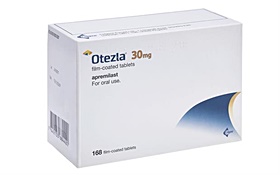
- Amgen Four generic versions of Amgen's oral psoriasis drug Otezla (Apremilast) have been approved simultaneously in Korea. With the resolution of Otezla’s 'use patent' issue, which had served as an obstacle to the launch of generics, domestic pharmaceutical companies that have previously succeeded in avoiding the drug’s composition patent seem to have applied for approval of their generic versions at once. On the 17th, the Ministry of Food and Drug Safety approved four apremilast-based formulations, including Dong-A ST's ‘Otelia Tab,’ Daewoong Pharmaceutical's ‘Apsola Tab,’ Dongkoo Biopharm’s ‘Otemila Tab,’ and Chong Kun Dang’s ‘Otebell Tab.’ Otezla, the original apremilast formulation of these generics, was the first oral psoriasis treatment to be approved by the MFDS in November 2017, but the company voluntarily withdrew the drug’s license in June 2022 after failing to cross the reimbursement threshold. In the process, domestic pharmaceutical companies began filing patent suits to launch their generic versions of Otezla. Otezla has 3 registered patents, including a use patent (10-0997001) and two formulation patents (10-2035362 and 10-2232154). In the case of the 2 formulation patents, 7 companies, including Daewoong Pharmaceutical, Dong-A ST, DongKoo Bio&Pharma, Huons, Chong Kun Dang, Mothers Pharm, and Cosmax, filed to confirm the passive scope of rights in May 2021 and November 2022 and succeeded in avoiding the patents. However, the companies still had to overcome the use of patents to launch their generic versions. Otezla’s use patent was set to expire on March 18, 2028. The companies must invalidate the use patent as well to launch their generic versions, and on August 24 last year, the court decided to ‘partially reject and dismiss’ the use patent’s invalidation trial. Despite withdrawing from the Korean market, Amgen appeared to be vigorously defending its patent rights, leading to criticism that it was blocking the entry of generics that were preparing to launch in Korea. And with no further news of the domestic pharmaceutical companies filing appeals to evade the use of patents since August last year, the news of the 4 generic Otezla approvals drew attention to their background. A representative from a relevant Korean pharmaceutical company said, "We have been continuously making an agreement with Amgen regarding the use of the patent. Amgen withdrew its license for Otezla in 2022 and had no intention of launching it in the future, so there was no reason to prevent generics from entering the market." "Amgen said that it didn't want to continue litigating a product that they had no intention of launching in the country. They agreed that the patent would not be a barrier to generic entry in the future, which is why we went through the process." Currently, the legal status of Otezla's use patent, (+)-2-[1-(3-ethoxy-4-methoxyphenyl)-2-methylsulfonylethyl]-4-acetylaminoisoindoline-1,3-dione, and methods of synthesis and compositions thereof" is indicated as “revoked," according to Korea’s Intellectual Property Trial and Appeal Board bulletin. An industry official said, "The Otezla generics have not been jointly developed by the companies, but seem to have been approved at the same time upon the resolution of the patent issue. We plan to apply for reimbursement immediately upon approval and start drug price negotiations."
- Policy
- PVA exemptions expanded to drugs below KRW 3 billion
- by Lee, Tak-Sun Apr 18, 2024 05:54am
- Effective this year, the price-volume agreement (PVA) criteria will be expanded to provide an exemption to products with a claim amount below KRW 3 billion. This amount represents an increase from the previous criteria, which was below KRW 2 billion. Also, any product that has undergone more than two price reductions in the last five years will receive a 30% cuts. The reduction rate will be differentially applied depending on the claimed amount. Since April 15th, the National Health Insurance Service (NHIS) has been collecting opinions regarding the partial revision of the 'Detailed Matters regarding PVA negotiation’s operational guidelines.' The revised program will be implemented starting on May 1st. ◆Expansion of drugs eligible for exemption·Addition of drugs eligible for reduction =Exempted drugs from negotiations will be expanded from same-class products with an annual claim amount of less than KRW 2 billion to less than KRW 3 billion. If a product has undergone more than two price reductions in the last five years before the end of the analysis period, it will be eligible for a reduction. However, drugs that have already received a reduction rate during the two negotiations with agreements before the end of the analysis period will not be eligible for the reduction. Drugs eligible for reduction will include those developed by innovative pharmaceutical companies or companies with R&D expenses to sales as of the year preceding the end of the analysis period, with a ratio of 10% or more and recognized by NHIS. The reduction rate is set to 30%. ◆Differential reduction rate based on claimed amounts = A formula for reference price for negotiation will be differentially calculated based on the claim amount. A higher reduction rate will be applied to drugs with a larger claim amount. For example, if the claim amount of 'Drug-type Ga' during the analysis period is more than KRW 3 billion and less than KRW 5 billion, the formula will be 'Reference price for negotiation = 0.95×(Price ceiling)+(1-0.95)×{Price ceiling×(Expected claim amount/Claimed amount by same-class product during the analysis period)}'. If the claim amount is more than KRW 5 billion and less than KRW 30 billion, the formula of 'Reference price for negotiation = 0.9×(Price ceiling)+(1-0.9)×{Price ceiling×(Expected claim amount/Claimed amount by same-class product during the analysis period)}' will be applied. If the claim amount is more than KRW 30 billion, the formula of 'Reference price for negotiation = 0.85×(Price ceiling)+(1-0.85)×{Price ceiling×(Expected claim amount/Claimed amount by same-class product during the analysis period)}' will be applied. The differential formula will be used for 'Drug-type Na' and 'Drug-type Da'. If the claim amount is more than KRW 3 billion and less than KRW 5 billion, the formula of 'Reference price for negotiation = 0.9×(Price ceiling)+(1-0.9)×{Price ceiling×(Claimed amount by same-class product during the analysis period)}' will be applied. If the claim amount is more than KRW 5 billion and less than KRW 30 billion, the formula of 'Reference price for negotiation = 0.85×(Price ceiling)+(1-0.85)×{Price ceiling×(Claimed amount by same-class product during the analysis period)}' will be applied. If the claim amount is more than KRW 30 billion, the formula of 'Reference price for negotiation = 0.8×(Price ceiling)+(1-0.8)×{Price ceiling×(Claimed amount by same-class product during the analysis period)}' will be applied. ◆Expanded refund contracted drugs = Drugs eligible for a refund contract instead of a drug reduction will be expanded. Drugs with multiple indications for the initial listing will be eligible for a refund contract. A one-time refund contract is also possible. The NHIS can enter into a one-time refund contract with a company instead of adjusting the reference price for negotiation when there is a temporary increase in the volume and upon the company’s request. The new guidelines will be implemented starting on May 1st, 2024. Drugs undergoing PVA monitoring or negotiations will be applied first. Therefore, any drugs subjected to this year’s 'Drug-type Da' monitoring will be eligible for the new guidelines.
- Policy
- KRW 10 Bil antiemetic drug Akynzeo seeks reimb for injection
- by Lee, Tak-Sun Apr 18, 2024 05:54am
- Akynzeo Inj has applied for reimbursement. HK inno.N is expanding the lineup of 'Akynzeo,' a medicine used to prevent vomiting in cancer patients. In addition to the capsule formulation currently covered by health insurance, the company has applied for reimbursement to the Health Insurance Review and Assessment Service (HIRA) for Akynzeo inj. According to industry sources on the 17th, Akynzeo inj, approved in October 2022, has applied for HIRA review. Akynzeo was introduced to South Korea by HK inno.N from the Swiss pharmaceutical company Helsinn. It is used for the prevention of acute and delayed nausea and vomiting associated with initial and repeat courses of moderately and highly emetogenic cancer chemotherapy. It is a combination of netupitant and palonosetron hydrochloride, with a mechanism of action inhibiting the nerve pathway associated with causing nausea and vomiting. According to analysis, the two active ingredients have a long plasma half-life, which makes them effective antiemetics. The capsule formulation was already available in South Korea. Akynzeo cap was approved in 2018 and listed for reimbursement in December of the same year. After the listing, the sales of the drug have skyrocketed. According to IQVIA, its sales of KRW 1.8 billion in 2019 increased to KRW 4.5 billion in 2020, KRW 6.4 billion in 2021, KRW 7.3 billion in 2022, and recorded KRW 9.8 billion last year (KRW 2 billion shy of KRW 10 billion). Akynzeo cap usage was expanded after the approval of reimbursement expansion in June 2022. Before the expansion, it could be used as a combination therapy with corticosteroids in patients who fell into the high-risk group (over 90%). After the reimbursement expansion, it can now be administered to severe patient groups (30~90%) without combination with corticosteroids. Akynzeo Inj, which has applied for reimbursement, is an IV injection. It is expected to benefit cancer patients who have difficulty ingesting oral medicines. Akynzeo Inj will undergo HIRA review for reimbursement appropriateness and seek health insurance listing.
- Policy
- Will Fasenra be applied RSA for reimbursement in KOR?
- by Lee, Tak-Sun Apr 18, 2024 05:54am
- AstraZeneca has entered into drug price negotiations with the National Health Insurance Service for its ‘Fasenra Prefilled Syringe Inj (benralizumab, AZ),’ a severe eosinophilic asthma treatment that passed the Health Insurance Review and Assessment Service's Drug Reimbursement Evaluation Committee review in March. With other drugs with the same mechanism of action such as Cinqair and Nucala already listed for reimbursement in Korea, whether Fasenra will also be granted reimbursement in Korea is gaining attention. According to an industry source on the 16th, the National Health Insurance Service is in drug price negotiations with AstraZeneca for Fasenra. In particular, Fasenra’s reimbursement is receiving attention in particular for the fact that 2 other drugs with the same mechanism of action – Cinqair (reslizumab, Teva-Handok) and Nucala (mepolizumab, GSK) - have already been approved in Korea. In October last year, the 2 interleukin (IL)-5 antagonists were granted reimbursement at the same time. However, Cinqair was approved through the regular reimbursement process, and Nucala was approved through the RSA process. This was the first time a drug in the same class had been approved through two different reimbursement schemes. Fasenra is also seeking reimbursement through the RSA track, which is likely to rise as a new case. In principle, it is possible for latecomers to be listed through the RSA track, but there have been almost no cases of drugs being listed through RSA after a same-class drug was listed through the general track. Moreover, as RSA was limitedly applied to anticancer drugs and rare diseases, Fasenra is regarded as an example of its expanded application, being a treatment for severe asthma. Meanwhile, the Health Insurance Review and Assessment Service is also conducting drug pricing negotiations for ‘Idelvion Inj (CSL Behring),’ which is used to treat hemophilia B.
- Policy
- Keytruda’s reimb expansion under review by CDRC
- by Lee, Tak-Sun Apr 17, 2024 06:06am
- MDS Korea 'Keytruda (pembrolizumab, MSD),' a cancer immunotherapy drug, will be considered for review by the Cancer Disease Review Committee this afternoon to discuss its expanding reimbursement. Keytruda’s reimbursement expansion has been submitted to the Cancer Disease Review Committee three times, but it has received re-evaluation decisions each time. Attention is being drawn to whether at least some of Keytruda’s indications will set reimbursement criteria, as this round of the Cancer Disease Review Committee will discuss the measure of the pharmaceutical company’s financial contribution. According to industry sources on the 16th, Keytruda’s reimbursement expansion application will be reviewed by the 3rd Cancer Disease Review Committee in 2024, which is scheduled to be held on the 17th. In June of last year, MSD Korea submitted Keytruda’s reimbursement expansion application to the Health Insurance Review and Assessment Service (HIRA) for 13 indications with high unmet needs in medical fields in Korea. MSD's application includes 13 indications: ▲ Early-stage triple-negative breast cancer ▲ Metastatic or recurrent triple-negative breast cancer ▲ Metastatic or recurrent head and neck cancer ▲ Advanced or metastatic esophageal cancer ▲ Adjuvant therapy after renal cell carcinoma surgery ▲ Non-invasive bladder cancer ▲ Persistent, recurrent, or metastatic cervical cancer ▲ Advanced endometrial cancer ▲ Metastatic endometrial cancer with MSI-H or dMMR ▲ Metastatic rectal cancer with MSI-H or dMMR that cannot be removed with surgery ▲ Metastatic small intestine cancer with MSI-H or dMMR ▲ Metastatic ovarian cancer with MSI-H or dMMR ▲ Metastatic pancreatic cancer with MSI-H or dMMR . In October and November of last year, some indications were considered for review by the Cancer Disease Review Committee but received re-evaluation decisions. Keytruda’s six indications were considered for reimbursement expansion in the first Cancer Disease Review Committee in January 2024, but the committee decided to reconsider them. The Cancer Disease Review Committee will prioritize reviewing the medical validity and clinical necessity of multiple indications for reimbursement expansion. Pharmaceutical companies' financial contribution measures towards proven indications will be analyzed to establish reimbursement criteria. Attention is drawn to whether Keytruda’s indications will set reimbursement criteria, as this round of the Cancer Disease Review Committee will consider the Pharmaceutical companies' financial contribution measures. Keytruda is an immune checkpoint inhibitor that treats cancer by inhibiting the PD-1 protein on the surface of T cells, preventing its binding to the PD-L1 receptor, and activating the immune cells. Keytruda is currently reimbursed for seven indications, including non-small cell lung cancer as a first-line treatment, melanoma, urothelial carcinoma, and four cancer types of Hodgkin’s lymphoma. According to IQVIA, Keytruda is ranked as the top-selling drug in Korea, with sales reaching KRW 398.7 last year.

- Policy
- A Korean 4th gen NSCLC drug starts clinical trial
- by Lee, Hye-Kyung Apr 16, 2024 05:47am
- A Phase 1 clinical trial for a domestically developed 4th generation non-small cell lung cancer (NSCLC) drug has been approved in Korea. The Ministry of Food and Drug Safety approved the Phase I trial for Oncobix’s oral ALK/EGFR inhibitor 'OBX02-011' on patients with advanced NSCLC on the 12th. The trial will be conducted at the National Cancer Center and will include dose escalation and dose expansion testing in the first-in-human Phase 1 trial. According to Oncobix, epidermal growth factor receptor (EGFR) mutations are one of the leading causes of NSCLC that account for approximately 10-30% of NSCLC, which is why an urgent need remains for the development of therapies to address the situation. Epidermal growth factor receptor (EGFR) mutations are found as a cause of cancer in some patients with NSCLC. Currently, NSCLC is treated with three generations of drugs, and are used according to mutation. EGFR inhibitors used to treat EGFR mutations include first-generation drugs gefitinib and erlotinib, second-generation drugs afatinib and dacomitinib, and third-generation drug Tagrisso (Osimertinib). Oncobix’s OBX02-011 has shown promise in nonclinical trials as a potential agent that can overcome resistance, which has been a drawback in existing third-generation NSCLC therapies. The company plans to verify its anticancer effect through the Phase 1 trial. Meanwhile, Oncobix was selected as a participating company in the 'Bio-Pharmaceuticals' category of the 2021 'Industrial Innovation Technology Support Platform Construction Project' package support service organized by the Ministry of Trade, Industry, and Energy, and has received partial support for the R&D costs for conducting the clinical trial from MOTIE.
