
- LOGIN
- MemberShip
- 2026-04-26 12:10:50

- Policy
- Moderate-risk trial granted for 'Amtagvi' for melanoma
- by Lee, Jeong-Hwan May 26, 2025 05:56am
- The government has approved a moderate-risk clinical study to treat refractory melanoma patients using the T-cell therapy, Amtagvi. The government also approved a high-risk clinical study that administer multi-virus antigen-specific immune T-cells to pediatric and adolescent patients with resistant·refractory multi-virus infections who underwent allogeneic hematopoietic stem cell transplantation. On May 23, the Ministry of Health and Welfare (MOHW) announced these decisions as part of the resolution results of the 5th Advanced Regenerative Medical and Advanced Biopharmaceutical Review Committee. The Committee reviewed a total of four clinical study plans (two high-risk, two moderate-risk) from institutions, including Catholic University of Korea Seoul St. Mary's Hospital and Samsung Medical Center. Of these, two were approved, and two were deemed unsuitable. Approval of 'Amtagvi' clinical study for melanoma patients The approved project is a moderate-risk clinical study to evaluate the safety and efficacy of tumor-infiltrating lymphocytes (TIL) derived from the patient's own body, in refractory (intractable) melanoma patients who have failed immune checkpoint inhibitor therapy. Melanoma is a malignant tumor originating from melanin cells in the skin. Although it accounts for 1-4% of skin cancers, it has the highest mortality rate. Tumor-infiltrating lymphocytes (TIL) are lymphocytes present in the tumor microenvironment that recognize and destroy tumor cells. They have a high potential to overcome tumor heterogeneity and tumor cell immune evasion, leading to tumor cell death. The TIL therapy 'Amtagvi' is the world's first approved T-cell therapy for solid tumors. Clinical trials of TIL therapy are currently underway for various solid tumors both domestically and internationally. This study aims to evaluate safety by confirming adverse reactions and to assess efficacy by checking objective response rates and progression-free survival, following the administration of TILs manufactured using a domestically developed method. This is to provide a new treatment option using TIL for domestic melanoma patients who have failed most existing treatments. Approved for T-cell therapy in multi-virus infected patients The study was a high-risk clinical study that involved administering multi-virus antigen-specific immune T-cells (VST) to pediatric and adolescent patients who have undergone allogeneic hematopoietic stem cell transplantation and show resistance· refractoriness to standard treatment for multi-virus infections or related infectious diseases. Graft-versus-host disease (GVHD), which primarily occurs during allogeneic hematopoietic stem cell transplantation, is a major severe complication where donor immune cells attack the patient's tissues. To manage this, strong immunosuppressants are used, and as a side effect, the patient's overall immunity is weakened, making them susceptible to infections. This leads to the reactivation of latent viruses within the patient's body, causing infections. Existing antiviral drugs find it difficult to suppress multiple viruses simultaneously, can lead to resistance with long-term use, and have high kidney·liver toxicity. This study aims to simultaneously suppress multiple viruses using VSTs and prevent long-term recurrence through immune memory. The director of the Minister of Food and Drug Safety (MFDS) informed the committee that the research data submitted by the researchers were valid through a rapid and combined review of the high-risk clinical study. Following the procedure, regenerative clinics will conduct the clinical study after receiving approval notification from the MFDS. Kim Woo-ki, Secretary-General of the Advanced Regenerative Medical and Advanced Biopharmaceutical Review Committee, explained, "Based on a re-deliberation decision regarding clinical study plans that required adjustments, the committee granted final approval so researchers can submit supplements."
- Policy
- Amgen’s SCLC drug tarlatamab soon to be approved in KOR
- by Lee, Hye-Kyung May 26, 2025 05:55am
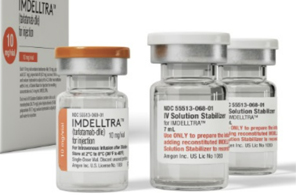
- The approval of Amgen's new drug for small cell lung cancer, tarlatamab (U.S. brand name Imdelltra), is imminent in Korea. According to industry sources on the 23rd, the Ministry of Food and Drug Safety has completed its safety and efficacy review for tarlatamab. The MFDS's completion of the review means a new drug approval will follow soon. Tarlatamab was designated as a “GIFT” item by the MFDS in January last year and underwent a fast-track review upon the submission of the new drug application. In the United States, the FDA designated tarlatamab as breakthrough therapy in October 2023 and granted accelerated approval on May 16, 2024, for the treatment of adult patients with extensive-stage small cell lung cancer (ES-SCLC) whose disease has progressed during or after platinum-based chemotherapy. Tarlatamab is a bispecific antibody that recognizes antigens in both tumor cells and T cells (immune cells). This allows for the drug to induce T cells to attack tumor cells even when the tumor cells try to avoid them. This drug demonstrated efficacy in the Phase II DeLLphi-301 trial. The trial evaluated the efficacy of tarlatamab in patients with SCLC who had failed two or more prior lines of treatment. The patients that enrolled in the trial received tarlatamab 10 mg every two weeks. The team recruited and randomized 220 patients who had failed first-line treatment for small cell lung cancer at 56 centers in 17 countries around the world, to find a new treatment strategy that would maximize the effectiveness of tarlatamab, which is currently under development while maintaining patient safety. Results showed that the group of subjects who received tarlatamab 100 mg every 2 weeks achieved an objective response rate of 40%, with a median response duration of 9.7 months. The median overall survival was 14.3 months. Currently, available treatments for small cell lung cancer in Korea include the immunotherapy drug 'Imfinzi (durvalumab)' and the chemotherapy drug ‘Zepzelca (lurbinectedin).'
- Policy
- Myung In’s Nuvigil first generic listed for reimb in Korea
- by Lee, Tak-Sun May 23, 2025 05:52am
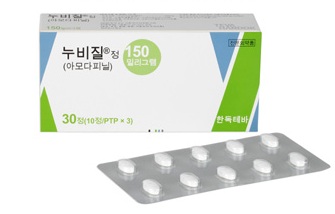
- Myung In Pharm’s first generic version of the narcolepsy drug Nuvigil (amodapine) is expected to be sold in earnest following its reimbursement listing in June. Currently, narcolepsy treatments are primarily composed of two ingredients: modafinil and amodafinil. With Mitsubishi Tanabe Pharma's ' 'Wakix (pitolisant)' recently withdrawing from the Korean market, fierce competition among existing treatments is anticipated. Currently, modafinil and armodafinil are primarily used for the treatment of narcolepsy. With Mitsubishi Tanabe Pharma Korea's recent withdrawal of 'Wakix (pitolisant)' from the Korean market, the competition among existing treatments is expected to intensify further. Amidst this situation, Myung In Pharm lowered the price of its generic product at a price below the calculated price and announced plans for aggressive market entry. According to industry sources on the 22nd, two dosages (150 mg and 250 mg) of its Amonil Tab, the first generic version of Nuvigil, will be listed for reimbursement on June 1. This drug is the first generic version of armodafinil, the active enantiomer of Provigil (modafinil). It works by activating dopamine in the brain to promote wakefulness and is characterized by its improved duration of action compared to the original drug. The original amodafinil drug is Teva-Handok’s Nuvigil. Nuvigil was approved for reimbursement in Korea in June 2018 and is competing with existing modafinil preparations. Last year, the amount of outpatient prescriptions for the drug amounted to KRW 1.1 billion, according to UBIST. Narcolepsy is a neurological disorder characterized by excessive daytime sleepiness, hallucinations when falling asleep or waking up, sleep paralysis, and sleep attacks. It is designated as a rare and intractable disease in Korea due to the low number of patients. The prevalence rate in Korea is estimated to be 0.002–0.18%, and it primarily occurs during adolescence or early adulthood before the age of 30. Due to the small number of patients, there are few medications available. For modafinil, there are two products: JW Pharmaceutical's Provigil Tab 200mg and Hanmi Pharmaceutical's Modanil Tab 200mg. For amodafinil, there are only two brands: Nuvigil Tab and the newly approved Amonil Tab. Even Wakix, a new drug that was approved in 2021 and listed for reimbursement that same year, withdrew from the Korean market last year due to the small number of patients and low drug prices. From the perspective of pharmaceutical companies, the domestic market for narcolepsy treatments is not so attractive. Nevertheless, Myung In Pharm is showing enthusiasm, lowering its drug’s price during reimbursement listing. Amonil 150mg is priced at KRW 1,206 per tablet, which is about 59% of the price of the original Nubizil 150mg at KRW 2,027. The price of Amonil 250mg is also significantly cheaper at KRW 1,766, compared to Nubizil 250mg at KRW 2,968. Amonil Tab is used for excessive daytime sleepiness associated with adult narcolepsy, with a recommended dosage of 150 mg once daily in the morning. The maximum daily dose is 250 mg. Therefore, attention is now focused on whether Myung In Pharm, which has been making notable strides in the central nervous system treatment area, will also establish a strong presence in the narcolepsy treatment market with its first generic version of Nuvigil.

- Policy
- Govt-ind sees consensus on 'AI-based new drug governance'
- by Lee, Jeong-Hwan May 22, 2025 06:09am
- The current administration has promised support and promotion for the establishment of a national governance system for AI-based new drugs, which the domestic pharmaceutical industry has called for the attention of the presidential election candidates. The National Bio Committee, which reports directly to the president, has selected AI-based new drug development as one of the 10 key tasks that the government will focus on for research and development (R&D) in the future. The vision is to discover optimal new drug candidates based on AI and big data, and to fulfill national responsibilities by supporting the entire cycle, including design and validation. On the 20th, the pharmaceutical and biotechnology industry expressed their broad consensus on the needs of the pharmaceutical industry in response to the announcement of the vision of the National Bio Committee. The domestic pharmaceutical industry has repeatedly suggested that the infrastructure for new drug development utilizing AI and big data should be established at the national level. In fact, the Korea Pharmaceutical and Bio-Pharma Manufacturers Association has proposed a policy to establish AI-based drug development governance for each candidate ahead of the June 3 presidential election. The demand is that the government should aggressively provide budget and policy support to utilize AI and big data to revitalize new drug development, which requires astronomical investment and time, and has a significantly low success rate. In particular, global big-tech companies such as Google AlphaFold 3-AlphaProteo, Nvidia BioNeMo, and Microsoft are developing AI super gap technology to be utilized in the whole stage of drug development based on large-scale investments and resources from global pharmaceutical companies. The KPBMA believes that Korea must not fall behind in the AI drug development competition with advanced countries to become a new drug powerhouse. Therefore, it is suggested that the government's full support is needed to create a national data-based open innovation ecosystem, build a big data platform for new drug development, and develop an AI-based intelligent autonomous laboratory optimization model. The next administration should collect national bio R&D public data for each field of drug development and create a new drug development big data platform for pharmaceutical companies’ access. Also, KPBMA’s policy proposal includes securing skilled professionals through an academia-industry collaborative training program for AI-driven drug discovery, as well as carrying out a joint platform project for shared use of AI-bio computing resources. As the National Bio Committee directly agreed with the pharmaceutical industry's policy proposal, there are expectations that the green light has been given for national-level budget and policy support for AI-based drug development even after the presidential election. An industry official said, “All previous administrations have set the goal of fostering the pharmaceutical industry as a future growth driver for the country, including developing new domestic drugs and discovering indigenous blockbusters. The government that will be established after the presidential election should realize that establishing governance for AI drug development is a prerequisite for creating domestic blockbusters, and should provide policy support and budgetary investment at the entire government level.” “The National Bio Committee's selection of developing infrastructure for AI-based drug development as one of the top 10 key R&D tasks has become a cog in the domestic pharmaceutical industry's policy proposals. We expect the new government to recognize that it is difficult for the private sector to create AI and big data drug development platforms, which are costly, and to take active policy and budgetary measures.”
- Policy
- 'AI-enabled stem cell for pediatric epilepsy proves effect'
- by Lee, Hye-Kyung May 21, 2025 06:36am
- A new treatment possibility has opened up for pediatric epilepsy patients who have shown little response to existing treatments. The Korea Health Industry Development Institute (President: Soondo Cha) announced on the 19th that Professor Hoon-Chul Kang’s research team at Yonsei University Severance Children's Hospital has successfully discovered a new drug candidate personalized for patients and experimentally proven its efficacy by utilizing AI-based drug discovery technology and induced pluripotent stem cells (iPSCs) obtained from patients. Pediatric epilepsy is a representative intractable neurological disorder, affecting approximately 250,000 people in Korea, with about 30-40% of patients suffering from drug-resistant epilepsy that does not respond to existing antiepileptic drugs. (from the left) Professor Hoon-Chul Kang and Ji-hoon Kim from Yonsei University and Professor Do Kyun Na from Chung Ang University In particular, pediatric epilepsy patients with rare genetic mutations, such as SCN2A gene mutations, exhibit significant differences in experimental responses by individual patient, rendering it difficult to achieve significant improvements with existing treatments. In addition, the lack of precise disease models and appropriate drug screening technologies has made the development of personalized drugs an urgent necessity. A joint research team led by Professor Hoon-Chul Kang and Ji-hoon Kim from Yonsei University and Professor Do Kyun Na from Chung Ang University addressed this issue by creating induced pluripotent stem cells (iPSCs) from patients' blood cells to develop precision disease models in the same disease environment as actual patients. Also, the team successfully identified new drug candidates, surpassing existing treatments through AI-driven high-throughput compound screening and validation. The research team used the latest gene editing technology to correct the SCN2A mutation to its normal state to reveal that the mutation is the direct cause of epilepsy, and confirmed that seizure symptoms disappeared. Furthermore, based on personalized neural cell models, the team analyzed approximately 1.6 million compounds using AI-based simulations and selected 5 optimal new drug candidates by considering blood-brain barrier permeability, toxicity, and gene binding affinity. Among these, 2 candidates demonstrated approximately 100 times higher efficacy than the existing treatment phenytoin, paving the way for personalized treatment. This study can be evaluated as a case of precision medicine that provides a practical alternative for intractable patients whose symptoms have not improved with existing treatments by combining the genetic characteristics of patients with rare genetic diseases with cell-based models and AI-based new drug discovery techniques. Professor Kang explained, “This study is a case where patient-derived cell-based personalized drug discovery technology for patients with intractable epilepsy demonstrated an effect. We plan to continue expanding our research to develop personalized precision therapies for patients with various genetic mutations, including SCN2A.” Professor Na emphasized, “This study demonstrates the practical applicability of precision medicine technology in the field of rare diseases. We believe that the findings from this study will help establish an innovative treatment strategy that can be applied to patients with various genetic disorders in the future.” This study was conducted with support from the Public Health Technology Research Project promoted by the Ministry of Health and Welfare and the Korea Health Industry Development Institute, and was published in the 2025 issue of Computers in Biology and Medicine, a world-renowned academic journal in the field of medical information.
- Policy
- Citus generics price raised, Ameliebou Inj huge price cut
- by Lee, Tak-Sun May 20, 2025 06:00am
- Prices of Citus generic drugs will be raised. As the price of original Citus has been adjusted, the prices of generic drugs that were reimbursement-listed in January have been recalculated. Meanwhile, the price of Samsung Bioepis' Lucentis biosimilar 'Ameliebou Inj' has been substantially cut, resulting in a significant difference from the original. According to industry sources on May 19, the prices of some items, including Citus generics, will be adjusted on the 1st of next month. Four Citus (Pranlukast Hydrate) generic products will see price increases following applications to adjust their upper-limit price. The price of Dasan Pharmaceutical's 'Prituss Tab 50 mg,' which met all the criteria, will rise from KRW 344 to KRW 526. In comparison, Daewoong Bio's 'Cituone Tab 50 mg,' Green Cross' 'Neopran 50 mg,' and DongKook Pharmaceutical's 'Pranpid 50 mg,' each meeting only one criterion, will increase from KRW 263 to KRW 447. Prices of Citus generics have been increased: 1. At the the Health Insurance Review and Assessment Service (HIRA)'s Drug Reimbursement Evaluation Committee (DREC) meeting held on April 3, the committee accepted the manufacturers' objection to HIRA's mandatory price reduction of Citus Tab 50 mg. SAMA Pham argued that its Citus development reference product was not the one identified by HIRA and that the ceiling price of Citus had already been adjusted to 53.55%. The committee accepted this argument, and the mandatory cut was effectively canceled. Because the generics listed in January were also assumed never to have had their ceiling price adjusted, their prices were calculated at 53.55% of the highest price for the same formulation. However, when HIRA acknowledged its error in using the original's price-setting criteria and launched a recalculation procedure, the generic prices were adjusted as well. In addition, after price-adjustment applications and negotiations with the National Health Insurance Service, the prices of two Custodiol Solution (Zenith Pharm) products will be raised. The 1,000 mL formulation will rise from KRW 140,492 to KRW 161,981, and the 5 L formulation from KRW 703,347 to KRW 809,905. Ceiling prices of six products will be loswered at the manufacturers' voluntary reduction request. Among these, the dramatic cut for the Lucentis biosimilar 'Ameliebou Inj 10 mg' (Samsung Bioepis), is notable. Ameliebou Inj was listed for reimbursement at KRW 463,773 in January 2023 but was cut to KRW 350,000 that March. It has now been reduced further to KRW 150,000. Since the original Lucentis 10 mg is priced at KRW 579,716, the price gap has widened even more. However, with competitor Chong Kun Dang's LucenBS also set at KRW 150,000, competition between the two drugs is expected to be intense. Ameliebou Inj is currently marketed domestically by Samil Pharmaceutical. Voluntary price cut items (as of June 1): 1. Yungjin Pharmaceutical's Demenduo Tab 10/20 mg (Donepezil Hydrochloride Monohydrate+Memantine Hydrochloride), combination therapy for dementia, will be cut from KRW 3,879 to KRW 3,650. Of the eight reimbursement-listed combination therapies approved in March, three have already cut their prices, indicating fierce price competition.
- Policy
- MFDS to review reference drug application every 2 months
- by Lee, Hye-Kyung May 20, 2025 05:59am
- The change in the procedure for selecting reference drugs for pharmaceutical equivalence tests is being well received by the domestic pharmaceutical industry. The Ministry of Food and Drug Safety recently announced a revision to the 'Guideline for Selecting Reference drugs for Pharmaceutical Equivalence Tests' and is seeking opinions on the change, deciding to proceed with the application and announcement of reference drugs every 2 months instead of every quarter. With the revision of the guideline, reference drug applications will be accepted six times a year (September 16-November 15, November 16-January 15, January 16-March 15, March 16-May 15, May 16-July 15, and July 16-September 15) and reference drugs will be announced in February, April, June, August, October, and December, respectively. The shortened period for selecting reference drugs is expected to help facilitate the smooth conduct of pharmaceutical equivalence tests and the development of generic drugs. In this regard, an official from pharmaceutical company A said, “In the past, the delay in designating a reference drug has often delayed the development schedule. If the designation of a reference drug is regularly conducted two months rather than every quarter, this will well speed up development.” Another official from pharmaceutical company B also said that shortening the schedule for selecting and announcing reference drugs will basically revitalize generic drug development, which is why domestic companies cannot be opposed to it. However, the official added that in practice, shortening the reference drug designation by 2-3 months cannot significantly reduce the drug development period. He emphasized, “We also expect improvements in operational methods, starting with the revision of the reference drug selection and announcement procedures. While designating reference drugs is important, it is also necessary to make reasonable judgments on whether to maintain the reference drug status for drugs that are not imported or produced domestically, despite being designated as reference drugs.” When reviewing applications for the designation (or change) of reference drugs, the government selects products from the same active ingredient type and content, formulation, and route of administration among approved (or reported) products, but those of a higher priority. The priority order for selecting reference drugs is as follows: ▲New drugs as defined in Article 2 of the Pharmaceutical Affairs Act that have received approval as prescription drugs for manufactured (imported) products; ▲Products by the original developer (if there are multiple products, the product with the earliest approval date); ▲Products that are subject to data submission under Article 2, Paragraph 8 of the Regulations on the Approval, Notification, and Review of Drug Products, and are the first products approved in Korea; ▲Products that meet Item 1 or Item 2 and have undergone bioequivalence testing ▲Domestically first-approved products (if the product has been canceled or withdrawn, it refers to products with the same active ingredient type and administration route as the domestically first-approved product, following the order below) etc. A representative from Company B stated, “If there is no reference drug, the reference drug must be purchased from overseas to conduct equivalence tests, but the company whose drug was designated as the reference drug does not disclose all details, such as the quantity of the active pharmaceutical ingredient. While the selection and announcement of reference drugs are important, the system must be improved to ensure proper operation, including measures to revoke reference drug status.”
- Policy
- GSK starts domestic trial on its B7-H3-targeted ADC
- by Lee, Hye-Kyung May 19, 2025 05:56am
- GSK's antibody-drug conjugate (ADC) drug candidate 'GSK5764227,' designated as a breakthrough therapy by the US FDA last year, will begin clinical trials in Korea. On the 16th, the Ministry of Food and Drug Safety approved GSK's application for a Phase I clinical trial to evaluate the safety, tolerability, pharmacokinetics, and clinical activity of GSK5764227 in patients with advanced solid tumors. This Phase I trial will be conducted at three hospitals: Samsung Medical Center, Seoul National University Hospital, and Severance Hospital. GSK5764227 is a B7-H3-targeted antibody-drug conjugate (ADC) intended as an investigational new drug (IND) for adult patients with advanced small cell lung cancer (SCLC) whose disease has progressed after platinum-based chemotherapy, and for adult patients with relapsed or refractory osteosarcoma who have progressed on at least two prior lines of therapy. The FDA designates breakthrough therapies to expedite the development and review process for drugs that show significant improvement over existing treatments for serious conditions. GSK acquired exclusive worldwide rights for GSK5764227 from Chinese pharmaceutical company Hansoh Pharma earlier this year, excluding China, Hong Kong, Macau, and Taiwan. GSK will progress with its global clinical development and commercialization. GSK5764227 is composed of a fully human anti-B7-H3 monoclonal antibody covalently linked to a topoisomerase inhibitor payload (TOPOi). The FDA designated GSK5764227 as a breakthrough therapy for small cell lung cancer last year and added a bone cancer indication earlier this year. Additionally, GSK574227 received Priority Medicines (PRIME) designation from the European Medicines Agency (EMA) last year. Meanwhile, Hansoh Pharma is conducting Phase I, II, and III clinical trials of HS-20093 for lung cancer, sarcoma, head and neck cancer, and other solid tumors in China.
- Policy
- New drugs Bimzelx and Adempas reimbursed from June
- by Lee, Jeong-Hwan May 19, 2025 05:55am
- UCB Pharma Korea's Bimzelx and Bayer Korea's Adempas will be reimbursed by national health insurance starting on the first of next month. The Ministry of Health and Welfare announced an amendment to the Details on the standards for application of drug reimbursement (drugs). Bimzelx is a monoclonal antibody drug that targets both interleukin-17A and 17F and is used to treat moderate-to-severe plaque psoriasis. It can be used for patients who have not responded adequately to existing biological agents or those who have poor tolerability. Specifically, patients with chronic severe plaque psoriasis (adults aged 18 years or older) who have had the condition for six months or longer must meet the following criteria. Patients with plaque psoriasis covering 10% or more of their total body surface area, with a PASI (Psoriasis Area and Severity Index) score of 10 or higher, who have been treated with MTX (Methotrexate) or Cyclosporine for 3 months or longer but have not responded or cannot continue treatment due to side effects are eligible for Bimzelx’s use with reimbursement. However, patients who are contraindicated for both photochemotherapy (PUVA) and medium-wave ultraviolet B (UVB) therapy are only eligible if they have received MTX (Methotrexate) or Cyclosporine for at least 3 months with no response, or if treatment cannot be continued due to side effects. In addition, reimbursement is also available for patients with plaque psoriasis covering more than 10% of the total skin surface area who have been treated with photochemotherapy (PUVA) or medium-wave ultraviolet (UVB) therapy for more than 3 months but have not responded or cannot continue treatment due to side effects. Bayer Korea's Adempas Tab (riociguat) will also be newly covered by reimbursement. Adempas is an oral soluble guanylate cyclase (sGC) stimulator used for the treatment of pulmonary arterial hypertension (PAH) and chronic thromboembolic pulmonary hypertension (CTEPH). It reduces pulmonary vascular resistance by dilating blood vessels, improving exercise capacity, and delaying functional decline. It is indicated for patients diagnosed with pulmonary arterial hypertension (WHO Group I) corresponding to WHO functional classification Stages II–III, who have insufficient response to ERA and/or PDE-5 inhibitor pulmonary arterial hypertension medications, or who are contraindicated for both ERA and PDE-5 inhibitor pulmonary arterial hypertension medications. Among the approved indications, reimbursement is recognized in accordance with the general principles for pulmonary arterial hypertension drugs in the “Details” section when administered for pulmonary arterial hypertension.

- Policy
- Trodelvy and new drugs reached an agreement with the NHIS
- by Lee, Tak-Sun May 16, 2025 06:21am
- Product photo of Trodelvy Three new drugs, including the triple-negative breast cancer (TNBC) treatment Trodelvy (sacituzumab govitecan), have completed negotiations with the National Health Insurance Service (NHIS) and are about to be included in the reimbursement list. These drugs passed the Health Insurance Review and Assessment Service (HIRA)'s Drug Reimbursement Evaluation Committee (DREC) in February and were undergoing negotiations with the NHIS. According to industry sources on May 15, the NHIS posted on its website that the companies of the TNBC drug 'Trodelvy,' the pulmonary hypertension drug 'Adempas Tab (riociguat, Bayer Korea),' and the plaque psoriasis drug 'Bimzelx Autoinjector (bimekizumab, UCB Korea)' have agreed on negotiation deals. During the 2nd DREC meeting on February 6, these drugs were acknowledged for their reimbursement appropriateness. The DREC granted reimbursement appropriateness for Trodevly's TNBC indication and Adempas' pulmonary hypertension among its efficacy·effectiveness. The efficacy·effectiveness of Adempas in chronic thromboembolic pulmonary hypertension (CTEPH) was not acknowledged for reimbursement appropriateness. For Bimzelx, the company received a decision that Bimzelx would meet the appropriateness of reimbursement if the company accepted an amount below the standard. After that, UCB accepted the condition and proceeded to negotiations with the NHIS. The company may have undergone negotiations with the NHIS for drug pricing and estimated claim amount, ultimately reaching an agreement. Among these drugs, Trodelvy received a decision of new drug innovativeness. It gained attention for becoming the first case to clear the DREC review, with its price being measured based on their ICER values. The Korea Alliance of Patients Organization (hereafter, Patients Organization) is asking for a quick reimbursement process since Trodelvy is the third-line treatment for adult patients with unresectable locally advanced or metastatic triple-negative breast cancer (mTNBC). The Patients Organization said, "Trodelvy is a high-cost drug, costing approximately KRW 1,500-2,000 per one cycle and some hundreds of millions of KRW yearly." They added, "Patients cannot continue treatment due to high-cost non-reimbursed drug costs and inevitably give up on receiving treatments." As these companies reached drug pricing negotiations with the NHIS, the drugs will be reviewed by the Health Insurance Policy Deliberation Committee. The drugs have higher chances of being included in the reimbursement list next month (June).
