
- LOGIN
- MemberShip
- 2026-05-06 09:32:49
- Policy
- Generic for Revlimid was listed as the lowest price
- by Lee, Tak-Sun Feb 24, 2022 05:58am
- Boryung Pharmaceutical is launching a generic drug called Revlimid (Renalidomide) for multiple myeloma treatment after four years of approval. With three general companies targeting the market since 2018, Boryung has thrown a winning move at the lowest price. According to the contents of the "Partial revision of the drug benefit list and upper limit table" released by the MOHW on the 21st, four capacities of Boryung Pharmaceutical's generic for Revlimid will be listed from March 1. It has been about four years since it was first approved in June 2018 with 25 mg. Generic for Revlimid has been on the market since January 2018. Currently, Chong Kun Dang's Lenaloma, Kwang Dong Pharmaceutical's Lenaldo, and Samyang Holdings' Lenalid are competing with the original drug Revlimid of Celgene. Generic drugs have yet to exert much power in the market. Quarterly sales of original products are around 8 billion won, but generic drugs alone maintain around 1 billion won. According to IQVIA in the second quarter of last year, Celgene's Revlimid recorded 8.8 billion won, Chong Kun Dang's Lenaloma recorded 1 billion won, Kwang Dong's Lenaldo 75.42 million won, and Samyang's Lenalid recorded 143.41 million won. Generic drugs are showing price competitiveness as a weapon against their original status, but it is not easy. Comparing the upper limit based on the 10mg formulation, Samyang's Lenalid costs 51,472 won, Chong Kun Dang's Lenaloma costs 71,874 won, Celgene's Revlimid costs 84,975 won, and Kwang Dong's Lenaldo costs 86,000 won. Compared to the original, Samyang's Lenalid is 20,000 won cheaper, and Chong Kun Dang's Lenaloma is 10,000 won cheaper. Boryung also chose the lowest price. Leblikin10mg is 51,471 won, 1 won cheaper than the current lowest price, Lenalid in Samyang. In particular, it is expected that it will be able to show competitiveness because it is 20,000 won to 30,000 won cheaper than existing products among capsule formulations. Boryung is preparing a variety of new products with generic for Revlimid to target the market for treating multiple myeloma. It is on the verge of developing the first generic of the latest version of Celgene's Pomalyst following Revlimid, and plans to introduce a new drug called Aplidin (Plitidepsin), Aplidin signed a contract with Spanish pharmaceutical company PharmaMar in 2016 to secure domestic copyright. Only Janssen's generic for Velcade(Bortezomib) Velkin was sold. Attention is focusing on whether Boryung will show the power of domestic pharmaceutical companies in the anticancer drug market with the lowest price strategy put forward along with various product lines.
- Policy
- Combination indication for Entresto has changed
- by Lee, Hye-Kyung Feb 24, 2022 05:58am
- The range of patients who can use Entresto (Sacubitril/Valsartan), a treatment for chronic heart failure of Novartis Korea, has become a little clearer. Until now, there has been a debate over the normal range of left ventricular ejection rates, with "chronic heart failure patients with decreased left ventricular contraction function." On February 14, the MFDS changed the effectiveness of Enresto, a heart failure treatment of Sacubitril/Valsartan drugs, and Xnepri by Sandoz. The efficacy at the time of Enresto approval in 2016 were ▲ chronic heart failure: decreased risk of death due to cardiovascular disease and hospitalization due to heart failure in patients with left ventricular contractile function (NYHA class II-IV), and ▲ angiotensin receptor antagonists (ARB) or angiotensin conversion enzymes (ACE) instead of other treatments. In combination therapy, patients with chronic heart failure were specifically specified, and patients with chronic heart failure with reduced left ventricular contraction function were specified as patients with chronic heart failure with a left ventricular ejection rate of 40% or less. The reason for this change was confirmed through the minutes of the central summary released by the MFDS. At the meeting, opinions on 40% and 60% were divided over the range of left ventricular ejection rates. As the left ventricular ejection rate showed consistent effects in the lower 60% group, there were opinions that the left ventricular ejection rate should be clearly described as 60%, and that the existing ejection rate could limit use in clinical sites or make it difficult to determine treatment targets. Some suggested that efforts and procedures to expand the standards for medical care benefits should be carried out together after changing efficacy and effectiveness. In response, the MFDS said, "Among the unauthorized matters, the phrase that this drug is administered in combination with other heart failure treatments instead of ARB or ACE inhibitors was established based on clinical trials and was suitable for existing treatment guidelines." The MFDS suggested, "The domestic guidelines for heart failure have not been changed at the moment, but considering that there is no standard therapy for patients with a 40% or more ejection rate, the phrase should be described only for patients with reduced ejection rate." The committee members generally agreed to the MFDS' change (proposal) saying that the definition of the left ventricular ejection rate is not accurately divided into figures, and finally decided to change the efficacy and effect. Meanwhile, according to UBIST, Enresto's outpatient prescription amount last year was 32.3 billion won, up 37.3% from 23.5 billion won last year.
- Policy
- Competition in full swing for the ₩100 bil Humira mkt
- by Lee, Tak-Sun Feb 23, 2022 05:50am
- Competition in the domestic Humira biosimilar market is expected to unfold with Celltrion's entry into the market. On how the market that was once dominated by its only biosimilar option, Samsung Bioepis’ Adalloce, will change with the entry of Celltrion in the market, remains the focus of attention. Humira, which is mainly used to treat rheumatoid arthritis, has formed a market worth ₩100 billion in Korea. Celltrion’s Humira (Abbvie, adalimumab) biosimilar ‘Yuflyma pen injection 40mg/0.4mL)’ will be reimbursed from March 1st. Its insurance price cap was set at ₩244,877, identical to Samsung Bioepis’s ‘Adalloce.’ As the price ceiling for the original drug, Abbvie’s ‘Humira,’ was set at ₩288,091, the price difference between the three products is not large. Humira recorded $20.69 billion (₩24 .8 trillion) in global sales in 2021 and has maintained the lead in pharmaceutical sales for 10 consecutive years since 2012. According to IQVIA, the drug also boasted much use in Korea, recording ₩91.2 billion in sales in 2021. This is a drop from the ₩104 billion sold in 2020, but the decrease was inevitable as Humira’s price cap was reduced by 30% with the approval of Adalloce. Humira is a monoclonal antibody drug that is used to treat various conditions. In addition to rheumatoid arthritis, Humira is indicated for the treatment of psoriasis arthritis, axial spondyloarthritis, adult and pediatric Crohn's disease, psoriasis, ulcerative colitis, Behcet’s disease, hidradenitis suppurativa, uveitis, pediatric idiopathic arthritis, and pediatric plaque psoriasis. With the rapid entry of Humira biosimilars, the industry expects Humira to encounter a crisis within the next two years. In particular, K-biosimilars are emerging as a vanguard that may break down the stronghold held by Humira. Samsung Bioepis launched a Humira biosimilar in the European market in 2018 and has been competing for the first and second place in the biosimilar market ever since. Celltrion is also busy tackling the European market based on the approval it received last year. In 2023, K-biosimilars’ entry into the Humira market is expected to increase further with Humira’s patent expiry in 2023. Pic of Humira and Adalloce In Korea, Samsung Bioepis received reimbursement approval for its ‘Adalloce’ in April last year and released the product. Yuhan Corp, which has a large distribution network, is in charge of its marketing and sales of Adalloce. With the introduction of Adalloce, Humira’s drug price had also been discounted 30%, and therefore may not be able to guarantee its annual sales of ₩100 billion this year. In the meantime, competition between AbbVie, which wishes to maintain its market share, and the biosimilar companies Samsung Bioepis and Celltrion is expected to further accelerate with the reimbursement approval granted for Celltrion. Due to the conservative characteristic of the Korean market, generics or biosimilars generally have difficulty penetrating the Korean market. In particular, latecomers of injections that are administered in general hospitals like Humira have more difficulty entering the market. However, as Celltrion’s Remicade biosimilar ‘Remsima’ successfully penetrated the market and earned ₩20 billion in Korea, attention is focused on whether Humira’s biosimilar may also perform this ‘K-magic.’
- Policy
- Jae-Myung Lee pledges to enact Special Bio Act
- by Lee, Jeong-Hwan Feb 23, 2022 05:49am
- Presidential candidate Jae-Myung Lee of the Democratic Party of Korea announced that he will prepare an appropriate compensation system for domestically developed drugs and new drugs that conduct clinical trials in Korea and enact a ‘Special Act on the Development of the Biohealth Industry’ to foster and develop the Korean bio-health industry into a global leader. Lee also expressed his ambition to establish a public-private matching-fund type megafund to drive the transformation of Korea's bio-health industry. In addition, Lee pledged more specific healthcare policies such as the legislation of public late-night pharmacies, the establishment of a state-led public e-prescription system, voluntary reporting, empowering judicial police power to the NHIS to eradicate illegal establishment of hospitals and pharmacies owned by non-medical personnel, reevaluation of insurance reimbursement for off-patent drugs, and the preapproval of ultra-high priced drugs. These pledges are contained in Lee's policy manifesto that was disclosed by the Democratic Party of Korea for the 20th presidential election on the 22nd. ◆Pharmacuetical and bio-industry pledges = Candidate Jae-Myung Lee had accepted many of the policies proposed by Korea's pharmaceutical and bio-industry, as represented by the Korea Pharmaceutical and Bio-Pharma Manufacturers Association. Although the new establishment of a control tower for new drugs under the immediate control of the president that was proposed by KPBMA and KRPIA was not included in the pledge, Lee promised to enact a ‘Special Act on the Development of the Biohealth Industry’ to foster the Korean bio-health industry into a global leader and to introduce a Deputy Prime Minister System for science and technology innovation. Lee’s vision is focused on reinforcing national competitivity for responding to infectious diseases and on driving Korea’s growth to become a leader in the bio-health industry. Therefore, Lee will promote bio-health policies under a pan-ministry unified system and enact a special law for the bio-health industry, and form a private-led bio-health industry supercluster. The system will help Korea secure the basis for developing the original technology necessary for domestic vaccines and treatments used for new infectious diseases and reinforce the country’s manufacturing capabilities to become a global vaccine hub. Also, Lee plans to prepare measures to expand self-sufficiency in the manufacture of materials, parts, and equipment required for vaccine manufacturing as well as APIs and key parts of medical devices. In addition, Lee will establish a public-private joint mega-fund and expand it to support the development of Phase III trials for blockbuster drugs, expand R&D tax support, develop innovative new drugs, and provide incentives to GMP-certified pharmaceutical companies of advanced countries. For the transformation of the pharmaceutical industry, the subject and criteria for government support will be clarified, and its practicality will be improved through all-cycle integrated support. Also, the pledge includes an appropriate reform of the compensation system for domestically developed and trial conducted new drugs. Also, the pledge includes measures to improve patient access to new drugs such as orphan drugs and high-priced anticancer drugs and raise a patient support fund whose cost will be shared with pharmaceutical companies to fulfill social responsibility. Also, measures to provide stable support of essential medicines that are difficult to supply through a public production system by utilizing government investment facilities and idle private facilities. Also, the candidate plans to secure fiscal sustainability of NHI finances by conducting reevaluations on insurance reimbursements of off-patent drugs, introduce a preapproval system for ultra-high priced drugs through the prescription preapproval system, and prepare a safe and rational medicine use management system. ◆Healthcare pledges= Lee also pledged to establish a policy that grants judicial police power to the NHIS and eradicate the illegal establishment of hospitals and pharmacies owned by non-medical personnel. Also, by reinforcing incentives for voluntary reporting and immunity for whistleblowers, Lee plans to support internal self-purification efforts within the medical community by strengthening criminal penalties for those establishing illegal establishment, realigning basic regulations for the restitution of unfair profit, promoting succession of dispositions such as closure orders and confiscation of non-reimbursed medical expenses. Also, policies to secure vaccine sovereignty and healthcare security through domestic vaccine development and public manufacture of essential medicines will be implemented. For self-sufficiency in the supply of vaccines used in the National Immunization Program, Lee will focus investment on R&D and actively foster expert personnel. Lastly, policies to expand public healthcare such as the assignment of primary care physicians extended NHI reimbursement to dental implants, hair loss treatment, and severe atopic dermatitis in children and adolescents, the establishment of public hospitals and university hospitals, as well as the introduction of local doctors and nurse system that Lee had continuously emphasized, were also included in the pledge.
- Policy
- Galvus generics to be reimbursed despite exclusivity period
- by Lee, Tak-Sun Feb 22, 2022 05:55am
- Ahn-gook Pharmaceutical’s that was released 55 days before other generics with generic exclusivity approved by partially invalidating Galvus’s substance patent. Generic versions of the anti-diabetic DPP-4 inhibitor ‘Galvus (vildagliptin)’ will be released on the 5th of next month in the marketing exclusivity period that is approved for first generics. This is due to the substance patent period of Galvus that will expire the day before. Therefore, Ahn-gook Pharmaceuticals’ marketing exclusivity will also expire in 2 months. According to industry sources on the 21st, 7 products from 7 companies including Genuone Sciences 'Vildaport tablet 50mg (vildagliptin)’ are preparing to release their products on the 5th of next month. These are all single-agent drugs containing the main active ingredient vildagliptin. Currently, the single-agent drugs listed for reimbursement with the main API as vildagliptin are Novartis Korea’s ‘Galvus tab. 50mg,' and Ahn-gook Pharmaceutical and Ahn-gook New Pahrm’s ‘Avus tab. 50mg,’ and ‘Vildatin tab. 50mg.’ Although other follow-ons containing vildagliptin as an active ingredient were introduced on January 9th, only 2 products, from Ahn-gook Pharmaceutical and its subsidiary Ahn-gook New Pharm, contain vildagliptin as the main active ingredient. All the others contain salt-modified products. Hanmi Pharmaceutical's ‘Vildagle 50mg’ contains ‘vildagliptin hydrochloride,’ and ‘Vilda tab.’ contains ‘vildagliptin nitrate.’ Ahn-gook Pharmaceutical and Hanmi Pharmaceutical invalidated 55 days of the extended patent term of Galvus’s substance patent and was allowed to release their drugs with reimbursement on the 9th of this month. However, other products with the same main active ingredient (vildagliptin) as the original Galvus and Ahn-gook Pharmaceutical’s ‘Avus tab’ were unable to be released despite the 55-day shortened term of Galvus's extended patent. The reason was due to Ahn-gook Pharmaceutical’s ‘first generic exclusivity.’ Ahn-gook, which had succeeded in invalidating part of the patent term, was the first to apply for the marketing approval of its drug among latecomers and to receive approval, therefore becoming the only company to receive generic exclusivity. Ahn-gook Pharmaceutical’s subsidiary Ahn-gook New Pharm’s ‘Vildatin tab’ also received generic exclusivity after satisfying the same conditions. The marketing exclusivity period was set from January 9th, the day when Ahn-gook Pharmaceutical launched its product, to May 29th. In the same period, drugs with the identical ingredient and formulation as Ahn-gook Pharmaceutical’s ‘Avus tab’ were banned from sale. Therefore, although the Supreme Court ruled in favor of Ahn-gook Pharmaceutical and the company succeeded in invalidating part of the extended patent term, no other single-agent drug containing the same main active ingredient (vildagliptin) was allowed for sale. However, with the patent period for Galvus expiring on March 4th, the effect of the sales ban provided by generic exclusivity will also expire accordingly. Under Article 50-10 (1)-2 of the Pharmaceutical Affairs Act, the effect of the exclusive marketing approval expires ‘the day a registered patent is rendered ineffective due to finalizations of a trial ruling or ruling that the registered patent is invalid.’ However, this excludes the petition for a trial or litigation filed by the person who has obtained exclusive marketing approval. This ‘but clause’ is what generic companies are basing their release with reimbursement on, on March 5th. An official from the company said, “Our drug will be listed for reimbursement on March 1st, and will be sold from the 5th upon patent expiry. Our CMO Genuone Sciences received confirmation from the Ministry of Food and Safety that we can release our drugs. First generic exclusivity usually stays effective for 6 months. However, this time, as the patent term expired only 55 days after the launch of its generics, only around 2 months were left for the company to exercise such rights. This is why the industry analyzed that the benefits reaped with Ahn-gook Pharmaceutical's victory in invalidating 55 days of Galvus’s patent was small.
- Policy
- Keytruda to be reimbursed as first-line treatment for NSCLC
- by Lee, Tak-Sun Feb 22, 2022 05:54am
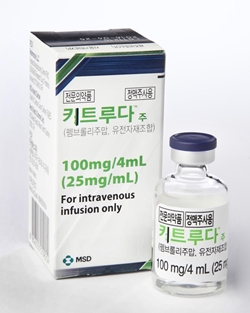
- A new category will be added to reimburse MSD’s NSCLC treatment ‘Keytruda’ as a first-line treatment. This is the first anticancer immunotherapy released in Korea to be reimbursed for NSCLC, five years into its approval as a first-line treatment for non-small-cell lung cancer in Korea. The drug passed deliberations by the Health Insurance Reimbursement and Assessment’s Drug Reimbursement Evaluation Committee, which decided to extend the national health insurance coverage for Keytruda as first-line treatment for NSCLC. HIRA announced the results above while collecting opinions on the 'revisions on the announcement made for drugs prescribed and administered to cancer patients' on the 18th. The revisions showed that a new reimbursement category has been added for Keytruda as first-line therapy and will take effect from March. Keytruda is a cancer immunotherapy drug that specifically binds to PD-1 (programmed death 1) proteins expressed at the surface of activated T cells, thereby inhibiting its binding to PD-L1 proteins existing on the surface of tumor cells and induces T cells to attack the tumor cells. Therefore, the drug can be used in various cancer patients with PD-L1 expression and was approved as a first-line treatment in Korea in March 2017 for the treatment of metastatic NSCLC. However, its reimbursement did not gain momentum until last year, when the agenda passed HIRA’s Cancer Disease Review Committee and then passed DREC review in January this year. In the proposed revision, Keytruda can now be reimbursed as ▲first-line treatment for PD-L1 positive (Tumor Proportion Score (TPS)≥50%), advanced NSCLC (Stage IV) patients with no EGFR or ALK mutation, ▲ first-line treatment of metastatic nonsquamous NSCLC patients with no EGFR or ALK mutation in combination with pemetrexed platinum-based chemotherapy, ▲ first-line treatment of metastatic squamous NSCLC patients in combination with pemetrexed or paclitaxel (or albumin-bound paclitaxel), ▲as monotherapy for the treatment of adult patients and pediatric patients aged 2 years or older with relapsed or refractory classical Hodgkin lymphoma (cHL) who have relapsed after at least two types of therapy or failed or is ineligible for allogeneic hematopoietic stem cell transplantation (HSCT). This is the first time a cancer immunotherapy is reimbursed as a first-line treatment for NSCLC. A clinical trial conducted on NSCLC patients as monotherapy for the reimbursed indication showed that its median OS was 30 months and median PFS 10.3 months, both better than the control group (14.2 months, 6.0 months), raising expectations on the treatment effect the drug will bring to the field. The ORR in the Keytruda-treated group was 69%, higher than the 42% of the control group. A qualitative improvement is expected in the field of NSCLC treatment in general with the increased treatment options and the improved patient access to new options. Meanwhile, the revision also added a new reimbursement standard for the acute myeloid leukemia (AML) treatment ‘Xospata (Astellas, gilteritinib).’ A new reimbursement standard will be added for the second-line or higher use of Xospata as monotherapy in patients with FLT3 mutation-positive relapsed or refractory AML.
- Policy
- Required PMS case reports reduced for Genvoya and Descovy
- by Lee, Hye-Kyung Feb 21, 2022 05:58am
- The number of evidence cases reported for post-marketing surveillance of HIV treatments ‘Genvoya tab (emtricitabine / tenofovir alafenamide/ cobicistat / elvitegravir)’ and ‘Descovy tab (emtricitabine / tenofovir alafenamide) that are subject to reevaluation will be adjusted. Genvoya and Descovy, which received marketing authorization from the Ministry of Food and Drug Safety in September 2016 and February 2017, respectively, are up for reexamination by September 12th and have been conducting post-marketing surveillance for 6 years since their release. The PMS cases that were required for the report are 3000 cases for Genvoya and 600 for Descovy, but the Central Pharmaceutical Affairs Council saw consensus on the need for the number of cases to be adjusted to 1,430 and 460 for each. The results were detailed in the minutes of the CPAC meeting disclosed recently by the Ministry of Food and Drug Safety. The committee members have judged that the number of evidence cases reported should be adjusted in consideration of the indications and the reduced sales for Genvoya, and the refunds and characteristics of its indication for Descovy. ◆Descovy = In detail, the committee chair of the safety and pharmaceutical reexamination review subcommittee explained that when a new standard-of-care is introduced, the number of new patients taking the drug decreases while the number of HIV-positive patients remains the same, the 600 PMS cases required for Descovy may not be realistic. The MFDS said, “The drug was not designated an orphan drug due to the availability of various alternatives. As setting a fixed number, 3,000 or 600, unilaterally on drugs rose as an issue, the company is allowed to present an appropriate number of evidence cases for the report in the process of determinations, but as the actual market situation may change, the number is often later adjusted according to the market situation. The explanation came after the inquiry on why AIDS treatments do not fall into the category of rare diseases when the number of AIDS patients was 14,000. A committee member said, “The number of PMS cases for submission should be reviewed and applied consistently within the ministry. A standard should be set internally to adjust the number of PMS cases.” Some had raised the opinion that AIDS treatments should be reviewed from a different standard than other general medicines when setting the number of required evidence cases for examinations. Another committee member said, “Due to the small number of patients and short duration of the drugs, it is hard to collect cases according to regulations. The short duration of action of the drug and the number of patients are not being considered. Since the additional investigation period will not help increase the number of collected cases, it would be better to close the re-examination within the set period and sort out the side effects as soon as possible.” ◆Genvoya = Both Descovy and Genvoya are Gilead Science Korea’s products, and the committee members focused on the fact that was the same company has been supplying improved follow-on STR formulation. The committee saw that the fact that the company supplies both the product subject to case number adjustments and follow-on products was an important factor and that the pharmaceutical company is leading the market by focusing on marketing its follow-on drug. The committee members weighted on the fact that the reason why Descovy and Genvoya cannot collect the number of required cases is that the market share has shifted with the release of its follow-on drugs. Another member said, “The follow-on drug will also be subject to reexaminations, and we should require the company to fill the number of evidence cases early on in those subject to the PMS. As the PMS should be conducted in patients who are new users of the drug, the company may apply for another adjustment without the allowance of retrospective studies." To this, some members had suggested that cases in the retrospective studies should also be included as PMS cases for submission. A member said, “There may be distortions in the retrospective survey depending on the patient's memory, but as the collection of results for the retrospective study is based on medical records, there will be no major distortions. We need to accept retrospective study results.” However, the MFDS said, “The PMS is conducted to monitor all adverse events. There is still room for data distortion with retrospective investigations.” The committee was able to reach an agreement on adjusting the number of cases, the members were unable to reach an agreement due to discord on filling the number of cases with retrospective studies. The chair of the committee said, “We ask the MFDS for more thorough supervision of the latecomer drugs developed and prepared by the pharmaceutical companies that developed the originals so that the companies could fully concentrate on PMS in the early stages after release.”
- Policy
- Pre-registration of Novavax vaccination will begin
- by Kim, Jung-Ju Feb 21, 2022 05:58am
- The quarantine authorities will start pre-registration of Novavax vaccinations for adults over the age of 18. According to the COVID-19 vaccination promotion team, adults over the age of 18 who want to receive Novavax can make reservations through (http://ncvr.kdca.go.kr). Elderly people who have difficulty making reservations on their own can make proxy reservations through the website or make phone reservations (1339, local government call centers). Those who have completed the pre-booking will be able to get vaccinated on the day of reservation at consigned medical institutions nationwide (about 12,900 locations) from March 7, and the second inoculation date will be automatically booked three weeks after the first inoculation. However, the inoculation date cannot be selected as a date two weeks before the reservation date. For example, if people make a reservation on February 21, they can choose after March 7, and if people make a reservation on February 22, they can choose after March 8. People can get vaccinated on the same day by booking a remaining vaccine on Kakao Talk and Naver, or putting the name on the preliminary list after checking by wire with a medical institution. The authorities plan to allow vaccinations on the same day through the amount held by all consignment agencies after March 7 so that vaccinations can be conveniently received without prior reservations. Cross-vaccination and 3rd vaccination using Novavax vaccine are also possible. 2nd vaccination should be inoculated with the same vaccine as primary vaccination, but cross-vaccination through Novavax vaccine is exceptionally possible if MD determines. In the case of basic vaccination with Novavax vaccine, the third vaccination is based on Novavax vaccine, and the vaccination interval is three months after the completion of the second vaccination. However, there are two exceptional cases. In the first case, a person who has received a basic vaccination with Novavax vaccine wishes to receive 3rd vaccination with mRNA vaccine, and can be vaccinated without any special reason. The second is the case where a person who received basic vaccination with a vaccine other than the Novavax vaccine has a reason for contraindication or postponement during the basic vaccination, and a third vaccination is possible with an exception under the judgment of a doctor. The authorities are conducting door-to-door vaccinations for non-invaccinated people such as ▲ hospitalized patients, ▲ residents of nursing facilities, ▲ elderly people with severe disabilities, etc. It is expected to contribute to reducing the number of severely ill patients and protecting high-risk groups by eliminating vaccination blind spots for high-risk groups that were not vaccinated due to physical constraints. The promotion team said, "As vaccination can reduce the risk of COVID-19 infection in the community and effectively prevent severe progression, we ask those who have not yet been vaccinated to actively participate in the pre-reservation for Novavax vaccination."
- Policy
- Tagrisso’s succeeds in RSA renewal… 3% price cut per dose
- by Kim, Jung-Ju Feb 18, 2022 05:55am
- AstraZeneca’s NSCLC treatment Tagrisso (Osimertinib) succeeded in renewing its risk-sharing agreement (RSA) with the National Health Insurance Service, and the price of the drugs will be adjusted and discounted by 3% per dose. According to industry sources, AstraZeneca has agreed to discount the insurance price of Tagrisso during RSA renegotiations with the NHIS. With the MOHW working to amend the ‘drug reimbursement list and reimbursement ceiling price table’ to implement these changes. If the amendment is finalized, it can be applied from March 1st. Leclaza is reimbursed for second-line treatment of lung cancer, for locally advanced or metastatic non-small cell lung cancer (NSCLC) patients with positive EGFR T790M mutation who have been previously treated with an EGFR-TKI. The drug also has indications as first-line therapy and as adjuvant therapy after complete tumor resection. With the expiry of the first RSA term, the price of the drugs will be discounted by 3% each. The 30mg dose will be discounted from ₩116,563 to ₩113,066, and the 80mg dose from ₩217,782 to ₩211,248.
- Policy
- What is the pledge of the presidential candidates?
- by Lee, Jeong-Hwan Feb 18, 2022 05:54am
- Democratic Party of Korea Lee Jae-myung (left), the power of the people, Yoon Seok-yeolWith the 20th presidential election day just 20 days away, candidates from each party completed submitting their teenage pledges with the registration of candidates for the National Selection Commission on the 13th. The main keyword for the health care pledge of Democratic Party of Korea Lee Jae-myung, the power of the people Yoon Seok-yeol, Ahn Cheol Soo of the People's Party, and Sim Sang Jung of the Justice Party is "overcoming COVID-19." Lee Jae-myung promised to secure sovereignty in domestic development vaccines and treatments and establish a public production system for essential medicines based on the strengthening of the all-out response system to the spread of COVID-19 variants such as Omicron. Lee Jae-myung plans to strengthen his ability to respond to infectious diseases by securing sufficient public hospitals and public medical personnel. Earlier, he said he would also implement policies to apply health insurance for hair loss treatments and legislate CCTVs in operating rooms, which he had pledged to "small situations" and Lee Jae-myung's definite happiness). Candidate Yoon Seok-yeol of the People's Power pledged to immediately operate an emergency rescue program by setting up a "COVID-19 Emergency Rescue Special Headquarters" directly under the president's office. Candidate Yoon established a policy fee in the health insurance benefit system to strengthen periodic pandemic responsiveness and announced the realization of a national responsibility system for essential medical care. It also reaffirmed its pledge to strengthen the requirements for foreign health insurance subscribers to register dependents and prevent theft of their names. Candidate Yoon is also expected to apply health insurance for consecutive blood glucose meters for diabetic patients, expand mobile telemedicine for military personnel, and make it mandatory to check health insurance recipients of medical institutions. Candidate Ahn Cheol Soo The People's Party stands out in the health and medical field for pledges such as safe welfare by life cycle, lowering the price of hair loss generic drugs, and the state responsibility system for mental health. Candidate Ahn promised to raise 3 trillion won to 5 trillion won in finances used to abolish standards for livelihood and medical benefits in order to link and treat high-risk groups for depression by adding mental health checkups to the entire nation. Candidate Sim Sang Jung Justice Party put the so-called "Sim Sang Jung Care" at the forefront of the pledge, which guarantees the right to health for the people by expanding public health care and setting an annual cap of 1 million won for hospital expenses. From the cradle to the grave It is determined to ensure the care of the whole people. As a way to implement Sim Sang Jung care, the government has proposed the expansion of public health care, guaranteeing essential severe medical care by region, upper limit on hospital expenses, and realizing health advanced countries such as the family doctor system. In detail, it promised to establish a system for training public doctors and public nurses by establishing the National University of Medicine and public medicine, and to expand health care personnel to the OECD level. It also said it would conduct a health impact assessment on all government policies with the establishment of the Ministry of National Health.
