
- LOGIN
- MemberShip
- 2026-05-06 00:52:00
- Policy
- Phase III for development of Alecensa & Keytruda
- by Lee, Hye-Kyung Apr 26, 2022 06:11am
- Roche Korea and MSD Korea are accelerating clinical trials to develop combination therapy for non-small cell lung cancer treatments. On the 22nd, the MFDS approved phase 3 clinical trials of MSD's Keytruda and Keytruda SC and Roche's Alecensa. All of these pharmaceutical companies begin clinical trials to confirm the safety and effectiveness of combination therapy using two or more drugs together. Alecensa received domestic permission for the treatment of patients with ALK-positive local progressive or metastatic non-small cell lung cancer. Phase 3 clinical trials will be conducted at Seoul National University Bundang Hospital, Asan Medical Center, and Seoul National University Hospital to evaluate the efficacy and safety of various treatments in the cohort of patients with stage 3 non-small cell lung cancer. Clinical trials are conducted to utilize multi-drug therapy along with comparative studies of Keytruda SC and Keytruda IV. In March, it was decided to expand insurance benefits as the primary treatment for non-small cell lung cancer in Korea and apply Keytruda's insurance benefits to recurrent or refractory typical Hodgkin lymphoma. This phase 3 clinical trial will be conducted at Korea University Guro Hospital, Chungnam National University Hospital, and Hwasun Chonnam National University Hospital to compare pharmacokinetics and safety of Keytruda SC administered with platinum-based two-drug chemotherapy in the primary treatment of metastatic squamous or non-squamous cell lung cancer patients. With the recent increase in targeted anticancer drugs that can be used to treat non-small cell lung cancer, the development of combination therapy using more than one drug is in full swing.

- Policy
- Exclude drugs that have increased due to COVID-19 from PVA
- by Lee, Tak-Sun Apr 25, 2022 06:08am
- It is reported that the pharmaceutical industry plans to officially propose to the government to exclude respiratory treatments that have increased their use due to the increase in COVID-19 patients from PVA. It is asked to reflect that the explosive increase in the use of the drug is inevitable due to the increase in the number of patients with infectious diseases, and that it has tried to meet the supply according to the government's policy. According to the industry on the 24th, the KPBMA will listen to the opinions of its members and suggest that respiratory treatments, which have increased in use due to the treatment of COVID-19 patients, should be excluded from PVA. An association official said, "As the number of home-based patients increased in the aftermath of Omicron, demand for respiratory treatments increased significantly, and in response to the government's request, we operated the factory two to three times more than usual to produce drugs. We plan to request that the public-private consultative body, which will be held at the end of this month, be excluded from the PVA" The NHIS revised in December 2020 to correct the use of drugs that have been confirmed to be used to treat infectious diseases when negotiating PVA. Correction was possible only when a temporary increase in use was confirmed among drugs designated by the head of the KDCA that stable securing and supply were needed to prevent and treat infectious diseases. The pharmaceutical industry is asking for the revised guidelines to be greatly expanded and reflected in this respiratory treatment. An official from the pharmaceutical industry stressed, "It is unreasonable and unfair to cut the drug price by targeting PVA for drugs that have exploded in use for a short period of time in the aftermath of Omicron." PVA is a system that adjusts drug prices as usage increases after drugs are listed to manage financial uncertainty, and if they exceed a certain level of expected claims agreed with the NHIS or a certain level of claims in the previous year, drug prices will be reduced by up to 10%.
- Policy
- Boryung’s Gemzar switches to domestic production
- by Lee, Hye-Kyung Apr 25, 2022 06:07am
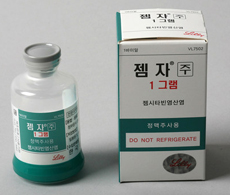
- In 2 years since Boryung Pharmaceutical acquired the domestic rights for Lilly’s anticancer treatment ‘Gemzar (gemcitabine HCl)’ in Korea, the company switched all its items to domestic productions. According to the Ministry of Food and Drug Safety, Boryung Pharmaceutical withdrew its import license for ‘Gemzar’ on the 21st, and switched the name of its domestic generic ‘Boryung Gemcitabine HCl Injection’ to the original name, ‘Gemzar,’ The company had co-promoted Lilly Korea’s Gemzar since 2014 and signed an agreement to transfer and acquire the rights of Gemzar, an anticancer treatment, in the local market with Eli Lilly in May 2020. Under the agreement, Boryung Pharmaceutical acquired the total rights of Gemzar in Korea including its sales and marketing authorization rights from the US company. Boryung and Lilly had been co-promoting Gemzar in Korea since 2015 Gemzar is indicated as a mono- or combination therapy in the first- and second-line treatment for pancreatic cancer, non-small cell lung cancer, bladder cancer, breast cancer, ovarian cancer, and biliary tract cancer. According to the market research firm IQIVA, Gemzar had sold ₩9.5 billion in 2016, which increased by around ₩3 billion in 5 years to record ₩12.44 billion in 2020. Gemzar’s sales account for 2-3% of Boryung’s total pharmaceutical sales every year, and sales are expected to increase due to cost reduction with the company converting all its imported products to domestic productions. Since 2019, Boryung had started driving the anticancer drug business and tripled its existing anticancer drug production facilities with the completion of its Yesan plant. Boryung plans to accelerate its anticancer drug business by introducing new products and expanding co-promotion products. Last year, the company had signed another contract to acquire and transfer assets for the schizophrenia treatment Zyprexa (olanzapine) with Lilly. Zyprexa had raised ₩14 billion in the domestic olanzapine market last year and is the No.1 prescribed product that holds a 50% share of the market. The agreement was made as part of Boryung’s LBA strategy it announced while conducting a capital increase of ₩98.5 billion in July last year. In addition to Gemzar and Zyprexa, Boryung plans to expand its portfolio by acquiring the domestic marketing approval of off-patent anticancer drugs that raise around ₩15 billion every year. Currently, the company is selecting candidates for digestive cancer, women's cancer, blood cancer, and lung cancer, and will also work to individual develop new anticancer drugs in the long term to strengthen its anticancer drug lineup.
- Policy
- Chong Kun Dang salt modified Entresto will be released soon
- by Lee, Hye-Kyung Apr 25, 2022 06:07am
- The market launch of Sacubitril/Valsartan Calcium, developed by Chong Kun Dang is imminent. According to the pharmaceutical industry on the 21st, Chong Kun Dang filed an application with the MFDS for permission for the drug developed by changing Valsartan Sodium, the main ingredient of Novartis' chronic heart failure treatment Entresto. This drug is likely to be a candidate substance called CKD-349, which was completed in June and October last year by conducting phase 1 clinical trials at Chungnam National University Hospital and H Plus Yangji Hospital, respectively. CKD-349 was tested with Entresto as a control drug. Entresto is the first double-inhibitor ARNI-based treatment that combines ARBI Valsartan and Sacubitril that inhibits Neprilsysin, and is currently recommended as a standard treatment in domestic and foreign heart failure treatment guidelines. As Entresto, which was approved for items in April 2016, was officially released in October 2017 after being listed, 13 domestic companies, including Hanmi Pharmaceutical and Chong Kun Dang, filed for patent judgment last year. On December 23, 2020, the Korean Intellectual Property Tribunal sided with generic companies by making a judgment on the establishment of the claim in a passive confirmation of the scope of rights of Entresto's crystalline patents filed against Novartis by 13 companies, including Hanmi Pharmaceutical and Chong Kun Dang. Entresto is protected by a total of five patents, including salt patents expiring in November 2026, use patent expiring in July 2027, crystalline patent expiring in September 2027, composition patent expiring in November 2028, and composition patents expiring in January 2029. If domestic companies succeed in targeting patents for use, they will be able to launch generics for Entresto early, which will end PMS on April 13. Entresto's outpatient prescription amounted to 32.3 billion won last year, up 37.3% from 23.5 billion won last year. This is the first achievement in four years since its release in October 2017.

- Policy
- Expansion of benefit standards such as Tenofovir/Baricitinib
- by Kim, Jung-Ju Apr 24, 2022 06:33pm
- As the scope of benefit of registered drugs such as chronic hepatitis B oral drug Vemlidy expands, the benefit standards for these drugs will also be expanded and changed. In addition, the standards for Baricitinib PO such as oluminant 2mg will be expanded to patients with chronic severe atopic dermatitis. The MOHW unveiled the "revised notification of details on the standards and methods of applying medical care benefits" and began to inquire about opinions until the 27th. ◆As the permission of the MFDS for= Tenofovir, an oral chronic hepatitis B treatment such as Vemlidy, is changed, the insurance benefit standards will also be expanded. Insurance authorities will expand and apply standards to non-target liver cirrhosis and liver cancer in consideration of excluding country permits, textbooks, clinical treatment guidelines, clinical research documents, and related academic opinions (expert opinions). In detail, the standard of "Besifovir and Tenofovir do not recognize non-subjective cirrhosis and liver cancer" among the benefit clues is changed to the phrase "Besifovir does not recognize non-subjective cirrhosis," and Tenofovir recognizes medical care benefits in patients with non-subjective cirrhosis. ◆ Antibiotics, PPI PO, Bismuth PO, Clarithromycin PO, Levofloxacin PO= Antibiotics, as well as Bismuth PO such as PPI PO and Denol, Clarithromycin PO, and Levofexin PO will be expanded. Insurance authorities were required to apply benefits to "after endoscopic resection of gastric adenoma" by referring to domestic and foreign permits, related literature, and academic opinions. ◆The benefits of Baricitinib PO will also be expanded to patients with Upadacitinib PO= chronic severe atopic dermatitis such as Olumiant 2mg and Rinvoq SR. However, the authorities may change the standards depending on the results of the MFDS review related to the safety of JAK I. In addition, due to insufficient grounds for replacement administration, it was decided not to admit replacement administration between Dupilumab and JAKI and replacement administration between JAK I. ◆ Everolimus PO such as Certican and Sirolimus PO= will also be applied to kidney transplant patients in the future. In addition, benefits are recognized for combination therapy with Tacrolimus for renal transplant patients beyond the scope of the MFDS' permission. ◆Guselkumab injections such as Tremfya Prefilled Syringe, etc.,= will be added to the MFDS' permission, and related standards will be expanded accordingly. In March last year, the drug added indications of "psoriatic arthritis." As a result, standards are also extended. Specifically, it is active and progressive healthy arthritis. A combination of newly listed items will be added to the benefit standard of the oral system for high blood pressure and hyperlipidemia. Starting next month, five Atorvastatin compound PO products such as Amlodipine, Candesartan, and Cantabell, and Telmisartan, Rosuvastatin and eight items of Ezetimbe PO complex such as Duowell Plus are scheduled to be listed, the combination of the drug ingredients will be added. ◆Tenofovir oral drugs such as K-Cab and K-CAB ODT 50mg will be newly registered next month, and this drug will also be added to the relevant benefit standards. The MOHW plans to implement the revision of the notice from May 1st if there is nothing unusual.
- Policy
- Expanding the use of Paxlovid with underlying dz over 12 yrs
- by Lee, Jeong-Hwan Apr 20, 2022 06:05am
- COVID PO Tx PaxlovidThe government said it is considering expanding the scope of the prescription for Paxlovid, an oral treatment for COVID-19, to "underlying patients aged 12 or older." However, considering the fact that there are side effects, it is said that various decision-making processes such as collecting opinions from experts should be carried out. This revealed the government's position on the presidential transition committee's announcement that it is considering expanding the prescription of the treatment to those with underlying diseases over the age of 12. Lee Sang-won, head of the epidemiological investigation and analysis team at the Central Disease Control Headquarters, explained at a regular briefing on the 19th, "Paxlovid, PO treatment, is undergoing clinical trials in other countries overseas and is reviewing data. I understand that there are no special abnormalities overseas regarding problems such as side effects," he said. "We are confirming that there are no problems such as securing supplies. We are currently considering expanding the target of the treatment from people aged 60 or older, immunocompromised, underlying patients in their 40s and 50s to underlying patients aged 12 or older, and expanding local clinics." Regarding the recent decline in the COVID-19 epidemic, the fatality rate does not fall below 0.1%, Lee said, "It is because the main class where the incidence of patients is decreasing is young and the age of 60 or older is decreasing, but the rate of decline is relatively slow compared to other age groups." Among the cumulative COVID-19 deaths, the proportion of the elderly aged 60 or older exceeds 95%, with most of the deaths occurring in the elderly aged 60 or older, which is a high-risk group.
- Policy
- MFDS requested supplementary data of Mifepristone
- by Lee, Hye-Kyung Apr 19, 2022 05:52am
- 'The MFDS is conducting a comprehensive review including the need for Bridging Study data. A year and four months have passed since the abortion crime was abolished, but drugs that have been applied for permission by domestic pharmaceutical companies are still being reviewed. According to the press release of the MFDS on the 18th, the MFDS requested the submission of supplementary data of Mifepristone applied by Hyundai in July last year. The MFDS said, "We asked the company to submit supplementary data because we needed to supplement some data during the screening process, and the company has requested a postponement of the deadline for submitting supplementary data." At the Central Pharmaceutical Review Committee held last year, the need for a Bridging Study clinical trial to verify safety and effectiveness by conducting clinical trials on Koreans again was discussed, but the MFDS has yet to give specific opinions. At the time, the Korean Association of Obstetrics and Gynecology said that the Bridging Study should be conducted, but most members reportedly concluded that the Bridging Study clinical trial was unnecessary. Accordingly, the MFDS said, "We are comprehensively reviewing the data submitted by the company, including whether or not bridging study data is necessary," adding, "It is difficult to answer because the approval schedule cannot be predicted." Regarding the criticism that obstetricians and gynecologists were excluded from the committee, the committee held last year said that obstetricians attended the committee as members The MFDS explained, "When the Central Pharmaceutical Center was held, obstetrics and gynecology specialists were also present as members in accordance with related regulations, and the Korean Association of Obstetrics and Gynecology attended and submitted opinions." Regarding the drug item license and safety use plan, the MFDS said, "Check safety, effectiveness, and quality, and use it safely during the examination process, and we will come up with measures such as educational materials for experts and patients and post-marketing investigations to ensure that abortion drugs can be used in a legally stable environment, and we will actively support the National Assembly's law revision process. On April 11, 2019, the Constitutional Court made a constitutional nonconformity decision on the abortion of the criminal law to respect women's right to self-determination of the body, and the abortion crime has been invalidated since January 1 last year.
- Policy
- Reimb. suspension on rebate drugs unconstitutional
- by Lee, Tak-Sun Apr 18, 2022 05:58am
- 박성민 변호사 A claim that applying the reimbursement suspension system on illegal rebate drugs that had been abolished in 2018 to acts that had been made before the law was revised can be unconstitutional has been raised. Due to unreasonable aspects of applying the existing law, the claim is that it is more reasonable to retroactively apply the law revised in 2018. Lawyer Seong-min Park at HnL law firm explained so at the monthly academic conference of The Korean Society of Law and Medicine that was held on April 16th. At the virtual conference, Park reviewed the ‘unconstitutionality of the insurance reimbursement suspension disposition applied under the National Health Insurance Act,’ and announced that the decision to suspend reimbursement for rebates caught before September 2018 violates the principle of prohibition of penalty surcharges or the principle of equality presented under the Constitution. The reimbursement suspension dispositions on drugs caught with illegal rebates had been first made in May 2017 after the system was introduced in 2014. However, due to concerns over hindered patient accessibility and side effects that arise from substituting drugs for non-medical reasons, the government revised the law to impose price cut dispositions rather than reimbursement suspensions in 2018. However, the government has applied the old law and issued reimbursement dispositions to acts of rebates that arose before September 2018, raising controversy. Park said, “The National Health Insurance Act revised as of 2018 does not stipulate which law to apply for rebates made before September 2018, however, the administrative agency has been issuing reimbursement suspension dispositions.” He added, “The retroactive application of the law, in particular, retrospective application of administrative laws is generally against the rule of law and therefore is not accepted as it unfairly infringes upon individual rights and freedoms and threatens the stability of living by the law. However, retrospective application of laws and ordinances is permitted as an exception in cases where there is no direct relationship to the interests of the general public or when the interest is rather advanced or eliminates disadvantages or suffering.” This is in accordance with the Supreme Court precedent that was made in May 2005 (Ruling No: 2004다 8630). He said, “We can’t definitively conclude that reimbursement suspensions are more advantageous than drug price cuts for the pharmaceutical companies. If the company clearly states it prefers price cuts over reimbursement suspensions, the protection of trust on the company’s part is rendered unnecessary, and the retroactive application of price cuts is therefore allowed as it can advance the interests of patients, doctors, pharmacists, health insurance finances, and pharmaceutical companies." In other words, the retroactive application of the revised law is reasonable even for rebates that occurred before September 2018. If the upper limit of fines is applied under the old law, the company may request a 40% penalty for one year of its sales rather than a suspension of reimbursement, and the authorities may exercise discretion. Park added that even if the law that was revised last year is applied, the company may request to receive a large fine that is applied for third violations under the current law rather than a reimbursement suspension, on which the authorities can also exercise discretion. Park said, “By substituting reimbursement suspensions to fines for lowest-priced drugs, the company may be subject to monetary sanctions through fines. Also, the price of drugs that are not lowest-priced can be effectively reduced by inducing voluntary drug price cuts, which can effectively result as same as drug price cut dispositions.”
- Policy
- Utilizing RWD for Re-evaluation of Old Drugs
- by Lee, Hye-Kyung Apr 18, 2022 05:58am
- Discussions were conducted at the Central Pharmacist Review Committee on the criteria for clinical re-evaluation of items licensed on the basis of foreign drug formulas without efficacy evaluation. The drug was Hanall Biopharma's "Blistop (p-Aminomethyl Benzoic Acid)" and was approved on May 16, 2001, and its efficacy expired on April 1. At the time of approval, Blistop was awarded to the eight major foreign drug formularies, allowing item approval without clinical data. However, with the recent revision of the permit regulations, it is impossible to permit drug formalities alone, and efficacy evaluation standard of "old drugs" used in the field for decades without efficacy evaluation has become controversial. According to the minutes of the committee's "Advice on the adequacy of drug item renewal" held by the MFDS on the 29th of last month, it was very difficult to prove its effectiveness through clinical re-evaluation. The MFDS said, "The items licensed based on foreign formularies have already been used in clinical sites for decades, and what to do with efficiency evaluation is a problem in the renewal of Old Drugs." "In consideration of not only clinical re-evaluation but also the use of RWD, we will only recognize the efficacy that can prove its validity through protocol review and approval procedures," he explained. Currently, the company has submitted opinions on clinical re-evaluation, and the MFDS is considering various methods such as clinical trials as well as post-marketing clinical trials. In this regard, a member said, "In the situation where there are differences in permission for each drug used for hemostasis, Blistop is well used so far in clinical sites," adding, "Since there is no significant adverse reaction, it is reasonable to give opportunities according to the company's will." Another member suggested, "It is difficult to objectively judge the validity of all drugs approved in the past. The MFDS needs to ease regulations on Old Drugs and prioritize safety evaluation over efficacy." It is unreasonable to impose restrictions on drugs that have been used for a long time since there is no safety problem, and the effectiveness is evaluated in the market, and drugs that are not effective will be eliminated in clinical practice. However, the MFDS agrees that the need and use in the market can naturally induce eviction, but there is a limit to maintaining permission as it is effective in the absence of clinical data as foreign formularies, the basis for licensed drugs, disappear. At the meeting that day, it was decided to renew the p-Aminomethyl Benzoic Acid item on the premise of validation.
- Policy
- Will losses from drug price cut dispositions be recovered?
- by Lee, Jeong-Hwan Apr 15, 2022 06:03am
- The Ministry of Health and Welfare and the pharmaceutical companies are intensely arguing over the application of an indemnification system where the pharmaceutical company’s damages are refunded by the government if they win the administrative suits for price cuts and reimbursement suspensions. As the system has already met the administrative notice period and completed the Regulation Reform Committee procedures, all that is left is for the MOHW to decide upon its implementation and period, but the pharmaceutical companies have been raising issues and requesting the government to amend the specifics in the bill. On the 14th, the MOHW had announced it had started an internal review process for the partial revision of the “Criteria for Decision or Adjustment on Drugs.” The administrative pre-announcement of the amendment that was presented on January 17th contained guarantees that refunds losses incurred by drug manufacturers, etc. as results of administrative trials and litigations. In essence, the government will recover the damages incurred if the pharmaceutical company wins after filing an administrative lawsuit against the MOHW’s disposition such as drug price cuts, reimbursement suspensions, or deletions. The pharmaceutical industry has been protesting that the system does not fully reflect reality. The companies are stressing that, unlike the price cut dispositions where the price can be immediately restored if the company wins the suit, damages from dispositions such as reimbursement suspensions or reductions cannot be recovered even afterward. For example, just a 1 month's suspension of reimbursement would result in the deletion of the prescription code at healthcare institutions, due to which the drug would lose its foothold in the market. Reducing the scope of reimbursement would also render considerable losses in prescriptions as the doctors would switch to other drugs, but the refunded amount is too insufficient to cover the losses. The companies believe that if they win the suits after reimbursement suspension or reduction dispositions, the government should compensate for its damages until the company fully recovers the damages caused by the disposition. In addition, the pharmaceutical companies insisted that an appropriate rate should be set through calculation by the Loss Estimation Committee rather than the MOHW unilaterally calculating the refund rate for drugs subject to reimbursement application suspensions or reductions. Whether the government would accept the industry’s argument will affect the final implementation of the system. If the MOHW accepts a broad range of opinions made by the industry, it may be necessary for the authorities to take additional administrative notice procedures. The MOHW is currently preparing the final administrative notice for review by the Ministry of Government Legislation after completing the Regulation Reform Committee procedures as well as opinion collection from the industry. An official from MOHW said, “We are internally discussing whether to accept the opinion collected during the administrative pre-announcement period. It has not been decided whether we will be reflecting the changes, and after we make a decision, we will receive a review from the Ministry of Government Legislation."
