
- LOGIN
- MemberShip
- 2026-05-05 21:14:57
- Policy
- To halve the death rate from COVID-19
- by Lee, Jeong-Hwan Jul 18, 2022 06:06am
- Veru homepageAs the domestic quarantine authorities announced their plan to review and promote the purchase of Sabizabulin, a new oral treatment for severe patients in preparation for the COVID-19 re-pandemic, attention is being paid to the treatment. Sabizabulin, developed by U.S. pharmaceutical company Veru, is the first serious oral treatment for COVID-19, and is known to significantly reduce the relative risk of death compared to placebo to 55%. On the 17th, the Ministry of Health and Welfare and the Korea Centers for Disease Control and Prevention reaffirmed to the National Assembly the need to introduce new oral drugs such as Paxlovid (Pfizer) and Largevrio (MSD). Sabizabulin is still a candidate drug for oral severe COVID-19. Developer Veru submitted an application for emergency use approval for Sabizabulin to the U.S. Food and Drug Administration (FDA) early last month. Developers are expected to be commercialized from August. Paxlovid and Lagevrio are for mild COVID patients. The difference is that the two oral drugs can be effective only when taken immediately after confirmation, while Sabizabulin has shown efficacy when used in severe patients who have already deteriorated due to confirmation. Sabizabulin is known to reduce the mortality rate by half (55%) when taken, and is evaluated as a new weapon to fight the COVID-19 pandemic. According to the results of a phase 3 clinical study published in the international journal New England Journal of Medicine (NEJM), Sabizabulin and standard treatments were administered to 150 severe COVID-19 patients, and the standard treatment group died 45.1% after 60 days, compared to 20.2% in Sabizabulin. As a result, the relative risk of death of Sabizabulin compared to placebo was significantly reduced to 55.2%. In addition, the period of hospitalization in the intensive care unit and the period of use of the ventilator were reduced by 14 days, respectively, compared to the placebo group. Sabizabulin was originally developed as an anticancer drug. Cancer cells grow on microtubules that move between cells in the body, blocking them from growing. Researchers at the University of Tennessee in the U.S., who developed the drug in the early days of the study, began further research, believing that when the coronavirus outbreak broke out in 2020, they could block the microtubule in cells to suppress the growth of the coronavirus. In the case of existing antibody treatments, the treatment effect may decrease depending on the virus mutation, but Sabizabulin is known to have no difference in the treatment effect due to the mutation. This is because it acts in a way that directly interferes with the microtubule in cells necessary for virus proliferation, not the virus itself. Developer Veru said, "If FDA approval is completed in July, we will be able to supply 57,000 people in July and 100,000 people in August." Veru introduces itself as a bio-cancer drug pharmaceutical company targeting bladder cancer and breast cancer.

- Policy
- Abbott has filed a suspension of execution with the court
- by Kim, Jung-Ju Jul 18, 2022 06:06am
- Abbott Korea, which has been in a dispute with the Ministry of Health and Welfare, immediately filed an appeal against the administrative court ruling by raising the issue of lowering the additional revaluation of the Rytmonorm SR series. Leo Pharma, which raised the issue together last year, decided to avoid legal confrontation with the government and abandoned the appeal. As a result, the drug price of Leo Pharma's seven items has been lowered as planned by the government from the 15th, and the drug price of Abbott's three items will be temporarily maintained due to the suspension of execution. Abbott appealed to the High Court for a total of three products containing Rytmonorm SR 225mg, 325mg and 425mg, and applied for a suspension of execution of the government's drug reduction plan (Notice No. 202-223), which the court accepted. Earlier in September 2021, the MOHW decided to conduct an additional revaluation by extensively overhauling the additional system that adds to the drugs listed on the list and conducting the first drug reduction according to the results. Products from these companies were included in the target. The lawsuit began as companies that were hit by the weak cut immediately protested. However, as the Seoul Administrative Court recently ruled in favor of the government, the first lawsuit ended, and at the same time, the suspension of execution, which temporarily maintained the price until the ruling, ended. But Abbott immediately appealed. Accordingly, the High Court decided to maintain the original price until the ruling, citing the suspension of execution applied by the company. Once the suspension of execution is maintained from the 15th to the 29th of this month, it is highly likely that the extension will be repeated again if the lawsuit is prolonged. Leo Pharma chose to give up the appeal and the drug price was immediately lowered. "We have decided not to proceed with the appeal process by persuading the Danish headquarters about the ongoing revaluation lawsuit," said Leo Pharma. The company added, "There is no way to recover from the decline in sales, but we decided to give up the appeal to do our best to meet social responsibility as a pharmaceutical company." Meanwhile, the ministry plans to guide further changes during the lawsuit.
- Policy
- Samsung reigns over Avastin biosimilar market in Korea
- by Lee, Tak-Sun Jul 14, 2022 05:54am
- No new biosimilars of ‘Avastin (Roche, bevacizumab)' are being introduced to the market after Samsung Bioepis’s biosimilar. The Avastin biosimilar market is estimated to have a ₩120 billion market in Korea. In terms of approvals, Pfizer Korea and Alvogen Korea had also received approval for their biosimilars after Samsung Bioepis, but only Samsung Bioepis received reimbursement approval for its biosimilar in September last year. The industry analysis is that the supply amount and results of patent challenges have risen as a variable, delaying reimbursement and release of the other biosimilars. According to industry sources on the 13th, Alvogen Korea withdrew its reimbursement application for ‘Alymsis inj’ that was approved in January this year. With the withdrawal, Alymsis’s reimbursed release in Korea is expected to be further delayed. The industry had previously expected Alymsis to be released with reimbursement in September this year. Alymsys is an Avastin biosimilar developed by the Spanish pharmaceutical company mAbxience that received US FDA approval in April through Amneal Pharmaceuticals. In Korea, the drug will be supplied by Alvogen Korea and marketed by Daewoong Pharmaceutical. The two companies signed an agreement in October last year under which Daewoong Pharmaceutical owns the rights to exclusively distribute and sell Alymsis in Korea. However, a variable - the patent challenge - arose with only reimbursement approval left for its release. Two of Alvogen’s three patent invalidation trials filed by the company were accepted by the court, but one was rejected. The rejected patent is known to be a combined therapy use patent set to expire in 2033. The industry believes that patent challenge results may have affected Alvogen’s reimbursement application withdrawal. However, no news on the reimbursement of Pfizer’s ‘Zirabev inj,’ which was approved before Alymsis, is arising either. Zirabev was approved in May last year. Therefore, speculations are rising that the release date of Zirabev is not being set due to insufficient domestic supply. With the release dates of Alvogen and Pfizer’s Avastin biosimilar unclear, the market preoccupation effect of Samsung Bioepis’s ‘Onbevzi inj,’ the first biosimilar that was released in September last year, has doubled. Onbevzi, which is sold in Korea through Boryung Pharmaceutical, has already passed the review of drug committees at 58 hospitals in Korea. This includes the ‘Big 4’ hospitals in Korea - Samsung Medical Center, Seoul Asan Medical Center, Seoul National University Hospital, and Sinchon Severance Hospital. Based on IQVIA, Onbevzi accounted for 9% of the market in the first quarter of this year. Onbevzi 0.1g/4mL is listed at ₩208,144 in Korea. This is slightly cheaper than Avastin 0.1g/4mL, which costs ₩218.782. Samsung Bioepis has also been emphasizing the economical price of its drug. A company official said, “We will continue to make efforts to provide more treatment options for patients with Onbevzi while contributing to the NHI fiscal-saving effort made by the health authorities in Korea.” Meanwhile, Celltrion had also applied for the approval of its Avastin biosimilar 'CT-P16' in September last year but had not received marketing authorization yet.

- Policy
- No social distancing obligations are introduced
- by Lee, Jeong-Hwan Jul 14, 2022 05:54am
- People in their 50s and 18s and older are also vaccinated with underlying diseases. In order to respond to the COVID-19 pandemic, the government has decided to expand the scope of the fourth vaccination to those in their 50s and 18 years of age or older. The mandatory quarantine period shall be maintained for seven days, but distancing shall not be implemented for the time being. Prime Minister Han Duck-soo presided over a meeting of the COVID-19 Central Disaster and Safety Headquarters on the 13th and announced measures to respond to the COVID-19 re-pandemic. It has decided to expand the target of 4th vaccination. The 4th vaccination target currently being conducted for people aged 60 or older and immunocompromised includes those in their 50s and 18s or older. It will also secure beds for the treatment of severely hospitalized patients. The government believes that it can afford as the operation rate of intensive care units is currently maintained at 10%. It is pointed out that thorough countermeasures are needed as the number of COVID-19 confirmed patients has doubled on a weekly basis recently. As a result, the government plans to prepare for hospitalization treatment with the possibility of up to 200,000 patients in mind. 10,000 "one-stop medical institutions" will be secured earlier by the end of this month so that confirmed patients who are not hospitalized and receive home treatment can receive tests, treatment and prescriptions at nearby hospitals and clinics at once. It will not implement measures to make it mandatory to keep distance immediately. It plans to consider introducing selective and phased distancing at a time when the COVID-19 re-pandemic situation is expected to become serious. Prime Minister Han asked, "Please thoroughly follow the basic quarantine rules such as wearing a mask, washing hands, vaccination, and periodic ventilation, which are the most reliable means of quarantine."
- Policy
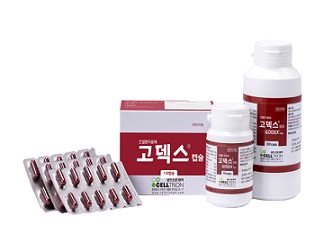
- Companies are worried about the result of Godex revaluation
- by Lee, Tak-Sun Jul 13, 2022 06:04am
- CelltrionThe result of the revaluation of Celltrion Pharmaceutical's Godex raised concerns for some pharmaceutical companies. This is because the re-evaluation results came out around the time the development of generics began in earnest. According to an industry on the 8th, some pharmaceutical companies are developing generic drugs for Godex. Godex contains seven ingredients, including ▲Biphenyl dimethyl dicarboxylate, ▲antitoxic silver ext., ▲Adenine HCl, ▲Pyridoxin HCl, ▲Riboflavin, and ▲Cyanocobalamin. Since it is a product that generates 70 billion won in annual performance, it was a product that had a strong desire to develop generic drugs. In particular, small and medium-sized companies have steadily challenged. It is known that some companies solved all raw material problems and completed development right before commercialization test. Other pharmaceutical companies also paid attention to the results of Godex's revaluation. The HIRA Pharmaceutical Benefit Evaluation Committee decided on the 7th that Godex was not eligible for benefits. It is a big deal for companies preparing generic drugs. Some companies have also been interested in developing tablets for Godex, a capsule formulation. This is because Celltrion Pharmaceutical was expected to defend generic drugs through tablet development. However, there is no news of permission for Godex, which has been approved in phase 3 clinical trials. Except for Godex's benefit, the HIRA's development of tablets is also likely to be disrupted. This is because, regardless of the formulation, products with the same ingredient have been determined to be non-reimbursement. Therefore, generic drugs also make it difficult to be reimbursed. An official from a company said, "I understand that some pharmaceutical companies have been seeking to develop generica for Godex for a long time." He expressed regret, saying, "I would have identified and planned the original defense strategy, but if the HIRA takes measures to delete the final benefit, all of this will be ruined." The crisis of Godex's deletion of benefit was not only a problem for Celltrion Pharmaceutical.
- Policy
- Hanall Biopharma's Glucofree OR is back
- by Lee, Tak-Sun Jul 12, 2022 05:53am
- Metformin OR products, which had been suspended due to the detection of excess NDMA of carcinogenic substances, are returning. Hanall Biopharma products have also returned to the reimbursed market with their names changed. With the emergence of them, competition is expected to intensify as the imbalance in supply and demand of Metformin OR is resolved. According to an industry on the 11th, Metformin OR products of Hanall Biopharma and Daewoong Bio have recently been lifted. The items are Hanall Biopharmas Glucofree OR 500mg, Glucofree OR 750mg, and Daewoong Bio's Diaformin XR 500mg and Diaformin XR 750mg. Hanall Biopharma's Glucofree OR is the name changed from Glucodown OR. Glucodown OR was the second highest-selling product in the Metformin single-product market after the original Diabex (Daewoong Pharmaceutical). In May 2020, manufacturing and sales of NDMA, a substance that is feared to cause cancer, were suspended because it exceeded the provisional management standards. Hanall Biopharma has been able to lift its manufacturing and sales suspension by changing it to an impurity-free product for about two years. Daewoong Bio's product, which was manufactured at the same factory and stopped manufacturing and selling together, has also returned. With the re-launch of the two products, worries about supply and demand can be eased, especially in the Metformin OR 750mg market. As the two products disappeared, Metformin OR 750mg was the only Metformin OR 750mg of Yuhan. Since the suspension of sales in 2020, the demand for Metformin OR 750mg has increased rapidly, making it difficult to supply it. 45 items in the Metformin OR 500mg market receive benefits. Hanall Biopharma and Daewoong Bio are also working to lift the suspension for 1000mg OR products. Before the suspension in 2020, Hanall Biopharma was the only competitive drug for imported Glucophage XR 1000mg and Diabex XR 100mg for domestic brands. Now, the number of competitive domestic drugs has increased as Dalim Biotech and Yuhan Corporation have newly entered. Hanall Biopharma and Daewoong Bio are members of Daewoong Pharmaceutical Group. Although Daewoong Pharmaceutical continues to rank No. 1 in the Metformin single-product market with its marketing import Diabex, its own production items of Hanall Biopharma and Daewoong Bio are also strategically important. This is because it is necessary to maintain the overwhelming market share of Daewoong Pharmaceutical Group while being a domestically produced product that can check imported items. Metformin preparation is the primary essential drug for patients with secondary diabetes. As a result, it is expected that Yuhan and Dalim will compete fiercely with Hanall Biopharma and Daewoong Bio for the first place as they are growing high in the single market of Metformin after the suspension of sales.
- Policy
- Reimbursement of new migraine drugs gain momentum
- by Lee, Tak-Sun Jul 11, 2022 06:04am
- New migraine drug Reyvow receives conditional approval from the DREC on the 7th New migraine drug Reyvow receives conditional approval from the DREC on the 7th New migraine drugs are competitively pushing to receive reimbursement listing in Korea. Following Lilly’s ‘Emgality (galcanezumab)’ in May, Ildong Pharmamceutical’s ‘'Reyvow (lasmiditan)’ has also passed deliberations by the Health Insurance Review and Assessment Service’s Drug Reimbursement Evaluation Committee (DREC) on the 7th. With Emgality already in pricing negotiations with the National Health Insurance Service, Il Dong is also working to speed up the listing process for Reyvow. Also, Teva-Handok’s new migraine drug ‘Ajovy’ is being reviewed for reimbursement adequacy. The industry analysis is that all 3 new migraine drugs may be reimbursed within the year. Reyvow passed DREC review in only 2 months after it received approval in May through the approval-assessment linkage system. This is evidence that its importer and seller, Ildong Pharmaceuticals, is making efforts to speed up Reyvow’s reimbursement process. Therefore, if the price level presented by DREC close to the company’s estimate, the two parties may immediately begin pricing negotiations. Reyvow selectively inhibits serotonin 5-HT 1F receptor. Triptan-class drugs, which are most commonly used for migraines also work on serotonin but may constrict the blood vessels and cause cardiovascular diseases such as myocardial infarction, strokes, etc. On the other hand, Reyvow, a selective inhibitor, has the advantage of causing fewer cardiovascular side effects. If a patient has difficulty receiving triptans due to side effects, Reyvow would rise as a viable option. Also, both the triptans and Reyvow come in tablet formulations. The other two, Emgality and Ajovy, are injection-type formulations. Both are humanized monoclonal antibody drugs that bind to the CGRP ligand that plays a key role in inducing migraine symptoms to inhibit its binding to its receptor. Therefore, the drugs are known to cost millions of won per year, much more expensive than the existing drugs. This is why the listing price of Emgality and Ajovy is also the focus of attention. Existing triptan class drugs are listed at 3,000 to 4,000 won per tablet, but the price of Emgality and Ajovy will have to be much higher than triptans as they use a different mechanism of action to improve treatment effect. Their formulation, as injection-type drugs, also differs from triptans. However, like triptans, Reyvow is a tablet formulation that acts on serotonin, therefore the price of the listed triptan class drugs may be used as a reference in Reyvow’s pricing. With Emgality at the forefront of the listing process, Teva and Ildong will first be keenly eyeing what price will be set for Emgality. As Teva has applied to hold a briefing session on Ajovy for HIRA reviewers, its reimbursement is also expected to be deliberated by DREC soon. The Korean migraine treatment market has remained small compared to its patient size. Accoring to UBIST in 2020, annual prescriptions of triptan-class drugs were at a 15.5 billion won range. However, the prevalence rate of migraines in Korea is 6%. According to HIRA's statistics, 550,000 patients received medical treatment for migraines, but around 2 million patients are estimated to have not visited hospitals or clinics for their condition in 2020. Therefore, the release of new drugs in the field is expected to further increase the market size.
- Policy
- ↑Rosuvastatin when combined with Brilinta/Rosuvastatin
- by Lee, Hye-Kyung Jul 11, 2022 06:04am
- According to a recent review of EMA safety information, the MFDS decided to establish a new clause on the interaction that combination of Ticagrelor and Rosuvastatin can affect kidney excretion and increase the risk of Rosuvastatin accumulation. According to the new clause, the exact mechanism of action for side effects was not known, but combination of Ticagrelor and Rosuvastatin resulted in decreased kidney function, increased CPK levels, and rhabdomyolysis. Ticagrelor, including Brilinta, is an ingredient that has been approved as a Ticagrelor in Korea. There are 76 items including 60 mg inno.N, Ahngook Ticagrelor, Brigrelor, Boryung Ticagrelor, Ticavix, Tirelor, Ticagrin, Hurorinta, Ticagen, and Brelor. The full-fledged launch is November, when Brilinta's material patent expires, and 25 items, including Boryung Ticagreler, have acquired generic for exclusivity from November 21 this year to August 20 next year. Brilinta, a representative item of Ticagrelor, was licensed for a new drug in 2011 to reduce the incidence of thrombotic cardiovascular events. The MFDS plans to change the permission after conducting an opinion inquiry by the 22nd.
- Policy
- New Donepezil & a dilemma over low drug prices
- by Lee, Tak-Sun Jul 11, 2022 06:03am
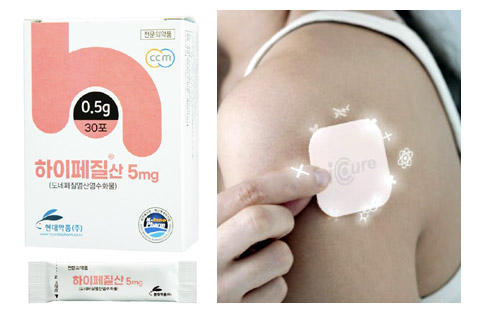
- Hypezil Powder 5mg (left) and IcureDomestic pharmaceutical companies are releasing a new form of Donepezil, a component of dementia treatment, but existing low-cost drugs are acting as a dilemma. Donepezil accounts for about 80% of dementia treatments, so competition among the same products is fierce. As there are 150 pharmaceutical companies with the same ingredient products, the drug price is breaking the lowest price every time. According to the industry on the 7th, Hyundai's Donepezil, Hypezil Powder 5mg, has been applied to the market since this month. This product is expected to be useful for patients who have difficulty swallowing existing tablets because it can be taken in water. The upper limit is 1,700 won. The MFDS recognized this product as a new formulation and approved it as a drug that submitted data. Therefore, if the drug price is calculated based on the standard for calculating the drug price, there is a possibility that the upper limit amount will be determined at 90% of the highest price of the existing product with the same ingredient. As the highest price of Donepezil 5mg is 2,060 won, 90% of this price is 1,854 won. However, Hyundai voluntarily lowered the price from the calculation standard and registered it as 1,700 won. In fact, 1700 won is also a high price based on the Donpezil 5mg. Because the current lowest price is 500 won. As 127 pharmaceutical companies compete for Donepezil 5mg alone, the lowest price is breaking every time a generic comes out. Therefore, it is analyzed that Hyundai, which is releasing new products, had no choice but to take into account the price competitiveness of the Donepezil market. Among the new Donpezil formulations, the patch system is expected to be released as early as the next day. This is because Donerion Patch (Celltrion) was conditionally passed by the Committee of the HIRA in May, are at the end of drug price negotiations. Since Daewoong Pharmaceutical's Fexuclu, which passed the committee's review on the same day, released this month, Celltrion and Icure's Donpezil defeat are also expected to be listed soon. The Committee judged that the benefit was appropriate when accepting less than the evaluation amount, but the industry believes that the committee calculated the drug price lower than the pharmaceutical company's expectations. Developer Icure was also initially in a position to release the drug at a lower price than the original drug Aricept, but it is said that a lower drug price was suggested. The industry analyzes that if alternative drugs were included, they would fall short of the company's expectations. For example, the average price of the original and generic 10mg is 2,040 won, which is cheaper than the original Aricept 10mg (2,265 won) as well as the developer Icure's Penedo 10mg (2,460 won). Considering the compliance of dementia patients, it is analyzed that the use of patch drugs is better, so even if the drug price is low, it can record high performance due to its high usage. The market seems to be at a disadvantage for product developers because Donepezil prices are too low.
- Policy
- Hemophilia Type A tx, Bayer's Jivi has been approved
- by Lee, Hye-Kyung Jul 10, 2022 03:35pm
- Bayer's hemophilia type A treatment Jivi has been approved for domestic items. The MFDS recently granted Jivi to routine prophylaxis for on-demand and suppression of bleeding episodes in adults and adolescents (blood coagulation factor VIII birth deficiency) who have been treated before, management of bleeding before and after surgery, and reducing the frequency of bleeding episodes. Jivi obtained permission from the EU Commission in November of the same year after being approved by the U.S. FDA as a routine preventive treatment for youth and adult hemophilia patients aged 12 and older with a history of treatment in August 2018. Since t1/2 is maintained at 17.9 hours, the initial recommended dose is administered twice a week once every five days, and is administered every seven days or twice a week depending on the clinical characteristics of the patient. Depending on the bleeding episode, the frequency of administration can be further adjusted for each individual. The most common side effects were headaches, coughs, nausea, and fever. Hemophilia A treatments currently prescribed in Korea include Advate (Takeda), Novoseven (Novonordisc), GreenMono (GC Pharma), Xyntha Solofuse (Pfizer), Adynovate (Takeda), Greengene F (GC Pharma), Faiva (Korean Red Cross), There are about 10 products including Kogenate FS (Bayer), Immune (Korean Red Cross), Elocate (Sanopy), Hemlibra (JW Pharmaceutical), Kogenate FS (Bayer), Immunate (Korean Red Cross), Eloctate (Sanofi), and Hemlibra (JW Pharmaceutical). Hemophilia is largely divided into hemophilia A ( factor Ⅷ deficiency), hemophilia B ( factor Ⅸ deficiency), hemophilia C (factor XI deficiency), parahemophilia ( factor V deficiency), pseudohemophilia or von Wilbrand factor deficiency. The frequency of hemophilia A patients is about 1 out of every 5,000 to 10,000 normal born boys, and hemophilia B is about one-fifth of hemophilia A.I n the case of von Willebrand Disease, it occurs in both men and women, and it is about one in 1,000 people. It is estimated that there are 600,000 hemophilia patients around the world, and about 12% of all hemophilia patients are type B hemophilia. In Korea, hemophilia A has the largest number of patients with hemophilia at about 2,000. Hemophilia B patients are estimated to be 400 patients, von Wilbrand Disease patients are estimated to be 100 patients, and hemophilia C patients are estimated to be 20.
