
- LOGIN
- MemberShip
- 2026-04-25 02:48:09
- Policy
- Minister Jeong "Regional·essential healthcare doctor system"
- by Lee, Jeong-Hwan Jan 16, 2026 08:52am
- Minister of Health and Welfare Jeong Eun KyeongMinister of Health and Welfare Jeong Eun Kyeong stated, "The results of the Medical Personnel Supply and Demand Estimation Committee, while subject to realistic constraints, are the best possible outcome based on currently predictable data and a consensus-driven process."The Ministry of Health and Welfare (MOHW) reaffirmed its position that the newly increased medical workforce will be dedicated exclusively to personnel working in regional and essential healthcare sectors.Minister Jeong made these remarks during the 3rd meeting of the Health and Medical Policy Deliberation Committee held at the International Electronics Center in Seocho-gu, Seoul, at 4 p.m. on the 13th.The meeting discussed detailed plans for the deliberation criteria for the scale of medical personnel training from 2027, following the 1st meeting held on December 29 last year.First, the committee reconfirmed its agreement for the estimation results of the Medical Personnel Supply and Demand Estimation Committee (the Estimation Committee). The Estimation Committee, composed of a majority of members recommended by provider organizations, held 12 rounds of discussions.The meeting discussed the 1st deliberation criterion from the 1st meeting, focusing on resolving regional healthcare disparities and shortages of essential and public medical personnel. Specifically, the committee discussed a plan to apply the increase in medical personnel quota after 2027 to the quota for the regional doctor system.Furthermore, it was decided to consider the scale and timing of graduates resulting from the establishment of a "Public Medical Training School" (tentative name) and the creation of new medical schools in regions currently without them.The committee will also consider the second and third deliberation criteria, detailing future changes in the medical environment and healthcare policy shifts, by including all combinations of the three demand models and two supply models adopted by the Estimation Committee.Regarding the fourth criterion, related to ensuring the quality of medical education, the committee explored ways to keep the fluctuation rate of the 2027 admission quota within a certain level compared to the 2026 recruitment (3,058 students total) and to ensure that small-scale medical schools can secure an appropriate number of students for education.The committee also decided to consider the reality that students from the 2024 and 2025 classes are currently attending lectures together.For the final criterion, related to ensuring predictability and stability, the committee discussed applying the quota based on the 2025 estimate for five years from 2027 to 2031, in line with the mandatory five-year cycle for supply and demand estimation.Given that students entering during this period will graduate over five years from 2033 to 2037, 2037 was set as the base year for supply and demand management. The plan for the next estimation, to be conducted in 2029, was reviewed, taking into account the timing of the next quota application (the 2032 academic year) and the advance notice system for university admissions.The Health and Medical Policy Deliberation Committee plans to incorporate the results of these discussions on the application of deliberation criteria and submit training scale proposals for multiple scenarios at the next meeting.Minister Jeong stated, "We plan to review the scale of the medical workforce after 2027 based on the estimation results. In today's meeting," adding, "we will discuss agendas to detail the deliberation criteria applied to the various estimation results derived from the demand and supply models presented by the Estimation Committee."Minister Jeong added, "The most important principle is that the ultimate goal of discussing the scale of the medical workforce is to strengthen regional, essential, and public healthcare, which is currently in crisis," and stressed that, "We must also consider upcoming policy changes, such as the legislation for training and supporting regional doctors and the special law for strengthening essential healthcare and resolving regional medical gaps, which is currently awaiting passage in the National Assembly."Minister Jeong concluded, "We have previously failed to apply crucial deliberation criteria such as the qualitative level of medical education, the situation at educational sites, and sufficient predictability for those sites to train high-quality medical personnel," adding, "Through thorough discussion in today's meeting, we plan to refine further the review criteria presented in the first meeting."
- Policy
- Companies do not renew Xeljanz generic licenses
- by Lee, Tak-Sun Jan 15, 2026 08:47am
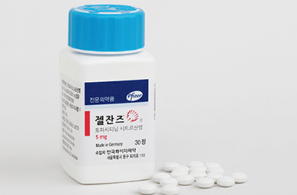
- Pfizer’s rheumatoid arthritis drug Xeljanz TabDespite the five year await for Xeljanz’s patent expiry, an increasing number of companies are abandoning sales of the generic versions of their rheumatoid arthritis treatment ‘Xeljanz.’This is largely attributed to drastic changes in the competitive landscape compared to the time of development. Some in the industry point to the negative consequences of so-called “blind approvals,” where companies follow competitors without question.According to the Ministry of Food and Drug Safety (MFDS) on the 14th, the license for Youngil Pharm’s Youngil Tofacitinib Tab 5 mg (tofacitinib aspartate) expired on the 14th and was removed from the product registry. This marks the 29th tofacitinib product to expire without renewal.By March, an additional six products are scheduled to expire, suggesting that more companies may forgo renewal.Of the 45 products that remain approved, only 14 have been listed for reimbursement.This situation reflects how the market environment changed dramatically during the 5-year wait for the original product’s substance patent expiry.Generic manufacturers attempted to bypass the extended substance patent by developing salt variants. Had this strategy succeeded, launch would have been possible after November 23, 2020, instead of waiting until the original substance patent expired on November 23, 2025.However, after legal disputes, the Supreme Court ruled in favor of the originator, Pfizer. The latecomers who received approval in 2020 had to wait until the substance patent expiry date of November 23, 2025.As a result, companies spent five years unable to launch, merely waiting for patent expiry. When the patent finally expired in November last year, several companies launched their products.However, the market had changed substantially compared to five years earlier. While Xeljanz became a blockbuster product generating sales in the KRW 10 billion range due to expanded reimbursement, its growth faced limitations as strong competitors emerged.New JAK inhibitors like Lilly's Olumiant and AbbVie's Rinvoq have entered the market since then. According to 2024 UBIST outpatient prescription data, Xeljanz recorded KRW 14.3 billion, Olumiant KRW 17.1 billion, and Rinvoq KRW 26.1 billion, showing Olumiant and Rinvoq surpassed Xeljanz in terms of sales.Furthermore, to counter latecomers, Pfizer released a more convenient extended-release formulation for Xeljanz, making it even harder for competitors to challenge it. The extended-release formulation, Xeljanz XR Tab 11mg, also holds a patent valid until March 12, 2035.As a result, more generic manufacturers are choosing not to renew their approvals despite the original drug’s substance patent expiry.Some point out that this incident highlights one of the drawbacks of the ‘blind approval’ system for latecomers. Many domestic pharmaceutical companies operating primarily in generics tend to develop products simply in line with the original drug’s patent expirations.Moreover, under Korea’s patent-linkage system, the first generic applicants that successfully bypass patents are granted nine months of market exclusivity. This has triggered a rush of follow-the-leader development, where competitors simply follow suit once a rival starts developing a generic.An industry executive commented, “In the case of some Xeljanz generics, the market has certainly changed, but fundamentally, the problem lies in companies blindly following competitors instead of pursuing independent business strategies, which has now backfired.”
- Policy
- 3-month import suspension for PCV 'Prevenar 20'
- by Lee, Tak-Sun Jan 14, 2026 09:32am
- Product photo of 'Prevenar 20 Pre-filled Syringe' The imported pneumococcal vaccine 'Prevenar 20 Pre-filled Syringe' will be subjected to a three-month suspension of import operations starting on the 12th. However, no issues are expected regarding its supply.This is interpreted as having sufficient existing imported inventory. As this vaccine is the most in-demand in the pneumococcal vaccination market, concerns about supply instability arose following the import suspension.The Ministry of Food and Drug Safety (MFDS) announced that the import operations for Prevenar 20 Pre-filled Syringe (Pneumococcal 20-valent Conjugate Vaccine [Diphtheria CRM197 Protein]) will be suspended for three months, from the 12th of this month to April 11th.The administrative measure was issued in accordance with relevant laws after it was confirmed in June last year that needles of a different specification than the authorized ones were being used.At that time, the MFDS distributed a safety letter ordering a temporary suspension of use. Pfizer faced significant challenges just as it launched a new product.However, after the issue was resolved, the product was initially supplied to the market through co-promotion with Chong Kun Dang. In October of that year, the supply was expanded as it was selected for the National Immunization Program (NIP) for infants from 2 months to children under 5 years of age. Once chosen for the NIP, eligible recipients can receive the vaccination free of charge.Concerns arose following the news of the sudden import suspension, but it has been confirmed that there are no issues with the supply.The MFDS stated, "Currently, there are no cases reported to the MFDS regarding the supply of this item," and added, "It has been confirmed by the company that there are no supply-related issues."Because this vaccine is used in the NIP and adult vaccinations are increasing, it seems that sufficient inventory was secured before the suspension. However, some question the effectiveness of the administrative measure, noting that if inventory is adequate, a fine should have been imposed rather than an import suspension.Prevenar 20 is the first new pneumococcal vaccine introduced by Pfizer in 14 years, adding seven serotypes (8, 10A, 11A, 12F, 15B, 22F, and 33F) to the previously available Prevenar 13.This vaccine is expected to replace the existing Prevenar 13. While competing products include Prodiax 23 and Vaxneuvance, Prevenar 20 is anticipated to take No.1 in the market, given that the previous Prevenar 13 has dominated with an outstanding market share.

- Policy
- Keytruda reimb extended… estimated claims of KRW 2 trillion
- by Jung, Heung-Jun Jan 14, 2026 09:31am
- While coverage has been strengthened with the expansion of reimbursement this month of the immuno-oncology drug Keytruda (pembrolizumab), the reimbursement expansion is expected to generate a record-high projected claims amount of KRW 238.4 billion, lighting warning signals for the management of Korea’s National Health Insurance finances.At the end of last year, the Ministry of Health and Welfare announced estimates that approximately KRW 1 trillion would be saved through its drug pricing system reform.However, when viewed in terms of net financial impact, the increase in claims for this single drug now accounts for roughly 20–25% of the savings generated from price cuts on listed generics.This is why calls are growing for stronger post-listing control, as more multi-indication blockbuster drugs enter Korea’s reimbursement system.According to industry sources on the 13th, the estimated reimbursement claims for MSD Korea’s immuno-oncology drug Keytruda represent the largest amount ever recorded, exceeding the KRW 2.2 trillion recorded for Paxlovid.This reflects the significant impact the drug is expected to have on national health insurance finances. Previously, Keytruda had been reimbursed for four cancer types, including non-small cell lung cancer. However, starting this year, reimbursement has been expanded to cover 17 regimens across nine cancer types, including head and neck cancer.The number of patients covered is expected to gradually increase from 3,258 to 6,680. Accordingly, the projected claim amount is expected to rise from KRW 178.8 billion in the first year to KRW 238.4 billion.In 2022, Keytruda successfully expanded coverage for first-line treatment of non-small cell lung cancer, among other indications. At that time, the Ministry of Health and Welfare estimated annual claims of KRW 1.762 trillion.Since then, Keytruda, which already generates annual sales exceeding KRW 400 billion as a single product, has continued to expand its reimbursement coverage, growing its market presence.The fact that coverage, previously concentrated on NSCLC, now extends to various cancer types, including female cancers, is welcome news for patients. However, the burden on health insurance finances is inevitably growing.The NHIS also states it will strengthen post-monitoring in consideration of the financial impact. As similar cases are expected to increase gradually, it is also contemplating enhanced post-approval management measures.An NHIS official said, “For new drugs with expanded reimbursement coverage, post-management is conducted through the price-volume linkage system. While other institutions may also have financial management measures in place, NHIS is considering additional post-management strategies as well.”
- Policy
- MFDS approves Servier’s Voranigo Tab in KOR
- by Lee, Tak-Sun Jan 14, 2026 09:31am
- The Ministry of Food and Drug Safety (MFDS, Minister Yu-kyoung Oh) announced on the 13th that it has approved Servier’s imported orphan drug ‘Voranigo Tab (vorasidenib) 10mg·40mg.’This drug is indicated for the treatment of Grade 2 astrocytoma or oligodendroglioma that have a susceptible isocitrate dehydrogenase-1 (IDH1) or isocitrate dehydrogenase-2 (IDH2) gene mutation in pediatric and adult patients aged 12 years and older weighing at least 40 kg, following surgery, including biopsy, major resection, or complete resection.A biopsy refers to the procedure in which a portion of tissue or cells is collected and examined under a microscope for diagnostic purposes.IDH (Isocitrate Dehydrogenase) mutations cause the abnormal production of excessive metabolic substances (2-HG), which promote the growth and survival of cancer cells.Astrocytoma and oligodendroglioma are types of gliomas, tumors arising from glial cells in the brain and spinal cord. Gliomas are a major category of brain tumors.Voranigo is an IDH-targeted therapy that inhibits mutated IDH1 and IDH2, thereby reducing the production of the carcinogenic substance 2-hydroxyglutarate (2-HG) and suppressing tumor cell proliferation. The Ministry of Food and Drug Safety expects the new approval to provide a new treatment opportunity for patients with brain tumors that are positive for IDH1 or IDH2 mutations.
- Policy
- Reimb re-evaluation active ingredient results to be unveiled
- by Jung, Heung-Jun Jan 14, 2026 09:31am
- The announcement of active ingredients subject to this year's reimbursement re-evaluation is expected to change slightly from the previously mentioned seven ingredients. This is due to changes in the re-evaluation selection criteria.According to industry sources on the 14th, an agenda regarding the 2026 reimbursement re-evaluation is scheduled to be tabled at tomorrow's Drug Benefit Evaluation Committee (DBEC) meeting.Furthermore, the re-evaluation selection criteria are expected to be discussed. The criteria regarding the number of countries where the drug is listed and the scale of the claimed amount will be removed. Ingredients that need re-evaluation of their clinical usefulness are expected to be included.When the government announced the drug price system reform plan last November, it pre-announced a restructuring of the criteria to include: ▲ active ingredients for which health authorities in A8 countries have initiated clinical or reimbursement adequacy re-evaluations ▲ cases where data or clinical evidence conflicting with previously reported efficacy has been published ▲ medications for which the necessity of re-evaluation has been suggested by academic societies and experts.This means that instead of classifying by listing countries or claim scale as in the past, active ingredients assessed to require a review of clinical usefulness will be designated for re-evaluation.The Health Insurance Review and Assessment Service (HIRA) is expected to listen to the opinions of institutions and academic societies and further strengthen its monitoring role regarding changes in claiming trends.If the reimbursement re-evaluation criteria are revised after passing through the DBEC and the Health Insurance Policy Review Committee, the preparation of additional procedures, such as an expert advisory committee for reviewing ingredient designation, is also anticipated.Additionally, the results of the reimbursement re-evaluation will be simplified to either "reimbursement exclusion" or "selective reimbursement." This means that the breakthrough of maintaining reimbursement through voluntary drug price cuts by pharmaceutical companies will no longer exist.If clinical adequacy cannot be proven, it is expected to lead to either an exit from insurance coverage or a change in patient co-payments.The seven ingredients discussed as targets for this year's re-evaluation at last year's HIPDC subcommittee were Ginkgo biloba leaf dried extract, dobesilate calcium hydrate, kallidinogenase, meglumine gadoterate, diacerein, Afloqualone, and octylonium bromide.Because the reimbursement re-evaluation criteria are changing, some fluctuations are expected in the seven ingredients selected based on the previous criteria. Meanwhile, this DBEC meeting is the first since the replacement of the 10th-term members. The committee has launched with 74 members, including Professor Seung Hyuk Choi of Samsung Medical Center, Professor Kim Seong-hwan of Seoul St. Mary's Hospital, Professor Seh-Hyon Song of Kyungsung University College of Pharmacy, and Professor Hyunah Kim of Sookmyung Women's University College of Pharmacy.
- Policy
- Three-month import suspension for Pfizer’s Prevnar 20
- by Lee, Tak-Sun Jan 13, 2026 06:58am
- Pfizer’s pneumococcal vaccine ‘Prevnar 20 Prefilled Syringe’ is subject to a three-month import suspension in Korea.The administrative action was imposed for importing and selling products that differed from the product specifications and standards described in the marketing authorization.On the 12th, the Ministry of Food and Drug Safety (MFDS) announced that it will suspend the import operations of Prevnar 20 Prefilled Syringe (Pneumococcal Diphtheria CRM197 Protein Conjugate Vaccine) for three months, from today through April 11.The MFDS explained that the action was taken because the company imported and sold products that differed from the product standard and specifications described in the marketing authorization.In June last year, the MFDS issued a safety letter and temporarily suspended the use of Prevnar 20 products that were supplied with injection needles that did not match the approved specifications.The vaccine is designed to be administered by attaching the enclosed needle to the syringe. While the approved needle length is 25 mm, the enclosed needles supplied were shorter, at 16 mm.At the time, the action was taken shortly after the product had entered the market. The current administrative penalty is understood to be a follow-up action based on the results of that investigation.Prevnar 20 is Pfizer’s first new pneumococcal vaccine in 14 years. It adds seven serotypes (serotypes 8, 10A, 11A, 12F, 15B, 22F, 33F) to the existing Prevenar 13 vaccine.

- Policy
- Lee administration’s bio-industry support plan revealed
- by Kang, Shin-Kook Jan 12, 2026 03:58pm
- The government is launching large-scale investment and policy support for the bio industry this year as part of its efforts to restore economic growth and secure future growth engines.On January 9, the government held the 2026 National Economic Growth Strategy Public Briefing at the Chungmu Room of the Blue House, presided over by President Jae-myung Lee, where it finalized and announced this year’s national growth strategy.Under the bio-industry development policy, the government will establish a National Bio Innovation Committee under the Prime Minister and announce a provisional Bio Industry Policy Roadmap in the first quarter of this year.President Jae-myung Lee is attending the 2026 National Economic Growth Strategy Public BriefingThe National Bio Innovation Committee will integrate and operate the National Bio Committee (chaired by the President) and the Bio-Health Innovation Committee (chaired by the Prime Minister).To support new drug development and commercialization, the government will expand regulatory review staff and accelerate approval timelines for medical products, while simplifying clinical trial and data submission procedures.The government's plan is to reduce the current approval review periods—420 days for new drugs, 406 days for biosimilars, and 398 days for new medical devices—to 240 days. Furthermore, criteria for exempting biosimilars from Phase III trials will be established this year.Comprehensive support measures covering finance, R&D, regulation, and location will also be implemented to help bio companies expand their global reach. First, ‘Bio Sector Mega Project’ will be established and promoted through the National Growth Fund. R&D support will also be provided for the entire lifecycle (development-clinical trials-approval) of advanced medical devices in six promising fields (medical robots, implants, etc.).Support for open innovation will be expanded to promote joint technology development between pharmaceutical companies and biotech ventures. The government will also pursue the enactment of a provisional Digital Healthcare Act to enhance the use of healthcare data and will upgrade existing bio-health clusters, such as advanced medical complexes, through infrastructure sharing and joint research.Furthermore, it will apply regulatory exemptions for data utilization to AI bio innovation hubs and establish a National Bio Data Integration System to lay the groundwork for data sharing and utilization. To this end, it will also push for the enactment of the proposed Bio Data Act.

- Policy
- Max ICER for cancer drugs exceeds KRW 50 million
- by Jung, Heung-Jun Jan 09, 2026 08:36am
- As a result of cost-effectiveness evaluations of drugs submitted for economic assessment, the median incremental cost-effectiveness ratio (ICER) for anticancer drugs has remained relatively stable at around KRW 40 million over the past 10 years.However, over the last four years, the maximum ICER has exceeded KRW 55 million, suggesting that the ICER threshold is declining depending on the drug.According to the 'Cost-effectiveness results of drugs submitted for pharmacoeconomic assessment' released by the Health Insurance Review and Assessment Service (HIRA) on January 8, the median ICER for anticancer drugs has not fluctuated significantly, even after the acceptance limits were raised in 2014.Median ICER values for anticancer drugs: The median ICER for anticancer drugs from 2014 to 2021 was KRW 45.32 million. For the 2018–2022 period, it was KRW 39.99 million; for 2019–2023, KRW 39.93 million; and for 2020–2024, KRW 42.94 million.Since 2022, HIRA has announced the median, minimum, and maximum ICER values for general drugs, anticancer drugs, and orphan drugs across four reporting cycles.The median ICER for anticancer drugs from 2014 to 2021 was KRW 45.32 million. For the 2018–2022 period, it was KRW 39.99 million; for 2019–2023, KRW 39.93 million; and for 2020–2024, KRW 42.94 million.overlapping periods, the median ICER for anticancer therapies is consistently in the low-to-mid KRW 40 million range.Notably, the maximum ICER value, which had never previously exceeded KRW 50 million, surged to KRW 55.36 million in the 2020–2024 data. This suggests that the authorities are flexibly recognizing the cost-effectiveness of essential anticancer drugs and strengthening coverage.Maximum ICER values for anticancer drugs.The anticancer ICER data for 2020–2024, announced last month, covers eight active ingredients. The drugs that broke through the KRW 50 million ceiling are likely those subject to 'flexible threshold application,' such as Enhertu or Trodelvy, before and after innovative ICER standards were introduced.Given the timing and pricing, Enhertu, a targeted therapy for breast cancer, appears to be the most likely candidate for the record-high maximum value.Upward trend of ICER values over the past decade is also observed in orphan drugs. Specifically, the minimum ICER for rare disease drugs has increased sharply. This reflects the growing prevalence of high-priced orphan drugs compared to the past.The minimum ICER for rare disease drugs rose from KRW 23.16 million (2014–2021) to KRW 39.97 million (2020–2024). The cost-effectiveness of orphan drugs is now approaching KRW 40 million, with a strong upward trajectory.In the 2020–2024 ICER evaluation results, the median for orphan drugs was not disclosed because it included only three rare disease drug active ingredients, which could have led to the identification of specific products.
- Policy
- AZ’s gMG candidate ‘gefurulimab’ receives GIFT designation
- by Lee, Tak-Sun Jan 09, 2026 08:36am
- AstraZeneca's ‘gefurumab,’ its new drug candidate for myasthenia gravis, has been selected for fast-track review support by Korea’s Ministry of Food and Drug Safety (MFDS).This designation is expected to accelerate its commercialization.On the 5th, the MFDS announced that AstraZeneca’s gefurulimab had been designated as the 63rd product under the GIFT (Global Innovative product on Fast-Track) program.GIFT is a fast-track review program operated by the MFDS since September 2022 to provide patients with new treatment opportunities through expedited product development support.Products eligible for GIFT designation include drugs for life-threatening diseases, rare diseases with no existing treatment alternatives, and innovative new drugs developed by certified innovative pharmaceutical companies.The MFDS designates GIFT products through a comprehensive evaluation of factors such as innovative therapeutic benefit, contribution to public-health crisis response, and the developer’s R&D efforts.Selection into GIFT reduces the review period by at least 25% (from 120 working days to 90 working days).This is achieved by applying a rolling review process, where submitted data are reviewed first, and close communication between reviewers and developers, which is facilitated through product briefings and supplementary explanations. Additionally, companies receive various supports for rapid commercialization, such as specialized regulatory consulting.AstraZeneca announced positive results last July from the Phase III PREVAIL trial, which evaluated the use of gefurulimab in adult patients with anti-acetylcholine receptor (AChR) antibody-positive generalized myasthenia gravis (gMG). Gefurulimab met the primary endpoint and all secondary endpoints in the trial.Gefurulimab is a terminal complement inhibitor that selectively binds to both complement protein C5 and serum albumin. It is a novel bispecific nanobody drug candidate optimized for self-administered subcutaneous injection to treat anti-acetylcholine receptor antibody-positive generalized myasthenia gravis (gMG).Generalized myasthenia gravis is a chronic autoimmune neuromuscular disorder, a rare disease causing muscle function loss and severe muscle weakness.Gefurulimab has been favorably evaluated for its convenience, as it allows once-weekly self-administration, compared with existing treatments for adult myasthenia gravis, such as Ultomiris and Soliris.AstraZeneca Korea's status as a Korean Innovative Pharmaceutical Company influenced gefurulimab’s selection for the GIFT program.This drug has not yet received approval from advanced overseas regulatory agencies such as the US FDA, Europe’s EMA, or Japan’s PMDA. The Ministry of Food and Drug Safety (MFDS) applied its fast-track review program ahead of these overseas agencies.However, the US FDA has designated this drug as an orphan drug and is providing support. The MFDS also designated this drug as a development-stage orphan drug this month.To date, 49 of the drugs designated as GIFT have received marketing authorization.
