
- LOGIN
- MemberShip
- 2026-04-25 01:06:13
- Policy
- Upcoming drug price reduction
- by Lee, Jeong-Hwan Jan 23, 2026 08:39am
- Major domestic pharmaceutical companies and mid-sized firms are repeatedly requesting modifications to the drug price reform plan, which was announced by the Ministry of Health and Welfare (MOHW) for implementation this year. The requests include a delay in its implementation and adjustments to the price reduction rates.The MOHW has yet to provide a clear response regarding the industry’s requests for a delay, changes to the reduction rates, or revisions to the preferential pricing details. Instead, the MOHW appears to be maintaining its "original plan to finalize the decision at the Health Insurance Policy Review Committee within the first quarter."In response, members of the National Assembly's Health Insurance Policy Review Committee, from the opposition party, plan to mediate between the pharmaceutical industry and the MOHW by hosting policy forums.On the 22nd, Rep. Baek Jong-heon of the People Power Party, alongside Reps. Han Ji-ah and Ahn Sang-hoon, will co-host a policy forum on drug price system reform on the 26th,. The forum will be organized by the Korea Pharmaceutical and Bio-Pharma Manufacturers Association (KPBMA).During the forum, Attorney Park Kwan-woo from Kim & Chang will analyze the impact of the MOHW's drug price reform on public health, and Attorney Kim Hyun-wook from Shin & Kim LLC will present on sustainable measures to improve the drug price system.In the subsequent panel discussion, representatives from large domestic pharmaceutical companies, as well as the Korea Pharmaceutical Industry Cooperative, representing mid-sized and small firms, will participate to demand a delay in implementation, adjustments to the reduction rates, and revisions to the MOHW's preferential pricing plan.Specifically, the industry representatives, including Yoon Jae-Chun, Vice Chairman of Daewoong Pharmaceutical; Young-Joo Kim, CEO of Chong Kun Dang Pharm; and Cho Yong-jun, Chairman of the Korea Pharmaceutical Industry Cooperative, will be attending. From academia and patient groups, Professor Hye-Young Kwon of the Department of Health and Medical Administration at Mokwon University and Yoon Gu-hyun, President of the Korean Association for the Study of Liver, will attend. Yeon-sook Kim, Head of the Pharmaceutical Management Division at the MOHW, will represent the government.Attention is focused on whether this forum, which aims to seek a balance between the sustainability of health insurance and the development of the pharmaceutical and biotech industries, can narrow the gap in perspectives between the industry and the government.Multiple industry sources are appealing to the MOHW to accept the industry's proposed modifications proactively. The top priority for the pharmaceutical industry is delaying the committee's approval of the reform plan, currently scheduled for next month (February).On November 28 last year, the MOHW publicly announced the reform plan, which centers on cutting generic drug prices, and reported the implementation schedule to the committee.Several domestic pharmaceutical companies maintain that the implementation plan is too rushed, failing to ensure the predictability necessary for business management.The pharmaceutical industry is also demanding that the price-reduction rates for already-listed drugs (generics) be minimized. While the MOHW plans to lower the current generic price calculation rate from 53.55% to the 40% range, the industry argues this cut is excessive and insists it should be set at 48% to 50%.Additionally, they have requested that the implementation timing for generics listed since the 2012 price cuts be pushed back sufficiently to ensure predictability, and that the details of the preferential pricing plan be revised through consultation with the industry.An official from a top-tier domestic pharmaceutical company said,"It is frustrating that specific consultations or coordination of opinions between the MOHW and the industry regarding the reform plan have not yet taken place," adding, "We have requested several times that the short time between the announcement and the implementation date undermines predictability. A delay in the committee's approval is necessary."Another official from a top-tier company added, "Although several forums regarding the drug price reform have been held in and around the National Assembly, the atmosphere remains unclear as to whether the government will modify its plan or accept the industry's demands. If the drug price reform aims to foster the domestic pharmaceutical industry, the MOHW needs to commit practical and proactive consultations with the sector."
- Policy
- 'Key is in compensating innovation that exceeds price cuts'
- by Lee, Jeong-Hwan Jan 22, 2026 08:22am
- Director Yeon-sook Kim explains the drug pricing system reform plan.“While the media has largely focused on how the upcoming drug pricing system reform plan involves adjustments and reductions in drug prices, the true core of the policy is a fundamental strengthening of innovation-based compensation for pharmaceutical R&D beyond mere adjustments Whether it's a new drug or a generic, if it demonstrates innovation, we will increase drug price compensation and extend the preferential period from the current one year to three years plus alpha, creating a virtuous cycle of innovation in the pharmaceutical industry.”The Ministry of Health and Welfare reiterated its stance that the core keywords of the drug pricing system reform plan announced for implementation this year are ‘innovative new drugs’ and ‘resolving supply instability,’ and that it will enhance the tangibility of preferential drug pricing incentives for pharmaceutical companies that achieve these goals.This involves establishing a drug pricing compensation structure proportional to the level of investment in new drug R&D and extending the preferential period from the current one year to ‘three years or more.’Regarding resolving supply instability, the government announced plans to guarantee preferential treatment for up to 10 years for drugs using self-manufactured APIs and for essential medicines made with domestic APIs.The Ministry's policy is to overhaul the post-listing drug price control system to enhance predictability for pharmaceutical companies while reducing the administrative burden on the government.Kim outlined the reform and its operational roadmap on the 21st at the 55th Dailypharm Future Forum held at the Catholic University of Korea’s Songeui Campus Institute of Biomedical Industry.“The current pricing system has limitations in supporting innovation and essential drug stability”The Ministry of Health and Welfare maintains that the current drug pricing system has clear limitations in reliably ensuring the creation of innovative new drugs and stable patient access to essential medicines.It was further diagnosed that, compared to other countries, South Korea's generic drug prices are relatively high, leading to stagnation in innovation through new drug R&D.The ministry believes that many pharmaceutical companies remain entrenched in business models centered on high generic drug prices, neglecting new drug R&D.At the same time, population aging and rising pharmaceutical expenditures have significantly increased drug spending, making it increasingly difficult to strike a balance between fostering an innovation-based pharmaceutical industry ecosystem and ensuring the sustainability of the National Health Insurance system.“Drug price reform to foster a new drug ecosystem and ensure a stable supply of essential medicines”To strengthen the new drug development ecosystem, the ministry plans to shorten the reimbursement listing period for rare disease treatments to within 100 days and to advance cost-effectiveness evaluations for treatments targeting severe and intractable diseases.To facilitate the early domestic introduction of innovative medicines, the scope of the flexible drug pricing contract system should be expanded, and compensation should be provided proportional to the level of innovation creation efforts, such as new drug R&D.This includes strengthening R&D-linked pricing incentives and ensuring stable preferential periods.For essential medicines, the ministry will overhaul the exit-prevention drug system across the entire lifecycle, strengthen the effectiveness of preferential treatment for essential drugs, and reinforce coordination between relevant policies.Through a public–private consultative body, supply stability medicines will be monitored throughout their lifecycle and addressed proactively.The government will also strengthen monitoring of pharmaceutical supply and distribution and implement tailored measures based on the causes of shortages.In particular, for medicines with unstable supply, the government plans to support substitution prescribing and dispensing at the national level.“Generic pricing rate to be adjusted to the 40% range… stepwise cuts to apply from the 11th product”The most controversial part of the reform among domestic pharmaceutical companies is the rationalization of price management.The ministry plans to revise the pricing structure based on international benchmarks, with the key change being a reduction of the generic pricing rate from the current 54.55% to the 40% range.The stepwise price reduction system will also be strengthened. Currently, stepwise cuts apply from the 21st product of the same ingredient, with the price set at 85% of the lowest price.Under the reform, price cuts will apply from the 11th product, and the reduction rate will be set at an additional 5 percentage points below the first generic price.The Ministry of Health and Welfare anticipates that this reform will significantly increase the perceived benefits for pharmaceutical companies by applying price premiums primarily to those contributing to new drug innovation and supply stability.For price reductions of already-listed generics, items maintaining a price level of 53.55% since the 2012 blanket price reduction adjustment will be sequentially reduced over three years.The post-listing management system will standardize the timing for adjusting price reductions linked to expanded usage and price-volume linkage agreements. Actual transaction price surveys will be restructured to a market competition-linked model. The reimbursement adequacy reassessments will be restructured around clinical evidence.Kim emphasized, “Korea is at a critical moment, both a crisis and an opportunity, to build an innovative new drug ecosystem. We will raise pricing rewards for innovation and significantly extend preferential periods to send a clear signal toward innovation.”She added, “Even if a product is not a new drug, it will receive preferential pricing if it contributes to a stable supply of essential medicines. For exit-prevention drugs, we will collaborate with organizations like the Korea Pharmaceutical and Bio-Pharma Manufacturers Association and the Health Insurance Review and Assessment Service to identify tasks for improving drug pricing levels or systems after conducting research studies. We will ensure that the number of generic items remains at an appropriate level, avoiding excessive proliferation.”“When too many products of the same ingredient are listed at once, prices will be adjusted according to stepwise criteria after an appropriate period. For already-listed products, prices that have remained high since 2012 will be reduced gradually and sequentially over three years.”
- Policy
- Gov't addresses unstable supply of essential drug·API
- by Lee, Jeong-Hwan Jan 22, 2026 08:22am
- To strengthen response to drug supply instability this year, the government is expanding support for pharmaceutical companies producing items in short supply, improving self-sufficiency in active pharmaceutical ingredients (APIs), and enhancing the manufacturing capabilities for biopharmaceutical raw materials and components.On the 20th, Yim Kang-seop, Head of the Division of Health Industry at the Ministry of Health and Welfare (MOHW), met with the Korea Special Press Association to explain measures to address the supply chain crisis facing the pharmaceutical and biotech industries.To address structural limitations in the drug supply system, the MOHW has secured a total budget of KRW 15.6 billion for this year and is pursuing five projects.The projects include support for production facilities and equipment for companies supplying drugs with unstable supply, support for stockpiling core medicines, support for diversifying API procurement, user testing support for bio-based raw materials and components, and manufacturing support for domestic raw materials and components.First, the MOHW will increase the number of pharmaceutical companies receiving budget support for producing drugs with unstable supply from 1 last year to 4 this year.This project, launched for the first time last year, currently supports 'Boryung Questran Powder For Suspension (Cholestyramine resin),' a bile acid sequestrant-based hyperlipidemia treatment, and the only drug safe for use by pregnant women and children.Yim plans to reorganize the program to allow subsidy support for up to two years, taking into account the actual time required for pharmaceutical companies' demand and equipment setup, while also increasing the number of target items.To produce API domestically, new projects starting this year include support for diversifying raw material procurement, which helps consortia between raw material suppliers and finished product manufacturers, and a project to cover stockpiling costs to ensure a stable supply of medicines even during crises.In collaboration with the Korea Health Industry Development Institute (KHIDI), the MOHW will also launch initiatives for user testing and manufacturing support to promote the use of domestically produced biopharmaceutical raw materials and components.Yim explained, "Korea's self-sufficiency rate for API is currently low, in the low 20% range. He noted that dependence on specific countries, such as China and India, is high, and that supply chain risks are growing as countries shift toward protectionist trade policies," adding, "To resolve these structural issues, the ministry is launching new projects this year to directly support supply chain stability, including the localization of raw materials and components, stockpiling core medicines, and user testing for bio-based materials.Yim added, "The ministry is ensuring that preferential drug pricing for the use of domestic raw materials and essential medicines is reflected in the drug price system reform plan. The goal is to create a structure that links budget support not only to simple raw material procurement but also to the improvement of facilities and equipment. Enhancing overall supply chain stability remains the core of this year's projects."Yim emphasized, "The issue of localizing and increasing the self-sufficiency rate of raw materials and bio-based components has been repeatedly pointed out during parliamentary audits," and added, "The MOHW will establish a research commission to develop a roadmap for API self-sufficiency and identify additional tasks through a two-track strategy that links the budget to pharmaceutical policies."
- Policy
- MFDS reviews mutagenicity of clarithromycin impurity
- by Lee, Tak-Sun Jan 21, 2026 09:07am
- While investigations into nitrosamine impurities in the antibiotic clarithromycin are underway, the Ministry of Food and Drug Safety (MFDS) is reportedly also reviewing their mutagenicity.The European Medicines Agency (EMA) has already concluded that the clarithromycin-related nitrosamine impurity is non-mutagenic.If the MFDS also concludes that there is no mutagenicity, the threshold for excessive nitrosamine detection in clarithromycin would be removed, making quality control significantly easier for the pharmaceutical industry.According to the MFDS on the 20th, nitrosamine impurities (N-nitroso-N-desmethyl clarithromycin) were detected in excess in finished drug products using clarithromycin ingredients from India. Consequently, the MFDS has ordered an investigation into 77 companies holding related items.The MFDS orders an investigation within one month for known impurities and a three-month investigation for relatively unknown impurities.The threshold for nitrosamine impurities in clarithromycin has already been established. In December 2023, the acceptable intake was set at 1,500 ng per day.An official from the MFDS stated, "Impurities were first detected in raw materials from India, and excessive amounts were also confirmed in one domestic finished drug product using those materials. We have therefore issued investigation orders to all companies with relevant items."Upon receiving reports of the investigation results from these companies, the MFDS will review usage patterns and supply status before ordering product recalls.However, it has been noted that the MFDS is also reviewing the mutagenicity (a chemical reaction to cause genetic mutations) of the clarithromycin nitrosamine impurity.While the European EMA has already concluded it is non-mutagenic, the U.S. FDA is currently conducting review.If the impurity is determined to be non-mutagenic, it would no longer pose a regulatory issue, even if detected in excess, since the acceptable limit would be deleted.The MFDS official explained. "We are conducting the mutagenicity review and the impurity investigation concurrently," adding, "If the conclusion that clarithromycin nitrosamine is non-mutagenic had reached first, this investigation would not have taken place."Meanwhile, clarithromycin is a widely used antibiotic for infections of the upper and lower respiratory tracts.
- Policy
- Generic development for low-strength Rosuzet to begin soon
- by Lee, Tak-Sun Jan 20, 2026 07:54am
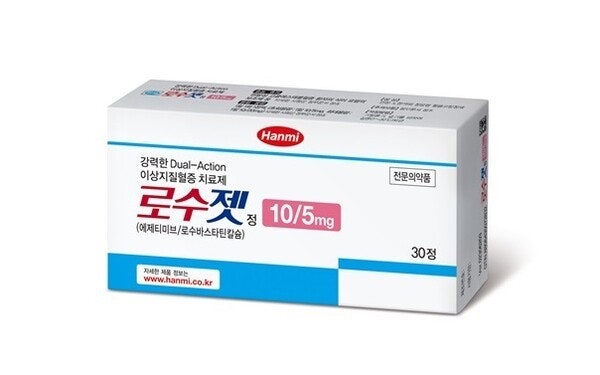
- Hanmi's Rosuzet TabDevelopment of generic versions of Hanmi Pharmaceutical’s low-strength combination lipid-lowering drug Rosuzet has begun, as its re-examination period is set to end in September next year.The low-strength Rosuzet formulation, which combines rosuvastatin 2.5 mg and ezetimibe 10 mg, was approved in September 2021 and designated as a re-examination drug for six years.The Ministry of Food and Drug Safety (MFDS) approved Shinil Pharma’s bioequivalence study for its generic candidate SIL1124 on the 13th. The reference drug is Rosuzet 10/2.5 mg, and the study will be conducted in 60 healthy adult volunteers.This marks the start of generic development for Rosuzet 10/2.5 mg. The product was approved on September 24, 2021, and its re-examination period will end on September 23, 2027.Generic applications may be submitted only after the re-examination period expires. The initiation of the bioequivalence study is therefore viewed as part of preparations to meet the regulatory filing timeline. In addition to Shinil Pharma, more companies will likely begin bioequivalence studies in the near future.More than 50 pharmaceutical companies have already expressed interest in developing their generic versions.In addition to the re-evaluation exclusivity period, patents listed in the Green List (specifically, an oral combination tablet containing ezetimibe and rosuvastatin, scheduled to expire on November 29, 2036) are also one hurdle for generic developers.As a result, many generic companies have launched patent challenges. To date, a total of 56 patent avoidance (non-infringement confirmation) trials, including one filed by Shinil Pharma, are currently pending before the Intellectual Property Trial and Appeal Board.If the Patent Trial and Appeal Board rules in favor of the generic companies, this will resolve their patent issues. They could then launch generic versions by September next year, upon expiry of the re-examination period.Low-strength Rosuzet gained rapid popularity following its launch, as it reduces the risk of adverse events such as diabetes and myopathy associated with high-dose statin therapy, while offering superior efficacy compared to statin monotherapy. The product is reported to generate annual sales exceeding KRW 20 billion.Hanmi Pharmaceutical demonstrated Rosuzet’s efficacy and safety through a Phase III clinical trial involving 279 Korean patients. The study was published in the online edition of the international journal Clinical Therapeutics.Currently, 12 products containing the same active ingredients as low-strength Rosuzet have already been approved. However, these products are not generics that completed bioequivalence studies using Rosuzet 10/2.5 mg as the reference drug; instead, they were approved as data-submission products based on independent clinical trials. Their re-examination periods are also identical to those of Rosuzet 10/2.5 mg.As the recent trend in new drug development shifts toward anticancer agents and orphan drugs, new drugs for chronic diseases like hypertension, hyperlipidemia, and diabetes have become scarce. As a result, domestic generic companies that rely on physician-centered marketing of generic chronic disease drugs are facing growing limitations in business development.In this environment, the upcoming expiration of exclusivity for a blockbuster drug like low-strength Rosuzet is expected to draw strong interest from generic manufacturers. Accordingly, generic activity is expected to accelerate ahead of the re-examination expiry in July next year.
- Policy
- ‘Will create first FDA-approved Korean drug by 2030’
- by Lee, Jeong-Hwan Jan 19, 2026 09:02am
- Amid the Ministry of Health and Welfare's ambition to foster Korea’s pharmaceutical industry by establishing a new dedicated “Division of Pharmaceutical and Bio Industry,” Kang-Seop Lim, its first director, expressed his ambition. He said, “We will create cases where domestically developed new drugs independently obtain approval from the U.S. Food and Drug Administration (FDA).”Rather than relying on licensing-out deals to global pharmaceutical companies for overseas market entry, what the government wants to do is support Korean pharmaceutical firms in completing Phase III clinical trials and securing FDA approval on their own, paving the way for direct global commercialization of Korean blockbuster drugs.On the 18th, Director Lim met with the Ministry of Health and Welfare's press corps and stated, “Our goal is to create a successful case of a fully developed Korean drug completing Phase III trials, securing FDA approval, and being sold directly in the U.S. market within five years. We will make this year the starting point, with the aim of achieving this milestone by 2030.”When asked what administrative priorities he would focus on this year as the inaugural head of the new division, Director Lim cited “developing a finished new drug that successfully completes Phase III clinical trials, secures FDA approval, and achieves direct sales” as the top priority.While the ministry will continue to support technology licensing deals, Lim emphasized that the new policy direction is focused on enabling Korean-developed drugs to enter global markets independently, without relying on multinational pharmaceutical companies.To this end, MOHW will operate a dedicated fund specifically supporting Phase III clinical trials for new drug candidates showing potential for final regulatory approval.The Ministry has already allocated KRW 60 billion in government capital in this year's budget proposal for this purpose. Combined with matching funds from the Fund of Funds, it plans to establish a ‘Phase III Clinical Trial Specialized Fund’ totaling KRW 150 billion.Lim said, “Last year, Korea recorded its highest-ever technology licensing exports, yet there are still very few cases of fully developed Korean drugs being launched overseas. Now is the time for Korea to take the lead in completing Phase III clinical trials and securing FDA approval.”“Looking at the K-Bio Vaccine Fund, roughly 50% went to preclinical research and 50% to Phase I–II trials, but there were virtually no Phase III investments. That gap is something we are now determined to fill, which is why we decided to establish a Phase III specialized fund based on this year's budget.”He added, “Of the KRW 150 trillion National Growth Fund, KRW 11.6 trillion will be allocated to the pharmaceutical, bio, and vaccine sectors over five years. We are also considering connecting this funding to late-stage clinical investments. We will signal that pharmaceutical and biotech companies can secure funding even in late-stage clinical trials, enabling them to plan their clinical and business strategies.”Lim added that the Ministry of Health and Welfare also plans to continue supporting technology licensing.This means the Ministry will assist pharmaceutical and biotech ventures and startups in growing from small and medium-sized enterprises (SMEs) to mid-sized companies, and their search for opportunities for further expansion, using technology exports as a starting point.The Ministry has allocated KRW 10.4 billion for its global open innovation budget and is developing collaboration plans to combine this with the Ministry of SMEs and Startups' budget to further expand the scale of the program.In the first half of the year, MOHW will establish a consultative body with biotech venture companies to gather feedback on regulatory reform and policy support. These discussions will feed into regulatory modernization initiatives and next year’s budget planning.Lim stated, “The number of companies to be supported through the global open innovation budget is around 32. For platform technology development R&D, we are considering planning it this year and including it in next year's budget. While existing R&D has primarily focused on candidate substances, preclinical studies, and clinical trials, we now intend to support investment in the platform technology itself.”He further noted, “The establishment of a dedicated department under the name ‘Division of Pharmaceutical and Bio Industry’ carries significant symbolic meaning. I feel a sense of responsibility. The follow-up budget and administrative measures for the Pharmaceutical and Bio-Health Leap Strategy unveiled last September will be fully implemented starting this year. We will present a changed approach to the industry, and the first message will be the announcement of the revised Innovative Pharmaceutical Company Certification System.”
- Policy
- "2030년까지 FDA 직접 허가 국산신약 사례 창출"
- by Lee, Jeong-Hwan Jan 19, 2026 09:02am
- [데일리팜=이정환 기자]보건복지부가 '제약바이오산업과'를 신설, 국내 제약산업 집중 육성 의지를 드러낸 가운데 임강섭 초대 과장은 "국산 신약이 자력으로 미국 식품의약국(FDA) 허가를 획득하는 사례를 만들겠다"는 포부를 내놨다.국내 제약사가 글로벌 빅파마에 신약 기술수출을 통해 미국, 유럽 등 해외 시장에 진출하는 현실을 뛰어 넘어 임상3상까지 오롯이 끝마친 뒤 블록버스터 신약으로서 직접 해외 허가를 따내는 원년으로 삼겠다는 의지다.18일 임강섭 과장은 복지부 전문기자협의회와 만나 "임상3상까지 끝낸 완제 신약을 개발해 FDA 허가까지 받아 직접 판매하는 사례를 5년 안에 만드는 게 목표고, 올해를 원년으로 삼아 2030년까지는 사례를 만들 것"이라고 피력했다.임 과장은 초대 제약산업과장으로 임명된 올해 무게중심을 둘 행정이 무엇이냐는 질문에 "임상3상 완료, FDA허가, 직접 판매에 성공하는 완제품 신약 개발"을 최우선 과제로 꼽았다.기술수출 지원도 지금보다 늘리겠지만, 우리나라 손으로 만든 신약이 빅파마 손을 빌리지 않고 해외 시장 문을 직접 두드릴 수 있게 돕는 복지부 지원에 방점을 찍겠다는 취지다.이를 위해 복지부는 최종 허가 가능성이 엿보이는 신약물질의 임상3상을 타깃으로 지원하는 전용 펀드를 운영한다.실제 복지부는 이를 위해 올해 예산안에 600억원 규모 정부 출자금을 편성한 상태로, 모태펀드 매칭을 합쳐 총 1500억원 규모의 '임상3상 특화 펀드'를 조성할 방침이다.임 과장은 "지난해 기술수출은 역대 최고치였는데 여전히 완제품 신약 해외 출시까지 가는 사례는 거의 없다"면서 "이젠 우리나라가 주체로서 임상3상까지 완료하고 FDA 승인을 받는 사례를 만들겠다"고 힘 줘 말했다.그러면서 "K-바이오 백신 펀드 집행 내역을 보면 전임상(동물실험)에 약 50%, 임상1상~2상에 약 50%가 쓰였는데 임상3상 투자 사례가 없어 아쉽다"며 "임상3상 투자 공백을 어떻게 메울지 방법을 고민했고, 올해 예산을 토대로 임상3상 특화펀드를 만들 것"이라고 설명했다.또 "국민성장펀드 150조원 중 제약·바이오·백신 분야에 11조6000억원을 5년간 활용한다고 하니, 이 자금을 후기 임상 투자로 연결하는 구상도 하고 있다"며 "제약바이오 기업들이 후기 임상 단계에서도 펀딩을 받을 수 있다는 신호를 전달해 임상·사업 계획을 세울 수 있게 하겠다"고 부연했다.임 과장은 복지부의 기술수출 지원 역시 계속 지원할 계획이라고 했다.제약바이오 벤처·스타트업 기업이 기술수출을 기점으로 중소기업, 중견기업으로 성장하고 또 더 큰 단계로 활로를 모색하는 경로를 복지부가 돕겠다는 얘기다.복지부는 글로벌 오픈이노베이션 예산으로 104억원을 편성한 상태로 중소기업벤처부 예산과 합쳐 규모를 더 키울 수 있도록 협업 방안을 만들고 있다.아울러 복지부는 중기부와 협력해 상반기 중 제약바이오 벤처와 협의체를 만들어 의견을 수렴하고 규제 완화 요구안과 지원안 등을 정리하는 작업도 추진한다. 이를 근거로 하반기부터 규제 선진화 작업과 내년도 예산 작업에 나선다는 게 임 과장 계획이다.임 과장은 "글로벌 오픈이노베이션 예산으로 지원하게 될 대상 기업 수는 32개사 정도다. 플랫폼 기술개발 R&D의 경우 올해 기획해서 내년 예산에 담는 방안을 검토 중"이라며 "기존 R&D가 주로 후보물질-전임상-임상에 집중됐다면 앞으로는 플랫폼 기술 자체에 대한 투자도 지원하려 한다"고 말했다.이어 "제약바이오 산업과란 명칭으로 전담과가 새로 생긴 건 상징적 의미가 크다. 책임감을 느낀다"며 "지난해 9월 발표된 제약바이오 대도약 전략의 후속 예산과 행정 조치가 올해부터 본격적으로 실행된다. 산업계에 변화된 모습을 제시할 것이고 첫 메세지가 혁신형 제약사 인증제 개편안 발표가 될 것"이라고 덧붙였다.
- Policy
- Pharma-MOHW disagree on drug pricing policy
- by Lee, Jeong-Hwan Jan 16, 2026 08:52am
- The Korean pharmaceutical industry has announced its stance that the government's drug price reform plan, which centers on generic price cuts and preferential pricing for "Innovative Pharmaceutical Companies," is too vague and requires both a delay in implementation and significant revisions.The industry requested a sufficient grace period, arguing that the plan excludes long-term impact assessments on the pharmaceutical-bio industry and public health, which could lead to industrial contraction.In contrast, the government stated it has no intention of delaying its plan to submit and finalize the reform at next month's (February) Health Insurance Policy Deliberation Committee for full implementation in July. This has left the gap between the two sides unbridged.As the pharmaceutical industry and the government have not bridged the divide in opinion, the conflict over drug pricing reform is expected to continue.On the 14th, the "National Assembly Forum on Drug Price Policies for Becoming a New Drug Powerhouse," hosted by Democratic Party Representatives Lee Un-ju, Seo Young-seok, and Kim Yoon, brought together the MOHW and industry representatives to exchange views.Pharmaceutical Industry, "Concerns over job losses, supply instability, and slowed growth"Hong Jeong-Ki, Managing Director of the Korea Pharmaceutical and Bio-Pharma Manufacturers Association (KPBMA), pointed out that repeated drug price cuts, executed 10 times since 1999, have gradually shrunkne the industry's overall profitability and investment capacity.Hong also expressed concerns that large-scale cuts to generic prices, as foreshadowed by the MOHW, would inevitably deepen reliance on low-cost imported raw materials and finished imported drugs.While price cuts might yield short-term fiscal savings, Hong warned that, based on implementation of policies in the past, they could lead to long-term employment shrinkage, instability in the supply of essential medicines, and a slowdown in industrial growth.Hong argued that the implementation of price cuts should be reconsidered after a comprehensive assessment of the impact on the industry and public health. Hong argues the need for a sufficient grace period for a successful landing and the establishment of a government-industry governance system.Furthermore, he requested fair compensation for companies that contribute to innovation and supply stability.The compensation aims to provide uniform preferential pricing for all Innovative Pharmaceutical Companies and to grant price benefits to non-certified companies that demonstrate excellent R&D performance and facility investment."The current reform plan is structured such that damages from strengthened regulations increase while compensation for innovation and supply stability remains limited," Hong pointed out. "This could act as a barrier to becoming one of the world's top five pharmaceutical powerhouses."He emphasized, "The implementation of drug price cuts must be reconsidered after an assessment of both short- and long-term impacts. We request a sufficient grace period to ensure a soft landing for the system," adding, "It is also necessary to establish a government-industry governance structure for constructive discussions on drug price policy."He further stressed, "By specifying the innovation-based price addition period and ensuring fair value compensation, we must build a virtuous cycle that accelerates innovation, such as through R&D reinvestment, and leads to the creation of global new drugs," and maintained, "Cuts to the prices of existing listed generics should be minimized to secure investment capacity and ensure supply stability.""Preferential pricing plan fails to reflect company contribution and diversity"Kim Sang Jong, Managing Director of Hanmi Pharmaceutical, also criticized the reform, stating it could weaken the foundation for domestic companies to continue investing in new drugs.Kim argued that cutting existing generic prices without accounting for a company's contribution to new drug R&D creates a structure in which larger companies with higher investment volumes incur greater absolute losses. In his view, the policy is becoming an overall price cut premised on the notion that Korean generics are expensive compared to overseas markets, rather than a system that guarantees fair returns on investment.Notably, Kim highlighted that limiting preferential pricing to "Innovative Pharmaceutical Companies" and a few others fails to benefit the many firms that contribute to the industry through Phase 2/3 trial investments, manufacturing facility expansions, quality advancements, and employment of research personnel.Kim added that extending the price increase period for Innovative Pharmaceutical Companies by three years is only effective in the early stages of the patent-expired market. Once generic market share expands in the later stages, prices drop significantly, making the compensation effect felt by companies very limited."The resources needed for new drug R&D, maintaining production facilities for stable supply, and maintaining employment currently come from generic sales," Kim criticized. "It is questionable whether an overall price-cutting policy aligns with reward investment."Kim further criticized, "The financial resources required for new drug R&D, maintaining production facilities for stable supply, and sustaining employment come from the sales of existing listed generics. For now, this is unavoidable," adding, "While the MOHW stated it would focus on outcomes such as innovation, I question whether implementing a blanket price-cutting policy, based on the idea that high generic prices can now be lowered, actually aligns with the policy goal of rewarding investment."He added, "It is questionable whether it is truly necessary to further divide preferential drug pricing among Innovative Pharmaceutical Companies into upper and lower tiers. Once the three-year preferential period ends, generic expenditures drop significantly. We are not sure if this can be considered a reward for Innovative Pharmaceutical Companies," adding, "Pharmaceutical companies also need to analyze the reorganization of the drug price system. Since the announcement on November 28 last year, time has been needed to run simulations to determine how to manage operations in line with the policy goals. A grace period (for the drug price cuts) is necessary."MOHW "Current system has reached its limit... will reform to minimize industry concerns"Despite such requests from Hong and Kim to delay implementation and revise the preferential pricing policy, the MOHW rejected these requests, stating that the current system has reached its limit and cannot be further delayed.Kim Yeon-Sook, Head of the Division of Pharmaceutical Benefits at the MOHW, explained, "This reform is being implemented because the current system has reached its limit. It is a structural policy change designed to improve these limits, strengthen the supply stability of both new and essential drugs, and maintain the sustainability of national health insurance," and explained, "Other countries also periodically adjust generic prices while considering fiscal efficiency.""While our drug price system has previously lacked predictability and fallen short of achieving the goal of generic activation, this reform is different," Kim added. "Unlike past approaches focused solely on reducing drug expenditures, this reform includes mechanism to reward innovation based on investment, even for generics."Kim concluded, "The government views this reform as a golden time for structural improvement and a leap forward for the industry, centered on Innovative Pharmaceutical Companies. We will implement a drug price system that leads to rewards for the industry to minimize the concerns of domestic pharmaceutical firms."

- Policy
- ‘Drug innovation is concentrated around specific diseases’
- by Jung, Heung-Jun Jan 16, 2026 08:52am
- The OECD has raised concerns that pharmaceutical innovation is increasingly concentrated in specific disease areas, while placing healthcare financial sustainability at the center of policy debate.It has stressed that the price increases of new drugs must be reviewed to determine if they actually lead to meaningful health gains, and that a comprehensive evaluation is necessary when assessing access to medicines.On the 15th, the Health Insurance Review and Assessment Service (HIRA) announced the results of its research on the Revised OECD Health System Performance Assessment framework indicators.The OECD HSPA framework is designed to compare how effectively national healthcare systems are functioning across countries.According to HIRA’s analysis, pharmaceuticals and medical technologies were newly positioned as core foundational elements determining system performance in the 2024 revised OECD HSPA framework.The revision reflects lessons from the COVID-19 pandemic, during which vulnerabilities in global supply chains for essential medicines and medical devices, as well as shortages in intensive care capacity and healthcare infrastructure, were exposed.Sustainability perspectives were particularly strengthened. The HIRA research team explained, “(The revised framework) critically questions whether rising prices of new drugs translate into actual improvements in health value and addresses the sustainability of health finances as a key policy challenge.”They added, “The OECD also points out the imbalance created by innovation being concentrated in specific disease areas, and calls for a fundamental review of the pharmaceutical incentive structure and the rationality of current pricing models.”Changes were also made to concretize the concept of drug accessibility. This signifies that accessibility should be evaluated as a multidimensional, people-centered concept, not merely based on a product's availability.The research team stated, " The revised framework defines access to medicines as a multidimensional concept encompassing availability, affordability, geographic accessibility, acceptability, and quality. This implies the need for a comprehensive assessment of barriers across the entire medicine lifecycle, including regulatory approval, health technology assessment, reimbursement listing, and prescribing and dispensing practices.”They further noted, ”The OECD has published a report that serves as a foundation for developing indicators to monitor such complex dimensions of access."
- Policy
- MOHW·KHIDI to focus on fostering innovative pharma companies
- by Lee, Jeong-Hwan Jan 16, 2026 08:52am
- The Ministry of Health and Welfare (MOHW) and the Korea Health Industry Development Institute (KHIDI) have set fostering of 'Innovative Pharmaceutical Companies' as a primary focus for the New Year. As the executive government bodies overseeing Innovative Pharmaceutical Companies, the MOHW and KHIDI plan to fully utilize the certification system for Innovative Pharmaceutical Companies as a core engine for the global expansion of the domestic pharmaceutical and bio-industry.These are the details from the New Year's policy directions announced by the MOHW Pharmaceutical and Bio-Pharma Industry Division on the 15th, as well as the major business report from KHIDI.Currently, the Innovative Pharmaceutical Company certification system is facing a shift. The core of the government's drug price system reform plan, which it announced will be implemented this year, involves significantly differentiating drug price preference rates based on whether a company holds the Innovative Pharmaceutical Company certification. The MOHW is preparing to improve the certification system to address controversies over its practical effectiveness.In this context, the MOHW and KHIDI have expressed their determination to leverage innovative pharmaceutical companies to advance the domestic pharmaceutical industry.First, Yim Kang-seop, Head of the Division of Health Industry Policy at the MOHW, plans to lead the structural improvement of the domestic industry through the reorganization of the certification system.Since the certification status is linked to the drug price reform plan, which determines the preferential price ratios for pharmaceutical companies, the reorganization aims to provide companies with specific signals regarding innovation.Yim explained, "Over the past 10 years, innovative pharmaceutical companies have contributed to some extent in shifting the domestic industry ecosystem toward a focus on new drugs. However, even among the 48 certified companies, a significant number still rely on generics, accounting for more than 40% of their sales. We must objectively acknowledge that some companies are becoming complacent with generics."Yim further emphasized, "We will strengthen systems so that innovative pharmaceutical companies can drive changes across the entire industrial ecosystem. We are engaged in sophisticated, strategic deliberation to ensure the drug pricing system functions as a mechanism that drives innovation, new drug development, and global expansion. We will enhance performance through the certification system reform."KHIDI also stated its goal of actively fostering the pharmaceutical industry to realize the Lee Jae Myung administration's national task of becoming one of the global top 5 pharmaceutical and bio-health powerhouses.First, KHIDI will support the National Bio-Innovation Committee, a governmental governance body, to provide more professional and systematic support for bio-health policies, and will establish statistics-based policies to respond to AI and new technology environments.Additionally, KHIDI will take full responsibility for managing the expanded healthcare R&D budget of KRW 1.2 trillion.KHIDI plans to focus on strengthening industry competitiveness by identifying policies that systematically cultivate innovative pharmaceutical companies.Hong Heon-Woo, KHIDI's Director of Planning, announced, "We will systematically foster innovative pharmaceutical companies and pursue global expansion through linked support from AI-based advanced medical device R&D to commercialization," adding, "KHIDI's plan includes striving to achieve KRW 2 trillion in healthcare R&D by 2030 and promoting strategic R&D investment centered on promising technologies by discovering representative technologies that citizens can experience."
