
- LOGIN
- MemberShip
- 2026-05-04 00:10:39
- Policy
- Implementation of projects linked to permission evaluation
- by Kim, Jung-Ju Dec 05, 2022 05:53am
- The government will conduct a pilot project of the "Permission Evaluation Negotiation Linkage System" in the first half of next year, which will simultaneously carry out three tracks of the drug market-wage hurdles, including the Ministry of Food and Drug Safety's item license safety and efficacy evaluation and the NHIS drug price negotiation. Although detailed standards or appropriate drug candidates have not yet been set, the pharmaceutical industry is showing interest, and the process will be created as soon as possible and applied as soon as appropriate drugs appear in the first half of the year. The Ministry of Health and Welfare recently announced the business plan when asked about pending insurance drug issues by the Korea Special Press Association. The government is currently operating the drug approval-patent linkage system to strengthen accessibility to patients. The drug approval-patent linkage system is a system that allows insurance benefits to be applied quickly by drastically reducing the time required by the Ministry of Food and Drug Safety's product approval and the HIRA benefit adequacy evaluation stage. Usually, the Ministry of Food and Drug Safety's review of the safety and effectiveness of drugs must be passed and item permission must be obtained to apply for insurance registration by the Korea Appraisal Board. If the salary adequacy is determined here, it will be reported to the Health Insurance Policy Review Committee immediately after the drug price negotiation of the industrial complex or if the salary is confirmed by formula, the final registration will be decided. Negotiations have been added to the permit evaluation linkage system, one of the "fast tracks" listed in the drug, which reduces the time further as a total of three tracks are conducted in parallel at the same time. The target is a drug that has a short life expectancy of ▲ from 6 months to less than 1 year, meets ▲the number of patients with cancer, and rare diseases, and has ▲ sufficient improvement effects instead of alternative drugs. Judging from what pharmaceutical companies are inquiring about, Oh seems to have drugs included in the target category. He added, "We will start a pilot project next year, we will organize the process as soon as possible and start it as soon as possible." He said, "I think it's the first half of the year, but I haven't decided on the candidate group or the details yet." He said, "We can set up a candidate group for pharmaceutical companies. "We will start in the first half of the year," he said. The government plans to effectively operate the Drug Approval-Patent Linkage System, which is currently in operation. This is because the existing system has also proven effective in improving drug accessibility. Manager Oh added, "Even if the Drug Approval-Patent Linkage System is introduced, the existing Drug Approval-Patent Linkage System will be taken as it is."
- Policy
- MOHW “reasonably decide on using A9 countries as reference"
- by Kim, Jung-Ju Dec 05, 2022 05:53am
- # i1 Regarding criticism from the industry on how the systemic reform of adding Australia and Canada to the existing A7 countries as drug price reference countries that are used for new drug insurance reimbursement evaluations, the government said it would make a reasonable decision after collecting industry and expert opinion. The Ministry of Health and Welfare released an explanation on the afternoon of the 2nd and emphasized that the revised plan was made as a result of lengthy discussions with the pharmaceutical industry and working-level consultative bodies. On November 21st, the Health Insurance Review and Assessment Service made a preannouncement of its revision plan to officially expand the number of reference countries used to evaluate new drugs from 7 to 9 (US, UK, Germany, France, Italy, Switzerland, Japan, Canada, Australia·A9) through the ‘Proposal for the Amendment to the Regulations on the Evaluation Standards and Procedures to Determine Eligibility for Reimbursement Benefits.’ Until now, the government had referred to the insured drug price of A7 countries when negotiating, agreeing, or designating insurance drug prices in Korea to not exceed the level set in A7 countries. Following the announcement, concerns and criticisms from interested parties arose on how adding Australia and Canada, which are not strong new drug developers, to the reference countries will decrease the price of insured drug prices in Korea and adversely affect the domestic pharmaceutical and bio-industry. On this, the MOHW explained that “The currently used drug price decision-making method has an unclear reference basis, so the MOHW organized a working-level consultative body with the pharmaceutical industry for 4 months from May this year based on the results of the policy research conducted in 2019 and expert consultation.” The MOHW added, “We will reasonably review various opinions that are submitted during the opinion inquiry period according to relevant procedures until the 11th, and then collect expert opinions to make a final decision." Meanwhile, the MOHW said that no specific plan has yet been set for the reevaluation of listed generics based on the revisited A9 plan and that it will provide information on the issue after collecting relevant opinions from the pharmaceutical industry.
- Policy
- The safety & efficacy evaluation of Jemperili was terminated
- by Lee, Hye-Kyung Dec 05, 2022 05:53am
- Authorization of domestic items for GlaxoSmithKline's immuno-cancer drug Jemperili is imminent. According to the pharmaceutical industry on the 1st, the Ministry of Food and Drug Safety recently ended Jemperili's safety and efficiency evaluation. As the safety and efficacy evaluation has been completed, permission will be obtained soon if there are no other variables. If Jemperili is approved, it will be listed as the third PD-1 inhibitor after Opdivo of Ono and BMS and Keytruda of MSD. Jemperili is the pipeline GSK acquired in 2019 when it acquired Tesaro for $5.1 billion. Unlike Opdivo and Keytruda, which had their first indication as melanoma treatments, Jemperili approved conditional sales of Jemperili in the EU in April last year, following the first approval in the U.S. as a treatment for recurrent or progressive endometrial cancer indicating "platinum-based therapy or subsequent inconsistency recovery defects." FDA approval was based on the results of the dMMR endometrial cancer cohort of the ongoing Phase 1 clinical trial GARNET study. The overall response rate of 71 patients with dMMR recurrent/progressive endometrial cancer in the study was 42.3%, with 12.7% and 29.6% for complete remission (tumor extinction) and partial remission (tumor contraction), respectively. In August of the same year, Jemperili obtained additional approval for dMMR recurrence or advanced various solid cancers that did not reach satisfactory results with existing treatment. GSK plans to add indications after endometrial cancer in Korea. Meanwhile, Keytruda and Opdivo, approved as domestic immuno-cancer drugs 1 and 2, are actively working on adding indications and expanding benefits.
- Policy
- Domestic new drug No. 36 Envlo has been approved
- by Lee, Hye-Kyung Dec 05, 2022 05:53am
- Envlo 0.3mg, the 36th domestic development new drug, has been approved in Korea. The Ministry of Food and Drug Safety (Director Oh Yoo-kyung) announced on the 30th that it has approved Daewoong Pharmaceutical's Envlo to improve blood sugar control in patients with type 2 diabetes. Envlo is an adjunct to diet and exercise therapy administered to improve blood sugar control in type 2 diabetes patients. It lowers blood sugar by suppressing the reabsorption of glucose in the kidneys and allowing glucose to be released into the urine. It selectively inhibits sodium-glucose co-transporters (SGLT2 transporters) involved in the re-absorption of glucose in the kidney (neoprene tube) to block the re-absorption of glucose into the bloodstream. Currently licensed SGLT2 transporter inhibitors include Dapagliflozin, Ertugliflozin, Empagliflozin, and Ifragliflozin. The Ministry of Food and Drug Safety said, "We expect this approval of the new drug to help expand the scope of treatment options and treatment opportunities for type 2 diabetes patients. The Ministry of Food and Drug Safety will continue to do its best to expand treatment opportunities to patients by quickly supplying treatments that have been sufficiently confirmed in safety and effectiveness based on regulatory science expertise."
- Policy
- Roche’s Lunsumio receives 1st GIFT designation in Korea
- by Lee, Hye-Kyung Dec 01, 2022 05:46am
- The Ministry of Food and Drug Safety (Minister: Yu-Kyung Oh) announced that it had designated Roche Korea’s ‘Lunsumio Inj (mosunetuzumab)’ as the first product subject to the Global Innovative product on Fast Track (GIFT) program it has been operating since September to support the development of innovative medical products in Korea. Lunsumio is used to treat adults with refractory or relapsed follicular lymphoma. With no other existing treatment options available for the disease, its urgent need for introduction had been recognized and designated as an item subject to the GIFT program. Drugs subject to GIFT receive various support for the rapid commercialization of its product including support for preparing approval data, rolling review support, and provided opportunities for close communication between the reviewer and developer, expert consulting on regulatory affairs, etc. The MFDS also newly established a page for GIFT on its webpage to ensure transparency in GIFT designations and allow easy access to related information in one place. The page provides information on GIFT and its main areas of support, eligibility for GIFT, the application process, submitted data, and the fast-track designation status of drugs, etc. As a result, information on Roche Korea’s Lunsumio Inj which received the first GIFT designation has also been disclosed on the GIFT information webpage. The information page can be accessed through www.mfds.go.kr → Public communication → active administration → GIFT The MFDS said, “We will continue to actively support the research and development of innovative new drugs and their rapid commercialization through the effective operation of the GIFT program.
- Policy
- The price of Donepezil 5mg fell below 500 won
- by Lee, Tak-Sun Dec 01, 2022 05:46am
- Dementia tx original AriceptDonepezil, which is most commonly used to treat dementia, fell to less than 500 won for 5mg due to the step-type drug price implemented in July 2020. The drug prices refer to 85% of the lowest price of the upper limit of the same product registered if more than 20 products are registered. According to industries on the 29th, Donepezil HCl applied by C.L.Pharm will be listed on the 1st of next month at 85% of the lowest price with step-type drug prices. Accordingly, C.L.Pharm's Bielpezil 5mg will be listed for 425 won and Bielpezil 10mg for 544 won. It has fallen to 85% from the previous lowest price product. In the case of 5mg of Donepezil HCl hydrate, 122 pharmaceutical products are listed. If newly registered, the upper limit will continue to fall depending on the price of the stepped drug. In the case of Donel 5m of i-World Pharm, the previous lowest price of 5mg of Donepezil, it was lowered from 1,223 won to 500 won in June through a voluntary cut. C.L.Pharm product is listed at 425 won, which is 85% of 500 won. price for Donepezil 5mg is 2,060 won, which is now about five times the difference. The industry analyzes that hospitals and clinics are receiving incentives under the drug-saving incentive system when they switch from high-priced drugs to low-priced drugs, so the lowest prices in Donepezil formulations are continuing.
- Policy
- Pediatric drugs eligible for PE exemptions from January
- by Kim, Jung-Ju Dec 01, 2022 05:46am
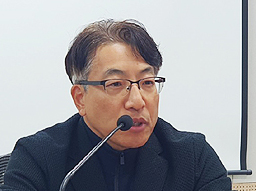
- Chang-Hyun Oh, Director of MOHW The government expects the ‘Measures to Improve Patient Access and Reinforce Reimbursement Management for High-Priced Severe Disease Treatments’ that gained industry attention for increasing the scope of use of the pharmacoeconomic evaluation exemption system (PE exemption system) will be applied to drugs that apply for reimbursement in January. In other words, the government plans to confirm and apply final revisions in December. The revisions to the Health Insurance Review and Assessment Service’s guidelines are currently complete and are being reflected in the National Health Insurance Service’s detailed standards for negotiations (negotiation guidelines). After the process is complete, it will be possible to extend the application of the PE exemption system to pediatric new drugs that apply for reimbursement in January. In the case of the 200 set as the ‘small number of patients’ standard, the government reaffirmed its position that extending PE exemption to drugs for adults deviates from the purpose and priority of reimbursement while emphasizing the flexibility of the Drug Reimbursement Evaluation Committee review as it had responded at the last NA audit. Chang-Hyun Oh, Director of the Pharmaceutical Benefits Division replied so at the QA session on pending issues at a recent meeting with the multinational pharmaceutical company press on the 29th. Also, Oh drew the line and said that it was different from the government’s intentions regarding the market’s prediction that the measures will be immediately applied from November upon notice. The following is the QA script between the press corp and Director Oh. ▶After the administrative notice, HIRA has not yet publicly announced the expansion of the PE exemption system to pediatric drugs. Were there any problems in the implementation process? “We are currently changing the NHIS negotiation guidelines. The Measures to Improve Patient Access and Reinforce Reimbursement Management for High-Priced Severe Disease Treatments does not only include expanding PE exemptions to pediatric drugs. It also includes the expedited listing of severe disease treatments and expanding the scope of reference countries to A9 which is set for December 11. These revisions have to be made collectively (none of them have been publicly announced yet). We will be able to confirm and revise the plan in December. ▶The pharma and bio industry expected the measures to be implemented immediately upon notice this month (in November) and awaited HIRA’s public notification. But at the current pace, the system will be applied next year at the earliest. Is this a delay or a deferment? “Since other revisions that need to be implemented also need to be reviewed and unilaterally implemented, the measure will be applicable to drugs that apply for reimbursement from January. Since the government had not announced that it will be implemented from November, it is not a delay." ▶The industry is still strongly voicing the need to extend the PE exemptions to drugs used in adults.” “A clause ‘drugs used to treat pediatric patients that are therapeutically equivalent or has no available treatment option, and demonstrates improvement in quality of life or is otherwise approved by the committee’ has been added to HIRA’s guidelines. At the same time, ‘when the drug’s main indication is for pediatric patients’ condition has been added to NHIS’s reimbursement standard procedure improvement plan. As these two are being applied together, reimbursement will be extended to drugs whose main indication is for ‘pediatric’ patients among drugs used for both children and adults. Therefore, the extension will be applied to pediatric patients. There have been many requests for expanding the reimbursement benefit to drugs that affect adult patients. We can review it, but our current priority is in benefiting pediatric patients rather than adults.” ▶The NA and others have pointed out how the extension had rather raised the threshold for PE exemptions and reimbursement. What is the government’s opinion on this? "I have already explained the reason why the ‘small number of patients’ clause had been included at the past NA audit. The restriction was set to clarify that PE exemptions are applied when the drugs have difficulty producing evidence. DREC had answered to the National Assembly that it will deliberate reimbursements in consideration of the severity of the disease for drugs that affect a small number of patients. The same is true for the 200 range that had been set. Considering the severity of the disease, even if the number of patients exceeds 200, the drug can be considered and reviewed as a drug that affects a small number of patients. I believe DREC will make a reasonable decision."
- Policy
- First Forxiga follow-on Dapapro listed at KRW 684
- by Lee, Tak-Sun Nov 29, 2022 05:54am
- The first follow-on of the antidiabetic SGLT-2 inhibitor ‘Forxiga Tab (dapagliflozin, AstraZeneca)’ will be listed at ‘Dapapro Tab’ with reimbursement at KRW 684 on December 1. The price has been set at 90% of the original due to premium pricing as a data submission drug due to salt modification, etc. Dapapro Tab succeeded in avoiding the duration of the substance patent as a prodrug that has a different chemical structure from the original. According to industry sources on the 28th, Dapapro Tab will be listed for reimbursement at KRW 684 on December 1. This is 10% lower than the KRW 760 set for Forxiga. In general, generics are listed at 53.55% of the original’s ceiling price, but as a data submission drug, the price was set at 90% of the original. Dapapro's ceiling price will be maintained as is until another generic with the same ingredient is listed. Until February, the release of Dapapro had been unclear until before the substance patent expiry. Dong-A ST had filed a claim to confirm the scope of rights for Forxiga’s substance patent, claiming that its drug does not impede the scope of rights of Forxiga’s substance patent, but the Patent Court of Korea reversed the decision of the Intellectual Property Trial and Appeal Board that had admitted the company’s claim. Nevertheless, Dong-A ST newly challenged the patent again and received an admission in the trial to confirm the scope of rights on the 2nd. In other words, the court accepted the claim that the 917 days added to the patent term for Forxiga’s substance patent does not apply to Dong-A ST’s product. Based on this, Dong-A ST started its reimbursement process and succeeded in listing its drug with reimbursement on the 1st of the following month. Forxiga’s substance patent will expire in April next year, and if Dapapro is released with reimbursement, it will be marketed before the expiry of the substance patent. With Dong-A ST planning to release Dapapro by February next year, the product is expected to be the first drug sold among Forxiga follow-on drugs. Also, it will be the first SGLT-2 class follow-on to be released into the market as well. Also, Dong-A ST owns its new antidiabetic drug ‘Suganon.’ The addition of the SGLT-2 antidiabetic Dapapro to its portfolio is expected to expand the company’s share in the domestic diabetic drug market. In particular, with Dapapro being released earlier than the generic versions of Forxiga, it is expected to further occupy the follow-on drug market.
- Policy
- Avastin biosimilar will be reimbursed starting next month
- by Lee, Tak-Sun Nov 29, 2022 05:53am
- Celltrion VegzelmaCelltrion's Avastin biosimilar Vegzelma will be listed on the 1st of next month. As a result, Roche, which owns the original Avastin, has joined Alvogen Korea, a biosimilar company, Samsung Bioepis, and Celltrion, making the market competition a four-way race. According to industries on the 25th, Celltrion Vegzelma's 0.1g and 0.4g will be listed at 208,144 won and 677,471 won, respectively, on the 1st of next month. The price is the same as Samsung Bioepis' Onbevezy and Alvogen's Arimcis. Bevacizumab formulations are anticancer drugs used in various carcinomas, with the domestic market reaching about 100 billion won. The original Avastin recorded 38.1 billion won in the first half of last year based on IQVIA. In September last year, Samsung Bioepis Onbevezy received a salary and was released for the first time in Korea as a biosimilar. This product is currently being sold by Boryung Pharmaceutical. Onbevezy's one-year monopoly in the biosimilar market was broken when Albogen Korea released Arimcis last month. Arimcis is sold by Daewoong Pharmaceutical. Competition for Bevacizumab formulations is expected to begin in earnest as Celltrion joins in December. Although biosimilars are less popular in the domestic market, Celltrion is also looking forward to Bevacizumab as it is only Remsima that performs as well as the original. Since the drug price difference between the original and biosimilars is not significant, the performance difference is expected to appear depending on marketing and distribution capabilities. However, the fact that Alvogen Arimcis is limited in use in relation to ovarian cancer due to patent problems is considered a weakness in the indication. Although Samsung Bio and Celltrion are raising their stock prices with biosimilars overseas, it is true that they have been negligent in marketing in the domestic market, which is small in size. However, the Avastin biosimilar is expected to be active in investing in domestic sales due to its large domestic market size. Attention is focused on who will win the four-way race for biosimilars.

- Policy
- Actilyse's price to rise 15% from next month
- by Kim, Jung-Ju Nov 28, 2022 05:50am
- The price of Boehringer Ingelheim’s acute myocardial infarction treatment Actilyse Inj. (alteplase) will rise 15% from next month after applying for drug pricing adjustments. Aju Pharm’s acute back pain reliever (aceclofenac, eperisone hydrochloride) will newly receive a 10% premium for 1 year. Also, the 30.4% premium pricing for Hanmi Pharmacueetical’s allergic rhinitis treatment Potastine OD Tab (bepotastine calcium dihydrate) will be maintained due to the small number of companies producing the same product, and Kyowa Kirin Korea voluntarily opted for a 1.5% reduction in the price of its Romiplate 250μg (romiplostim). According to industry sources, the Ministry of Health and Welfare is working to amend the ‘drug reimbursement list and reimbursement ceiling price table’ to implement the changes above for implementation on December 1st. First, Aju Pharm’s Afexon Tab has been newly listed with premium pricing for 1 year. The premium pricing rate will be wet at 10%. For incrementally modified combined new drugs, the government applies a 59.5% premium for first generics for one year from listing. For drugs from innovative pharmaceutical companies, the premium is set at 68% of the original drug price in the first year, then subsequently lowered to 53.55% after the term is terminated. The premium pricing for Hanmi Pharmaceutical’s Potastine OD Tab will be maintained for the time being due to the small number of companies manufacturing the same item. The premium rate of the drug is set at 30.4%. The government applies premium pricing to drugs when there are 1 or less companies that produce a drug with the same route of administration, ingredient, and formulation as the first-listed incrementally modified new drug. However, if no other companies produce the same product even after the 5-year premium pricing period, the premium pricing is maintained until the number of companies becomes 2 or more. On the other hand, some companies have opted for strategic price reductions for marketing, etc. Kyowa Kirin Korea applied for drug pricing adjustments to reduce the price of its Romiplate 250μg by 1.5%, and the reduction will be applied from the next month. Boehringer Ingelheim Korea applied for a price increase for its Actilyse Inj. (alteplase), and after undergoing negotiations, the price of Actilyse will be raised by 15% for each strength from next month. The application to adjust the ceiling price for price increases can be submitted when the drug is ▲essential to the treatment of patients, ▲has no alternatives, ▲is supplied by one company and its administration is cheaper than its alternatives. After the drug passes deliberation by the Health Insurance Review and Assessment Service’s Drug Reimbursement Review and Assessment Service and undergoes drug pricing negotiations with the National Health Insurance Service.
