
- LOGIN
- MemberShip
- 2026-05-03 07:14:42
- Policy
- Erleada is listed
- by Lee, Tak-Sun Mar 28, 2023 05:56am
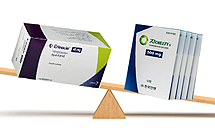
- Janssen Erleada, a new drug for the treatment of prostate cancerJanssen Korea, which succeeded in listing Erleada, a new prostate cancer treatment drug, voluntarily lowers the upper limit on Zytiga, an existing prostate cancer treatment drug. The industry believes that another so-called 'trade-off' case appeared last year when MSD lowered the upper limit on its drug while expanding reimbursement for the immuno-oncology drug 'Keytruda'. According to the industry on the 22nd, Janssen Erleada will be listed next month at a marked price of 20,045 won as a risk-sharing agreement (RSA) reimbursement type. In terms of the market price alone, it is slightly cheaper than the competing drug, Xtandi, which costs 20,882 won. However, it is evaluated that Erleada is economical for patients in that Xtandi is a selective benefit with a co-payment of 30%, while Erleada is a mandatory benefit with a co-payment of 5%. Some predicted that Erleada would not be easy to apply for benefits while receiving PE, unlike Xtandi. In fact, Erleada and Xtandi passed the HIRA in February of last year, but Xtandi, which omitted PE and accepted selective benefits, applied for benefits in August of that year, but Erleada had to pass the year. As a result, Erleada's benefit is also evaluated as a strategic success on the part of Janssen. It is interpreted as suggesting a trade-off as one of the strategies. It appears that the company negotiated with the insurance authorities by lowering the upper limit on Zytiga, an existing prostate cancer treatment, as a condition for Erleada's insurance coverage. Zytiga will cut 4.7% from next month from 17,606 won to 16,780 won. An industry insider said, “Trade-off negotiations in the form of drug price cuts for existing treatments through new drug reimbursement are gradually expanding following Keytruda last year.” It can be seen as a kind of trade-off negotiation in that it is intertwined with
- Policy
- Jeil Pharmaceutical discontinued Actos co-promotion
- by Lee, Tak-Sun Mar 27, 2023 05:56am
- Actozon 15mgJeil, which has already launched sales of the generic drug Actozone 15mg and the combination drug Actozonemet 15/850mg from 4Q last year, is expected to launch Actozon 30mg in the reimbursement market in April. According to the industry on the 26th, Actozon 30mg will be listed at the upper limit of 940 won from April 1st. There are still fewer than 19 generic drugs listed, and Jeil Pharmaceutical succeeded in calculating the same price as the highest price by meeting all the standard requirements. Previously, when Actozon 15mg was re-listed in January of last year, it was difficult to calculate the highest price as there were more than 20 generics. Accordingly, Actozon 15mg has been listed at the lowest price of 359 won for the same product. Actozonemet was also listed at the highest price of 714 won when it was re-listed in August of last year, as fewer than 19 identical drugs were listed. In terms of drug price, apart from 15mg, single drugs 30mg, and combination drugs maintain the highest price, and it is evaluated that they did well even though they entered the generic market belatedly. Jeil entered the generic market belatedly because the co-promotion of the original Actos and Actos met, which had been sold since the second half of last year, was discontinued. Best has sold Actos since 2013. At the time, it signed a co-promotional contract with Takeda. Jeil had to end 9 years of original sales as Celltrion Pharm took over the Asia-Taeyang region rights for Takeda products including Actos last year and started selling them alone from the second half of the year. Jeil immediately put generics into the market. In January of last year, Actozon 15mg, which had been removed from reimbursement, was listed again on the list of benefits, and in August of that year, Actozonemet was also listed again. Then, from the fourth quarter of last year, generic drugs were sold in earnest. Actozon 30mg was additionally approved in January. From April, it is expected to enter the market in earnest with a full lineup of pioglitazone capacities. As Jeil secured a large number of customers by selling the original Actos, it is expected that the relationship with customers lost due to the suspension of product sales in the generic business will be restored in the short term. The three-drug regimen including Metformin + SGLT2 will be covered from April for Glitazone drugs, which is also positive for sales recovery. An official in the pharmaceutical industry said, “As Jeil has a long experience in selling Actos, it is highly likely that it will quickly settle into the market as a generic drug.” He explained, "Therefore, other generic companies are also watching Jeil's movements."
- Policy
- Dupixent 200mg, newly listed
- by Kim, Jung-Ju Mar 27, 2023 05:55am
- Sanofi-Aventis Korea's severe atopic dermatitis treatment Dupixent PFS 300mg has expanded insurance coverage to pediatric and adolescent patients, and products with 200mg content will be newly listed next month with an expanded range. Taking this as an opportunity, the government is planning to expand the scope of benefits for special calculations based on eliminating blind spots in existing treatments for severe atopic dermatitis. Janssen Korea Erleada, which is used for the treatment of metastatic prostate cancer (mHSPC), will be newly listed as a risk-sharing contract (RSA) reimbursement type at around 20,000 won. According to the industry on the 21st, the Ministry of Health and Welfare plans to revise the 'drug reimbursement list and reimbursement upper limit table' and is pushing to apply it on the 1st of next month. There are a total of 4 new drugs being promoted, 1 drug that has been expanded in the scope of use (benefit), and 4 items that are under contract renewal negotiations with the NHIS due to the expiration of the RSA period. ◆Newly listed item = Erleada is newly listed next month at 20,045 won so that it can be applied for health insurance. This drug is used in combination with androgen deprivation therapy (ADT) for the treatment of patients with hormone-responsive metastatic prostate cancer. Currently, A7 is registered in a total of seven countries, including the United States, Japan, France, Germany, Italy, Switzerland, and the United Kingdom. The company applied for insurance listing to the Review and Assessment Service on November 30, 2021, a year later. proceeded. At the time, the committee judged that the cost-effectiveness ratio was included in the acceptable range as a result of the economic evaluation, but the reimbursement was appropriate when the drug price was lowered in consideration of the financial impact such as the possibility of an increase in market share. As the company accepted this result, the drug was put on the negotiating table of the NHIS, and immediately entered into negotiations on the drug price and expected billing amount, and was successfully registered in April. The corporation expects that this drug will be cheaper than alternative treatments, and actual additional finance will be insignificant when considering the RSA refund rate in the future. Dupixent, which is used for severe atopic skin disease in adults, is also listed as a 200mg product with reduced content. Similar to the 300mg content product already registered and covered by insurance, RSA refund type, total amount limit type, and initial treatment cost refund type were applied to this content product in combination. In addition, Bukwang Pharmaceutical's Zaledeep 5mg and 10mg content products, which have stepped on the track of skipping drug price negotiations with the NHIS, are also listed at 102 won and 153 won per capsule, respectively. ◆ Expansion of scope of use = The scope of reimbursement for Dupixent 200mg, which is already registered, will be expanded from adults currently applied to children and adolescents in the future. Currently, it is estimated that 5,000 Korean adults with atopic dermatitis are receiving benefits. The government plans to broaden the reimbursement standard so that the drug can be widely used for children (6-11 years old) and adolescents (12-17 years old) with atopic dermatitis. The number of these patients is estimated to be 2550. The drug's benefit for children and adolescents is being applied to all A7 countries, and it is also being applied to adults in Korea, so its clinical usefulness has already been proven. Following the increase in benefits this time, the company negotiated with the NHIS again and set the price at 696,852 won per share, a 1.5% cut. At the same time, the government expands the scope of application of special calculations accordingly. It is to adjust the benefit standard while expanding the benefit from the existing adult target to children and adolescents. This is because if the current registration standards for calculation special cases are maintained, pediatric patients fall under the pharmaceutical reimbursement standards, but cannot meet the registration standards for calculation special cases, creating a blind spot where special cases are not applied. ◆ RSA Expiration Evaluation Items = Negotiations were made to renew contracts for 4 items of drugs covered by insurance through RSA. The target is Cabometyx, a renal cell cancer drug from Ipsen Korea, and Erbitux Inj. 5mg/mL (cetuximab), colorectal cancer, and head and neck cancer treatment from Merck. Before the contract period of the RSA drug expires, the government has the Pharmaceutical Review Committee evaluate the drug's clinical usefulness and cost-effectiveness, and proceed with contract renewal negotiations with the NHIS. The types of negotiations include lower drug prices, expected billing amounts, reimbursement rates, and caps. The target drugs for this time were contracts with Cabometyx or Erbitux, which limit the amount of use per patient, and as the companies expressed their intention to renew the contract, the procedure was followed. As a result of the negotiations, Cabometyx will be cut by 2.5% for each content, and Erbitux will be cut by 8.5%. In the case of Erbitux, the new drug price will be applied as of May 1 due to the renewal of the contract.
- Policy
- Forxiga patent is about to expire
- by Kim, Jung-Ju Mar 24, 2023 05:48am
- As the patent for Dapagliflozin, the original drug (Forxiga), is about to expire, domestic generics of this drug will be released early next month. Accordingly, the government is swiftly proceeding with the process of calculating the drug price and additional negotiations so that the drug can be listed immediately. According to the industry on the 21st, the Ministry of Health and Welfare is planning a revision of the drug reimbursement list and the maximum reimbursement amount table and is pushing to apply it on the 1st of next month. The application date is April 8, the day after the patent expiry date of Forxiga. Forxiga is an antidiabetic drug, and its price dropped to 734 won, or 3.4%, after negotiations with the NHIS for PVA type "Na" was concluded on the 13th. Domestic generics, which are taking a breather to secure market share, are 89 single drugs and 78 combination drugs. The Ministry of Health and Welfare has calculated generic drug prices based on 734 won, which was set as a result of PVA negotiations, in order to quickly register these drugs. If the original drug expires, the generics are automatically given a price calculation of 53.55%. Currently, companies ahead of the launch of Forxiga's generics are currently in the process of negotiating with the NHIS for stable supply and quality control while preparing for enlistment on the 8th. The deadline for negotiations is the 30th of this month. Governments and authorities expect generics to quickly capture half of the claims once they hit the reimbursement market. The estimated size of fiscal savings is expected to be around 1.1 billion won per month. Estimated on an annual basis, it is about 13.2 billion won. As the share of domestic products increases, the reduction in health insurance finances is proportional to that amount, so the government has no choice but to be busy.
- Policy
- Dual punishment for CSO rebates passes NA committee
- by Lee, Jeong-Hwan Mar 24, 2023 05:48am
- A provision that stipulates the prohibition of doctors from receiving rebates offered by contract sales organizations (CSOs) and a plan to amend the Medical Service Act to advance regulations on medical advertisements and allow the Ministry of Health and Welfare to intervene in the Medical Advertisement Deliberation Committee passed the plenary meeting of National Assembly’s Health and Welfare Committee. Also, a proposal to amend the Pharmaceutical Affairs Act, which includes a clause prohibiting illegal hospital subsidies in exchange for prescriptions between hospitals and pharmacies that are preparing to open, and a clause that allows pharmacists to refuse to dispense poor or counterfeit narcotics prescriptions was passed in the same the plenary meeting. Also, the bill to manage the harm from cigarettes, which was merged as an alternative by the NA Chair after the bill was separately presented by NA Rep. Hye-Young Choi of the Democratic Party of Korea and Ki-Yoon Kang of the People Power Party, also crossed the threshold set by the Health and Welfare Committee. On the 23rd, the NA Health and Welfare Committee. held a plenary session and voted on the bills that were reviewed by the 1st and 2nd legislation subcommittees. A bill that adds drug CSOs to the scope of rebates such as money and valuables that doctors should not receive and obligates the medical device CSOs to report to the government and local governments passed the Health and Welfare Committee deliberations. Therefore, these agendas will go through legislative procedures with the drug CSO reporting system that had been pending at the Legislation and Judiciary Committee level. Changes are expected in the review of medical advertisement deliberations in the future as the Medical Advertisement Deliberation Committee, which consists of functional groups of medical professionals such as those from the Korean Medical Association, passed the bill to improve MDAC deliberations and allows the Ministry of Health and Welfare the right to intervene. Also, the Pharmaceutical Affairs Act, which prohibits prospective hospitals and pharmacies from exchanging hospital subsidies for prescriptions, is subject to review by the NA’s Legislation and Judiciary Committee. Furthermore, legislation of the Tobacco Hazard Control Act, which includes disclosure of the types and amounts of harmful substances contained in e-cigarettes as well as leaf tobacco is expected to accelerate progress. Also, an amendment to the Narcotics Control Act that stipulates that pharmacists at pharmacies may refuse to dispense drug prescriptions issued by medical institutions that poorly entered patient information or are suspected a forgery also passed the Health and Welfare Committee. Whether to present the bills at the plenary session will be determined by the Legislation and Judiciary Committee after considering the agenda seriatim.
- Policy
- Rinvoq also succeeded in expanding youth atopy benefits
- by Lee, Tak-Sun Mar 24, 2023 05:48am
- Rinvoq 15mg will be covered from April as an adolescent atopy treatment. On the same day as the biologic drug Dupixent, the youth atopic treatment benefit is applied. It is the first among JAK inhibitors to obtain reimbursement for the youth indication before Cibinqo, a competitor drug. According to the industry on the 22nd, Rinvoq SR 15mg will be reduced by 5.1% from 21,085 won to 20,100 won by voluntarily lowering the upper limit of the salary. In addition to the reduction in the upper limit, benefits are also applied to the treatment of atopic dermatitis in adolescents. This drug was covered only for the treatment of moderate to severe atopic dermatitis in adults. As a result, it is expected that the treatment accessibility of adolescent atopic dermatitis patients will be improved. It is known that Rinvoq SR 15mg sought to lower the drug price according to the expansion of the range of use for the application of youth benefits. Although the upper limit of the range of use is adjusted within 5%, it is interpreted that the drug price cut was widened voluntarily, and the youth benefit was applied earlier than Cibinqo, a competing drug. From April, Dupixent will also be covered for atopic dermatitis in children and adolescents. The insurance authorities decided to apply Dupixent PFS 200mg and Dupixent PFS 300mg not only to adults with severe atopic dermatitis but also to children and adolescents aged 6 years or older through refund-type, total-limit, and initial treatment cost-reimbursement contracts. Pfizer's Cibinqo, a similar drug to Rinvoq, is currently negotiating with the NHIS to receive coverage as a treatment for atopic dermatitis in adults and adolescents. As the pediatric and adolescent atopic dermatitis treatment market expands, competition among related drugs is expected to intensify.
- Policy
- Pharma industry makes a request to MOTIE and MOEF
- by Nho, Byung Chul Mar 23, 2023 04:45am
- Public opinion has been rising for the government to revoke the designation of botulinum toxin as a national core technology. The rise of this public opinion brings more meaning as the request was made by Korea Pharmaceutical and Bio-Pharma Manufacturers Association, which represents the industry. Breaking away from lesser movements that had been made by individual companies or internally within the Ministry of Trade, Industry, and Energy, KPBMA has taken entitative and requested the above for industry development and the future. According to industry sources, KPBMA sent an opinion statement last week requesting the MOTIE to revoke the national core technology designation it had set for the manufacturing technology of botulinum toxin strain and products. In addition, within this week, the association plans to deliver an improvement proposal to the Ministry of Economy and Finance’s Economic Regulatory Innovation TF that requests the revocation of the designation of the national core technology on toxins. KPBMA submitted the petition to MOEF to revoke the toxin national core technology destination request to MOEF because the ministry had organized an 'Economic Regulation Innovation TF' to foster and support the industry, which team listens to the voices of the field, and reflects them in actual policy and institutional improvement. The TF consists of 13 private members and 12 government members and is jointly led by the Deputy Prime Minister of Economy and Finance and a private expert. An industry official said, “Since a written opinion has already been submitted to MOEF, the agenda will be discussed at MOEF’s TF meeting. After setting the direction, official discussions will be made between the two ministries on the withdrawal of the national core technology designation to toxins.” The designation, maintenance, and cancellation of toxin as a national core technology is regarded a sensitive issue for which considerable debate has taken place even within MOEF. The MOTIE Minister can designate or drop the designation of a certain technology after deliberation with the Industrial Technology Protection Committee (which consists of less than 25 members including the chair) under Article 9 ① and ③ of relevant laws. However, the agenda is busy being discussed due to the strong difference in opinion among the 25 committee members, which is why the committee is having trouble setting the specific direction of modifications, and the technology is far from originality and lacks progressive superiority. The representative key core technology designations in Korea include the following technologies: ▲Semiconductor (DDI design technology for OLED to operate driving display panels); ▲Electricity and electronics (design, process, manufacturing, and evaluation technology of ultra-high-performance electrodes or solid electrolyte-based lithium secondary batteries); ▲Display (AMOLED panel design, process, manufacturing, and operating technology). The technologies above are widely accepted as advanced technologies, however, the prevailing opinion is that toxins do not require advanced technology as the toxin strains are more discovered and purchased than developed. As the safety of these toxins can be ensured with the existing management and supervision of the health authorities, the industry has been voicing that it is time for the government to actively prepare a blueprint (revocation of national core technology) on toxins to increase domestic demand and exports. In the absence of general knowledge and information, concerns about the threat of terrorism due to the chemical weaponization of toxins could be raised, but it is a consistent opinion in academia that it is virtually impossible to weaponize the toxins in general pharmaceutical/bio-pharmaceutical research institutes or the private sector. In this regard, another industry official said, "The national core technology designations are made to strengthen the competitiveness of domestic companies by preventing and protecting illegal leakage of industry technology and to contribute to national security and national economic development. However, such toxins are already being approved, manufactured, and sold in a consigned CDMO format among domestic biopharmaceutical companies after they sign joint sales contracts. Therefore, its value as a national core technology is lessening in value.” Meanwhile, KPBMA is taking active steps to revitalize the industry through cooperative governance, therefore, the specific direction on whether to maintain and revoke toxins as national core technology may be determined as early as this year.
- Policy
- Legislation requiring submission of botulinum strains
- by Lee, Jeong-Hwan Mar 23, 2023 04:45am
- A bill that makes it mandatory to submit genetic information of bioterrorism infectious diseases such as botulinum toxin to domestic quarantine authorities and cancels the possession permit if not submitted did not pass the Health and Welfare Committee of the National Assembly held on the 22nd. If the bill is passed, it may lead to excessive regulation of trade secrets and property values of pharmaceutical companies with botulinum toxin strains, and retroactive application of the submission obligation to pharmaceutical companies prior to the enforcement of the law may be intrusive or cause trust protection problems. This is the result of reflecting the opinion of the expert member's office of the Welfare Committee that a policy judgment on legislation is necessary. The members of the subcommittee on the bill sympathized with the expert's point out that corporate trade secrets and property values could be excessively regulated while acknowledging the necessity of the bill. The bill has emerged as a controversial bill in the pharmaceutical industry as it contains a retrospective application clause that imposes the obligation to submit genetic information such as strains and base sequences to licensees and pharmaceutical companies that have obtained domestic marketing permission and have botulinum toxin before implementation after passing the National Assembly. Pharmaceutical companies with botulinum toxin have mixed opinions about the passage of the bill, but the opposing pharmaceutical companies are in the position that the legislation, such as the source of the strain and the submission of the base sequence, is ineffective given that the botulinum toxin strain is a natural substance. It is pointed out that Medytox and Daewoong Pharmaceutical are in a dispute over whether to steal botulinum strains in Korea, so if the bill is passed, disputes between pharmaceutical companies may escalate. The amendment to the Infectious Disease Prevention and Management Act, proposed by Choi Jong-yoon, a member of the Democratic Party, requires those who possess a total of eight types of bioterrorism infectious disease pathogens, including botulinum bacillus, to submit the pathogens to the Director of the Korea Centers for Disease Control and Prevention within 30 days from the date of possession. It also contains a provision allowing the director of the Korea Centers for Disease Control and Prevention to cancel the permit to possess the pathogen of an infectious disease of bioterrorism, even though it must be submitted within 60 days from the date of request for resubmission. The Director of the Korea Centers for Disease Control and Prevention checked whether the submitted bioterror infectious disease pathogens and the bioterror infectious disease pathogens approved for possession matched and made it possible to build a database. The purpose is to strengthen the safety management system for bioterror infectious disease pathogens. While acknowledging the necessity of the bill, the expert pointed out that it is necessary to judge whether there is room for excessive regulation on companies and research activities if the state management of pathogens, which are corporate trade secrets and property values, is strengthened. In particular, it was considered that it was necessary to review whether there is room for less invasive means to be applied and whether there is a possibility of specifying a legitimate reason for the content that allows the cancellation of the possession permit rather than an administrative fine as a sanction in the case of non-submission of pathogens of biological infectious diseases. Regarding the clause imposing the obligation to submit bioterror infectious disease pathogens of previous holders, the expert committee's office believed that there should be a policy judgment on whether the database establishment would pose an additional burden or protection of trust in the related industry. “The bioterrorism database, in which the state analyzes and builds genetic information for the submitted pathogens, is planned to be used for the purpose of preparing for and responding to bioterrorism, which requires strict security management", the director stated. As the legislative subcommittees decided to continue the review, the bill requiring the submission of botulinum strains was a chance for future legislative review.

- Policy
- Janssen's CAR-T treatment Carvykti was approved
- by Lee, Hye-Kyung Mar 21, 2023 05:57am
- The Ministry of Food and Drug Safety (Director Oh Yu-kyung) announced that it has granted CARVYKTI, a CAR-T treatment agent, a rare drug of Jansen, a rare drug. CAR-T cells are called chimera because they modify the surface receptor to better recognize and attack cancer cells. Carvykti is an anticancer drug that injects the T cell into the patient's body after putting genetic information that can recognize the B cell mature antigen (BCMA) into the patient's immune cells (T cells). B-cell maturity antigen (BCMA) is an ideal target for transplanted cell carcinoma (multiple myeloma) because it is selectively expressed during transformed cell differentiation and is not expressed in other major organs. Carvykti has previously provided new treatment opportunities for patients with recurrence or dissatisfaction with at least four treatments, including Proteaums, immunomodulatory preparations, and anti-CD38 antibodies. The MFDS scientifically reviewed and evaluated the quality, safety and effectiveness, manufacturing, and quality control criteria of the drug in accordance with the screening criteria prescribed in the Act on the Safety and Support Act of Advanced Regenerative Medical and Advanced Bio. Carvykti is a long-term tracking survey under Article 30 of the Advanced Regeneration Bio Act and must be tracked over the case of more than 15 years from the date of administration. The MFDS said, "We will do our best to ensure that the therapeutic drugs that are fully confirmed with safety and effectiveness based on regulatory science are quickly supplied."
- Policy
- Which Vemlidy IMD among the 5 will rise to the top?
- by Lee, Tak-Sun Mar 21, 2023 05:57am
- Although failing to receive reimbursement in advance, many Vemlidy IMDs are awaiting entry into the Korean market. All the drugs are incrementally modified drugs that were developed with different salt formations. According to industry sources on the 20th, 5 more companies are waiting to enter the market with Vemlidy latecomers. These companies follow the earlier entrants, such as Dong-A ST, which received reimbursement approval in January, and Chong Kun Dang and Daewoong Pharmaceuticals, which received reimbursement approvals in February. Vemlidy (tenofovir ala fenamide) is an upgraded version of Gilead Science’s previous chronic hepatitis B treatment, ‘Viread (tenofovir).’ Vemlidy has been evaluated to have improved tolerance and nephrotoxicity over Viread. Same-ingredient Vemlidy generics are unable to enter the market because the drug’s hemi-fumarate patent is set to last until August 15, 2032, However, domestic companies have succeeded in releasing drugs in the market by avoiding the patent by changing the sodium ingredient of the drug. Starting with Dong-A ST’s release of ‘Vemlia (tenofovir alafenamide citrate)’ with reimbursement, Chong Kun Dang followed in February by releasing Tenofobell-A (tenofovir alafenamide succinate) with reimbursement and Daewoong Pharmaceutical also released Vemliver (tenofovir alafenamide hemitartrate) with reimbursement. Their ingredients show that all use different salts with Vemlidy. Donga ST, Chong Kun Dang, and Daewoong Pharmaceutical each developed their own salt-modified drugs. 2 more types of salt-modified drugs are set to follow. Jeil Pharmaceutical Tecavir-D (tenofovir alafenamide) was approved in the same month as those by Chong Kun Dang and Daewoong Pharmaceutical but was not granted reimbursement. On its reason, a company official said, “reimbursement had been delayed due to disruptions in the supply of the drug’s API,” he explained. With the normalization of the supply, it is highly likely that our product will also be released with reimbursement.” Also, 4 tenofovir alafenamide hemimalte products were approved on March 15th and are set to be released with reimbursement in June. The drugs are manufactured and supplied by Samjin Pharm but will be marketed by Bukwang Pharm, which has strong marketing strengths in the hepatitis B treatment market. Also, Dongkook Pharmaceutical, Hutecs Korea Pharmaceutical, and Samil Pharm will also receive products from Samjin and enter the market with individually approved products. As of now, a total of 5 salt-modified Vemlidy IMDs have been released to the market. The fact that so many salt-modified drugs were developed and released for one product shows the interest large companies have in this market. Large companies tend to develop and sell their own products rather than receive drugs upon consignment from other companies. This is why, large pharmaceutical companies that gross large sales, such as Donga ST, Chong Kun Dang, Daewoong Pharmaceutical, and Jeil Pharmaceutical, dedicated and developed their own salt-modified drugs to preoccupy the market. On the other hand, since it is difficult for small and medium-sized companies to develop drugs independently due to development costs, Samjin is known to have addressed the problem through joint development with other companies under the 1+3 regulation set for consigned bioequivalence tests. Therefore, which salt-modified product will be leading the market is gaining attention.
