
- LOGIN
- MemberShip
- 2026-05-03 07:14:42
- Policy
- Mounjaro, a weight loss effect for DM pts, has been approved
- by Lee, Hye-Kyung Jul 03, 2023 05:47am
- Eli Lilly's 'Mounjaro PFS', known overseas as a game changer for obesity treatment, has been approved in Korea. In Korea, it has been approved as a treatment for diabetes. Mounjaro is a synthetic peptide with a mechanism that can selectively bind to both the GIP and GLP-1 receptors for the first time in Korea. The Ministry of Food and Drug Safety (Ministry of Food and Drug Safety, Minister Oh Yu-Kyoung) has tested the content of 6 Mounjaro (2.5, 5, 7.5, 10, 12.5, 15mg/0.5ml) used as an adjuvant for diet and exercise therapy to control blood sugar in adult type 2 diabetic patients. It was confirmed on the 28th. This drug selectively binds to the GIP receptor and the GLP-1 receptor to induce insulin secretion promotion, insulin resistance improvement, and glucagon secretion reduction, thereby causing pre- and postprandial blood glucose reduction. GLP-1 agonists act on GLP-1, a hormone that makes you feel full by acting on the brain's hypothalamus, activates incretin, an intestinal hormone, and promotes insulin production to lower blood sugar levels. It slows down the movement of food from the stomach to the small intestine, increases satiety, and has proven its effectiveness, becoming a very popular obesity treatment in the United States. Mounjaro is a successor to Lilly's blockbuster diabetes treatment Trulicity and was approved by the US FDA in May of last year as a dietary and exercise supplement to improve blood sugar control in patients with type 2 diabetes. It can be used as a monotherapy or as a combination therapy with Metformin, SGLT2 inhibitor, Sulfonylurea, and Insulin glargine. The Ministry of Food and Drug Safety said, “We will continue to do our best to expand treatment opportunities for patients by making efforts to promptly supply treatments whose safety and effectiveness are sufficiently confirmed based on regulatory science expertise.”
- Policy
- Drug price negotiations such as Roche Evrysdi begin
- by Lee, Tak-Sun Jul 03, 2023 05:47am
- Roche's 5q spinal muscular dystrophy treatment Evrysdi Dry Syrup began negotiations with the NHIS as soon as it passed the Drug Benefit Evaluation Committee of the HIRA. Ace Pharma and H&O Pharm's multiple myeloma treatments Megval Inj. and Melpspal Inj. have also entered negotiations. The NHIS added oEvrysdi Dry Syrup 0.75 mg/mL, Melpspal Inj. 50 mg and Megval Inj. 50 mg to the negotiation list for new drug prices on the 30th. As a result, six items are currently under negotiation, including these three items, Lilly Retevmo Cap, Bayer Verquvo, and BMS Onureg. When the drug price negotiations are concluded, the benefits will be applied through a report by the Health Insurance Policy Review Committee of the Ministry of Health and Welfare. Evrysdi Dry Syrup, Megval Inj., and Melpspal Inj. were recognized for their adequacy of benefit at the Drug Benefit Evaluation Committee of the HIRA on June 1 and moved on to the negotiation stage of the industrial complex. Usually, when the MOHW orders the negotiation, the NHIS sets up a negotiation team to conduct full-fledged negotiations on the upper limit and expected usage. Evrysdi Dry Syrup is a liquid formulation that is taken PO QD and is characterized by being applicable to patients who have difficulty in treating spinal cord cavities. Motor function improvement and safety profiles were confirmed in patients of a wide range of diseases, including patients of a wide age range from 2.2 to 25 months old and patients with experience in scoliosis-related surgery. Since self-administration is possible at home, it is expected to reduce insurance financial and socioeconomic burdens by reducing the burden of indirect medical expenses such as academic, workplace interruption, transportation, and nursing. Megval and Melpspal are forms of injections with Melphalan as the main active ingredient and are national essential drugs. In Korea, Samil Pharmaceutical's Alkeran has been reported, but currently, the KODC has stopped importing and only the KODC supplies inventory as unlicensed drugs in Korea. Accordingly, Megval and Melpspal are expected to have much better accessibility to patients with multiple myeloma if they are paid.
- Policy
- Eval period for HCV treatment shortened to 12 weeks from 24
- by Lee, Hye-Kyung Jun 30, 2023 06:01am
- The evaluation period used to determine the efficacy of chronic hepatitis C treatments has been reduced in Korea. The Ministry of Food and Drug Safety (Minister Yu-Kyoung Oh) revised the 'Clinical Trial Evaluation Guidelines for Chronic Hepatitis C Treatments' on June 29 to align Korea’s clinical trial efficacy evaluation standards with the international standards and reflect the standard treatment method for chronic hepatitis C treatments. The main revisions included ▲changing the evaluation period of major efficacy evaluation indices, ▲setting toxicity test exemption standards for combination drugs, and ▲reflecting the latest chronic hepatitis C standard of care to the guidelines. Through the revision, the sustained virologic response (SVR) period that was used to evaluate the efficacy of HCV treatments will be reduced from 24 weeks to 12 weeks. The authorities had analyzed the clinical trial results of approved drugs and confirmed a correlation (98-100%) between the 12- and 24-week treatment results, and also considered its coherence with those of health agencies abroad. Also, the guidelines presented a clear standard for companies developing combination drugs to waive toxicity tests. Companies can submit their non-clinical or clinical data of the individual composite drugs and be exempt from toxicity tests if no serious toxicological concerns are present in the submitted data of each ingredient. Since the standard treatment for HCV was changed from the use of peginterferon in combination with ribavirin to direct-acting antivirals, the information on the new standard of care was also reflected in the guideline. The MFDS said, “We hope that the revised guidelines will support the development of HCV treatments, and will continue to provide information to support the development of treatments based on our expertise in regulatory science.”
- Policy
- Tx for combi of dementia/hyperlipidemia have increased
- by Lee, Tak-Sun Jun 30, 2023 06:01am
- The amount of claims for dementia treatment and hyperlipidemia has increased by more than 50% in the past two years. In the case of dementia treatment, it seems to have increased significantly as the elderly patients' visits to medical institutions decreased in 2020 due to COVID-19. The hyperlipidemia complex is interpreted as the amount of charge has also increased as the post-drugs of statin + edetimive came out all at once. In the '2022 payroll drug claim status' disclosed by the Health Insurance Review and Assessment Service on the 26th, the claim status by ATC code was compared to 2020. The drug with the largest claim in the ACT Code is the treatment for peptic ulcer and gastroesophageal reflux disease, and 1.155.8 trillion won was charged in 2022. Compared to the past 2020, this is an increase of 25.1%. However, the number of listed items decreased by 170 from 1510 to 1340. This formulation is interpreted as a significant increase in claims due to the overlap of the emergence of domestic new drug K-cap, the growth of PPI+ sodium bicarbonate formulation, and the balloon effect after the expulsion of ranitidine. Of course, the decrease in medical use due to COVID-19 in 2020 is also a major increase.. In the case of dementia treatment, such a underlying effect was more prominent. Dementia treatment claims increased by a whopping 58.4% when compared to 2020 and 2022, reflecting the decline in visits to medical institutions for the elderly in 2020. In fact, 2019 before COVID-19 had higher dementia treatment claims than in 2020. As visits to medical institutions have gradually normalized since 2021, the demand for dementia treatment has turned to an increasing trend, surpassing 400 billion won last year. During this period, the number of subsympathetic nervous system, which contains choline-alpocerate formulation, increased by 17.4%. This ingredient formulation has been judged as a selection benefit due to salary re-evaluation, but the notice is being delayed due to the suspension of execution, and the marketing of pharmaceutical companies is strengthening, so it seems that the claim is ahead of the dementia treatment. However, the number of listed items has decreased by 109 in two years. The hyperlipidemia complex also increased claims by 56% as 323 items were added in two years. Atojet generics have been pouring out since 2021, and the sales of improved new drugs from domestic companies have grown to 1 trillion won last year. The 16 top ATC code classifications for claims have all grown compared to 2020. However, direct-acting antiviral drugs, which include hepatitis B treatment and hepatitis C treatment, grew only 0.8%, making a contrast. This is interpreted because there are drugs that have a high therapeutic effect, so the number of patients does not increase. In the second year, the number of listed items has also decreased by 199.
- Policy
- New oral ulcerative colitis drug Zeposia approved
- by Lee, Hye-Kyung Jun 28, 2023 05:53am
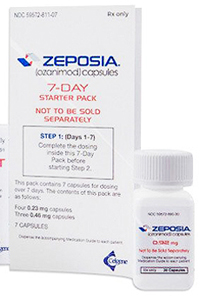
- BMS Korea’s new ulcerative colitis treatment ‘Zeposia Cap (ozanimod)’ seems to have been granted marketing authorization for its effectiveness in broadening the treatment option for patients with ulcerative colitis despite the small number of clinical trial subjects. The recent minutes of the Central Pharmaceutical Affairs Council that were recently disclosed by the Ministry of Food and Drug Safety revealed that the council had a discussion on the feasibility of applying the clinical trial results of an ulcerative colitis drug in Korea. The minutes also mentioned that the ulcerative colitis treatment discussed by the CPAC had the ‘advantage of being taken once a day orally,’ indicating that an advisory meeting had been held for Zeposia ahead of its approval in February. Zeposia is a sphingosine 1-phosphate receptor modulator used to suppress inflammation by preventing self-reactive lymphocytes from moving to the stomach in ulcerative colitis where immunomodulatory abnormalities are observed Zepocia is taken once a day and is indicated to treat moderate-to-severe active ulcerative colitis in ▲ patients who respond adequately to existing treatment or biological agents including corticosteroids, immunosuppressants, etc., or ▲ have no response, or ▲have resistance. However, whether to grant Zepocia’s approval was discussed due to the small number of Korean subjects available in the clinical trial results submitted by the company for approval. One committee member said, "Epidemiologically and statistically speaking, due to the small of Korean trial participants in the bridging data, the results of one or two patients can make a large difference in the results, rendering the judgment difficult.” The MFDS explained, “Population pharmacokinetics analysis data show that the drug’s pharmacokinetics in the total patient population and Koreans were similar.” Also, the MFDS explained that the US label shows that the AUC and Cmax increased in Japanese patients compared to Caucasians, but the difference was not clinically significant. Also, discussions were made on what is the best indicator that can be used to evaluate the effectiveness of the ulcerative colitis treatment as the number of Korean subjects in the trial was insufficient to conduct a sub-analysis. The members discussed whether clinical remission was the right indicator of clinical response efficacy, and whether to use any as secondary indicators in determining the efficacy of the discussed drug. In this regard, a member said, “In ulcerative colitis, drugs are administered for a short period of time to induce remission, and steroids and mesalazine are used as maintenance therapy after the patient reaches a response. When the condition progresses to a severe state, biological agents or immunomodulators are additionally used, then surgery if drug treatment is insufficient.” Since ulcerative colitis can be managed but not cured, there was also the opinion that inducing an initial remission only indicates that patients respond to the drug. Also, another member claimed that although the clinical remission results may not be enough to determine the efficacy of the drug due to the small number of subjects, the clinical response results are in favor of its use in Korea. A member said, “There are so many types of ulcerative colitis drugs with various mechanisms of action in the market because the treatment rate of the currently available treatments for the disease is low, and even this low response is often lost over time. Therefore, if an effect can be seen with a drug that has a different mechanism of action, its addition will increase the number of treatment options for the patients to choose from.” Another member also agreed that the drug can be useful in terms of providing additional drug selection opportunities.
- Policy
- The share of drug spending was about 23 trillion won
- by Lee, Tak-Sun Jun 28, 2023 05:53am
- Last year, the share of health insurance drug expenses was 23%, the lowest level in the past five years. Although drug costs themselves are steadily increasing, the rate of increase in total medical costs is much higher, indicating that the proportion of drug costs is continuously declining. According to the 'Current Status of Claims for Reimbursed Drugs in 2022' published by HIRA on the 26th, drug costs last year were 22,896.8 billion won, accounting for 23.34% of the total medical expenses of 98,121.2 billion won. 2022 is the only time in the last five years that the share of drug spending has fallen to the 23% level. It fell by 1.28%p from 24.62% in 2018. The decrease in the share of pharmaceutical expenditures is due to the greater increase in total medical expenditures. Total medical expenses increased by 11.32% compared to the previous year, far exceeding the 7.95% increase in drug expenses. Last year, there were 906 items on the list and 2,332 deleted items, a much larger number. As a result, the number of registered items also decreased by 1,404 from the previous year to 23,643. In 2019 and 2020, the number of listed items due to the reorganization of the drug pricing system approached 4,000, but after the implementation of the system, the number of deleted items gradually increased and the number of listed items decreased. In 2022, the number of claims for health insurance reimbursement drugs was 23.481 trillion won, hospitalized 2.8604 trillion won and outpatient 20.1877 trillion won. By type, the amount claimed for pharmacy-reimbursed drugs was 16,234.6 billion won, accounting for 70.4% of the total. This was followed by 13.2% (3.327 trillion won) of advanced general hospitals, 8.2% (1.8919 trillion won) of general hospitals, 4.3% (983.3 billion won) of clinics, and 3.8% (885.5 billion won) of hospitals. Claims for reimbursed drugs for those aged 65 and over accounted for 45.6% of the total at 10,505.8 billion won. This is an 8.4% increase from the previous year, and the share of reimbursed drugs for those aged 65 or older continues to increase.
- Policy
- 4 Vemlidy latecomers reimbursed in Korea
- by Lee, Tak-Sun Jun 27, 2023 05:48am
- Gilead’s original hepatitis B treatment Four more Vemlidy latecomers will be entering the market. Currently, only 3 products by Dong-A ST, Daewoong Pharmaceutical, and Chong Kun Dang are available in the market. Its original drug is Gilead Science Korea’s Vemlidy Tab. According to industry sources on the 25th, Samjin Pharm, Korea Hutex Pharma, Samil Pharm, and Dongkook Pharmaceutical’s tenofovir alafenamide hemimalte hepatitis B treatments will be reimbursed from July. The latecomers are all incrementally modified drugs that were developed with different salt formations than the original Vemlidy’s tenofovir ala fenamide hemitartar hydrochloride. Four companies have succeeded in avoiding Vemlidy’s salt patent with their salt-modified drugs. With the 4 additions, 7 salt-modified drug products of Vemlidy are now available in the Korean market. With Donga ST being the first to be listed in February, Daewoong and Chong Kun Dang also launched and received reimbursement for their respective IMDs in March. All 3 were salt-modified drugs that avoided Vemlidy’s salt patent. The ceiling price of the products that will be released in July can be divided into the highest and lowest price groups. Samjin Pham and Hutex set their drugs’ price at the highest price, at 90% of the original drug's price, according to the pricing formula used for salt-modified drugs, at KRW 3,033 per tablet. However, Samil Pharm and Dongkook Pharmaceutical set the price of their drugs at KRW 2,425 and KRW 2,424, each, the lowest price among the 7 salt-modified drugs introduced in the market. This was interpreted as the companies’ decision to give up the formula price and list their drugs for reimbursement at the lowest estimated sales price among their competitors. The previous 3 companies had also adopted a low-price strategy. Dong-A ST, Daewoong, and Chong Kun Dang all gave up the formula price and listed their drugs at the lowest price. As a result, the price of Donga ST product was set at KWR 2,400, Daewoong’s at KRW 2,473 won, and Chong Kun Dang’s at KRW 2,439. The original Vemlidy’s price is KRW 3,370, and the companies of the latecomer IMDs were found to have chosen price competitiveness over profit to preoccupy the market. Vemlidy has been showing rapid growth in Korea’s hepatitis B treatment market, posting outpatient prescriptions of KRW 47.1 billion (UBIST) in Korea last year Only a few companies were able to develop drugs that avoid Vemlidy’s patent and receive reimbursement. Therefore, the small number of companies are working to secure as much market share as possible until a generic version with the same ingredients as Vemlidy is released. Meanwhile, Samjin’s Taflead Tab which is set to be reimbursed in July will be sold by Bukwang Pharmaceutical, which is well known in the hepatitis B treatment market for its self-developed new drug Levovir. Samjin is in charge of product production and supply.
- Policy
- Pediatric orphan drug Qarziba·Bylvay selected as the No. 1
- by Lee, Jeong-Hwan Jun 27, 2023 05:47am
- Qarziba and Bylvay were selected as the first drugs for the government’s approval-reimbursement-pricing pilot project. Qarziba and Bylvay, treatments for rare diseases in children, were selected side by side as the first target drugs for the government's parallel pilot project of 'applying for permission-reimbursement evaluation-negotiation of drug price'. Qarziba is a treatment for neuroblastoma, and Bylvay is a treatment for progressive cholestatic pruritus (pruritus). On the 26th, at a meeting with the Korea Special Press Association, the Ministry of Health and Welfare Insurance and Pharmaceuticals announced the results of the selection of the first approval-reimbursement-price combination drug as part of a plan to improve access to treatment for expensive severe diseases and strengthen benefit management. Under the current regulations, it is a normal drug benefit procedure to apply for health insurance listing after completing the safety and efficacy review of the Ministry of Food and Drug Safety. The Ministry of Health and Welfare, along with HIRA and NHIS, has started to improve patient access to treatment for severe diseases through a parallel pilot project. The target of the pilot project is cancer or rare disease with a life expectancy of less than one year and a drug that has proven superiority in survival and treatment effects for patients with a small number of patients and no alternative drug. Based on the fact that eight domestic and foreign pharmaceutical companies submitted applications for about 10 items, the Ministry of Health and Welfare selected two drugs as the No. 1 drug. Qarziba, which was selected this time, is a product of Recordati, an Italian pharmaceutical company, and is being supplied by the KODC in Korea. It is an anticancer drug to treat high-risk blastoma in children aged 12 months or older. Bylvay of French pharmaceutical company Ipsen obtained marketing approval from the US FDA in June of this year as a treatment for cholestatic pruritus in patients with Alagille Syndrome (ALGS) aged 12 months or older. The parallel approval-reimbursement-pricing pilot project starts from the moment two pharmaceutical companies apply for product approval to the Ministry of Food and Drug Safety. Pharmaceutical companies must go through the Ministry of Food and Drug Safety's 'Innovative Product Rapid Review (GIFT)' designation process for Qarziba and Bylvay. Ministry of Food and Drug Safety approval, HIRA benefit evaluation, and NHIS drug price negotiation is equivalent to normal new drug evaluation. The Ministry of Health and Welfare explained, "The target for the 2nd project will be selected through a demand survey in the second half of this year. Drugs included in the 1st demand survey and reviewed can also be selected as the 2nd target drug." The Ministry of Health and Welfare explained, "Pharmaceutical companies are urged to quickly prepare the GIFT designation procedure and submission materials. A working-level consultative body to discuss the implementation of the project will be held in July-August."
- Policy
- Cibinqo is slightly cheaper than Rinvoq in Korea
- by Lee, Tak-Sun Jun 26, 2023 05:53am
- Rinvoq (left) and Cibinqo, JAK inhibitors that are reimbursed for the treatment of adolescents aged 12 years or older with atopic dermatitis With Pfizer’s Cibinqo (abrocitinib), which is attracting attention as an oral treatment option for adolescent patients with atopic dermatitis, set to be listed for reimbursement in July this year, its competition with the already-reimbursed Rinvoq sustained-release tablet (Upadacitinib), is expected to start in full-scale next month. Cibinqo started drug pricing negotiations for its reimbursement in March last year. At the time, its reimbursement was expected in May to June at the earliest, but the period was somewhat delayed. As a result, Cibinqo received reimbursement 3 months later than Rinvoq, which was granted reimbursement for atopic dermatitis in adolescents in April. As a result, Cibinqo was listed for reimbursement at a slightly lower price than Rinvoq. According to industry sources on the 23rd, Pfizer’s Cibinqo Tab 50mg, 100mg, and 200mg will be listed with reimbursement at KRW 11,087, KRW 17,739, and KRW 25,942, respectively, for the treatment of atopic dermatitis. Its ceiling price is known to be 88% of the arithmetic average price of alternative drugs. As a result, Cibinqo became the second drug following Rinvoq to be reimbursed among oral JAK inhibitors as a treatment for atopic dermatitis in adolescent patients aged over 12 years of age. Rinvoq ER 15mg has been granted reimbursement for the treatment of adolescents aged 12 years or older with atopic dermatitis in April in addition to its existing reimbursement for adults. With the reimbursement extension, the ceiling price for Rinvoq was reduced by 5.1%. Also, its KRW 20,000 line collapsed due to the price-volume agreement system. The industry believes the reduced price of Rinvoq to have affected that of Cibinqo. As a latecomer in the market, Cibinqo’s price was set even lower than that of Rinvoq. The 100mg dose is the recommended dose for adolescent patients aged 12 years or older with atopic dermatitis, and the same patients are recommended to use the Rinvoq ER 15mg dose. Both are taken orally, one tablet a day. The price of Cibinqo 100mg is KRW 17,339, and Rinvoq ER is KRW 19,831. Cibinqo is slightly cheaper than Rinvoq, as Cibinqo 100mg’s price is 89% of that of Rinvoq ER 15mg. Due to the very subtle difference, the difference in the ceiling price is deemed to have an insignificant impact on sales. Therefore, the competition to preoccupy the oral drug market for adolescent patients with atopic dermatitis is expected to start in earnest in July. Meanwhile, among biological injections, Dupixent (dupilumab, Sanofi) was reimbursed for atopic dermatitis in children and adolescents in April. While Dupixent, which posted sales of over KRW 100 billion won (based on IQVIA) last year alone, is firmly leading the atopic dermatitis treatment market, attention is focused on how the introduction of the two oral medications will affect the market structure in the adolescent atopic dermatitis market.
- Policy
- Opsumit price cut by 30%
- by Kim, Jung-Ju Jun 26, 2023 05:52am
- Janssen's blockbuster pulmonary arterial hypertension drug Opsumit 10mg (Micronized Macitentan) will drop by 30% on the 1st of next month. In addition to the reimbursement of Maciten, the first generic drug that acquired generic for exclusivity, the drug price cut was applied in a cascading fashion. An addition is applied here, so after a year, even this will disappear and fall further. According to the industry on the 23rd, the Ministry of Health and Welfare is in the process of revising the 'drug benefit list and the maximum benefit amount table'. Opsumit's drug price cut began when first-generic Maciten received insurance benefits this month. Maciten is the first Opsumit generic, priced at 28,864 won per party. It is 53.55% of the Opsumit insurance drug price of 48,512 won. Due to the cascade of drug price cuts, also called the so-called 'half-price drug price system', they competed at prices close to half the price, and even dealt a blow to the original Opsumit family. Janssen Korea has continued a patent dispute with Samjin. After Samjin won the case in April by drawing a trial decision on the establishment of the claim from the Intellectual Property Trial and Appeal Board (1 trial), a counterattack by Janssen Korea is predicted. However, as Janssen Korea gave up a series of drug price lawsuits against the Ministry of Health and Welfare to cancel drug price cuts and apply for suspension of execution, the cut has become clear this time. Opsumit's price cut rate is around 30% of the current price. However, strictly speaking, this is an original addition to the 'half-price drug price system'. Using this system, when the first generic is listed, the government, in principle, adjusts the original to 53.55% like the generic, but reflects the characteristics of the original and gives an additional value to maintain the final 70% for one year. Opsumit is set to cut an additional 23.5% on June 1, 2024, one year after the addition ends. Korea United Pharm's Atmeg Combigel will drop 21.2% as of the 1st of next month as the addition ends.
