
- LOGIN
- MemberShip
- 2026-05-02 10:13:38
- Policy
- ‘Refer to Japan’s half-price policy for generic's price'
- by Lee, Tak-Sun Jul 13, 2023 05:35am
- The Health Insurance Research Institute, a research institution under the National Health Insurance Service, stressed the need to refer to Japan’s generic drug price reduction policies in its recently published ‘Issue & View June 2023.’ Hyun-Ok Lee, Associate Research Fellow of the Health Insurance Research Institute, and her fellow researchers published an article containing the need above in the June issue of Issue & View under the title of 'Recent Changes in Japan's Drug Pricing System and Implications'. The authors argued that it is necessary to refer to and reflect on Japan’s generic drug pricing system in the paper’s conclusion and implications. The research team said, “Korea’s elderly population continues to increase, and the country is expected to enter a super-aged society by 2025. Therefore, various reforms need to be made to Korea’s current pricing system in preparation for a super-aged society, and we should refer to Japan's revised drug pricing system in the process.” As its background, the paper pointed to the rise in drug expenditures that followed the rise in multiple chronic diseases caused by population aging. The medical expenditures in Korea’s national health insurance from KRW 43.6 trillion in 2010 to KRW 86 trillion in 2019, and health insurance drug expenditures increased from KRW 12.7 trillion in 2010 to KRW 19.4 trillion in 2019. In other words, drug expenditures accounted for 24.1% of the total medical expense in 2019. “In Korea, an equal price policy between original and generic drugs was implemented in 2012. Based on the system, the upper limit of insurance listing price for generic drugs was set at 59% of the initial original drug price in the first year, then at 53.55% from the second year. In Japan, generic drug prices are set at 50% of the original drug price, and generic drugs that are listed thereafter are set at the same price as the lowest price of previously listed generics.” Japan also has a drug price system where if 10 or more generic drugs are listed, their price is set at 40% of the original price, and at 90% of the lowest price when 20 or more are listed. Unlike Korea, Japan implemented a claim addition system to encourage the use of generic drugs. Japan's first generic drug price (50%) is lower than that of Korea (53.55%). The method of lowering drug prices according to the number of generics introduced has also been introduced in Korea, but the difference is that Japan applies the standard from 10 or more, and Korea from 20 or more. The authors explained, "Korea has conducted drug price reevaluations for already-listed drugs in 2012 and unilaterally adjusted drug prices in 2012, but has not been regularly conducting drug price reevaluations thereafter. However, Korea has a post-marketing Price-Volume Agreement system in place that lowers prices as a drug’s use volume increases. “On the other hand, Japan has been conducting an annual drug price survey on all items since 2020 to adjust its drug prices to reflect actual market prices. Korea should also refer to Japan’s drug price adjustment policy that reflects actual transaction price and generic price decision method to improve Korea’s drug pricing policy in the future, ahead of the surge in pharmaceutical expenses that may occur in line with the rapidly aging population.” In other words, the paper stressed the need to periodically make price adjustments to generic drugs in Korea. The paper is expected to serve as a basis for raising the legitimacy of generic drug price cuts at a time when the government has recently started measures to improve the drug price cut investigation system and reform the generic drug price system.
- Policy
- Will the number of generics decrease?
- by Lee, Tak-Sun Jul 13, 2023 05:35am
- Analysts say that the government has begun strengthening the standard for cascading drug pricing in order to reduce the number of generics. A plan to reduce the existing list of 20 items, which is currently used as the standard for lowering the upper limit of new items, to 10 seems promising. However, the industry points out that there is a limit to reducing the number of large generics even if the tiered drug pricing standard is strengthened. Rather, it is predicted that it will only encourage development. The Ministry of Health and Welfare recently entrusted a research service to Kongju University professor Kim Dong-sook's team on the subject of 'preparation of measures to improve the drug price system for generic drugs'. In this study, the appropriateness of 20 products, which is the standard for the number of products to which differential price is applied, will be addressed. The 20 baselines were introduced in 2020 with the reorganization of the drug pricing system. If a generic enters the market with more than 20 identical products already listed, the upper limit will be set at 85% of the lower price between the lowest price of the same product and 38.69%. Unfortunately, the NHIS-affiliated Health Insurance Research Institute recently introduced the Japanese generic drug pricing system through a publication in the June 2023 issue and View, arguing that it needs to be reflected in the domestic system. In particular, when the number of generics is 10 or more, the generic price is calculated at 40% of the original price, and when there are 20 or more, the system is set at 90% of the lowest price. There was an atmosphere that the current baseline of 20 needs to be reduced to 10 like Japan. It is known that the Ministry of Health and Welfare, NHIS, and HIRA have also mentioned the plan to have a strict baseline for generic drug price cuts. Accordingly, the industry is of the opinion that it is not possible to further strengthen the cascading drug pricing system by creating a clear basis through research services. However, it is pointed out that there is a limit to reducing the number of large generics no matter how low the baseline for cascading drug pricing is. The cascading drug pricing system will be applied from the month after the first generic is listed. Therefore, in the first month, there is no penalty even if the number of entries exceeds 20. In the case of Forxiga's generic 10mg, which served as an opportunity for insurance authorities to pursue a plan to reduce the number of generics, 57 were listed in the first month of April alone. Most of the generic companies tried to register their products according to the patent expiry schedule to avoid the cascading drug pricing system. For the next two months, only one of Forxiga's generic 10mg was listed. Industry analysts say that generics with a large market size, such as Forxiga's generic, are highly likely to be listed on a large scale in the first month regardless of the cascading drug pricing baseline. The same is true for Januvia generics scheduled to be listed in September. Therefore, in Korea where generic competition is fierce, even if the price cut baseline is reduced from 20 to 10, the number of large generics will not change significantly. Rather, it is pointed out that generic companies can only waste social costs by trying to develop without asking regardless of expected performance in order not to be late for entering the insurance coverage. An official from the pharmaceutical industry explained, "There is a possibility that generic companies will flock to patent challenges at once to get reimbursed early." However, if the baseline is set from 20 to 10, the effect of not increasing the number of listed generics will be more significant. However, it is also pointed out that there is a limit to reducing the total number of generics. Another official in the pharmaceutical industry said, “Although Japan has generally reduced the price of generic drugs, it is different from Korea in that it is simultaneously promoting generic incentives, such as actively granting incentives to doctors and pharmacists for generic prescriptions.” He criticized, "Our insurance authorities are only concentrating on lowering the price of generic drugs and seem to have no interest in encouraging their use."
- Policy
- 2 Tylenol products stopped production will be decided in 2Q
- by Lee, Jeong-Hwan Jul 13, 2023 05:35am
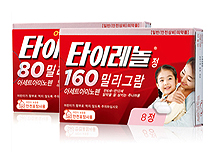
- In the second half of this year, the Ministry of Health and Welfare plans to discuss the cancellation of the safety household medicine designation and the designation of additional alternative medicines for two Tylenol items, which have stopped production due to the sale of Janssen Korea's Hyangnam plant. On the 11th, the Ministry of Health and Welfare Ministry of Health and Welfare's Pharmaceutical Affairs Policy Division announced through a press briefing on media reports that the response to Tylenol, a safe and household medicine that has been suspended for more than a year, was insufficient. Some items, such as Tylenol 80mg for children and Tylenol 160mg, were withdrawn in March 2022 due to the relocation of the Tylenol manufacturer's factory overseas. A media company reported a critical article claiming that the government was neglecting the two items even though they had not been supplied for a year and four months due to a halt in production. In response, the Ministry of Health and Welfare explained that there is a considerable amount of inventory that has already been produced and that there are items that are trying to re-permit after relocating the factory, so they are examining the situation in consideration of the use of inventory and the possibility of re-permission. In particular, it also announced that it would make a decision within the second half of the year on the cancellation of the designation of safety and emergency medicines for two items that have been discontinued and the designation of additional alternative medicines. Regarding the suspension of supply, the Pharmaceutical Affairs Policy Division said, “It is not that the supply to convenience stores has stopped because the stock that has already been produced is being distributed.” The Pharmacy Policy Division continued, "Tylenol tablets for children 80mg and Tylenol tablets 160mg are alternative items such as children's Ibuprofen syrup and children's Tylenol suspension." "We will quickly discuss and decide on the need to cancel the designation of safe household medicines for the two items that have been discontinued and the need to additionally designate alternative drugs. According to the safety and household medicine system, the designation decision is made in consideration of the ingredients, side effects, content, dosage form, awareness, and convenience of purchase of the item," the Pharmaceutical Affairs Policy Division said.
- Policy
- Gov’s halts price cut discussions on generics
- by Lee, Jeong-Hwan Jul 10, 2023 05:21am
- Pharmaceutical companies in Korea are carefully monitoring the government's direction in improving the pricing system of generic drugs, including the government's insurance ceiling price policy. The Ministry of Health and Welfare was known to be contemplating a system with the health insurance authorities to further reduce the price of generic drugs after 3 years through a stepped pricing system. However, with no specific movement being observed in that direction for several months, there have been speculations that the government has temporarily halted the pursuit of additional price cuts on generic drugs. On the 7th, the pharmaceutical industry began to assess the atmosphere surrounding MoHW’s drug pricing policy on generics. Previously, MOHW, centering around the 2nd Vice-Minister of Health and Welfare Park Min-Soo, started exploring improvement measures to prevent the mushrooming of generics in the market. One measure mentioned was to further the price reduction imposed on generic drugs. As MOHW’s drug pricing policy aimed to expand accessibility for patients with severe and rare diseases who require high-cost drugs and rationalize the prices of generic drugs that lead to excessive competition in distribution, there was speculation that the upper price limit of 53.55% that was set for generic drugs could be adjusted or the number of differential price reductions for listed drugs with the same ingredients be reduced. However, no progress in the area has been made for several months since the internal meeting was conducted between the MOHW, the Health Insurance Review and Assessment Service, and the National Health Insurance Service regarding the drug pricing policy on generics in April. Therefore, the speculation is that the MOHW is controlling the speed of price reduction of generic drugs. MOHW may have felt it burdensome to create additional measures for the price reduction of generic drugs ahead of the reevaluation of the ceiling price (criteria) that will be held for listed generic drugs. This speculation has been supported by the fact that the scheduled TFT meeting between the MOHW, HIRA, and NHIS for drug pricing policies of generics in June was postponed. However, MOHW has not proclaimed a specific stance regarding the pricing system of generics. This means that it is difficult to hastily judge whether the government has halted its pursuit to impose price cuts on generic drugs. Given the situation, pharmaceutical companies are focusing on the actions of MOHW to formulate countermeasures in line with the administrative direction. An official from a pharmaceutical company stated, “For now, MOHW has halted the scheduled meetings on drug pricing policy on generics with HIRA and NHIS. With the reevaluation of the standards for listed drugs scheduled in the second half of the year, there are speculations that the MOHW may have slowed down its pace in pursuing additional revisions in drug pricing policies on generics. However, some expect partial differential price cuts may be imposed on generic drugs, even if the ceiling price is not adjusted" An official in charge of drug pricing from another pharmaceutical company said, "For the pharmaceutical industry, the news that MOHW has halted additional drug price reductions is a significant development. However, we cannot be at ease until the MOHW presents specific policy directions regarding drug price cuts. Many pharmaceutical companies are preparing various arguments and evidence against drug price cuts." In addition, with the upcoming announcement of the final version of the Second Comprehensive Plan of National Health Insurance this year, pharmaceutical companies are demanding a clearer policy direction from MOHW so that they can increase predictability in order to respond to government policies. A representative from another pharmaceutical company said, “In addition to the drug pricing policies on generics, MOHW has not yet released the final version of its policy on preferential pricing for breakthrough therapies after their discussions with private-public consultative bodies in the first half of the year. As this coincides with the formulation of the Second Comprehensive Plan of the National Health Insurance, pharmaceutical companies are contemplating on how to strategize their management policies accordingly. It would be desirable for the government to gather a wide range of opinions and take actions to prioritize predictability for companies and provide support for future management decisions, rather than being solely driven by political considerations.”
- Policy
- Taiwanese new drug receives reimb in only 1 yr since release
- by Lee, Tak-Sun Jul 07, 2023 05:43am
- The Nephoxil Cap (ferric citrate hydrate) that was granted reimbursement at KRW 377 per capsule from the 1st of this month is actually a Taiwanese new drug. The drug, which is being imported and sold by the Japanese pharmaceutical company Kyowa Kirin’s Korean subsidiary in Korea, was developed by a Taiwanese pharmaceutical company. In other words, Nephoxil marks a rare case where a new drug developed in Taiwan was imported and reimbursed in Korea. Although the drug has not been listed in any of Korea’s A7 reference countries, it only took 14 months for the company to complete the listing process from approval to reimbursement, at a lower price than its substitute. In 2017, Kyowa Kirin Korea signed a domestic licensing agreement for Nephoxil with the Taiwanese pharmaceutical company, Panion & BF Biotech. Nephoxil was developed by Panion & BF Biotech in 2015. The agreement drew attention at the time as the Korean subsidiary of Kyowa Kirin had independently promoted and signed the agreement, not its Japanese headquarters. Nephoxil is used to improve hyperphosphatemia in patients with chronic renal disease on hemodialysis. As an iron-based phosphate binder, the drug has been assessed to reduce the risk of adverse events that commonly arise in calcium-based phosphate binders such as hypercalcemia and vascular calcification. Non-calcium class drugs currently available in Korea are Sanofi’s Renvela Tab, SK Chemical’s Invela, JW Pharmaceutical’s Fosrenol, among others. Also, same-ingredient generics versions of Renvela have recently joined in on the competition in Korea’s market. In Korea, Kyowa Kirin Korea has been positioning itself as a company that sells treatments for chronic renal disease patients. The company had achieved high sales performance n the field with its anemia treatment 'Nesp' and 'Regpara', a treatment for secondary hyperparathyroidism in patients with chronic renal disease. The company had once excelled in the hyperphosphatemia treatment market as well. Its product, Renagel Tab, which contains the same ingredient as Lenvela, has once led the market, however, its supply was discontinued in 2015 due to a contract with its developer. The company had lacked a product for hyperphosphatemia ever since. In this context, Nephoxil was a relief to the company. Regarding the use of Nepoxil, the Korean Society of Nephrology recommended restricting the administration of calcium-based phosphorus binders to avoid hypercalcemia and favorably recommended ferric citrate as it is useful and has an additional effect on correcting anemia as it contains iron compared to general phosphorus binders. However, the Health Insurance Review and Assessment Service’s Drug Reimbursement Evaluation Committee reviewed that it is difficult to determine whether Nephoxil has a different effect over existing non-calcium-based binders. Moreover, none of the A7 countries (USA, Germany, Switzerland, UK, Italy, Japan, France) have listed the same product. Only different strengths of ferric citrate were available in the United States and Japan. Despite such criticism, the company overcame the barriers with its low price. Kyowa Kirin Korea accepted the drug’s price of KRW 377, which is 90% of the weighted average price of its alteratives, and was able to skip the drug price negotiation process. Nephoxil received approval from the Ministry of Food and Drug Safety on May 9 last year. After passing DREC review in only one year of its approval in April this year, it was swiftly applied reimbursement in July. The industry analysis is that the company’s low price strategy also had some influence on Nephoxil’s speedy reimbursement.
- Policy
- Evaluation different after Kymriah·Zolgensma benefits?
- by Lee, Tak-Sun Jul 07, 2023 05:43am
- The ultra-expensive treatments Zolgensma and Kymriah are supposed to go through a performance evaluation, but whether or not they are disclosed is different. As a pre-approved drug, Zolgensma, which is subject to review by an expert review committee, has performance evaluation results disclosed to the public, whereas Kymriah does not. Therefore, unlike Zolgensma, Kymriah, which received a benefit earlier than Zolgensma, does not disclose performance evaluation results. According to the industry on the 5th, The HIRA recently disclosed the first performance evaluation of Zolgensma on its website. Zolgensma requires clinical evaluation before administration and every 6 months after administration for up to 5 years, and objective data such as medical records for clinical evaluation must be submitted. In addition, ▲ permanent respiratory use or death, ▲ CHOP-INTEND score not improved by 4 points or more compared to the baseline before drug administration, ▲ even if the previous items were improved, CHOP-INTEND 4 points or more in two consecutive times in the subsequent response evaluation Or, if it falls under any of the cases of a decrease of 3 points or more on the HFMSE, it is defined as drug administration failure. Reflecting this, as a result of the first performance evaluation, clinically meaningful improvement was confirmed in 5 out of 6 cases and marked as successful. The remaining case was judged to be a failure because a patient with respiratory problems due to SMA died of suspected acute respiratory failure. 5 out of 6 were successful reviews. Then, how was Kymriah, which was listed for benefit in April last year, 4 months ahead of Zolgensma, evaluated? Zolgensma is an ultra-expensive new drug worth 2 billion won and Kymriah is about 360 million won, and the Ministry of Health and Welfare is managing the performance of both. However, Kymriah cannot know the results of the evaluation. Because there are no disclosure rules. An official from the HIRA said, "Zolgensma is a pre-approved drug that goes through an expert review committee, so the review results are disclosed according to regulations, but Kymriah has no disclosure regulations." “At this time, we are not considering making it public,” he explained. Kymriah was not subject to the prior approval system because the patient's condition could deteriorate due to medication delay. For this reason, performance evaluations are not made public. Regarding this, an industry insider pointed out, "It is appropriate to disclose the results of the performance evaluation to the outside in order to enhance transparency and reliability in the context of the decision to evaluate the performance as part of the management of super-expensive drugs." The HIRA went through a professional review committee and disclosed two cases of the recognition of Kymriah's benefits in May, but both cases were rejected because they did not meet the standards. If the reimbursement is rejected, the patient has no choice but to pay 360 million won for non-reimbursement drugs. If benefits are applied, the drug price will be reduced to 6 million won. For this reason, some are suggesting that a plan to reduce the burden on patients should be prepared in the event of a post-reimbursement issue by reflecting the characteristics of an ultra-expensive new drug. Regarding this, Novartis said, "The reduction in benefit is a problem that occurs between the nursing institution and the patient and has nothing to do with the manufacturer. There is no separate patient support program."

- Policy
- Pres. Yoon urges swift legislation for remote treatment
- by Kang, Shin-Kook Jul 06, 2023 05:39am
- President Yoon Suk-yeol has instructed the Ministry of Health and Welfare to make every effort to pass the amendment of the Medical Service Act for the introduction of non-face-to-face treatment, which is currently under discussion in the National Assembly, raising hopes for its rapid legislation. President Yoon made these remarks on the 4th while leading the 18th Emergency Meeting on Economic Affairs on the direction of economic policies for the second half of 2023 at the Yeongbingwan in Cheong Wa Dae. President Yoon stated, "Many bills aimed at improving the economic constitution and ensuring stable public welfare - such as the National Finance Act for the introduction of fiscal rules, the Housing Act for easing residency obligations, and the Medical Service Act for establishing the basis for non-face-to-face treatments - are being impeded by the National Assembly, disappointing many citizens." To this, President Yoon urged, "Ministers of each department should focus solely on the people and make every effort to ensure the swift passage of essential economic and public welfare bills." As President Yoon personally directed the amendment of the Medical Service Act, it is anticipated that the government will expedite the legislation for the non-face-to-face treatment system. Currently, the amendment of the Medical Service Act related to non-face-to-face treatment is pending in the Legislative Review Subcommittee of the NA’s Health and Welfare Committee. The direction of the legislation has taken shape to closely align with the current pilot project for non-face-to-face treatment. The legislative direction being discussed and promoted by the government in cooperation with the National Assembly is as follows: Allowing non-face-to-face treatment only for follow-up visits, with initial consultations primarily in clinic-level medical institutions as exceptions. If patients are not eligible for home-delivered medication, the patient (or their representative) may obtain the prescribed medication directly from a pharmacy after receiving face-to-face medication counseling from a pharmacist. While the method of delivering medication is still an issue, the matter will not be a major point of contention during the National Assembly discussions, as the aspect falls under the amendment of the Pharmaceutical Affairs Act and not the Medical Service Act.
- Policy
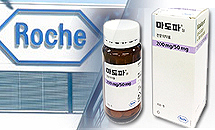
- Roche Korea, "No decision has been made to resupply Madopar
- by Lee, Tak-Sun Jul 06, 2023 05:39am
- Roche Korea recently announced that it has no plans to resupply Madopar, a Parkinson's disease treatment for which the grace period for the deletion of benefits was recently extended. It is explained that the headquarters did not make a decision to resupply, and that no agreement was signed with any organization for resupply. The extension of the grace period for deletion of benefits was carried out in consultation with the Ministry of Health and Welfare, and it is explained that there is no plan to resupply Madopar during that period. An official from Roche Korea said in a phone call on the 4th. announced its withdrawal from the country in January by voluntarily withdrawing Madopar's license. Patients with Parkinson's disease are urging the resupply of Madopar, urging Myungdopar, which is the only generic drug with the same drug, to have significant side effects. The Ministry of Health and Welfare has also opened the door to resupply, saying that it is possible to negotiate a price increase through the upper limit adjustment system, and some have reported that the Parkinson's Association and Roche Korea have agreed to resupply Madopar. Roche Korea said that the agreement for Madopar was not true. A company official explained, "The head office has not made any decision regarding the resupply of Madopar." However, he explained that the reason why the grace period for deleting benefits was extended was because there was a consultation with the Ministry of Health and Welfare. The official explained, "After checking the Madopar inventory, we found that there was still a lot left, and in consultation with the Ministry of Health and Welfare, we extended the grace period for the deletion of benefits to prevent patients from suffering economic damage." The grace period for deleting Madopar benefits was extended by 4 months to a total of 10 months. Normally, the grace period for deleting benefits is up to six months, but it was extended by four months under the authority of the Ministry of Health and Welfare. As a grace period was granted, some said that the Ministry of Health and Welfare and Roche had confirmed the resupply of Madopar and extended the grace period. There is criticism that it is giving preferential treatment to original drugs that have voluntarily withdrawn from the market. In addition, the generic industry argues that if the government follows the issue of resupplying the original, the reliability of generics will decrease.
- Policy
- Will AZ/Kolon succeed in challenging COPD combi benefit?
- by Lee, Tak-Sun Jul 05, 2023 05:45am
- Two COPD 3 drugs combi inhalers that are competing for reimbursement are not easily able to get out of the HIRA stage. AstraZeneca's 'Breztri Aerosphere' also requested a re-evaluation of the committee's results, while Kolon Pharmaceutical's 'Trimbow Inhaler' took on a re-challenge for reimbursement despite the drug evaluation committee's conditional decision. According to the industry on the 4th, Breztri Aerosphere, which was notified of the conditional determination of the adequacy of benefits when accepting less than the appraised amount at the 5th committee last May, recently applied for re-evaluation. According to the drug reimbursement evaluation regulations, drug manufacturers, etc. may apply for re-evaluation within 30 days of being notified of the evaluation results. It is interpreted that AstraZeneca's action is based on the judgment that it is difficult to accept less than the appraised amount. If the re-evaluation results remain unchanged, AstraZeneca is likely to consider whether to reapply for benefits. Similar to Breztri Aerosphere, Kolon Pharmaceuticals Trimbow, which received a conditional judgment that benefits are appropriate when accepted below the appraisal amount, has not accepted the committee's decision and is currently reapplying for benefits. Currently, it is known that the second supplementary data submission has been completed and the society's opinions are being listened to. The reason why these drugs are having difficulty receiving reimbursement seems to be that GSK's 3-dose combination COPD inhaler Trelegy Ellipta, which was listed first, was listed at a relatively low price. Trelegy Ellipta, which was listed as a benefit in 2021, costs 45,602 won for a 30-day supply, similar to the price of a two-drug combination drug. Given that alternative drugs are cheap, there seems to be a large gap between the HIRA valuation and the management's expectations. The 3 drugs combination is expected as an alternative treatment for COPD patients who do not respond well to the existing ICS-LABA and LABA-LAMA combination therapy. While GSK products are currently listed, it is noteworthy whether AstraZeneca and Kolon Pharmaceuticals will be able to find a solution to the insurance coverage.
- Policy
- AZ Capivasertib, designated GIFT No. 8
- by Lee, Hye-Kyung Jul 05, 2023 05:45am
- On the 4th, the Ministry of Food and Drug Safety designated AstraZeneca Korea's breast cancer treatment Capivasertib as the 8th "Global Innovation Product Rapid Review (GIFT)." Starting with Lunsumio, a lymphoma treatment in Roche Korea, which was designated as GIFT No. 1 in November last year, it has been designated up to No. 8 recently, but none of the items have been officially approved yet. In this regard, Park Jae-hyun, head of the rapid review division of the Ministry of Food and Drug Safety, said in a briefing for reporters on the 4th, "Even if it is designated as GIFT, it may not apply for permission for each item." However, since a total of eight items have been designated starting with Lunsumio, the GIFT No. 1, Park explained that GIFT designated items are expected to be linked to permits in the second half of this year. Since the establishment of the GIFT system, a total of 13 items have been applied for rapid review, and eight of them have been designated as targets. In the end, it means that the designation rate is not as high as 61%. This is because GITF items are limited to ▲ drugs aimed at treating serious or rare diseases such as life-threatening cancer, ▲ drugs aimed at preventing or treating infectious diseases such as bioterrorism or infectious diseases, ▲ new drugs developed by innovative pharmaceutical companies designated by the Ministry of Welfare, ▲ rapid screening, and medical devices or ▲ if there is no existing treatment or if there is a clinically significant improvement in effectiveness compared to the existing treatment Park said, "When I meet with the pharmaceutical industry, I receive many suggestions to expand the scope of rapid review." "Among them, we are sometimes asked to include improved new drugs in the rapid review, and although it is difficult due to a lack of manpower, we plan to review them in the mid- to long-term," he said. The hurdles are high, but if designated as GITF targets, ▲ the screening period will be reduced by at least 25% (e.g., 120 working days→90 working days), ▲ close communication between reviewers and developers, such as item briefings and supplementary briefings, or ▲ regulatory-related consulting. The GIFT system is a branding of the rapid review program that has been operated since the establishment of the rapid review and has been in full force since September last year to revitalize the two-year rapid review and strengthen support for rapid commercialization of innovative products. Starting with frequent screening of COVID-19 vaccines and treatments, the rapid screening of drugs is Daewoong Pharmaceutical's Envlo 0.3mg and AstraZeneca's Koselugo 25mg. With the introduction of rapid screening in Korea, items such as the COVID-19 treatment Regkirona, COVID-19 AstraZeneca vaccine, Pfizer vaccine, Janssen vaccine, Moderna vaccine, etc. were approved in 2021. Manager Park explained, "Since the rapid examination department was established in August 2020 and the rapid examination began, a total of 33 items have been designated for rapid examination, and 28 items have been approved, and about 85% have been approved." "Over the past three years, the average number of days required for rapid review of designated items has been 65 working days, and in the case of the COVID-19 vaccine, 28.7 working days, less than 30 days on average," he explained. Among them, Daewoong Pharmaceutical's Envlo reduced the screening period by 59% compared to 120 working days, and reduced the screening period by more than 100 days compared to the average new drug screening period from 353 days, including the data supplement period. Manager Park said, "GIFT designated items aim to be reduced to 75% of the general screening period, and it is difficult to calculate and answer the entire screening date because there are no items that have been approved yet." "For reference, you can refer to the overall average screening date of items subject to rapid screening over the past three years by the rapid screening department," he said. Regarding the criticism that the GIFT system seems to have focused only on foreign pharmaceutical companies, Park explained, "When the Pharmaceutical Affairs Act is revised for rapid review, the law has been revised to support the development of the domestic pharmaceutical industry." "Since February, we have been operating GIFT Kiwoom, a 1:1 consultative body with developers, focusing on domestic innovative pharmaceutical companies to support commercialization such as item permits," he said. Currently, there are 48 innovative pharmaceutical companies certified by the Ministry of Health and Welfare, of which 46 are domestic pharmaceutical companies, so it is expected to help designate new drugs developed by domestic pharmaceutical companies as GIFT.
