
- LOGIN
- MemberShip
- 2026-05-01 21:13:37
- Policy
- NHIS extends Bavencio’s reimb...adds KRW 20 bil sales
- by Lee, Tak-Sun Jul 27, 2023 05:40am
- Merck Korea's 6th immuno-oncology drug, 'Bavencio Inj,’was granted a reimbursement extension and will be covered for the first-line treatment of urothelial cancer from next month. With the reimbursement extension, the drug is expected to secure annual sales worth more than KRW 10 billion like the other immuno-oncology drugs. 'Bavencio is the first drug to be granted reimbursement as a first-line treatment for urothelial cancer. The Health Insurance Review and Assessment Service announced the news through the 'Opinion Inquiry on Amendment to Public Notice for Drugs Prescribed and Administered to Cancer Patients (Draft),’ effective as of August 1st. Bavencio Inj (avelumab) was approved in Korea as the 6th immuno-oncology drug in March 2019. As an anti-PDl-L1 immunotherapy drug, the drug was granted reimbursement for the rare condition, metastatic Merkel cell carcinoma (MCC) in 2020. Currently, a total of 8 immuno-oncology drugs, starting with BMS’s ‘Yervoy (ipilimumab)’ in December 2014, followed by MSD’s ‘Keytruda (pembrolizumab),’ Roche’s Tecentriq (atezolizumab),’ AstraZeneca’s ‘Imfinzi (durvalumab),’ Merck’s Bavencio (avelumbab),’ GSK’s ‘Jemperli (dostarlimab),’ then AstraZeneca’s ‘Imjudo (tremelimumab).’ All immunotherapy drugs other than Jemperli and Imjudo are reimbursed in Korea. Immuno-oncology drugs are breaking new sales records every year, receiving reimbursement extensions based on groundbreaking effects on various types of cancer. Last year, based on IQVIA, Keytruda posted sales of KRW 239.6 billion, Opdivo KRW 109.9 billion, Tecentriq KRW 81.8 billion, Imfinzi KRW 52.4 billion, and Yervoy KRW 14.2 billion. Only Bavencio failed to meet the blockbuster criteria, posting KRW 500 million won in sales last year, but reimbursement as first-line treatment for urothelial cancer approved this time is expected to enable the drug to raise over KRW 10 billion in sales. Urothelial cancer is a common term used to refer to malignant tumors originating from the lining of the urinary system that constitutes the mucosal layer of the urinary tract. It includes bladder cancer, renal pelvic cancer, ureteral cancer, and urethral cancer, with the most frequently occurring cancer being bladder cancer. Platinum-based chemotherapy has been used as the standard first-line treatment, and when the disease progresses or recurs, platinum-based chemotherapy is re-administered or drugs such as Keytruda and paclitaxel were used as second-line treatments. Bavencio is the first immuno-oncology drug to be used as monotherapy for the first-line maintenance treatment of adult patients with locally advanced or metastatic urothelial cell carcinoma who have not progressed on platinum-based chemotherapy. The NHIS estimated the number of urothelial cancer patients that would use Babencio to be about 670 per year and agreed with the pharmaceutical company on the estimated claims amount of KRW 21.65 billion. In other words, the reimbursement extension guarantees additional sales of KRW 20 billion won per year. However, actual sales are expected to be less as the company signed a refund type and expenditure cap type risk-sharing agreement (RSA). Bavencio also lowered its insurance price ceiling by 30% with the reimbursement extension, from KRW 1,226,243 per vial to KRW 854,864 per vial. However, Bavencio’s reimbursement extension is not expected to significantly affect insurance finances. Rather, it is expected to have the effect of saving NHI finances. This is because of the amount of Keytruda used. NHIS expects the use of Keytruda, which is being used as a second-line treatment for urothelial cancer, will decrease with the reimbursement extension of Bavencio. Immunotherapy drugs cannot be administered in the second line if another immunotherapy drug is used as first-line maintenance therapy. Therefore, the NHIS estimated that the actual amount of fiscal spending, unlike the expected claims amount, will range between KRW -1.84 billion to KRW 5.57 billion. Currently, Keytruda is granted reimbursement for 7 indications in 4 cancer types, including as a first-line treatment for metastatic non-small-cell lung cancer. In addition, as it has recently applied to extend reimbursement to 13 indications, its use in cancer is expected to expand further in the future. Therefore, the reimbursement authorities will have to continue to contemplate ways to minimize the spending of health insurance finances while expanding the reimbursement of effective immuno-oncology drugs.
- Policy
- All Sandoz products removed from Korea’s reimb list
- by Lee, Tak-Sun Jul 26, 2023 05:41am
- All products that were registered by Sandoz Korea will be removed from Korea’s reimbursement list. The company had withdrawn from the Korean market in June. With the removal, the name Sandoz will no longer be visible in the Korean market. However, a grace period of 6 months has been granted for some items, and reimbursement for such drugs is valid until February 1 next year. Its CNS (central nervous system) items that have solidified their position in the domestic market will be transferred to Samil Pharmaceutical, and be changed accordingly in the reimbursement list. According to industry sources on the 25th, 18 products from Sandoz Korea will be removed from the reimbursement list as of August 1st. The company had voluntarily withdrawn the licenses of the 18 products. Currently, there are no effective Sandoz products on Korea’s drug approval list. All of them were withdrawn or were deleted in line with the company’s business closure in June. Sandoz withdrew from the Korean market following its spin-off decision made by its parent company, Novartis. Sandoz will be focusing on the biosimilar business in Europe. The license of some of the CNS (Central Nervous System) products sold by Sandoz in Korea has already been transferred to Samil Pharmaceutical. Samil received the sales and distribution rights to the antidepressant ‘Mirtax,’ ‘Sandoz Estical Opram,’ ‘Sandoz Paroxetine,’ the schizophrenia treatment ‘Sandoz Olanzapine Tab,’ and insomnia treatment ‘Sandoz Zolpidem.’ Accordingly, the name of the pharmaceutical company on the reimbursement list will also be changed from Sandoz to Samil Pharm. As a result, no Sandoz products will be left on the reimbursement list. Sandoz Korea had first established its branch in Korea in 2003 as Hexal Korea. Afterward, the company name was changed to Sandoz Korea, and it remained active in the generic market for 20 years thereafter, which is rare for a foreign pharmaceutical company, showing strength in the CNS and anticancer drug markets. Meanwhile, reimbursement for some generic items of its parent company, Novartis Korea, was also removed from the reimbursement list along with the deletion of the Sandoz products.
- Policy
- Yuhan’s low-dose atorvastatin combo receives reimb
- by Lee, Tak-Sun Jul 25, 2023 05:46am
- Just as Hanmi Pharm preoccupied the market with its low-dose (2.5mg) rosuvastatin, Yuhan Corp has its hopes for its low-dose (5mg) atorvastatin to do the same. The companies’ strategy is to reduce the risk of side effects while maintaining efficacy with low-dose statins. According to industry sources, Yuhan Corp’s ‘Atovamibe Tab 10/5mg’ will be listed for reimbursement starting on August 1st. The drug is a combination of atorvastatin calcium trihydrate 5mg and ezetimibe 10mg and is the first fixed-dose combination drug for hyperlipidemia that combines 5 mg of atorvastatin with ezetimibe. No other atorvastatin 5mg product – as a combination drug or a single agent- has been listed for reimbursement until now. The atorvastatin+ ezetimibe combination is well known for the original Atozet (MSD Korea). The rosuvastatin+ ezetimibe combo market is estimated to be at KRW 500 billion, and the atorvastatin + ezetimibe combo market about KRW 200 billion. Recently, the popularity of low-dose statins has been rising in this market. In December 2021, Hanmi Pharmaceutical introduced Rosuzet Tab. 10/2.5mg which contains rosuvastatin 2.5mg, and fostered it as a blockbuster worth KRW 10 billion a year, after which Daewoong Pharmaceutical, Yuhan Corp, Samjin Pharm, and Shinpoong Pharm joined the market. The rosuvastatin+ ezetimibe combinations were evaluated to be more effective than statin monotherapies while minimizing the risk of side effects such as diabetes and myopathy that arise from the use of existing high-dose statins. Yuhan Corp’s Atovamibe 10/5mg is also similar in concept to the rosuvastatin 2.5mg + ezetimibe combo. The drug demonstrated a superior LDL-C change rate to treatment with atorvastatin 5mg monotherapy and the ezetimibe 10mg monotherapy at 8 weeks. The insurance ceiling price of Atovamibe 10/5mg is KRW 637 and was listed at a price lower than the calculated price. At KRW 637, it is priced at the same level as Atovamibe 10/10mg. Therefore, patients can choose 10/5mg or 10/10mg Atovamibe Tab as their initial dose without burden. Yuhan Corp is also currently the first in Korea to receive approval for an atorvastatin 5mg single-agent drug as well. With those products, Yuhan Corp is expected to bring a sensation as a pioneer in the low-dose atorvastatin market.
- Policy
- Be aware of interstitial renal tubulitis when taking Vimovo
- by Lee, Hye-Kyung Jul 25, 2023 05:45am
- When taking anti-inflammatory drugs containing Esomeprazole and Naproxen, care must be taken to prevent the occurrence of interstitial renal tubulitis. The Ministry of Food and Drug Safety recently prepared a change (draft) for permission based on the results of a review of safety information on formulations containing 'esomeprazole and naproxen' from the European Medicines Agency (EMA). The analgesic is used for the symptomatic treatment of osteoarthritis, rheumatoid arthritis, and ankylosing spondylitis in patients who are at risk of gastric ulcer or duodenal ulcer associated with steroidal anti-inflammatory drugs (such as naproxen) and who are not satisfied with low-dose Naproxen or other non-steroidal anti-inflammatory drugs. Domestically approved items are LG Chem's 'Vimovo 500/20mg', Hanmi Pharm's 'Naxozol 500/20mg', Chong Kun Dang's 'Naxen S 500/20mg', SK Chemical's 'Nafmed 500/20mg', Korea PMG Pharm's 'Synflex 500/20mg', Korea Pharmaceutical's 'Esoroxen', Alvogen Korea's 'Esoroxen' Naprazole' and 7 items. If looking at the approval change plan prepared by the Ministry of Food and Drug Safety, the adverse reaction term 'interstitial nephritis' is deleted, and 'interstitial renal tubulitis' is added. A general precaution also includes 'Acute interstitial renal tubulitis: Acute interstitial renal tubulitis has been observed in patients treated with esomeprazole and naproxen-containing agents'. It is also added that acute interstitial renal tubulitis may occur at any time during the treatment period of this drug and may progress to renal failure, and that patients suspected of having acute interstitial renal tubulitis should discontinue administration of this drug and take appropriate measures. The Ministry of Food and Drug Safety said, "If you have a review opinion on the change, please submit the reason and supporting data to the Drug Safety Evaluation Division by August 7."다.
- Policy
- Reimbursement extended for 18 Factor VIII hemophilia drugs
- by Kim, Jung-Ju Jul 24, 2023 05:26am
- The reimbursement for recombinant factor VIII therapies that are used to treat hemophilia is expected to be extended soon. The government accepted the requests of related medical societies and patients and analyzed its fiscal impact, and the pharmaceutical companies with relevant products accepted the government’s request and will share the fiscal burden of the reimbursement extensions with the government. Starting next month, the drug price of the recombinant factor VIII therapies will be cut in line with the reimbursement extensions. According to industry sources, the Ministry of Health and Welfare is working to revise its ‘drug reimbursement list and reimbursement ceiling price table’ to apply the abovementioned changes. The revised list and table will become effective as of the 1st of next month. There has been a constant demand for reimbursement extensions on Factor VIII therapies in Korea. Patients can only maintain daily life when the patient’s factor activity is maintained at 1% or higher during pharmacokinetic tests. Patients whose factor activity is less than 1%, have a high possibility of experiencing complications due to repeated joint bleeding and spontaneous bleeding. Thus, the Korean Society of Hematology had asked the government to grant reimbursement when patients receive the maximum dose allowed within the range approved in the indication to maintain their coagulation factor activity level at 1% or higher. Acknowledging the need, the government held a financial subcommittee to analyze the fiscal impact of the reimbursement extensions. At the June meeting, the subcommittee analyzed that the additional budget required annually will be in the KRW 6.57 billion range. However, the government’s ex officio adjustment on the price of the drugs would not be significant due to the small number of items that can be adjusted and the small amount of financial savings that would follow. Therefore, the government sought another way to extend reimbursement. Among pharmaceutical companies with related products, the MOHW requested 4 major pharmaceutical companies to share the fiscal burden, and 3 accepted and submitted a voluntary price-cut proposal to the authorities. As a result, the price of 18 items of 4 ingredients will be voluntarily reduced. The government expects that increasing the administered dose of the Factor VIII therapies will delay the timing of Hemlibra administration. Also, as the patients that benefit from the new reimbursement extensions may overlap with those already receiving reimbursement through the current standards, the MOHW believes the budget impact may be less than expected. The affected 18 products are Takeda Pharmaceuticals Korea’s Advate Inj and Adynovate Inj, Pfizer Korea’s Xyntha Solofuse Prefilled Inj, Sanofi-Aventis Korea’s Eloctate Inj. The companies decided to voluntarily reduce the price of their items from 0.1% to up to 5.6% each.
- Policy
- BMS makes 2nd voluntary price cut for Baraclude this year
- by Lee, Tak-Sun Jul 24, 2023 05:26am
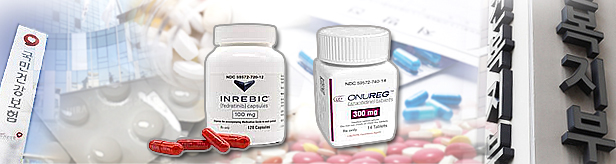
- BMS Korea made the decision to carry out a second voluntary price cut on its flagship hepatitis B treatment ‘Baraclude’ this year. It is rare for an original drug to undergo two voluntary price cuts in one year. The industry analysis is that the company is using the price cut of its off-patent drug Baraclude as leverage to list new drugs. According to industry sources on the 21st, BMS Korea voluntarily reduced the insurance ceiling price for its 0.5mg dose Baraclude (entecavir) from KRW 3,030 to KRW 3,006, and its 1mg dose from KRW 3,430 to KRW 3,403, effective as of August 1st. As a result, Baraclude’s price is now placed in the mid-range among same ingredient drugs. Eighteen 0.5mg dose and eight 1mg dose generic drugs are now more expensive than the original Baraclude. The company had already voluntarily reduced the price of Baraclude once in June. The 0.5mg dose’s price had been reduced from KRW 3,064 to KRW 3,030 at the time, and the price of the 1mg dose from KRW 3,470 to KRW 3,430 then. Coincidentally, a new drug from BMS was listed a month after the company carried out the voluntary price cut. In June, the myelofibrosis treatment Inrebic Cap (fedratinib) was listed for reimbursement, and in August, the acute myeloid leukemia treatment Onureg Tab is set to be listed for reimbursement through the RSA system. This is why the industry believes that BMS has carried out a 'trade-off' twice – lowering the price of its off-patent drug to list a new drug under the pretext of sharing the government’s financial burden. Such trade-offs are not revealed on the surface due to a confidentiality clause made during negotiations between the NHIS and pharmaceutical companies. However, there is a definite possibility that the company made trade-offs as the company made the voluntary price cuts for its off-patent drug the same month a new drug was listed. Recently, pharmaceutical companies are known to be the first to propose such trade-offs to the NHIS to list new drugs. Baraclude has remained in the top rank ever since its patent expired in 2015. Last year, it had made outpatient prescriptions of KRW 71 billion and ranked second to Viread (tenofovir disoproxil fumarate, Gilead), which had recorded KRW 89.5 billion. However, Baraclude’s sales had fallen 3%p last year due to the release of Vemlidy (tenofovir alafenamide hemiFumarate, Gilead), and the strong inflow of generics.
- Policy
- Original for Parkinson's dz tx released are withdrawn
- by Lee, Tak-Sun Jul 21, 2023 05:41am
- Decisions are being made to withdraw from Korea one after another, citing the weakening profitability of Parkinson's disease original treatment drugs, for which generics have appeared. Early this year, following Roche Korea's Madopar, Boehringer Ingelheim Korea's Mirapex ER also decided to stop supplying. The problem is that existing patients have a distrust of generic drugs, so there is a concern about a treatment gap if the supply of the original drug is discontinued. According to the industry on the 19th, Boehringer Ingelheim Korea recently informed the retailer that it would stop supplying Mirapex ER. Accordingly, Mirapex ER 0.375mg is expected to be sold out by July 31 next year, Mirapex ER 1.5mg by February 28 next year, and Mirapex ER 0.75mg by July 31 next year. However, Boehringer Ingelheim decided to maintain the supply of Mirapex. Mirapex is taken three times a day and Mirapex ER is taken once a day. Discontinuation of the supply of Mirapex ER, which is highly convenient, seems to be related to the entry of generics. Mirapex ER started with Hyundai Pharm's Mirap ER in 2014, followed by Samil Pharm's Prapexole ER and Myeongin Pharm's PD-Pexol ER. As three generic companies compete fiercely to preoccupy the market, drug prices are also falling. Each generic company is widening the gap with the original drug by voluntarily lowering the drug price. The profitability of original drugs has fallen due to drug price cuts following the introduction of generics, and market share is also in an emergency due to the generic offensive. In the case of Pramipexole ER 0.75mg, a component of Mirapex ER, the lowest price for generics has fallen from 740 won to 707 won. There is a difference of 74 won from the original price of 781 won. Due to the price reduction of Mirapex ER, Mirapex taken three times a day is better than Mirapex ER in terms of profitability. For this reason, some analyze that Behringer withdrew Mirapex ER and left Mirapex in the market. Roche Korea's Madopar also decided to discontinue supply in January of this year after the drug price was reduced when the generic was first released in August 2021. However, patients are requesting the resupply of Madopar through national petitions because generic drugs have side effects. Accordingly, Roche Korea and the Ministry of Health and Welfare are seeking a way out of the controversy by extending the insurance deletion grace period from July 31 to December 31. Roche has yet to make an official statement about resupply. CNS drugs such as Parkinson's disease drugs are highly dependent on drugs, so there is a high preference for existing prescribed original drugs. In this situation, patients' dissatisfaction is growing as original drugs are withdrawn from Korea due to profitability problems. Accordingly, while some argue that drug price hikes should be considered to maintain the supply of original drugs, others oppose that the government should step forward and implement policies to increase the reliability of generic drugs.

- Policy
- How Scemblix received reimb without negotiations
- by Lee, Tak-Sun Jul 21, 2023 05:40am
- The chronic myeloid leukemia treatment Scemblix (asciminib, Novartis) was passed the Drug Reimbursement Evaluation Committee review for costing the same as another 3rd generation CML treatment, Iclusig (ponatinib, Otsuka), The company agreed to set its price at 100% or below the weighted average price of its therapeutic alternative to waive the drug pricing negotiation process and succeeded in being listed within one year since it applied for reimbursement on July 27 last year. According to industry sources on the 20th, the DREC’s evaluation results on Scemblix were recently disclosed by the Health Insurance Review and Assessment Service showed that the cost of Scemblix, which was the same as that of Iclusig, was the decisive factor that prompted the committee to accept the adequacy of Scemblix’s reimbursement. Scemblix is a treatment for adult patients with Philadelphia chromosome-positive chronic myeloid leukemia (Ph+ CML) in the chronic phase previously treated with two or more tyrosine kinase inhibitors (TKIs). For Scemblix’s review, DREC selected Iclusig as the therapeutic alternative in consideration of the drug’s label, literature, academic opinion, and reimbursement standards. The committee explained, “The NCCN guidelines recommend the drug that submitted the application at the same level as ponatinib (Iclusig generic name), and as the drug’s improvement in effect over its therapeutic alternative is unclear in various variables, the two drugs are appropriate comparators in terms of drug administration cost.” In other words, the committee determined that Iclusig’s price will be the key factor that determines the adequacy of Scemblix’s reimbursement. In response, Novartis accepted a price that is 100% or lower than the weighted average price of its alternative. Accordingly, DREC determined Scemblix’s reimbursement appropriate and cost-effective because its effect was similar to its alternative, and the cost was the same. In particular, the company was able to waive the NHIS drug pricing negotiations as it accepted a price below the set standard. The drug price negotiation waiver system is applied to drugs that are deemed to have reimbursement adequacy, have similar effects to their alternative, and are cost-effective as they cost less or are equivalent to their therapeutic alternative. Scemblix is one example of how a company accepted a price at 100% or below the weighted average price and only underwent negotiations for the estimated claims amount. However, Scemblix had to overcome its share of obstacles to reimbursement listing. Most of all, the fact the approval can increase NHI financial spending as switching between Iclusig and Scemblix is allowed served as a major obstacle. This was why the Cancer Disease Deliberation Committee failed to set Scemblix’s reimbursement standards at its meeting last December. Reflecting this, Novartis applied for reimbursement again on January 12 this year. The DREC also acknowledged the adequacy of Scemblix’s reimbursement but added the condition that it would be necessary to consider the fiscal impact of switching. Accordingly, the company would have dealt with the switching issue during negotiations with the NHIS on the expected claims amount. Meanwhile, Scemblix 20mg’s reimbursement ceiling price was set at KRW 50,914, and Scemblix 40mg at KRW 76,371. Iclusig 15mg’s reimbursement ceiling price is KRW 60,400, and Iclusig 45mg is KRW 152,742. When considering how the recommended dose of Scemblix is 80mg, and Iclusig 45mg, the price of the two drugs are comparable.
- Policy
- Evrysdi also subject to prior authorization for reimb
- by Lee, Tak-Sun Jul 20, 2023 05:35am
- Pic of SMA treatments (from the left) Spinraza, Evrysdi, Zolgensma The Health Insurance Review and Assessment Service is expected to require the oral SMA (spinal muscular atrophy) treatment ‘Evrysdi Dry Syrup (risdiplam, Roche)’ to receive prior authorization for reimbursement. Also, HIRA is planning to reflect the prior authorization experience it has accumulated from Spinraza for Evrysdi. HIRA’s Healthcare Review and Assessment Committee announced so at a special press corps meeting with industry reporters on the 18th. Jin-Su Lee, Chair of the Healthcare Review and Assessment Committee, said, ”After literature review and reflection of overseas cases, we have prepared an announcement on the revised measures for prior authorization drugs based on the RWD (Real World Data) data we obtained from the prior authorization for Spinraza. The revised standards will be applied to the prior authorization review of the oral SMA treatment Evrysdi that was recently granted reimbursement. Jin-Su Lee, Chair of HIRA’s Healthcare Review and Assessment Committee is answering questions at a special press corp meeting on the 18th Currently, Roche is having pricing negotiations with the National Health Insurance Service for Evrysdi, after which reimbursement listing is expected. Also, the company for Spinraza Inj, a drug already listed for reimbursement, is negotiating to expand the use age for the drug with NHIS. The reimbursement standards for the two drugs are prepared after completing pricing negotiations, and the measure HIRA presented on the 18th will be reflected then. Lee said, “We expect the new measure to contribute to saving finances unnecessarily spent on SMA patients who are judged to have no effect with Spinraza Inj.” Based on the comment, it is likely that the Healthcare Review and Assessment Committee will be disapproving reimbursement of the drug to patients who are judged to have no effect. Spinraza is a high-priced drug that costs KRW 554 million per patient in the first year, then KRW 277 million every year thereafter. A HIRA official explained, "We cannot conclusively say that Evrysdi will be subject to prior authorizations as its reimbursement standards have not been announced yet. However, as the other existing SMA treatments are also required to receive prior authorizations, it is true that the drug’s chances of being subject to the same conditions are high.” Currently, the SMA treatments Spinraza and Zolgensma are subject to prior authorizations for reimbursement. Lee also added that just as in Spinraza's reimbursement standards, the committee will be reflecting the experience accumulated from other prior authorizations in the reimbursement review process as well. Lee stressed, “We will continue to sequentially analyze the data of other prior authorization drugs in addition to Spinraza inj. Although the purpose and content analyzed may differ by item, we will be assessing the possibility and need for the subject drugs to switch to general review drugs and identify whether there is a need to improve the reimbursement standards for others.” He added, "If the committee judges that it is necessary to improve the reimbursement standard based on data analysis, and there is valid evidence to support the change, we will closely work with relevant departments to make the necessary improvements." SMA is a rare condition in which the SMN1 gene is innately deficient or mutated to result in progressive muscle atrophy. In the case of SMA Type 1, the most common and severe form of SMA, if left untreated, over 95% of the motor neurons are damaged within 6 months, and 90% die before the age of 2 or require permanent respiratory support devices. Also, 30% of SMA Type 2 patients can die before the age of 25 and requires lifelong treatment. The reimbursement decision for the SMA treatment Spinraza has been subject to prior authorization ever since it was listed for reimbursement in April 2019. Also, ‘Zolgensma Inj,’ better known as the one-shot treatment for SMA, has been added as a prior authorization drug.
- Policy
- The more applications for pre-screening drugs, the higher
- by Lee, Tak-Sun Jul 20, 2023 05:34am
- .. Lee Jin-soo, chairman of the Medical Review and Evaluation Committee, "If the number of applications increases, the understanding of the benefit standards also increases." It was found that the higher the number of applications for pre-screening drugs, the higher the approval rate. It is an interpretation that the approval rate increases as the understanding of the salary standards accumulates. However, there is an interpretation that the salary standard is strict in the first place, so there is a high probability of disapproval of the salary in the pre-screening. Among pre-screening drugs, Soliris, which treats 'atypical hemolytic uremic syndrome (aHUS)', has a meager initial approval rate. The Health Insurance Review and Assessment Service presented an interpretation at the Korea Special Press Association meeting on the 18th that the understanding of the benefit standard was poor. In response to a question about the cause of Soliris' aHUS initial review approval rate and improvement plans, Chairman Lee Jin-soo explained, "I think the approval rate will increase if the clinical site fully understands the benefit standard and applies for it." He explained, “When we analyzed the status of approvals by the institution by 2022, we confirmed that the more cumulative applications there are, the more often they are approved.” According to the table released by the Clinical Review and Evaluation Committee, a total of 47 institutions applied for prior approval of Soliris in aHUS disease, and 51 cases (20.3%) out of 251 cases were approved. However, agency A, which applied the most, was approved for 10 out of 35 cases, with an approval rate of 28.6%, higher than the average. On the other hand, all 15 institutions that applied for prior approval were rejected. Regarding this, Chairman Lee explained, "As the number of applications for Solily increases, the understanding of the salary standard increases." Even so, it is pointed out that the approval rate of Soliris aHUS is too low compared to other drugs with an initial approval rate of more than 50%. In response, the Medical Review and Assessment Committee also said, "The expansion of the Soliris reimbursement standard was discussed at a recent advisory meeting, and the review results have been reported to the Ministry of Health and Welfare." In fact, it is pointed out that the Soliris aHUS salary standard is more difficult than overseas. In Korea, the benefit is approved only when all four criteria are satisfied: platelet count, mitotic red blood cell count, hemoglobin, and LDH, but the medical community says that the standard is higher than overseas. The Korean Society of Nephrology also submitted an opinion asking for relief standards to be relaxed. In March, Yoo Mi-young, head of the drug management office at HIRA, said, "A number of academic societies, including the Society for Nephrology, have submitted proposals for revising the reimbursement standards (for Soliris aHUS), including discontinuation of administration, administration standards, and evaluation methods." "We are currently reviewing the salary standards by identifying the reasons for pre-approval and disapproval and referring to expert opinions," she explained. It is noteworthy whether the pre-examination approval rate of Soliris will increase through the improvement of the benefit standard.
