
- LOGIN
- MemberShip
- 2026-05-01 22:35:22
- Policy
- MOHW-Roche have difficulty discussing resupply of Madopar
- by Lee, Jeong-Hwan Aug 28, 2023 05:21am
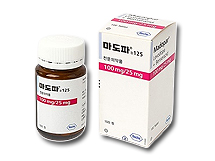
- The Ministry of Health and Welfare seems to be having difficulty bringing in Madopar, a Parkinson's disease drug that had withdrawn from the domestic market, back to Korea. The MOHW had previously announced that it would make efforts to resupply Madopar in Korea. Roche Korea is known to have refused to supply Madopar Tab to Korea, citing how additional administrative procedures are required to resupply Madopar and that significant expenses are required to produce quantities for export to Korea. On the 25th, the MOHW responded, "We will find a way to solve the patient's difficulties, including resupply," to a written inquiry submitted by Rep Eun-mi Kang, a member of the Justice Party and the National Assembly's Health and Welfare Committee regarding the supply of Madopar. According to MOHW, the authorities had listened to the patient's difficulties through an interview with the Korean Parkinson's Disease Association. At the same time, the Ministry of Health and Welfare also listened to the company's difficulties through a meeting with Roche Korea and suggested measures for Madopar’s resupply, such as guidance on drug price increase procedures. However, Roche Korea’s position is that it is difficult to resupply the drug in Korea because the company has to obtain documents necessary for new domestic approval from its Italian manufacturing plant and the manufacturing facility has been demanding a considerable price as the cost for restoring manufacturing facilities to produce the quantities for export. As a result, Myung-In Pharm's Myungdopar Tab, a generic version of Madopar, is being used instead of Madopar in the field. The MOHW said, "To address the need for Madopar in Korea, we will hold in-depth discussions with the pharmaceutical company the Ministry of Food and Drug Safety, and the Korean Parkinson's Disease Association to seek a way to resolve the difficulties of patients, including whether to resupply."
- Policy
- Are there any countermeasures against Rx of hair loss pills?
- by Lee, Jeong-Hwan Aug 25, 2023 06:06am
- The Health and Welfare Committee of the National Assembly will start reviewing legislation to institutionalize non-face-to-face treatment, excluding the prescription restriction bill for high-risk non-insured drugs such as hair loss treatment, which is being prepared by Rep. Jeon Hye-sook, and the public e-prescription legislation proposed by Rep. However, in the process of institutionalizing non-face-to-face treatment, the issue of prescription of high-risk non-reimbursed drugs and the need for regulatory and management measures for electronic prescriptions to be issued after non-face-to-face treatment are expected to be discussed together. Whether the Ministry of Health and Welfare can clearly come up with measures to solve the problem of abnormal prescriptions and dispensing that can be mass-produced when non-face-to-face treatment is enacted, or the collapse of the healthcare ecosystem such as hospitals, clinics, and pharmacies, will determine the legislative success or failure. On the 24th, the Welfare Committee began reviewing five previously proposed amendments to the Medical Act related to the institutionalization of non-face-to-face treatment and the implementation plan submitted by the Ministry of Health and Welfare. The screening, which began at 9:30 a.m., is expected to continue until lunchtime. The non-face-to-face treatment bill submitted by the Ministry of Health and Welfare is the main point of the pilot project currently being implemented. It is a content that allows non-face-to-face treatment mainly for returning patients and clinics and allows first visits only in special cases such as residents of medically underserved areas, people with mobility difficulties, and people with disabilities. Prescription drug delivery is allowed only in special cases by designating it as a home recipient, and basically, it is required to visit a pharmacy and receive face-to-face medication instruction. However, the Ministry of Health and Welfare submitted an improved opinion on the regulation of non-face-to-face treatment platforms such as Dr. Now. First of all, platforms that want to run a non-face-to-face treatment brokerage business must go through a reporting process that requires government repairs. In the case of non-reporting or false reporting, a fine of not more than 3 million won was imposed. According to the Ministry of Health and Welfare, a report requiring repair is a report system operated with a relaxed permit. It is not simply a report that meets formal requirements, but it must meet practical requirements such as human standards and material standards. The report review by the Ministry of Health and Welfare also includes not only a formal review but also a substantive review on whether or not the statutory requirements or legislative purpose are met. The view of multiple welfare committee members is that the key to reviewing the non-face-to-face treatment bill will be whether the Ministry of Health and Welfare has prepared specific countermeasures for the side effects that occurred during the pilot project. The purpose is that legislation may be difficult if it is not clear how to manage the ratio of non-face-to-face treatment, which is focused on prescriptions for non-insured high-risk drugs such as hair loss treatments, morning-after pills, and acne medications. In addition, it is expected that the Ministry of Health and Welfare will have to come up with solutions for electronic prescriptions issued after non-face-to-face treatment, such as managing sensitive patient information and preventing concerns about forgery. In particular, the range of non-face-to-face treatment patients allowed in the pilot project stage is also a legislative issue. The current pilot project permits all diseases other than those requiring a prescription for narcotic drugs or medicines concerned with misuse or abuse during non-face-to-face treatment other than first visits. For this reason, there are criticisms that the side effects of non-face-to-face treatment, such as hair loss pills, morning-after pills, and acne medicine, are accelerating, such as the concentration of prescriptions in some treatment categories or disease groups. Some welfare committee members are expressing the opinion that legislating such a pilot project as it is is too broad. It is the opinion that non-face-to-face treatment should be allowed locally only for residents of medically vulnerable areas where non-face-to-face treatment is unavoidable due to poor mobility or lack of medical institutions and pharmacies in the living radius. Cho Won-joon, the senior expert on the matter, said, "We examine the non-face-to-face treatment bill submitted by the Ministry of Health and Welfare, but how to manage non-consensual and irrational non-face-to-face treatment prescription behavior, such as non-insured hair loss prescriptions that have not yet been proposed or are omitted from the agenda, and how to manage e-prescriptions. The position of the Ministry of Health and Welfare will determine the success or failure of the legislation,” he explained. Commissioner Cho Won-joon explained, "The Ministry of Health and Welfare must clearly present a policy to operate the system so that non-face-to-face treatment does not produce side effects that threaten the safety of the public and patients and destroy the health care ecosystem."
- Policy
- Bayer completes pricing negotiations for Jivi Inj in KOR
- by Lee, Tak-Sun Aug 25, 2023 06:06am
- Bayer’s hemophilia A treatment Bayer’s s hemophilia A treatment ‘Jivi Inj (damoctocog alfa pegol)’ has come one step near to receiving reimbursement in Korea. On the other hand, reimbursement discussions for Lilly Korea’s ‘Retevmo (selpercatinib)’ have returned to square one after the company failed to complete pricing negotiations for its RET targeted anticancer drug with the NHIS. In addition, Teva-Handok started pricing negotiations for its antibody drug for asthma, ‘Cinqair (reslizumab)’ with the NHIS. According to the industry on the 24th, the NHIS had updated the drug pricing negotiation status of new drugs on its webpage recently. The drug pricing negotiations for Jivi Inj were found to have been completed. In May, the drug was approved for reimbursement under the condition that it accepts a price below the amount evaluated by the Drug Reimbursement Evaluation Committee of the Health Insurance Review and Assessment Service. Jivi Inj then initiated and completed drug pricing negotiations with the NHIS. However, due to the timing of the agreement, the drug will be listed for reimbursement the month after the next, rather than next month. Jivi Inj is indicated for use in previously treated adults and adolescents (12 years of age and older) with hemophilia A (congenital Factor VIII deficiency) as an on-demand treatment and control of bleeding episodes, for the perioperative management of bleeding, and routine prophylaxis to reduce the frequency of bleeding episodes. Another drug, Lilly’s Retevmo Cap, had failed to reach an agreement after completing pricing negotiations. Retevmo passed the DREC review in May but was unable to close the gap in opinion with the NHIS during pricing negotiations without extending the negotiation period. As such, the company would need to restart the reimbursement application process from scratch for reimbursement in Korea. Retevmo is indicated for the treatment of ▲RET-mutated medullary thyroid cancer and ▲ RET fusion benign thyroid cancer. Although the number of patients is small, the drug is used in RET-mutated patients with poor prognosis. No drug for RET mutation has been approved for reimbursement in Korea yet. Teva-Handok newly started pricing negotiations for the reimbursement of its antibody drug for asthma, ‘Cinqair Inj.’ Cinqair passed DREC review in July. The drug is used to treat severe eosinophilic asthma. As an interleukin-5 (IL-5) inhibitor, it has a new mechanism of action that reduces the levels of blood eosinophils, a type of white blood cell that is involved in the development of asthma exacerbation. Roche failed to reach an agreement within the deadline for its spinal muscular atrophy (SMA) treatment 'Everysdi Dry Syrup (risdiplam)', which has been under negotiations since last June and extended its negotiation period.
- Policy
- Reduction in the scope of platform regulation & re-examinati
- by Lee, Jeong-Hwan Aug 25, 2023 06:06am
- Following the decision to postpone the non-face-to-face treatment institutionalization bill again by the National Assembly Health and Welfare Committee on the 24th, it is evaluated that the number of issues to be resolved for legislation has increased. At the same time, the need to reduce the scope of non-face-to-face treatment patients compared to the current pilot project was raised, and criticism followed that there was no mechanism to regulate illegal and expedient actions by mediation platform companies. Furthermore, as a result of the pilot project that has been in effect since last June, it is still difficult to punish without distinguishing first-time and returning patients in non-face-to-face treatment, and it is a shame for violations of the law that exceeds 30% of non-face-to-face treatment and dispensing rates allowed by medical institutions and pharmacies. Members of the National Assembly’s subcommittee point out that there is not even a countermeasure against losing. On this day, the non-face-to-face treatment legislative review was in the direction of a collision between the Ministry of Health and Welfare's request to regulate expedients on some platforms through prompt institutionalization and the National Assembly's criticism of the Ministry of Health and Welfare's countermeasures against many side effects that may occur in the enactment of non-face-to-face treatment legislation. It is said that it has been done. Opposition members of the welfare committee who participated in the review are of the opinion that the Ministry of Health and Welfare has not come up with a proper legislative bill to address problems that threaten public health and cause confusion in the health and medical ecosystem. Although the Ministry of Health and Welfare submitted a government bill to the National Assembly that went through the process of amending and improving the provisions with the Welfare Committee expert committee, criticism continued that it failed to come up with legal provisions to solve even the problems that occurred during the pilot project. The basics of the welfare committee members are that there are no measures on how to classify first-time and returning patients when institutionalizing, what punishments to be imposed in case of violation, and how to regulate the problem of implementing non-face-to-face treatment exceeding the allowable rate (up to 30% for pilot projects). negative opinion.
- Policy
- Verquvo will be listed for reimb at KRW 2,867 in KOR
- by Kim, Jung-Ju Aug 24, 2023 05:46am
- The 3 doses of Bayer Korea’s chronic heart failure treatment Verquvo Tab will be newly listed at KRW 2,867. The price of Abbott Korea’s Depakote Sprinkle Cap (divalproex sodium) will be raised by nearly 22% upon the company’s request and negotiations. According to industry sources on the 22nd, the Ministry of Health and Welfare is working on the ‘Amendment to the drug reimbursement list and reimbursement ceiling price table’ that contains the abovementioned changes that will become effective as of the 1st of the next month. First, 5 new that contain 3 ingredients are waiting to be listed after successful negotiations with the NHIS. The 2.5mg, 5mg, and 10mg formulations of Bayer Korea's Verquvo tablets will be listed at KRW 2,867. Two new melphalan hydrochloride drugs, a treatment for multiple myeloma, will also be newly listed. The price of Ace Pharma’s Megval Inj. 50mg and Korea HO Pharm’s Melpspal Inj. 50mg were set at KRW 110,000 per vial. A total of three drugs have succeeded in negotiations and will receive raise in drug prices. Among the drugs notified on the reimbursement list, these are drugs that successfully negotiated with the NHIS after requesting a price increase (application for adjustment) and passing deliberations by the Drug Reimbursement Evaluation Committee, and succeeded in negotiations with the NHIS. In order for the price adjustment application to be accepted, all of the following conditions must be met: the drug must be▲ essential for patient care ▲ no alternative drug exists ▲ the cost of administration is lower than its alternatives, and is supplied by a single company. In terms of the price increase by drug, Abbott Korea's Depakote Sprinkle Cap (divalproex sodium) will be supplied at a price of a 21.5% increase. In addition, Korea Orphan & Essential Drug Center’s Xenazine Tab (tetrabenazine) will be priced at a 19.6% increase, and DID Bio’s Leclean Solution (sodium phosphate enema) will be set at a 28.7% increase in price and supplied.
- Policy
- Generics for Januvia are deleted from the reimbursement list
- by Lee, Tak-Sun Aug 24, 2023 05:46am
- 6 While 239 drugs containing Sitagliptin, the active ingredient of DPP-4 diabetes treatment Januvia, will be registered for benefit on the 2nd of next month, six existing supplementary items will be deleted from the benefits list. It is interpreted that five items were excluded from the medical care benefit due to the newly created negotiation process. According to the industry on the 23rd, six supplementary items among sitagliptin generics will be deleted from the benefit list on the 1st of next month. These items were listed before June 2020, when the provisional registration system disappeared. The provisional listing system is a system in which generics approved by the Ministry of Food and Drug Safety are listed on the reimbursement list in advance during the original patent period. Through this, 9 items of sitagliptin phosphate hydrate were tentatively listed, but 6 items were deleted this time. In the case of Kwangdong Sitagliptin Phosphate Hydrate Tab 100mg, the pharmaceutical company expressed that it had no intention to sell it, and the list of benefits was deleted according to the last deliberation. Starvia 100mg, Janulinin S 100mg, Sitaliptin 25mg, 50mg & 100mg were not agreed upon as a result of the negotiations, so they are excluded from the medical care benefit after deliberation by the Health Insurance Policy Deliberation Committee. For these items, it seems that no agreement was reached in the negotiations related to the stable supply and quality control of drugs. Negotiations on this content were introduced in October 2020 for drugs subject to calculation, such as generics. It is interpreted that the provisional items had to be negotiated for stable supply on the premise of the actual launch, but this was not met. Instead, Kwang Dong, Daewon, and Vivozon are scheduled to be listed on the 2nd of next month as other items of sitagliptin. Among the tentatively listed items, only three items from Shinpoong Pharmaceutical Sitaglu will be listed on the 2nd of next month.
- Policy
- Conflict rise over the need of the PE exemption system
- by Lee, Jeong-Hwan Aug 24, 2023 05:45am
- Experts are showing a sharp conflict of opinion over the effectiveness and need for the existence of Korea's system that exempts new drugs from receiving pharmacoeconomic evaluations. The PE exemption system, which was introduced in 2015, was implemented to improve access to new drugs for patients with severe and rare diseases. However, conflict has been rising on whether to abolish/reduce or continue the operation of the system after making improvements. Those who are in favor of the PE exemption system argue that the system should be more actively implemented but the process strengthened to increase patient access to treatments, while opponents argue that the system makes overseas drug prices be reflected as they are, wasting health insurance finances and only benefitting the pharmaceutical companies. On the 22nd, the pros and cons of the PE system were discussed by medical and pharmaceutical experts at a forum hosted by NA Rep. Hye-Young Choi of the Democratic Party of Korea to improve the PE exemption system that allows drugs to waive submission of pharmacoeconomic evaluation data during the reimbursement review process. Borami Kim, Co-chair of the Market Access Committee at KRPIA (Korea Research based Pharmaceutical Industry Association), which represents the global pharmaceutical industry, said that the PE exemption system has many advantages in expanding patient access to drugs within the limited health insurance budget. In other words, Kim’s point is that abolishment of the system is out of the question as it would impede patient access to new drugs. Kim said, “It is much more beneficial to operate the current system well according to its purpose, and it is also in line with the direction of the current government policy, which stresses the proper use of limited resources and the abolition of regulations. If we dismiss the benefits of the system and discuss its abolition or bring in more post-marketing control regulations than now, the door of opportunity for patients will only get narrower and narrower.” Dr. Young Chul Moon, Professor of Hemato-Oncolgoy at Ewha Womans University Mokdong Hospital, who actively treats patients in the field, also supported the improvement and maintenance of the PE exemption system. In particular, Moon’s diagnosis was that Korea’s new drug reimbursement speed was too slow despite the existence of the PE exemption track. His concern was that the speed of new drug reimbursement could be further delayed with the removal of the PE exemption system. Therefore, Moon proposed an improvement plan that raises the standards for submitting the PE exemption plan while further activating the system for its better management. Moon said, “New drugs that are in need of rapid reimbursement are not being introduced fast enough, even with the PE exemption system in place. It took over 6 months for Kymriah’s reimbursement, and patients and doctors are all concerned that reimbursement will further be delayed with the removal of the PE exemption system.” "Also, tighter pharmacoeconomic evaluations are made for drugs like anticancer drugs that are reimbursed through the PE exemption track. The Cancer Disease Deliberation Committee requests the companies to submit PE data to determine the price and request price cuts. Many drugs give up reimbursement even after applying for PE exemptions.” “We should encourage faster introduction of innovative drugs that improve patients’ lives, even if we bear the cost to some extent, and instead, we should establish a system to conduct reevaluations every 2-3 years. There is also a need for a policy to secure health insurance finances and stabilize drug prices by lowering the price of generics and biosimilars while encouraging their use.” Dong-Geun Lee, Director of the Korean Pharmacists’ Association for Healthy Society, objected to the system, claiming that it had changed into a system that maximized the benefits of pharmaceutical companies. Just as concerns were raised when the system was introduced in 2015, the price of new drugs has been set at a higher price due to the PE exemption system, and the system is becoming a chronic go-to regulation for companies rather than an exception. Lee said, "When the system was introduced during the Park Geun-Hye administration, civic groups opposed it because the system will accept the drug prices of advanced countries as is. We were concerned that it would have the effect of increasing the price of new drugs that should have been reimbursed through the positive listing system. We need to find out how much of these concerns have been resolved today.” “The purpose of the PE exemption system is to enhance patient access but it is used as a beneficial system for pharmaceutical companies that exempts the submission of safety and efficacy review data that pharmaceutical companies are required to submit. It was an exception at the time of introduction, but as it improved, the number of such exemptions continued to increase, and 17 drugs that have comparator drugs took the PE exemption track." Eun-Young Bae, Professor of Pharmacy at Gyeongsang National University also claimed the need to minimize the use of the system. Bae said the government should reduce the use of the PE exemption track to only when necessary to resolve its side effects such as how it adversely affects the reimbursement of of latecomer drugs.” In particular, Professor Bae dismissed concerns that access to new drugs for patients will decrease if the PE exemption system is abolished, saying, "We need to regard the two separately.” Professor Bae said “I do not mean that the PE exemption drugs should be non-reimbursed. "However, there is no decision-making measure available to use when clinical evidence is accumulated for PE exemption drugs that were approved through a simplified pathway. In order to make the best decision, we have to decide based on sufficient grounds, but the problem is that the PE exemption system does not allow this to happen.” “I don't think abolishing the PE exemption system will act as the main obstacle that hinders prompt reimbursement of new drugs. There are other ways to speed up patients' access to new drugs by conducting rolling evaluations even before the data is complete." Chang-Hyun Oh, Director of Pharmaceutical Benefits at MOHW, said that he agrees that there is a need to evaluate the pros and cons of the PE exemption system, and will collect various opinions and make efforts to make the best decision. Oh said, “The PE exemption system was established through social consensus, and the side effects of the system are just being discussed now, 6-7 years after its implementation. We conducted a preceding study last year, and we would need to simulate various scenarios after a system improvement plan is proposed based on the study, such as by adding a risk-sharing condition to the Pe exemption system, etc.”

- Policy
- 157 single and 82 combo Januvia generics reimbursed in KOR
- by Lee, Tak-Sun Aug 23, 2023 05:46am
- TA total of 239 new drugs that contain ‘sitagliptin,’ the active ingredient of the DPP-4 inhibitor class drug Januvia (MSD), will pour out onto the market on the 2nd of next month. In terms of the number of companies, 59 companies will be releasing their single-agent generics and 63 will be releasing their fixed-combination generics. According to industry sources on the 22nd, a total of 239 items (157 single-agent drugs, 82 fixed-combination drugs) will be listed for reimbursement on September 2, the day after the expiration of sitagliptin’s substance patent. In the case of the single-agent drug, 157 items from 59 companies will be reimbursed. The highest insurance price for sitagliptin 25mg was set at KRW 261, and 37 items received the price. only 3 items have a price below KRW 261. The highest insurance price set for the 50mg formulation was KRW 393 and was applied to 55 items, with 4 items having a lower price. The highest insurance price set for 100mg was KRW 592, and 57 items received the price, with 4 items having a lower price In the case of the fixed-dose combinations, 82 items from 63 companies will be listed. Among them, there are 9 triple fixed-dose combination drugs. Hanmi Pharm, Daewon Pharmaceutical, and Chong Kun Dang will release a three-drug fixed-dose combination that contains sitagliptin. The remaining 73 items are two-drug combinations, most of which are sitagliptin (DPP4i) + dapagliflozin (SGLT2i) combinations. Only Chong Kun Dang and Hanmi Pharm’s generic Janumet (metformin HCI + sitagliptin phosphate hydrate) are listed this time. The other Janumet latecomers have a different salt and hydrate formation. Therefore, single-agent drugs that contain the same ingredient will be listed this time, and other combination drugs are expected to be listed in October.
- Policy
- 'No other country has a PE exemption system'
- by Lee, Jeong-Hwan Aug 23, 2023 05:46am
- Professor Eun-Young Bae “Korea is the only country that has introduced the use of the pharmacoeconomic evaluation exemption system. As an academic, I do not understand the logic of the PE exemption system. It is also difficult to explain to other countries. If a particular drug has received reimbursement at a non-cost effective price due to the system, it will continue to affect latecomers in the indication." An expert has pointed out that the use of the PE exemption system in place for the reimbursement of drugs approved in Korea should be reduced to a minimum. The analysis is that if a drug has demonstrated a significant level of clinical benefit or is an ultra-rare disease, the specificity of the drug, such as its impact on health insurance finances, should be closely reviewed to determine whether to apply for PE exemptions. Also, suggestions that the current standard, which allows drugs that should not be subject to PE exemptions to receive exemptions, should be reformed and a separate reimbursement standard should be set for National Essential Medicines were raised. Eun-Young Bae, Professor of Pharmacy at Gyeongsang National University expressed her opinion at a forum that was held on the 23rd to seek ways to improve the PE data waiver system (PE exemption system) of pharmaceutical economic evaluation data. The PE exemption system, which was introduced in 2015, reviews the listing status and listed prices of a drug in A8 countries (that the government uses to calculate the foreign adjusted average price of drugs) during the reimbursement review process rather than its cost-effectiveness. As of July 2022, 26 drugs have been reimbursed under the PE exemption system. Professor Bae pointed out that it is necessary to review how to resolve the uncertainties that arise due to the cost-effectiveness of PE exemption drugs. Bae explained that the issue should be resolved because high uncertainties remain about the clinical grounds of drugs that were reimbursed through the PE exemption system, and affects the evaluation of its latecomers. Bae stressed, “An initial evaluation should be made on PE exemption drugs. The effectiveness of the reevaluations that are conducted after the application of the PE exemption system is low because of the lack of initial evaluation. If a drug has been reimbursed through the system at a high price and is not cost-effective, this will continue to affect latecomers.” She added, "We also need to look at whether to keep the initial registration conditions during the 5 years until reevaluations said. "We need to check how to evaluate the latecomers of PE exemption drugs and what the appropriate price level should be for the PE exemption drugs." "The justification for the use of the system is weak. If the government seeks to maintain the system nevertheless, its use should be minimized to the extent necessary. The PE exemption drugs should submit pharmacoeconomic evaluation plans in advance and receive deliberations that can be used as the basis for price reevaluation or readjustments in the future.” The forum was cohosted by NA Rep. Hye-Young Choi of the Democratic Party of Korea and the Korea Alliance of Patients Organization
- Policy
- Envlomet SR is priced at 611 won, the same price as Envlo
- by Lee, Tak-Sun Aug 23, 2023 05:46am
- Daewoong Pharmaceutical's self-developed SGLT2i ingredient, Enavogliflozin, combined with Metformin hydrochloride will be released in September. In particular, even though metformin hydrochloride is added, the price is the same as the existing single drug Envlo. This is related to the drug price calculation structure for combination drugs. According to the industry on the 22nd, Daewoong Pharmaceutical's Envlomet SR 0.3/1000mg will be listed as a benefit at 611 won per party from the 1st of next month. This drug is a combination drug that combines metformin, an ingredient for treating diabetes, with Envlo, a new domestic SGLT2i drug released last May. Envlo It contains Enavogliflozin 0.3mg and Metformin HCl 1000mg and is administered as an adjunct to diet and exercise therapy to improve blood sugar control in type 2 diabetic patients for whom combined administration of Enavogliflozin and Metformin is appropriate. The price is the same as the single drug Envlo. The combination drug is calculated as the sum of 68% of the single drug, and even if you add 418 won, which is 68% of the single drug Envlo, and 119 won for metformin 1000mg, it costs 537 won, which is cheaper than the single drug. As this reversal phenomenon appeared, the same calculation was made with the single drug price. As a result, even if Envlo is administered at 611 won per tablet and then switched to Envlomet for blood sugar control, the patient does not have an additional financial burden. Compared to the same series SGLT-2 series Forxiga and Xigduo XR, Envlo or Envlomet are at a high level. This is because the patent for Dapagliflozin of Forxiga expired in April, and generics have appeared. Looking at the adjusted price, Forxiga 10mg is 734 won to 514 won, Xigduo XR 10/1000mg is 736 won, 512 won, and Xigduo XR 10/500mg is 736 won to 473 won. Forxiga and Xigduo's direct adjustment price is cheaper than Envlo or Envlomet. In the future, Daewoong Pharmaceutical plans to continue expanding its lineup of complex drugs, starting with Envlomet, as demand for complex drugs continues to increase in the domestic diabetes treatment market.
