
- LOGIN
- MemberShip
- 2026-05-01 14:44:58
- Policy
- Why did the original Ninlaro voluntarily cut its price 34%
- by Lee, Tak-Sun Sep 27, 2023 05:44am
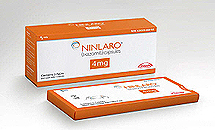
- The insurance ceiling price of Takeda Pharmaceuticals Korea’s multiple myeloma treatment ‘Ninlaro Cap’ will be discounted by 34% from October. 10% of the price cut is made due to the price-volume agreement system, but the company had voluntarily lowered the price significantly over the set 10%. It is rare for an original drug with no generic to reduce its insurance price ceiling by over 30%. Why did Takeda decide to make such an unexpected price cut? According to the industry on the 26th, from October 1, the insurance price ceiling of Ninlaro will be lowered by KRW 494,000 from the previous KRW 1,450,000 to KRW 956,000. This is a drastic reduction amounting to 34%. First, the maximum reduction rate for this drug was reduced by 10% through the price-volume agreement negotiations. It was reduced from KRW 1,450,000 to KRW 1,305,000. In addition, the company further lowered the insurance price ceiling to KRW 956,000 voluntarily. Regarding the price cut, Takeda Pharmaceuticals Korea, said, “In addition to the reduction due to the price-volume agreement negotiations, the change in the insurance price ceiling of Ninlaro Cap. is the result of the change in the company's internal policy. The company is pleased to be able to provide Ninlaro Cap. to patients with multiple myeloma in Korea at a reduced price." “All decisions within our organization are made in accordance with our code of conduct - Patient, Trust, Reputation, Business (PTRB) — which bring our values of Takeda-ism to life.” The nuance is that the price cut will provide economic benefits to patients. However, some analysts say that the reduction in the price ceiling will only change the list price, and there will be no actual change in the real price of the drug. Rather, the analysts expected that the company would benefit from tax reduction by lowering the list price. Ninlaro is reimbursed through an RSA (risk-sharing agreement) with the National Health Insurance Service. It is reimbursed through a refund-type RSA, which means that a certain percentage of the drug expenditure that exceeds the pre-agreed amount is refunded to the NHIS by the company. Refunds are made based on the actual price, not the list price (insurance price ceiling). Accordingly, the analysis is that if the actual price does not change, it will not affect product performance, health insurance expenditures, or the economic burden of patients. An industry official said, "The actual price may have gone down through the NHIS’s PVA system. But the voluntary cut seems to have only changed the upper limit of the list price." He added, "If the actual price remains the same, nothing much will change in the field.” He added, “However, by lowering the list price, you can benefit from tax savings during customs clearance. I understand that many companies that receive reimbursement through RSA are considering lowering their drug’s list price for tax benefits.”
- Policy
- Madopar triggers bioequivalence test verification requests
- by Lee, Hye-Kyung Sep 26, 2023 05:50am
- The demand has been rising for the government to verify the validity of bioequivalence tests conducted by generic versions of Madopar Tab (levodopa-benserazide), Roche Korea’s Parkinson's disease drug that had withdrawn from the domestic market. Opinions are being collected on the post ‘Regarding the validity of bioequivalence tests that serve as the standard for approving generic drugs’ that appeared as an open petition on the Petition24 website earlier this month. The opinion collection deadline is October 6. The petitioner, who described himself as a Parkinson's disease patient for 20 years, said, "Original drug manufacturers are withdrawing from Korea because of fake generic drugs. No matter how cheap the drugs are, we are in a situation where we have to put aside good drugs and take quack generic drugs.” The price of Madopar Tab was reduced with the introduction of generics in 2021, and Roche Korea voluntarily withdrew its marketing authorization on January 6 this year. The Ministry of Health and Welfare had been making efforts to supply the original in Korea, such as by extending the reimbursement term for Madopar that Roche voluntarily withdrew, from July 31 to December 31. However, Roche Korea submitted a written position on how it would be difficult to resupply the drug in Korea because the company has to obtain documents necessary for new domestic approval from its Italian manufacturing plant that produces Madopa Tab, and the manufacturing facility has been demanding a considerable price due as cost of restoring manufacturing facilities to produce the quantities for export. This is why patients have been demanding the Ministry of Food and Drug Safety to verify the validity of the bioequivalence tests that are conducted for the approval of generics. The petitioner said, "The withdrawal of original drugs and the introduction of generic drugs is a very natural phenomenon in some ways. I happily accepted this phenomenon and switched prescriptions to the relatively inexpensive generic drugs." "However, I physically feel the difference in effect when taking the medicine for a long time. Bioequivalence tests are designed on a logical and scientific basis, and many people have a great deal of trust in this bioequivalence test, I know that it is an internationally recognized test. But due to my personal experience, I can’t help but start to have doubts about its validity.” Therefore, the petitioner requested the government to create a bioequivalence test feasibility study team composed of experts to examine whether standards for generic drugs could be added to bioequivalence tests or whether new standards were needed and create an international standard for generic drugs that can be recognized around the world. However, the MFDS drew the line that the safety and effectiveness of generics that passed the bioequivalence test were equivalent to the original. An MFDS official emphasized, "In the case of generic drugs, bioequivalence tests that compare the drug with the original are required upon approval. When a generic drug demonstrates its bioequivalence to the original, its safety and efficacy are judged to be equivalent to the original drug. This is an internationally accommodated standard."
- Policy
- Pfizer’s Bosulif in pricing negotiations for reimb in KOR
- by Lee, Tak-Sun Sep 26, 2023 05:49am
- The reimbursement listing process for Pfizer’s Philadelphia chromosome-positive chronic myeloid leukemia (CML) treatment Bosulif (bosutinib) is gaining momentum. The drug has entered the drug pricing negotiation stage only 8 months after it received approval in January in Korea. As a late 2nd-gen Ph+ CML drug entrant to Korea, the drug is expected to contribute to increasing Pfizer's recognition in the domestic Ph+ CML treatment market. According to industry sources on the 25th, Pfizer accepted the results of the Drug Reimbursement Evaluation Committee (DREC) meeting that was held on the 7th. At the meeting, The efficacy and effect of Bosulif 100, 400, and 500mg were deemed adequate for reimbursement if the company accepts a price below the assessed price for Ph+ CML. DREC is understood to have presented a price lower than the weighted average of its alternative as other second-generation drugs, such as BMS Korea’s ‘Sprycel,’ Novartis’s ‘s ‘‘Tasigna,’ and Il-Yang Pharamceutical’s ‘Supect (ladotinib)’. In Korea, up to 4th generation Ph+ CML treatments have been released with the reimbursement listing of Novartis ‘Scemblix’ in July. As Pfizer accepted the conditions presented by DREC, Bosulif is expected to move on to the drug price negotiation stage. This is in 6 months since it the drug was first approved last January. At the HIRA's Cancer Disease Deliberation Committee that was held a month before DREC, the drug succeeded in setting reimbursement standards only for Ph+ CML as a second-line treatment. CDDC has decided to recognize the adequacy of the drug’s reimbursement only for Ph+ CML in the chronic phase (CP), accelerated phase (AP), and blast phase (BP) that shows resistance or intolerance to previous therapy. On the other hand, no reimbursement standard had been set for the treatment of newly diagnosed chronic phase Ph+ CML. Accordingly, Pfizer is expected to first list the drug as a second-line treatment as soon as possible, then move forward and expand its reimbursement as a first-line treatment. Given that the drug price negotiation deadline with the National Health Insurance Service is 60 days, there is a high possibility that the drug will be reimbursed within the year. If this happens, the drug will gain attention as a new drug that took less than one year from approval to reimbursement.
- Policy
- Hanmi is the first to release Zytiga generic at half price
- by Lee, Tak-Sun Sep 25, 2023 05:35am
- Hanmi Pharm has become the first to launch the first generic of Janssen's prostate cancer treatment ‘Zytiga (abiraterone acetate).’ In particular, the drug is expected to greatly reduce the financial burden borne by patients as it is sold at a much lower price than the original Zytiga. According to industry sources on the 22nd, Hanmi Pharm’s 'Abiteron Tab 500mg' will be listed for reimbursement on the 1st of next month. The drug is a generic that contains the same ingredients as Zytiga and is the first generic to be listed for reimbursement. Its insurance price ceiling is KRW 8,537 per tablet, which is almost half of that of Zytiga, which is KRW 16,780. It is even lower than 53.55% of the original price, which is the standard used to calculate the price of generics. The company said that it set a low price to reduce the financial burden on patients and improve accessibility. There are no patents registered on MFDS’s green list for Zytig. Nevertheless, the reason no other generic version has been approved so far is due to the difficulty in conducting bioequivalence tests. However, Hanmi succeeded in completing the bioequivalence test and won the first generic title. Abiteron has the same indications as Zytiga. The drug is indicated for ▲the treatment of asymptomatic or mildly symptomatic patients with metastatic castration-resistant prostate cancer, ▲treatment of f metastatic castration-resistant prostate cancer in adult men whose disease has progressed on or after a docetaxel-based chemotherapy regimen, and ▲ treatment of newly diagnosed high-risk metastatic hormone-sensitive prostate cancer (mHSPC) in adult men in combination with androgen deprivation therapy (ADT). Among these, Janssen, which owns the original Zytiga, is taking steps to convert the selective reimbursement (30% copayment rate) status of the third indication to essential reimbursement (5% copayment rate). If the company succeeds in expanding reimbursement of its drug, Abiteron is also expected to benefit and receive expanded coverage. Based on IQVIA sales, Zytiga recorded sales of KRW 21.8 billion in Korea last year.
- Policy
- Mifegyne, inadequate national essential drug system
- by Lee, Jeong-Hwan Sep 25, 2023 05:34am
- Rep. Nam In-soon applies as a reference to the Pharmaceutical Society for a Healthy Society Anticipation of questions such as transparency of essential medicines. Problems with the national essential drug designation system and the issue of the miscarriage inducer Mifegyne not being designated as a national essential drug are expected to be discussed at this year's Ministry of Food and Drug Safety inspection. On the 22nd, after examining the final list of applications for witnesses and references for the National Assembly's Health and Welfare Committee of the National Assembly, Nam In-soon, a member of the Democratic Party of Korea, applied for Lee Dong-Geun, secretary general of the Pharmaceutical Association for a Healthy Society, as a reference. Rep. Nam's reason for applying as a reference is to inquire about problems with the national essential drug system. The Pharmaceutical Association for a Healthy Society has been pointing out problems with the Ministry of Food and Drug Safety's national essential drug designation system for several years now. The biggest problem that the Pharmaceutical Association for a Healthy Society is looking at is that the purpose and standards for reorganizing the national list of essential drugs are unclear, and that “miscarriage-inducing drugs,” which civil society has been continuously demanding, are not designated as essential drugs. Due to the decision in 2019 to make the abortion law unconstitutional, many women are receiving abortion procedures at medical institutions starting in 2021, but abortion through medication is still not performed in Korea, and the reason for this is the non-designation of Mifegyne as an essential drug. The Ministry of Food and Drug Safety has not designated Mifegyne as a national essential drug. Although the Ministry of Food and Drug Safety's failure to designate Mifegyne as an essential drug cannot necessarily be viewed as faulty administration, it has been pointed out that the national essential drug designation system must be disclosed more transparently in order to examine whether it is proper administration. This is also the reason why the Pharmaceutical Association for a Healthy Society is demanding that the Ministry of Food and Drug Safety reveal the standards for designating nationally essential drugs. In addition, the Pharmaceutical Association for a Healthy Society pointed out that it was a problem that nine items for the treatment of acquired immunodeficiency syndrome (HIV) were included in the list of drugs that can be de-designated as essential drugs. Acquired immunodeficiency requires a variety of medicines due to the nature of the disease, and it is unreasonable for the Ministry of Food and Drug Safety to consider lifting the designation even though there is a precedent in the past where multinational pharmaceutical companies unilaterally stopped supply for economic reasons. An official from the Pharmaceutical Society for a Healthy Society explained, “We plan to respond to questions from the National Inspector General regarding the non-designation of miscarriage inducers such as Mifegyne as essential drugs and urge that the standards for designation as national essential drugs be disclosed more transparently than they are now.” He explained, “Even if a lactic acid inducing drug is not approved for domestic marketing, it is possible to designate it as an essential drug, but the Ministry of Food and Drug Safety is holding on by refusing to respond.”
- Policy
- Vabysmo·Evrysdi will be reimbursed in October
- by Lee, Jeong-Hwan Sep 25, 2023 05:34am
- New reimbursement standards for Vabysmo, SMA treatment Evrysdi, and hemophilia A treatment Jivi (Damoctocog Alfa Pegol) will be established from the 1st of next month. The scope of reimbursement for Spinraza, a cure for spinal muscular atrophy, will be expanded, and the reimbursement standard for the emergency introduction drug Ivexproglycem Suspension will be established within the range recognized by the Minister of Food and Drug Safety. The Ministry of Health and Welfare recently announced some revisions to the details of the standards and methods for applying such nursing care benefits. We plan to implement it from the 1st of next month after collecting opinions on the 25th. ◆Vabysmo=Vabysmo, an ophthalmic medication, is newly approved for neovascular (wet) age-related macular degeneration and diabetic macular edema. If the medication is replaced with Vabysmo with an administration opinion attached, and the treatment effect does not appear after 3 administrations, subsequent administration will not be reimbursed. In addition, for diabetic macular edema, reimbursement is recognized up to 14 times in total, including the number of administrations of Aflibercept and Ranibizumab. ◆Evrysdi=Evrysdi is newly reimbursed when administered to patients with 5q spinal muscular atrophy with a confirmed genetic diagnosis of deletion or mutation of the 5q SMN-1 gene. ▲If the SMN2 gene copy number is 3 or less even before the onset of symptoms and the start of treatment is less than 6 months old, or ▲Patients who have developed SMA-related clinical symptoms and signs and are Type 1 to Type 3 and are not using a permanent ventilator are eligible for the benefit. Reimbursement is not recognized for replacement or co-administration between Evrysdi and spinal muscular atrophy treatment. However, if improvement is confirmed during Spinraza administration and does not meet the discontinuation criteria, but the committee determines that there are clinical reasons for replacement with Evrysdi, one replacement administration is permitted. In addition, in-hospital prescriptions are the principle, but for long-term prescriptions, the dosage per prescription is limited to 2 bottles for discharge and outpatient use. ◆Jivi = Hemophilia A treatment Jivi is approved for reimbursement when administered to adult and adolescent (age 12 or older) hemophilia A patients with a previous treatment history (exposure for more than 150 days). The single administration dose (one serving) is 20-25 IU/kg. However, in case of moderate or higher bleeding, up to 30 IU/kg is allowed depending on the doctor's medical judgment. ◆Spinraza = Spinraza's benefits range is expanded based on the same standards as Evrysdi. Patients with 5q Spinal Muscular Atrophy (SMA) with a confirmed genetic diagnosis of deletion or mutation of the 5q SMN-1 gene are eligible for administration. Eligibility for coverage is ▲ SMN2 gene copy number of 3 or less even before symptom onset and less than 6 months of age at the start of treatment, or ▲ Type 1 to Type 3 with SMA-related clinical symptoms and signs and not using a permanent respirator. In addition, both Spinraza and Evrysdi will be added to the list of expensive drugs. The management period is 1 year, and those eligible for management are those who are over 18 years old at the time of first administration and have an HFMSE score of less than 5 points. ◆Other= Ivexproglycem Suspension is within the scope recognized by the Minister of Food and Drug Safety, that is, inoperable pancreatic islet cell adenoma, pancreatic islet cell carcinoma, or extrapancreatic malignant tumor in adults, leucine sensitivity, pancreatic islet cell hyperplasia, extrapancreatic malignant tumor, and islet cell in infants and children. Reimbursement is recognized for the treatment of hyperinsulinemia related to adenoma or pancreatic islet adenomatosis. It can be used not only as a temporary measure before surgery but also when hypoglycemia persists after surgery. Preda and Progynova, which are estradiol preparations, are approved for use not only within the scope of approval, such as prevention of menopausal disorders and postmenopausal osteoporosis, but also for hypoestrogenism (for women over 11 years of age) due to decreased gonadal function and ovarian dysfunction, and assisted reproductive technology.
- Policy
- How Samsung’s biosimilar became covered in the US
- by Lee, Hye-Kyung Sep 22, 2023 05:41am
- Language barriers, insufficient handling of administrative issues related to regulations and visas, difficulties in recruiting and managing local personnel, and lack of a network infrastructure were pointed to as barriers to the Korean pharmaceutical companies’ entry into the U.S. Entry into the U.S. market holds significance in the industry as it is the world's largest pharmaceutical market that leads global technological standards. However, due to the various risk factors that exist, thorough preliminary research and simulation are necessary before making an attempt. The '2023 Global Pharmaceutical-Bio Market Export Support Report' that was issued by the Korea Health Industry Development Institute on the 21st published the difficulties and entry strategies for domestic companies seeking to enter the US market. First, the report said that companies should consider a strategy of being listed in the private insurance market through pricing, like Celltrion Healthcare and Samsung Bioepis. Celltrion Healthcare's Humira biosimilar’ Yuflyma’ was listed on the formulary of OptumRx, which is a subsidiary of one of the top 3 PBMs in the US, United Healthcare. The company pursued a high price strategy of setting the price at USD 6,576, which is only 5% cheaper than the original Humira. It is said that the high drug price allows room for much margin, increasing rebate resources and being advantageous in negotiations with PBMs. Samsung Bioepis’s Humira biosimilar ‘Hadlima’ was listed as a preferred drug in the formulary of Cigna Healthcare, a major private insurance company. The company had set the Wholesale Acquisition Cost (WAC) of its drug at USD 1,038, which was the lowest among all Humira biosimilars in competition in Korea, and 85% lower than that of the original. On the other hand, SK Biopharmaceuticals had prepared a direct sales approach due to a lack of network infrastructure. When using a direct sales system, profitability increases as the number of products sold increases, but initially, it imposes a huge fixed cost burden as the company needs to establish a local corporate body and hire professional sales and marketing personnel. SK Biopharmaceuticals explained that its SG&A expenses have continued to rise for the company since 2019 when it began preparing for a direct sales system. According to KAPAL (Korean-American Professional Association in Life Sciences), difficulties faced by Korean companies entering the US include language barriers, poor administrative management related to regulations/visas, difficulties in recruiting and managing local personnel, and lack of a network infrastructure. It also advised that preliminary research, thorough simulation, and advice from local experts and the experienced should be used to address the difficulties. In other words, companies need to understand and overcome local environmental and cultural differences, including by thorough localization of personnel and business operations, understanding and accepting the high wages and flexible working conditions, and taking a long-term approach based on an understanding of the relatively slow business progress and invest the time for information collection and networking to continuously develop its technology and intelligence property to successfully enter the US market. Although the CDMO infrastructure in the US is saturated, the government announced a policy to strengthen manufacturing. This is expected to expand medical and pharmaceutical production facilities and bases in the US, and the situation could be used in favor of the Korean companies as it would allow the companies to receive incentives and secure leadership in local production. New investment in the field of new drug development and clinical trials has been increasing in the US, and the government has been investing particularly in cancer treatment. Anticancer drug development and clinical trials account for 40% of all clinical trials conducted in the US, therefore, companies can seek entry into relevant fields through licensing out, technology transfers, and M&A with companies related to anticancer drug development.
- Policy
- Vabysmo·Evrysdi, listed as reimbursement
- by Lee, Tak-Sun Sep 22, 2023 05:41am
- It is reported that Vabysmo and Spinal Muscular Atrophy Evrysdi Dry Syrup 0.75mg/mL will be listed on the benefit in October. Additionally, the upper limit for 2 Jardiance items and 2 Ninlaro items is expected to be reduced due to PVA. It is reported that the upper limit price of pseudoephedrine ingredient preparations that have completed negotiations will be adjusted to 29 to 32 won as a condition of supply expansion. According to the industry on the 21st, the government is pushing for such revisions to the drug list. It is expected to take effect as early as September 1. Vabysmo passed the HIRA Pharmaceutical Reimbursement Evaluation Committee last July. It is said that at the time of passage, the upper limit of the drug price negotiation standard was accepted and the NHIS only negotiated the estimated billing amount. This drug is used to treat nAMD and vision impairment caused by DME. In particular, it is attracting attention because it is a new drug that targets both VEGF-A and Ang-2, which are major disease pathogenesis. Evrysdi is used for symptomatic SMA patients under the age of 18. Along with the listing of Evrysdi, the existing SMA treatment Spinraza will also have expanded coverage. Only patients under the age of 3 with symptoms could be administered, but with the expansion of coverage, it is expected that patients under the age of 18 with symptoms, like Evrysdi, will also be able to use it. The upper limit for SGLT-2 inhibitory diabetes drugs Jardiance 10mg and Jardiance 25mg will be adjusted due to increased usage. PVA type Na standard was applied. The upper limit price for Takeda's multiple myeloma treatments Ninlaro 2.3mg, Ninlaro 3mg, and Ninlaro 4mg will be reduced based on the type price standard. Pfizer's acute lymphoblastic leukemia treatment Besponsa and Takeda's ovarian cancer treatment Zejula 100mg successfully renewed their RSA contracts. For the four single-drug pseudoephedrine products (Samil Pseudoephedrine Tablets, SamA Schdafen, Kolon Cosue, and Shinil Shinil Pseudoephedrine Tablets) for which price increases have been confirmed due to supply shortages, the upper limit price will range from 29 won to 32 won depending on the amount of supply expansion stipulated as a condition. It is applied differentially. Currently, one item is 20 won and the remaining three items are 23 won.

- Policy
- Bioequivalence reevals speed up in line with drug price reev
- by Lee, Hye-Kyung Sep 21, 2023 05:24am
- With the number of items requiring equivalence tests expanded as such, the Ministry of Food and Drug Safety is also accelerating the reevaluation of those that were previously approved. In particular, it is said that the review is being further accelerated this year as its timing overlaps with the reevaluation of the insurance price ceiling amount, which requires self-bioequivalence tests. So-Hee Kim, Director of the Bioequivalence Evaluation Division at the Ministry of Food and Drug Safety's National Institute of Food and Drug Safety Evaluation, said so at a press briefing it had held together with the Drug Evaluation Department. Director Kim explained, "The initial results of the Ministry of Health and Welfare's 'insurance price ceiling reevaluations (standard requirements)' have come out, and pharmaceutical companies are showing mixed responses based on their results. At the time of the drug pricing reevaluations that were conducted, the MFDS reviewed the equivalence reevaluation of many items in a short period of time, and have completed the first review and are reviewing the data again,” The MFDS has expanded the scope of equivalence reevaluations to include all prescription drug generics, starting with oral tablets (uncoated tablets) this year, tablets (film-coated tablets) in 2024, and capsules, granules, and syrups in 2025. For the equivalence reevaluation, subject companies would have to submit a bioequivalence testing result or plan by March of every year. If the companies find it difficult to submit the test result report by then, they may first submit a plan, and submit the results by December after completing the test according to plan. The reevaluation results will be released around February of the following year. The problem was the drug price reevaluations that took place this year. Generic drugs subject to drug price reevaluations had to satisfy both requirements - conducting bioequivalence tests and using registered raw drug substances - to receive the highest insurance price. For items that are subject to both equivalence reevaluations and drug price reevaluations, it was difficult for the companies to submit a notice of completion of their bioequivalence tests in accordance with the drug pricing reevaluation schedule under the Ministry of Food and Drug Safety’s plan. Kim explained, “ The MFDS also had to conduct many equivalence reevaluations in a short period to meet the pricing reevaluation schedule. The review of the items subject to drug price re-evaluation has been completed, and we are now reviewing the remaining equivalence re-evaluation data.” For companies to receive the highest price, the MFDS had to submit a notice of completion of the equivalence reevaluation review to HIRA within the drug pricing reevaluation period, which forced the MFDS to also accelerate its review. Kim said, “Pharmaceutical companies have been expressing difficulties. We have been guiding ways to resolve their issues to help them follow the government’s policies.” (from the left) Sang-Ae Park, Director of the Advanced Drug Quality Division, Mi-Jung Kim, Director of the Pharmaceutical Standardization Division, Young-Rim Kim, Director-General of the Drug Evaluation Department, Ho-Jung Oh, Director of the Oncology and Antimicrobial Products Division, So-Hee Kim, Director of the Pharmaceutical Standardization Division Regarding the need to engage in continuous communication with the pharmaceutical industry to respond to various issues including the recent reevaluations, Young-Rim Kim, Director-General of the Drug Evaluation Department, explained the plan. Director-General Kim said, "Last March, we launched CHORUS (CHannel On RegUlatory Submission & Review) to discover two-way agendas between the industry and the MFDS industry, and we are forming and have been operating five branches to allow various companies to cooperate with working-level members that directly carry out the actual work.” He added that CHORUS plans to announce the performance of each branch this year and establish a plan for next year at the H2 CHORUS workshop. In addition to related associations and industry meetings, it plans to strengthen communication with companies that directly meet reviewers. Director-General Kim said, “We have procedures in place so that companies can officially request a supplementary meeting or in-person consultation when applying for marketing authorizations. The temporary restrictions made on phone consultations for relevant departments due to COVID-19 have been lifted. Now, companies can call for consultation without any time limit.” However, as only 124 review personnel are available in the Institute which needs 135, the institute lacks the manpower to address the absolute number of civil complaints. For example, the U.S. FDA has 8,000 review personnel. Director-General Kim said, “We will take the domestic pharmaceutical industry environment into consideration, adjust the timing, and approach it step by step to ensure that the policy is well established and implemented, and we will fully listen to the industry’s opinions during the process.”
- Policy
- Pseudoephedrine price negotiations have been concluded
- by Lee, Tak-Sun Sep 21, 2023 05:24am
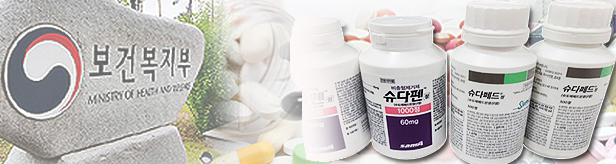
- Quick agreement reached after a week of negotiations, likely to be implemented in October It appears that the single agent for colds, Pseudoephedrine, will be subject to increased drug prices starting in October. There is news that drug price adjustment negotiations with the NHIS, which have been ongoing since last week, have been concluded. Attention is being paid to whether this drug price increase will increase the supply of products from pharmaceutical companies and alleviate supply and demand difficulties. According to the industry on the 19th, the corporation and pharmaceutical companies agreed to increase the price of 60mg of single drug Pseudoephedrine HCl. It is said that negotiations were concluded around 30 won, an increase from the current 23 won. Pseudoephedrine HCl 60mg products are sold as Cosue by Kolon, Schdafen by Sam-A, Sudafed by Samil, and Pseudoephedrine by Shinil. Among these, Pseudoephedrine is worth 20 won, and the rest are worth 23 won. This ingredient has been in short supply since last year. This is because, as the number of respiratory patients as well as COVID-19 increases, prescriptions for medications containing Pseudoephedrine, which are used for colds, sinusitis, and upper respiratory allergies, have increased. Accordingly, pharmacies have requested increased supply. Last May, the Pharmaceutical Association supplied one bottle of 500 tablets to each pharmacy to solve the supply shortage. Supply shortages continued, and recently, the ‘Public-Private Response Consultative Group on Instability in Pharmaceutical Supply and Demand’ composed of the Ministry of Health and Welfare, the Ministry of Food and Drug Safety, the Pharmaceutical Association, the Pharmaceutical and Biopharmaceutical Association, and the Pharmaceutical Distribution Association decided to push for an increase in drug prices. After the drug price increase agenda passed the HIRA on the 6th, the NHIS began drug price negotiations last week and announced a settlement within a week. Accordingly, the agenda for increasing the price of pseudoephedrine will be reported to the Health Policy Review Committee of the Ministry of Health and Welfare, which will be held soon, and the adjusted drug price is expected to be applied from October 1. The NHIS appears to have received confirmation from pharmaceutical companies regarding drug price increases as well as supply expansion. Accordingly, it is expected that the problem of a supply shortage of Pseudoephedrine single drugs will be resolved.
