- LOGIN
- MemberShip
- 2026-09-18 20:23:28
- "More BTK inhibitor options for MCL, Brukinsa as alt choice"
- by Whang, byung-woo | translator Hong, Ji Yeon | 2025-03-14 05:57:16
Changes to the treatment settings have been brought to Mantle cell lymphoma (MCL) with the launching of new treatments like BTK inhibitors and implementing reimbursement.
As the 2nd-generation BTK inhibitors are introduced, treatment options have been broadened for relapsed or refractory MCL, where treatment options have been limited to 1st-generation BTK inhibitors.

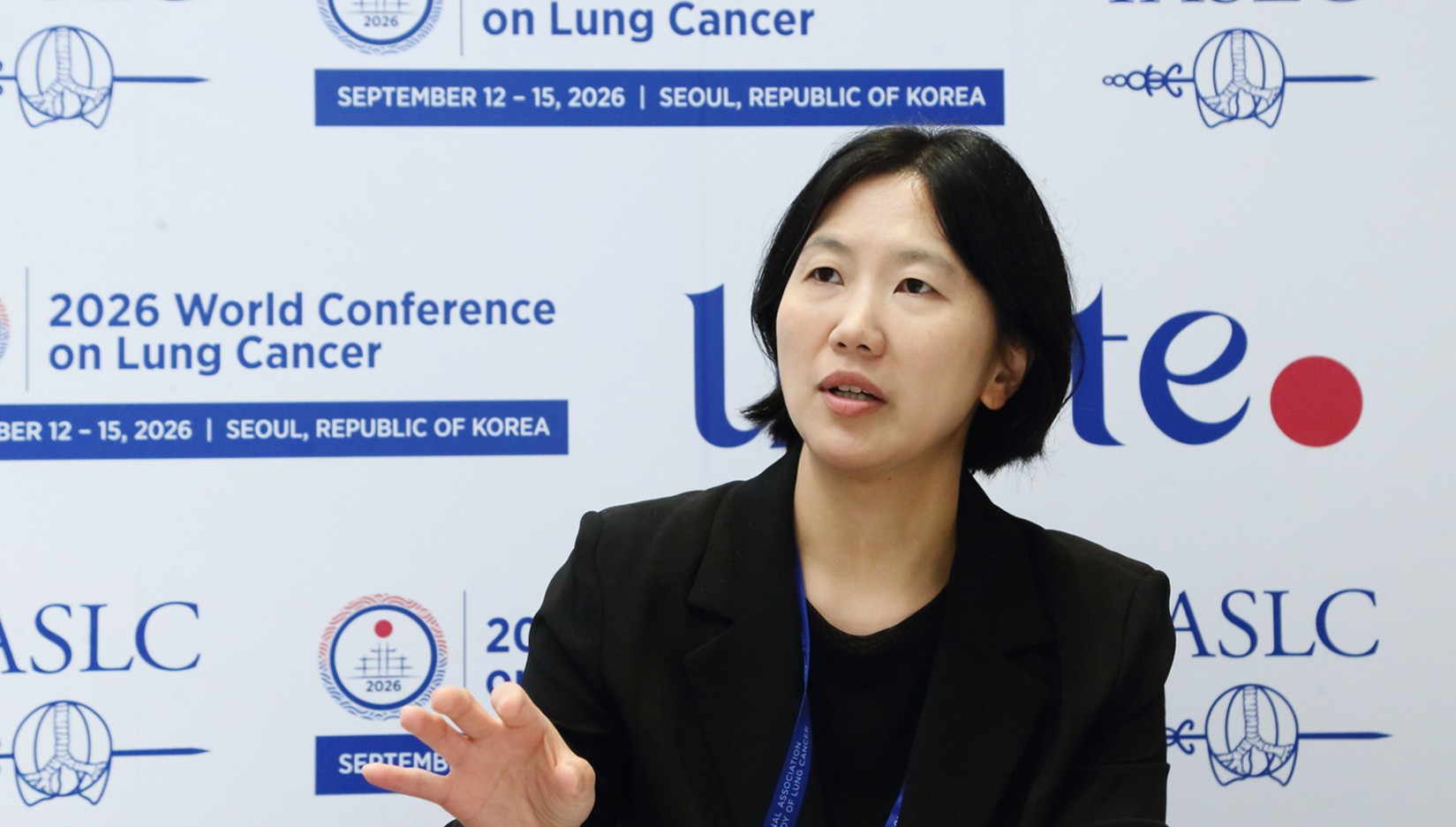
Youngwoo Jeon, a Professor in the Department of Hematology at Yeouido St MaryDuring a meeting with Daily Pharm, Dr.
Youngwoo Jeon, a Professor in the Department of Hematology at Yeouido St Mary's Hospital, who runs the only Lymphoma and Cell Therapy-Research Center in South Korea, emphasized the need to discuss ways to effectively utilize treatment options.
Mantle cell lymphoma (MCL) is a subtype of non-Hodgkin lymphoma (NHL), accounting for approximately 5% of all NHL cases.
MCL shows aggressive clinical features.
Unlike typical lymphoma that starts in lymph nodes, MCL occurs in organs where lymph nodes are not located.
Patients often transfer from dermatology, oncology, and gastroenterology to hematology.
Five years ago in South Korea, the annual new patient number was about 80.
Now, that there are about 100-110 new patients each year.
"According to international classification standards, extranodal T-cell lymphoma is typically considered indolent; however, once it surpasses a critical threshold, it can proliferate rapidly, like DLBCL, and requires immediate treatment," Dr.
Jeon said.
"Even if the disease initially progresses slowly, the short time between diagnosis and treatment means clinicians on the front lines inevitably perceive it as aggressive." In the case of MCL, the development of new treatment options, including standard therapies, has been slow, and treatment protocols or strategies have only been established relatively recently.
As a result, treatment approaches have been sporadic and often based on available economic discretion, implying that patients have been treated drugs designed for other types of lymphoma treatments.
Previously, combination treatments such as CHOP (rituximab+cyclophosphamide/doxorubicin/vincristine/prednisone) were primarily used.
Patients with poor ECOG were administered treatments that have lower-toxicity, such as follicular lymphoma treatments like R-CVP (rituximab+cyclophosphamide/vincristine/prednisone).
In addition to these options, patients have the choice to pay for BR treatment (bendamustine+rituximab) out-of-pocket.
"Expanded option to include BTK inhibitors is regarded favorable, 2nd generation with reduced side-effects gains attention" The remaining issue lies in the relapse and treatment resistance seen in MCL.
Many patients present with a poor prognosis at diagnosis, and given the nature of indolent lymphomas, which are notoriously difficult to cure, the sequencing of treatments becomes increasingly critical.
Dr.
Jeon explained, "Full recovery is challenging for indolent lymphomas like MCL.
Thus, we adopt a strategy similar to that used in treating chronic lymphocytic leukemia, focusing on maximizing progression-free survival (PFS).
Moreover, because relapse is frequent, it is difficult to aim for a cure from the very first treatment line, so we carefully plan the treatment sequence for when the disease relapses." In response to these unmet therapeutic needs, BTK inhibitors have emerged.
In addition to the 1st-generation agents, a 2nd-generation treatment, like Brukinsa (zanubrutinib), has been introduced.
Since June 2024, reimbursement for Brukinsa has been expanded to include its use as monotherapy for patients with MCL who have received at least one prior treatment.
Dr.
Jeon analyzed, "The introduction of oral targeted anticancer agents, such as first- and second-generation BTK inhibitors, has greatly improved patient treatment convenience.
Under conventional cytotoxic chemotherapy, patients typically endured cycles of deterioration and improvement over more than a year of hospital admissions, often leading to death.
Because patients can self-administer the medication and only need to manage side effects, treatment accessibility has been significantly enhanced." In fact, the 1st-generation BTK inhibitor, Ibrutinib, has shown outcomes that surpass those observed in clinical trials, as evidenced by over seven years of real-world data (RWD).
"In about two years, we expect RWD on the second-generation BTK inhibitor, Brukinsa, will become available," Dr.
Jeon said.
"Based on results with 1st-generation BTK inhibitors, Brukinsa's data are expected to be very favorable.
Although it has only been a short time, its satisfactory performance in the clinical setting is very encouraging." Dr.
Jeon has highlighted that a characteristic of 2nd-generation BTK inhibitors is their enhanced selectivity for BTK.
Typically, when a drug affects unintended targets, it can lead to adverse events such as cardiac hemorrhage, referred to as an off-target effect.
2nd-generation agents like Brukinsa have been designed to minimize these off-target effects.
Dr.
Jeon said, "These agents have reduced the incidence of hematologic bleeding and cardiac issues seen in clinical trials to around 7–8%, less than half of previous rates, which is very encouraging," adding, "However, in real-world clinical practice, we focus more on managing gastrointestinal disturbances and onycholysis, side effects that can significantly impact patient adherence during long-term treatment." "The criteria for BTK inhibitors are limiting…patient's life-long use of treatments must be considered" Despite both 1st- and 2nd-generation BTK inhibitors being eligible for reimbursement, a significant limitation remains: if a patient fails on a 1st-generation BTK inhibitor, subsequent BTK inhibitor therapy is not reimbursable.
Patients only have one opportunity for BTK inhibitor treatment when considering treatment sequencing.
Dr.
Jeon had about five to six patients on 1st-generation BTK inhibitors that have been switched with Brukinsa.
Dr.
Jeon explains that while patients already stabilized on 1st-generation therapy typically continue, new patients are generally started on Brukinsa whenever possible.
Yet, Dr.
Jeon stressed that even though switching between 1st- and 2nd-generation therapies that both target the same molecule can be justifiable, it is critical to remember that these drugs are intended for lifelong use.
"Patients on 1st-generation BTK inhibitors often suffer from severe nausea and vomiting that disrupt their daily lives.
In such cases, switching to Brukinsa, which has reduced off-target effects, has produced notably positive outcomes," Dr.
Jeon said.
"It appears that the Health Insurance Review and Assessment Service (HIRA) considers switching unnecessary because the treatment offers a refined version of the same target," Dr.
Jeon said.
"Because forcing patients to endure painful side effects for a lifetime is like torture, 2nd-generation BTK inhibitors will represent an excellent alternative." Finally, Dr.
Jeon emphasized the urgent need to adopt CAR‑T therapies as a third-line treatment for MCL quickly.
"While CAR‑T therapy is already being implemented as third-line treatment overseas, it is not yet approved domestically, so they are available for use.
However, the HIRA must propose an alternative so Korean patients could eventually receive treatment on par with those in other G20 countries," Dr.
Jeon said.
"Approximately 85% of patients are filtered out during second-line BTK inhibitor treatment, leaving very few who progress to third-line treatments," Dr.
Jeon said.
"Although these treatments are high-cost, the financial burden is likely minimal due to the small patient population."
-

- 0
댓글 운영방식은
댓글은 실명게재와 익명게재 방식이 있으며, 실명은 이름과 아이디가 노출됩니다. 익명은 필명으로 등록 가능하며, 대댓글은 익명으로 등록 가능합니다.
댓글 노출방식은
댓글 명예자문위원(팜-코니언-필기모양 아이콘)으로 위촉된 데일리팜 회원의 댓글은 ‘게시판형 보기’와 ’펼쳐보기형’ 리스트에서 항상 최상단에 노출됩니다. 새로운 댓글을 올리는 일반회원은 ‘게시판형’과 ‘펼쳐보기형’ 모두 팜코니언 회원이 쓴 댓글의 하단에 실시간 노출됩니다.
댓글의 삭제 기준은
다음의 경우 사전 통보없이 삭제하고 아이디 이용정지 또는 영구 가입제한이 될 수도 있습니다.
-
저작권·인격권 등 타인의 권리를 침해하는 경우
상용 프로그램의 등록과 게재, 배포를 안내하는 게시물
타인 또는 제3자의 저작권 및 기타 권리를 침해한 내용을 담은 게시물
-
근거 없는 비방·명예를 훼손하는 게시물
특정 이용자 및 개인에 대한 인신 공격적인 내용의 글 및 직접적인 욕설이 사용된 경우
특정 지역 및 종교간의 감정대립을 조장하는 내용
사실 확인이 안된 소문을 유포 시키는 경우
욕설과 비어, 속어를 담은 내용
정당법 및 공직선거법, 관계 법령에 저촉되는 경우(선관위 요청 시 즉시 삭제)
특정 지역이나 단체를 비하하는 경우
특정인의 명예를 훼손하여 해당인이 삭제를 요청하는 경우
특정인의 개인정보(주민등록번호, 전화, 상세주소 등)를 무단으로 게시하는 경우
타인의 ID 혹은 닉네임을 도용하는 경우
-
게시판 특성상 제한되는 내용
서비스 주제와 맞지 않는 내용의 글을 게재한 경우
동일 내용의 연속 게재 및 여러 기사에 중복 게재한 경우
부분적으로 변경하여 반복 게재하는 경우도 포함
제목과 관련 없는 내용의 게시물, 제목과 본문이 무관한 경우
돈벌기 및 직·간접 상업적 목적의 내용이 포함된 게시물
게시물 읽기 유도 등을 위해 내용과 무관한 제목을 사용한 경우
-
수사기관 등의 공식적인 요청이 있는 경우
-
기타사항
각 서비스의 필요성에 따라 미리 공지한 경우
기타 법률에 저촉되는 정보 게재를 목적으로 할 경우
기타 원만한 운영을 위해 운영자가 필요하다고 판단되는 내용
-
사실 관계 확인 후 삭제
저작권자로부터 허락받지 않은 내용을 무단 게재, 복제, 배포하는 경우
타인의 초상권을 침해하거나 개인정보를 유출하는 경우
당사에 제공한 이용자의 정보가 허위인 경우 (타인의 ID, 비밀번호 도용 등)
※이상의 내용중 일부 사항에 적용될 경우 이용약관 및 관련 법률에 의해 제재를 받으실 수도 있으며, 민·형사상 처벌을 받을 수도 있습니다.
※위에 명시되지 않은 내용이더라도 불법적인 내용으로 판단되거나 데일리팜 서비스에 바람직하지 않다고 판단되는 경우는 선 조치 이후 본 관리 기준을 수정 공시하겠습니다.
※기타 문의 사항은 데일리팜 운영자에게 연락주십시오. 메일 주소는 dailypharm@dailypharm.com입니다.