- LOGIN
- MemberShip
- 2026-07-09 02:25:50
- Lynparza secures long-term survival evidence in ovarian cancer
- by Son, Hyung Min | translator Hong, Ji Yeon | 2026-07-08 08:53:45
The evaluation criteria for first-line maintenance therapy in ovarian cancer is shifting.
Delaying disease recurrence, progression-free survival (PFS), and overall survival (OS) improvements are now included as primary endpoints for assessing therapeutic efficacy, underscoring the growing importance of initiating early-stage treatment strategies optimized for long-term prognosis.
According to biopharmaceutical industry sources, recent global clinical guidelines are increasingly prioritizing biomarker-based personalized medicine for the ovarian cancer therapy.
As treatment strategies become increasingly subdivided, targeting patients with BRCA mutations to those with homologous recombination deficiency (HRD), the clinical value of first-line maintenance therapies backed by long-term survival data has increased. Consequently, the therapeutic strategy is shifting toward subdividing treatment pathways based on patient-specific biomarker profiles to maximize the likelihood of modifying long-term prognosis from the initial maintenance therapy.
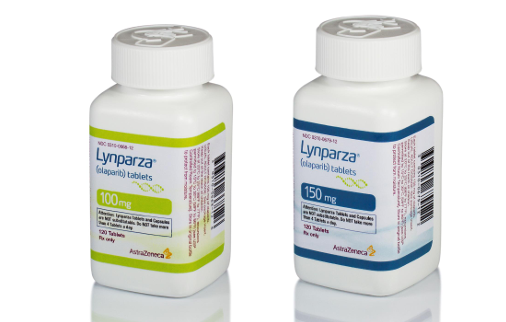
Amid these clinical shifts, the PARP inhibitor 'Lynparza (olaparib)' is being assessed as a therapeutic option with long-term follow-up data across both BRCA-mutated and HRD-positive patients from the SOLO-1 and PAOLA-1 trials, respectively.
Ovarian cancer has the highest mortality rate among all gynecological malignancies. A significant majority of patients are diagnosed at an advanced stage. Despite high initial response rates to frontline interventions, the clinical course is characterized by frequent recurrences, followed by sequential rounds of subsequent lines of therapy. Given these clinical challenges, real-world oncology practice is rapidly shifting toward maintenance strategies that prioritize overall survival (OS) outcomes alongside progression-free survival.
The SOLO-1 study has proved Lynparza's effectiveness as a first-line maintenance therapy for BRCA-mutated ovarian cancer. At the 3-year follow-up analysis, the progression-free survival rate was 60% in the Lynparza group, compared with 27% in the placebo arm, demonstrating a 70% reduction in the risk of disease progression or death.
Subsequent 7-year follow-up data provided evidence of long-term survival. The overall survival rate in the Lynparza group was confirmed at 67%, a 45% reduction in the risk of death compared to the placebo control (mOS: NR vs. 75.2 months). This indicates that 2 of 3 patients survived to the 7-year mark, validating that the survival benefit of frontline Lynparza maintenance therapy is sustained over extended follow-up.
In addition to the BRCA-positive patients, Lynparza demonstrated a consistent overall survival benefit in patients with HRD-positive status.
In the 5-year follow-up analysis of the PAOLA-1 clinical trial, the 5-year overall survival rate among HRD-positive patients was 65.5% in the Lynparza + bevacizumab combination therapy group versus 48.4% in the bevacizumab monotherapy group, translating to a 38% reduction in the risk of death.
Within the same analysis, the median progression-free survival reached 46.8 months and 17.6 months, respectively, representing a 59% reduction in the risk of disease progression or death.
The significance of the PAOLA-1 5-year data extends beyond merely securing additional long-term tracking points. Demonstrating a statistically significant overall survival benefit in the first-line maintenance setting is difficult in ovarian cancer clinical trials, as the data are highly susceptible to confounding by multiple sequential lines of subsequent therapies administered after recurrence.
This trial demonstrated that the Lynparza + bevacizumab combination therapy maintains a highly consistent clinical benefit for HRD-positive patients over an extended long-term follow-up period, consistent with the efficacy seen in the initial primary analyses.
Notably, the long-term follow-up study results of sustained PFS, alongside enhanced 5-year survival rates and reduced mortality risk, provides significant evidence supporting the clinical value proposition of this therapeutic strategy. This outcome confirms that frontline maintenance product selection directly correlates with downstream long-term prognostic outcomes.
Homologous recombination deficiency represents a critical biomarker detected in approximately half of all patients with high-grade serous ovarian cancer, the primary histological subtype of the disease. As the ovarian cancer treatment paradigm transitions into biomarker-based precision oncology, the clinical weight of mature long-term survival evidence generated within the HRD-positive population has risen substantially.
This clinical evidence is firmly reflected in international therapeutic standards. The National Comprehensive Cancer Network (NCCN) Guidelines recommend Lynparza following platinum-based chemotherapy in both BRCA-mutated and HRD-positive cohorts. Notably, within the HRD-positive population, the Lynparza plus bevacizumab combination therapy is the only PARP inhibitor-based therapy designated as a Category 1 recommendation.
Despite strong clinical evidence and inclusion in standard global guidelines, patient market access bottlenecks persist in South Korea. While health insurance coverage is active for the BRCA-mutated cohort, the Lynparza-bevacizumab combination based on the PAOLA-1 trial for HRD-positive patients remains non-reimbursed. Although the therapy cleared the initial regulatory hurdle at the Cancer Disease Review Committee (CDRC) in September of last year, final implementation of the expanded reimbursement criteria has been delayed for nearly a year.
Consequently, oncologists emphasize that even when companion diagnostic HRD screening identifies patients who would derive clinical benefit, financial barriers prevent the deployment of this optimized first-line maintenance strategy in real-world clinical practice.
Discussions about the need to expand reimbursement for Lynparza have intensified recently. "The 2nd National Health Insurance Comprehensive Plan," finalized in March, includes provisions to review expanded reimbursement criteria for oncology therapeutics utilized in ovarian cancer care. Simultaneously, calls for improving patient access continue to gain traction across regulatory policy forums and academic symposia.
Professor Se Ik Kim of the Department of Obstetrics and Gynecology at Seoul National University Hospital said, "Given that ovarian cancer carries a high recurrence rate requiring repetitive lines of sequential therapy, it is imperative to establish frontline strategies focused on maximizing long-term survival probability from the outset. Rather than simply delaying time-to-recurrence, clinical management must increasingly prioritize therapeutic strategies that optimize long-term prognosis by integrating patient-specific biomarker characteristics."
Professor Kim added that Lynparza is a PARP inhibitor with mature, long-term survival data across both BRCA-mutated and HRD-positive populations from the SOLO-1 and PAOLA-1 trials. He emphasized that it is highly clinically meaningful because it demonstrates that frontline maintenance product selection in the HRD-positive population can significantly dictate downstream, long-term therapeutic outcomes.
Professor Kim concluded by emphasizing that "While clinicians can now screen and identify patients expected to benefit clinically via companion HRD testing, patient access to treatment remains restricted. We expect that discussions on patient access advance rapidly so that clinically validated therapeutic strategies can be applied to real-world patient care. "
-

- 0
댓글 운영방식은
댓글은 실명게재와 익명게재 방식이 있으며, 실명은 이름과 아이디가 노출됩니다. 익명은 필명으로 등록 가능하며, 대댓글은 익명으로 등록 가능합니다.
댓글 노출방식은
댓글 명예자문위원(팜-코니언-필기모양 아이콘)으로 위촉된 데일리팜 회원의 댓글은 ‘게시판형 보기’와 ’펼쳐보기형’ 리스트에서 항상 최상단에 노출됩니다. 새로운 댓글을 올리는 일반회원은 ‘게시판형’과 ‘펼쳐보기형’ 모두 팜코니언 회원이 쓴 댓글의 하단에 실시간 노출됩니다.
댓글의 삭제 기준은
다음의 경우 사전 통보없이 삭제하고 아이디 이용정지 또는 영구 가입제한이 될 수도 있습니다.
-
저작권·인격권 등 타인의 권리를 침해하는 경우
상용 프로그램의 등록과 게재, 배포를 안내하는 게시물
타인 또는 제3자의 저작권 및 기타 권리를 침해한 내용을 담은 게시물
-
근거 없는 비방·명예를 훼손하는 게시물
특정 이용자 및 개인에 대한 인신 공격적인 내용의 글 및 직접적인 욕설이 사용된 경우
특정 지역 및 종교간의 감정대립을 조장하는 내용
사실 확인이 안된 소문을 유포 시키는 경우
욕설과 비어, 속어를 담은 내용
정당법 및 공직선거법, 관계 법령에 저촉되는 경우(선관위 요청 시 즉시 삭제)
특정 지역이나 단체를 비하하는 경우
특정인의 명예를 훼손하여 해당인이 삭제를 요청하는 경우
특정인의 개인정보(주민등록번호, 전화, 상세주소 등)를 무단으로 게시하는 경우
타인의 ID 혹은 닉네임을 도용하는 경우
-
게시판 특성상 제한되는 내용
서비스 주제와 맞지 않는 내용의 글을 게재한 경우
동일 내용의 연속 게재 및 여러 기사에 중복 게재한 경우
부분적으로 변경하여 반복 게재하는 경우도 포함
제목과 관련 없는 내용의 게시물, 제목과 본문이 무관한 경우
돈벌기 및 직·간접 상업적 목적의 내용이 포함된 게시물
게시물 읽기 유도 등을 위해 내용과 무관한 제목을 사용한 경우
-
수사기관 등의 공식적인 요청이 있는 경우
-
기타사항
각 서비스의 필요성에 따라 미리 공지한 경우
기타 법률에 저촉되는 정보 게재를 목적으로 할 경우
기타 원만한 운영을 위해 운영자가 필요하다고 판단되는 내용
-
사실 관계 확인 후 삭제
저작권자로부터 허락받지 않은 내용을 무단 게재, 복제, 배포하는 경우
타인의 초상권을 침해하거나 개인정보를 유출하는 경우
당사에 제공한 이용자의 정보가 허위인 경우 (타인의 ID, 비밀번호 도용 등)
※이상의 내용중 일부 사항에 적용될 경우 이용약관 및 관련 법률에 의해 제재를 받으실 수도 있으며, 민·형사상 처벌을 받을 수도 있습니다.
※위에 명시되지 않은 내용이더라도 불법적인 내용으로 판단되거나 데일리팜 서비스에 바람직하지 않다고 판단되는 경우는 선 조치 이후 본 관리 기준을 수정 공시하겠습니다.
※기타 문의 사항은 데일리팜 운영자에게 연락주십시오. 메일 주소는 dailypharm@dailypharm.com입니다.