- LOGIN
- MemberShip
- 2026-07-09 02:25:52
- Samsung Bioepis gains edge in Keytruda biosimilar race
- by Hwang, byoung woo | translator Alice Kang | 2026-07-08 08:53:52
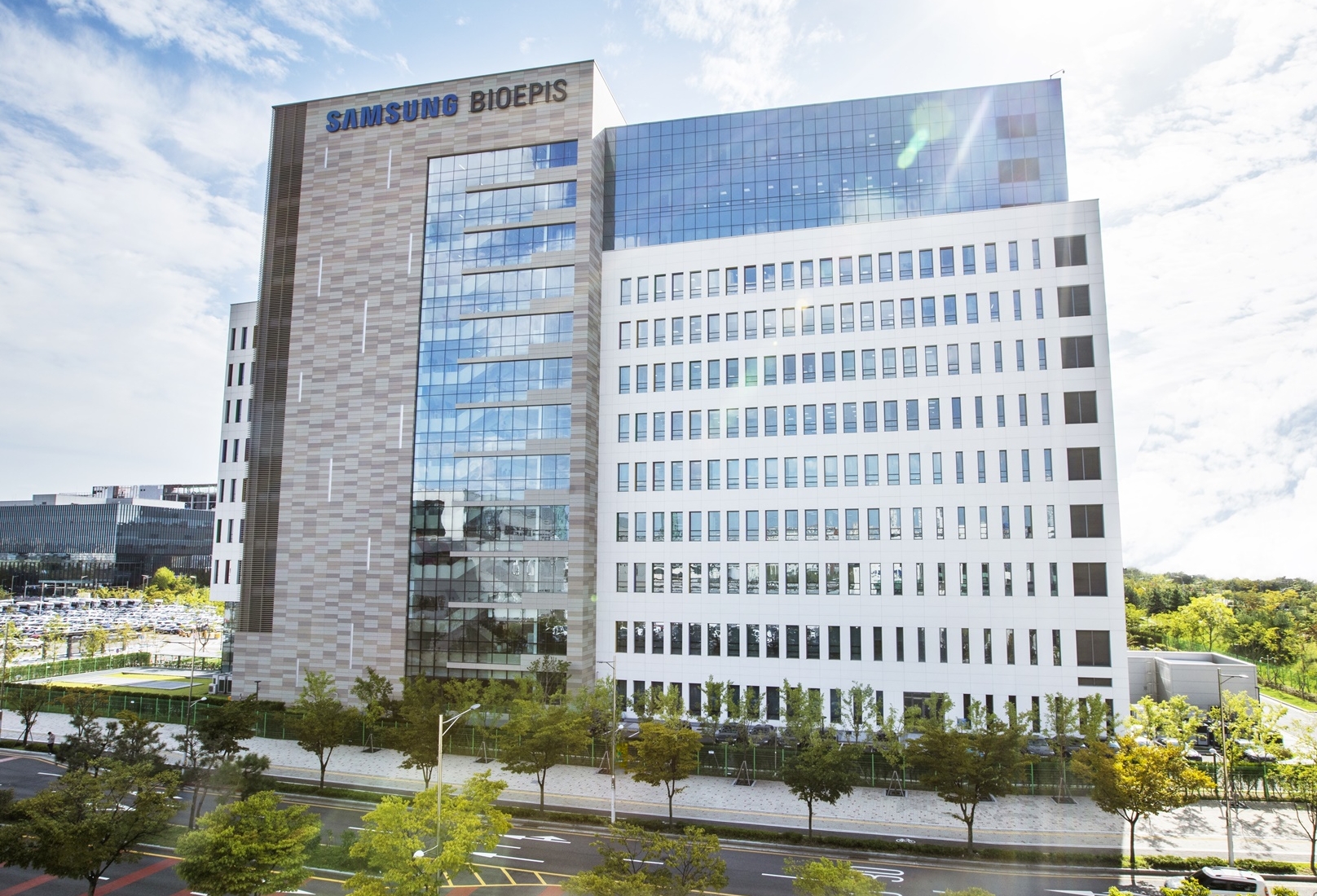
Samsung Bioepis has taken the lead in the race to develop a biosimilar to the blockbuster immuno-oncology drug Keytruda, becoming the first company to disclose Phase III clinical data.
With the patent expiration of Keytruda, which has exceeded $30 billion in global sales, approaching, it is assessed that Samsung Bioepis has established the foundation for a follow-up approval strategy targeting the large-scale immuno-oncology biosimilar market by leveraging its extensive clinical data.
Secures ‘Phase III data… differentiates regulatory positioning
Samsung Bioepis recently announced that SB27, its Keytruda biosimilar candidate, met the primary efficacy endpoints in both global Phase I and Phase III clinical studies, demonstrating equivalence to the original product.
The Phase I trial enrolled 163 participants across four countries, including South Korea. The company reported that pharmacokinetic analyses of the area under the plasma level-time curve (AUC) met the predefined equivalence criteria.
The Phase III trial enrolled 555 patients in 14 countries. In patients with non-small cell lung cancer (NSCLC), SB27 demonstrated efficacy equivalent to the reference product based on the objective response rate (ORR) at Week 24, the study's primary endpoint. Comparable safety and immunogenicity profiles were also observed.
The significance of these findings lies in Samsung Bioepis becoming the first developer to present topline results from a global Phase III study in the Keytruda biosimilar race, thereby securing clinical evidence that could strengthen its regulatory competitiveness. By completing both global Phase I and Phase III studies, the company has assembled a comprehensive clinical package expected to enhance its position during future regulatory review and commercialization.
According to the company, both clinical studies are scheduled to be fully completed within this year. However, completion of the trials does not necessarily mean regulatory submissions or product launch will occur within the same timeframe.
Even after clinical completion, biosimilar approval requires additional steps, including data collection and analysis, preparation of regulatory data, and development of country-specific submission strategies.
USD 31.7 billion market fuels intensifying competition
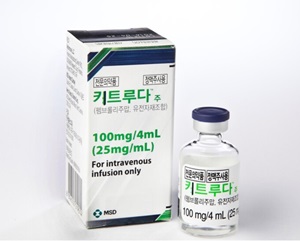
The fierce competition surrounding Keytruda biosimilars reflects the enormous size of the original’s market. According to MSD's 2025 financial results, combined annual sales of Keytruda and the subcutaneous formulation Keytruda Qlex reached USD 31.7 billion (approximately KRW 46 trillion), making it one of the world's highest-selling pharmaceutical products.
Keytruda is a PD-1 immuno-oncology drug indicated for a wide range of cancers, including non-small cell lung cancer, melanoma, and head and neck cancer, giving it a broad treatment base and substantial prescribing volume.
Given the product's commercial value, multiple developers are racing to develop biosimilars. The compound patent is scheduled to expire sequentially beginning in 2028 in Korea, 2029 in the United States, and 2031 in Europe, intensifying global competition to secure early market entry.
Celltrion is conducting a global Phase III trial of its Keytruda biosimilar CT-P51, while China's Bio-Thera Solutions has initiated an integrated Phase I/III study of BAT3306. Other global biosimilar developers, including Formycon and Sandoz, are also pursuing pembrolizumab biosimilars.
Samsung Bioepis' key advantage lies in having completed both global Phase I and Phase III studies, providing a robust clinical evidence package that goes beyond the minimum regulatory requirements and is expected to strengthen physician trust.
This is particularly meaningful because large immuno-oncology biosimilars require complex trial designs and extensive patient recruitment. Demonstrating success in both Phase I and Phase III studies is expected to carry significance in future regulatory submissions and partnership discussions.
Another noteworthy development is the evolving regulatory strategy among competitors. As the U.S. Food and Drug Administration (FDA) and the European Medicines Agency (EMA) move toward streamlining biosimilar approval requirements, companies such as Sandoz and Formycon have discontinued Phase III trials and are instead pursuing regulatory approval based solely on Phase I data.
While Samsung Bioepis benefits from having completed conventional global Phase I and Phase III studies, some competitors may seek approval through these alternative regulatory pathways under the evolving framework.
Nevertheless, because Samsung Bioepis adopted an overlapping strategy by initiating Phase I and Phase III studies simultaneously, its extensive efficacy and safety data from a large-scale Phase III trial are expected to serve as a major competitive advantage in the prescription conservative oncology market, building physician trust and supporting future market penetration.
Another challenge will be overcoming MSD's evergreen strategy aimed at extending the commercial life of Keytruda. To defend against biosimilar competition, MSD is actively transitioning patients from the intravenous (IV) formulation to a more convenient subcutaneous (SC) formulation, pursuing regulatory approvals in major markets in an effort to contain as many patients as possible before biosimilars become available.
For Samsung Bioepis, successful commercialization will depend not only on regulatory approval timelines but also on product differentiation, manufacturing and supply capabilities, reimbursement and tender strategies in individual markets, and commercial partnership capabilities.
The company stated that it is still too early to disclose specific launch plans or commercialization strategies for SB27.
However, because patent expiry is expected earlier in Korea than in many other markets, industry observers believe the product could potentially be launched first in Korea in 2028. However, the actual launch timing will ultimately depend on regulatory review, patent litigation, and market conditions in each country.
Dong-hoon Shin, Executive Vice President of Clinical Science at Samsung Bioepis, said, "Demonstrating equivalence between SB27 and the reference product represents a meaningful achievement that showcases Samsung Bioepis' global biosimilar development capabilities. Building on our rigorous quality management system, we will continue to strive to improve patient access to immuno-oncology therapies through biosimilars."
-

- 0
댓글 운영방식은
댓글은 실명게재와 익명게재 방식이 있으며, 실명은 이름과 아이디가 노출됩니다. 익명은 필명으로 등록 가능하며, 대댓글은 익명으로 등록 가능합니다.
댓글 노출방식은
댓글 명예자문위원(팜-코니언-필기모양 아이콘)으로 위촉된 데일리팜 회원의 댓글은 ‘게시판형 보기’와 ’펼쳐보기형’ 리스트에서 항상 최상단에 노출됩니다. 새로운 댓글을 올리는 일반회원은 ‘게시판형’과 ‘펼쳐보기형’ 모두 팜코니언 회원이 쓴 댓글의 하단에 실시간 노출됩니다.
댓글의 삭제 기준은
다음의 경우 사전 통보없이 삭제하고 아이디 이용정지 또는 영구 가입제한이 될 수도 있습니다.
-
저작권·인격권 등 타인의 권리를 침해하는 경우
상용 프로그램의 등록과 게재, 배포를 안내하는 게시물
타인 또는 제3자의 저작권 및 기타 권리를 침해한 내용을 담은 게시물
-
근거 없는 비방·명예를 훼손하는 게시물
특정 이용자 및 개인에 대한 인신 공격적인 내용의 글 및 직접적인 욕설이 사용된 경우
특정 지역 및 종교간의 감정대립을 조장하는 내용
사실 확인이 안된 소문을 유포 시키는 경우
욕설과 비어, 속어를 담은 내용
정당법 및 공직선거법, 관계 법령에 저촉되는 경우(선관위 요청 시 즉시 삭제)
특정 지역이나 단체를 비하하는 경우
특정인의 명예를 훼손하여 해당인이 삭제를 요청하는 경우
특정인의 개인정보(주민등록번호, 전화, 상세주소 등)를 무단으로 게시하는 경우
타인의 ID 혹은 닉네임을 도용하는 경우
-
게시판 특성상 제한되는 내용
서비스 주제와 맞지 않는 내용의 글을 게재한 경우
동일 내용의 연속 게재 및 여러 기사에 중복 게재한 경우
부분적으로 변경하여 반복 게재하는 경우도 포함
제목과 관련 없는 내용의 게시물, 제목과 본문이 무관한 경우
돈벌기 및 직·간접 상업적 목적의 내용이 포함된 게시물
게시물 읽기 유도 등을 위해 내용과 무관한 제목을 사용한 경우
-
수사기관 등의 공식적인 요청이 있는 경우
-
기타사항
각 서비스의 필요성에 따라 미리 공지한 경우
기타 법률에 저촉되는 정보 게재를 목적으로 할 경우
기타 원만한 운영을 위해 운영자가 필요하다고 판단되는 내용
-
사실 관계 확인 후 삭제
저작권자로부터 허락받지 않은 내용을 무단 게재, 복제, 배포하는 경우
타인의 초상권을 침해하거나 개인정보를 유출하는 경우
당사에 제공한 이용자의 정보가 허위인 경우 (타인의 ID, 비밀번호 도용 등)
※이상의 내용중 일부 사항에 적용될 경우 이용약관 및 관련 법률에 의해 제재를 받으실 수도 있으며, 민·형사상 처벌을 받을 수도 있습니다.
※위에 명시되지 않은 내용이더라도 불법적인 내용으로 판단되거나 데일리팜 서비스에 바람직하지 않다고 판단되는 경우는 선 조치 이후 본 관리 기준을 수정 공시하겠습니다.
※기타 문의 사항은 데일리팜 운영자에게 연락주십시오. 메일 주소는 dailypharm@dailypharm.com입니다.