- LOGIN
- MemberShip
- 2026-09-22 20:32:10
- Vanflyta wins nod in KOR…expanded AML targeted therapy options
- by Son, Hyung Min | translator Hong, Ji Yeon | 2026-02-11 08:08:49
Vanflyta (quizartinib), a new targeted therapy for acute myeloid leukemia (AML), has officially been added to first-line treatment options in South Korea, intensifying market competition.
Until now, Vanflyta has faced significant hurdles, including rejections from global regulatory bodies due to safety concerns. However, it has been reevaluated based on survival benefits, signaling a potential shift in the FLT3 inhibitor market, currently dominated by Rydapt (midostaurin) and Xospata (gilteritinib).
A key factor in this market restructuring is Vanflyta's comprehensive treatment model, which includes maintenance therapy for patients with the high-risk FLT3-ITD mutation.
Strategy for targeting FLT3-ITD has been clarified
According to industry sources on February 11, Daiichi Sankyo Korea announced that Vanflyta (quizartinib) obtained approval in Korea.
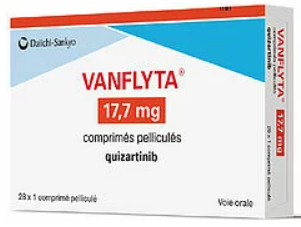
With this approval, Vanflyta can now be used in combination with standard cytarabine and anthracycline induction therapy and standard cytarabine consolidation therapy for newly diagnosed adult patients with FLT3-ITD mutation–positive AML. It is also approved as a maintenance monotherapy.
Up to 37% of newly diagnosed AML patients carry the FLT3 mutation, with approximately 80% specifically possessing the FLT3-ITD variant. This mutation is known to drive cancer growth, increase recurrence risk, and shorten overall survival. The five-year survival rate for these patients has been reported at about 20%.
The approval is based on the Phase 3 QuANTUM-First study, which involved 539 treatment-naive FLT3-ITD-positive AML patients.
In this study, the Vanflyta group showed a 22% reduction in mortality risk compared with the placebo group.
At a median follow-up of 39.2 months, the median overall survival (OS) in the Vanflyta group was 31.9 months, more than double the 15.1 months observed in the placebo group.
In terms of safety, addverse events were similar to those of the placebo group, with common observations including febrile neutropenia, hypokalemia, and pneumonia.
In particular, patients who participated in the study received induction, consolidation, and maintenance for up to 3 years, regardless of whether they unwent allogeneic hematopoietic stem cell transplantation (HSCT). Therefore, it is a distinct advantage of Vanflyta in the clincial field.
Expected to bring a shift to the market centered around Xospata·Rydapt
The FLT3 inhibitor market has been led by Novartis's first-generation Rydapt and Astellas's second-generation Xospata.
While Rydapt reduced mortality by 23% in the RATIFY study when combined with standard therapy, it lacks strong evidence for maintenance therapy post-transplant and has relatively lower selectivity for FLT3-ITD.
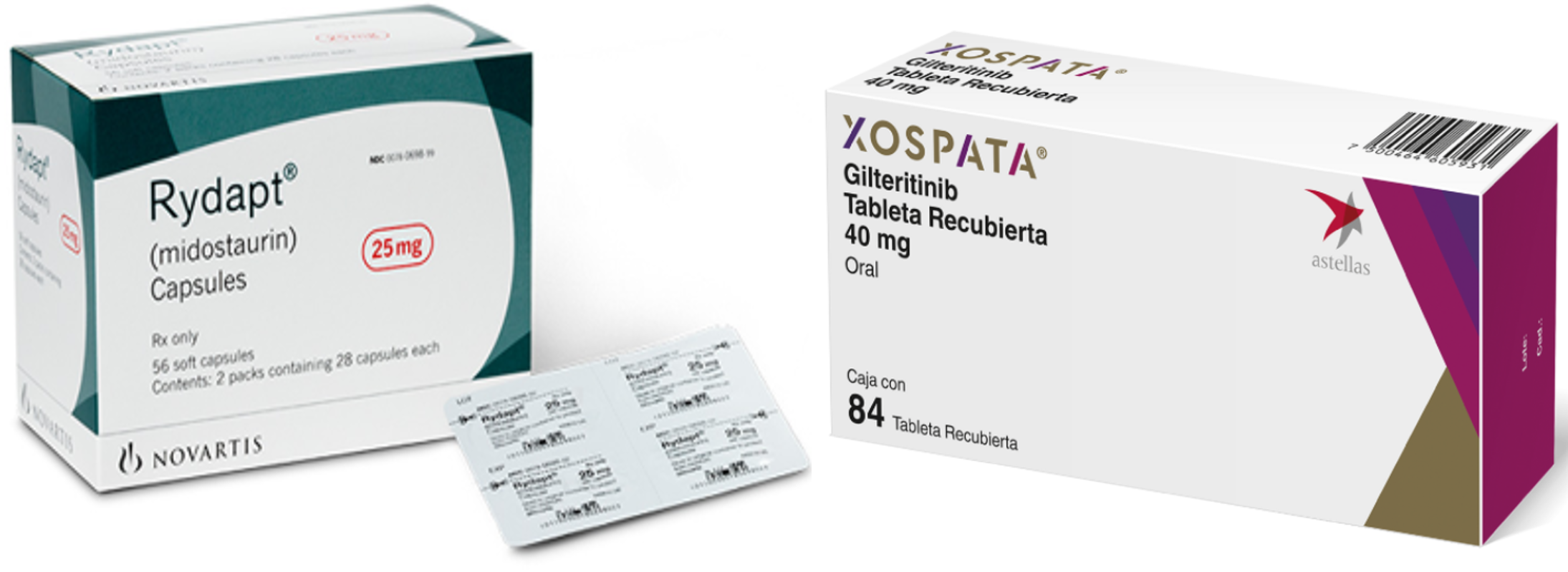
Xospata was commercialized as the first once-daily oral monotherapy for relapsed or refractory AML, with response rates better than those with Rydapt.
However, Xospata failed to demonstrate sufficient clinical benefit in trials for first-line induction or post-transplant maintenance. Because of this, it is firmly established in the market. analysis suggests that this drug has limitations in obtaining an expanded indication spectrum.
Medical experts are focusing on Vanflyta's inclusion of maintenance therapy. While previous inhibitors lacked clear strategies for consolidation, Vanflyta's effectiveness was demonstrated in extending complete remission (CR) and safety through long-term follow-up of over 5 years.
There have been various hurdles for Vanflyta until it was approved in Korea. This drug was originally developed by Ambit Biosciences, which was acquired by Daiichi Sankyo in 2014.
Vanflyta faced a major roadblock in 2019 when the U.S. FDA denied approval. The FDA cited risks of QT interval prolongation and inadequate cardiac toxicity management plans.
The QT interval is measured from the beginning of the Q wave to the end of the T wave on an electrocardiogram (ECG). It represents the total time required for the heart's ventricles to undergo depolarization and repolarization. Abnormally long or short QT interval is linked to the increased risks of abnormal heart rhythm or occurrence eof sudden death.
In the case of Vanflyta, Daiichi Sankyo addressed these risks by enhancing its Risk Evaluation and Mitigation Strategy (REMS) and safety protocols. However, in 2023, the FDA issued a 3-month extension for an additional safety review.
After that, the FDA approved the drug following the Phase 3 QuANTUM-First study, which demonstrated significant benefits in overall survival (OS) for AML patients. This led to Vanflyta's subsequent approvals in Europe and South Korea, and Vanflyta succeeded in entering the global market.
-

- 0
댓글 운영방식은
댓글은 실명게재와 익명게재 방식이 있으며, 실명은 이름과 아이디가 노출됩니다. 익명은 필명으로 등록 가능하며, 대댓글은 익명으로 등록 가능합니다.
댓글 노출방식은
댓글 명예자문위원(팜-코니언-필기모양 아이콘)으로 위촉된 데일리팜 회원의 댓글은 ‘게시판형 보기’와 ’펼쳐보기형’ 리스트에서 항상 최상단에 노출됩니다. 새로운 댓글을 올리는 일반회원은 ‘게시판형’과 ‘펼쳐보기형’ 모두 팜코니언 회원이 쓴 댓글의 하단에 실시간 노출됩니다.
댓글의 삭제 기준은
다음의 경우 사전 통보없이 삭제하고 아이디 이용정지 또는 영구 가입제한이 될 수도 있습니다.
-
저작권·인격권 등 타인의 권리를 침해하는 경우
상용 프로그램의 등록과 게재, 배포를 안내하는 게시물
타인 또는 제3자의 저작권 및 기타 권리를 침해한 내용을 담은 게시물
-
근거 없는 비방·명예를 훼손하는 게시물
특정 이용자 및 개인에 대한 인신 공격적인 내용의 글 및 직접적인 욕설이 사용된 경우
특정 지역 및 종교간의 감정대립을 조장하는 내용
사실 확인이 안된 소문을 유포 시키는 경우
욕설과 비어, 속어를 담은 내용
정당법 및 공직선거법, 관계 법령에 저촉되는 경우(선관위 요청 시 즉시 삭제)
특정 지역이나 단체를 비하하는 경우
특정인의 명예를 훼손하여 해당인이 삭제를 요청하는 경우
특정인의 개인정보(주민등록번호, 전화, 상세주소 등)를 무단으로 게시하는 경우
타인의 ID 혹은 닉네임을 도용하는 경우
-
게시판 특성상 제한되는 내용
서비스 주제와 맞지 않는 내용의 글을 게재한 경우
동일 내용의 연속 게재 및 여러 기사에 중복 게재한 경우
부분적으로 변경하여 반복 게재하는 경우도 포함
제목과 관련 없는 내용의 게시물, 제목과 본문이 무관한 경우
돈벌기 및 직·간접 상업적 목적의 내용이 포함된 게시물
게시물 읽기 유도 등을 위해 내용과 무관한 제목을 사용한 경우
-
수사기관 등의 공식적인 요청이 있는 경우
-
기타사항
각 서비스의 필요성에 따라 미리 공지한 경우
기타 법률에 저촉되는 정보 게재를 목적으로 할 경우
기타 원만한 운영을 위해 운영자가 필요하다고 판단되는 내용
-
사실 관계 확인 후 삭제
저작권자로부터 허락받지 않은 내용을 무단 게재, 복제, 배포하는 경우
타인의 초상권을 침해하거나 개인정보를 유출하는 경우
당사에 제공한 이용자의 정보가 허위인 경우 (타인의 ID, 비밀번호 도용 등)
※이상의 내용중 일부 사항에 적용될 경우 이용약관 및 관련 법률에 의해 제재를 받으실 수도 있으며, 민·형사상 처벌을 받을 수도 있습니다.
※위에 명시되지 않은 내용이더라도 불법적인 내용으로 판단되거나 데일리팜 서비스에 바람직하지 않다고 판단되는 경우는 선 조치 이후 본 관리 기준을 수정 공시하겠습니다.
※기타 문의 사항은 데일리팜 운영자에게 연락주십시오. 메일 주소는 dailypharm@dailypharm.com입니다.