- LOGIN
- MemberShip
- 2026-09-16 20:34:49
- Doctors long for a new treatment option for liver cancer
- by Moon, sung-ho | translator Alice Kang | 2025-04-09 05:56:30
Progressive hepatocellular carcinoma, or liver cancer, is a disease with only a few effective treatment options in the clinical setting.
Recently, the emergence of various first-line treatment options such as targeted anticancer drugs and immuno-oncology drugs, has raised expectations for improved treatment outcomes.
However, treatment options for liver cancer are still in high demand in the clinical setting due to low treatment response rates, the lack of biomarkers for treatment selection, and the lack of second-line treatment options.
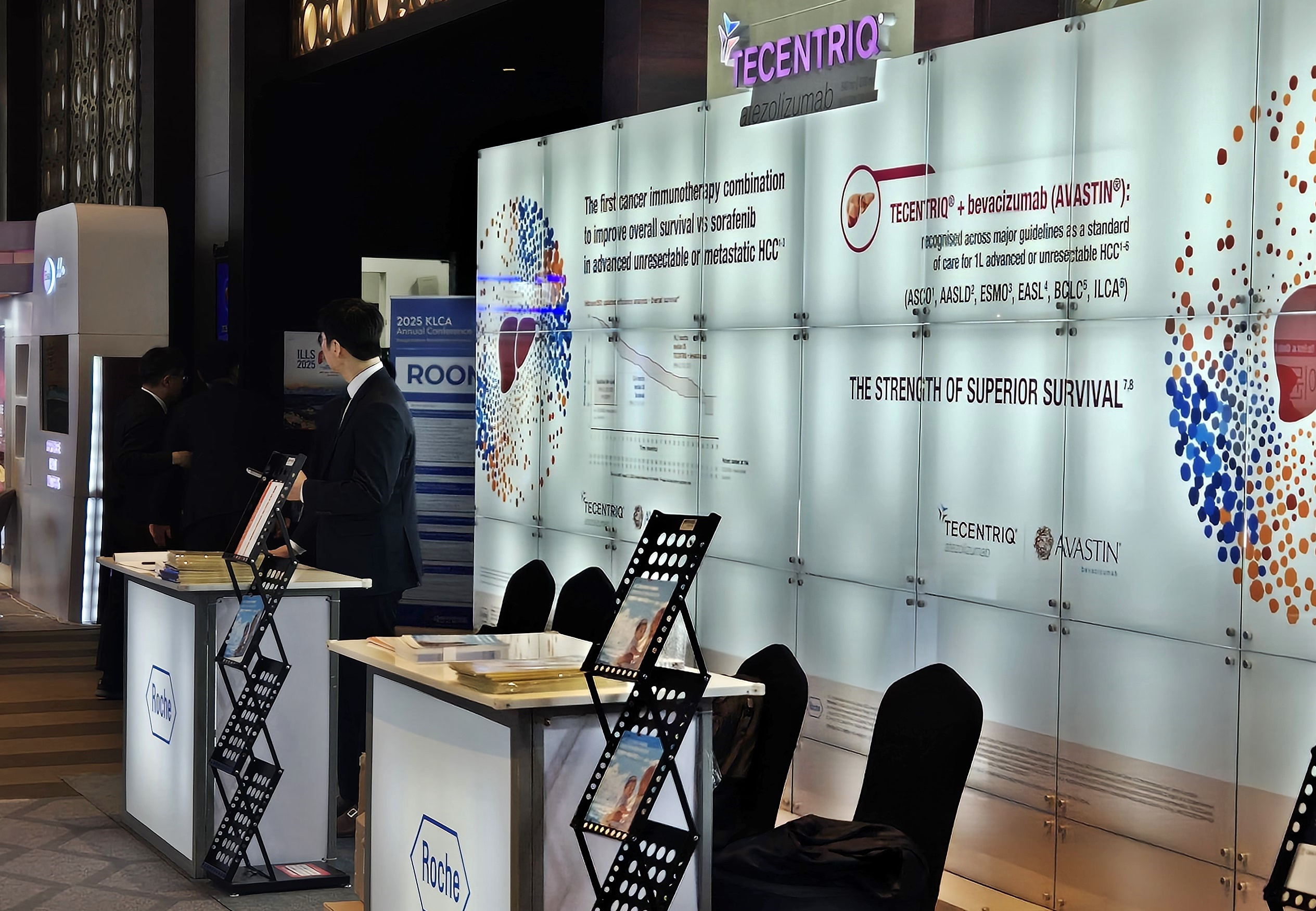
According to the medical community on the 7th, the treatment options that are used as a standard therapy in the first-line treatment of liver cancer are the Tecentriq (atezolizumab) and Avastin (bevacizumab) combination therapy.
According to the “Guidelines for the Treatment of Hepatocellular Carcinoma” revised by the Korean Liver Cancer Association and the National Cancer Center in 2022, if a liver cancer patient is not indicated for surgery or local treatment as first-line systemic therapy, the Tecentriq and Avastin combination or Imfinzi (durvalumab) and Imjudo (tremelimumab) is recommended as the first choice.
Professor Hong-Jae Jeon of the CHA Bundang Medical Center (Hematolo-oncology), explained, “Liver cancer is the sixth most common cancer worldwide and the second leading cause of cancer deaths in Korea, and various treatment options have emerged to improve its prognosis.
However, there is still a high unmet need in terms of long-term survival.
As the development of therapeutic agents continues with the aim of improving the treatment outcomes of liver cancer, immune-oncology drugs have recently emerged as an innovative first-line treatment option for liver cancer.’ However, the standard therapy currently available for practical use in clinical practice is limited to the Tecentiq+Avastin combination.
Previously, there were treatments such as Nexavar (sorafenib) and Lenvima (lenvatinib), but in the course of developing treatments, the Tecqntriq+Avastin combination has recently been used as a standard therapy.
In the case of the Imfinzi+Imjudo combination, which has improved the risk of bleeding, a typical side effect of existing treatments, the combination has been approved by the Ministry of Food and Drug Safety in Korea but is not reimbursed by the National Health Insurance, so it can only be used as a non-reimbursed drug.
AstraZeneca, Imfinzi’s developer, pushed for reimbursement and passed the threshold of the Cancer Disease Review Committee of the Health Insurance Review and Assessment Service in November last year, but the application is still in the pharmacoeconomic evaluation stage of the subcommittee under the Drug Reimbursement Evaluation Committee.
Imjudo, which is used in combination with Imfinzi, is administered only once, but the patient must pay KRW 10 million for the single shot, so it is essential for the company to apply for the combination’s reimbursement due to poor patient access in terms of finances.
As a result, although there are currently 4 liver cancer treatment options approved in Korea, the first-line treatment option is limited to the Tecentriq+Avastin combination.
The problem is that the reimbursement of even this combination is at risk of being cut back in the field.
In fact, major medical associations have prepared and submitted a proposal to the Health Insurance Review and Assessment Service to improve reimbursement standards for liver cancer treatments, led by the Tecentiq+Avastin combination, in the second half of last year.
This is believed to be a measure to reduce the frequency of reimbursement price cuts due to increased claims for this treatment option.
Professor Hyun Yang of Eunpyeong St.
Mary's Hospital (Department of Gastroenterology) recently gave a presentation on the topic at the Korean Liver Cancer Association.
He said, “There is a gap between the actual reality and the application of reimbursement for systemic treatment of hepatocellular carcinoma.
There is ambiguity in the reimbursement criteria for the Tecentriq+Avastin combination therapy, which states 'local treatment is not possible,’ and there is a gap between the indication for the Phase III clinical trial of the Imfinzi+Imjudo combination therapy as well as the combination therapy in question.” Soon Sun Kim, Insurance Director of the Korean Liver Cancer Association (Department of Gastroenterology, Ajou University Hospital), said, “We submitted expert consensus opinions to HIRA on the reimbursement application of systemic liver cancer treatment for hepatocellular carcinoma.
We presented the opinion paper to improve the ambiguity of the reimbursement criteria for the use of such treatments.” The lack of treatment options for liver cancer in clinical settings has created an unmet demand, and the domestic pharmaceutical and biotechnology industries, which have identified the marketability in the field, are busy developing new drugs.
A typical example is HLB's rivoceranib.
HLB Life Science acquired the development rights to rivoceranib from Bukwang Pharm in 2018 for KRW 40 billion.
Since then, HLB has been developing a combination therapy of lenvatinib and camrelizumab for liver cancer with Jiangsu Hengrui Pharmaceuticals Company, Camrelizumab, which was developed by Jiangsu Hengrui Pharmaceuticals Company, is an immuno-oncology drug that inhibits the PD-1 protein expressed on the surface of immune cells (T cells), preventing them from binding to the PD-L1 receptor on the surface of cancer cells and activating immune cells.
According to the results of the Phase III CARES-310 study, which was unveiled at the 2022 European Society for Medical Oncology (ESMO) by HLB and Jiangsu Hengrui Pharmaceuticals, the combination of rivoceranib and camrelizumab recorded a median overall survival (OS) of 22.1 months, an improvement over Nexavar’s 15.4 months.
However, the FDA approval was again denied last month, following the one in May last year.
As with the previous time, the issue this time is also related to the Chemistry, Manufacturing, and Control (CMC) of camrelizumab by Jiangsu Hengrui Pharmaceuticals.
However, HLB has expressed its intention to reapply for FDA approval, so there is still a possibility of approval.
The progress of Yuhan Corporation's subsidiary, ImmuneOncia, a biotech company specializing in immuno-oncology drugs, is also noteworthy.
The company's pipeline has recently attracted increased attention after passing the preliminary screening for the KOSDAQ listing.
In particular, there is a lot of interest in 'IMC-002’ in the company's pipeline of monoclonal antibodies targeting the CD47 factor.
MC-002 is an immune checkpoint inhibitor for macrophages that blocks the “don't eat me” signal between CD47 on cancer cells and SIRPα on macrophages, helping macrophages attack cancer cells (phagocytosis).
In Phase Ia clinical trial on solid tumors, it has been attracting attention as a CD47 immuno-oncology drug candidate that global big pharma has given up on because it minimizes binding to normal cells such as red blood cells and is highly safe.
Based on this, ImmuneOncia also signed a technology export contract for IMC-002 to China with 3D Medicines for KRW 540 billion in 2021.
The results of the Phase Ib clinical trial of IMC-002 will be presented at the American Society of Clinical Oncology (ASCO 2025) congress scheduled to be held in May.
ImmuneOncia plans to develop IMC-002 as a second-line treatment option for liver cancer, which has a high unmet clinical need.
“The biggest feature is that it binds strongly to cancer cells while minimizing binding to normal cells, such as red blood cells,” said Heung Tae Kim, CEO of ImmuneOncia (Oncology specialist).
”This is why global pharmaceutical companies have been held back.
Existing candidate substances had a strong tendency to bind with red blood cells, causing side effects such as anemia and thrombocytopenia, but IMC-002 has solved the safety issues and is expected to be highly effective,” he explained.
Kim added, ”In addition to the safety data, we will present efficacy data on our candidate at ASCO 2025.
While our competitors have been developing treatments for blood cancers, we are currently conducting clinical trials for liver cancer among solid cancers.
In the case of liver cancer, there are first-line treatment options regarded as standard of care, but there are virtually no therapies available as a second-line treatment.
We are working to provide next-generation options in this market.”
-

- 0
댓글 운영방식은
댓글은 실명게재와 익명게재 방식이 있으며, 실명은 이름과 아이디가 노출됩니다. 익명은 필명으로 등록 가능하며, 대댓글은 익명으로 등록 가능합니다.
댓글 노출방식은
댓글 명예자문위원(팜-코니언-필기모양 아이콘)으로 위촉된 데일리팜 회원의 댓글은 ‘게시판형 보기’와 ’펼쳐보기형’ 리스트에서 항상 최상단에 노출됩니다. 새로운 댓글을 올리는 일반회원은 ‘게시판형’과 ‘펼쳐보기형’ 모두 팜코니언 회원이 쓴 댓글의 하단에 실시간 노출됩니다.
댓글의 삭제 기준은
다음의 경우 사전 통보없이 삭제하고 아이디 이용정지 또는 영구 가입제한이 될 수도 있습니다.
-
저작권·인격권 등 타인의 권리를 침해하는 경우
상용 프로그램의 등록과 게재, 배포를 안내하는 게시물
타인 또는 제3자의 저작권 및 기타 권리를 침해한 내용을 담은 게시물
-
근거 없는 비방·명예를 훼손하는 게시물
특정 이용자 및 개인에 대한 인신 공격적인 내용의 글 및 직접적인 욕설이 사용된 경우
특정 지역 및 종교간의 감정대립을 조장하는 내용
사실 확인이 안된 소문을 유포 시키는 경우
욕설과 비어, 속어를 담은 내용
정당법 및 공직선거법, 관계 법령에 저촉되는 경우(선관위 요청 시 즉시 삭제)
특정 지역이나 단체를 비하하는 경우
특정인의 명예를 훼손하여 해당인이 삭제를 요청하는 경우
특정인의 개인정보(주민등록번호, 전화, 상세주소 등)를 무단으로 게시하는 경우
타인의 ID 혹은 닉네임을 도용하는 경우
-
게시판 특성상 제한되는 내용
서비스 주제와 맞지 않는 내용의 글을 게재한 경우
동일 내용의 연속 게재 및 여러 기사에 중복 게재한 경우
부분적으로 변경하여 반복 게재하는 경우도 포함
제목과 관련 없는 내용의 게시물, 제목과 본문이 무관한 경우
돈벌기 및 직·간접 상업적 목적의 내용이 포함된 게시물
게시물 읽기 유도 등을 위해 내용과 무관한 제목을 사용한 경우
-
수사기관 등의 공식적인 요청이 있는 경우
-
기타사항
각 서비스의 필요성에 따라 미리 공지한 경우
기타 법률에 저촉되는 정보 게재를 목적으로 할 경우
기타 원만한 운영을 위해 운영자가 필요하다고 판단되는 내용
-
사실 관계 확인 후 삭제
저작권자로부터 허락받지 않은 내용을 무단 게재, 복제, 배포하는 경우
타인의 초상권을 침해하거나 개인정보를 유출하는 경우
당사에 제공한 이용자의 정보가 허위인 경우 (타인의 ID, 비밀번호 도용 등)
※이상의 내용중 일부 사항에 적용될 경우 이용약관 및 관련 법률에 의해 제재를 받으실 수도 있으며, 민·형사상 처벌을 받을 수도 있습니다.
※위에 명시되지 않은 내용이더라도 불법적인 내용으로 판단되거나 데일리팜 서비스에 바람직하지 않다고 판단되는 경우는 선 조치 이후 본 관리 기준을 수정 공시하겠습니다.
※기타 문의 사항은 데일리팜 운영자에게 연락주십시오. 메일 주소는 dailypharm@dailypharm.com입니다.