- LOGIN
- MemberShip
- 2026-09-21 04:01:53
- "No drugs available for pediatric obesity…low dose phentermine combi as an option"
- by Lee, Jeong-Hwan | translator Hong, Ji Yeon | 2026-01-29 08:17:04
The medical community demanded the establishment of a regulatory track to allow limited prescribing of the psychotropic appetite suppressant phentermine·topiramate combination (Qsymia) in cases where the purpose of treating pediatric diseases, such as high-risk groups for adult-onset diseases, is clear.
They argued that while obesity drugs such as GLP-1 analogs that can be used for pediatric patients aged 12 and older exist, they present challenges such as the difficulty of the injectable formulation and high medication costs; therefore, treatment options must be expanded by extending the indication for the low-dose phentermine and topiramate combination to those aged 12 and older.
The Ministry of Food and Drug Safety (MFDS) understood the demands of prescribing clinicians and academia. Yet, it stated that the social controversy surrounding 'medical narcotic addiction' cannot be completely ignored.
The MFDS explained that if a prescribing physician explains that the administration was for the purpose of treating a disease, the administration of narcotic appetite suppressants is possible even for pediatric patients.
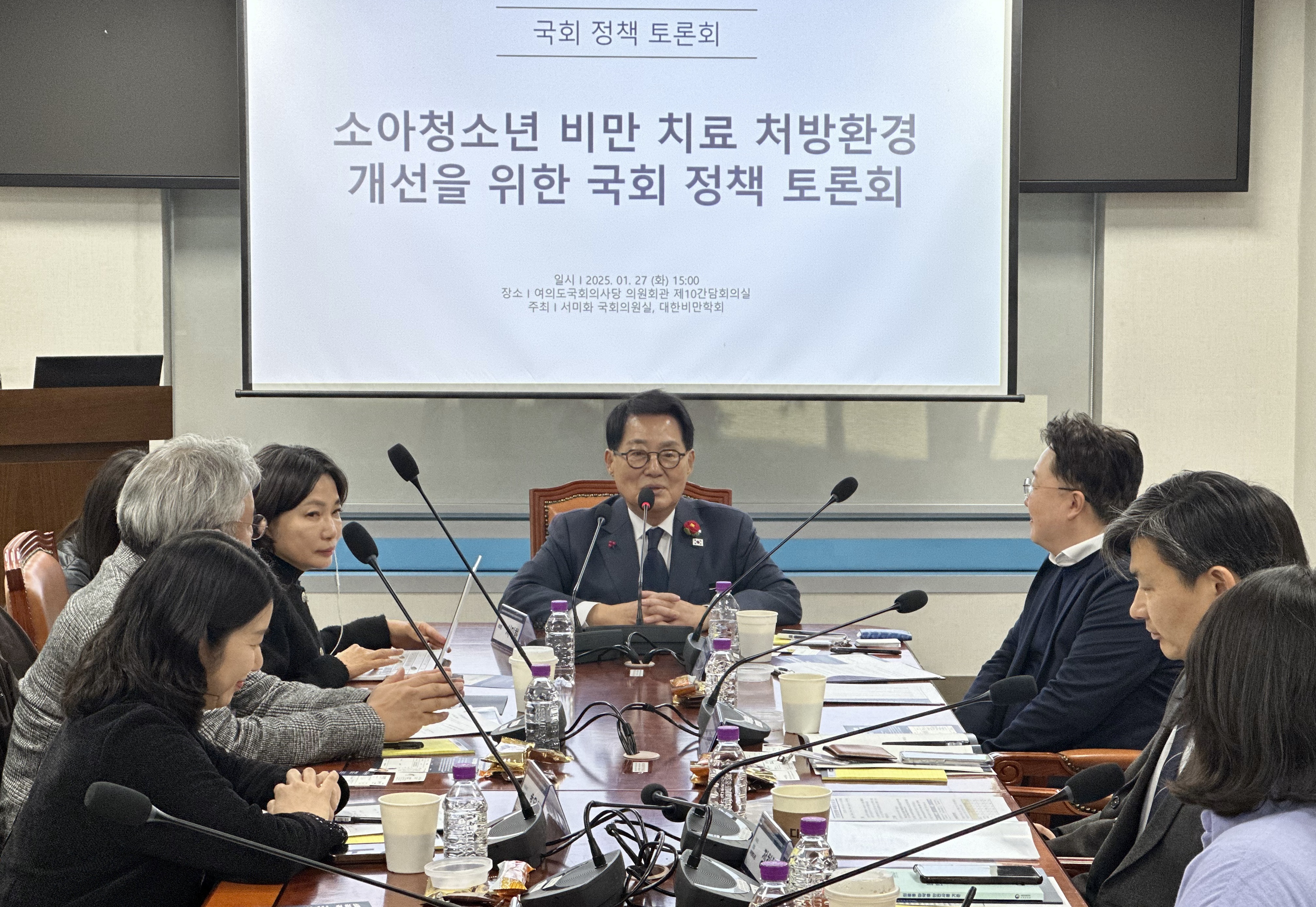
At the policy forum for expanding opportunities for pediatric obesity treatment medications, held on the 27th and hosted by the KSSO and Rep. Seo Mi-hwa of the Democratic Party, healthcare experts and the regulatory authority, the Ministry of Food and Drug Safety, met to exchange views on expanding the prescription of the phentermine/topiramate combination.
Rep. Park Jie-won of the Democratic Party, the oldest active member of the National Assembly and a leading candidate for the next National Assembly Speaker, also attended the forum to support expanding obesity treatment options and to deliver congratulatory remarks.
Rep. Seo Mi-hwa said, "Rep. Park Jie-won is the person who led me into politics," and added, "Along with Rep. Park, I will carefully review the opinions of medical sites and experts who believe that expanding treatment options for severe pediatric obesity is necessary."
"Time to consider prescription options for pediatric patients aged 12 and older, even with restricted prescription conditions"
Professor Hea Young Cho of the CHA University College of Pharmacy, who serves as the President of the Korean Society of Pharmaceutical Sciences and Technology (KSPST), appealed for the great necessity of creating a regulatory track to allow limited administration to pediatric patients aged 12 and older, highlighting Qsymia's low dependence and its clinically proven weight loss efficacy.
In particular, Professor Cho noted that while the approval for phentermine monotherapy is set at age 16 and older, the reality that the low-dose phentermine·topiramate combination is more tightly regulated at age 18 and older has some irrational aspects.
Professor Cho explained, "Phentermine monotherapy can be prescribed from age 16, yet the topiramate combination therapy is instead mandated for use in patients aged 18 and older," and added, "I wondered why this was the case. The prescription regulation for the combination is higher despite its lower phentermine content."
Professor Cho further added, "Topiramate sustains weight loss effects by increasing satiety or stabilizing eating habits. Psychotropic components were developed as combination drugs to produce synergistic effects while lowering the dosage," and added, "Regarding dependence, the U.S. FDA manages the phentermine combination as Schedule IV, which is classified as having the lowest dependence."
Professor Cho emphasized, "Because the weight loss effect of the low-dose phentermine combination has been scientifically proven, a relaxed prescription track must be created so that if necessary for pediatric treatment, the drug can be used while tracking and managing results through clinical monitoring," and added, "One way is to use a flexible prescription policy, such as lowering the prescription age for the phentermine combination by imposing limited prescription conditions and requiring sufficient clinical cases."
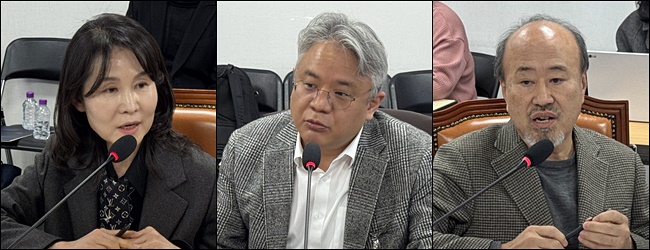
Professor Park Jung-Hwan of the Department of Endocrinology and Metabolism at Hanyang University Hospital, who serves as a director on the Committee of External Affairs and Policy of the KSSO, also urged the MFDS, the regulatory authority for the phentermine combination, not to take all management responsibility but instead grant obligations to prescribing doctors or selling pharmaceutical companies to operate the prescription age range flexibly.
Professor Park said, "The use of low-dose phentermine combinations must be activated for pediatric patients. There is a case of a patient where we prescribed semaglutide up to stage 5, costing millions of won. However, the patient did not lose even 1kg of body weight," and added, "There are cases where phentermine·topiramate works for such patients."
Professor Park stated, "Although semaglutide has been approved for use in pediatric patients, the reasons for obesity are diverse, so it would be good to relax the prescription age standards to accumulate and observe the necessary data and safety for the country," and "Rather than posing prescription restrictions, wouldn't it be more appropriate for the regulatory authority to open it up limitedly and present guidelines?"
Director Lee Jae Hyuk of the Korea Regulatory Affairs Professionals Society also suggested that we should contemplate expanding medical options in the selection of medications for pediatric patients.
The suggestion is that although the question of how to manage habitual and addictive drugs is a long-standing proposition for humanity, there is a great necessity to allow their use for medical or academic purposes.
Lee said, "Even if production or distribution is strictly controlled, use should not be restricted as much as possible if medical necessity is recognized," and "Regardless of how the issue of abuse is managed as a separate focus, it is not a solution for abuse countermeasures to simply prohibit use unconditionally. A prescription environment where it can be used reasonably must be established."
"No issues with pediatric patients using the phentermine combination if the treatment purpose is clear"
Jeong Hyeon-cheol, Director of the Narcotics Policy Division at the MFDS, who participated as a panelist, stated that even now, there is no problem with prescribing the phentermine combination for pediatric patients where the necessity for administration is clear, such as those in high-risk groups for adult-onset diseases.
This suggests that the MFDS has a sufficient range of understanding regarding the physician's right to prescribe for treatment purposes, and that simply expanding the administration indication for pediatric patients is difficult to view as the only solution.
Jeong emphasized, "Regarding the facts, pediatric patients for whom use is essential due to the urgency of disease treatment risks can essentially be seen as not being restricted by prescription regulations," and "However, an inconvenient situation where a doctor has to provide a justification after prescribing may occur. This is because we operate a pre-notice system for the abuse of narcotics."
Jeong highlighted, "For example, we request 4,500 doctors identified over a year as having exceeded the action standards for narcotic abuse to explain their reasons for prescription; afterward, through a committee of experts composed of doctors and pharmacists, we verify if the justification is valid, and the number decreases to units of hundreds or tens," and "The MFDS cannot restrict the physician's right to prescribe. It may be inconvenient, but the MFDS is allowing the prescription of phentermine combinations for pediatric patients."
Jeong added, "To explain the questions the general public might have regarding the phentermine combination, the MFDS has approval standards, and the insurance authorities have reimbursement standards. The standards inevitably differ for each," and "After listening to the healthcare professionals, there is a need to allow its use for pediatric patients with metabolic syndrome, but the fundamental administrative goal is to prevent the abuse of psychotropic narcotics. If clinical data is submitted, we will review it."

Professor Jae-Hyuk Lee of the Department of Endocrinology at Myongji Hospital (Director of the General Affairs Committee of the KSSO), who served as the chairperson, expressed concern that the method of 'justification after prescription' has significant irrational aspects and may hinder active treatment.
Professor Lee emphasized, "The method of letting it pass if a proper exception is justified is not easy in clinical practice. Doctors try to avoid the task of justifying prescriptions that exceed regulations, which makes treatment difficult from the start," and "If the Ministry writes the prescription indication regulations well, healthcare professionals can accept prescribing according to those regulations."
Professor Lee suggested, "If the regulations are excessively broad as they are now, it is difficult to use the drug (for pediatric patients) and post-monitoring regulation becomes complicated," and "It is ideal to manage the administration indications well and strictly regulate those that are exceeded. There are difficulties with the current method of 'do not use for now, but if you did, justify it and if that is correct, we will allow it.' Why not create the prescription regulations well so that doctors can use them properly?"
-

- 0
댓글 운영방식은
댓글은 실명게재와 익명게재 방식이 있으며, 실명은 이름과 아이디가 노출됩니다. 익명은 필명으로 등록 가능하며, 대댓글은 익명으로 등록 가능합니다.
댓글 노출방식은
댓글 명예자문위원(팜-코니언-필기모양 아이콘)으로 위촉된 데일리팜 회원의 댓글은 ‘게시판형 보기’와 ’펼쳐보기형’ 리스트에서 항상 최상단에 노출됩니다. 새로운 댓글을 올리는 일반회원은 ‘게시판형’과 ‘펼쳐보기형’ 모두 팜코니언 회원이 쓴 댓글의 하단에 실시간 노출됩니다.
댓글의 삭제 기준은
다음의 경우 사전 통보없이 삭제하고 아이디 이용정지 또는 영구 가입제한이 될 수도 있습니다.
-
저작권·인격권 등 타인의 권리를 침해하는 경우
상용 프로그램의 등록과 게재, 배포를 안내하는 게시물
타인 또는 제3자의 저작권 및 기타 권리를 침해한 내용을 담은 게시물
-
근거 없는 비방·명예를 훼손하는 게시물
특정 이용자 및 개인에 대한 인신 공격적인 내용의 글 및 직접적인 욕설이 사용된 경우
특정 지역 및 종교간의 감정대립을 조장하는 내용
사실 확인이 안된 소문을 유포 시키는 경우
욕설과 비어, 속어를 담은 내용
정당법 및 공직선거법, 관계 법령에 저촉되는 경우(선관위 요청 시 즉시 삭제)
특정 지역이나 단체를 비하하는 경우
특정인의 명예를 훼손하여 해당인이 삭제를 요청하는 경우
특정인의 개인정보(주민등록번호, 전화, 상세주소 등)를 무단으로 게시하는 경우
타인의 ID 혹은 닉네임을 도용하는 경우
-
게시판 특성상 제한되는 내용
서비스 주제와 맞지 않는 내용의 글을 게재한 경우
동일 내용의 연속 게재 및 여러 기사에 중복 게재한 경우
부분적으로 변경하여 반복 게재하는 경우도 포함
제목과 관련 없는 내용의 게시물, 제목과 본문이 무관한 경우
돈벌기 및 직·간접 상업적 목적의 내용이 포함된 게시물
게시물 읽기 유도 등을 위해 내용과 무관한 제목을 사용한 경우
-
수사기관 등의 공식적인 요청이 있는 경우
-
기타사항
각 서비스의 필요성에 따라 미리 공지한 경우
기타 법률에 저촉되는 정보 게재를 목적으로 할 경우
기타 원만한 운영을 위해 운영자가 필요하다고 판단되는 내용
-
사실 관계 확인 후 삭제
저작권자로부터 허락받지 않은 내용을 무단 게재, 복제, 배포하는 경우
타인의 초상권을 침해하거나 개인정보를 유출하는 경우
당사에 제공한 이용자의 정보가 허위인 경우 (타인의 ID, 비밀번호 도용 등)
※이상의 내용중 일부 사항에 적용될 경우 이용약관 및 관련 법률에 의해 제재를 받으실 수도 있으며, 민·형사상 처벌을 받을 수도 있습니다.
※위에 명시되지 않은 내용이더라도 불법적인 내용으로 판단되거나 데일리팜 서비스에 바람직하지 않다고 판단되는 경우는 선 조치 이후 본 관리 기준을 수정 공시하겠습니다.
※기타 문의 사항은 데일리팜 운영자에게 연락주십시오. 메일 주소는 dailypharm@dailypharm.com입니다.