- LOGIN
- MemberShip
- 2026-09-14 09:53:30
- Drug price cuts without support disturb pharma independence
- by Hwang, byoung woo | translator | 2026-01-22 08:22:17
The Korean pharmaceutical industry has voiced strong concerns regarding the government's proposed drug price reform plan.
It is a warning that repeated drug price cuts are depleting the foundational R&D strength of the domestic pharmaceutical industry and could ultimately lead to a health security crisis, such as the discontinuation of essential medicine supplies.
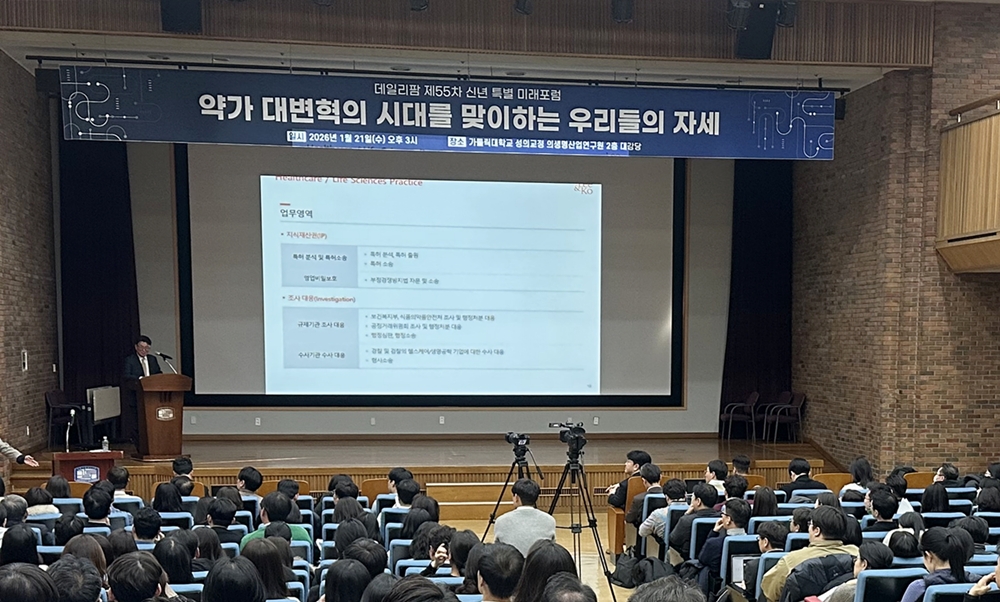
On the 21st, DailyPharm hosted its 55th New Year Special Future Forum at the main auditorium of the The Catholic University of Korea Institute of Biomedical Industry under the title, "Our Attitude in Facing the Era of Great Transformation in Drug Pricing," to collect frontline opinions.
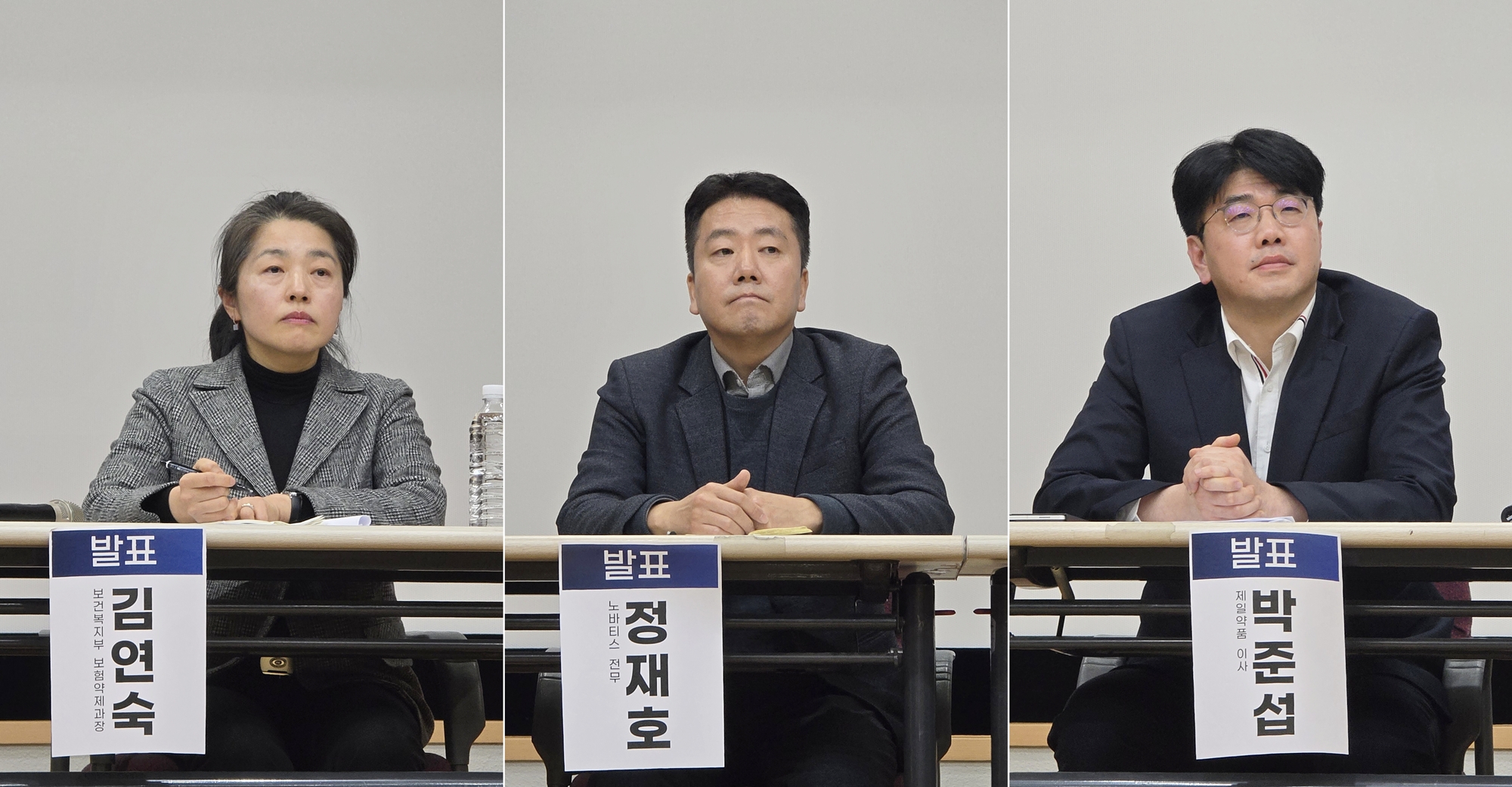
The forum was attended by key figures including Yeon-sook Kim, Head of the Division of Pharmaceutical Benefits at the Ministry of Health and Welfare (MOHW); Jun-seop Park, Board of Director at Jeil Pharmaceutical; Jaeho Jung, Head of Department at Novartis Korea; and members of the Healthcare Team from the law firm Lee & Ko. They shared various views on the contents, analysis, and response strategies related to the drug price reform plan.
"KRW 63T in Cumulative Price Cuts… Unpredictability is the Greatest Risk"
Jun-seop Park, Board of Director at Jeil Pharmaceutical, who delivered a presentation representing the domestic pharmaceutical industry, emphasized that repeated drug price reduction policies are forcing the industry to face a crisis of an unpredictable investment environment.
According to Park, starting with the introduction of the actual transaction price reimbursement system in 1999, followed by the 2012 blanket price cuts and the 2020 differential requirement system, continuous reductions through 2023 are estimated to have resulted in a cumulative decrease of approximately KRW 63 trillion.
The industry's greatest concern regarding these continuous cuts is 'uncertainty.'
Park said, "This unpredictable policy environment makes it virtually impossible for pharmaceutical companies to establish long-term survival strategies."
However, it was also emphasized that despite the repeated price-cutting environment, the domestic pharmaceutical industry has continued to build achievements in new and incrementally modified drugs (IMDs).
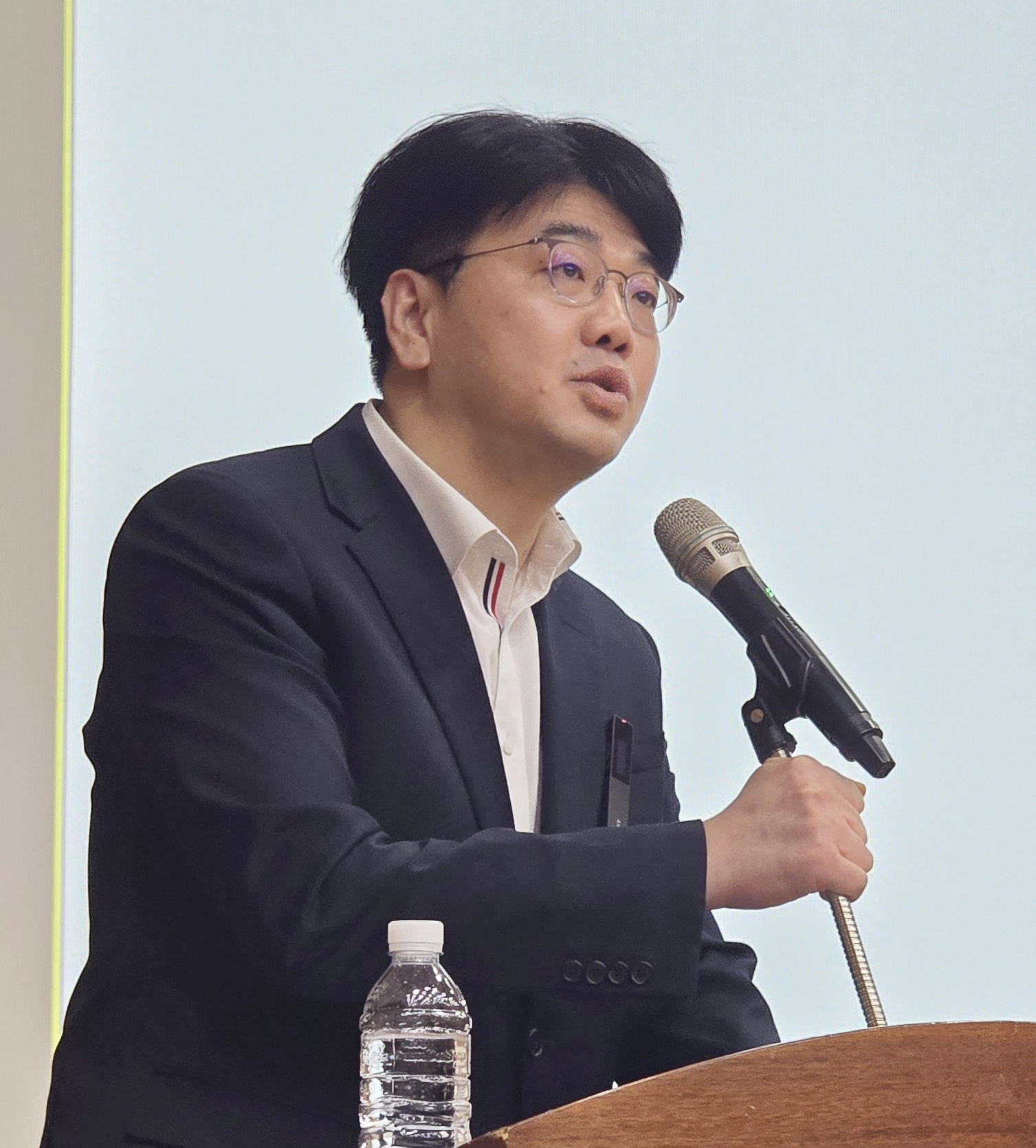
According to growth indicators for 2024 compared to 2000 presented by Director Park: ▲ Industry scale: KRW 7.9 trillion → KRW 29.8 trillion (277% growth); ▲ Number of employees: 55,000 → 120,000 (118% growth).
In particular, R&D investment surged 18-fold (1727%) from KRW 0.197 trillion to KRW 3.6 trillion. Since the launch of the first domestically developed new drug in 1999, the industry has produced 41 new drugs and 142 IMDs, establishing advanced clinical and quality systems.
However, Park warned that this virtuous cycle of growth is coming to a halt.
As the basis, he cited the "essential medicine supply discontinuation" crisis. According to data from the Ministry of Food and Drug Safety (MFDS), the number of reported cases of drug supply discontinuation and shortages has nearly tripled over the five years since 2020.
"While prices have risen by 20%, the standards for low-priced medicines have been frozen for over 10 years, threatening the sustainability of manufacturing basic medicines," Park said. "In Europe, unsustainable pricing policies are also acting as one of the primary causes of drug shortages."
The issue of equity in government support was also brought to the fore. While the government's R&D investment ratio for all industries stands at 21–24%, the ratio for the pharmaceutical industry was a mere 5.5% as of 2023.
"While companies cover 94.2% of pharmaceutical R&D with their own profits, slashing the profitability of generics and IMDs, which form that financial base, is like cutting off a runner's supply line during a marathon for new drug development," Park compared.
"Instead of short-term indicators like the R&D investment ratio of the past three years, we must comprehensively evaluate cumulative investment amounts, continuity, and substantial outcomes," Park suggested. "It is time to consider drug price preferences through the designation of 'Research-Oriented Pharmaceutical Companies' for those who continue substantial investment, in addition to the existing 'Innovative Pharmaceutical Companies' certification."
Park urged, "What the pharmaceutical industry needs right now is not drug price cuts, but the breathing room and support to prepare for the next 10 years. Instead of securing finances by cutting drug prices, we need policies that strengthen self-sustainability, allowing the industry to create jobs and reinvest in global competitiveness through appropriate drug pricing."
"Cutting Generic Prices to Approximately 40%, Legal Rationality in Question"
Following this, Attorney Jin-hwan Jeong from the law firm Lee & Ko presented a legal and industrial analysis of the drug price reform plan announced by the MOHW last November.

He also questioned the government's plan for drug price cuts related to the generic drug price estimation criteria.
"The government cites cases from Japan and France, but it is worth considering whether a horizontal comparison is possible given the industrial structures and the proportion of global new drugs in those countries," Jeong said. "We need to examine whether there is rationality in how a cut to the 40% range contributes to stimulating new drug development by domestic pharmaceutical firms."
Furthermore, he raised questions regarding the 'differentiation of the price addition system,' a core part of the reform. The government's plan grants high price additions only to the top 30% of Innovative Pharmaceutical Companies in terms of R&D ratios.
"It is difficult to see a substantial difference in R&D capabilities between a company at the 30th percentile and one at the 31st, and a structure where rankings change every year based on sales fluctuations hinders corporate predictability," Jeong said. "Evaluating companies primarily by ratios without considering comprehensive indicators, such as cumulative R&D investment or technology transfer achievements, may be irrational."
Jeong added, "There may be grounds for claims regarding the deviation or abuse of discretionary power under the Administrative Litigation Act. The collapse of an industry happens in an instant, but its revival takes a long time. We need a detailed institutional design where welfare and industry can coexist."
Predictability over Speed… Issues of Scope and Timing for Listed Drugs
In the subsequent Q&A session, questions focused on the 'speed' and 'predictability' of the policy.
Attendees expressed concern that, as the reform is being pushed forward rapidly, a 'big picture timeline' for when and to what extent the system will be applied must be presented first so companies can prepare.
There were also questions reflecting anxiety about the uncertainty of policy implementation, specifically about which of the currently listed medicines will be subject to price cuts and when.
The standard view among the domestic pharmaceutical industry was that, since each company had already established mid- to long-term business plans, an accelerated implementation date could destabilize management, employment, and decisions on development and investment.
In response, Yeon-sook Kim, Head of the Division of Pharmaceutical Benefits at the MOHW, expressed a commitment to setting specific targets as soon as possible to increase industry predictability.
"The government also fully recognizes that policy predictability is important," Director Kim explained. "We will quickly finalize and announce the targets for listed drug adjustments, and we are reviewing measures for a soft landing, considering the impact on the industry."
Kim emphasized that rather than a unilateral speed race, the government would ensure detailed adjustments through communication with the industry, stating, "We will not focus simply on cutting prices, but will sufficiently examine areas for supplementation by taking the voices of the industrial field into account."
In conclusion, Kim added, "We are considering a phased implementation, starting with a primary review of medicines listed before 2012. We plan to finalize the specific targets and scope through technical verification and close communication with associations to avoid confusion."
-

- 0
댓글 운영방식은
댓글은 실명게재와 익명게재 방식이 있으며, 실명은 이름과 아이디가 노출됩니다. 익명은 필명으로 등록 가능하며, 대댓글은 익명으로 등록 가능합니다.
댓글 노출방식은
댓글 명예자문위원(팜-코니언-필기모양 아이콘)으로 위촉된 데일리팜 회원의 댓글은 ‘게시판형 보기’와 ’펼쳐보기형’ 리스트에서 항상 최상단에 노출됩니다. 새로운 댓글을 올리는 일반회원은 ‘게시판형’과 ‘펼쳐보기형’ 모두 팜코니언 회원이 쓴 댓글의 하단에 실시간 노출됩니다.
댓글의 삭제 기준은
다음의 경우 사전 통보없이 삭제하고 아이디 이용정지 또는 영구 가입제한이 될 수도 있습니다.
-
저작권·인격권 등 타인의 권리를 침해하는 경우
상용 프로그램의 등록과 게재, 배포를 안내하는 게시물
타인 또는 제3자의 저작권 및 기타 권리를 침해한 내용을 담은 게시물
-
근거 없는 비방·명예를 훼손하는 게시물
특정 이용자 및 개인에 대한 인신 공격적인 내용의 글 및 직접적인 욕설이 사용된 경우
특정 지역 및 종교간의 감정대립을 조장하는 내용
사실 확인이 안된 소문을 유포 시키는 경우
욕설과 비어, 속어를 담은 내용
정당법 및 공직선거법, 관계 법령에 저촉되는 경우(선관위 요청 시 즉시 삭제)
특정 지역이나 단체를 비하하는 경우
특정인의 명예를 훼손하여 해당인이 삭제를 요청하는 경우
특정인의 개인정보(주민등록번호, 전화, 상세주소 등)를 무단으로 게시하는 경우
타인의 ID 혹은 닉네임을 도용하는 경우
-
게시판 특성상 제한되는 내용
서비스 주제와 맞지 않는 내용의 글을 게재한 경우
동일 내용의 연속 게재 및 여러 기사에 중복 게재한 경우
부분적으로 변경하여 반복 게재하는 경우도 포함
제목과 관련 없는 내용의 게시물, 제목과 본문이 무관한 경우
돈벌기 및 직·간접 상업적 목적의 내용이 포함된 게시물
게시물 읽기 유도 등을 위해 내용과 무관한 제목을 사용한 경우
-
수사기관 등의 공식적인 요청이 있는 경우
-
기타사항
각 서비스의 필요성에 따라 미리 공지한 경우
기타 법률에 저촉되는 정보 게재를 목적으로 할 경우
기타 원만한 운영을 위해 운영자가 필요하다고 판단되는 내용
-
사실 관계 확인 후 삭제
저작권자로부터 허락받지 않은 내용을 무단 게재, 복제, 배포하는 경우
타인의 초상권을 침해하거나 개인정보를 유출하는 경우
당사에 제공한 이용자의 정보가 허위인 경우 (타인의 ID, 비밀번호 도용 등)
※이상의 내용중 일부 사항에 적용될 경우 이용약관 및 관련 법률에 의해 제재를 받으실 수도 있으며, 민·형사상 처벌을 받을 수도 있습니다.
※위에 명시되지 않은 내용이더라도 불법적인 내용으로 판단되거나 데일리팜 서비스에 바람직하지 않다고 판단되는 경우는 선 조치 이후 본 관리 기준을 수정 공시하겠습니다.
※기타 문의 사항은 데일리팜 운영자에게 연락주십시오. 메일 주소는 dailypharm@dailypharm.com입니다.