- LOGIN
- MemberShip
- 2026-09-14 16:43:47
- 'Drug pricing reform will improve patient access'
- by Son, Hyung Min | translator | 2026-01-22 08:22:26
As global pharmaceutical R&D trends rapidly shift toward high-priced anticancer and rare disease therapies, attention is focused on how the government's proposed drug pricing system reform will impact domestic patient access and the competitiveness of the pharmaceutical industry.
On the 21st, Dailypharm held a Future Forum at the Catholic University of Korea's Songeui Campus Institute of Biomedical Industry. At the forum, Jaeho Jung, Head of Value and Access at Novartis, presented the perspective of multinational pharmaceutical companies on the proposed drug pricing reform.
Jung said, “The reform plan is in line with global R&D trends. If appropriate value-based compensation and faster reimbursement listing are achieved, it will send a positive signal not only for patient access but also for Korea’s R&D ecosystem.”

Development of high-cost anticancer drugs and rare disease treatments active... “Current drug pricing and reimbursement systems struggle to accommodate innovation.”
Jung first highlighted the scale of clinical development in oncology and rare disease therapies. Currently, oncology accounts for 41% of all global clinical trials, of which 35% involve innovative drugs.
The rare disease treatment market is expected to reach KRW 542 trillion by 2023, while rare cancer trials account for 74% of all ongoing rare disease studies.
Despite this projected expansion of the high-cost new drug market, securing insurance coverage, which is a core value for patient access in Korea, remains inadequate. Among 460 new drugs approved in major countries from 2012 to 2021, the coverage rate averaged 28% across G20 nations and 29% in OECD countries, while Korea lagged at just 17%.
Jung said, “Korea is facing a triple burden of ensuring universal welfare with limited resources, expanding access to new drugs, and guaranteeing patients’ right to treatment. The government has not been idle. The system has been continuously revised since 2007, but it has now reached its limits.”
Examining the time required for reimbursement by treatment type, rare disease treatments took 23.6 months, anticancer drugs 31.6 months, and general new drugs 18.3 months. Even after new drug approval, a lengthy period remains before patients really gain reimbursement.
At the same time, global R&D trends have driven the rise of antibody-drug conjugates (ADCs), bispecific antibodies, and biologics, many of which now hold multiple indications. Some immuno-oncology drugs have more than 20 approved indications.
In response, the government has proposed reforms aimed at improving access to new drugs. These include an indication-based pricing, strengthening value-based drug reimbursement, and shortening the reimbursement listing period for rare diseases. In particular, the reimbursement listing period for rare disease therapies is expected to be reduced from an average of 240 days to within 100 days.
Jung assessed, “With the proportion of high-cost new drugs rapidly increasing, it is difficult to guarantee patient access solely with limited national health insurance funds. As more drugs secure multiple indications, an indication-based pricing system is in line with global standards”
He added, "The current system focuses on increasing reimbursement rates within the existing framework; it remains finance-centered from a patient access perspective. Although the government’s approach is understandable given budget constraints, the system must be operated with the patients in mind.”
“Reform will create synergy, not suppress R&D”
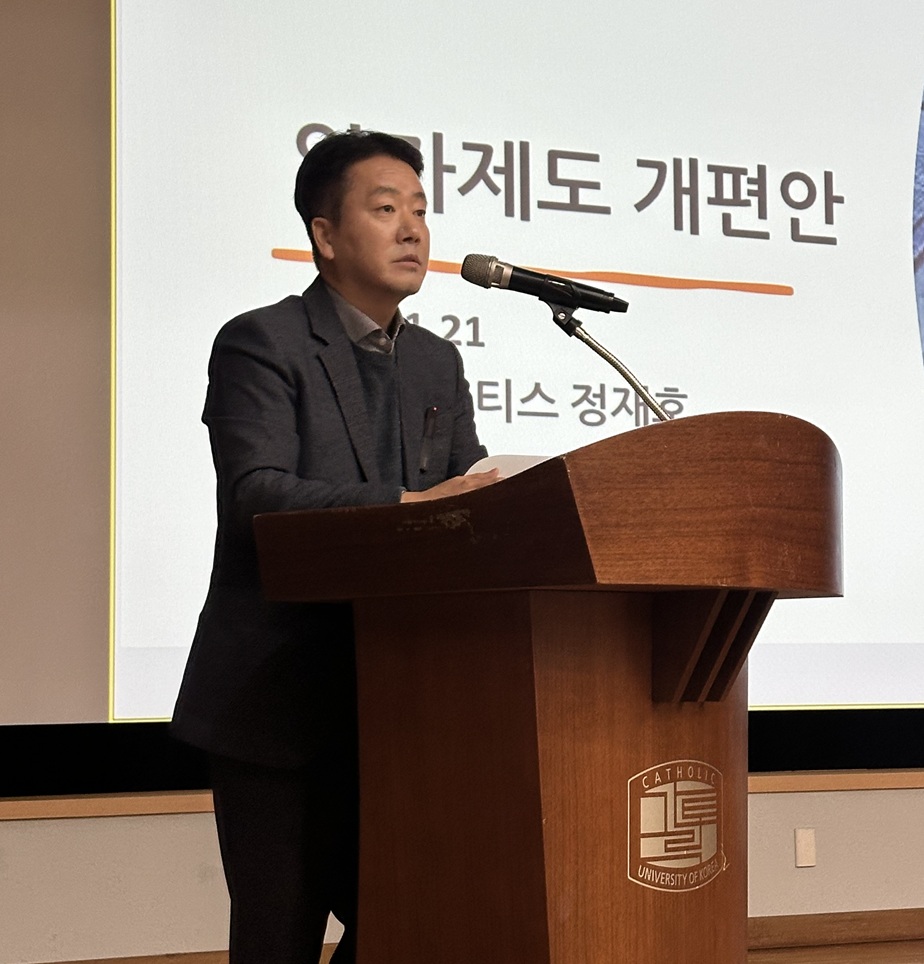
He also expressed the view that the drug pricing reform could improve the domestic investment environment.
Korean pharmaceutical companies, whose portfolios are largely centered on generics, have repeatedly voiced concerns that the proposed drug pricing reform could significantly stifle R&D.
However, Jung emphasized the potential advantage that improved access to new drugs could expand investment by global pharmaceutical companies.
He explained that currently, only two global pharmaceutical companies have production facilities in Korea, and attracting global-level R&D centers remains challenging.
Jung stated, “Even when reviewing potential sites for our flagship one-shot treatment Kymriah, we received feedback that Korea was not suitable. If the system becomes more predictable and the value of R&D is properly recognized, direct investment and partnerships with Korean companies will expand.”
He added, “If drug pricing improves in terms of value recognition and patient access, direct investment by global pharmaceutical companies will increase, as well as partnerships with Korean companies.”
“Looking at Boston or New Jersey, which have rapidly emerged as global bioclusters, their R&D centers are well-established. This is because they are clustered together in terms of the collaborative R&D value. Looking at the domestic R&D environment, it feels like everyone is working hard, but individually. If the drug pricing reform system is well-established, I believe synergies will grow further, including joint R&D centers between global and domestic companies.”
Furthermore, Jung pointed out that discussions on reimbursing high-value new drugs like ADCs and one-shot gene therapies have repeatedly faced difficulties within the existing framework. “The reform plan has a high potential to contribute to improving patient access, aligning with future global R&D trends.”
Jung stated, “Operational execution is as crucial as the system's design. I hope a patient-centered system can take root through continuous dialogue between the government and industry.”
-

- 0
댓글 운영방식은
댓글은 실명게재와 익명게재 방식이 있으며, 실명은 이름과 아이디가 노출됩니다. 익명은 필명으로 등록 가능하며, 대댓글은 익명으로 등록 가능합니다.
댓글 노출방식은
댓글 명예자문위원(팜-코니언-필기모양 아이콘)으로 위촉된 데일리팜 회원의 댓글은 ‘게시판형 보기’와 ’펼쳐보기형’ 리스트에서 항상 최상단에 노출됩니다. 새로운 댓글을 올리는 일반회원은 ‘게시판형’과 ‘펼쳐보기형’ 모두 팜코니언 회원이 쓴 댓글의 하단에 실시간 노출됩니다.
댓글의 삭제 기준은
다음의 경우 사전 통보없이 삭제하고 아이디 이용정지 또는 영구 가입제한이 될 수도 있습니다.
-
저작권·인격권 등 타인의 권리를 침해하는 경우
상용 프로그램의 등록과 게재, 배포를 안내하는 게시물
타인 또는 제3자의 저작권 및 기타 권리를 침해한 내용을 담은 게시물
-
근거 없는 비방·명예를 훼손하는 게시물
특정 이용자 및 개인에 대한 인신 공격적인 내용의 글 및 직접적인 욕설이 사용된 경우
특정 지역 및 종교간의 감정대립을 조장하는 내용
사실 확인이 안된 소문을 유포 시키는 경우
욕설과 비어, 속어를 담은 내용
정당법 및 공직선거법, 관계 법령에 저촉되는 경우(선관위 요청 시 즉시 삭제)
특정 지역이나 단체를 비하하는 경우
특정인의 명예를 훼손하여 해당인이 삭제를 요청하는 경우
특정인의 개인정보(주민등록번호, 전화, 상세주소 등)를 무단으로 게시하는 경우
타인의 ID 혹은 닉네임을 도용하는 경우
-
게시판 특성상 제한되는 내용
서비스 주제와 맞지 않는 내용의 글을 게재한 경우
동일 내용의 연속 게재 및 여러 기사에 중복 게재한 경우
부분적으로 변경하여 반복 게재하는 경우도 포함
제목과 관련 없는 내용의 게시물, 제목과 본문이 무관한 경우
돈벌기 및 직·간접 상업적 목적의 내용이 포함된 게시물
게시물 읽기 유도 등을 위해 내용과 무관한 제목을 사용한 경우
-
수사기관 등의 공식적인 요청이 있는 경우
-
기타사항
각 서비스의 필요성에 따라 미리 공지한 경우
기타 법률에 저촉되는 정보 게재를 목적으로 할 경우
기타 원만한 운영을 위해 운영자가 필요하다고 판단되는 내용
-
사실 관계 확인 후 삭제
저작권자로부터 허락받지 않은 내용을 무단 게재, 복제, 배포하는 경우
타인의 초상권을 침해하거나 개인정보를 유출하는 경우
당사에 제공한 이용자의 정보가 허위인 경우 (타인의 ID, 비밀번호 도용 등)
※이상의 내용중 일부 사항에 적용될 경우 이용약관 및 관련 법률에 의해 제재를 받으실 수도 있으며, 민·형사상 처벌을 받을 수도 있습니다.
※위에 명시되지 않은 내용이더라도 불법적인 내용으로 판단되거나 데일리팜 서비스에 바람직하지 않다고 판단되는 경우는 선 조치 이후 본 관리 기준을 수정 공시하겠습니다.
※기타 문의 사항은 데일리팜 운영자에게 연락주십시오. 메일 주소는 dailypharm@dailypharm.com입니다.