- LOGIN
- MemberShip
- 2026-05-15 20:47:38
- Talking points on ‘Korea Passing’ in pharma industry
- by Eo, Yun-Ho | translator Byun Kyung A | 2019-11-27 06:36:10

When it comes down to the Korean pharmaceutical industry, the expression does not indicate the U.S.
and North Korea neglecting South Korea during the Korean peninsula nuclear talks.
Rather, it indicates multinational pharmaceutical companies neglecting Korean market to protect certain level of pricing in other countries.
This is why the South Korean health authority is offended by the industry using the expression, ‘Korea Passing’.
However, there have been some clear signs of the phenomenon and a number of alarming cases has been reported.
And the issue is around ‘drug’, a product that directly affects people’s health.
Increasing number of ‘available but inaccessible drug’ is certainly an issue we need to be concerned of.
It’s agreeable to deduce the theory under a number of circumstances, but it cannot be defined as ‘truth’ at the moment.
Despite the grievance, the industry also cannot exactly explain it.
Countries around the world have different drug pricing systems according to respective calculation model.
Tax, actual transaction price, retail price and many other factors play a part.
As we are now in the day and age of high-cost drug, growing number of countries are adopting the dual pricing system.
A research was criticized by the public because of it, as the research concluded ‘drug price in Korea is at around 45 percent of other OECD member countries’’.
Of course, if a specific drug’s insurance listing in Korea has been delayed or withdrawn, then the reason is not because ‘the drug price was too high’.
At least there is no doubt the drug price in Korea that more countries would refer to, is the black sheep multinational pharmaceutical companies want to keep it hidden.
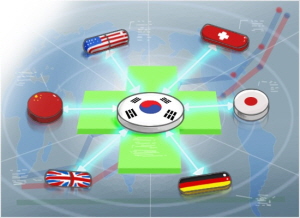
Multinational drug manufacturers point their fingers at Middle Eastern countries, Japan and even recently China as the biggest reason why Korea Passing is a relevant issue, because those countries take up significant pie in the overall international sales, but also refer to pricing in Korea.
Then why are those countries peaking at drug pricing in Korea?
It would be truer to say ‘because pricing is transparent’ instead of simply saying ‘pricing is low’.
Under the single-payer health insurance system, or the National Health Insurance (NHI), Korean drug pricing system compares drug price with other alternative options, and conducts pharmacoeconomic analysis before a price for drug is set when listing the item on NHI.
The system is surely convenient for other countries to use as a reference.
Although the risk sharing agreement (RSA) system has been introduced, the ratio of dual pricing in Korea is comparatively lower.
However, the actual volume of Korean pharmaceutical market is about 1.5 to 1.7 percent of the entire global market.
Because of the transparent pricing system, multinational drug companies ironically started to neglect Korean market.
And hence, the industry argues drug prices should be kepts undisclosed.
In the same sense, some are demanding ratio of dual pricing should be increased with RSA subject expansion.
A market access (MA) expert from a multinational pharmaceutical company stated “Each drug has different circumstances, but the Korean office is feeling the strain as increasing number of foreign countries are referring to drug pricing in Korea.
Korea Passing is an issue that the Korean industry and government should talk and seek for solutions”.
But justification for each case should be thoroughly reviewed.
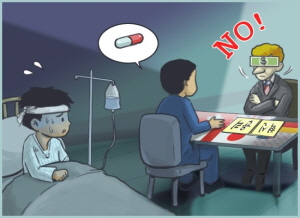
The government cannot shrug shoulders every time when multinational companies pull out reimbursement application or give up on their reimbursement listing.
For instance, Novartis’ allergic asthma treatment Xolair (omalizumab) is a typical example of Korea Passing the industry is complaining about.
In December last year, Novartis pulled out Xolair from drug pricing negotiation with National Health Insurance Service (NHIS) when it was finally passed by Drug Reimbursement Evaluation Committee (DREC) under Health Insurance Review and Assessment Service (HIRA) after being approved in Korea for 11 long years.
It was actually China triggering the company’s action.
Right around then, China added Korea as one of external reference pricing countries.
Novartis headquarters decided to avoid risk of lowering drug price in a market potentially 20 times bigger than Korean market.
Some of the Korean industry people named the incident as ‘China Shock’.
It wasn’t to say what was a righteous or justifiable.
It was simply a good example of what the industry fears—a global company giving up on Korea for a bigger market.
Within the business logic, it would be considered as a reasonable case of Korea Passing.
However, another case with Mitsubishi Tanabe’s amyotrophic lateral sclerosis (ALS) treatment Radicut (edaravone) was different.
The company suddenly withdrew application for refund type RSA on Radicut in last June.
It was Canada this time.
The refund type RSA was considered Korean industry’s solution to Korea Passing.
Some are even arguing the refund type should be excluded from RSA types and shift it as a type of general insurance listing.
Mitsubishi Tanabe gave up on listing the drug in Korea, because it was afraid drug price in Canada would be affected by labeled price and not by the actual transaction price.
Labeled price is usually proposed by pharmaceutical company.
In fact, many multinational companies have their Korean office to go through a process of conducting its own internal and external feasibility evaluation on the labeled price set with DREC, and reporting the result to the headquarters for their confirmation.
During the process, the company also keeps track of drug listing schedule in other countries and the foreign country’s external reference pricing system as well.
In May 2017, Canada announced it would add Korea on to their list of countries of external reference pricing, and enforced it from the beginning of this year.
It was well-known news ever since the global company initiated a talk on RSA in Korea.
And actually, Canada dropped Korea from its list recently.
The case of Ono Pharmaceutical’s cancer immunotherapy Opdivo (nivolumab) was even worse.
The item was listed as both refund and expenditure cap type RSA in August 2017, but the company technically gave up on the Korean market after the pre-negotiation on expanding reimbursed indication for lung cancer second-line therapy fell apart.
The negotiation started from last year but it broke down in the first quarter of this year.
The Korean health authority proposed for a renegotiation, but Ono Pharmaceutical refused.
“The headquarters has made up their mind”, was their answer.
A drug, listed with RSA and initially engaged in an indication expansion talk, refused to even negotiate.
It was certainly not because of external reference pricing.
Xolair, Raicut and Obdivo are all cases of Korea Passing.
But they are all different.
Xolair was a concerning case, but Radicut and Obdivo were not.
They should rather be reprehended.
“Without company’s will, there isn’t anything the government can do.
The government is also internally reviewing various means to improve new drug accessibility.
But a company unilaterally announcing withdrawal of listing and blaming everything on the government is unacceptable”, said Ministry of Health and Welfare official.
-

- 0
댓글 운영방식은
댓글은 실명게재와 익명게재 방식이 있으며, 실명은 이름과 아이디가 노출됩니다. 익명은 필명으로 등록 가능하며, 대댓글은 익명으로 등록 가능합니다.
댓글 노출방식은
댓글 명예자문위원(팜-코니언-필기모양 아이콘)으로 위촉된 데일리팜 회원의 댓글은 ‘게시판형 보기’와 ’펼쳐보기형’ 리스트에서 항상 최상단에 노출됩니다. 새로운 댓글을 올리는 일반회원은 ‘게시판형’과 ‘펼쳐보기형’ 모두 팜코니언 회원이 쓴 댓글의 하단에 실시간 노출됩니다.
댓글의 삭제 기준은
다음의 경우 사전 통보없이 삭제하고 아이디 이용정지 또는 영구 가입제한이 될 수도 있습니다.
-
저작권·인격권 등 타인의 권리를 침해하는 경우
상용 프로그램의 등록과 게재, 배포를 안내하는 게시물
타인 또는 제3자의 저작권 및 기타 권리를 침해한 내용을 담은 게시물
-
근거 없는 비방·명예를 훼손하는 게시물
특정 이용자 및 개인에 대한 인신 공격적인 내용의 글 및 직접적인 욕설이 사용된 경우
특정 지역 및 종교간의 감정대립을 조장하는 내용
사실 확인이 안된 소문을 유포 시키는 경우
욕설과 비어, 속어를 담은 내용
정당법 및 공직선거법, 관계 법령에 저촉되는 경우(선관위 요청 시 즉시 삭제)
특정 지역이나 단체를 비하하는 경우
특정인의 명예를 훼손하여 해당인이 삭제를 요청하는 경우
특정인의 개인정보(주민등록번호, 전화, 상세주소 등)를 무단으로 게시하는 경우
타인의 ID 혹은 닉네임을 도용하는 경우
-
게시판 특성상 제한되는 내용
서비스 주제와 맞지 않는 내용의 글을 게재한 경우
동일 내용의 연속 게재 및 여러 기사에 중복 게재한 경우
부분적으로 변경하여 반복 게재하는 경우도 포함
제목과 관련 없는 내용의 게시물, 제목과 본문이 무관한 경우
돈벌기 및 직·간접 상업적 목적의 내용이 포함된 게시물
게시물 읽기 유도 등을 위해 내용과 무관한 제목을 사용한 경우
-
수사기관 등의 공식적인 요청이 있는 경우
-
기타사항
각 서비스의 필요성에 따라 미리 공지한 경우
기타 법률에 저촉되는 정보 게재를 목적으로 할 경우
기타 원만한 운영을 위해 운영자가 필요하다고 판단되는 내용
-
사실 관계 확인 후 삭제
저작권자로부터 허락받지 않은 내용을 무단 게재, 복제, 배포하는 경우
타인의 초상권을 침해하거나 개인정보를 유출하는 경우
당사에 제공한 이용자의 정보가 허위인 경우 (타인의 ID, 비밀번호 도용 등)
※이상의 내용중 일부 사항에 적용될 경우 이용약관 및 관련 법률에 의해 제재를 받으실 수도 있으며, 민·형사상 처벌을 받을 수도 있습니다.
※위에 명시되지 않은 내용이더라도 불법적인 내용으로 판단되거나 데일리팜 서비스에 바람직하지 않다고 판단되는 경우는 선 조치 이후 본 관리 기준을 수정 공시하겠습니다.
※기타 문의 사항은 데일리팜 운영자에게 연락주십시오. 메일 주소는 dailypharm@dailypharm.com입니다.
- [Reporter's View] The dark side of improved diabetes med convenience
- Reporter's view | Son, Hyung Min

- [Reporter's View] Contradiction of "K-passing" and a new drug powerhouse
- Reporter's view | Lee, Jeong-Hwan