- LOGIN
- MemberShip
- 2026-05-15 23:50:27
- The Answer is in RSA expansion and undisclosed pricing
- by Kim, Jung-Ju | translator Byun Kyung A | 2019-11-29 22:54:42

If Korea Passing occurs when other foreign countries start referring to Korean drug pricing, then it could be avoided by preventing them from referencing.
Otherwise, drug could be price at a moderate level to avoid Korea Passing regardless of other countries.
Theoretically they are both simple, but realistically they are not.
It is close to impossible for Korea to bring up the pricing level immediately.
So the second option of making Korean pricing system unattractive for external reference pricing, or in other words, increasing number of ‘undisclosed drug pricing’ could be a better option.

Daily Pharm’s survey on 21 market access personnel from multinational pharmaceutical companies clearly showed their intention.
16 out of 21 companies suggested ‘RSA expansion or splitting out the refund type’, or ‘undisclosed drug pricing’ as solutions for Korea Passing.
RSA has a room to grow, “make the right decision for the people” Increase number of listed drugs with dual pricing to prevent disclosure of actual price.
Raise the externally referenced pricing with higher labeled price.
Dual pricing for refund type RSA system in Korea undergoes economic evaluation like any other generally listed drug, and receives actual price according to ICER value.
In other words, the government may provide dual pricing, but it does not affect National Health Insurance financially.
But the civic groups are opposing fiercely and the government cannot blindly ignore it.
The government has also shown strong will to expand RSA.
Korean Ministry of Health and Welfare (MOHW) recently presented three conditions for RSA application eligibility, regardless of treating ‘life-threatening level of health condition’ or not.
Expanding scope of subject disease was one of the most demanded changes the industry has been asking for, besides making follow-on drug eligible.
The government, reportedly, has ongoing discussions about additional expansion plan.
The industry is welcoming the government’s action for now.
But many are still craving for more changes.
The pharmaceutical industry is urging the government to increase ratio of undisclosed drug pricing.
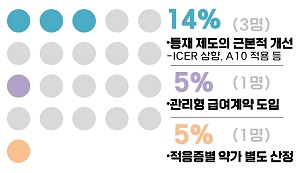
The industry demands the refund type RSA should not be a conditional listing route, but another route of general listing procedure.
In fact, Korea’s RSA has narrower scope than other countries.
On the contrary, foreign countries are deciding to keep more number of drug pricing undisclosed.
A common example that multinational companies like to take are Italy and Australia.
The European country now has more than 300 drug items with undisclosed pricing, and Australia has 95 items.
Taiwan and Malaysia, following Singapore, amended their regulations for pharmaceutical companies to freely apply for dual pricing.
Some are also pointing fingers at the labeled price itself.
A pharmaceutical company can propose a labeled price in Korea, but under the limitation of ‘less than A7 adjusted average price’.
The industry explains the existing labeled pricing model could become a reason for Korea Passing in a long term.
A global pharmaceutical company’s market access expert claimed, “Many countries caring about their own people are trying to secure access to new drugs by expanding the ratio of undisclosed drug pricing, despite it being a second best option.
Although the title of ‘transparent pricing’ in global community is admirable, Korean government should make a decision for their patients as well”.
Views and criticism on Korea Passing All of the arguments mentioned make sense.
But accepting all demands at once is impractical.
Their demands need a series of discussions to reach a satisfying solution.
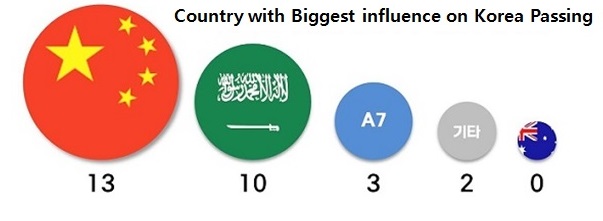
China refers to Korean drug pricing, but still there are two to three years of gap in point of listing between two countries.
But as the gap is narrowing, the pharmaceutical companies are now feeling the pressure.
Not all drug items are instantly faced with risk of Korea Passing.
Some say RSA expansion is not the only option.
MOHW, for instance, recently presented an option of ‘trade-off’.
The ministry intends to save expenditure from drug with expired patent, and reinvest the saved finance on securing access to new drug.
However, pharmaceutical industry expressed anxiousness as they claimed it is another means of reducing drug price.
It makes a sense for companies who have experienced a series of regulatory changes centering drug expenditure control.
But, could it be that the companies are more concerned about risking lowered sales profit from their drugs with expired patent?
Recently, a company refused to hand in a list of items with expired patent to trade off with a compensation for new drug pricing.
The company presented a list of items with expired patent but expected to drop price due to expanded indication.
It was basically the company turning down the trade-off offer.
“We wonder if RSA is the only option.
The current RSA regulation has expanded its subject scope recently, and yet the government is constantly reviewing other means of improving the system, including another expansion of subject.
We need put everyone’s heads together for this problem”, a government official said.
Surely, there is something wrong with foreign country’s external reference pricing creating uneasy tension and causing Korea Passing.
But the multinational pharmaceutical companies are not selling designer bags or luxurious cars.
And some drugs are actually priced higher in comparatively less developed country, or countries with weaker negotiation power.
World Health Organization (WHO) convened ‘Fair Pricing Forum’ and adopted a resolution on “improving the transparency of markets for medicines, vaccines, and other health products”.
What the global community strives to achieve with ‘drug pricing’ may differ from the multinational pharmaceutical companies.
Korea Passing should never justify pharmaceutical companies trying to generate a loophole in the reimbursement listing system in Korea.
We need to get a clearer view on the matter.
Is there a certain headquarters passing the Korean market with a slightest inconvenience?
Are executives and MA experts at Korean offshoots indeed trying to convince headquarters while they urge the government to amend regulation?
They are some questions to ponder on.
Another multinational company’s MA expert said, “It depends on pipelines, but each multinational company’s different nature has also affected Korea Passing.
Government regulation should be improved, but it should be backed up by pharmaceutical industry’s effort as well”.
-

- 0
댓글 운영방식은
댓글은 실명게재와 익명게재 방식이 있으며, 실명은 이름과 아이디가 노출됩니다. 익명은 필명으로 등록 가능하며, 대댓글은 익명으로 등록 가능합니다.
댓글 노출방식은
댓글 명예자문위원(팜-코니언-필기모양 아이콘)으로 위촉된 데일리팜 회원의 댓글은 ‘게시판형 보기’와 ’펼쳐보기형’ 리스트에서 항상 최상단에 노출됩니다. 새로운 댓글을 올리는 일반회원은 ‘게시판형’과 ‘펼쳐보기형’ 모두 팜코니언 회원이 쓴 댓글의 하단에 실시간 노출됩니다.
댓글의 삭제 기준은
다음의 경우 사전 통보없이 삭제하고 아이디 이용정지 또는 영구 가입제한이 될 수도 있습니다.
-
저작권·인격권 등 타인의 권리를 침해하는 경우
상용 프로그램의 등록과 게재, 배포를 안내하는 게시물
타인 또는 제3자의 저작권 및 기타 권리를 침해한 내용을 담은 게시물
-
근거 없는 비방·명예를 훼손하는 게시물
특정 이용자 및 개인에 대한 인신 공격적인 내용의 글 및 직접적인 욕설이 사용된 경우
특정 지역 및 종교간의 감정대립을 조장하는 내용
사실 확인이 안된 소문을 유포 시키는 경우
욕설과 비어, 속어를 담은 내용
정당법 및 공직선거법, 관계 법령에 저촉되는 경우(선관위 요청 시 즉시 삭제)
특정 지역이나 단체를 비하하는 경우
특정인의 명예를 훼손하여 해당인이 삭제를 요청하는 경우
특정인의 개인정보(주민등록번호, 전화, 상세주소 등)를 무단으로 게시하는 경우
타인의 ID 혹은 닉네임을 도용하는 경우
-
게시판 특성상 제한되는 내용
서비스 주제와 맞지 않는 내용의 글을 게재한 경우
동일 내용의 연속 게재 및 여러 기사에 중복 게재한 경우
부분적으로 변경하여 반복 게재하는 경우도 포함
제목과 관련 없는 내용의 게시물, 제목과 본문이 무관한 경우
돈벌기 및 직·간접 상업적 목적의 내용이 포함된 게시물
게시물 읽기 유도 등을 위해 내용과 무관한 제목을 사용한 경우
-
수사기관 등의 공식적인 요청이 있는 경우
-
기타사항
각 서비스의 필요성에 따라 미리 공지한 경우
기타 법률에 저촉되는 정보 게재를 목적으로 할 경우
기타 원만한 운영을 위해 운영자가 필요하다고 판단되는 내용
-
사실 관계 확인 후 삭제
저작권자로부터 허락받지 않은 내용을 무단 게재, 복제, 배포하는 경우
타인의 초상권을 침해하거나 개인정보를 유출하는 경우
당사에 제공한 이용자의 정보가 허위인 경우 (타인의 ID, 비밀번호 도용 등)
※이상의 내용중 일부 사항에 적용될 경우 이용약관 및 관련 법률에 의해 제재를 받으실 수도 있으며, 민·형사상 처벌을 받을 수도 있습니다.
※위에 명시되지 않은 내용이더라도 불법적인 내용으로 판단되거나 데일리팜 서비스에 바람직하지 않다고 판단되는 경우는 선 조치 이후 본 관리 기준을 수정 공시하겠습니다.
※기타 문의 사항은 데일리팜 운영자에게 연락주십시오. 메일 주소는 dailypharm@dailypharm.com입니다.
- [Reporter's View] The dark side of improved diabetes med convenience
- Reporter's view | Son, Hyung Min

- [Reporter's View] Contradiction of "K-passing" and a new drug powerhouse
- Reporter's view | Lee, Jeong-Hwan