- LOGIN
- MemberShip
- 2026-05-15 23:50:22
- ECCK “Revised Pricing Negotiation Guideline Violates FTA"
- by Kim, Jin-Gu | translator Byun Kyung A | 2019-12-03 05:53:59

Europe-based global pharmaceutical companies with offshoots in Korea have filed official complaints on ‘additional requirements under side agreement’ added to drug pricing negotiation procedure in Korea.
They claim the new changes could violate the principles of Korea-EU Free Trade Agreement (FTA).
European Chamber of Commerce in Korea (ECCK) convened a press conference on Nov.
29 at Four Seasons Hotel Seoul, and addressed issues regarding each industry sector and 180 recommendations to the Korean government.
ECCK’s Healthcare Committee (Chair Julien Samson, VP & General Manager of GSK Korea) also contributed 34 recommendations.
The highlight of the recommendations was the ‘Revising the New Requirements Imposed through Drug Price Agreement.’ National Health Insurance Service (NHIS) imposed several ‘side agreement’, or ‘additional requirements’ to the pharmaceutical companies during the price negotiation since last year and regulated them in June, 2019.
ECCK official warned the additional requirements were “regulated without any public comment period.
Some of them are overly strict with little relevance to pricing negotiation.
This could violate the principles of Korea-EU FTA”.
The committee argues Korea-EU FTA stipulates when revising regulation or guideline regarding pharmaceutical pricing or insurance reimbursement, both government bodies should communicate with industry.
“It is recommended to consult with the industry stakeholders on any new requirements or revisions in line with the principles of the Korea-EU FTA”, ECCK officially advised.
In fact, the side agreement requirements have become the most talked about issue of recent drug pricing negotiation cases.
Lipiodol incident was the critical point triggered the Korean government.
The change is interpreted as the government’s effort to prevent any other already-listed item refusing to supply products to Korean market.
The new requirements impose penalty on pharmaceutical company not fulfilling obligation to supply drug products, and stipulate the companies to provide compensation for patient when suspending supply.
Also the side agreement requires both negotiating parties to keep negotiation details non-disclosed.
Biogen’s Spinraza, Janssen’s Darzalex, Amgen’s Prolia and other items that completed pricing negotiation this year had to meet the additional requirements.
Although it had the negotiation last year, CJ Healthcare’s K-Cab had to fill out the side agreement as well.
And three new drug items exempted from negotiation were denied from the last reimbursement review procedure in April, because they were “missing side agreement”.
It was unexpected as reimbursement used to be granted usually without an issue for an item passed by Health Insurance Policy Deliberation Committee (HIPDC).
At the end, Whanin Pharm’s Agotin, AstraZeneca’s Faslodex and Takeda’s Alunbrig were successfully listed after compiling side agreement.
But the happening reaffirmed the gravity of side agreement in the negotiation procedure.
In June, the side agreement submission was regulated as a law.
NHIS’ revised drug pricing negotiation guideline now requires pharmaceutical companies to submit an agreement about supply obligation, patient protection measures, and confidentiality when negotiating drug pricing.
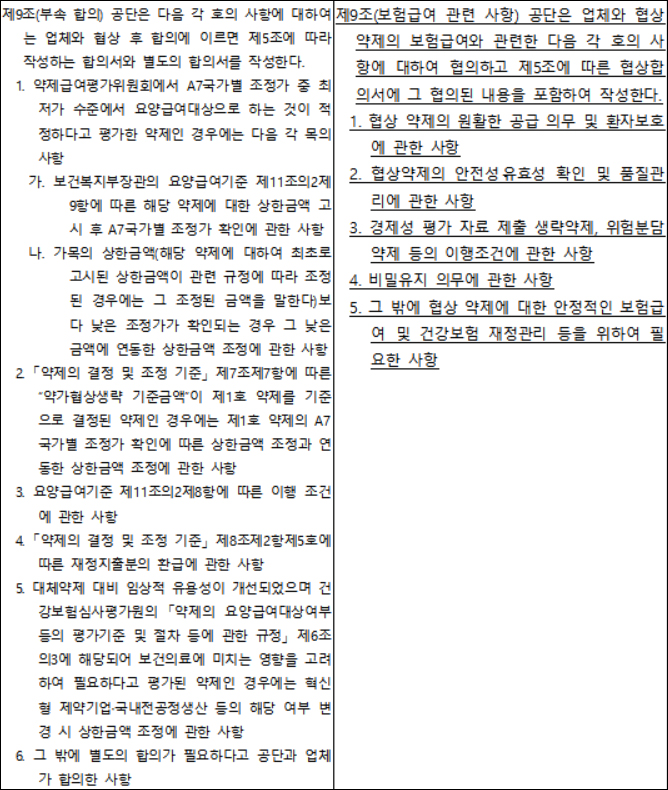
The pharmaceutical industry is mainly complaining about the government omitting the industry comment period.
For an instance, a global pharmaceutical company organization, or Korean Research-based Pharma Industry Association (KRPIA), submitted an official statement claiming “Imposing of additional requirement or obligation for drug pricing negotiation should come with an administrative notice according to the Administrative Procedure Act”.
The organization also reprehended the new requirements are considered as ‘side agreement’, but it actually puts NHIS on an authoritative position for it to unilaterally impose obligations to pharmaceutical companies.
The ECCK’s complaint is basically an extension of the criticism.
Established in 2012, ECCK has headquarters in Europe and it consists of 360 active member companies.
Every year the Chamber represents the voice of European businesses by collecting recommendations and relaying them to the Korean government.
Last year, the Chamber has presented ECCK White Paper 2018 with 123 recommendations, and almost 40 percent of the recommendations received positive feedbacks from the Korean Ministry of Trade, Industry and Energy (MOTIE).
-

- 0
댓글 운영방식은
댓글은 실명게재와 익명게재 방식이 있으며, 실명은 이름과 아이디가 노출됩니다. 익명은 필명으로 등록 가능하며, 대댓글은 익명으로 등록 가능합니다.
댓글 노출방식은
댓글 명예자문위원(팜-코니언-필기모양 아이콘)으로 위촉된 데일리팜 회원의 댓글은 ‘게시판형 보기’와 ’펼쳐보기형’ 리스트에서 항상 최상단에 노출됩니다. 새로운 댓글을 올리는 일반회원은 ‘게시판형’과 ‘펼쳐보기형’ 모두 팜코니언 회원이 쓴 댓글의 하단에 실시간 노출됩니다.
댓글의 삭제 기준은
다음의 경우 사전 통보없이 삭제하고 아이디 이용정지 또는 영구 가입제한이 될 수도 있습니다.
-
저작권·인격권 등 타인의 권리를 침해하는 경우
상용 프로그램의 등록과 게재, 배포를 안내하는 게시물
타인 또는 제3자의 저작권 및 기타 권리를 침해한 내용을 담은 게시물
-
근거 없는 비방·명예를 훼손하는 게시물
특정 이용자 및 개인에 대한 인신 공격적인 내용의 글 및 직접적인 욕설이 사용된 경우
특정 지역 및 종교간의 감정대립을 조장하는 내용
사실 확인이 안된 소문을 유포 시키는 경우
욕설과 비어, 속어를 담은 내용
정당법 및 공직선거법, 관계 법령에 저촉되는 경우(선관위 요청 시 즉시 삭제)
특정 지역이나 단체를 비하하는 경우
특정인의 명예를 훼손하여 해당인이 삭제를 요청하는 경우
특정인의 개인정보(주민등록번호, 전화, 상세주소 등)를 무단으로 게시하는 경우
타인의 ID 혹은 닉네임을 도용하는 경우
-
게시판 특성상 제한되는 내용
서비스 주제와 맞지 않는 내용의 글을 게재한 경우
동일 내용의 연속 게재 및 여러 기사에 중복 게재한 경우
부분적으로 변경하여 반복 게재하는 경우도 포함
제목과 관련 없는 내용의 게시물, 제목과 본문이 무관한 경우
돈벌기 및 직·간접 상업적 목적의 내용이 포함된 게시물
게시물 읽기 유도 등을 위해 내용과 무관한 제목을 사용한 경우
-
수사기관 등의 공식적인 요청이 있는 경우
-
기타사항
각 서비스의 필요성에 따라 미리 공지한 경우
기타 법률에 저촉되는 정보 게재를 목적으로 할 경우
기타 원만한 운영을 위해 운영자가 필요하다고 판단되는 내용
-
사실 관계 확인 후 삭제
저작권자로부터 허락받지 않은 내용을 무단 게재, 복제, 배포하는 경우
타인의 초상권을 침해하거나 개인정보를 유출하는 경우
당사에 제공한 이용자의 정보가 허위인 경우 (타인의 ID, 비밀번호 도용 등)
※이상의 내용중 일부 사항에 적용될 경우 이용약관 및 관련 법률에 의해 제재를 받으실 수도 있으며, 민·형사상 처벌을 받을 수도 있습니다.
※위에 명시되지 않은 내용이더라도 불법적인 내용으로 판단되거나 데일리팜 서비스에 바람직하지 않다고 판단되는 경우는 선 조치 이후 본 관리 기준을 수정 공시하겠습니다.
※기타 문의 사항은 데일리팜 운영자에게 연락주십시오. 메일 주소는 dailypharm@dailypharm.com입니다.
- [Reporter's View] The dark side of improved diabetes med convenience
- Reporter's view | Son, Hyung Min
- [Reporter's View] Contradiction of "K-passing" and a new drug powerhouse
- Reporter's view | Lee, Jeong-Hwan