- LOGIN
- MemberShip
- 2026-09-19 06:36:05
- ‘Policy support required for hidradenitis suppurativa’
- by Whang, byung-woo | translator Alice Kang | 2025-04-30 06:06:40
“Hidradenitis suppurativa is difficult to cure and requires long-term treatment.
As it is a rare disease, I think it is desirable to increase access to treatments with clear treatment benefits by providing both reimbursement and special calculation for this disease, which has a small number of patients.” Hidradenitis suppurativa is a disease whose exact cause or pathogenesis has not yet been fully identified, and it is a rare disease with a prevalence rate of less than 1% in South Korea.
The number of patients with hidradenitis suppurativa in South Korea is estimated to be approximately 10,000 as of 2022, which only includes those who have been clearly diagnosed after experiencing recurrent lesions and formation of tracts beneath the skin.
Although TNF-α inhibitors are a reimbursable treatment option, options are limited when considering treatment failure and side effects.

Hidradenitis suppurativa causes abscesses to form in various areas around the sebaceous glands beneath the skin.
Unlike typical abscesses, the lesions are connected to each other, forming channels known as “tracts.” It is broadly classified into ▲active, where inflammation persists, and ▲inactive, where no further inflammation occurs; however, it is difficult to clearly distinguish between the active and inactive states.
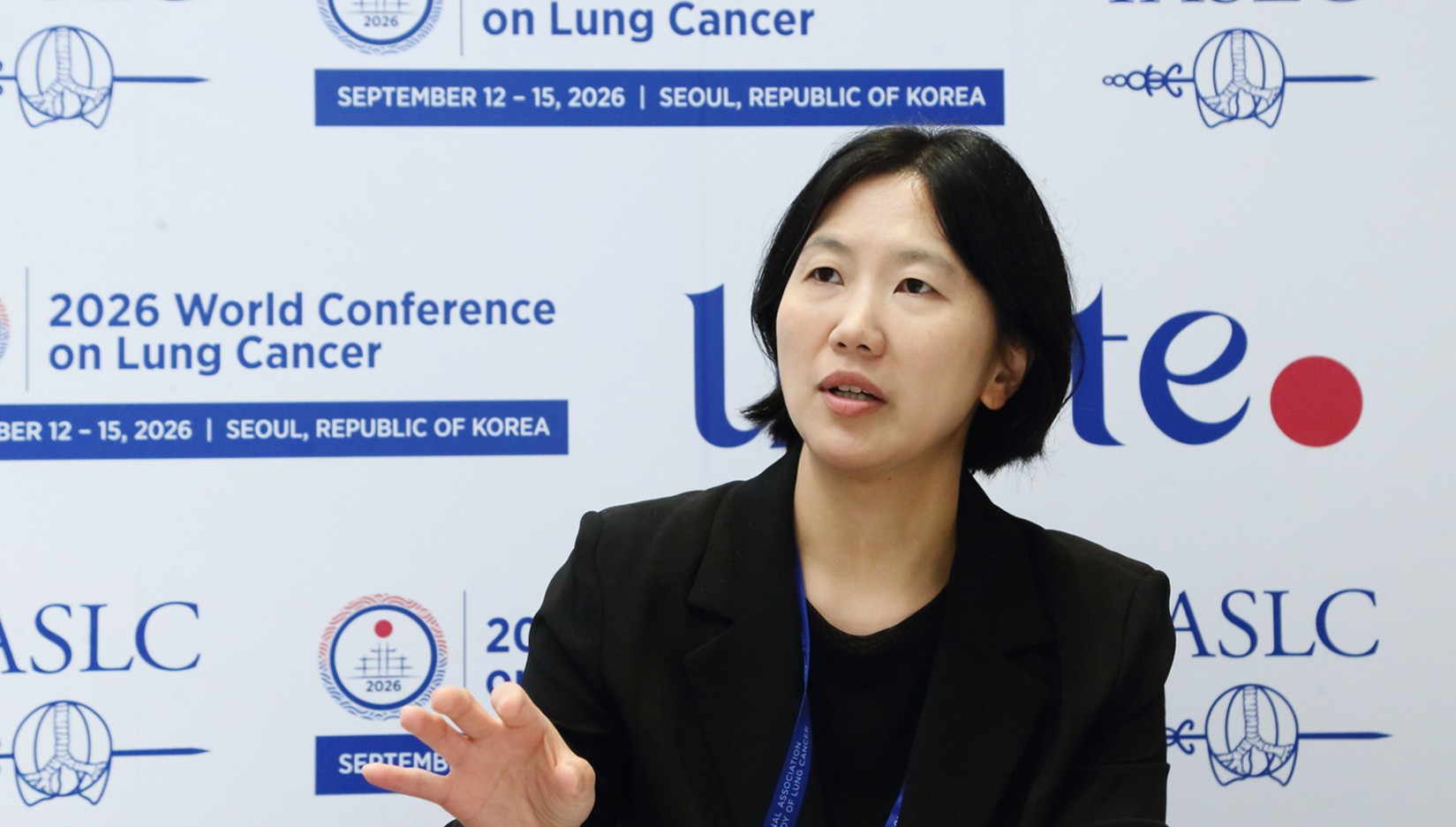
Professor Ko explained, “Even in the same patient, the condition can be highly active at one time and stable at another, so the medication and treatment methods used may vary depending on the individual's condition.
In the case of active disease, the patient experiences severe pain due to inflammation in areas such as the armpits, and the goal of treatment is to reduce the frequency of the inflammation.” He continued, “Mild-to-moderate patients rarely visit university hospitals, and mild patients with symptoms in one or two areas are mainly treated at private clinics.
It is important to identify the potential for progression to severe disease in mild patients, as a higher recurrence rate is associated with a higher risk of progression.” Limited treatment options for suppurative hidradenitis, IL-17 emerges but faces hurdles for use The basic treatment for suppurative hidradenitis is I&D (incision and drainage), which involves incising the area where the patient feels pain to remove the internal inflammation.
In addition, antibiotics are administered for about 3 months to reduce inflammation, and if there is a high risk of recurrence, sebum inhibitors used to treat acne are also used.
However, in severe cases, these treatments are not sufficient to control the inflammation, and biological agents are used.
Currently, Humira (adalimumab), a TNF-α inhibitor, is covered by insurance.
In addition, although not yet covered by insurance, the interleukin-17 (IL-17) inhibitor Cosentyx (secukinumab) was approved in Korea in 2015, approximately 8 years after the approval of Humira.
Professor Ko said, “TNF-α inhibitors covered by insurance have the advantage of broadly blocking inflammation, but they also have the limitation of blocking the inflammatory response that is necessary for our bodies.
IL-17 inhibitors have a more targeted mechanism than TNF-α inhibitors and show similar therapeutic effects and superior safety.” According to overseas and domestic guidelines, both TNF-α inhibitors and IL-17 inhibitors are currently recommended as first-line treatment options.
If sufficient therapeutic effects are not achieved with oral medications, one of the two approved biological agents can be selected.
Regarding this, Professor Ko explained, “Although TNF-α inhibitors have been covered by insurance in Korea for over 5 years, not many patients actually use them on-site.
TNF-α inhibitors have a broad anti-inflammatory mechanism, which raises concerns about side effects, and when we explain this to patients, they are reluctant to use them.” In actual treatment, patients who received IL-17 inhibitors (Cosentyx) showed a significant improvement in quality of life after continuing treatment for one and a half years, said Professor Ko.
Previously, patients had severe symptoms requiring surgery and were unable to move their arms properly, but after treatment, their symptoms improved significantly, and the use of antibiotics and other medications decreased to 25% of the previous level.
Professor Ko stated, “In global clinical trials, approximately 60% of patients achieved HiSCR 50 with Cosentyx.
This means that 60% of patients experienced a 50% or greater improvement in symptoms.
While a 50% improvement may seem modest, it actually represents a significant improvement.” He added, “Hidradenitis suppurativa is a disease that develops at a young age and requires long-term management, so controlling it with medications that have few side effects is the best approach.
In this regard, I believe Cosentyx is a good option at this point.” “Hidradenitis suppurativa, a rare and intractable disease pustular psoriasis…unrestricted special reimbursement calculation support is needed” However, there are restrictions on the use of the IL-17 inhibitor Cosentyx.
Unlike Humira, which is covered by reimbursement, Cosentyx is not yet covered.
In fact, Novartis Korea applied for reimbursement expansion for Cosentyx for hidradenitis suppurativa in November last year, but the discussions are at a standstill.
Professor Ko said, “IL-17 inhibitors have already been used extensively in psoriasis, so there is a tendency to prefer Cosentyx, but it is difficult to use it actively because it is not covered by insurance.
Currently, if TNF-α inhibitors are used and sufficient effects are not seen, the cost of using Cosentyx thereafter is extremely high.” Professor Ko emphasized that while it may be worth considering distinguishing treatment sequence within biological agents based on practical factors like drug prices, from a medical perspective, it is important to prioritize options that have fewer side effects.
He said, “If TNF-α inhibitors are used in the first line and are not effective, using Cosentyx as a the next treatment option can be an alternative, but this cannot be considered the ideal approach from a medical standpoint.
In the long term, it would be desirable to apply reimbursement so that both treatments can be used on an equal footing.” Additionally, Professor Ko stressed the need for policy support to apply special reimbursement calculation provisions for the rare and intractable disease suppurative hidradenitis.
Currently, suppurative hidradenitis is classified according to severity, and only severe cases are eligible for special reimbursement and insurance coverage, but the total number of patients is only about 10,000, and among them, less than 1,000 are estimated to be severe cases.
Therefore, even if reimbursement and special calculations are applied simultaneously, it is unlikely to place a significant financial burden on the government.
Professor Ko said, “For diseases like hidradenitis suppurativa, which have a small number of patients and treatments offer clear benefits, it is necessary to increase access to treatment by providing both reimbursement and special calculations.
Even if reimbursement and special calculations are applied simultaneously, only a few dozen patients will actually benefit and use Cosentyx each year.” Finally, he added, “Effective medications for treating hidradenitis suppurativa are continuing to emerge, and better ones will be developed in the future.
I hope patients do not lose hope and actively consult with medical professionals and seek treatment.”
-

- 0
댓글 운영방식은
댓글은 실명게재와 익명게재 방식이 있으며, 실명은 이름과 아이디가 노출됩니다. 익명은 필명으로 등록 가능하며, 대댓글은 익명으로 등록 가능합니다.
댓글 노출방식은
댓글 명예자문위원(팜-코니언-필기모양 아이콘)으로 위촉된 데일리팜 회원의 댓글은 ‘게시판형 보기’와 ’펼쳐보기형’ 리스트에서 항상 최상단에 노출됩니다. 새로운 댓글을 올리는 일반회원은 ‘게시판형’과 ‘펼쳐보기형’ 모두 팜코니언 회원이 쓴 댓글의 하단에 실시간 노출됩니다.
댓글의 삭제 기준은
다음의 경우 사전 통보없이 삭제하고 아이디 이용정지 또는 영구 가입제한이 될 수도 있습니다.
-
저작권·인격권 등 타인의 권리를 침해하는 경우
상용 프로그램의 등록과 게재, 배포를 안내하는 게시물
타인 또는 제3자의 저작권 및 기타 권리를 침해한 내용을 담은 게시물
-
근거 없는 비방·명예를 훼손하는 게시물
특정 이용자 및 개인에 대한 인신 공격적인 내용의 글 및 직접적인 욕설이 사용된 경우
특정 지역 및 종교간의 감정대립을 조장하는 내용
사실 확인이 안된 소문을 유포 시키는 경우
욕설과 비어, 속어를 담은 내용
정당법 및 공직선거법, 관계 법령에 저촉되는 경우(선관위 요청 시 즉시 삭제)
특정 지역이나 단체를 비하하는 경우
특정인의 명예를 훼손하여 해당인이 삭제를 요청하는 경우
특정인의 개인정보(주민등록번호, 전화, 상세주소 등)를 무단으로 게시하는 경우
타인의 ID 혹은 닉네임을 도용하는 경우
-
게시판 특성상 제한되는 내용
서비스 주제와 맞지 않는 내용의 글을 게재한 경우
동일 내용의 연속 게재 및 여러 기사에 중복 게재한 경우
부분적으로 변경하여 반복 게재하는 경우도 포함
제목과 관련 없는 내용의 게시물, 제목과 본문이 무관한 경우
돈벌기 및 직·간접 상업적 목적의 내용이 포함된 게시물
게시물 읽기 유도 등을 위해 내용과 무관한 제목을 사용한 경우
-
수사기관 등의 공식적인 요청이 있는 경우
-
기타사항
각 서비스의 필요성에 따라 미리 공지한 경우
기타 법률에 저촉되는 정보 게재를 목적으로 할 경우
기타 원만한 운영을 위해 운영자가 필요하다고 판단되는 내용
-
사실 관계 확인 후 삭제
저작권자로부터 허락받지 않은 내용을 무단 게재, 복제, 배포하는 경우
타인의 초상권을 침해하거나 개인정보를 유출하는 경우
당사에 제공한 이용자의 정보가 허위인 경우 (타인의 ID, 비밀번호 도용 등)
※이상의 내용중 일부 사항에 적용될 경우 이용약관 및 관련 법률에 의해 제재를 받으실 수도 있으며, 민·형사상 처벌을 받을 수도 있습니다.
※위에 명시되지 않은 내용이더라도 불법적인 내용으로 판단되거나 데일리팜 서비스에 바람직하지 않다고 판단되는 경우는 선 조치 이후 본 관리 기준을 수정 공시하겠습니다.
※기타 문의 사항은 데일리팜 운영자에게 연락주십시오. 메일 주소는 dailypharm@dailypharm.com입니다.