- LOGIN
- MemberShip
- 2026-05-15 07:55:36
- The government is worried about the generic exclusivity
- by Kim, Jin-Gu | translator Choi HeeYoung | 2020-09-08 06:12:21

Until now, the industry has been criticized for 'free ride' over this system.
The core of the system is the grant of monopoly rights, and the contradictory situation in which monopoly was impossible was repeated.
The discrimination power was lowered by the process of acquiring the generic exclusivity by anyone, which led to a reduction in substantial benefits.
As a result of the Dailypharm analysis, the average benefit per item that has acquired the right so far has reached an average of ₩400 million.
For the pharmaceutical company that led the patent challenge and generic development, it was a collapse.
It is said that the MFDS, the main ministry in charge, agrees to such criticism from the pharmaceutical industry.
It is from the same reason that they have come up with improvements one after another in the fifth year of the generic exclusivity system.
However, in the pharmaceutical industry, there is no change in ‘the requirements for first trial', which is the core cause of the problem.
In this regard, it is reported that the government intends to separate this part and promote it in the form of legislative legislation.
◆The first improvement plan by the MFDS excluding the right of consignment items
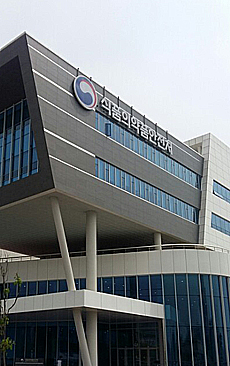
First of all, this is the result of the 'Public-Private Council for Reinforcing International Competitiveness of Generic Drugs' announced on July 16th.
As one of the measures to strengthen the competitiveness of generics, the MFDS has decided to ``exclude consignment generics from the generic exclusivity''.
The permission of the right for consigned items was another reason for the scattering of right along with the initial request for trial.
In fact, there were frequent cases of receiving only the right without developing generics.
As many as dozens of companies boarded the train for the generic exclusivity at the same time.
For example, in the case of “Sarpogrelate SR,” 23 companies received the generic exclusivity, but manufacturers are only Sinil and Kukje.
22 companies entrusted the production of generics to Sinil.
Generic for ‘Alitoc (Alitretinoin)’ is more biased.
Thirteen companies received the right for the generic exclusivity, all of which are produced by Donkko.
The same is true of Stillen 2X and Layla.
For generics for Stillen 2X, all 14 companies that received the generic exclusivity were assigned to Richwood (Poonglim), and for generics for Layla, all 10 companies left to Mothers Pharmaceuticals.
Most of the major large items had similar circumstances.
10 companies each entrusted the production of Januvia (Sitagliptin) and Janumet (Sitagliptin + Metformin) to three consignors.
Excluding Chong Kun Dang, Hanmi Pharm, and Dasan Pharm, Kyungdong Pharm, SCD Pharm, Samjin Pharm, Jeil Pharm, Youngjin Pharm, Yuyu Pharm, and Korea Prime Pharm received the right without direct production of generics.
Generic production from 21 pharmaceutical companies for Amosartan (Amlodipine + Losartan) was concentrated in three consignment companies, and production of 'Viread (Tenofovir)' from 13 companies was concentrated in five consignment companies.
These are the cases in which a pharmaceutical company recruits dozens of Consignment companies to file a patent lawsuit when they devise a formulation development and patent strategy.
From the consignee's point of view, it is a strategy that can maximize consignment production income while reducing the risk of patent litigation.
This is the reason why some point out that pharmaceutical companies have invited free rides for generic exclusivity by sharing patent strategies.

This was because the efforts for product development and patent overcoming were in vain.
Criticism came out that it did not fit the purpose of the generic exclusivity system.
Additionally, it was pointed out that the excessive number of unnecessary lawsuits increased social costs, and that the burden of complaints on the original company, the patent holder, was increased.
The improvement plan requires revision of the Pharmaceutical Affairs Act.
Currently, the published proposal is the opinion of the public-private council.
Even if an amendment to the Pharmaceutical Affairs Act containing these contents is legislated, the gateway to the passage of the National Assembly remains.
Taking this into account, it is an observation that at least one year remains before this alternative is actually applied to the field.
◆The MFDS Improvement Proposal Second'Unable to delete trick patents The second is the content contained in the 'Partial Amendment to the Pharmaceutical Affairs Act', which was announced on August 20th.
The key is to prevent the 'trick' of the patent holder (original company) in advance.
The main point is to restrict the deletion of patents in the case of medicines that have received the generic exclusivity.
Under the current regulations, the patent right registered in the patent list can be deleted upon request by the patent holder.
In this case, the company that received the generic exclusivity cannot exercise the right.
It is possible to enter the market without restrictions, not only for items that have received the right, but also for other generics.
This is because the right qualification automatically disappears as the patent right is deleted.
It is reported that after the actual generic exclusivity system was implemented, several original companies made such an attempt to check the items of right .
However, it is explained by the MFDS that there has been no instance of a patent right being deleted after acquiring the right.
The industry explanation is a little different.
It is explained that there have been no cases of deleting a patent since the right was acquired, but there were often cases where a patent was deleted during the patent evasion process before the right was obtained.
Accordingly, there is an opinion in the industry that the timing of the patentee's discretionary restriction of deletion of patents should be set to “the point of filing a patent trial” rather than “after obtaining the right”.
◆What is the improvement of the'initial request for trial requirements? Although there are some disagreements, the domestic pharmaceutical industry is generally welcoming the two institutional changes.
With regard to the exclusion of generic exclusivity for consignment items, most of them agree to the purpose of the fact that free rides are greatly reduced.
Many of the positions that the patentee's discretionary measures not to delete a patent are also welcomed in that it protects the rights of generics.
However, there are many opinions that it is unfortunate when it comes to the entire system.
This is because the 'initial request for trial', which can be said to be the cause of the abuse of right.
Taking generic for Amosartan as an example, if only the measures to exclude the rights of consignment items are applied, the number of pharmaceutical companies that can acquire rights will be reduced from 21 to 3.
On the other hand, if the requirements for the initial request for trial are improved, only one place can receive the right copyright.
The case of 'Trajenta' is similar.
When only consignment items are limited as specified by the MFDS, 12 companies receive the right, but if the initial request for a trial is improved, one will receive the right.
▲ Trajenta's copyright holders An official from a domestic pharmaceutical company said, "As long as the requirements for the initial request for trial stipulated on 14days, we cannot fundamentally prevent the abuse of right." A patent attorney in the pharmaceutical and bio field also said, "There is a requirement for an initial request for a trial in the background that the generic exclusivity system has fallen to the level of a generic ticket.
The exclusion of the generic exclusivity for consignment items will have some effect, but it is more active in order to properly recognize the price of the effort.
Institutional change is necessary." ◆"First request for trial, promoting legislative legislation rather than government legislation, In this regard, according to the results of Dailypharm, it is reported that the MFDS is trying to improve the requirements for initial request for trial through the legislation rather than the government legislation.
Several officials from the pharmaceutical industry and the National Assembly gathered saying, "We know that the MFDS is pursuing the government legislation to exclude the right of generic exclusivity of consignment items, and the improvement of the initial request for trial in the form of a legislative legislation." Government legislation and legislative legislation are customarily clear in their strengths and weaknesses.
In the case of government legislation, it takes a long time for the legislation to pass, but the passing rate is high.
The bill is thoroughly reviewed in the process of pre-evaluation, legislative notice, public hearing, consultation with related ministries, and deliberation by the city council.
On the contrary, the time for legislative legislation to be initiated is short.
A joint motion of 10 or more members of the National Assembly is a prerequisite.
However, the passing rate tends to be slightly lower than that of government legislation.
In view of this, the MFDS is pursuing a more conservative and reliable method, the exclusion of the generic exclusivity of consignment items, while the improvement of the initial request for adjudication is undertaken by a two-track strategy that speedily promotes through the legislative legislation.
It is not yet known exactly what the bill will contain in relation to the improvement of the initial request for trial.
However, instead of deleting the 14-day rule in question, it is effective to eliminate the requirement for the initial request for trial.
In this case, the requirements for obtaining the right are reduced from three to two.
An official in the pharmaceutical industry said, "If only the 14 days rule is deleted, there is a possibility that the number of requests for trials will increase.
By allowing applications to be made, transparency is secured and free rides are also expected to decrease.”
-

- 0
댓글 운영방식은
댓글은 실명게재와 익명게재 방식이 있으며, 실명은 이름과 아이디가 노출됩니다. 익명은 필명으로 등록 가능하며, 대댓글은 익명으로 등록 가능합니다.
댓글 노출방식은
댓글 명예자문위원(팜-코니언-필기모양 아이콘)으로 위촉된 데일리팜 회원의 댓글은 ‘게시판형 보기’와 ’펼쳐보기형’ 리스트에서 항상 최상단에 노출됩니다. 새로운 댓글을 올리는 일반회원은 ‘게시판형’과 ‘펼쳐보기형’ 모두 팜코니언 회원이 쓴 댓글의 하단에 실시간 노출됩니다.
댓글의 삭제 기준은
다음의 경우 사전 통보없이 삭제하고 아이디 이용정지 또는 영구 가입제한이 될 수도 있습니다.
-
저작권·인격권 등 타인의 권리를 침해하는 경우
상용 프로그램의 등록과 게재, 배포를 안내하는 게시물
타인 또는 제3자의 저작권 및 기타 권리를 침해한 내용을 담은 게시물
-
근거 없는 비방·명예를 훼손하는 게시물
특정 이용자 및 개인에 대한 인신 공격적인 내용의 글 및 직접적인 욕설이 사용된 경우
특정 지역 및 종교간의 감정대립을 조장하는 내용
사실 확인이 안된 소문을 유포 시키는 경우
욕설과 비어, 속어를 담은 내용
정당법 및 공직선거법, 관계 법령에 저촉되는 경우(선관위 요청 시 즉시 삭제)
특정 지역이나 단체를 비하하는 경우
특정인의 명예를 훼손하여 해당인이 삭제를 요청하는 경우
특정인의 개인정보(주민등록번호, 전화, 상세주소 등)를 무단으로 게시하는 경우
타인의 ID 혹은 닉네임을 도용하는 경우
-
게시판 특성상 제한되는 내용
서비스 주제와 맞지 않는 내용의 글을 게재한 경우
동일 내용의 연속 게재 및 여러 기사에 중복 게재한 경우
부분적으로 변경하여 반복 게재하는 경우도 포함
제목과 관련 없는 내용의 게시물, 제목과 본문이 무관한 경우
돈벌기 및 직·간접 상업적 목적의 내용이 포함된 게시물
게시물 읽기 유도 등을 위해 내용과 무관한 제목을 사용한 경우
-
수사기관 등의 공식적인 요청이 있는 경우
-
기타사항
각 서비스의 필요성에 따라 미리 공지한 경우
기타 법률에 저촉되는 정보 게재를 목적으로 할 경우
기타 원만한 운영을 위해 운영자가 필요하다고 판단되는 내용
-
사실 관계 확인 후 삭제
저작권자로부터 허락받지 않은 내용을 무단 게재, 복제, 배포하는 경우
타인의 초상권을 침해하거나 개인정보를 유출하는 경우
당사에 제공한 이용자의 정보가 허위인 경우 (타인의 ID, 비밀번호 도용 등)
※이상의 내용중 일부 사항에 적용될 경우 이용약관 및 관련 법률에 의해 제재를 받으실 수도 있으며, 민·형사상 처벌을 받을 수도 있습니다.
※위에 명시되지 않은 내용이더라도 불법적인 내용으로 판단되거나 데일리팜 서비스에 바람직하지 않다고 판단되는 경우는 선 조치 이후 본 관리 기준을 수정 공시하겠습니다.
※기타 문의 사항은 데일리팜 운영자에게 연락주십시오. 메일 주소는 dailypharm@dailypharm.com입니다.
- [Reporter's View] The dark side of improved diabetes med convenience
- Reporter's view | Son, Hyung Min
- [Reporter's View] Contradiction of "K-passing" and a new drug powerhouse
- Reporter's view | Lee, Jeong-Hwan