- LOGIN
- MemberShip
- 2026-05-15 02:58:35
- Roche: Fast listing was all about improving patient access
- by Eo, Yun-Ho | translator Byun Kyung A | 2020-11-02 06:13:55

But now Roche seems to be picking up its speed.
Their last two years have been different; the company successfully expanded the reimbursement on targeted therapy Alecensa in anaplastic lymphoma kinase (ALK) lung cancer as a first-line therapy, immunotherapy Tecentriq in lung cancer as a second-line therapy after listing in urothelial carcinoma, and targeted therapy Perjeta in early stage of breast cancer.
Also the multinational company is under review for expanding the reimbursement on Tecentriq as a first immunotherapy in triple-negative breast cancer (TNBC), and antibody-drug conjugate (ADC) Kadcyla in breast cancer as a maintenance therapy, as well as for receiving reimbursement on a new flu drug Xofluza.
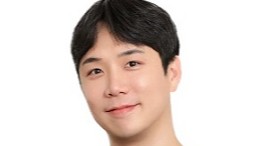
President Nic Horridge at Roche Korea is in the center of such dynamic change.
Appointed as a president of Roche Korea in October 2018, Horridge once said “We prioritize in the patients’ access to treatment more than anything else.” Daily Pharm interviewed President Nic Horridge about his perspective on the changed Roche and the prospects.
-Soon, it would be two years since you took the position.
And Roche’s products are receiving the reimbursements fast, which is a positive change in the company.
It is gratifying for the public to notice the accelerated speed in the reimbursement listing process.
Many may think of drug approval, when talking of pharmaceutical accessibility.
But the healthcare reimbursement is crucial to secure the practical access to the treatments.
We are proud of Roche’s close engagement with the South Korean government.
The fact that the company’s products are meeting the government’s level of pharmaceutical value to win the reimbursements fast means significant to the company.
Regarding the topic, I would like to express my gratitude to our staffs at Roche.
Personally, this is one of the proudest parts of my career in South Korea—improving the Korean patients’ access to new drug.
Specifically, Kadcyla and Perjeta are attempting various tactics to achieve complete recovery.
In the lung cancer treatment area, Tecentriq and Alecensa contributing to the patients’ treatment benefit is also an outstanding performance.
-What was your impression on the National Health Insurance (NHI) benefit system, and what do you think is the changes it needs?
To be honest, my first impression of the South Korean reimbursement scene was that ‘it is not that easy.’ But a government trying to take the most value out of pharmaceutical purchasing cost is common in every country, so it does not necessarily make the Korean government too special or difficult.
The upside of Korea is that the general review and decision making process are thorough, which makes it clear for the pharmaceutical companies to see what should be done and proven to list the drugs in the market.
The system seems to clarify which evidence should be provided to reflect the needs of the healthcare providers and patients and to prove the value of the drug.
And it even suggests which role should a company play as the government’s partner.
Regardless, the time taken for the reimbursement listing in South Korea is relatively longer than other countries with similar regulatory environment.
-Roche has been fruitful in the breast cancer therapeutic area, and its presence in the market seems to be outstanding.
But with new immunotherapy line-ups, the company seems to have expanded to other cancer areas.
Is there any challenge in the sales and marketing?
This is the part we have been deeply contemplating about.
And this applies not only to anticancer treatment fields, but also in other fields as well.
To tackle the issue, we need to first study the issue the consumers have and then try to provide fitting solution.
To do so properly, we need to push up our work efficiency, and take an agile stance on resource utilization.
-Avastin, with its patent term coming to expire soon, is actually having its second golden age.
While it is considered as the best combination drug for both targeted therapy and immunotherapy, we assume the health authority’s pressure to bring down the pricing would get greater.
For any drug, patent term expiration is inevitable.
This is the reason why Roche cannot cease to pursue innovation and annually invest USD 12 billion, or 20 percent of the entire sales from the group, to develop new drugs.
The healthcare providers and patients would continue to look for Avastin, and the company would also continue to provide support for the market in an environment we can adequately provide such support.
As Avastin has been recently studied to create remarkable synergy effect in combination with an immunotherapy, we plan to provide support regardless of the types of the cancer.
But the weight of the innovation would be on Tecentriq than on Avastin.
-Many news reporters were surprised to find out Tecentriq winning the NHI reimbursement.
The South Korean government proposed pharmaceutical companies to cover the initial administration cost, and Roche was the only company with an immunotherapy option to accept the deal.
Was there any regret in the decision?
We are exhilarated to expand the patients’ access to Tecentriq with the company’s decision.
Even if we turn back the time, we would make the exact same decision.
It was a positive experience considering how we shared constructive talks with the government.
-Roche’s reputation as a market leader in the anticancer treatment scene has been lately challenged as other companies are leading the immunotherapy competition and other anticancer businesses.
What is your plan to maintain that title?
Roche has the richest pipeline among the healthcare industry.
There are 20 candidate medicines in late development phase, scheduled to be released in about five years.
In South Korea, the company would continuously expand Tecentriq’s reimbursement in treating lung cancer and liver cancer, and pursue reimbursement on Kadcyla in treating early stage of breast cancer.
Meanwhile, a neurotrophic tropomyosin receptor kinase (NTRK) gene targeted therapy Rozlytrek was recently approved.
With the drug targeting a specific biomarker regardless of the types of cancer, the company is determined to continuously improve patients’ access to treatment.
-

- 0
댓글 운영방식은
댓글은 실명게재와 익명게재 방식이 있으며, 실명은 이름과 아이디가 노출됩니다. 익명은 필명으로 등록 가능하며, 대댓글은 익명으로 등록 가능합니다.
댓글 노출방식은
댓글 명예자문위원(팜-코니언-필기모양 아이콘)으로 위촉된 데일리팜 회원의 댓글은 ‘게시판형 보기’와 ’펼쳐보기형’ 리스트에서 항상 최상단에 노출됩니다. 새로운 댓글을 올리는 일반회원은 ‘게시판형’과 ‘펼쳐보기형’ 모두 팜코니언 회원이 쓴 댓글의 하단에 실시간 노출됩니다.
댓글의 삭제 기준은
다음의 경우 사전 통보없이 삭제하고 아이디 이용정지 또는 영구 가입제한이 될 수도 있습니다.
-
저작권·인격권 등 타인의 권리를 침해하는 경우
상용 프로그램의 등록과 게재, 배포를 안내하는 게시물
타인 또는 제3자의 저작권 및 기타 권리를 침해한 내용을 담은 게시물
-
근거 없는 비방·명예를 훼손하는 게시물
특정 이용자 및 개인에 대한 인신 공격적인 내용의 글 및 직접적인 욕설이 사용된 경우
특정 지역 및 종교간의 감정대립을 조장하는 내용
사실 확인이 안된 소문을 유포 시키는 경우
욕설과 비어, 속어를 담은 내용
정당법 및 공직선거법, 관계 법령에 저촉되는 경우(선관위 요청 시 즉시 삭제)
특정 지역이나 단체를 비하하는 경우
특정인의 명예를 훼손하여 해당인이 삭제를 요청하는 경우
특정인의 개인정보(주민등록번호, 전화, 상세주소 등)를 무단으로 게시하는 경우
타인의 ID 혹은 닉네임을 도용하는 경우
-
게시판 특성상 제한되는 내용
서비스 주제와 맞지 않는 내용의 글을 게재한 경우
동일 내용의 연속 게재 및 여러 기사에 중복 게재한 경우
부분적으로 변경하여 반복 게재하는 경우도 포함
제목과 관련 없는 내용의 게시물, 제목과 본문이 무관한 경우
돈벌기 및 직·간접 상업적 목적의 내용이 포함된 게시물
게시물 읽기 유도 등을 위해 내용과 무관한 제목을 사용한 경우
-
수사기관 등의 공식적인 요청이 있는 경우
-
기타사항
각 서비스의 필요성에 따라 미리 공지한 경우
기타 법률에 저촉되는 정보 게재를 목적으로 할 경우
기타 원만한 운영을 위해 운영자가 필요하다고 판단되는 내용
-
사실 관계 확인 후 삭제
저작권자로부터 허락받지 않은 내용을 무단 게재, 복제, 배포하는 경우
타인의 초상권을 침해하거나 개인정보를 유출하는 경우
당사에 제공한 이용자의 정보가 허위인 경우 (타인의 ID, 비밀번호 도용 등)
※이상의 내용중 일부 사항에 적용될 경우 이용약관 및 관련 법률에 의해 제재를 받으실 수도 있으며, 민·형사상 처벌을 받을 수도 있습니다.
※위에 명시되지 않은 내용이더라도 불법적인 내용으로 판단되거나 데일리팜 서비스에 바람직하지 않다고 판단되는 경우는 선 조치 이후 본 관리 기준을 수정 공시하겠습니다.
※기타 문의 사항은 데일리팜 운영자에게 연락주십시오. 메일 주소는 dailypharm@dailypharm.com입니다.
- [Reporter's View] The dark side of improved diabetes med convenience
- Reporter's view | Son, Hyung Min
- [Reporter's View] Contradiction of "K-passing" and a new drug powerhouse
- Reporter's view | Lee, Jeong-Hwan