- LOGIN
- MemberShip
- 2026-05-15 03:59:17
- A heated panel discussion on indication-basis drug pricing
- by Eo, Yun-Ho | translator Byun Kyung A | 2020-11-17 06:27:58
In this day and age of a single drug offering a variety of indications, the problem now lies on the drug pricing.
The negotiation between the South Korean government and pharmaceutical company is slowing down and the patients have to wait longer as the country’s drug pricing system cuts the pricing when a drug expands its uses.

11, Daily Pharm convened the 40th Future Forum on the topic of priorities in introducing the drug pricing system by indication.
The pharmaceutical industry, government and academic society representatives gathered to find the answer of unending question of treatment access and appropriate pricing.
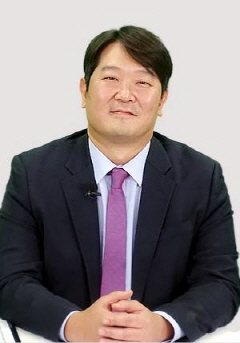
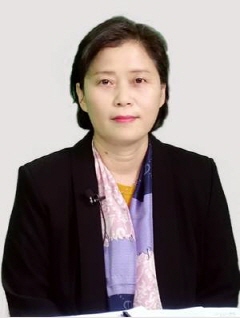
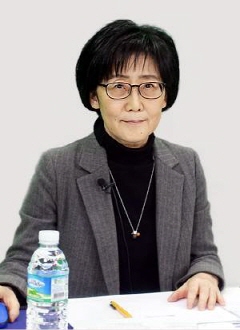
Professor Suh Dong-churl of Chung-ang University College of Pharmacy led the forum as a speaker, where Professor Park Mi Hye gave a keynote speech on ‘Introducing Indication-basis Drug Pricing to Improve Patient Access,’ followed by a heated discussion among panelists like Deputy Director Choi Kyung-ho of the Ministry of Health and Welfare (MOHW) Pharmaceutical Benefits Division, Director Lee Young-hee of National Health Insurance Service (NHIS) Drug Pricing System Improvement Division and Senior Manager Ryu Chiyoung of Korean Research-based Pharmaceutical Industry Association (KRPIA).
Last month, the industry finally solved the problem of applying risk sharing agreement on follow-on drugs that have treatment level on par with a first-in-class drug and favorable cost-effectiveness.
However, the government has added another condition; while allowing follow-on drugs to sign RSA, any drug seeking to expand reimbursement, regardless of being the RSA subject, would have to prove cost-effectiveness (administration cost comparison or pharmacoeconomic (PE) analysis).
In other words, when the Health Insurance Review and Assessment Service (HIRA) requires cost-effectiveness evaluation, a drug would be priced at lowest level compared to either PE or clinical evidence with reference drug, and have the price reduced according to the same standard as the first-in-class drug.
Senior Manager Ryu Chiyoung stated, “These days, a single drug now gains 15 to 20 indications through various researches.
But if their pricing drops as they expand indications, then which company would voluntarily take an additional action to actually expand the indication?
KRPIA proposes the government to apply weighted average pricing by indication or to adjust refund rate, if it looks for cost-effectiveness when approving additional indication.”

Increasing number of other countries using the international reference pricing (IRP) is worsening the risk of the ‘Korea Passing’ phenomenon.” ◆The unavoidable issue of ‘financial burden’: When the reimbursement scope of a drug is extended, patients receive the benefit, but at the same time the financial burden also gets bigger.
Under the National Health Insurance (NHI) system, the government has to contemplate on cost-effectiveness whenever it lists a new drug.
The controversial premise of ‘reducing drug pricing when use is expanded’ is also a result of the contemplation.
Deputy Director Choi Kyung-ho said, “Taking a look at immunotherapy, the indication expansion of the drug in South Korea has been sluggish compared to the company’s expectation.
Two to three indications are added a year.
If the talks on reimbursement are delayed, more and more indications would be left non-reimbursed.” But the deputy director also explained, “The additional expenditure for the expanded reimbursement is through the roof and the indication-basis pricing is unprecedented.
The government does see the issue, and it would try to find the point of agreement through thorough discussion.” Regardless, the academic scholars highlighted another means of approaching the issue.
But the country heavily relies on the drug pricing that it is losing flexibility in the financial management, which is also why the industry and the government are in a deadlock for a longer period of time.
It may be better to shift the paradigm away from reducing the expenditure simply through drug pricing.” However, the government is also highly concerned of the drug pricing increase due to the indication-basis pricing.
Director Lee Young-hee claimed, “The drug pricing could be increased when a number of indications receive weighted average pricing or differentiated refund rate on a single labeled pricing.
NHIS can only pay when it has money.
The agency has no choice but to be careful about the indication-basis pricing as it is directly related to the sustainability of NHI.” The industry representative gave a clear answer on the government’s concern.
Senior Manager Ryu disputed, “No company would demand for pricing increase, when adding an indication with the revised system.
But, what we are saying now is that we need to adjust the current pricing reduction measure.” ◆The realistic difficulties and hastiness: The change in administration could only be cumbersome.
Giving different pricing for each indication would have to input two to three codes for a single drug.
Accordingly, the billing system HIRA and NHIS operate would have to undergo a significant change, and even the healthcare institute could get confused by inputting the major and minor disease codes.
Generally considering the detailed execution plan, the indication-basis pricing requires comprehensive revision on the system and other supplementary actions.” Some argue introducing the indication-basis drug pricing to the South Korean market could be a hasty decision at the moment.
Director Lee elaborated, “From 2013 through 2017, total 45 novel anticancer treatments were released in the Korean market, and the number indications surged from 265 to 935.
So far, only six countries have adopted the indication-basis pricing, although all countries are experiencing the same issue with indications and pricing.
It testifies how the system is difficult for everyone accept.” KRPIA official rebutted the claim straight on.
Senior Manager Ryu said, “The current billing system in South Korea allows input up to top ten.
I beg to differ that the disease code monitoring could get difficult and cause confusion.
South Korea is one of the few countries that have successfully unified and systematized the billing system.
Only because other countries are not adopting the system, it would not make sense for Korea to be hesitant to take the lead and revise the system.”
-

- 0
댓글 운영방식은
댓글은 실명게재와 익명게재 방식이 있으며, 실명은 이름과 아이디가 노출됩니다. 익명은 필명으로 등록 가능하며, 대댓글은 익명으로 등록 가능합니다.
댓글 노출방식은
댓글 명예자문위원(팜-코니언-필기모양 아이콘)으로 위촉된 데일리팜 회원의 댓글은 ‘게시판형 보기’와 ’펼쳐보기형’ 리스트에서 항상 최상단에 노출됩니다. 새로운 댓글을 올리는 일반회원은 ‘게시판형’과 ‘펼쳐보기형’ 모두 팜코니언 회원이 쓴 댓글의 하단에 실시간 노출됩니다.
댓글의 삭제 기준은
다음의 경우 사전 통보없이 삭제하고 아이디 이용정지 또는 영구 가입제한이 될 수도 있습니다.
-
저작권·인격권 등 타인의 권리를 침해하는 경우
상용 프로그램의 등록과 게재, 배포를 안내하는 게시물
타인 또는 제3자의 저작권 및 기타 권리를 침해한 내용을 담은 게시물
-
근거 없는 비방·명예를 훼손하는 게시물
특정 이용자 및 개인에 대한 인신 공격적인 내용의 글 및 직접적인 욕설이 사용된 경우
특정 지역 및 종교간의 감정대립을 조장하는 내용
사실 확인이 안된 소문을 유포 시키는 경우
욕설과 비어, 속어를 담은 내용
정당법 및 공직선거법, 관계 법령에 저촉되는 경우(선관위 요청 시 즉시 삭제)
특정 지역이나 단체를 비하하는 경우
특정인의 명예를 훼손하여 해당인이 삭제를 요청하는 경우
특정인의 개인정보(주민등록번호, 전화, 상세주소 등)를 무단으로 게시하는 경우
타인의 ID 혹은 닉네임을 도용하는 경우
-
게시판 특성상 제한되는 내용
서비스 주제와 맞지 않는 내용의 글을 게재한 경우
동일 내용의 연속 게재 및 여러 기사에 중복 게재한 경우
부분적으로 변경하여 반복 게재하는 경우도 포함
제목과 관련 없는 내용의 게시물, 제목과 본문이 무관한 경우
돈벌기 및 직·간접 상업적 목적의 내용이 포함된 게시물
게시물 읽기 유도 등을 위해 내용과 무관한 제목을 사용한 경우
-
수사기관 등의 공식적인 요청이 있는 경우
-
기타사항
각 서비스의 필요성에 따라 미리 공지한 경우
기타 법률에 저촉되는 정보 게재를 목적으로 할 경우
기타 원만한 운영을 위해 운영자가 필요하다고 판단되는 내용
-
사실 관계 확인 후 삭제
저작권자로부터 허락받지 않은 내용을 무단 게재, 복제, 배포하는 경우
타인의 초상권을 침해하거나 개인정보를 유출하는 경우
당사에 제공한 이용자의 정보가 허위인 경우 (타인의 ID, 비밀번호 도용 등)
※이상의 내용중 일부 사항에 적용될 경우 이용약관 및 관련 법률에 의해 제재를 받으실 수도 있으며, 민·형사상 처벌을 받을 수도 있습니다.
※위에 명시되지 않은 내용이더라도 불법적인 내용으로 판단되거나 데일리팜 서비스에 바람직하지 않다고 판단되는 경우는 선 조치 이후 본 관리 기준을 수정 공시하겠습니다.
※기타 문의 사항은 데일리팜 운영자에게 연락주십시오. 메일 주소는 dailypharm@dailypharm.com입니다.
- [Reporter's View] The dark side of improved diabetes med convenience
- Reporter's view | Son, Hyung Min

- [Reporter's View] Contradiction of "K-passing" and a new drug powerhouse
- Reporter's view | Lee, Jeong-Hwan