- LOGIN
- MemberShip
- 2026-05-13 12:13:13
- “Evenity is effective in patients at very-high-risk of OP"
- by | translator Alice Kang | 2021-05-07 06:01:44
The strategic paradigm for osteoporosis treatment has shifted.
Compared to the past where not many patients were treated for osteoporosis and those who were treated used bone resorption inhibitors like bisphosphonate, a more aggressive treatment paradigm has landed in the field of osteoporosis treatment.
The development of new drugs had triggered such changes in the treatment trend.
Unlike bone resorption inhibitors, the only option patients used to have as a bone-forming agent was teriparatide; however, the introduction of Amgen’s ‘Evenity (romosozumab)’ brought all the difference.
Evenity is the first and only bone builder with a dual mechanism of action that increases bone formation and inhibits bone resorption.
With the introduction of this promising new drug, the American Association of Clinical Endocrinology∙American College of Endocrinology (AACE∙ACE) newly defined a Very-high-risk group for osteoporosis fractures by revising the 2020 guidelines for the diagnosis and treatment of postmenopausal osteoporosis, to recommend aggressive drug treatment from early on.
Dailypharm met with Dr.
Felicia Cosman, professor of Medicine at Columbia University Vagelos College of Physicians and Surgeons, to hear about the latest advances and trends in the treatment of osteoporosis.
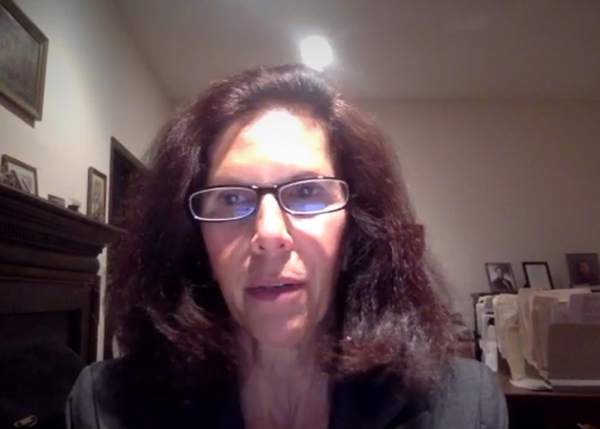
Dr.
Cosman is explaining the latest advances in the treatment of osteoproosis in a virtual webinar held on the 4th.
(Pic.
From the virtual interview) -- Last year, the international guideline newly defined the 'very-high-risk group for osteoporosis fracture' and presented different treatment strategies according to the patient’s level of risk.
Could you tell us the background and specifics of the revised guideline? =Academic societies in Korea and abroad have newly defined patients with high risk of fractures as a ‘very-high-risk group for osteoporosis fracture’ and recommends bone-forming agents to be more effective in increasing bone strength.
These group of patient can be considered ‘at emergency of osteoporosis’ and are at high risk of experiencing fractures in the near future.
The international osteoporosis foundation defined the very-high-risk group for osteoporosis fracture as ‘patients with a 10% or higher probability of experiencing fractures within 2 years.’ Also, according to a retrospective cohort study by Professor Balasubramanian that researched 377,561 women that are 65 years or older who recently experienced fractures, the cumulative risk of subsequent fractures in these women were 10% and 18% in 1 and 2 years, respectively.
One notable fact is that the risk and area of subsequent fractures varied according to the initial fracture site.
Patients with initial vertebral fracture had the highest risk of refractures at 14%, and those with initial ankle fracture had the lowest risk at 5%.
However, as the 2-year risk of refracture in patients with ankle fractures was also 10%, these patients were also categorized as a very-high-risk group.
Multiple fracture patients are also classified as a very-high-risk group, regardless of their recent fracture events.
This very-high-risk group should use bone-forming agents from early on for rapid bone formation.
In the past, bone resorption inhibitors were considered as the first treatment option for these patients; however, the paradigm has shifted to using bone-forming agents from early on.
-The new guidelines recommended 4 kinds of treatment strategies for the very-high-risk group.
Evenity, which shows a dual effect to increase bone formation and inhibit bone resorption, was also first recommended in the revised guidelines.
What is your opinion on this, and how should we devise treatment strategies using the recommended therapies? =As I mentioned before, the paradigm has changed to acknowledge that starting treatment with bone-forming agents like Evenity, followed by bone resorption inhibitors may be more effective for bone formation.
This is why Evenity was also included as an option in the new guideline.
There aren’t many head-to-head studies on Evenity and teriparatide; however, there is one that was published on NEJM in 2014.
The Phase II trial that studied women aged 55 to 85 with low bone mineral density showed that Evenity had improved the BMD in hip, femoral neck and spine more than teriparatide.
Evenity also had a higher effect in increasing bone density compared to teriparatide in the hip and spinal area a follow-up study, In practice, the approach needs to be set differently for each patient.
For example, a patient in his/her 60s who had experienced spinal fracture may have a low BMD in his/her spine, but a normal BMD in the hip area.
If the patient has no other risk factors, he/she may choose to use teriparatide.
-As the lead author of the Phase III FRAME (FRActure study in postmenopausal woMen with ostEoporosis) trial, you found that Evenity-Prolia was more effective in reducing the risk of fracture than placebo-Prolia. =The FRAME study compared patients treated with Evenity and placebo for 1 year, both followed by Prolia for 1 year to assess the risk of fractures.
Study results showed that at month 12, Evenity reduced the risk of new vertebral and all clinical fracture risk by 73% and 38%, respectively, compared to placebo.
Also, patients treated with Evenity saw a mean percent increase in BMD over placebo of 13.3% at the lumbar spine, 6.8% at the total hip, and 5.2% at the femoral neck.
This is a superior increase in BMD compared to both mono and dual therapies.
Based on such results, the researchers were able to reconfirm that Evenity is the top priority treatment option for patients at very high risk of fractures as it quickly reduces the risk of fractures while increasing bone formation.
In particular, Evenity is more suitable for patients with a low BMD in the hip and nonvertebral areas, as well as the vertebrae area.
-Despite Evenity’s potency, why do patients need to switch to Prolia after 1 year?
Could patients who saw much benefit from Evenity extend their treatment period?
=The treatment period reflects the results of the Phase II trial on Evenity.
In the Phase II trial, Evenity showed a very high bone-forming effect for 1 year.
After that, its effect was comparable to those of bone resorption inhibitors.
While no additional benefits were seen in the second year of Evenity treatment, such as an increase in bone mass, patients who switched to Prolia after 1-year of Evenity treatment saw the better effect.
Based on such findings, the 1-year treatment period was deemed reasonable considering the administration cycle and number.
-- What are your thoughts on the risk of adverse cardiovascular events that were added to the indications in Europe, U.S., and Korea? =The only clinical study on Evenity that presented adverse cardiovascular events was the Phase III ARCH trial that compared Evenity with alendronate.
In the study, a higher rate of major adverse cardiac events (MACE), which is defined as the composite of cardiovascular deaths, myocardial infarction, or stroke, was reported at week 12 in patients treated with Evenity (2.0%, 41/2,040 participants) compared to those treated with alendronate (1.1 %, 22 /2,014 participants).
However, when including heart failure events, there was no significant difference in MACE between the two groups.
In conclusion, the risk and benefits that each patient may see from using Evenity need to be analyzed and compared.
Of course, the decision must comply with the recommendations set in the approval process.
In the U.S., use of Evenity is restricted for patients that are at very high risk of experiencing cardiovascular events.
This includes patients who have experienced strokes or myocardial infarction within 1 year.
-In Korea, the reimbursement standards directly affect treatment strategy.
In consideration of the reimbursement standards currently set for Evenity in Korea, what areas do you think require further discussion? = When I saw Korea’s reimbursement criteria for Evenity, I wondered whether its application after 2 or more fractures was appropriate.
As I have mentioned before, there is ample evidence to support the validity of prescribing Evenity even after just a single fracture.
Also, the criteria that first requires the use of bisphosphonates is quite similar to the pre-revised international guideline.
The problem is that prescribing bone-forming agents after the use of bisphosphonates doesn’t provide as good an effect in reducing fractures.
Korea also needs to consider the paradigm shift in osteoporosis treatment that has already begun.
In the past, the global consensus was to first use bisphosphonate; however, this has completely changed now.
With the introduction of Evenity, it has been recognized that the right time to use bone-forming agents for optimal effect is in the early stages when patients are identified to be at very-high-risk of fractures.
-

- 0
댓글 운영방식은
댓글은 실명게재와 익명게재 방식이 있으며, 실명은 이름과 아이디가 노출됩니다. 익명은 필명으로 등록 가능하며, 대댓글은 익명으로 등록 가능합니다.
댓글 노출방식은
댓글 명예자문위원(팜-코니언-필기모양 아이콘)으로 위촉된 데일리팜 회원의 댓글은 ‘게시판형 보기’와 ’펼쳐보기형’ 리스트에서 항상 최상단에 노출됩니다. 새로운 댓글을 올리는 일반회원은 ‘게시판형’과 ‘펼쳐보기형’ 모두 팜코니언 회원이 쓴 댓글의 하단에 실시간 노출됩니다.
댓글의 삭제 기준은
다음의 경우 사전 통보없이 삭제하고 아이디 이용정지 또는 영구 가입제한이 될 수도 있습니다.
-
저작권·인격권 등 타인의 권리를 침해하는 경우
상용 프로그램의 등록과 게재, 배포를 안내하는 게시물
타인 또는 제3자의 저작권 및 기타 권리를 침해한 내용을 담은 게시물
-
근거 없는 비방·명예를 훼손하는 게시물
특정 이용자 및 개인에 대한 인신 공격적인 내용의 글 및 직접적인 욕설이 사용된 경우
특정 지역 및 종교간의 감정대립을 조장하는 내용
사실 확인이 안된 소문을 유포 시키는 경우
욕설과 비어, 속어를 담은 내용
정당법 및 공직선거법, 관계 법령에 저촉되는 경우(선관위 요청 시 즉시 삭제)
특정 지역이나 단체를 비하하는 경우
특정인의 명예를 훼손하여 해당인이 삭제를 요청하는 경우
특정인의 개인정보(주민등록번호, 전화, 상세주소 등)를 무단으로 게시하는 경우
타인의 ID 혹은 닉네임을 도용하는 경우
-
게시판 특성상 제한되는 내용
서비스 주제와 맞지 않는 내용의 글을 게재한 경우
동일 내용의 연속 게재 및 여러 기사에 중복 게재한 경우
부분적으로 변경하여 반복 게재하는 경우도 포함
제목과 관련 없는 내용의 게시물, 제목과 본문이 무관한 경우
돈벌기 및 직·간접 상업적 목적의 내용이 포함된 게시물
게시물 읽기 유도 등을 위해 내용과 무관한 제목을 사용한 경우
-
수사기관 등의 공식적인 요청이 있는 경우
-
기타사항
각 서비스의 필요성에 따라 미리 공지한 경우
기타 법률에 저촉되는 정보 게재를 목적으로 할 경우
기타 원만한 운영을 위해 운영자가 필요하다고 판단되는 내용
-
사실 관계 확인 후 삭제
저작권자로부터 허락받지 않은 내용을 무단 게재, 복제, 배포하는 경우
타인의 초상권을 침해하거나 개인정보를 유출하는 경우
당사에 제공한 이용자의 정보가 허위인 경우 (타인의 ID, 비밀번호 도용 등)
※이상의 내용중 일부 사항에 적용될 경우 이용약관 및 관련 법률에 의해 제재를 받으실 수도 있으며, 민·형사상 처벌을 받을 수도 있습니다.
※위에 명시되지 않은 내용이더라도 불법적인 내용으로 판단되거나 데일리팜 서비스에 바람직하지 않다고 판단되는 경우는 선 조치 이후 본 관리 기준을 수정 공시하겠습니다.
※기타 문의 사항은 데일리팜 운영자에게 연락주십시오. 메일 주소는 dailypharm@dailypharm.com입니다.