- LOGIN
- MemberShip
- 2026-09-22 02:02:07
- K-Bio successfully signs multiple technology transfer deals
- by Son, Hyung Min | translator Hong, Ji Yeon | 2025-06-25 06:01:37
In the first half of this year, the Korean pharmaceutical and biotech industry has successfully achieved technology transfers in various areas, including changed formulations for immunotherapy, new obesity drug candidates, and new drug discovery platforms.
Companies, such as LigaChem Biosciences and Onconic Therapeutics, have successfully received additional milestones from clinical achievements of previously exported new drug candidates.
Technology transport deals continue to yield accomplishments this year

The contracting party remains undisclosed.
Through this agreement, Abion will conduct non-clinical research on five protein targets, including Claudin 3 (CLDN3), targeted by ABN501, while the contracting party will handle other research, development, and commercialization.
The license is valid worldwide.
The upfront payment is set at $25 million, with $5 million per targeted antibody.
The total contract value amounts to $1.315 billion (approximately KRW 1.8 trillion), including $290 million in development-stage milestones and $1 billion in commercialization-stage milestones.
Claudins are a family of protein that regulates the exchange of cellular molecules and maintains cell junctions.
While these proteins are typically limited in healthy tissues, they are overexpressed in certain types of solid tumors.
Currently, Astellas' Vyloy, which targets Claudin18.2, has been commercialized, drawing significant attention from the domestic and international pharmaceutical and biotech industries to this biomarker.
Among them, CLDN3 is known to be overexpressed in small-cell lung cancer, breast cancer, ovarian cancer, and prostate cancer.
Abion is currently conducting preclinical studies for ABN501.
Clinical results disclosed to date have confirmed the safety of ABN501 through toxicity evaluations, and improved therapeutic effects have also been secured when ABN501 is combined with chemotherapy in preclinical models.
Autotelic Bio signed a technology transfer agreement this month with the Brazilian pharmaceutical company Ache for its hybrid fixed dose combination new drug, 'ATB-101'.
Autotelic Bio's entry into the Brazilian market follows its signing of an exclusive supply agreement with Chinoin of Mexico in June 2024.
ATB-101 is being developed as a combination of olmesartan, used for treating hypertension, and dapagliflozin, used for treating diabetes.
Currently, Phase 3 clinical trials are underway in approximately 33 institutions, including Seoul National University Bundang Hospital, for patients with essential hypertension and type 2 diabetes.
The composition of ATB-101 has been patented not only in Korea but also in the United States, Japan, Mexico, Brazil, and Russia, allowing the company to exercise exclusive rights upon market entry in these countries.
AriBio has successfully achieved the technology transfer of its Alzheimer's disease new drug candidate, AR1001 , for the second consecutive year.
This month, the company signed a technology export agreement with Arcera, a global pharmaceutical company established by Abu Dhabi Developmental Holding (ADQ), a sovereign wealth fund of the United Arab Emirates (UAE).
The total contract value is $600 million (approximately KRW 820 billion), with the upfront payment remaining undisclosed.
AriBio also achieved the technology transfer of 'AR1001' in March of last year.
At that time, AriBio received an upfront payment of KRW 120 billion.
AR1001 is a multi-target drug directed to the causes of Alzheimer's disease, including PDE5 and toxic proteins.
This new drug candidate is an oral treatment that improves Mirodenafil (Mvix), an erectile dysfunction drug similar to Viagra.
The basis of AR1001's mechanism is being strengthened, with recent announcements indicating the efficacy of phosphodiesterase-5 (PDE5) inhibitors, such as Viagra and Cialis, in preventing Alzheimer's disease.
AR1001's Phase 3 clinical trial is progressing smoothly.
AriBio is conducting global Phase 3 clinical studies in the United States, where the first patient was dosed in December 2022, as well as in Korea, the UK, Germany, France, Spain, Italy, Denmark, the Netherlands, the Czech Republic, and China.
In April, ABL Bio signed a technology export agreement with GlaxoSmithKline (GSK) for its blood-brain barrier (BBB) shuttle platform, 'Grabody-B,' for the development of new neurodegenerative disease treatments.
Through this agreement, ABL Bio will receive a non-refundable upfront payment of 38.5 million pounds (approximately KRW 73.9 billion) and a short-term milestone of 38.6 million pounds.
The total contract value amounts to 2.1401 billion pounds(approximately KRW 4 trillion).
Under the terms of the agreement, GSK acquires exclusive rights related to the development and commercialization of multiple new target candidates applying ABL Bio's Grabody-B.
ABL Bio will transfer its Grabody-B related technology and know-how to GSK, while GSK will be responsible for preclinical and clinical development, manufacturing, and commercialization.
The agreement aims to develop multi-target-based therapies using various modalities, including oligonucleotides (such as siRNA and ASO) and polynucleotides, as well as antibodies.
ABL Bio is also planning additional technology transfers.
The company holds the largest number of bispecific antibody candidates among domestic companies.
It currently possesses over seven pipelines, including ABL001 (VEGFxDLL4), ABL111 (Claudin18.2x4-1BB), and ABL503 (PD-L1x4-1BB).
Olix·Alteogen have successfully achieved technology transfers Olix and Alteogen have successfully achieved technology transfers for their new drug candidates targeting metabolic dysfunction-associated steatohepatitis (MASH)·obesity, as well as formulation change technology for anti-cancer drugs, respectively.
Eli Lilly has challenged the development of new MASH drugs by in-licensing a new drug candidate from the Korean company Olix Pharmaceuticals.
Olix announced in February that it had signed a co-development and technology export agreement with Lilly for its MASH and obesity treatment candidate 'OLX75016 (OLX702A)'.
The total contract value is $630 million (approximately KRW 911.7 billion).
This amount comprises a non-refundable upfront payment, as well as development and commercialization milestones contingent upon clinical progress.
Specific details, such as the proportion of the upfront payment, were not disclosed.
OLX75016 is a MASH and obesity treatment candidate based on siRNA technology, a type of short double-stranded RNA genetic material within RNA interference technology.
OLX75016 is being developed as a subcutaneous (SC) formulation for the treatment of obesity, administered once every three months.
Olix is currently conducting a Phase 1 clinical trial of OLX75016 in Australia.
The company is also investigating the possibility of combining OLX75016 with new drugs targeting GLP-1 and glucagon.
As most MASH treatments target GLP-1, Olix plans to develop a treatment with a differentiated mechanism to enhance synergistic effects with GLP-1 agents.
Alteogen signed two exclusive license agreements in March with MedImmune, AstraZeneca's bio R&D subsidiary, for its human hyaluronidase-based subcutaneous (SC) formulation change platform, 'ALT-B4'.
The non-refundable upfront payment for the contract signed between Alteogen and MedImmune is KRW 36.4 billion.
The development and commercialization milestones amount to KRW 1.0547 trillion.
The upfront payment for the contract signed with MedImmune is KRW 29.1 billion, with milestones totaling KRW 843.8 billion.
Both agreements include separate sales royalties.
Alteogen's proprietary human hyaluronidase-based technology works by increasing the permeability of subcutaneous tissue, allowing for the rapid dispersion of drugs within the tissue and their subsequent absorption into the bloodstream.
While drug delivery to subcutaneous tissue has historically been challenging due to the protection of hyaluronan, human hyaluronidase technology enables the degradation of hyaluronan.
Existing anti-cancer drugs are primarily administered intravenously (IV), a method criticized for requiring over an hour of administration time.
The development of C formulations for anti-cancer drugs is expected to shorten administration time and enhance patient convenience.
Currently, the SC formulation of the cancer immunotherapy Keytruda, utilizing Alteogen's technology, has shown non-inferiority compared to the existing IV formulation in its Phase 3 clinical trial.
Alteogen is also developing an anti-cancer SC injection formulation with Daiichi Sankyo, a developer of antibody-drug conjugates (ADC).
More milestone payment recipients In the first half of the year, many more companies received additional milestone payments from technology transfers.
Genomictree recently received a KRW 1 billion milestone payment from 'Shandong Lukang Hao Li You' following the completion of clinical trials for its colorectal cancer diagnostic product 'EarlyTect-C' in China.
Genomictree signed a technology transfer agreement in May 2021 with Shandong Lukang Hao Li You, a joint venture established by Orion Holdings and China's Lukang Pharma for the commercialization of its colorectal cancer in vitro diagnostic product in the Chinese market.
The total contract value is KRW 6 billion, and Genomictree received an upfront payment (contract payment) of 2 billion KRW in 2021.
Shandong Lukang Hao Li You subsequently established production infrastructure for the colorectal cancer in vitro diagnostic product in China.
The company commenced clinical trials in 2023 and completed them in January of this year.
Based on the recent clinical results, they have applied to the China's 'National Medical Products Administration (NMPA)' for manufacturing approval of the colorectal cancer diagnostic product.
LigaChem Biosciences announced this month the receipt of a short-term milestone payment for 'LCB97', an ADC-based new anti-cancer drug out-licensed to the Japanese pharmaceutical company Ono Pharmaceutical.
While the exact amount received was not disclosed, the company announced it received more than one-tenth of last year's revenue of KRW 125.9 billion.
LigaChem Biosciences has successfully received its third milestone payment from Ono Pharmaceutical, following additional milestone payments in November last year and March this year.
LCB97, for which the milestone was received, is an ADC discovered and developed based on LigaChem Biosciences' proprietary ADC platform technology.
It targets L1CAM, known to be overexpressed in various solid tumors.
The company states that LCB97 has shown excellent anti-cancer efficacy in various tumor mouse models conducted to date.
LigaChem Biosciences signed two technology transfer agreements related to ADCs with Ono Pharmaceutical in October last year.
These agreements included ▲a contract transferring the exclusive global development and commercialization rights for LCB97 ▲a contract transferring ADC platform technology for multiple targets.
The specific contract amount was not disclosed by mutual agreement between the two companies, and the total value of the two contracts exceeds KRW 943.5 billion.
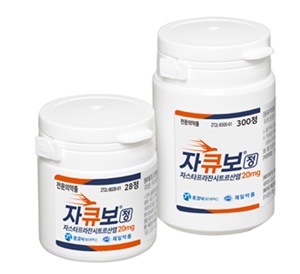
Through this, Onconic Therapeutics claimed a milestone payment of $1.5 million (KRW 2.2 billion).
Onconic Therapeutics signed a technology export agreement for Zacubo with the Chinese pharmaceutical company Livzon Pharmaceutical Group in March 2023.
The contract value is up to $127.5 million.
Onconic Therapeutics initially received a non-refundable upfront payment of $15 million and is set to receive up to $112.5 million in technology fees based on development, approval, and commercialization milestones.
Zacubo is a P-CAB (Potassium-Competitive Acid Blocker)-based treatment for gastroesophageal reflux disease.
It was approved as the 37th domestically developed new drug in April last year.
Onconic Therapeutics received a milestone payment of $3 million last month following the first patient dosing in Zacubo's Phase 3 clinical trial in China.
With the completion of CMC (Chemistry, Manufacturing, and Controls) technology transfer for production, the company is expected to receive further milestone payments.
-

- 0
댓글 운영방식은
댓글은 실명게재와 익명게재 방식이 있으며, 실명은 이름과 아이디가 노출됩니다. 익명은 필명으로 등록 가능하며, 대댓글은 익명으로 등록 가능합니다.
댓글 노출방식은
댓글 명예자문위원(팜-코니언-필기모양 아이콘)으로 위촉된 데일리팜 회원의 댓글은 ‘게시판형 보기’와 ’펼쳐보기형’ 리스트에서 항상 최상단에 노출됩니다. 새로운 댓글을 올리는 일반회원은 ‘게시판형’과 ‘펼쳐보기형’ 모두 팜코니언 회원이 쓴 댓글의 하단에 실시간 노출됩니다.
댓글의 삭제 기준은
다음의 경우 사전 통보없이 삭제하고 아이디 이용정지 또는 영구 가입제한이 될 수도 있습니다.
-
저작권·인격권 등 타인의 권리를 침해하는 경우
상용 프로그램의 등록과 게재, 배포를 안내하는 게시물
타인 또는 제3자의 저작권 및 기타 권리를 침해한 내용을 담은 게시물
-
근거 없는 비방·명예를 훼손하는 게시물
특정 이용자 및 개인에 대한 인신 공격적인 내용의 글 및 직접적인 욕설이 사용된 경우
특정 지역 및 종교간의 감정대립을 조장하는 내용
사실 확인이 안된 소문을 유포 시키는 경우
욕설과 비어, 속어를 담은 내용
정당법 및 공직선거법, 관계 법령에 저촉되는 경우(선관위 요청 시 즉시 삭제)
특정 지역이나 단체를 비하하는 경우
특정인의 명예를 훼손하여 해당인이 삭제를 요청하는 경우
특정인의 개인정보(주민등록번호, 전화, 상세주소 등)를 무단으로 게시하는 경우
타인의 ID 혹은 닉네임을 도용하는 경우
-
게시판 특성상 제한되는 내용
서비스 주제와 맞지 않는 내용의 글을 게재한 경우
동일 내용의 연속 게재 및 여러 기사에 중복 게재한 경우
부분적으로 변경하여 반복 게재하는 경우도 포함
제목과 관련 없는 내용의 게시물, 제목과 본문이 무관한 경우
돈벌기 및 직·간접 상업적 목적의 내용이 포함된 게시물
게시물 읽기 유도 등을 위해 내용과 무관한 제목을 사용한 경우
-
수사기관 등의 공식적인 요청이 있는 경우
-
기타사항
각 서비스의 필요성에 따라 미리 공지한 경우
기타 법률에 저촉되는 정보 게재를 목적으로 할 경우
기타 원만한 운영을 위해 운영자가 필요하다고 판단되는 내용
-
사실 관계 확인 후 삭제
저작권자로부터 허락받지 않은 내용을 무단 게재, 복제, 배포하는 경우
타인의 초상권을 침해하거나 개인정보를 유출하는 경우
당사에 제공한 이용자의 정보가 허위인 경우 (타인의 ID, 비밀번호 도용 등)
※이상의 내용중 일부 사항에 적용될 경우 이용약관 및 관련 법률에 의해 제재를 받으실 수도 있으며, 민·형사상 처벌을 받을 수도 있습니다.
※위에 명시되지 않은 내용이더라도 불법적인 내용으로 판단되거나 데일리팜 서비스에 바람직하지 않다고 판단되는 경우는 선 조치 이후 본 관리 기준을 수정 공시하겠습니다.
※기타 문의 사항은 데일리팜 운영자에게 연락주십시오. 메일 주소는 dailypharm@dailypharm.com입니다.