- LOGIN
- MemberShip
- 2026-09-21 00:02:35
- Pharma tries to flip the returned out-licensing of new drugs
- by Son, Hyung Min | translator Hong, Ji Yeon | 2025-07-03 06:11:21
New drug candidates from Korean pharmaceutical companies, which were previously returned after technology transfer, are now re-entering the clinical stage and proving their potential.
Attention is focused on whether these candidates will re-label their past failures and demonstrate technological potential.
According to industry sources on July 2, NOBO Medicine and Hanmi Pharmaceutical disclosed the Phase 2 clinical trial results for Poseltinib, a hematological cancer treatment under co-development.
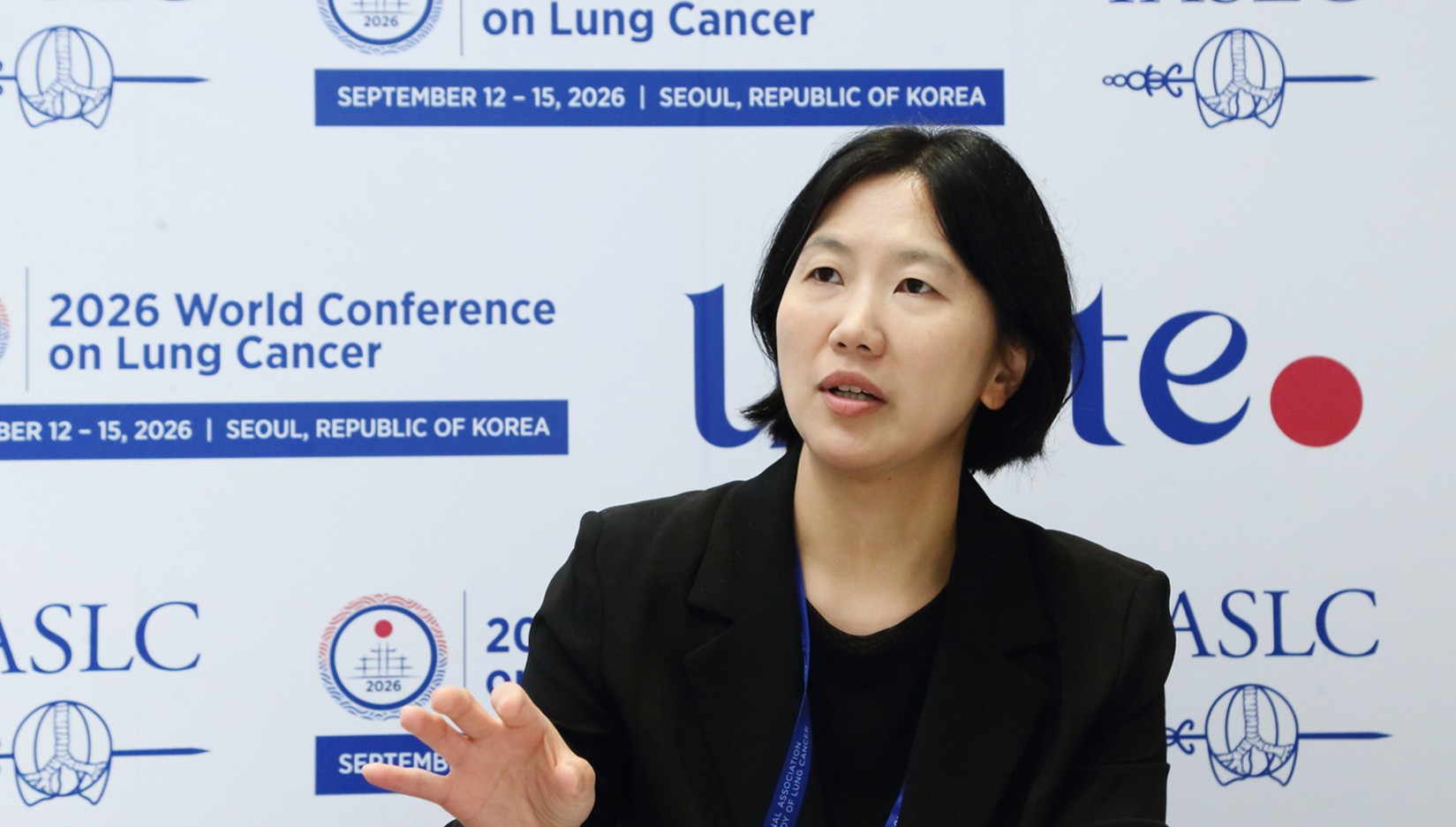
These results were presented last month at the International Conference on Malignant Lymphoma (ICML) held in Lugano, Switzerland.
Poseltinib Revives after Technology Transfer Return...Targets Unmet Needs in Lymphoma Poseltinib is a Bruton's tyrosine kinase (BTK) inhibitor initially developed by Hanmi Pharmaceutical in 2010 and subsequently out-licensed to Eli Lilly in 2015 for up to US$690 million (approximately KRW 893 billion).
BTK inhibitors are drugs that reversibly bind to the protein binding site of the BTK enzyme, which regulates the function of B cells and myeloid cells, thereby inhibiting its catalytic reaction.
After in-licensing Poseltinib from Hanmi Pharmaceutical, Eli Lilly conducted a Phase 2 clinical trial in patients with rheumatoid arthritis but discontinued it due to a lack of confirmed efficacy.
Poseltinib failed to demonstrate efficacy in clinical trials where key endpoints included improvement in rheumatoid arthritis symptoms and the incidence of drug-related adverse events.
Consequently, Lilly returned the technology transfer rights to Hanmi Pharmaceutical in 2019.

NOBO Medicine has been conducting investigator-initiated clinical trials for patients with relapsed and refractory Diffuse Large B-cell Lymphoma (DLBCL) using a triple combination therapy combining Poseltinib with Roche's Columvi and BMS's Revlimid at Seoul National University Hospital.
The industry discussed the possibility of transitioning Poseltinib and developing it for hematological cancers, such as lymphoma and leukemia.
It is because Janssen's BTK inhibitor Imbruvica was already launched as a treatment for mantle cell lymphoma, and sufficient safety and tolerability results had been confirmed for Poseltinib.
The recently announced clinical results are from two studies: ▲Relapsed and refractory Diffuse Large B-cell Lymphoma (DLBCL) ▲Relapsed and refractory Primary Central Nervous System Lymphoma (PCNSL).
DLBCL is the most common type of aggressive lymphoma, accounting for approximately 30-40% of all non-Hodgkin lymphoma patients.
While the remission rate for first-line treatment is high, the prognosis is poor for relapsed or refractory patients who do not respond to existing therapies.
Therefore, it has led to a continuous demand for treatments with new mechanisms of action.
In the DLBCL trial, the Poseltinib combination therapy with Columvi and Revlimid achieved an objective response rate (ORR), measuring the proportion of patients who had a treatment response, such as tumor size reduction, of 84.1%.
The complete response rate (CRR), representing the proportion of patients whose cancer completely disappeared, was 58.5%.
In terms of safety, significant adverse events reported included Grade 3 or higher neutropenia (68.7%), cytokine release syndrome (4.8%), and cardiac arrhythmia (3.6%).
PCNSL is a rare type of non-Hodgkin lymphoma that originates in the central nervous system, specifically in the brain and spinal cord, accounting for the majority of CNS lymphomas.
This disease is difficult to treat, has a high recurrence rate, and treatment options are particularly limited in elderly patients.
As it frequently recurs even after conventional chemotherapy or radiation therapy, there is a significant unmet medical need for new drug candidates with superior brain penetrability.
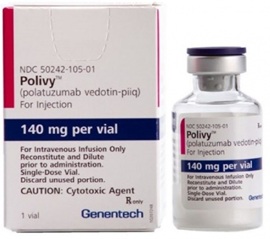
Clinical results showed that the Poseltinib + Polivy + Revlimid combination therapy had an ORR of 55.6% and a CRR of 33.3%.
The median progression-free survival (PFS), the period patients lived without their disease worsening, was 6.3 months.
Although the number of enrolled patients was small at 10, these results are considered significant given the challenging indication of central nervous system lymphoma.
The median overall survival (OS) has not yet been reached, and the 6-month survival rate was 88.9%.
Patients were tracked without treatment discontinuation, and only one case of severe adverse event, neutropenia (11%), occurred.
NOBO Medicine explains that Poseltinib, which works by selecting multiple kinases including BTK and TEC, demonstrates blockade of bypass pathways, high brain penetrability, and a low side effect profile.
Yuhan·Daewoong·TiumBio, and Others Continue New Drug Clinical Trials

Yuhan Corp announced in March that it had received notification of termination of its technology transfer agreement and return of rights for 'YH25724', a MASH (Metabolic Dysfunction-Associated Steatohepatitis) new drug candidate, from Boehringer Ingelheim.
In July 2019, Yuhan Corp signed a technology transfer agreement for YH25724 with Boehringer Ingelheim.
YH25724 is a dual agonist that simultaneously targets GLP-1 and FGF21, and a technology transfer agreement was signed at the preclinical stage.
Yuhan Corp announced its intention to continue developing its MASH new drug.
Yuhan Corp stated, "Based on the potential to address unmet medical needs of patients and positive safety results from clinical trials, we are considering continuing the development of this candidate." Daewoong Pharmaceutical is continuing the development of 'Bersiporocin', an idiopathic pulmonary fibrosis (IPF)treatment, which was previously out-licensed to China's CS Pharmaceutical.
In March, CS Pharmaceutical notified Daewoong Pharmaceutical of its intent to terminate the contract.
Bersiporocin is an anti-fibrotic new drug candidate that inhibits PRS, affecting collagen production, and works by suppressing the excessive production of collagen that causes fibrosis.
IPF is a type of interstitial pneumonia characterized by progressive fibrosis of the lung parenchyma.
Currently, available treatments offer only limited therapeutic effects, capable only of delaying the disease, thus leaving significant unmet needs.
Bersiporocin's Phase 1 clinical trial, conducted in 2022 in Korea and Australia with a total of 162 healthy adults, confirmed its safety and characterized its pharmacokinetic properties, including absorption, distribution, and metabolism in the body.
The following year, Daewoong Pharmaceutical received approval for a multinational Phase 2 clinical trial and is evaluating the efficacy and safety of Bersiporocin in IPF patients aged 40 and above.
This trial includes patients who are currently receiving or have discontinued approved treatments.
TiumBio was notified in March this year by the Italian pharmaceutical company Chiesi of the termination of their contract and return of rights for the respiratory disease treatment development program 'NCE401'.
In 2018, TiumBio signed an agreement to transfer NCE401 to Chiesi, along with an upfront payment of US$1 million.
NCE401 was being developed as a new drug candidate for respiratory diseases designed to target transforming growth factor-beta (TGF-ß).
However, Chiesi reportedly failed to identify a suitable candidate molecule.
TiumBio's clinical trials for TU2218, which is produced using the same platform and developed as an anti-cancer drug, are progressing smoothly.
TU2218 simultaneously blocks the pathways of TGF-ß and vascular endothelial growth factor (VEGF), both known to hinder immunotherapy activity.
This mechanism aims to maximize the efficacy of immunotherapies.
TiumBio unveiled the results of its Phase 2 clinical trial for TU2218 in combination with MSD's immunotherapy 'Keytruda' at the American Society of Clinical Oncology (ASCO) meeting held in Chicago last month.
The recently disclosed trial represents early cohort results from an ongoing study in patients with head and neck cancer and biliary tract cancer.
Clinical results showed that the TU2218 + Keytruda combination therapy resulted in a partial response (PR), where tumor size decreased beyond a certain standard, in 7 out of 11 patients with head and neck cancer.
Stable disease (SD), characterized by no significant change in tumor size or condition, was observed in one patient.
In the biliary tract cancer cohort, 4 out of 23 patients showed PR, and 7 showed SD.
-

- 0
댓글 운영방식은
댓글은 실명게재와 익명게재 방식이 있으며, 실명은 이름과 아이디가 노출됩니다. 익명은 필명으로 등록 가능하며, 대댓글은 익명으로 등록 가능합니다.
댓글 노출방식은
댓글 명예자문위원(팜-코니언-필기모양 아이콘)으로 위촉된 데일리팜 회원의 댓글은 ‘게시판형 보기’와 ’펼쳐보기형’ 리스트에서 항상 최상단에 노출됩니다. 새로운 댓글을 올리는 일반회원은 ‘게시판형’과 ‘펼쳐보기형’ 모두 팜코니언 회원이 쓴 댓글의 하단에 실시간 노출됩니다.
댓글의 삭제 기준은
다음의 경우 사전 통보없이 삭제하고 아이디 이용정지 또는 영구 가입제한이 될 수도 있습니다.
-
저작권·인격권 등 타인의 권리를 침해하는 경우
상용 프로그램의 등록과 게재, 배포를 안내하는 게시물
타인 또는 제3자의 저작권 및 기타 권리를 침해한 내용을 담은 게시물
-
근거 없는 비방·명예를 훼손하는 게시물
특정 이용자 및 개인에 대한 인신 공격적인 내용의 글 및 직접적인 욕설이 사용된 경우
특정 지역 및 종교간의 감정대립을 조장하는 내용
사실 확인이 안된 소문을 유포 시키는 경우
욕설과 비어, 속어를 담은 내용
정당법 및 공직선거법, 관계 법령에 저촉되는 경우(선관위 요청 시 즉시 삭제)
특정 지역이나 단체를 비하하는 경우
특정인의 명예를 훼손하여 해당인이 삭제를 요청하는 경우
특정인의 개인정보(주민등록번호, 전화, 상세주소 등)를 무단으로 게시하는 경우
타인의 ID 혹은 닉네임을 도용하는 경우
-
게시판 특성상 제한되는 내용
서비스 주제와 맞지 않는 내용의 글을 게재한 경우
동일 내용의 연속 게재 및 여러 기사에 중복 게재한 경우
부분적으로 변경하여 반복 게재하는 경우도 포함
제목과 관련 없는 내용의 게시물, 제목과 본문이 무관한 경우
돈벌기 및 직·간접 상업적 목적의 내용이 포함된 게시물
게시물 읽기 유도 등을 위해 내용과 무관한 제목을 사용한 경우
-
수사기관 등의 공식적인 요청이 있는 경우
-
기타사항
각 서비스의 필요성에 따라 미리 공지한 경우
기타 법률에 저촉되는 정보 게재를 목적으로 할 경우
기타 원만한 운영을 위해 운영자가 필요하다고 판단되는 내용
-
사실 관계 확인 후 삭제
저작권자로부터 허락받지 않은 내용을 무단 게재, 복제, 배포하는 경우
타인의 초상권을 침해하거나 개인정보를 유출하는 경우
당사에 제공한 이용자의 정보가 허위인 경우 (타인의 ID, 비밀번호 도용 등)
※이상의 내용중 일부 사항에 적용될 경우 이용약관 및 관련 법률에 의해 제재를 받으실 수도 있으며, 민·형사상 처벌을 받을 수도 있습니다.
※위에 명시되지 않은 내용이더라도 불법적인 내용으로 판단되거나 데일리팜 서비스에 바람직하지 않다고 판단되는 경우는 선 조치 이후 본 관리 기준을 수정 공시하겠습니다.
※기타 문의 사항은 데일리팜 운영자에게 연락주십시오. 메일 주소는 dailypharm@dailypharm.com입니다.