- LOGIN
- MemberShip
- 2026-09-18 05:05:16
- PCV21 emerges…evidence-based vaccination policies discussed
- by Whang, byung-woo | translator Hong, Ji Yeon | 2025-07-07 06:10:34
"To improve pneumococcal disease prevention in Korea, an evidence-based pneumococcal vaccination policy is essential.
It's crucial to evaluate the efficacy of existing vaccines and conduct cost-effectiveness assessments for new vaccines based on domestic data." Despite the implementation of the National Immunization Program (NIP), pneumococcal disease remains a significant public health issue in South Korea.
Therefore, experts emphasize the need to strengthen vaccine strategies, particularly targeting high-risk populations.
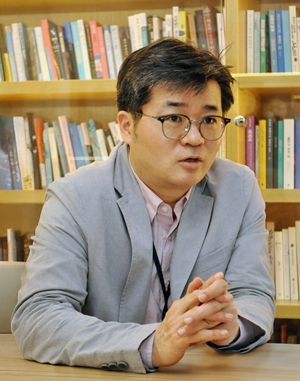
Jung Yeon Heo, a professor at Ajou University HospitalDr.
Jung Yeon Heo, a professor at Ajou University Hospital's Infectious Diseases Department, an expert in the field, emphasized the need for a 'dual protection strategy,' which involves the direct vaccination of high-risk adults in addition to pediatric pneumococcal vaccination.
Pneumococcal infection is known to be fatal for elderly people, causing not only pneumonia but also various invasive diseases such as bacteremia and meningitis.
Specifically, adults aged 65 and older face a greater risk of pneumococcal pneumonia and invasive infection.
The risk of infection further increases for adults with chronic diseases compared to healthy adults of the same age.
Dr.
Heo explained, "Invasive Pneumococcal Disease (IPD) primarily occurs in high-risk groups, including adults aged 65 and older, immunocompromised individuals, and patients with chronic kidney disease or heart disease," and added, "Generally, the prevalence of these chronic or immunocompromised conditions increases with age, leading to a higher risk of pneumococcal infection in elderly people." Since 2013, South Korea has provided protein conjugate vaccines (PCV) for children and 23-valent polysaccharide vaccines (PPSV23) for adults (aged 65 and older) through the NIP.
However, while the pediatric PCV vaccination rate is high at approximately 97%, the PPSV23 vaccination rate for adults aged 65 and older is only about 54.5%.
Currently, there are concerns about the intergenerational transmission of pneumococcal bacteria, as the number of grandparents caring for grandchildren increases.
Regarding this, Dr.
Heo stated that indirect effects of reduced adult pneumococcal infection can be expected from pediatric vaccination, based on domestic and international cases.
However, he also emphasized the importance of direct vaccination for a sufficient preventive effect.
Dr.
Heo said, "While indirect effects of reducing pneumococcal disease in adults can be expected from pediatric vaccination, indirect effects alone are not sufficient for adequate prevention in adults," and stressed, "In addition to pediatric vaccination, adult pneumococcal vaccination is also crucial." The distribution of serotypes also highlights the importance of prevention in elderly people.
According to Dr.
Heo, the most common pneumococcal serotypes in Korean adults are 3 and 19A.
Despite these two serotypes being included in the currently used 13-valent pneumococcal conjugate vaccine (PCV13), they still cause infections.
Dr.
Heo pointed out, "This shows that even though the domestic pediatric vaccination rate is high, nearing 95%, for some serotypes, pediatric vaccination alone is not sufficient for full prevention." He added, "For certain serotypes, indirect effects alone are insufficient for adequate prevention, providing evidence that adults also need pneumococcal vaccination." Discussion of sequential·single-dose vaccination strategies..."Vaccine characteristics must be considered" However, with the emergence of newly approved pneumococcal vaccines, there is also anticipation for expanding the scope of pneumococcal disease prevention.
Recently, the Korean Society of Infectious Diseases issued revised recommendations, recommending sequential vaccination with PCV15 + PPSV23 or single-dose vaccination with PCV20 for all individuals aged 6 months and older, as well as for high-risk individuals aged 19-64.
Regarding sequential vaccination, Dr.
Heo explained, "Vaccination is needed to enhance the immunogenicity in high-risk groups for pneumococcal disease while including as many serotypes as possible.
This strategy was proposed because combining PCV's strong immune induction effect with PPSV23's broad serotype coverage can lead to more comprehensive and potent preventive effects." He also stated, "If patient convenience is prioritized, a single injection of PCV20 might be a simpler approach." However, he added, "The main reason why the sequential vaccination strategy is recommended is due to considerations of PPSV23's efficacy and cost-effectiveness." Currently, PPSV23, provided free through the domestic NIP, is considered highly cost-effective as it can prevent a wide range of serotypes at a relatively low cost.
Conversely, individuals who can afford to cover the cost may opt for non-reimbursed vaccination with a single dose of PCV20, which is not covered by insurance benefits.
Dr.
Heo advised, "For those who can bear the cost, a single-dose PCV20 strategy can be considered.
However, for those who wish to benefit from the NIP, sequential vaccination with PCV15 and PPSV23 is a good choice." He further stated, "Since each vaccine has its pros and cons and overall effects are similar, it's difficult to conclude that one vaccine is superior to another." He added, "Physicians should thoroughly explain the characteristics and differences of each vaccine and then decide on the appropriate vaccination method together with the patient." "PCV21 vaccine is expected to be introduced...Expectation for adult prevention effectiveness" In this context, the 21-valent pneumococcal conjugate vaccine (PCV21) is expected to be approved this year.
Regarding this, Dr.
Heo explained, "Theoretically, the PCV21 vaccine can prevent the broadest range of serotypes in adults," and added, "At the Infectious Diseases Society conference, attendees showed a preference for PCV21 among the 15-valent, 20-valent, and 21-valent options." PCV21 is distinguished from existing vaccines by excluding serotypes included in the original PCV7 and incorporating the most non-vaccine type (NVT) serotypes whose adult incidence has increased due to serotype replacement phenomena following vaccine use.
Dr.
Heo stated, "Considering even the indirect effects of pediatric vaccination, the 21-valent vaccine could be the ideal vaccine." He added, "However, what strategy will be most effective for adults will need to be determined through real-world data from future field use." Dr.
Heo also emphasized the establishment of an evidence-based vaccine policy to improve the pneumococcal prevention environment in South Korea.
In South Korea, PPSV23 is currently provided free of charge to adults aged 65 and older.
However, with the emergence of new vaccines, a multi-faceted review is necessary.
Dr.
Heo pointed out, "As new pneumococcal vaccines continue to be introduced, we need to closely analyze the efficacy of existing vaccines and domestic usage data.
When introducing new vaccines, cost-effectiveness must also be reviewed." He added, "However, to respond to diverse serotype distributions and serotype changes resulting from vaccine use, a pneumococcal vaccine covering a broader range of serotypes is needed." Finally, Dr.
Heo suggested, "While expanding the adult NIP is not easy at the moment due to cost issues, we have no choice but to follow the trend as vaccine technology advances.
Systematic policy preparation considering complex factors is necessary."
-

- 0
댓글 운영방식은
댓글은 실명게재와 익명게재 방식이 있으며, 실명은 이름과 아이디가 노출됩니다. 익명은 필명으로 등록 가능하며, 대댓글은 익명으로 등록 가능합니다.
댓글 노출방식은
댓글 명예자문위원(팜-코니언-필기모양 아이콘)으로 위촉된 데일리팜 회원의 댓글은 ‘게시판형 보기’와 ’펼쳐보기형’ 리스트에서 항상 최상단에 노출됩니다. 새로운 댓글을 올리는 일반회원은 ‘게시판형’과 ‘펼쳐보기형’ 모두 팜코니언 회원이 쓴 댓글의 하단에 실시간 노출됩니다.
댓글의 삭제 기준은
다음의 경우 사전 통보없이 삭제하고 아이디 이용정지 또는 영구 가입제한이 될 수도 있습니다.
-
저작권·인격권 등 타인의 권리를 침해하는 경우
상용 프로그램의 등록과 게재, 배포를 안내하는 게시물
타인 또는 제3자의 저작권 및 기타 권리를 침해한 내용을 담은 게시물
-
근거 없는 비방·명예를 훼손하는 게시물
특정 이용자 및 개인에 대한 인신 공격적인 내용의 글 및 직접적인 욕설이 사용된 경우
특정 지역 및 종교간의 감정대립을 조장하는 내용
사실 확인이 안된 소문을 유포 시키는 경우
욕설과 비어, 속어를 담은 내용
정당법 및 공직선거법, 관계 법령에 저촉되는 경우(선관위 요청 시 즉시 삭제)
특정 지역이나 단체를 비하하는 경우
특정인의 명예를 훼손하여 해당인이 삭제를 요청하는 경우
특정인의 개인정보(주민등록번호, 전화, 상세주소 등)를 무단으로 게시하는 경우
타인의 ID 혹은 닉네임을 도용하는 경우
-
게시판 특성상 제한되는 내용
서비스 주제와 맞지 않는 내용의 글을 게재한 경우
동일 내용의 연속 게재 및 여러 기사에 중복 게재한 경우
부분적으로 변경하여 반복 게재하는 경우도 포함
제목과 관련 없는 내용의 게시물, 제목과 본문이 무관한 경우
돈벌기 및 직·간접 상업적 목적의 내용이 포함된 게시물
게시물 읽기 유도 등을 위해 내용과 무관한 제목을 사용한 경우
-
수사기관 등의 공식적인 요청이 있는 경우
-
기타사항
각 서비스의 필요성에 따라 미리 공지한 경우
기타 법률에 저촉되는 정보 게재를 목적으로 할 경우
기타 원만한 운영을 위해 운영자가 필요하다고 판단되는 내용
-
사실 관계 확인 후 삭제
저작권자로부터 허락받지 않은 내용을 무단 게재, 복제, 배포하는 경우
타인의 초상권을 침해하거나 개인정보를 유출하는 경우
당사에 제공한 이용자의 정보가 허위인 경우 (타인의 ID, 비밀번호 도용 등)
※이상의 내용중 일부 사항에 적용될 경우 이용약관 및 관련 법률에 의해 제재를 받으실 수도 있으며, 민·형사상 처벌을 받을 수도 있습니다.
※위에 명시되지 않은 내용이더라도 불법적인 내용으로 판단되거나 데일리팜 서비스에 바람직하지 않다고 판단되는 경우는 선 조치 이후 본 관리 기준을 수정 공시하겠습니다.
※기타 문의 사항은 데일리팜 운영자에게 연락주십시오. 메일 주소는 dailypharm@dailypharm.com입니다.


-
- "Leclaza, the best first-line option…expanded reimb will increase accessibility"
- PALOMA-2 recorded an objective response rate (ORR) of 90 and the 3-year overall survival (OS) rate of 70%…mOS has not yet been reached