- LOGIN
- MemberShip
- 2026-09-20 23:08:51
- How Denmark gave birth to the golden goose Wegovy
- by Cha, Jihyun | translator Alice Kang | 2025-07-17 06:13:16

It surpassed France's luxury goods group LVMH, which had held the top spot in the European stock market for over two years.
At the time, Novo Nordisk’s market value was approximately KRW 790 trillion.
This surpasses Denmark's gross domestic product (GDP) last year.
It is truly a case of “one well-developed new drug” sustaining the country.
Novo Nordisk is based in Denmark.
Denmark has a population of 6 million and a land area only half that of Korea, but its biotechnology is considered among the best in Europe.
The foundation of this technological prowess is Medicon Valley.
Medicon Valley, located between Copenhagen and Malmö in Sweden, is the largest life science hub in Northern Europe.
It is recognized as a model example of a biotech cluster where research and development infrastructure, capital, and talent are closely interconnected.
Medicon Valley, a Nordic bio ecosystem that operates as one across borders According to industry sources on the 14th, Medicon Valley is the largest bio cluster in Northern Europe, covering the Copenhagen metropolitan area in Denmark and the Skåne region in Sweden.
Denmark and Sweden have built a joint life science ecosystem centered on the Øresund Strait.
It began to take shape in earnest in the mid-1990s, with Copenhagen, Lund, and Malmö serving as its core hubs.
Medicon Valley's strength lies in its clustering effect.
Industry, academia, medicine, and capital are concentrated within a single ecosystem, and they are organically connected to accelerate innovation.
The core players in the bio ecosystem are physically close to each other and operate a system that promotes organic cooperation.
One of the biggest factors supporting Medicon Valley's competitiveness is its high concentration of companies.
There are more than 500 life science companies in the area.
Many of them are global pharmaceutical companies or promising biotech companies.
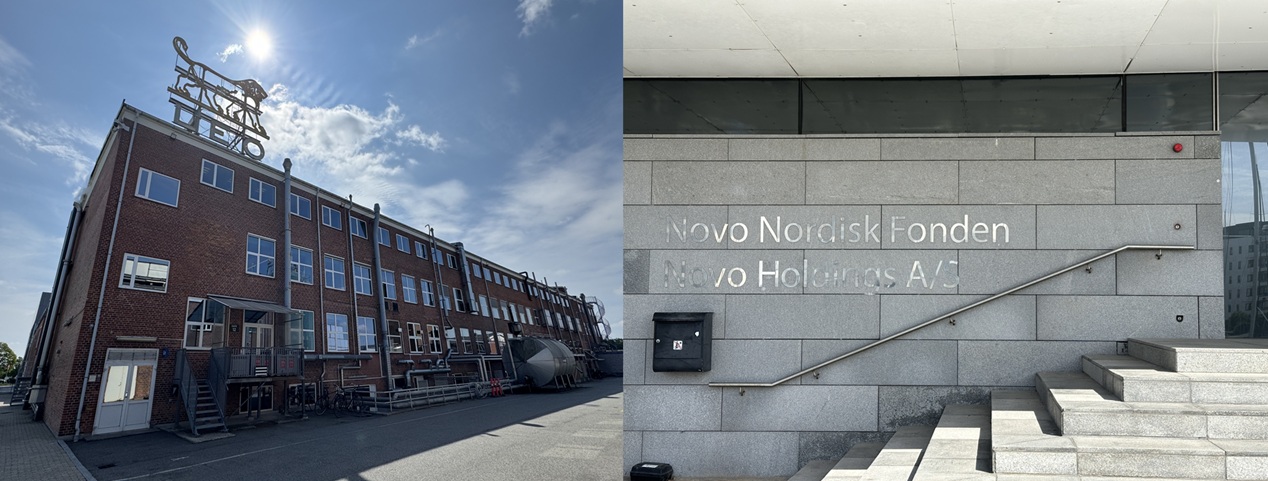
From leading global biopharmaceutical companies such as Novo Nordisk, Lundbeck, and LEO Pharma to startups rapidly growing in areas such as AI-driven drug discovery, antibody and cell therapies, and digital health, a diverse range of companies are concentrated in the region.
When companies of different sizes and at different stages of development are physically close to each other, technological collaboration, talent circulation, information sharing, and business commercialization naturally occur.
This enables innovation at a speed, efficiency, and scale that cannot be achieved by a single company or research institute alone.
The dense structure of Medicon Valley goes beyond a simple locational advantage to serve as a foundation for collective intelligence that boosts the efficiency and speed of the entire bio industry.
The academic and hospital infrastructure of the Danish bio cluster serves as the driving force behind the ecosystem.
Medicon Valley is home to universities with some of the best research capabilities in Europe.
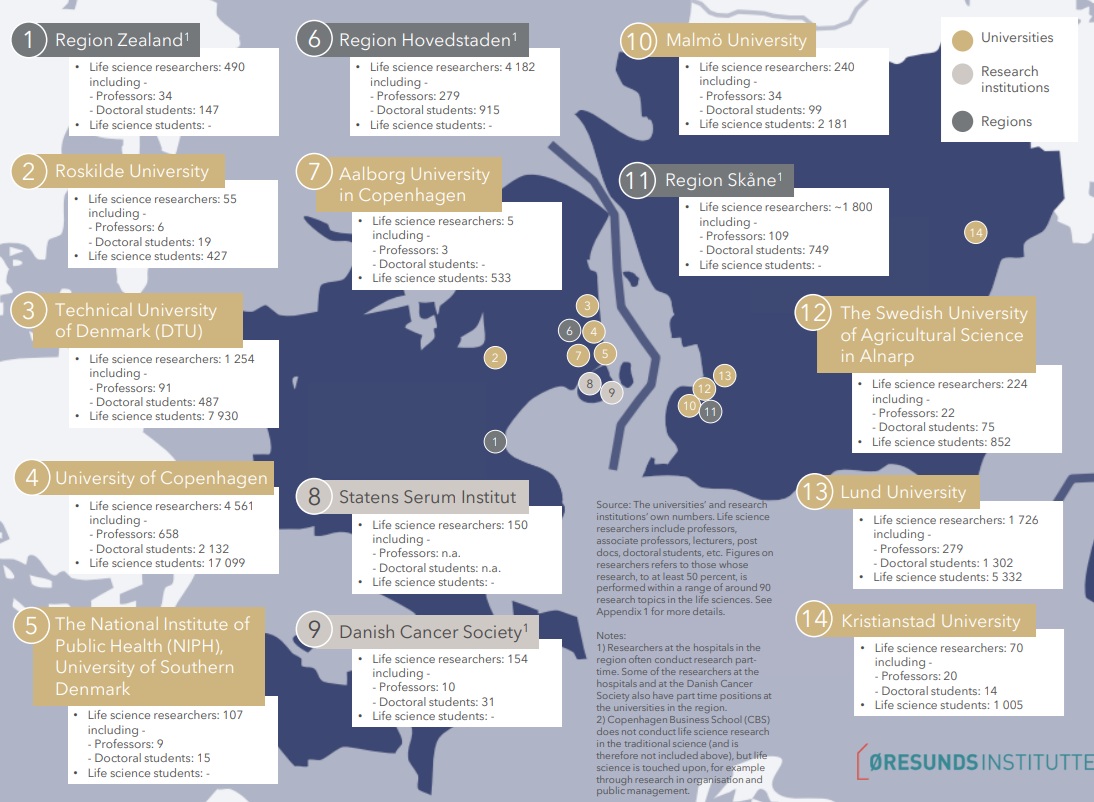
The University of Copenhagen, the Technical University of Denmark, the University of Southern Denmark, and Lund University in Sweden are located within the cluster.
These universities are not just educational institutions, but also core technology providers and launchpads for startups and industrialization in the bio ecosystem.
They are essential spaces for refining technologies developed at universities for practical application in patients and serve as trusted clinical validation partners for companies.
In addition to Odense University Hospital, one of Denmark's three major university hospitals, and Rigshospitalet, a national central hospital, there are many university hospitals and regional hospitals specialized in clinical research, joint research, and technology validation.
Most hospitals in Medicon Valley are directly connected to universities, enabling them to perform educational, research, and treatment functions simultaneously.
In particular, it is common for biotech and medical device companies to test their initial technologies in hospital testbeds and then improve and commercialize them based on real-world data.
A national clinical support system organically connects the hospital network, enabling the entire process, from clinical trial approval procedures to subject recruitment and data analysis, to proceed efficiently.
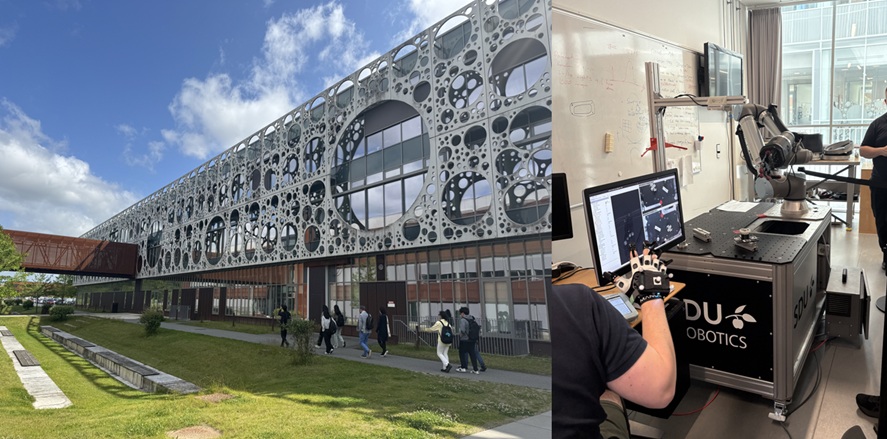
Among these, SDU Robotics is a representative example of field-oriented medical innovation where technology development is directly applied to clinical settings.
SDU Robotics is a robotics research center affiliated with the School of Engineering at the University of Southern Denmark, and companies such as Universal Robots (a collaborative robot developer) and MiR (an autonomous mobile robot company) were established through this center.
The University of Southern Denmark and Odense University Hospital jointly operate multiple research centers.
These institutions are physically located just 4 km apart, enabling them to swiftly coordinate the entire process from technology development to clinical validation.
The two institutions collaborate on research and productization based on a 50:50 partnership, with developed technologies tested directly within the hospital and systematically validated for commercial viability.
Thiusius Rajeeth Savarimuthu, Professor and Head of SDU Robotics, stated, “The ability of SDU Robotics to transition research outcomes into actual clinical applications is thanks to the collaboration between researchers with expertise in engineering and medicine.
This collaboration has been further strengthened with the official launch of a joint research center between the university hospital and SDU's School of Engineering.” #Money flows even without government funding…The technology commercialization formula of Medicon Valley In Medicon Valley, technology does not end in the laboratory.
Ideas invented at universities and hospitals are quickly turned into biotech, and then supported by a professional startup support platform and private funding system.
The BioInnovation Institute (BII) is one representative institution.
BII is a non-profit startup support organization fully funded by the Novo Nordisk Foundation.
BII provides grants of up to 3 million kroner (approximately KRW 6 billion) to early-stage technology-based startups without requiring equity.
Additionally, it operates a comprehensive support system covering shared experimental infrastructure, dedicated mentoring, investor connections, and business development strategy formulation.
In fact, BII is attracting promising technology startup teams not only from Denmark but from all across Europe.
To date, BII has produced over 100 startups, which have secured follow-on investments exceeding 500 million euros (approximately KRW 70 billion).
Unlike many countries, including South Korea, where biotech startups still rely on government R&D projects or one-time grants, the BII model is unique in that it is led by the private sector and forms a cycle of startups and industrialization.

The Novo Nordisk Foundation is Europe's largest foundation supporting the life sciences sector, with annual funding exceeding KRW 1 trillion.
The foundation provides Proof of Concept (PoC) funding not only to BII but also to researchers at major universities such as the University of Copenhagen, the Technical University of Denmark, and the University of Southern Denmark.
In subsequent stages, top European biotech venture capital firms such as Sofinnova Partners, Life Sciences Partners (LSP), and Novo Holdings continue to invest in companies spun out of BII or technology-based companies within Medicon Valley, from Series A to Series C.
The process from incubation to technology verification to initial investment to follow-up VC is designed within a single ecosystem, providing a foundation for biotech companies to grow without any funding gaps.
Ultimately, the core of Medicon Valley lies in the fact that each entity does not act independently.
Technology is born in laboratories, verified in hospitals, commercialized by companies, and provided with growth momentum by private capital, all within a single cluster.
For example, when cell therapy technology developed at the University of Copenhagen enters early clinical trials through joint research with a hospital, nearby biotech companies jointly develop or acquire the technology to promote its commercialization.
During this process, the Novo Nordisk Foundation or BII provides initial funding, and venture capitalists follow up with subsequent investments if the technology shows promise.
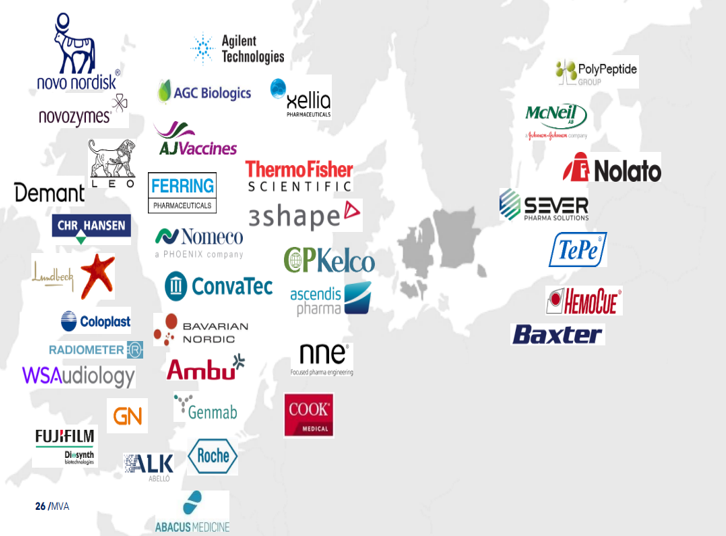
Hospitals, universities, and companies are located within 30 minutes to an hour of each other.
The Novo Nordisk headquarters is located in Bagsvaerd, approximately 15 km from the center of Copenhagen, Lundbeck is in the Østerbro district of Copenhagen, and Leo Pharma is in nearby Valby.
The distance between these companies is within a 20-30 minute drive, and they are also within a 30-minute commute from universities and hospitals.
This proximity enables the entire process from startup to commercialization, including technical reviews, clinical discussions, and investor meetings, to be completed within a single day.
This goes beyond mere physical density, serving as a decisive factor in enhancing the intensity and speed of collaboration.
Since technology, people, and capital can respond and circulate quickly within the same living area, the commercialization cycle of technology is shortened, and the execution power of innovation is enhanced.
Medicon Valley also leads the way in securing high-level talent in the biotechnology and medical fields.
With top European universities specializing in life sciences and medicine concentrated within the cluster, a steady stream of highly skilled professionals is produced across various fields, from basic science to biomedical engineering, healthcare, and AI-driven biotechnology.
Additionally, companies, hospitals, and university research labs are closely connected, allowing talent to freely move between different institutions and organizations to accumulate practical experience.
This talent circulation structure within the ecosystem facilitates the recruitment of specialized personnel and short-term project-based hiring within institutions, thereby enhancing their R&D agility and efficiency.
Reducing regulations and speeding up approvals...The government's framework for bio innovation The Danish government's active policy support also plays an important role in the rapid functioning of the Medicon Valley ecosystem.
The Danish government launched a public-private strategic group (Life Science Growth Team) and began implementing a life science growth strategy to foster the bio industry, a key growth engine for the country.
This organization subsequently led to the establishment of a national life science strategy and the Life Science Office, which is directly under the Prime Minister's Office.
The Life Science Office coordinates policies across all ministries, including health, education, industry, and foreign affairs, and serves as a government control tower overseeing the entire cycle from research and development to clinical trials and commercialization.
The Danish government has also been actively recruiting global talent.
It operates a fast-track visa system for highly skilled personnel in the life science field and provides support for foreign researchers to settle in Denmark, creating an environment that naturally attracts doctoral and master's degree researchers from around the world.
In addition, it is expanding English-based higher education programs and international joint research projects, providing an open research ecosystem for researchers from countries outside Europe.
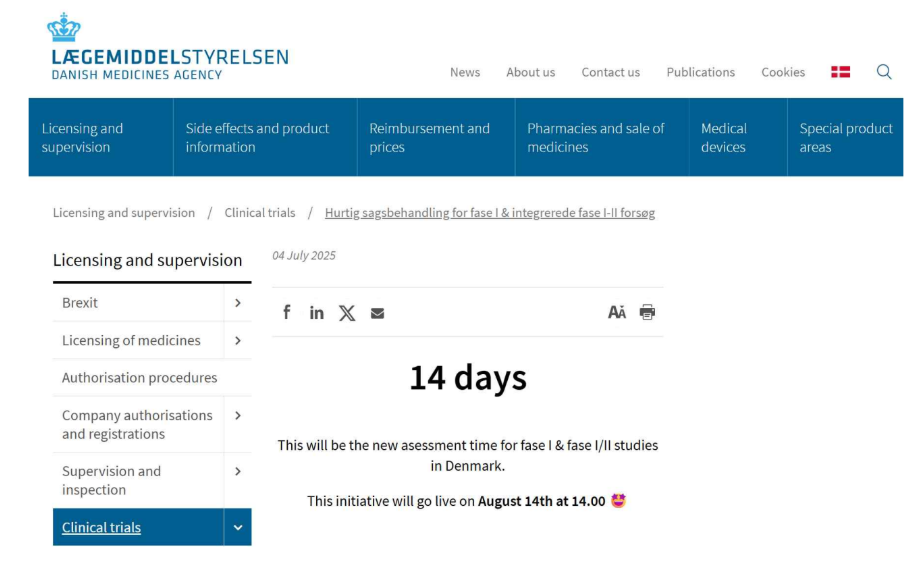
The Danish Medicines Agency will collaborate with the Medical Research Ethics Committee (MREC) to notify applicants of approval decisions for all single-country Phase I and Phase I/II clinical trial applications within 14 days.
This measure is part of the 2030 Danish Life Science Strategy.
The 2030 Danish Life Science Strategy is a blueprint for the development of the bio industry announced by the Danish government at the end of last year, which includes comprehensive policy measures to make Denmark a leading life science powerhouse in Europe by 2030.
Denmark plans to lower the barriers to clinical trials for biotech startups and global pharmaceutical companies and enhance the competitiveness of its research environment to boost the overall capabilities of the industrial ecosystem.
In addition to shortening the clinical approval process, Denmark is laying the groundwork for various institutional measures to strengthen the competitiveness of the biotech industry.
Denmark has already introduced a national pilot program to jointly evaluate research combining pharmaceuticals and medical devices.
This program is an attempt to reduce institutional gaps in the approval process for combination products that combine pharmaceutical and medical devices.
The country will also expand the use of AI and machine learning-based data analysis in clinical trials.
By utilizing new technologies in clinical design and patient response prediction, Denmark plans to accelerate the development of personalized pharmaceuticals by upgrading relevant laws and technical systems by 2025.
-

- 0
댓글 운영방식은
댓글은 실명게재와 익명게재 방식이 있으며, 실명은 이름과 아이디가 노출됩니다. 익명은 필명으로 등록 가능하며, 대댓글은 익명으로 등록 가능합니다.
댓글 노출방식은
댓글 명예자문위원(팜-코니언-필기모양 아이콘)으로 위촉된 데일리팜 회원의 댓글은 ‘게시판형 보기’와 ’펼쳐보기형’ 리스트에서 항상 최상단에 노출됩니다. 새로운 댓글을 올리는 일반회원은 ‘게시판형’과 ‘펼쳐보기형’ 모두 팜코니언 회원이 쓴 댓글의 하단에 실시간 노출됩니다.
댓글의 삭제 기준은
다음의 경우 사전 통보없이 삭제하고 아이디 이용정지 또는 영구 가입제한이 될 수도 있습니다.
-
저작권·인격권 등 타인의 권리를 침해하는 경우
상용 프로그램의 등록과 게재, 배포를 안내하는 게시물
타인 또는 제3자의 저작권 및 기타 권리를 침해한 내용을 담은 게시물
-
근거 없는 비방·명예를 훼손하는 게시물
특정 이용자 및 개인에 대한 인신 공격적인 내용의 글 및 직접적인 욕설이 사용된 경우
특정 지역 및 종교간의 감정대립을 조장하는 내용
사실 확인이 안된 소문을 유포 시키는 경우
욕설과 비어, 속어를 담은 내용
정당법 및 공직선거법, 관계 법령에 저촉되는 경우(선관위 요청 시 즉시 삭제)
특정 지역이나 단체를 비하하는 경우
특정인의 명예를 훼손하여 해당인이 삭제를 요청하는 경우
특정인의 개인정보(주민등록번호, 전화, 상세주소 등)를 무단으로 게시하는 경우
타인의 ID 혹은 닉네임을 도용하는 경우
-
게시판 특성상 제한되는 내용
서비스 주제와 맞지 않는 내용의 글을 게재한 경우
동일 내용의 연속 게재 및 여러 기사에 중복 게재한 경우
부분적으로 변경하여 반복 게재하는 경우도 포함
제목과 관련 없는 내용의 게시물, 제목과 본문이 무관한 경우
돈벌기 및 직·간접 상업적 목적의 내용이 포함된 게시물
게시물 읽기 유도 등을 위해 내용과 무관한 제목을 사용한 경우
-
수사기관 등의 공식적인 요청이 있는 경우
-
기타사항
각 서비스의 필요성에 따라 미리 공지한 경우
기타 법률에 저촉되는 정보 게재를 목적으로 할 경우
기타 원만한 운영을 위해 운영자가 필요하다고 판단되는 내용
-
사실 관계 확인 후 삭제
저작권자로부터 허락받지 않은 내용을 무단 게재, 복제, 배포하는 경우
타인의 초상권을 침해하거나 개인정보를 유출하는 경우
당사에 제공한 이용자의 정보가 허위인 경우 (타인의 ID, 비밀번호 도용 등)
※이상의 내용중 일부 사항에 적용될 경우 이용약관 및 관련 법률에 의해 제재를 받으실 수도 있으며, 민·형사상 처벌을 받을 수도 있습니다.
※위에 명시되지 않은 내용이더라도 불법적인 내용으로 판단되거나 데일리팜 서비스에 바람직하지 않다고 판단되는 경우는 선 조치 이후 본 관리 기준을 수정 공시하겠습니다.
※기타 문의 사항은 데일리팜 운영자에게 연락주십시오. 메일 주소는 dailypharm@dailypharm.com입니다.