- LOGIN
- MemberShip
- 2026-09-22 01:14:01
- Sales of Esomezol ·Noltec↑ Nexium↓ in the PPI market
- by Kim, Jin-Gu | translator Kim, Jung-Ju | 2024-01-25 05:49:36
Sales of major proton pump inhibitor (PPI) class of antiulcer drugs showed mixed performance last year.
‘Nexium (esomeprazole)’ saw a 4% year-on-year decline in prescriptions, while ‘Lanston LFDT (lansoprazole)’ and ‘Pariet (rabeprazole)’ also saw a decline in prescriptions.
Hanmi Pharmaceutical's ‘Esomezol (esomeprazole)’ and Ilyang Pharmaceutical's ‘Noltec (ilaprazole)’ saw an increase in prescriptions last year.
However, the increase has slowed down recently.
This may be due to the rapid growth of its competitors such as P-CABs (potassium-competitive acid blockers).
Presciptions of Esomezol·Esomezol Plus rise 3% in 1 yr…sales growth slows down
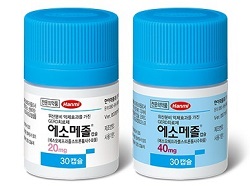
Esomezol prescriptions totaled KRW 61.6 billion last year, up 1% YoY.
Hanmi Pharmaceutical launched Esomezol in 2008.
Since then, its prescriptions have increased steadily.
From 2018 to 2021, prescription sales increased by more than 20% every year.
In 2021, it reached the KRW 50 billion mark for the first time and became the market leader.
However, since 2022, its sales growth has slowed down.
In 2022, sales increased by only 2% YoY, and in 2023, the growth rate decreased further to 1%.
Hanmi Pharmaceutical launched Esomezol Plus in 2022 to make up for the slowdown in sales of Esomezol.
Esomezol Plus is an immediate-release product that contains esomeprazole and magnesium hydroxide.
It is characterized by a faster onset of action than the existing Esomezol.
Esomezol Plus generated prescription sales of KRW 1.5 billion in 2022 and KRW 2.6 billion last year.
Prescription sales of Esomezol and Esomezol Plus together increased by 3% from KRW 62.4 billion in 2022 to KRW 64.2 billion last year.
The situation is not so different for Ilyang Pharmaceutical's Noltec.
Noltec’s prescriptions rose 3% YoY to KRW 42.3 billion last year.
From 2018 to 2020, Noltec’s prescription sales increased by more than 10% every year.
In 2021, the year-on-year prescription growth rate decreased to 8% and further decreased to 3% in 2022 and 2023.
Nexium KRW 33.5 billion→KRW 32.3 billion…prescriptions decreased for 3 consecutive years Other major PPIs performed poorly in the outpatient prescription market in general.
AstraZeneca's Nexium posted prescription sales of KRW 32.3 billion last year.
This is down 4% from the KRW 33.5 billion it had made in 2022.
It was the 3 consecutive year the company saw a decline in prescriptions since 2021.
Nexium’s sales grew steadily until 2020 and had long been a leader among PPI class anti-ulcer drugs, but prescriptions declined for the first time in 2021.
With the decline, the company had to hand over its market lead to Hanmi Pharmaceuticals' Esomezol.
In 2022, the decline was even greater.
Prescription sales dropped from KRW 42 billion in 2021 to KRW 33.5 billion, dropping 20% in one year.
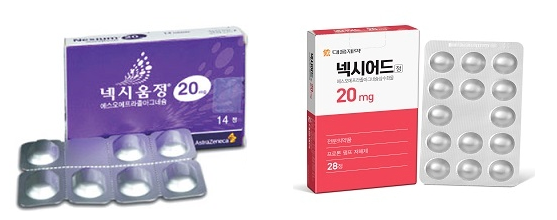
Previously, Nexium was co-promoted and co-sold by Daewoong Pharmaceutical, but AstraZeneca and Daewoong chose to part ways at the end of 2021.
Daewoong decided to focus its sales efforts on the launch of Nexium's potential competitor, Fexuclu (fexuprazan).
So, Ildong Pharmaceutical took over the place of Daewoong Pharmaceutical and copromoted sales of Nexium ever since.
Ildong aimed to synergize Nexium’s sales with another PPI antiulcer drug, Rabiet (rabeprazole), but both Nexium and Rabiet experienced a sales decline as a result.
Daewoong decided to part ways with Nexium and launch a generic version of Nexium.
Since 2022, the company started selling its Nexium generic Nexierd in 2022.
At the same time, it sold Nexiquin, another generic version of Nexium, through its subsidiary Daewoong Bio.
Nexierd and Nexiquin landed in the market in 2022, recording prescription sales of KRW 7.5 billion in the first year.
However, sales dropped 8% to KRW 6.9 billion last year.
Lanston·Pariet·Rabiet show slowdown in sales…influenced by rise in competition, including P-CAB etc. Takeda's Lanston LFDT (lansoprazole) has also seen a decline in its prescriptions for 3 consecutive years since 2021.
Last year, prescription sales of Lanston LFDT were KRW 21.7 billion, down 7% YoY.
The drug had made a personal new record in 2020 with KRW 32.8 billion in prescriptions, but it fell to KRW 30.8 billion the following year, and further declined to KRW 23.4 billion in 2022.
Sales of Takeda's other PPI anti-ulcer drug, Dexilant DR (dexlansoprazole), have stagnated recently.
Presciptions of Dexilant had increased from KRW 17.1 billion in 2020, to KRW 18.8 billion in 2021, then to KRW 20.9 billion in 2022.
However, last year, it sold KRW 20.9 billion, the same as in the previous year.
Eisai’s Pariet (rabeprazole) generated KRW 19.6 billion last year, down 4% YoY.
Pariet’s prescription sales steadily expanded from 2018 to 2022 but saw a decline for the first time last year.
Ildong Pharmaceutical's ‘Laviet’ decreased by 2% from KRW 19.4 billion in 2022 to KRW 19.1 billion last year.
Sales of Daewon Pharmaceutical's Eswoamp (esomeprazole) fell 6% to KRW 18.8 billion from KRW 20 billion during the same period, and Takeda's Pantoloc (pantoprazole) fell 5% to KRW 12.1 billion from KRW 12.7 billion.
The industry pointed to the rise of its competitors as one of the reasons for the sluggish sales of the major PPI class anti-ulcer drugs.
P-CAB class drugs are one representative.
The rapid rise in prescription sales of HK Inno.N’s ‘K-CAB (tegoprazan)’ and Daewoong Pharmaceutical's ‘Fexuclue (fexuprazan),’ had relatively slowed down sales of PPI drugs that have the same indication.
K-CAB recorded prescription sales of KRW 158.2 billion last year.
Since its launch in 2019, it has made strong growth, recording a 20% YoY increase in sales.
Fexuclue recorded prescription sales of KRW 53.5 billion last year.
After launching in July 2022 and generating sales of KRW 12.9 billion by the end of the year, its sales rose even more steeply last year.
The rise of PPI+antacid combination drugs is also analyzed to have contributed to the decline of PPI single-agent drugs.
The PPI+antacid market grew rapidly, recording KRW 19.8 billion in 2020, to KRW 27.6 billion in 2021, to KRW 44.2 billion in 2022, and then to KRW 53.8 billion last year.
-

- 0
댓글 운영방식은
댓글은 실명게재와 익명게재 방식이 있으며, 실명은 이름과 아이디가 노출됩니다. 익명은 필명으로 등록 가능하며, 대댓글은 익명으로 등록 가능합니다.
댓글 노출방식은
댓글 명예자문위원(팜-코니언-필기모양 아이콘)으로 위촉된 데일리팜 회원의 댓글은 ‘게시판형 보기’와 ’펼쳐보기형’ 리스트에서 항상 최상단에 노출됩니다. 새로운 댓글을 올리는 일반회원은 ‘게시판형’과 ‘펼쳐보기형’ 모두 팜코니언 회원이 쓴 댓글의 하단에 실시간 노출됩니다.
댓글의 삭제 기준은
다음의 경우 사전 통보없이 삭제하고 아이디 이용정지 또는 영구 가입제한이 될 수도 있습니다.
-
저작권·인격권 등 타인의 권리를 침해하는 경우
상용 프로그램의 등록과 게재, 배포를 안내하는 게시물
타인 또는 제3자의 저작권 및 기타 권리를 침해한 내용을 담은 게시물
-
근거 없는 비방·명예를 훼손하는 게시물
특정 이용자 및 개인에 대한 인신 공격적인 내용의 글 및 직접적인 욕설이 사용된 경우
특정 지역 및 종교간의 감정대립을 조장하는 내용
사실 확인이 안된 소문을 유포 시키는 경우
욕설과 비어, 속어를 담은 내용
정당법 및 공직선거법, 관계 법령에 저촉되는 경우(선관위 요청 시 즉시 삭제)
특정 지역이나 단체를 비하하는 경우
특정인의 명예를 훼손하여 해당인이 삭제를 요청하는 경우
특정인의 개인정보(주민등록번호, 전화, 상세주소 등)를 무단으로 게시하는 경우
타인의 ID 혹은 닉네임을 도용하는 경우
-
게시판 특성상 제한되는 내용
서비스 주제와 맞지 않는 내용의 글을 게재한 경우
동일 내용의 연속 게재 및 여러 기사에 중복 게재한 경우
부분적으로 변경하여 반복 게재하는 경우도 포함
제목과 관련 없는 내용의 게시물, 제목과 본문이 무관한 경우
돈벌기 및 직·간접 상업적 목적의 내용이 포함된 게시물
게시물 읽기 유도 등을 위해 내용과 무관한 제목을 사용한 경우
-
수사기관 등의 공식적인 요청이 있는 경우
-
기타사항
각 서비스의 필요성에 따라 미리 공지한 경우
기타 법률에 저촉되는 정보 게재를 목적으로 할 경우
기타 원만한 운영을 위해 운영자가 필요하다고 판단되는 내용
-
사실 관계 확인 후 삭제
저작권자로부터 허락받지 않은 내용을 무단 게재, 복제, 배포하는 경우
타인의 초상권을 침해하거나 개인정보를 유출하는 경우
당사에 제공한 이용자의 정보가 허위인 경우 (타인의 ID, 비밀번호 도용 등)
※이상의 내용중 일부 사항에 적용될 경우 이용약관 및 관련 법률에 의해 제재를 받으실 수도 있으며, 민·형사상 처벌을 받을 수도 있습니다.
※위에 명시되지 않은 내용이더라도 불법적인 내용으로 판단되거나 데일리팜 서비스에 바람직하지 않다고 판단되는 경우는 선 조치 이후 본 관리 기준을 수정 공시하겠습니다.
※기타 문의 사항은 데일리팜 운영자에게 연락주십시오. 메일 주소는 dailypharm@dailypharm.com입니다.