- LOGIN
- MemberShip
- 2026-09-19 05:09:55
- First patient dosing with Pluvicto imminent in Korea
- by Moon, sunh-ho | translator Kang, Shin-Kook | 2024-07-30 05:52:02
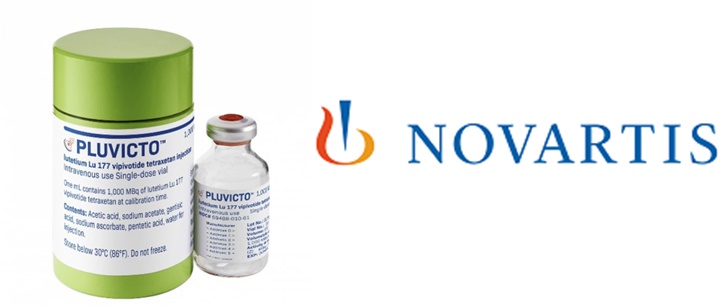
Novartis Korea's prostate cancer drug Pluvicto, which has been in the spotlight since its approval by the Ministry of Food and Drug Safety, is gaining further attention as the company prepares to administer the first dose to patients in Korea.
Pluvicto is a blockbuster drug that generated more than KRW 1 trillion in global sales last year and is considered to have ushered in the era of so-called ‘radiopharmaceutical missiles’ in oncology.
As a result, global pharmaceutical companies are rushing to develop radiopharmaceuticals after witnessing the success, intensifying competition among domestic pharmaceutical and biotech companies.
According to the medical and pharmaceutical industry on the 27th, the first patient is expected to be treated at one of the largest general hospitals in Korea in late August, after the Ministry of Food and Drug Safety’s approval of Novartis Korea's prostate cancer drug Pluvicto (lutetium Lu 177 vipivotide tetraxetan) in late May.
Pluvicto is a radioligand therapy that binds the radioactive isotope lutetium (177Lu) to prostate-specific membrane antigen (PSMA), which is overexpressed in prostate cancer, to kill cancer cells.
The treatment was acquired by Novartis through its acquisition of US-based Endocyte in 2018.
Radioligands are therapeutic agents that combine a therapeutic radioisotope with a ligand (which targets specific cancer cells).
When the radioligand binds to the target cell, it releases the therapeutic radioisotope, inhibiting cancer cell proliferation.
Its May approval was based on the Phase III VISION trial.
The trial evaluated the efficacy and safety of Pluvicto versus standard-of-care monotherapy in 831 patients with PSMA-positive metastatic castration-resistant prostate cancer (mCRPC).
Results showed that the the primary endpoint of radiologic progression-free survival (rPFS) was 8.7 months in the Pluvicto arm, which was longer compared to 3.4 months in the control arm.
Median overall survival (OS) was 15.3 months in the Pluvicto arm and 11.3 months in the control arm.
The risk of radiographic progression or death was reduced by 60% with the use of Pluvicto.
Since the drug was approved by the MFDS, Novartis Korea has been working to start treating patients at the largest hospitals in Korea.
In order for medical institutions to introduce the radiopharmaceutical Pluvicto, the institutions need to have a PSMA PET-CT dedicated to prostate cancer and have a separate room for dispensing, quality control, and patient administration of radioactive therapeutic agents.
Currently, 15 medical institutions nationwide, including the largest hospitals in Korea, are equipped with PSMA PET-CT for testing.
Novartis is currently in discussions with 11 of these medical institutions, including Asan Medical Center in Seoul, to provide Pluvicto to prostate cancer patients.
With the first patient expected to be treated without reimbursement as early as August, Novartis Korea is considering introducing a patient program to address the high price of the drug.
For reference, the recommended dose of Pluvicto is 7.4 GBq (200 mCi), administered intravenously up to 6 times every 6 weeks (±1 week), and it is expected that tens of millions of won will be spent per dose without reimbursement in clinical sites.
"From the HCP’s point of view, we believe the introduction of Pluvicto will have a positive impact in that it increases the number of weapons available for prostate cancer, and is a proven treatment with no significant side effects," said Dr.
In-Keun Park, Professor of Oncology at Asan Medical Center.
"The problem is that it is expensive and there are only a limited number of institutions that can perform PSMA PET-CT, rendering its administration equally limited." "Because it is a radioactive therapeutic agent, it requires a separate space for its administration rather than a general hospital room.
Like Kymriah, Pluvicto is also produced through pre-orders," said a representative from Novartis Korea, "So it takes a considerable process to produce the drug in Europe and deliver it to patients in Korea." "We are reviewing the possibility of introducing a patient program.
However, due to the nature of radioactive therapeutic agents, it is quite expensive.
This is because it utilizes lutetium, a radioactive isotope," the representative added, "We are also discussing the possibility of applying for insurance reimbursement." With the use of Pluvicto nearing on-site, the competition among domestic pharmaceutical and biotech companies to develop radiopharmaceuticals is also heating up.
Currently, FutureChem is at the forefront in the area.
In mid-May, FutureChem began dosing its first patient in the U.S.
for a Phase IIa clinical trial of FC705, a prostate cancer drug for castration-resistant metastatic patients.
FC705 is a radiopharmaceutical that targets PSMA, which is overexpressed on the surface of prostate cancer cells.
It kills cancer cells by introducing a therapeutic isotope into a peptide that binds to the PSMA protein.
In a Phase I clinical trial, an objective response rate (ORR) and disease control rate (DCR) were confirmed in all patients who were administered FC705.
In addition to the U.S.
clinical trial, FutureChem is also conducting Phase II in Korea, including at Seoul St.
Mary's Hospital, and is reportedly discussing technology transfer negotiations with China.
In addition, AbTis, a subsidiary of Dong-A ST, is working with CellBion to develop a new radiopharmaceutical.
The two companies signed a joint development agreement last month and will utilize AbTis’ linker platform technology AbClick and CellBion's radiopharmaceutical lab linker technology to develop a new Antibody-Radionuclide Conjugate (ARC) drug targeting stomach and pancreatic cancer.
Recently, SK Biopharmaceuticalsentered into a license-in technology transfer agreement with Full-Life Technologies to acquire global development and commercialization rights to FL-091, a radiopharmaceutical candidate targeting neurotensin receptor 1 (NTSR1), from Full-Life Technologies.
FL-091 small-molecule radioligand vector designed to deliver actinium-225 (225Ac), a next-generation radioisotope capable of killing cancer cells by selectively binding to NTSR1, a receptor protein, which is selectively overexpressed in various types of solid tumors, including colorectal cancer, prostate cancer, and pancreatic cancer.
SK Biopharm has been discussing introducing radiopharmaceuticals into its pipeline since last year as the next step after its epilepsy drug cenobamate (U.S.
brand name: Xcopri).
The company acquired global-level Targeted Protein Degradation (TPD) technology through the acquisition of ProteoVant Sciences last year.
The TPD technology seeks to overcome the limitations of existing therapeutics by degrading and removing target proteins and solving the causes of diseases.
"This license agreement is the most concrete achievement we have made since the announcement of our entry into the field of radiopharmaceutical therapeutics last year," said Dong-hoon Lee, CEO of SK Biopharmaceuticals.
"We plan to unveil a more specific business plan for the entire radiopharmaceutical business this year and accelerate clinical development and commercialization."
-

- 0
댓글 운영방식은
댓글은 실명게재와 익명게재 방식이 있으며, 실명은 이름과 아이디가 노출됩니다. 익명은 필명으로 등록 가능하며, 대댓글은 익명으로 등록 가능합니다.
댓글 노출방식은
댓글 명예자문위원(팜-코니언-필기모양 아이콘)으로 위촉된 데일리팜 회원의 댓글은 ‘게시판형 보기’와 ’펼쳐보기형’ 리스트에서 항상 최상단에 노출됩니다. 새로운 댓글을 올리는 일반회원은 ‘게시판형’과 ‘펼쳐보기형’ 모두 팜코니언 회원이 쓴 댓글의 하단에 실시간 노출됩니다.
댓글의 삭제 기준은
다음의 경우 사전 통보없이 삭제하고 아이디 이용정지 또는 영구 가입제한이 될 수도 있습니다.
-
저작권·인격권 등 타인의 권리를 침해하는 경우
상용 프로그램의 등록과 게재, 배포를 안내하는 게시물
타인 또는 제3자의 저작권 및 기타 권리를 침해한 내용을 담은 게시물
-
근거 없는 비방·명예를 훼손하는 게시물
특정 이용자 및 개인에 대한 인신 공격적인 내용의 글 및 직접적인 욕설이 사용된 경우
특정 지역 및 종교간의 감정대립을 조장하는 내용
사실 확인이 안된 소문을 유포 시키는 경우
욕설과 비어, 속어를 담은 내용
정당법 및 공직선거법, 관계 법령에 저촉되는 경우(선관위 요청 시 즉시 삭제)
특정 지역이나 단체를 비하하는 경우
특정인의 명예를 훼손하여 해당인이 삭제를 요청하는 경우
특정인의 개인정보(주민등록번호, 전화, 상세주소 등)를 무단으로 게시하는 경우
타인의 ID 혹은 닉네임을 도용하는 경우
-
게시판 특성상 제한되는 내용
서비스 주제와 맞지 않는 내용의 글을 게재한 경우
동일 내용의 연속 게재 및 여러 기사에 중복 게재한 경우
부분적으로 변경하여 반복 게재하는 경우도 포함
제목과 관련 없는 내용의 게시물, 제목과 본문이 무관한 경우
돈벌기 및 직·간접 상업적 목적의 내용이 포함된 게시물
게시물 읽기 유도 등을 위해 내용과 무관한 제목을 사용한 경우
-
수사기관 등의 공식적인 요청이 있는 경우
-
기타사항
각 서비스의 필요성에 따라 미리 공지한 경우
기타 법률에 저촉되는 정보 게재를 목적으로 할 경우
기타 원만한 운영을 위해 운영자가 필요하다고 판단되는 내용
-
사실 관계 확인 후 삭제
저작권자로부터 허락받지 않은 내용을 무단 게재, 복제, 배포하는 경우
타인의 초상권을 침해하거나 개인정보를 유출하는 경우
당사에 제공한 이용자의 정보가 허위인 경우 (타인의 ID, 비밀번호 도용 등)
※이상의 내용중 일부 사항에 적용될 경우 이용약관 및 관련 법률에 의해 제재를 받으실 수도 있으며, 민·형사상 처벌을 받을 수도 있습니다.
※위에 명시되지 않은 내용이더라도 불법적인 내용으로 판단되거나 데일리팜 서비스에 바람직하지 않다고 판단되는 경우는 선 조치 이후 본 관리 기준을 수정 공시하겠습니다.
※기타 문의 사항은 데일리팜 운영자에게 연락주십시오. 메일 주소는 dailypharm@dailypharm.com입니다.