- LOGIN
- MemberShip
- 2026-07-28 14:42:54
- Basic refund type-drugs granted early RSA termination
- by Lee, Tak-Sun | translator Hong, Ji Yeon | 2024-12-20 05:46:40

However, pharmaceuticals on the cost-effectiveness evaluation waiver track, demonstrating cost-effectiveness, can be submitted for negotiation through the renewal of the agreement.
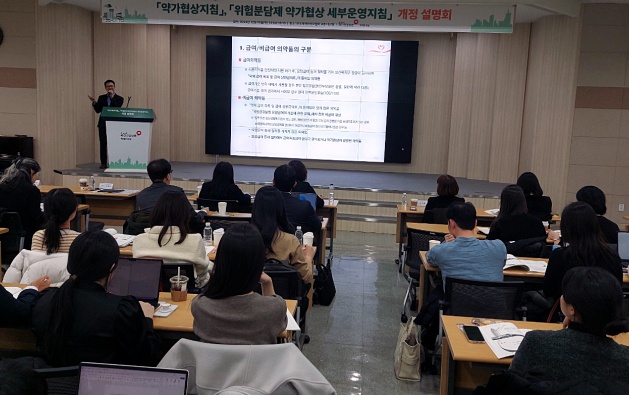
The National Health Insurance Service (NHIS) has finalized the 'Guidelines for Drug Price Negotiations and Detailed matters.' On the afternoon of December 19, the NHIS held a briefing session at the Korea Pharmaceutical and Bio-Pharma Manufacturers Association (KBPMA) to explain the revisions made to the 'Guidelines for Drug Price Negotiations' and the 'Guidelines for Drug Price Negotiations and Detailed matters.' The finalized revised guidelines include the changes reported to the Health Insurance Policy Review Committee meeting held in December 2024.
These changes are part of the 'Proposal to reflect the new drug's innovative value and the nation's healthcare security.' Health Insurance Review and Assessment Service (HIRA) included these updates in the 'Specific evaluation criteria of new drugs and medicines in consideration for negotiation' during revisions made in August and December.
Meanwhile, the Ministry of Health and Welfare (MOHW) incorporated these changes in the October administrative notice outlining partial revision to the drug reimbursement and adjustments criteria.
The NHIS has improved its policies to align with regulatory revisions.
The revised guidelines for drug price negotiations and detailed matters for RSA underwent consultation starting on November 28 and concluded on December 4.
One association suggested that early termination should be allowed for all RSA types.
However, the final decision limited early termination to basic refund RSA type only.
Current policy states that companies can request early termination of an RSA, but under the revised guidelines, this will be limited to basic refund RSAs.
However, for cost-effectiveness-evaluated drugs that have demonstrated cost-effectiveness through the HIRA’s Drug Reimbursement Evaluation Committee (DREC) review, companies, and NHIS can renegotiate to adjust reimbursement ceilings, reset expected claim amounts, or modify·terminate total expenditure-capped RSAs.
This opens the possibility of terminating total expenditure-capped RSAs through renewal of agreement.
Additionally, one association suggested simplifying re-renewal processes for all RSA types but was rejected.
The revision will apply only to basic refund RSAs, as this approach aligns with existing HIRA regulations, which NHIS incorporated into its guidelines.
The negotiation period for RSA renewals following contract expiration will also be reduced.
If renewal or termination negotiations fail, the NHIS and the company can renegotiate once under the Minister of Health and Welfare’s directive.
The drug is removed from the reimbursement list if this second negotiation fails.
However, based on the revised guidelines, in case of a negotiation failure, the NHIS and the company will have 60 days for renegotiation under the directive of the Minister of Health and Welfare without any extensions.
If renegotiation fails, the drug will be removed from the reimbursement list.
"Currently, negotiations can take up to 300 days, which burdens the individuals involved," Oh Se-rim, head of the HIRA's Pharmaceutical Benefits Department, stated.
"The revised guidelines reduce this period to a maximum of 240 days." The updated proposal indicates that when applying for reimbursement listings of the same formulation under a RSA, the NHIS and associated organizations may mandate the applicant to sign a confidentiality agreement and provide details regarding the RSA associated with the drug.
The recent revision of pricing negotiation guidelines remains intact.
Updates include a 30-day timeframe for essential medicines.
Additionally, a new provision permits 'pre-negotiations' to occur during the evaluation period conducted by the HIRA.
The NHIS has already implemented this strategy in negotiations concerning drugs experiencing shortages, such as acetaminophen, after the COVID-19 endemic.
-

- 0
댓글 운영방식은
댓글은 실명게재와 익명게재 방식이 있으며, 실명은 이름과 아이디가 노출됩니다. 익명은 필명으로 등록 가능하며, 대댓글은 익명으로 등록 가능합니다.
댓글 노출방식은
댓글 명예자문위원(팜-코니언-필기모양 아이콘)으로 위촉된 데일리팜 회원의 댓글은 ‘게시판형 보기’와 ’펼쳐보기형’ 리스트에서 항상 최상단에 노출됩니다. 새로운 댓글을 올리는 일반회원은 ‘게시판형’과 ‘펼쳐보기형’ 모두 팜코니언 회원이 쓴 댓글의 하단에 실시간 노출됩니다.
댓글의 삭제 기준은
다음의 경우 사전 통보없이 삭제하고 아이디 이용정지 또는 영구 가입제한이 될 수도 있습니다.
-
저작권·인격권 등 타인의 권리를 침해하는 경우
상용 프로그램의 등록과 게재, 배포를 안내하는 게시물
타인 또는 제3자의 저작권 및 기타 권리를 침해한 내용을 담은 게시물
-
근거 없는 비방·명예를 훼손하는 게시물
특정 이용자 및 개인에 대한 인신 공격적인 내용의 글 및 직접적인 욕설이 사용된 경우
특정 지역 및 종교간의 감정대립을 조장하는 내용
사실 확인이 안된 소문을 유포 시키는 경우
욕설과 비어, 속어를 담은 내용
정당법 및 공직선거법, 관계 법령에 저촉되는 경우(선관위 요청 시 즉시 삭제)
특정 지역이나 단체를 비하하는 경우
특정인의 명예를 훼손하여 해당인이 삭제를 요청하는 경우
특정인의 개인정보(주민등록번호, 전화, 상세주소 등)를 무단으로 게시하는 경우
타인의 ID 혹은 닉네임을 도용하는 경우
-
게시판 특성상 제한되는 내용
서비스 주제와 맞지 않는 내용의 글을 게재한 경우
동일 내용의 연속 게재 및 여러 기사에 중복 게재한 경우
부분적으로 변경하여 반복 게재하는 경우도 포함
제목과 관련 없는 내용의 게시물, 제목과 본문이 무관한 경우
돈벌기 및 직·간접 상업적 목적의 내용이 포함된 게시물
게시물 읽기 유도 등을 위해 내용과 무관한 제목을 사용한 경우
-
수사기관 등의 공식적인 요청이 있는 경우
-
기타사항
각 서비스의 필요성에 따라 미리 공지한 경우
기타 법률에 저촉되는 정보 게재를 목적으로 할 경우
기타 원만한 운영을 위해 운영자가 필요하다고 판단되는 내용
-
사실 관계 확인 후 삭제
저작권자로부터 허락받지 않은 내용을 무단 게재, 복제, 배포하는 경우
타인의 초상권을 침해하거나 개인정보를 유출하는 경우
당사에 제공한 이용자의 정보가 허위인 경우 (타인의 ID, 비밀번호 도용 등)
※이상의 내용중 일부 사항에 적용될 경우 이용약관 및 관련 법률에 의해 제재를 받으실 수도 있으며, 민·형사상 처벌을 받을 수도 있습니다.
※위에 명시되지 않은 내용이더라도 불법적인 내용으로 판단되거나 데일리팜 서비스에 바람직하지 않다고 판단되는 경우는 선 조치 이후 본 관리 기준을 수정 공시하겠습니다.
※기타 문의 사항은 데일리팜 운영자에게 연락주십시오. 메일 주소는 dailypharm@dailypharm.com입니다.
- “Drug pricing intervention contributes to the crisis in essential healthcare and shortage of drugs”
- Reporter's view | Lee, Jeong-Hwan